I looked down at the “seating chart,” which was actually just a scrap of paper the wedding planner had handed me with a look of profound pity. While my cousins—even the ones my sister hadn’t spoken to in a decade—were draped in satin at the circular “Diamond Tier” tables near the floral arch, I was positioned behind a decorative fern.
My sister, Elena, had always been the sun around which our family orbited. I was the moon: cold, distant, and only visible when the light reflected off her. But today, the eclipse was total.
“Excuse me,” a waiter muttered, bumping my shoulder as he rushed a tray of lobster tail to Table 1. “Can’t have chairs in the walkway, pal.”
“It’s not in the walkway,” I said quietly. “It’s my seat.”
He looked at the chair, then at the restroom sign, then at my custom-tailored suit. He winced. “Sorry, man. Tough break.”
I checked my watch. 6:45 PM. The toasts were about to begin. The “Man of Honor” toast. The one Elena had begged me to write six months ago. The one she said would be the “soul of the evening.”
I looked at the head table. Elena was laughing, her white veil cascading over the back of a throne-like chair. Our parents were beside her, beaming. No one was looking toward the restroom. No one was looking for me.
I realized then that I wasn’t an honored guest. I was a backup plan. I was the person she called to fix the seating chart, to coordinate the caterers, and to pay the $15,000 “security deposit” when the venue threatened to cancel last week. But I wasn’t someone she wanted in the photos.
I didn’t make a scene. I didn’t stand up and shout. I simply reached into my jacket pocket, pulled out the thick, cream-colored envelope containing my speech, and laid it on the empty, cold seat of the folding chair.
Then, I walked out the back service entrance.
The Ten-Minute Fuse
I walked across the manicured lawn to the parking lot. The evening air was crisp, smelling of jasmine and expensive champagne—champagne that my credit card had cleared just forty-eight hours prior.
I sat in my car and turned on the engine. I didn’t drive away immediately. I just sat in the dark, watching the glow of the ballroom windows.
Six minutes in: The music stopped. I knew the schedule. This was the moment the DJ would announce the Man of Honor.
Eight minutes in: My phone began to vibrate in the center console. Elena. I didn’t answer.
Nine minutes in: Mom. I didn’t answer.
Ten minutes in: A text message arrived from the wedding planner, her professional composure clearly shattered: “Leo, where are you? The venue coordinator is here. They’re shutting down the bar and the music. They say the final payment didn’t clear the secondary authorization. WE NEED YOU.”
I felt a strange, calm clarity. I hadn’t canceled the payment. I had simply moved the funds from the “Immediate Release” category to “Manual Verification” because I wanted to “ensure the service was satisfactory” before the final wire. It was a standard business move I’d told Elena about weeks ago. She just hadn’t been listening.
I pulled out of the parking lot.
The Realization
Inside the ballroom, the fairy tale was collapsing at record speed.
As I learned later from my cousin Marcus (the only one who actually liked me), the music had cut out right in the middle of Elena’s “Thank You” speech. The lights had flickered to half-power. The waitstaff had stopped serving the main course and begun clearing the half-eaten appetizers.
“Where is Leo?” Elena had screamed, her voice cracking.
Our mother had rushed to the back, toward the restrooms, thinking I might be ill. She found the folding chair. She found the $2,000 floral arrangement that had been shoved against the wall to make room for it. And she found the envelope.
She opened it. But it wasn’t just a speech.
Inside the envelope, clipped to the handwritten notes about our childhood, was the master vendor list. Next to every single item—the florist, the string quartet, the 5-tier cake, the premium bar, and the venue itself—was a stamped receipt that read: PAID IN FULL BY LEO VAN DOREN.
At the bottom of the list, I had written a final note in neat, black ink:
“The view from the restroom isn’t great, but it gave me a lot of time to think. Since I’m apparently a ‘distant’ member of this family, I’ve decided to take a ‘distant’ approach to the finances as well. The ‘Manual Verification’ code is the date of our grandmother’s birthday. I hope you remember it. Happy Wedding, Elena.”
The Tears
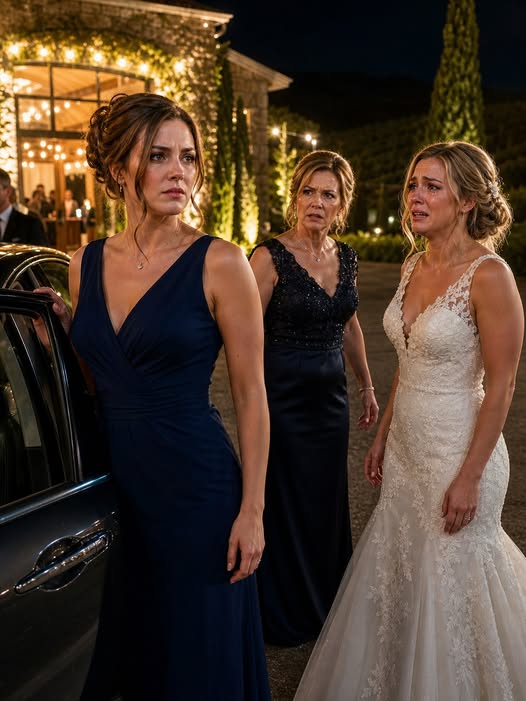
Elena burst into tears—not of joy, but of pure, unadulterated realization.
She realized that the “useless” brother she had sidelined to keep her “VIP” aesthetic pure was the only reason the floor beneath her feet was paid for. She realized that by treating me like a folding chair, she had folded her own wedding.
The guests began to whisper. The “VIPs” looked at their empty glasses and then at the folding chair by the toilet. The irony wasn’t lost on anyone. The most important person in the room had been sat in the least important place, and he had finally decided to leave.
The Good Vibes (The Aftermath)
I didn’t go home to mope. I drove to a 24-hour diner three towns over, ordered a stack of blueberry pancakes, and turned my phone on “Do Not Disturb.”
Two hours later, I saw a single notification from Marcus: “She found the code. The party is back on, but half the guests left because they were disgusted by the seating chart thing. Mom and Dad look like they want to crawl into a hole. Elena is sitting in your folding chair, crying. She says she doesn’t deserve the throne.”
The next morning, Elena was at my front door. She wasn’t wearing white. She looked tired, humbled, and small.
“I’m sorry,” she whispered. “I got caught up in the ‘perfect’ image. I forgot who actually builds the stage I stand on.”
I didn’t kick her out. I made her coffee. But I didn’t let her off the hook, either.
“The money is a gift, Elena,” I said. “But the seat? You don’t get to choose where I sit anymore. From now on, I pick my own place at the table.”
She nodded, hugging her mug. For the first time in seventeen years, we didn’t talk about her “brand” or her “dream life.” We just talked.
The “Good Vibes” didn’t come from the revenge. They came from the fact that for the rest of our lives, at every family dinner, every holiday, and every birthday, there was never a folding chair in sight. I always had the best seat in the house—because I finally knew I deserved it.