The calm waters off the coast of Monterey Bay were the last place anyone expected terror to strike. On that crisp Saturday morning, Jessica Radcliffe, a 32-year-old marine biology enthusiast, was aboard a small whale-watching vessel with ten other passengers. The group had set out to catch a glimpse of the migrating humpback whales that frequent the bay during this season. The sea was glassy, the sky clear, and the atmosphere filled with excitement as the boat’s captain slowly maneuvered toward a pod spotted in the distance. Jessica, a seasoned diver and ocean lover, leaned eagerly over the railing, her camera ready. It seemed like the perfect day for an unforgettable encounter with one of nature’s most majestic creatures. No one could have predicted that within minutes, that sense of awe would be replaced by shock and fear.
According to eyewitnesses, the pod of whales appeared calm at first, surfacing and exhaling in great plumes of mist. The crew maintained a respectful distance, following maritime guidelines meant to protect both humans and animals. Jessica was laughing with another passenger when, without warning, one of the whales broke away from the group and swam directly toward the boat. Passengers described a sudden change in the whale’s movement—its approach seemed deliberate and unusually fast. “At first, we thought it was just curious,” recalled one witness, “but then it dove under the boat and came up right beside Jessica.” What happened next was so sudden that several people didn’t fully understand what they were seeing until it was too late. The whale’s massive head emerged, creating a swell that rocked the vessel, and in a swift, almost fluid motion, Jessica was swept overboard.

The chilling detail that witnesses have since recounted was the sound the whale made just moments before the incident. Several passengers claim to have heard a deep, resonant groan—different from the usual calls or songs humpbacks are known for. Marine behavior experts who later reviewed the accounts suggested that the noise might have been a distress signal or a territorial warning. Some believe the whale may have been agitated by the presence of the boat or by underwater noise pollution from nearby vessels. Others speculate it could have been protecting a calf, a behavior documented in certain whale species. Whatever the reason, the moment that sound echoed across the water, the animal’s demeanor shifted from serene to unpredictable.
Crew members reacted instantly, throwing life rings and shouting instructions, but the current created by the whale’s sudden movement pulled Jessica farther away. She was seen briefly at the surface, struggling to keep her head above water. The whale circled once more, its massive body casting an ominous shadow beneath her, before disappearing into the depths. The captain issued a mayday call to the Coast Guard, and within minutes, rescue boats and a helicopter were dispatched to the scene. Despite the rapid response, precious time had already been lost. Several passengers broke down in tears as they realized how quickly the situation had spiraled from wonder to tragedy.

Search-and-rescue teams scoured the area for hours, using sonar equipment and divers to try to locate Jessica. The bay, though relatively calm, is known for strong tidal currents beneath the surface, and these can make recovery efforts incredibly challenging. By late afternoon, officials confirmed they had suspended the active search until the following morning, citing fading daylight and safety concerns. News of the incident spread quickly through local communities, with many expressing shock that such an event could occur during what is generally considered a safe, regulated activity. Marine tour companies reassured the public that whale attacks on humans are exceedingly rare, but acknowledged that wild animals can behave unpredictably when startled or stressed.
In the days following, experts from the Marine Mammal Center and the University of California began analyzing environmental data from the area. They considered factors such as recent increases in boat traffic, changes in prey availability, and even shifts in ocean temperature that might affect whale behavior. While they emphasized that no definitive conclusion could yet be drawn, several pointed out that the combination of close human proximity, environmental stressors, and possible protective instincts could have triggered the whale’s unusual actions. For Jessica’s friends and family, however, scientific explanations brought little comfort. They described her as someone who deeply respected the ocean and its creatures, always mindful of keeping a safe distance and following conservation guidelines. That she could fall victim to the very species she admired so much was a heartbreaking irony.
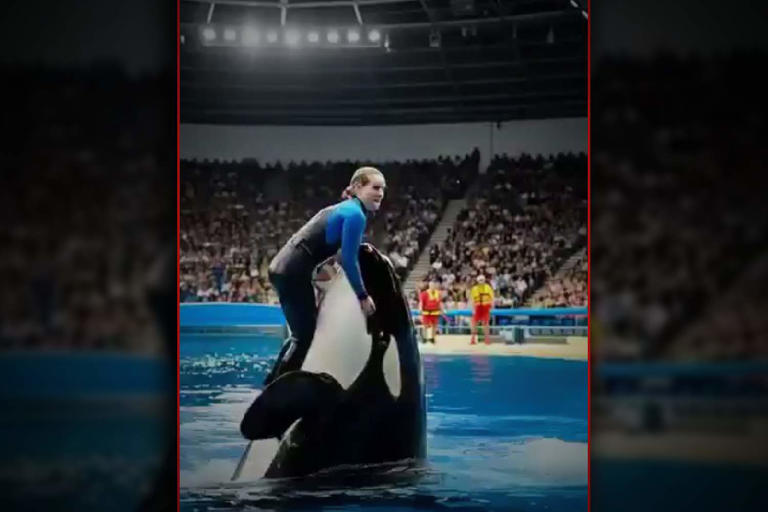
Though the official investigation remains ongoing, the incident has reignited discussions about human interaction with marine wildlife. Some advocates are calling for stricter limits on how close whale-watching vessels can approach pods, while others stress the importance of reducing underwater noise pollution that may be interfering with whale communication. The tragedy serves as a stark reminder that even in moments of beauty and connection with nature, danger can emerge without warning. As the community mourns Jessica Radcliffe, the question lingers: what truly made the whale do it? Was it fear, protection, confusion—or something humans may never fully understand? For now, the ocean keeps its secrets, and those who were there that day will forever remember the haunting sound that came just before the water swallowed her from view.