For twenty years, I ran the front desk at my husband’s dental office without a paycheck.We called it “our business.”I believed that.Every morning, I unlocked the office before sunrise.
I turned on the lights, started the sterilization equipment, checked the appointment schedule, answered the phones,
handled insurance claims, ordered supplies, balanced deposits, reminded patients about appointments,
and stayed late whenever someone needed a root canal after hours.
I knew which patients preferred text messages and which ones insisted on phone calls.I knew which insurance companies were impossible to deal with.
I knew when the compressor was making a strange sound and when the X-ray machine needed servicing.
I even knew which drawer my husband kept his favorite pens in.
But apparently, after twenty years, I knew nothing about the business.
That was what his attorney told me.“You were never an employee,” he said calmly. “There are no payroll records in your name. You have no ownership interest in the dental practice.”
I stared at him across the conference table.My husband, Daniel, sat beside him.Daniel wouldn’t look at me.Not once.His attorney slid a folder across the table.
“Your husband is willing to let you keep the house,” he said. “That is a generous settlement considering the circumstances.”
I almost laughed.The house.
The same house where I had cooked dinner for twenty years while Daniel worked late.
The same house where I had used my savings to cover our mortgage during the first two years of the practice.
The same house where I had raised our daughter.
The same house where Daniel had once kissed me in the kitchen and said, “We built all of this together.”
Now he was giving it to me like a charity donation.
I looked at him.
“Daniel?”
His eyes remained fixed on the table.
“Take the house, Claire,” he muttered. “Let’s just be done.”
My lawyer, Susan, placed her hand over mine.
“Don’t sign anything today.”
Daniel finally looked up.
For the first time in twenty years, I saw something in his eyes I didn’t recognize.
Fear.
It disappeared almost immediately.
His attorney closed the folder.
“We can reconvene next week.”
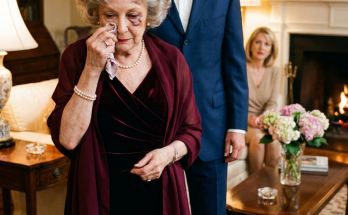
When I walked out of that office, I was fifty-nine years old, unemployed, humiliated, and apparently worth nothing in the business I had helped build for two decades.
The strangest part was that I almost believed them.
Almost.
Because I had never read the paperwork.
That was my mistake.
When Daniel opened the practice in 2004, I trusted him.
He had been my husband for twelve years already.
We had a six-year-old daughter.
He had spent years working for another dentist, saving money and dreaming about having his own practice.
One night, sitting at our tiny kitchen table, he told me he had finally found a building.
“I can do it,” he said.
I remember smiling.
“Then do it.”
He reached across the table and squeezed my hand.
“I can’t do it without you.”
Those words became the foundation of my life.
I quit my part-time job.
I took over the front desk.
I signed whatever documents Daniel put in front of me.
“Just paperwork,” he’d say.
I trusted him.
The first year was brutal.
There were weeks when we weren’t sure we could pay the electric bill.
Daniel treated patients all day.
I handled everything else.
When the receptionist quit, I took her place.
When the bookkeeper moved away, I learned the accounting software.
When our office manager left, I became the office manager.
When the insurance companies delayed payments, I spent hours on hold.
When a patient couldn’t afford treatment, I worked out payment plans.
And when Daniel came home exhausted, I told him everything was going to be okay.
Eventually, it was.
The practice grew.
We hired hygienists.
Then another dentist.
Then two more assistants.
We moved into a larger building.
The little dental office Daniel had dreamed about became a successful practice with twelve employees and hundreds of patients.
And through all of it, I never received a paycheck.
Daniel always said, “We’re reinvesting everything.”
Then, “We’re building something for our retirement.”
Then, “What’s mine is yours.”
I never questioned it.
Until the separation.
Our marriage had been deteriorating for years.
There wasn’t one dramatic betrayal.
There was just distance.
Daniel became obsessed with the practice.
He worked weekends.
He stopped coming home for dinner.
Then he started keeping his phone face down.
Eventually, he told me he wanted a separation.
I was devastated.
But I thought at least we could be fair.
We had spent twenty years together.
Surely the business we’d built together would be divided fairly.
Instead, his attorney told me I owned nothing.
I went home that evening and sat alone at the kitchen table.
I looked around the house.
Photographs.
Furniture.
Wedding pictures.
Our daughter’s graduation photo.
Twenty years of memories.
I wondered how someone could erase twenty years with a few pieces of paper.
Then I started packing.
Not because I agreed.
Because I didn’t know what else to do.
Daniel had already moved into a condominium.
I was preparing to stay in the house temporarily while the attorneys negotiated.
I opened the hall closet looking for boxes.
That’s when a stack of old office supplies fell forward.
Behind them was an accordion folder.
It was thick.
Dusty.
The label was handwritten in faded black ink.
“PRACTICE — 2004.”
I almost threw it away.
Then I remembered something.
The practice had opened in 2004.
I sat on the floor.
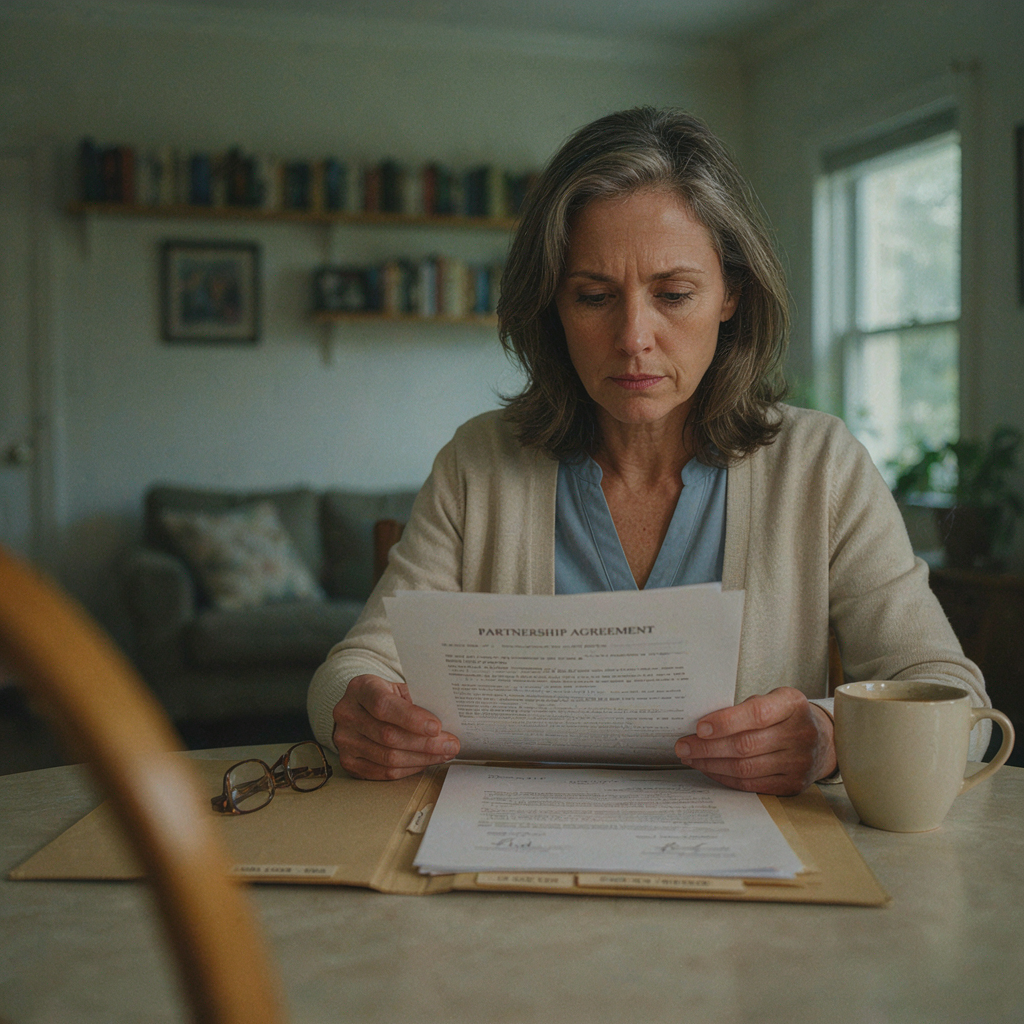
My hands were shaking as I opened the folder.
Inside were old bank statements.
Tax registrations.
A commercial loan agreement.
Business licenses.
Insurance documents.
And then I saw it.
A document titled:
PARTNERSHIP AGREEMENT
I froze.
I read the first page.
Daniel’s name.
Then mine.
I turned the page.
There were signatures at the bottom.
Daniel’s.
And mine.
I kept reading.
My heart began pounding.
Then I saw the ownership section.
Claire Morgan — 51%
Daniel Morgan — 49%
I read it three times.
Then five.
I whispered, “No.”
Because if this was real, everything Daniel’s attorney had told me was false.
I grabbed my phone and called Susan.
She answered immediately.
“Claire?”
“I found something.”
“What?”
“I found the original partnership agreement.”
Silence.
Then:
“What does it say?”
I swallowed.
“My name is on it.”
“That isn’t unusual.”
“No.”
I looked again.
“My name is on it as fifty-one percent owner.”
Susan stopped breathing for a second.
Then she said quietly, “Don’t move.”
“What?”
“Don’t move anything. Don’t sign anything. Don’t call Daniel. Don’t tell him what you found.”
My heart was pounding.
“Susan, what does this mean?”
“I need to see it.”
She came to my house that night.
I placed the folder on the dining table.
Susan put on her reading glasses and began examining the documents.
She didn’t speak for almost ten minutes.
Finally, she looked up.
“Claire, this appears to be genuine.”
I felt dizzy.
“Genuine?”
“The signatures match the other documents. The agreement is dated 2004. It appears to have been notarized.”
“So I own fifty-one percent?”
“If this hasn’t been legally amended, yes.”
I stared at her.
“But his attorney said I owned nothing.”
Susan nodded slowly.
“That’s why I asked you not to confront Daniel.”
She turned another page.
Then she stopped.
“What?”
She pointed to a paragraph.
“The agreement requires annual ownership certifications.”
I frowned.
“What does that mean?”
“It means the owners have to certify the ownership percentages each year.”
“Who signs them?”
Susan looked at me.
“That’s what we need to find out.”
The next morning, Susan requested the company’s corporate and tax records.
Within forty-eight hours, she called me.
Her voice sounded different.
Serious.
“Claire.”
“What?”
“I found the certifications.”
My stomach tightened.
“And?”
“Someone has been signing them every year.”
“Daniel?”
“No.”
The room seemed to tilt.
“Then who?”
Susan paused.
“Your name appears on them.”
I stared at the wall.
“That doesn’t make sense.”
“It gets worse.”
“How?”
“The ownership percentages on the certifications changed.”
“To what?”
“Daniel — one hundred percent.”
I couldn’t speak.
Susan continued.
“Beginning in 2016, the filings state that you transferred your interest to Daniel.”
“I never transferred anything.”
“I know.”
“I never signed that.”
“I know.”
I felt a coldness spread through my chest.
“Then whose signature is that?”
Susan didn’t answer immediately.
Finally she said:
“That’s what we’re going to find out.”
Over the next week, Susan dug deeper.
She discovered that the practice had been reorganized in 2016.
According to documents filed with the state, I had supposedly signed a transfer agreement giving Daniel my fifty-one percent ownership.
But there was a problem.
I had been on vacation in Florida when the document was supposedly signed.
I had hotel receipts.
Credit-card records.
Photographs.
Even an airline ticket.
Susan looked at me.
“You were nowhere near the office.”
“No.”
“And yet someone signed your name.”
My hands began shaking.
“Forgery?”
“Possibly.”
“Why would Daniel do that?”
Susan leaned back.
“We don’t know yet.”
Then she found the bank records.
In 2016, the practice had opened a second account.
Money had been transferred from the original business account into it.
Large amounts.
Hundreds of thousands of dollars.
And the second account wasn’t listed in the financial records Daniel had given my lawyer.
Susan stared at the documents.
“Claire, I think this is bigger than your ownership.”
“How much bigger?”
“I don’t know yet.”
Three days later, we discovered something else.
The second account belonged to a company called Morgan Dental Holdings LLC.
Daniel was listed as the sole owner.
The business had been purchasing commercial properties.
Two office buildings.
A warehouse.
A small medical plaza.
All paid for using money that appeared to have originated from the dental practice.
Susan looked at me.
“Do you recognize any of these properties?”
I shook my head.
“No.”
“You never heard Daniel mention them?”
“No.”
“Not even once?”
“No.”
I thought about all those nights Daniel had told me the practice wasn’t making enough money to justify paying me.
All those years when I’d asked whether we could increase our retirement contributions.
All those times he’d said:
“We need to keep cash in the business.”
I felt sick.
Susan continued investigating.
Then she found the annual ownership certifications.
From 2016 onward, every document claimed Daniel owned one hundred percent of the practice.
But something else was strange.
The signatures were supposedly mine.
Yet they were identical.
Same curves.
Same pressure.
Same tiny mistake in the letter “C.”
Susan sent copies to a forensic document examiner.
The examiner’s conclusion was devastating.
The signatures had likely been mechanically reproduced or digitally inserted.
They weren’t genuine handwritten signatures.
But that wasn’t even the biggest discovery.
The original 2004 partnership agreement had never been formally terminated.
And under its terms, I still owned fifty-one percent.
Susan explained it carefully.
“Your husband may have spent years behaving as though he owned everything, but the original agreement is evidence that he didn’t.”
“So what happens now?”
“We demand an accounting.”
“And if he refuses?”
“We go to court.”
I looked down at the folder.
For twenty years, I had thought it was worthless old paperwork.
It was the most valuable thing I owned.
Then Daniel called me.
“Claire, we need to talk.”
I almost laughed.
“About what?”
“About the divorce.”
“Okay.”
“Your lawyer is making this unnecessarily complicated.”
I said nothing.
Daniel sighed.
“I’m trying to be reasonable.”
“Are you?”
“Yes.”
“You said I owned nothing.”
“That’s what the documents show.”
“No, Daniel.”
He went quiet.
I could hear his breathing.
“I found the 2004 partnership agreement.”
Silence.
Long silence.
Then he said:
“You shouldn’t have that.”
Those five words told me everything.
I closed my eyes.
“You knew.”
“Claire—”
“You knew I owned fifty-one percent.”
“It’s complicated.”
“No. It isn’t.”
“Listen to me.”
“You lied to me.”
“I’m trying to protect the practice.”
“You forged my signature.”
He stopped.
For several seconds, neither of us spoke.
Then Daniel whispered:
“You don’t understand what happened.”
“I understand enough.”
“No, you don’t.”
“Then explain it.”
He didn’t.
Instead, he said:
“Take the house.”
I almost felt sorry for him.
Almost.
“You offered me the house because you thought I wouldn’t find the agreement.”
“That’s not true.”
“Then why?”
He hung up.
Susan filed an emergency preservation request the next morning.
The court ordered Daniel not to transfer or dispose of significant business assets while the dispute was pending.
That was when everything exploded.
Employees started calling.
The office manager, Linda, called first.
“Claire, what’s happening?”
“I don’t know.”
“Daniel told everyone you’re trying to take the practice away from him.”
I sat silently.
Then Linda said something that changed everything.
“He’s been telling us for years that you were an owner.”
My heart stopped.
“What?”
“He used to say, ‘Claire owns more than I do, but she doesn’t want the responsibility.’”
I stared at the phone.
“Are you sure?”
“Absolutely.”
Linda paused.
“He said it at our Christmas party in 2012.”
Then another employee called.
Then another.
They all remembered the same thing.
Daniel had repeatedly referred to me as his business partner.
He had introduced me to vendors as “my partner.”
He had told employees I owned fifty-one percent.
He had even joked that I was “the boss nobody sees.”
But when our marriage ended, he suddenly claimed I had never been part of the business.
Susan gathered sworn statements from several employees.
Then she subpoenaed the accounting firm.
That uncovered another bombshell.
The original tax records listed the practice as a partnership.
And the partnership returns included allocations to both Daniel and me.
But beginning in 2016, the tax treatment changed.
Daniel had started reporting the business as solely his.
My name disappeared.
Yet the practice continued operating under the original partnership agreement.
Susan stared at the records.
“He didn’t just hide the ownership from you.”
“What did he do?”
“He changed the story depending on who was looking.”
The legal case became enormous.
Daniel’s attorney tried to argue that I had abandoned my ownership.
Susan countered with twenty years of evidence.
Emails.
Employee statements.
Bank records.
Tax documents.
The original loan.
The partnership agreement.
And one thing Daniel hadn’t expected.
An old voicemail.
In 2014, when we were applying for a larger business loan, Daniel had called the bank’s loan officer from his cell phone.
He left a message.
“Hi, this is Daniel Morgan. Claire and I are both owners. She holds fifty-one percent, and I’ll have her sign the remaining documents tomorrow.”
That voicemail was still archived in the bank’s system.
Susan obtained it legally.
When she played it in court, I sat perfectly still.
I heard my husband’s voice from twelve years earlier.
Confident.
Casual.
Truthful.
Claire and I are both owners.
The judge listened.
Daniel looked down.
His attorney whispered something to him.
Daniel shook his head.
For the first time, he looked directly at me.
His expression wasn’t anger.
It was desperation.
The court ordered a full forensic accounting.
The numbers were staggering.
Over ten years, more than $3.2 million had been moved from the dental practice into companies and properties controlled solely by Daniel.
Some of it had been labeled as “management fees.”
Some as “consulting.”
Some as “equipment expenses.”
But there were no corresponding invoices.
Susan’s accountant traced the money.
It had helped fund the purchase of three commercial properties.
Daniel had been building a private real-estate portfolio while telling me we couldn’t afford to pay me.
Then came the final discovery.
One of the properties had been purchased in 2021.
The deed listed Daniel and his new girlfriend, Rebecca, as owners.
I stared at the document.
Rebecca.
The woman I had suspected Daniel was seeing.
Suddenly everything made sense.
The late nights.
The secret phone.
The sudden interest in protecting the business.
The rush to separate from me.
He hadn’t simply wanted a divorce.
He wanted to get everything out of my reach before I realized what belonged to me.
The settlement conference took place almost a year after we separated.
Daniel arrived with three attorneys.
I arrived with Susan.
The judge had already ruled that the 2004 partnership agreement was valid unless Daniel could prove a later legal transfer.
He couldn’t.
The court also found substantial evidence that the later ownership certifications had been falsified.
Daniel sat across from me.
His face looked older.
Tired.
He spoke quietly.
“Claire, we were married for thirty-two years.”
I looked at him.
“Exactly.”
“You don’t have to destroy everything.”
I shook my head.
“I didn’t destroy anything.”
“You’re taking the practice.”
“No.”
I leaned forward.
“I am taking what was mine.”
He swallowed.
Susan slid a document across the table.
The proposed settlement recognized my fifty-one percent ownership interest.
It also required an accounting of the diverted funds.
Daniel would retain forty-nine percent of the dental practice.
He would have to repay a substantial amount related to unauthorized transfers.
And the properties purchased using business funds would be subject to further proceedings.
Daniel stared at the document.
“You’d really do this?”
I looked at him for a long time.
“You did this.”
He lowered his eyes.
“No.”
I corrected myself.
“You did this when you decided my twenty years of work was worth nothing.”
Silence filled the room.
Finally, Daniel signed.
Not because he wanted to.
Because the evidence left him no choice.
Months later, I walked back into the dental office.
The same office where I had spent most of my adult life.
The front desk looked exactly the same.
The same reception chairs.
The same artwork.
The same appointment computer.
Linda stood behind the counter.
She smiled.
“Welcome back, boss.”
I laughed.
“I don’t think I’m ready for that.”
She smiled wider.
“You’ve been the boss for twenty years.”
I looked around.
For years, I had thought of the practice as Daniel’s dream.
Now I understood something.
It had been ours.
But I had confused trusting someone with surrendering my rights.
I spent the next several months rebuilding the business structure.
I hired a professional administrator.
We updated the ownership records.
Every agreement was reviewed by an attorney.
Every signature was documented.
Every financial transaction required proper authorization.
And for the first time in twenty years, I received an actual paycheck.
The first one wasn’t particularly large.
I framed it.
Linda thought I was joking.
“No,” I told her.
“I’m keeping this.”
She smiled.
“Why?”
“Because twenty years ago, I worked here for free.”
I looked at the check.
“I’m never doing that again.”
Eventually, the practice became even more successful.
I didn’t become a dentist.
I didn’t need to.
I became what I had always been.
The person who knew how the entire operation worked.
I understood the patients.
The employees.
The finances.
The systems.
The vendors.
The insurance companies.
And most importantly, I understood the value of the work that happens behind the scenes.
One afternoon, nearly two years after I found that accordion folder, I was cleaning out the old storage room.
I found another box marked 2004.
Inside was a photograph.
Daniel and me standing outside the original dental office on opening day.
He was holding a champagne bottle.
I was holding the keys.
On the back, Daniel had written something.
I turned the photograph over.
It said:
“To Claire — my partner in everything. Fifty-one percent of this dream belongs to you. Without you, none of this would exist.”
I stared at those words for a long time.
Then I smiled.
Not because I missed him.
I didn’t.
I smiled because twenty years earlier, my husband had known the truth.
Somewhere along the way, greed had convinced him that he could rewrite it.
But paperwork has a strange memory.
It remembers what people try to forget.
And sometimes, the document someone hides in an old closet can speak louder than twenty years of lies.
I put the photograph back in the box.
Then I took the old partnership agreement out of the accordion folder.
I placed it in a new fireproof safe.
Not hidden.
Protected.
Because I had learned something at fifty-nine that I wish I had learned at thirty-nine.
Love is built on trust.
Business is built on records.
And when someone tells you that you don’t own anything after you’ve spent twenty years building it with them, don’t argue.
Don’t scream.
Don’t beg.
Go find the paperwork.
Because sometimes the truth isn’t gone.
Sometimes it’s sitting quietly in a dusty folder, waiting for you to open it.