Every Sunday, my mom sent the same message to our family group chat.Dinner at 6. Bring Tupperware.She had been doing it for almost eleven years.
It didn’t matter if she was tired, sick, traveling, or angry with one of us. Sunday dinner was sacred.
My brother Daniel always arrived late.
My sister Rachel always complained that Mom made too much food.
And I always brought three empty containers because I knew I’d leave with enough leftovers to feed myself for half the week.Mom loved that part.
“Why cook for four people when I can cook for twelve?” she’d say.We’d laugh.
Then she’d spend the next two hours forcing food onto our plates.
It was our routine.Comfortable.Predictable.
Until one Sunday morning.At exactly 10:02 a.m., my phone buzzed.I glanced at the family group chat expecting the usual message.Instead, I saw:
Mom: PLEASE DON’T COME TODAY.No emoji.No explanation.No “Love you.”
Just those four words.I stared at them for several seconds.
I actually laughed.I thought she was joking.
Maybe she’d finally gotten tired of cooking.Maybe she’d ordered takeout and wanted a quiet day.I typed:Me: Is everything okay?She read it.No response.
Five minutes later, Daniel messaged me privately.
Daniel: I called Mom but she doesn’t pick up. Have you talked to her?
I called her immediately.
Straight to voicemail.
I tried again.
Nothing.
Then Rachel called.
“Did you hear from Mom?”
“No.”
“Her phone is on, but she’s not answering.”
A strange feeling settled in my stomach.
“Let’s go over there.”
“I’ll meet you there.”
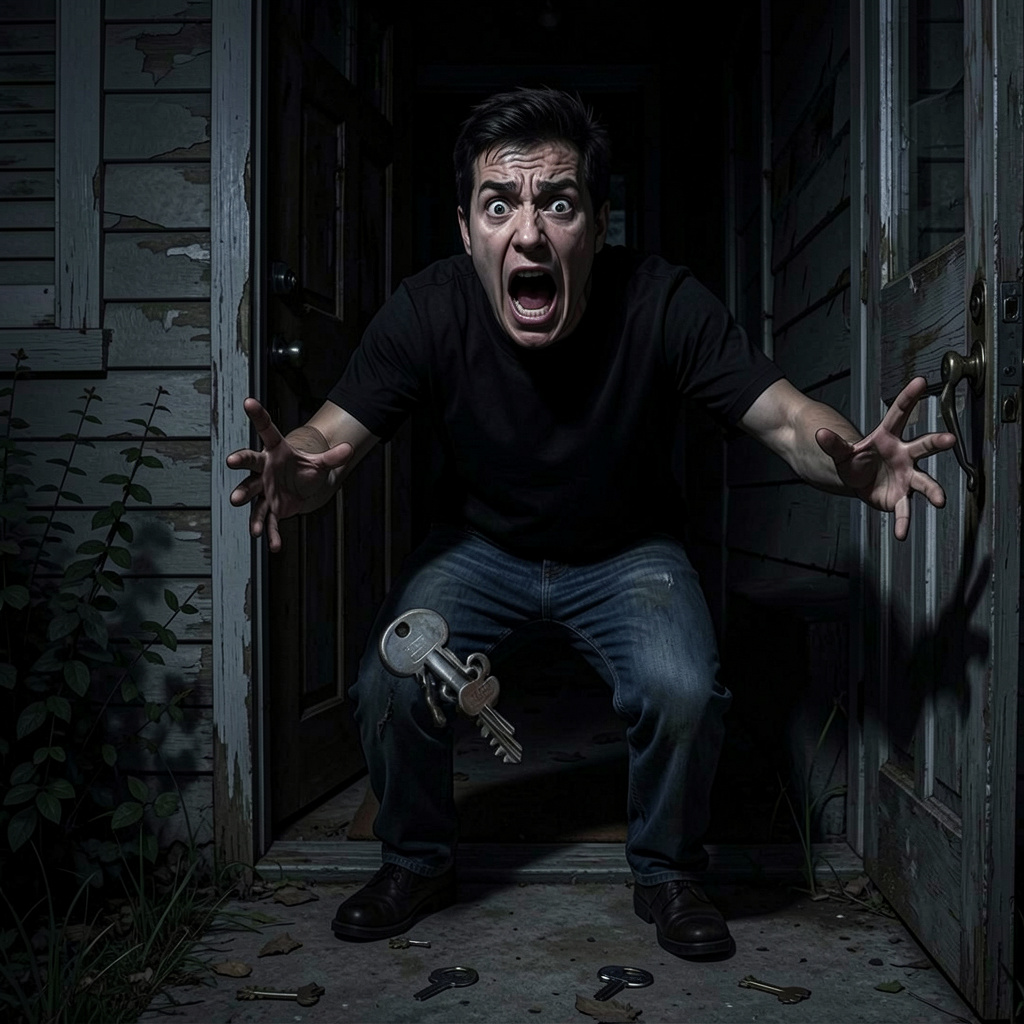
I grabbed my keys.
Mom lived twenty minutes away in the same little house she’d owned since I was twelve.
I’d been there hundreds of times.
I knew every squeaky floorboard, every stubborn cabinet, every crack in the driveway.
When I pulled up, her car was in the driveway.
The front curtains were closed.
Her porch light was off.
And the house looked completely normal.
Too normal.
I knocked.
“Mom?”
Nothing.
I knocked harder.
“Mom, it’s me.”
Silence.
I tried the door.
Locked.
Then I remembered I still had the spare key she’d given me years ago.
“Mom always said she’d kill me if I used this without calling first,” I muttered.
I unlocked the door.
“Mom?”
I stepped inside.
The house smelled faintly of cinnamon.
Her kitchen light was on.
A pot sat on the stove.
And then I saw something on the floor.
I froze.
My heart stopped.
“Mom!”
She was lying beside the kitchen table.
Face down.
One arm stretched beneath her.
Her other hand was curled around something.
I screamed.
I dropped to my knees.
“Mom! Mom, wake up!”
Her body was cold.
Not freezing.
But cold enough that panic exploded through me.
I grabbed my phone and called emergency services.
I was barely able to speak.
“My mother—she’s on the floor—she’s unconscious—I don’t know how long she’s been there.”
The operator told me to check her breathing.
I did.
There was a faint movement in her chest.
“She’s breathing!”
“Good. Stay with her.”
I heard Daniel pounding on the front door.
He rushed in seconds later.
“What happened?”
“I don’t know!”
He dropped beside Mom.
“Mom!”
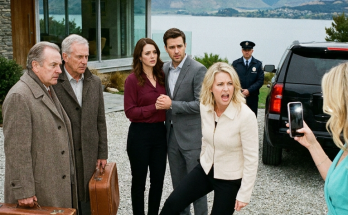
Rachel arrived shortly after.
The three of us stood helplessly around the woman who had spent our entire childhood making sure none of us ever felt helpless.
The ambulance arrived.
Paramedics rushed inside.
They checked Mom’s vitals, started oxygen, and lifted her onto a stretcher.
One of them asked, “How long has she been like this?”
“I don’t know,” I said. “She sent us a message at ten this morning.”
“What did it say?”
I showed him.
His expression changed.
“Did she say anything else?”
“No.”
The paramedics carried her outside.
We followed.
At the hospital, they wouldn’t tell us much.
We waited.
Twenty minutes.
Thirty.
An hour.
Then a doctor finally came out.
“Family of Margaret Collins?”
We stood.
“I’m her daughter.”
“I’m sorry. Your mother suffered a significant fall. She has a head injury, a fractured wrist, and some internal bleeding. We’re stabilizing her now.”
“Is she going to die?”
The question escaped me before I could stop it.
The doctor paused.
“She’s very sick. But she’s fighting.”
I nearly collapsed.
Daniel put his arm around me.
We spent the next three hours in the waiting room.
Nobody spoke much.
Rachel stared at the floor.
Daniel kept pacing.
I kept looking at my phone.
At 2:47 p.m., it buzzed.
A message.
From Mom’s phone.
My blood ran cold.
Mom: Did you find it?
I showed Daniel.
His face went pale.
“Who sent that?”
“I don’t know.”
We called Mom’s number.
No answer.
Then another message appeared.
Mom: Don’t trust anyone who asks about the blue box.
I stared at the screen.
“What blue box?”
Daniel shook his head.
“I have no idea.”
Rachel looked between us.
“Maybe someone has her phone.”
That was when we noticed something.
Mom’s phone wasn’t with her at the hospital.
I’d seen it lying on the kitchen counter when we arrived.
Which meant whoever was sending those messages was still inside Mom’s house.
We called the police.
Two officers met us there.
They searched the house.
Nothing.
No intruder.
No broken windows.
No signs of forced entry.
But they found something strange.
Mom’s kitchen drawer had been pulled out.
Inside were dozens of old photographs.
Family pictures.
Birthdays.
Christmases.
Graduations.
And beneath them was a handwritten note.
One sentence.
If something happens to me, look beneath the floorboard in my bedroom.
My stomach tightened.
“That’s Mom’s handwriting.”
The officer looked at me.
“Do you know what she was talking about?”
“No.”
We went upstairs.
Mom’s bedroom looked exactly as I’d remembered.
Her floral curtains.
Her old sewing machine.
The framed photograph of my father on the dresser.
And beneath the bed, near the wall, one floorboard looked slightly different.
Daniel knelt.
He pried it up.
Underneath was a small metal box.
Not blue.
Black.
Locked.
Rachel whispered, “Maybe this isn’t what she meant.”
Daniel turned it over.
A tiny label was stuck underneath.
FOR MY CHILDREN.
We stared at each other.
The police officer asked, “Do you have permission to open it?”
“It’s addressed to us.”
He nodded.
Daniel found a screwdriver.
Inside the box were documents.
A passport.
Several bank statements.
An old photograph.
And a letter.
My hands trembled as I unfolded it.
My children,
If you’re reading this, something has happened that I prayed would never happen.
There is something about our family that I kept from you because I thought I was protecting you.
I was wrong.
I stopped.
“What is it?” Rachel whispered.
I continued.
Your father did not die in an accident.
The room went silent.
My father had died twenty-two years earlier.
We had always been told he’d fallen asleep while driving home from work.
He’d crashed into a tree.
We’d never questioned it.
But Mom’s letter continued.
He was murdered.
Rachel covered her mouth.
Daniel backed away from the bed.
“No.”
I kept reading.
Your father discovered that someone was stealing money from the company he worked for. He confronted the person responsible. That person threatened him.
Your father told me he had evidence. He planned to go to the police the next morning. He never made it home.
My vision blurred.
I suspected who was responsible. But I was afraid. I had three children. I didn’t know how to protect you. So I stayed silent.
Daniel whispered, “Who?”
The next line answered him.
Your father’s brother, Michael.
Our uncle.
I almost dropped the letter.
Uncle Michael had been around our entire childhood.
He’d brought us Christmas presents.
He’d attended my graduation.
He’d held my daughter when she was born.
He had stood beside Mom at Dad’s funeral.
And Mom believed he’d killed our father.
But there was more.
Michael didn’t act alone.
I read the next paragraph.
There was another person. Someone much closer to us. Someone you would never suspect.
My heart pounded.
The letter ended with a warning.
The evidence is in the blue box.
We searched the house for hours.
No blue box.
Then Daniel remembered something.
“Mom’s storage room.”
We drove there.
The storage facility was nearly empty.
Mom had rented the unit for years.
We found old furniture, Christmas decorations, boxes of clothes.
Then, behind a stack of dusty suitcases, we found it.
A small blue metal box.
Locked.
Inside was a flash drive.
A photograph.
And a newspaper clipping.
The photograph showed Dad standing outside a restaurant.
Beside him was Uncle Michael.
But behind them stood another person.
Mom.
The newspaper clipping was dated two days before Dad’s death.
The headline read:
LOCAL ACCOUNTANT REPORTS SUSPECTED FINANCIAL FRAUD.
Daniel looked at me.
“Why would Mom be there?”
I plugged the flash drive into my laptop.
There were six audio recordings.
The first was Dad’s voice.
I hadn’t heard it in twenty-two years.
“Margaret, if you’re listening to this, something happened to me.”
Mom’s voice answered.
“Stop talking like that.”
“I’m serious.”
“You’ve been working too hard.”
“I found the transfers.”
“Michael?”
“Not just Michael.”
A pause.
Then Dad said:
“It’s Andrew.”
I stopped breathing.
Andrew.
Our mother’s second husband.
The man she’d married six years after Dad’s death.
The man who had been in our family for seventeen years.
The man who had been sitting beside Mom at Thanksgiving just three months earlier.
Daniel whispered, “No.”
The recording continued.
Dad explained that Michael had been stealing company funds.
But Andrew, who had worked for the same company as an outside consultant, had helped hide the transactions.
Then Dad said something that changed everything.
“Michael isn’t the one I’m afraid of.”
Mom asked, “Then who?”
“Andrew.”
The recording ended.
We played the second.
Dad was speaking faster.
“He knows I have copies.”
Mom cried.
“What are you going to do?”
“I’m going to the police tomorrow.”
Then a man’s voice appeared.
Andrew.
Even though I’d heard that voice for most of my adult life, I recognized it instantly.
“You shouldn’t do that, Robert.”
Silence.
Then Dad said:
“How long have you been standing there?”
The recording ended.
We sat frozen.
Our uncle had helped steal money.
But Andrew had threatened Dad.
And Mom had married him years later.
Why?
The final recording answered that question.
Mom’s voice was shaking.
“I know what you did.”
Andrew replied calmly.
“You knew twenty years ago.”
“I thought you were protecting us.”
“I was.”
“You killed Robert.”
“No.”
A pause.
Then Andrew said:
“Michael did.”
Mom gasped.
“You told him to.”
“I told Michael to scare him. I never told him to kill him.”
I covered my mouth.
Then Andrew continued.
“But once Robert was dead, you understood what would happen if you talked.”
Mom whispered:
“You threatened my children.”
“I reminded you what was at stake.”
The recording ended.
We didn’t sleep that night.
The next morning, we gave everything to the police.
Within hours, investigators were at Mom’s house.
Then something happened that none of us expected.
Mom woke up.
She was weak, confused, and heavily medicated.
But alive.
We rushed to her hospital room.
Her eyes opened slowly.
When she saw us, tears filled them.
“I told you not to come.”
I took her hand.
“We know.”
She looked at Daniel.
“You found the box.”
“Yes.”
She closed her eyes.
“I’m sorry.”
Rachel started crying.
“Mom, why didn’t you tell us?”
“Because I was afraid.”
“Afraid of Andrew?”
She nodded.
“He knew everything. He knew where your father hid the evidence. He knew I had copies. He watched us for years.”
“But you married him.”
“I thought if I stayed close to him, I could protect you.”
Daniel’s voice cracked.
“You let us call him Dad.”
“I know.”
“You let him come into our lives.”
“I know.”
Mom began crying.
“I thought I could control the situation.”
I squeezed her hand.
“What happened today?”
She looked at me.
“I discovered something.”
“What?”
“Andrew had found the blue box.”
My blood ran cold.
“He knew?”
“Yes. He came to the house Saturday night.”
Mom told us everything.
Andrew had confronted her.
He knew she’d finally transferred the evidence to the blue box.
He demanded it.
She refused.
He threatened to hurt us.
Mom had secretly recorded their conversation.
Then, when Andrew left, she sent the message to the family group chat.
PLEASE DON’T COME TODAY.
Not because she didn’t want us there.
Because she knew the house was being watched.
She wanted us to stay away.
But then she’d fallen.
The messages we’d received afterward weren’t from Mom.
They were from Andrew.
He had her phone.
He’d been trying to determine whether we’d found the evidence.
And when we did, he fled.
Police arrested him that evening.
Uncle Michael was arrested two days later.
For twenty-two years, we’d believed our father’s death was a tragic accident.
It wasn’t.
It had been a carefully buried crime.
And our mother had carried that secret alone.
Months later, Mom came home from the hospital.
She was still recovering.
She couldn’t stand for long.
She couldn’t cook.
She couldn’t lift heavy pots.
So the following Sunday, something unusual happened.
At 5:45 p.m., the family group chat buzzed.
I looked at my phone.
A message from Mom.
Mom: Dinner at 6. Bring Tupperware.
I laughed.
Daniel replied:
Daniel: Absolutely not. You’re not cooking.
Rachel wrote:
Rachel: Agreed. We’re cooking.
Mom responded:
Mom: I raised you better than this.
I smiled.
Then I drove to her house.
For the first time in twenty-two years, we didn’t sit around Mom’s table pretending everything was fine.
We sat there knowing everything.
The truth.
The lies.
The fear.
The sacrifices.
And somehow, that made the dinner feel more honest than any meal we’d ever shared.
Mom looked around the table.
“I have something for you.”
She reached beneath the table and pulled out three small blue boxes.
My heart stopped.
“Mom…”
She smiled.
“Don’t worry. These are different.”
She opened hers.
Inside was a photograph of Dad holding us as children.
Under it was a note.
For the family I almost lost trying to protect.
Mom looked at us.
“I spent twenty-two years thinking silence would keep you safe.”
She swallowed.
“But silence doesn’t protect people. It only gives secrets more time to grow.”
Daniel reached across the table and took her hand.
“We’re here now.”
Rachel nodded.
“So are you.”
Mom smiled through tears.
Then she looked at me.
“And did you bring Tupperware?”
I laughed.
“Three containers.”
“Good.”
She pointed at Daniel.
“How many?”
“None.”
Mom gasped.
“Then you can eat at home.”
For the first time in weeks, we all laughed.
Real laughter.
The kind that comes after surviving something you never thought you’d survive.
Later that night, I stood outside Mom’s house.
The porch light was glowing.
The windows were warm.
And for the first time, I understood something.
Sunday dinner had never really been about food.
It was about making sure everyone came home.
It was about keeping the family connected.
And that Sunday, when Mom sent the message she’d never sent before—
PLEASE DON’T COME TODAY—
she hadn’t been pushing us away.
She had been trying, in the only way she knew how, to save us.
Twenty-two years of secrets had nearly destroyed our family.
But the truth finally brought us back to the same table.
And now, every Sunday at 6 p.m., we still gather.
Mom still makes far too much food.
Daniel still arrives late.
Rachel still complains.
And I still bring Tupperware.
Except now, whenever Mom sends that familiar message—
Dinner at 6. Bring Tupperware.
—I don’t just smile.
I check that everyone has replied.
Because we learned the hard way that sometimes the ordinary messages are the ones you should never take for granted.