The Daughter Who Worked at the Soup Kitchen
My stepmother, Patricia, had always believed that my father’s house belonged to her.Not legally.Not morally.But in her mind, simply because she had married him, everything he had built somehow became hers to distribute.
Especially to her favorite child, Kevin.I learned that on a Tuesday morning when Patricia stormed into my house without knocking.
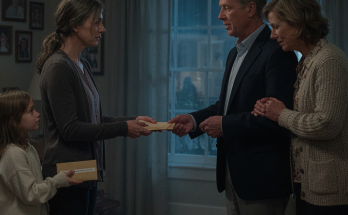
She threw a thick envelope onto my kitchen counter.
“A lawyer’s letter,” she announced. “You have thirty days to hand over your father’s house.”
I stared at her.“My father’s house?”“To Kevin.”I almost laughed.“Patricia, Dad left that house to me.”She smiled coldly.“Your father changed his mind.”“He died three years ago.”Her smile disappeared.
“Then perhaps you should have paid more attention before he died.”I opened the envelope.
Inside was a letter claiming Kevin had a rightful interest in the property.
It was filled with legal language, threats, and references to an alleged agreement I had never seen.
I looked up.“This is forged.”
Patricia leaned against the counter.“You always were difficult.”“I’m not giving Kevin my home.”She laughed.“Fine. Keep it.”I frowned.She stepped closer.“But I’ll destroy your father’s memory before I let you win.”
That sentence stayed with me.I didn’t know what she meant.Not yet.For the next few weeks, Patricia and Kevin made my life miserable.
They called relatives.
They spread rumors.
They told people Dad had been disappointed in me.
They claimed I had manipulated him while he was sick.
They even suggested I had somehow tricked him into leaving me his house.
The truth was much simpler.
My father had raised me to believe that family meant protecting people who had less than you.
That was why, after losing my job several years earlier, I started volunteering at a local soup kitchen.
I eventually found steady work again, but I never stopped volunteering.
Every Saturday, I served meals.
Every winter, I collected blankets.
And whenever someone needed a place to shower, clean clothes, or simply someone to listen, I tried to help.
Patricia hated that.
She called it “playing poor.”
I called it remembering who my father was.
Then came Grandma’s 80th birthday.
The entire family gathered at a community shelter where we’d rented a room for the celebration.
Grandma sat at the head table, surrounded by flowers and photographs.
I brought a small gift and stayed near the back.
I wanted the day to be about her.
Instead, Patricia stood up halfway through dinner.
She tapped her glass.
Everyone became quiet.
“I think it’s time someone tells the truth,” she said.
My stomach tightened.
Patricia pointed at me.
“Emily has spent years pretending she’s some generous little saint.”
I stood slowly.
“Patricia, please.”
“No.”
She raised her voice.
“She is greedy. Selfish. She took her father’s house and refuses to give it to Kevin.”
Grandma looked shocked.
“Patricia, this is my birthday.”
“I’m sorry, Mother, but you deserve to know what kind of granddaughter you have.”
Kevin stood beside her.
He looked uncomfortable, but he didn’t stop her.
Then Patricia shouted:
“She stole everything from this family!”
The room went silent.
I reached into my bag.
“I didn’t steal anything.”
I pulled out the original deed.
“This is my father’s signature. This is the recorded transfer. And this is the document he left with his attorney.”
Kevin suddenly grabbed the deed from my hands.
“Give me that!”
“Kevin!”
He held it up.
“You don’t deserve this house!”
Then the shelter door opened.
Everyone turned.
A man walked inside.
He was thin.
His clothes were clean but obviously borrowed.
His gray hair was neatly combed.
He carried no luggage.
No belongings.
He simply stood there.
And stared at Patricia.
Her face went completely white.
The man smiled.
“Hello, Patricia.”
She stepped backward.
He continued.
“Remember me?”
Nobody moved.
The man took another step.
“I’m Robert Hart.”
My heart stopped.
“Emily’s uncle.”
I stared at him.
I had heard that name my entire childhood.
Robert was my father’s younger brother.
According to Patricia, he had stolen money from the family and disappeared.
Dad had always refused to discuss him.
My hands began to shake.
Robert looked directly at Patricia.
“The man you framed for stealing when I caught you embezzling.”
A gasp moved through the room.
Patricia’s lips parted.
“That isn’t true.”
Robert laughed softly.
“You told everyone I stole twenty thousand dollars.”
He pointed toward her.
“But I knew you were taking money from your husband’s business accounts.”
Patricia shook her head.
“You were a thief!”
“No.”
Robert’s voice became firm.
“I was the person who found the bank records.”
He looked at me.
“Your father believed me.”
I couldn’t breathe.
“Then why did you disappear?”
Robert’s eyes filled with tears.
“Because Patricia made sure I had no choice.”
He explained everything.
Years earlier, while Dad was building his company, Patricia had quietly diverted money from several accounts.
Robert discovered the transactions.
He confronted her.
She panicked.
She created false records suggesting Robert had stolen the money.
Then she convinced several family members that he had fled because he was guilty.
But Robert had never been a thief.
He had become homeless after losing his job, his reputation, and eventually his apartment.
For years, he lived from shelter to shelter.
Until recently, when a volunteer at our soup kitchen recognized his name from an old family photograph.
That volunteer had been me.
I just hadn’t known who he was.
Robert looked around the room.
“Emily helped me without knowing I was her nephew.”
My eyes filled with tears.
“You’re the man I met last month?”
He nodded.
“You gave me a coat.”
I covered my mouth.
“You told me your name was Robert.”
“I did.”
“Why didn’t you tell me?”
“Because I wanted to know if you would still help me without knowing who I was.”
I started crying.
Robert smiled.
“You did.”
Patricia suddenly shouted.
“This is ridiculous! He has no proof!”
I reached into my bag again.
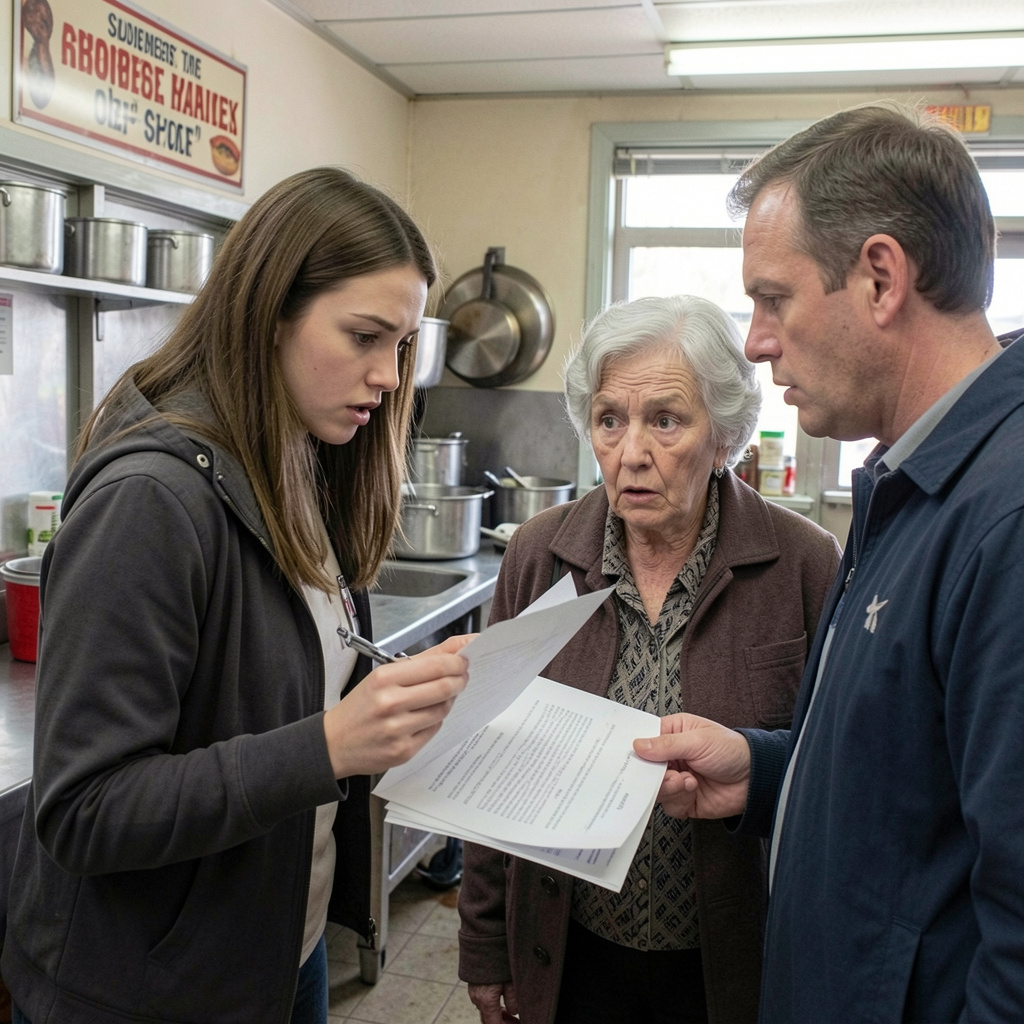
This time, I pulled out a folder.
“I do.”
I placed the documents on the table.
“Dad’s attorney gave these to me after his death.”
Inside were copies of bank records.
Old correspondence.
Affidavits.
And a notarized statement from my father.
The final document stated that Patricia had no ownership claim to the house.
Then I pulled out another page.
“Dad also created a trust.”
Kevin stared at me.
“What trust?”
I looked at him.
“A five-million-dollar trust.”
The room exploded with whispers.
I continued.
“Dad didn’t want Patricia controlling it. He established it for family charitable purposes, with part of the proceeds available to me for managing the foundation.”
Patricia’s face crumbled.
“You’re lying.”
“No.”
I handed the documents to Grandma.
She read them carefully.
Then she looked at Patricia.
“Why didn’t you tell us?”
Patricia couldn’t answer.
Robert stepped forward.
“Because she never expected me to come back.”
Kevin slowly lowered the deed.
His hands were trembling.
Suddenly, he looked at Patricia.
“You told me the house was mine.”
She stared at him.
“I said we’d get it.”
“You said Dad promised it to me.”
“I thought—”
“You lied to me?”
For the first time, Kevin looked afraid.
Patricia’s carefully constructed world was collapsing.
The lawyer’s letter was challenged.
The forged claims were investigated.
The financial records were turned over.
And once the truth came out, Patricia lost far more than her attempt to steal my father’s house.
She lost her reputation.
Her access to family money.
Her control over the accounts she had manipulated.
And, eventually, Kevin stopped speaking to her.
He returned the deed.
He couldn’t even look at me.
A few months later, I stood outside my father’s house with Robert beside me.
He stared at the front door.
“This was where your father used to bring me when we were boys,” he whispered.
I smiled.
“Then come home.”
He looked at me.
“What?”
I opened the door.
“You’re family.”
Robert started crying.
“I don’t have anything.”
I hugged him.
“You don’t need anything.”
He stepped inside.
For the first time in decades, Robert Hart had a home.
And I finally understood something my father had tried to teach me all my life.
Inheritance isn’t really about houses.
Or money.
Or deeds.
It’s about what you choose to do with what someone trusted you to carry forward.
My father left me a house.
He left me five million dollars in a charitable trust.
But more importantly, he left me a lesson.
Never let people who measure love in possessions convince you that kindness makes you weak.
Patricia thought I was just the daughter who worked at a soup kitchen.
She thought that made me easy to defeat.
She was wrong.
Because while she was busy trying to take my father’s house…
I was busy becoming the kind of person he would have been proud to call his daughter.
And sometimes, the person everyone thinks has nothing…
is the person who has everything that truly matters.