The $15,000 came from a savings account I had been feeding for six years.
I called it my someday account — the money I was setting aside for someday I’d need a new car, someday I’d want to travel, someday the world would demand something of me that I hadn’t anticipated. I was twenty-nine years old and I had been careful and disciplined in a way that nobody in my family had modeled for me. I packed my own lunches. I drove a 2011 Civic with a crack in the dashboard. I skipped the concert tickets and the weekend trips and the bottomless brunch invitations, and I watched the number in that account grow the way you watch a plant grow — imperceptibly, and then suddenly, with a kind of joy that embarrasses you in front of people who have real problems.
My sister Dara called me on a Tuesday night in March, and she was crying before I even said hello.
“They’re going to cancel the venue,” she said. “Marcus’s parents were supposed to wire the deposit and they didn’t and now the coordinator is saying if we don’t have it by Friday—”
“How much?”
A pause. “Fifteen.”
“Fifteen hundred?”
“Thousand.”
I sat with that for a moment. Outside my apartment window, a delivery truck was idling, and the low grumble of its engine filled the silence between us.
“Nora,” she said. “You’re the only person I can ask. Mom doesn’t have it. Dad doesn’t have it. Marcus’s family obviously doesn’t have it or we wouldn’t be in this mess.” Her voice broke cleanly, the way voices break when the emotion is real. “I promise I’ll pay you back by June. I promise. You know I’m good for it — I’m up for that promotion, and once I get it—”
“Okay,” I said.
“Okay?”
“I’ll transfer it tomorrow morning.”
She made a sound I had never heard from her before, something between a sob and a laugh, raw and grateful and animal. “You’re my hero,” she said. “Nora, I mean it. You are my actual hero.”
I transferred the money the next morning. I watched my balance go from $16,240 to $1,240, and I felt the specific vertigo of a person who has just done something irreversible. But I also felt, beneath the vertigo, a warmth. I had saved my sister’s wedding. I had been the person she needed me to be.
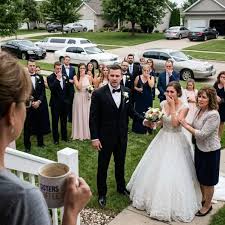
The wedding was in September, at a vineyard forty minutes outside the city. The grounds were extraordinary — rolling hills gone gold in the early autumn light, long tables draped in ivory linen, candles in glass vessels that caught the last of the evening sun. Dara looked genuinely beautiful, the kind of beautiful that doesn’t come from the dress alone but from happiness that has temporarily resolved all the tension in a person’s face.
I found my name card at Table 14.
I stood there for a moment, certain there had been a mistake. Table 14 was near the back of the tent, close enough to the exit that I could hear the catering staff moving through the side passage, the clink and clatter of the kitchen beyond. The family table — Table 1 — was at the center of the room, already populated by aunts and uncles and cousins I had grown up with, people currently laughing and refilling each other’s glasses and leaning in the easy way of people who know they are exactly where they are supposed to be.
I thought: there has been a mix-up. I thought: someone will come find me. I thought, for perhaps twenty minutes, a series of thoughts that amounted to: this cannot mean what it appears to mean.
Nobody came. I sat at Table 14 with Marcus’s college roommate, a woman from Dara’s yoga class whose name I never caught, and two people who appeared to be plus-ones with no fixed social identity at the event. They were perfectly pleasant. We talked about the vineyard and the weather and the food, which was excellent. I drank more wine than I meant to.
During dinner, Dara stood to give her speech. She had always been a good speaker — confident, warm, with a timing that made people feel she was talking directly to each of them. She thanked Marcus. She thanked his parents, Harold and Constance, who beamed from Table 1. She thanked her maid of honor, her bridesmaids by name, her college roommate, her mother, her late grandmother whose ring she was wearing. She thanked the coordinator, whose name was Bethany. She thanked the florist. She thanked the DJ. She thanked the caterer, and the vineyard staff, and said something funny about the signature cocktail that made everyone laugh.
She looked out at the room with the full, luminous expression of a person who has received everything she wanted.
She sat down.
I finished my wine. I listened to the clink of silverware against the good glasses. Somewhere behind me, through the tent wall, I could hear the catering staff talking to each other in low voices, completely unbothered by the beautiful occasion they were servicing.
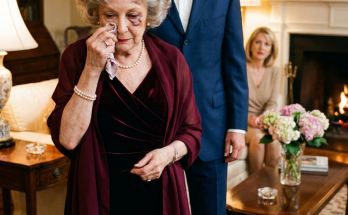
I drove home alone. I did not cry until I was on the highway, and then I cried in the way you cry when you’re also angry, which is ugly and strange and not particularly cathartic.
I gave her a year.
This was a choice I made consciously, and I want to be honest about the reasoning: I told myself I was being generous, giving her time to settle into married life, to land the promotion she’d mentioned, to find the right moment. But I was also afraid. Afraid of what it would mean if I asked and she refused. Afraid of the conversation that would confirm what a small, suspicious part of me had been quietly thinking since the seating arrangement.
In October of the following year, I texted her.
Hey. I know things have been busy. I wanted to check in about the money — no rush, just wanted to put it on your radar. Whenever works for you.
Three days passed. Then: That was a gift, not a loan. Don’t embarrass yourself.
I read the message several times. I noticed that she hadn’t used my name. I noticed the specific coldness of don’t embarrass yourself — not I think you misunderstood or I’m sorry, I don’t have it right now but a sentence designed to make the problem mine, to reframe my memory as delusion and my request as a social failure.
I went back through our messages. Found the one from March, eighteen months earlier. I promise I’ll pay you back by June. Clear as anything. I screenshotted it and sent it to her without comment.
She blocked me.
I sat with the blocked status for a long time. It has a particular texture, being blocked by a sibling — different from being blocked by anyone else, because the relationship is supposed to be permanent, load-bearing, the kind of thing that outlasts circumstances. You don’t block family. The fact that she had done it so quickly, so cleanly, suggested she had been prepared to do it. Suggested, maybe, that she had been waiting.
I told my mother. My mother said, “You know how Dara is,” and then changed the subject to a neighbor’s renovation.
I told a friend. She said, “That’s insane. You should take her to small claims court.”
I looked up small claims court. The limit in my state was $10,000, which meant I’d need a different filing entirely. I talked to a lawyer briefly, on the phone, who told me that text message promises were enforceable but that the cost and stress of pursuing it might not be worth it. “These cases get ugly,” she said. “Especially family.”
I knew that. I had already experienced the ugly. I was living inside it.
Two months after Dara blocked me, on a Wednesday evening in December, my phone rang with a number I didn’t recognize.
I almost didn’t answer. I was making dinner, tired, not in the mood for whatever it was going to be. But something made me pick up — some small instinct I couldn’t have explained.
“Nora?” The voice was male, careful. “This is Marcus. Dara’s husband.”
I turned off the stove.
“Okay,” I said.
“I know this is strange. I know you probably don’t want to hear from anyone connected to—” He stopped. I could hear him composing himself. “I need to tell you something. I’ve been trying to figure out whether to call for weeks. But I think you deserve to know. I think it’s the right thing.”
“Tell me.”
There was a long pause, and in it I heard the specific sound of a person choosing, definitively, to cross a line they cannot uncross.
“The money you gave us,” he said. “Dara told me it was a gift from the beginning. She told me you’d offered it. That you insisted. I didn’t know about the texts until three weeks ago. I went looking for something on her old phone — the passcode is our anniversary, I’ve always known it — and I found the whole conversation. Everything.” His voice tightened. “I found a lot of things.”
I sat down at my kitchen table.
“What kind of things?”
He was quiet for a moment. “She’s been — there’s been a lot of things she hasn’t told me. Financial things. There’s a credit card I didn’t know about. There are payments I can’t account for. I started looking because I found something that didn’t make sense in our account, and then I kept looking because I couldn’t stop, and—” He exhaled sharply. “The point is, I found the texts. And I saw what she said to you. That it was a gift. I saw her block you.”
“Yes,” I said.
“She told me you’d become difficult. That you were making up a story about a loan to try to get money from us. She said you’d always been like that — jealous of her, financially irresponsible, looking for someone to blame.” A pause. “I believed her. I want you to know that I believed her, and I’m sorry. I should have — I don’t know what I should have done differently. But I believed her.”
I thought about the wedding. The caterer, the DJ, the florist.
“Why are you calling me now?”
“Because I’m leaving her,” he said. “Because in the last three weeks I’ve found out things about the woman I married that I — I need some time to figure out what’s real. And one of the things I know is real is that her sister emptied her savings account for our wedding, and has been frozen out and called a liar for asking to be paid back. And I can’t live with knowing that and doing nothing.”
I did not say anything for a long time.
“Nora,” he said. “I want to pay you back. The full amount. I’ve been moving money into a separate account. It’s not completely there yet, but—”
“Marcus.”
“I can have ten thousand to you by the end of the month, and the rest—”
“Marcus.” I stopped him. “Why are you doing this? If you’re leaving her, you’re going to need that money. You’re going to have legal fees. You’re going to be starting over.”
“Because it’s the right thing,” he said, with a simplicity that made the words land without any of the self-congratulation they might have carried from someone else. Not I’m a good person. Just: it’s the right thing.
I pressed my palm flat against the kitchen table. The wood was cool. I focused on that.
“Tell me about the other things,” I said. “The credit card. The payments. You don’t have to. But if you want to tell someone—”
So he told me.
It took a long time, the telling.
There was the credit card with $23,000 in debt that Dara had opened in both their names without telling him, a card he’d only discovered because a collections notice came to the house. There was money transferred, in small increments that would not trigger alerts, from their joint account to one she held alone — almost $8,000 over two years. There were charges from a hotel forty minutes away, not a place either of them had reason to be, on dates when she’d told him she was visiting a friend from work.
“I don’t know how long,” he said. “I don’t know if it’s one person or — I don’t know anything. I don’t know who I was married to.”
“You were married to Dara,” I said. “I’ve known her my whole life. She’s always been exactly this.”
“Did you know? About the — the other things?”
I thought about how to answer that honestly. “I knew something was always slightly off-center with her,” I said. “I knew she was capable of rewriting things. When we were kids, she broke our mother’s favorite vase and told everyone I did it. I knew it was her because I was outside. But she cried so convincingly that even I started to doubt myself.” I paused. “I didn’t know she was capable of this scale.”
“I keep asking myself why,” he said. “I keep trying to find the thing that explains it.”
“I don’t think there is one thing. I think some people just — some people decide that they are the protagonist and everyone else is a supporting character, and supporting characters exist to serve the story. The money, the credit card, whatever else — it all makes sense if you start from that premise.”
He was quiet for a while. Then: “Is that how she treated you? Like a supporting character?”
I thought about the seating arrangement. Table 14. The caterer, the DJ, the florist. The text — don’t embarrass yourself — sent without even a courtesy pause.
“Yes,” I said. “But the thing is, for a long time, I let her. I thought it was just — how families work, sometimes. That some people take up more space. That being the generous one, the reliable one, the one who doesn’t make a fuss, was a kind of dignity.” I heard myself saying this and realized I was only now putting words to something I had felt wordlessly for years. “It took a fifteen-thousand-dollar lesson.”
“I’m going to get you that money,” Marcus said.
“You don’t have to.”
“I know I don’t have to.”
“Let’s talk about it later,” I said. “When things are less—”
“When things are less of a disaster.”
“Right.”
He almost laughed. It was a terrible, exhausted sound, and I understood it completely.
We talked for almost two hours that night.
By the end, we had moved past Dara entirely, or as past Dara as two people who have both been leveled by her can get, and we were talking about other things — his job, which he liked; my job, which I was ambivalent about; the neighborhood where he and Dara had bought their apartment, which he would probably have to leave. He had a dry, understated sense of humor that surprised me. He was thoughtful in the way that people are thoughtful when they’ve been doing a lot of reading and a lot of sitting alone.
“I always wanted to know you better,” he said at one point. “At the wedding, I was so busy — and afterward, Dara always had reasons why we couldn’t get together, why you were difficult, why it was better to keep things separate.”
“Now I know why,” I said.
“Yeah.” A beat. “Now we know a lot of things.”
Over the following weeks, we texted occasionally. He filed for divorce in January. He kept his word about the money — sent $10,000 in two transfers before the month was out, and the remainder in March. I transferred it back into my savings account and sat for a moment with the balance, which was still not what it had been, which would take more years to rebuild, but which felt different now than it had in the long months when I was trying to make peace with having lost it entirely.
Dara called me once, in February. I saw her name on the screen and felt something — not the old pull toward reconciliation, not the love-and-resentment compound that had always characterized my feelings about her, but something simpler and more like weather. An acknowledgment that the call was happening. A recognition that I did not have to answer it.
I let it go to voicemail.
She left no message.
I have thought a lot, in the time since, about the nature of what happened. Not to make sense of it in a way that resolves it — some things do not resolve, they only settle — but to understand what I was participating in, and for how long, and why.
Here is what I think: I wanted to be the hero of the story. Not in a grandiose way, not with fanfare, but I wanted the role of the dependable sister, the one who came through, the one whose goodness was load-bearing in the family structure. And Dara knew this about me, consciously or not, the way certain people have a genius for identifying what someone wants and offering it as bait.
She called me her hero. She cried and meant the gratitude, I think — or some portion of her did. People are not always lying when they thank you for something they intend to take. Sometimes the gratitude and the taking can exist simultaneously, in a person who has very little wall between what they feel in the moment and what they intend to honor over time.
The lesson I take is not do not be generous. It is not do not trust people or always get it in writing, though getting it in writing is sensible.
The lesson, as far as I can articulate it, is this: notice when your generosity is being recruited. Notice when someone comes to you already knowing you’ll say yes, already counting on the specific texture of your love for them, already planning the story they’ll tell themselves afterward. Generosity given in that space is not freely given — it is extracted, gently, by someone who has understood you as a mechanism.
I still believe in giving. I still believe in the pleasure and the rightness of it. But I want to give from surplus, not from fear of being the one who didn’t show up. I want to give with my eyes open, knowing that the gift may not return to me, and choosing to give anyway — not because I’ve been leveraged into it by tears and the word hero, but because I have genuinely decided, in full daylight, that this is what I want to do.
Last spring, Marcus and I had lunch.
It was slightly awkward at first, the way things are when the shared context is strange and painful. We talked around Dara for the first twenty minutes, circling carefully, and then he said something wry about having to learn to cook for one, and I said something about my Civic, and somehow the conversation found its footing.
He’s doing alright. Better than alright, I think — there’s a version of him emerging from the wreckage of the marriage that looks like someone who has been given, at great cost, the opportunity to become himself more completely.
I told him that once, on the walk back from the restaurant, on a street that was bright with the specific lemon light of April.
“That’s a generous way to look at it,” he said.
“I’m working on doing that,” I said. “Generosity. Just — more carefully.”
He nodded. We reached the corner where we’d go separate directions, and for a moment we stood there in the light, two people who owed each other nothing and had, through strange and painful alchemy, ended up in each other’s company anyway.
“She never mentioned you once,” I said. “In the speech. Not once.”
“I know,” he said. “I remember thinking it was odd at the time. And then she had an explanation for it and I let the oddness go.” He looked at me. “I’m sorry I let the oddness go.”
“You couldn’t have known.”
“Maybe not.” A pause. “But I should have wondered. I should have let myself wonder.”
I thought about that on the drive home. About the things we decide not to wonder about, because the wondering would cost us something — the beautiful wedding, the uncomplicated love, the story of ourselves as someone who trusts, who hopes, who does not look for the bad in people.
Wondering costs something.
But so, I have learned, does not.
The savings account balance is back to $14,400. I’m not rushing. I’m packing my lunch again, driving the Civic, letting the number grow in its own time. My someday account, for all the unpredictable demands of a life that continues to surprise me.
I went to Table 14 for a reason I may never fully understand. But I know this: I drove home from that vineyard, and I cried on the highway, and I kept going. I kept going after the text, after the block, after the long silence from people who should have been louder. And when the phone rang on that December evening and an unlikely person told me the truth, I was still there to answer it.
That’s the only thing I know how to call it.
Still there. Still going. Eyes open now.