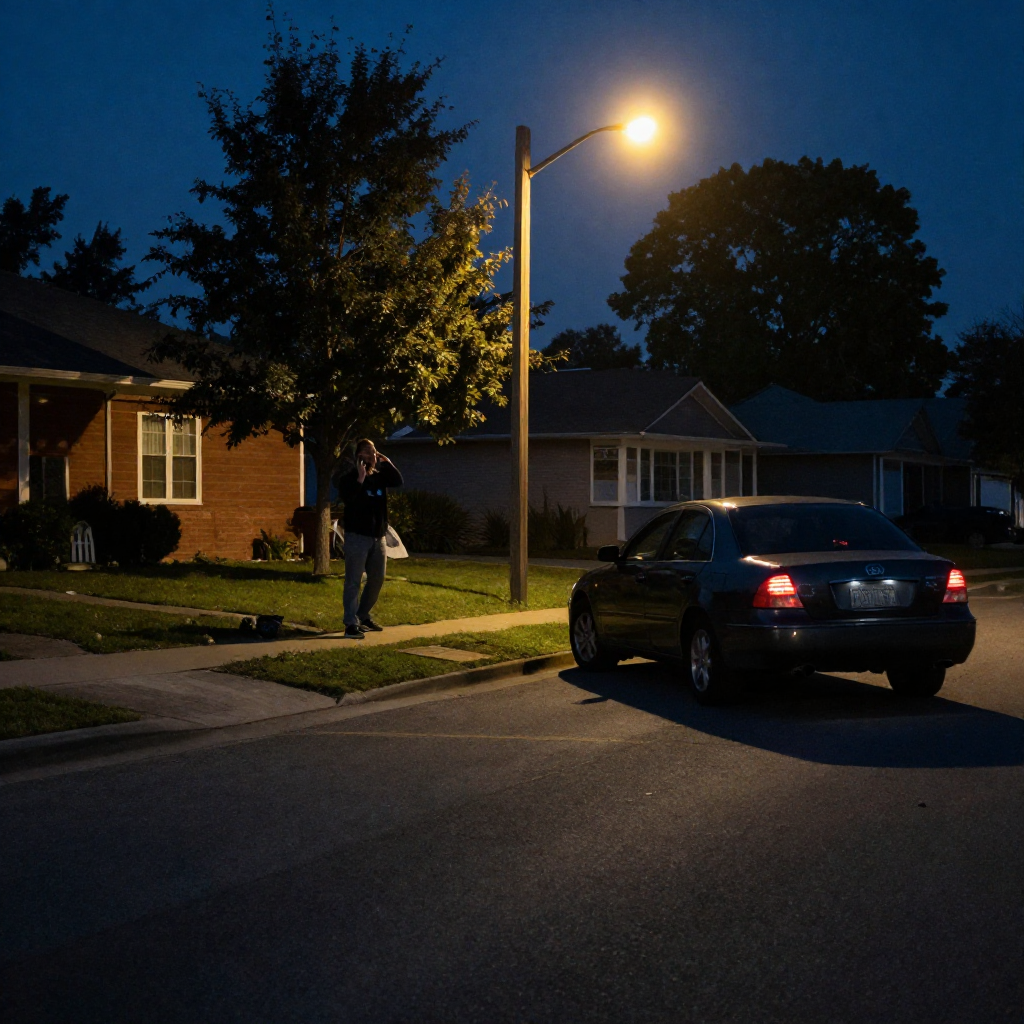
My husband’s phone rang at exactly 3:00 a.m. Not 2:58. Not 3:07. Exactly 3:00.
The sound cut through the darkness like a blade.
Beside me, Daniel jerked awake so fast it looked rehearsed. He grabbed the phone before the second ring and slid out of bed carefully, trying not to disturb me. I kept my breathing slow. “Hello?” he whispered. Silence followed.
Then he said quietly, “I’m coming.”
He ended the call, dressed in the dark, and left the room.
A minute later, I heard the front door close.
I checked the clock.
3:04 a.m.
At first, I assumed it was work.
Daniel was a trauma surgeon. Emergencies happened. But the hospital never called his personal phone in the middle of the night. They used the pager system.
And he never whispered.
When he came home four hours later, I pretended to be asleep.
He showered immediately.
That scared me more than the phone call.
The next week, it happened again.
3:00 a.m.
Ring.
Whisper.
“I’m coming.”
Gone.
This time I watched from the upstairs window as he backed out of the driveway. He looked tense, glancing at the house before driving away.
When he returned, his expression seemed hollow.
Like someone returning from a funeral.
For two months, the pattern repeated.
Always once a week.
Always at 3:00 a.m.
Always four hours.
I started imagining things.
A secret family.
A mistress.
Debt.
Drugs.
Something criminal.
Every terrible possibility took turns poisoning my thoughts.
Daniel noticed the change in me.
“You okay?” he asked one morning over coffee.
I forced a smile. “Just tired.”
“You’ve seemed distant lately.”
I nearly laughed at the irony.
Instead, I asked carefully, “Are you?”
He froze for half a second.
Then he smiled.
“I’m fine.”
But his eyes looked exhausted.
That Friday, when the phone rang again, I was ready.
I waited thirty seconds after he left, then grabbed my coat and keys.
Rain hammered the windshield as I followed his car through sleeping streets.
Twenty minutes later, he turned onto Briar Lane.
The neighborhood was old and quiet, lined with dying oak trees and crumbling stone walls.
Daniel pulled into the driveway of a narrow white house with black shutters.
No lights outside.
No visible movement.
He got out and went inside using a key.
A lamp flickered on in the living room.
I parked half a block away and waited.
For an hour, the light remained on.
Then suddenly it went dark.
Nothing moved for another forty minutes.
Finally, the front door opened.
Daniel stepped outside.
Even from a distance, I could see something strange in the way he walked.
Not guilt.
Grief.
He stood on the porch for several seconds staring at the door before leaving.
I wrote down the address.
The next morning, while Daniel showered downstairs, I searched property records online.
Owner: Claire Thompson.
I didn’t recognize the name.
I searched again.
And found her obituary.
Claire Thompson.
Died eight years earlier.
Age thirty-four.
Survived by her husband and infant daughter.
I stared at the screen until the words blurred.
The house should have been empty.
That night, I confronted him.
We were sitting at the kitchen table. He looked tired, rubbing his temples while reading patient notes.
“I followed you,” I said.
The room went still.
Daniel slowly lowered the papers.
“You what?”
“I know about the house on Briar Lane.”
The color drained from his face.
For a long moment, he said nothing.
Then quietly:
“You shouldn’t have done that.”
I laughed bitterly.
“Seriously? That’s your response?”
“I was trying to protect you.”
“From what?”
He looked toward the dark kitchen window.
“Some things are better left alone.”
“Are you sleeping with someone?”
His expression twisted in genuine shock.
“What? No.”
“Then tell me the truth.”
He stood abruptly.
“I can’t.”
“That’s not good enough anymore.”
His voice cracked when he answered.
“If I tell you, you’ll never sleep peacefully again.”
Then he walked out of the room.
I didn’t sleep at all.
The next morning, Daniel left early for work.
And I drove back to Briar Lane.
The house looked abandoned in daylight.
Paint peeling.
Dead flowers in cracked pots.
Curtains yellowed with age.
But the front lawn had been freshly cut.
I approached slowly.
The air felt colder near the porch.
I knocked.
No answer.
I tried the knob.
Unlocked.
Every instinct told me to leave.
I went inside anyway.
Dust coated nearly everything.
The furniture looked frozen in time.
Family photos still lined the shelves.
A smiling blonde woman holding a baby.
Claire.
The little girl couldn’t have been older than one.
A sour smell lingered beneath the scent of dust and mildew.
I walked deeper into the house.
The kitchen clock had stopped at 3:00.
My stomach tightened.
Then I heard it.
A faint sound upstairs.
A creak.
I should have left.
Instead, I climbed the stairs.
Each step groaned beneath my feet.
At the end of the hallway, one door stood slightly open.
A child’s bedroom.
Moon-and-star wallpaper peeled from the walls.
Toys scattered across the floor.
And sitting in a rocking chair near the window was a little girl.
Maybe nine years old.
Long dark hair.
White nightgown.
She looked up at me calmly.
“You’re Daniel’s wife,” she said.
I froze.
My throat closed.
“How do you know my husband?”
She tilted her head.
“He visits every week.”
The room suddenly felt ice-cold.
“Where are your parents?”
“My mommy’s downstairs.”
Her voice remained strangely flat.
“And your daddy?”
“He left.”
I swallowed hard.
“What’s your name?”
“Emily.”
The obituary.
Claire’s infant daughter.
Impossible.
The girl slowly pointed toward the hallway.
“She doesn’t like strangers.”
A floorboard creaked behind me.
I turned.
A woman stood in the doorway.
Pale skin.
Sunken eyes.
Blonde hair hanging damp around her shoulders.
She wore an old gray sweater stained dark at the sleeves.
Claire.
I knew it instantly.
Every photo downstairs confirmed it.
For one terrible second, nobody moved.
Then Claire spoke.
“You weren’t supposed to come here.”
Her voice sounded wet.
Like water moving through a drain.
I stumbled backward.
“This isn’t real.”
Claire stared at me with exhausted sadness.
“That’s what Daniel said the first time.”
My knees nearly gave out.
“You’re dead.”
“Yes.”
The word landed softly.
Matter-of-fact.
Not frightening.
Almost worse because of it.
I backed into the hallway.
“What do you want from him?”
Claire looked toward Emily.
“Help.”
I ran.
I don’t remember reaching my car.
I only remember shaking so violently I could barely unlock the door.
By the time I got home, Daniel was waiting in the driveway.
His face told me everything.
He knew.
“You went inside,” he whispered.
I burst into tears.
“She’s there.”
Daniel closed his eyes.
For several moments neither of us spoke.
Then he said quietly, “Come inside.”
We sat in silence at the kitchen table.
Finally, he began.
“Eight years ago, Claire Thompson came into the ER after a car accident.”
His hands trembled.
“She was pregnant. Severe internal bleeding. We lost both her and the baby during surgery.”
I stared at him.
“The obituary said she had a daughter.”
“She did. Emily was one year old.”
“What happened to her?”
Daniel looked sick.
“That’s the problem.”
He explained that Claire’s husband, Marcus, disappeared after the funeral.
Neighbors assumed he took Emily and moved away.
But six months later, police discovered Marcus had emptied his bank accounts the same day Claire died.
No records.
No sightings.
Nothing.
The case went cold.
“Three months ago,” Daniel said, “I got the first call.”
“At 3 a.m.?”
He nodded.
“I answered and heard a woman crying.”
He swallowed hard.
“She said, ‘You let me die.’”
A chill crawled over my skin.
“I thought it was a prank. But then she gave me the address.”
“The house?”
“Yes.”
“And you went there?”
“I don’t know why. I just… did.”
He rubbed his face.
“When I entered the house, Emily was sitting alone upstairs.”
“She looked nine years old?”
He nodded slowly.
“She shouldn’t exist like that. Time moves differently there.”
I felt nauseated.
“Where’s Marcus?”
Daniel stared at the table.
“In the basement.”
My blood turned cold.
“What?”
“Claire showed me the first night.”
He looked up at me with haunted eyes.
“Marcus killed Emily after Claire died.”
I covered my mouth.
“He blamed the baby for ruining their lives. He snapped after the funeral.”
Daniel’s voice broke.
“He drowned her in the bathtub.”
Tears filled my eyes.
“Oh my God.”
“Claire came home and found him trying to bury her body in the basement crawlspace.”
The room felt suffocating.
“She attacked him.”
“And?”
“He killed her too.”
I remembered the stains on Claire’s sleeves.
Water.
Not blood.
“He buried them both beneath the house and disappeared.”
I whispered, “How do you know this?”
“Claire showed me.”
I should have thought he was insane.
Instead, I believed him completely.
“Why call you?” I asked.
Daniel stared blankly ahead.
“Because I was the last person who tried to save her.”
The silence stretched between us.
Then I asked the question I feared most.
“What happens at 3 a.m.?”
Daniel’s face darkened.
“That’s when they died.”
The next Friday, the phone rang again.
3:00 a.m.
This time, Daniel answered on speaker.
Static crackled.
Then a woman whispered:
“Please.”
Not angry.
Begging.
Daniel looked at me.
“We have to end it.”
An hour later, we stood inside the Briar Lane house together.
The air felt heavy.
The walls creaked softly like breathing.
Claire waited in the living room.
Emily stood beside her clutching a stuffed rabbit.
Neither looked frightening anymore.
Only trapped.
Daniel spoke first.
“We’re going to help you.”
Claire nodded once.
Then she pointed toward the basement door.
The smell hit us before we reached the bottom steps.
Rot.
Earth.
Something ancient.
Near the far wall, the concrete looked newer.
Daniel and I dug for nearly an hour.
Neither of us spoke.
Finally, the shovel struck wood.
I nearly screamed.
Inside the shallow grave were two skeletons.
One adult.
One child.
Emily’s tiny bones still wrapped in fragments of pink fabric.
Police arrived before sunrise.
Daniel told them an anonymous tip led us there.
The investigation reopened immediately.
Two days later, authorities found Marcus Thompson living under a false identity in Nevada.
When they arrested him, he confessed within hours.
Everything Claire had shown Daniel was true.
After the funeral, the calls stopped.
No more ringing at 3 a.m.
No more whispers.
No more midnight drives.
For the first time in months, Daniel slept peacefully.
But sometimes, very late at night, I still think about the house on Briar Lane.
About grief lingering so long it became something else.
Something powerful enough to survive death.
A mother waiting eight years for someone to listen.
And sometimes, when the house is completely silent, I wake suddenly at exactly 3:00 a.m.
Not because the phone rings.
But because somewhere deep in my memory, I can still hear a little girl’s voice.
Soft.
Gentle.
Finally at peace.
“Thank you for finding us.”