THE JUDGE’S FORGED SIGNATURE: MY FATHER-IN-LAW LAUGHED WHEN I ENTERED COURT ALONE—UNTIL I EXPOSED THE DOCUMENT THAT COULD DESTROY HIS ENTIRE FAMILY
Chapter 1: The Woman They Thought Was Powerless
My father-in-law laughed when I entered the courtroom alone. It wasn’t a quiet laugh. It was the kind of laugh designed to make sure everyone nearby understood exactly how little he thought of me.
“Couldn’t afford a lawyer?” Richard Whitmore whispered to my husband, Daniel. “How embarrassing. Seven years of marriage, and she still can’t manage to stand on her own two feet.”
Daniel chuckled. I heard him. I also heard the woman sitting beside him, his attorney, quietly telling him not to worry.
I didn’t respond. I simply smiled, adjusted the handle of my battered brown briefcase, and walked toward the defendant’s table.
My name is Catherine Mitchell. I was thirty-six years old, recently divorced, and about to face the wealthiest family in the county.For seven years, the Whitmores had treated me like an unimportant addition to their family.
They believed I was lucky Daniel had married me.
They believed my clothes were too inexpensive, my family background too ordinary, and my education too useless to deserve their respect.
What they never bothered to learn was that before I married Daniel, I had spent years practicing military law.
I had represented service members in disciplinary proceedings, reviewed complicated financial evidence, investigated fraudulent documentation, and learned how to recognize a lie hidden beneath perfectly polished legal language.
I had left that career after my mother’s cancer diagnosis. I wanted to spend time with her. I wanted a family.
I wanted a peaceful life. Instead, I married into the Whitmore family.
And now, after seven years, Daniel wanted to take everything I had.
My home. My savings. My mother’s inheritance. Even the small investment account she had established for me before she died. Richard sat behind Daniel wearing an expensive navy suit and a gold watch that probably cost more than my first car.
He looked completely relaxed. He had spent months telling everyone that I would leave the marriage with nothing.
He had hired one of the most expensive law firms in the state.
He had brought witnesses, accountants, financial statements, and documents that supposedly proved I had no independent claim to the assets I was fighting for.
He was so confident that he had even invited several business associates to watch.
To Richard, this wasn’t a legal proceeding.
It was a public execution.
And I was supposed to be the person being executed.
What he didn’t know was that I hadn’t come to beg.
I had come to present evidence.
And the most important piece of evidence wasn’t about money.
It was about a forged signature.
A signature that appeared to belong to the judge.
A signature that had been used to transfer ownership of my mother’s property.
And a signature that Richard Whitmore had personally authorized.
But I am getting ahead of myself.
To understand why I stood alone in that courtroom, you need to understand what happened during my marriage.
Because the Whitmores didn’t become powerful by accident.
And they certainly didn’t become wealthy by respecting other people’s rights.
Chapter 2: Seven Years of Being Invisible
I met Daniel Whitmore at a charity event in Boston.
I was twenty-nine.
He was thirty-two.
He was handsome, confident, and charming in a way that made people immediately want to impress him.
His family owned Whitmore Holdings, a property development and investment company that controlled commercial buildings, residential properties, and several private investment partnerships.
His father, Richard, was the chairman.
His mother, Eleanor, was the woman who organized charity galas and judged everyone else’s appearance.
Daniel was their only son.
From the beginning, he made me feel special.
He listened when I spoke.
He remembered small details.
He brought me coffee when I worked late and once drove forty minutes through a snowstorm because I mentioned that I had forgotten my favorite book at my apartment.
I thought I had found someone different from his family.
I was wrong.
The first warning came during our engagement dinner.
We were sitting at a private restaurant when Richard asked about my career.
“I understand you worked in the military legal system,” he said.
“Yes,” I replied. “I practiced military law for several years.”
He smiled.
“Interesting. And what exactly does that mean?”
“I handled legal matters involving military personnel, disciplinary cases, and administrative proceedings.”
“So, paperwork.”
I smiled politely.
“Sometimes.”
Richard looked at Daniel.
“Well, that’s convenient. At least she’ll understand all the documents when she signs them.”
Everyone laughed.
I didn’t.
But Daniel squeezed my hand beneath the table.
“Don’t take Dad seriously,” he whispered.
I believed him.
We married six months later.
After the wedding, Daniel suggested I leave my legal career.
“We’ll have enough money,” he said. “You won’t need to work.”
I hesitated.
My career had taken years to build.
But my mother had recently been diagnosed with a serious illness, and I wanted to spend more time with her.
So I resigned.
I told myself it was temporary.
It wasn’t.
For the first year, our marriage was pleasant.
Then the small comments began.
Eleanor criticized my cooking.
Richard questioned my spending.
Daniel started asking why I needed to visit my mother so frequently.
Whenever I disagreed with them, Daniel reminded me that his family had given me a comfortable life.
“You’re not struggling anymore, Catherine,” he would say. “You should appreciate what you have.”
I never asked them for money.
I had my own savings.
My mother had left me an inheritance.
But they behaved as though every comfortable thing I owned belonged to them.
When my mother died, she left me a modest but valuable property outside Boston, along with approximately $480,000 in investments and savings.
The property had belonged to her parents.
It was a beautiful old house with a detached guest cottage and several acres of land.
My mother had spent her final years restoring it.
She called it her sanctuary.
Before she died, she held my hand and made me promise something.
“Never let anyone make you feel that you have to surrender what belongs to you just to keep the peace.”
I promised.
At the time, I didn’t understand how important those words would become.
The inheritance was legally mine.
My mother had established a separate trust, and the documents clearly stated that the property and financial assets were intended for me alone.
Daniel knew about the inheritance.
At first, he seemed happy for me.
Then Richard learned about it.
And everything changed.
Chapter 3: The First Request
Three months after my mother’s funeral, Richard invited us to dinner.
He was unusually friendly.
He asked about the property, its condition, and whether I intended to keep it.
“I want to preserve it,” I said.
Richard nodded.
“Of course. But property is an investment. You need someone experienced to manage it.”
“I can manage it.”
He smiled.
“You’re a housewife, Catherine. No offense, but property development is complicated.”
Daniel laughed softly.
“Dad knows what he’s talking about.”
Richard continued.
“Whitmore Holdings has been expanding. Your property is near a developing commercial corridor. We could turn it into something valuable.”
“I don’t want to sell it.”
“Nobody said anything about selling.”
He pushed a folder toward me.
Inside was a proposed management agreement.
The document gave Whitmore Holdings authority to manage the property, negotiate leases, obtain financing, and make certain improvements.
I read it carefully.
One clause caught my attention.
The company could use the property as collateral for certain business obligations.
I looked up.
“This gives your company the right to borrow against my inheritance.”
Richard’s smile disappeared briefly.
“Only if necessary.”
“Then I’m not signing it.”
Daniel put down his fork.
“Catherine, don’t make this difficult.”
“I’m not making anything difficult. I simply don’t agree.”
Richard leaned back.
“Your mother left you a valuable property, but that doesn’t mean you understand what to do with it.”
I closed the folder.
“I know exactly what I want to do with it.”
Dinner ended badly.
On the drive home, Daniel didn’t speak.
When we reached the house, he finally turned toward me.
“Why did you embarrass my father?”
“I didn’t.”
“You made him look like he was trying to steal your inheritance.”
“I read the agreement.”
Daniel shook his head.
“You’re becoming paranoid.”
That night, I found the folder on my bedside table.
Someone had placed a sticky note on it.
Think about our future before you make another selfish decision.
I recognized Daniel’s handwriting.
I put the folder in my locked desk drawer.
I thought that would be the end of it.
It wasn’t.
Over the next several months, Daniel brought up the property repeatedly.
Sometimes he suggested selling it.
Sometimes he suggested transferring it into a family investment company.
Sometimes he said his father could help me make more money from it.
I refused every time.
Then one afternoon, I received a letter from a bank.
It was addressed to me.
The letter thanked me for my recent inquiry regarding a commercial loan secured against the inherited property.
I had never made such an inquiry.
I called the bank immediately.
The representative explained that someone had submitted preliminary documentation using my personal information.
I asked for copies.
She said she couldn’t release everything without additional verification, but she confirmed that the application had been submitted through a business account associated with Whitmore Holdings.
I felt cold.
That evening, I confronted Daniel.
“Did your company apply for a loan using my property?”
He barely looked up from his phone.
“It was just preliminary paperwork.”
“Without my permission?”
“My father was exploring possibilities.”
“I never authorized it.”
Daniel sighed.
“God, Catherine. It’s a piece of paperwork. Nobody stole anything.”
I stared at him.
“Someone used my personal information.”
“You’re overreacting.”
I walked away.
For the first time in seven years, I began to wonder whether my husband was simply selfish or whether he was involved in something much worse.
I started keeping copies of everything.
Bank letters.
Emails.
Property records.
Financial statements.
I didn’t tell Daniel.
And I didn’t tell Richard.
I had learned something during my years practicing law.
People who believe nobody is watching often become careless.
The Whitmores were about to become very careless.
Chapter 4: The Divorce That Wasn’t About Divorce
The marriage ended on a Tuesday.
Daniel came home at 8:40 p.m.
He didn’t kiss me.
He didn’t ask about my day.
He placed a thick envelope on the kitchen counter.
“I want a divorce.”
I looked at him.
“Why?”
He loosened his tie.
“We’re not compatible anymore.”
“Is there someone else?”
He hesitated.
Only for a second.
But I saw it.
“That’s irrelevant.”
I opened the envelope.
Inside were preliminary divorce papers and a financial disclosure request.
Daniel wanted the house, several investment accounts, and a substantial portion of my mother’s inheritance.
I read the proposed division twice.
“Why are you claiming my mother’s property?”
“Because the marriage benefited from it.”
“The marriage never benefited from it. I never transferred it into our joint accounts.”
Daniel pulled out a chair.
“Everything changes during a marriage.”
“Not necessarily inherited property.”
He gave me a tired look.
“Don’t start pretending you’re a lawyer again.”
I almost laughed.
Almost.
Instead, I asked one question.
“Did your father tell you to do this?”
Daniel’s expression changed.
“Leave Dad out of it.”
That was my answer.
Two weeks later, I discovered that Daniel had already moved several joint financial accounts.
He had also contacted the property manager at my mother’s house.
He claimed he was authorized to negotiate a sale.
Fortunately, the property manager knew my mother had placed the property in a separate trust.
He refused to cooperate.
Then came the financial disclosure documents.
Daniel claimed that I had received approximately $1.2 million in marital benefits connected to my inheritance.
He also claimed that my mother’s property had been substantially improved using Whitmore family money.
Neither statement was true.
I checked the bank records.
There were no transfers supporting his claims.
But his attorneys had prepared a detailed spreadsheet showing dozens of alleged payments.
The amounts were convincing.
The dates were convincing.
The descriptions were convincing.
Except for one problem.
The account numbers were wrong.
They belonged to a company I had never heard of.
I searched the company name in the public business registry.
It was registered to a holding company controlled by Richard Whitmore.
Now I understood.
They weren’t simply trying to divide marital assets.
They were attempting to make my inheritance appear as though it had become part of a family business arrangement.
If they succeeded, I could lose the property and hundreds of thousands of dollars.
I needed legal representation.
I contacted three attorneys.
The first quoted a retainer I couldn’t afford.
The second said the Whitmores were major clients of his firm and declined the case.
The third reviewed the documents and became unusually quiet.
Finally, he said something that frightened me.
“Catherine, this is bigger than a divorce dispute.”
“What do you mean?”
He lowered his voice.
“Some of these documents may have been used in financial transactions outside your marriage. If they’re authentic, you’re in trouble. If they’re not authentic, someone has committed a serious crime.”
I looked at him.
“Would you represent me?”
He shook his head.
“I can’t. But I strongly recommend that you preserve every original document.”
I left his office with a strange feeling.
I was alone.
But I wasn’t helpless.
That night, I opened the storage cabinet where I kept my old professional files.
For the first time in seven years, I took out my military law credentials.
I placed them on the desk.
Then I opened my mother’s inheritance folder.
Behind the trust agreement was a document I hadn’t examined closely before.
It was a notarized authorization supposedly allowing Whitmore Holdings to represent my interests in a property transaction.
My signature appeared at the bottom.
But I hadn’t signed it.
And beneath my signature was something even more disturbing.
A court seal.
A judge’s signature.
And an order supposedly approving the transfer of the property into a private holding company.
I stared at the document for several minutes.
Then I noticed the date.
The order was supposedly issued three weeks before my divorce petition had even been filed.
I knew the judge’s name.
Judge Margaret Collins.
She had served as a military appellate judge before being appointed to the civilian bench.
I had worked with her during a previous legal matter.
I knew her signature.
And I knew something was terribly wrong.
Chapter 5: The Signature That Changed Everything
The following morning, I went to the courthouse.
I didn’t make accusations.
I simply requested information about the supposed order.
The clerk examined my copy.
Then she entered the case number into the system.
She frowned.
“That’s strange.”
“What?”
“This case number belongs to a completely different matter.”
My stomach tightened.
“Could you check the order?”
She searched again.
“There is no order under your name.”
I placed the document on the counter.
“Then what is this?”
The clerk examined the seal.
She called another employee.
Within minutes, I was directed to the court administrator.
He reviewed the document carefully.
Then he asked me where I had obtained it.
I explained.
He didn’t immediately answer.
Instead, he made a copy and placed the original inside a protective folder.
“This needs to be examined by our judicial records office,” he said.
“Is the signature authentic?”
“I cannot make that determination right now.”
“Does the case number belong to another proceeding?”
“Yes.”
He looked at me.
“And I would strongly advise you not to circulate this document until we have completed an initial review.”
I nodded.
I wasn’t interested in spreading rumors.
I wanted the truth.
Over the next several days, I gathered everything I could find.
The property records showed that an attempted transfer had been submitted using the questionable court order.
The transfer had not been completed because the county recorder’s office requested additional verification.
But someone had tried.
Someone had attempted to take ownership of my mother’s house.
I also discovered that the document had been attached to a financing package submitted to a private lender.
The lender had been asked to approve a loan of $2.4 million.
The collateral included my mother’s property.
I printed the public filing history.
Then I compared the documents.
The supposed court order contained a formatting error.
The judge’s signature had been copied from an older public ruling.
The signature itself was convincing, but the spacing and digital stamp were inconsistent with the court’s current system.
The document had been constructed to look official.
And someone had made a mistake.
A small mistake.
But a mistake that could expose everything.
I submitted a formal report to the appropriate court authorities and provided the materials to investigators.
I also informed the divorce court that I intended to challenge the authenticity of the documents being used by Daniel’s attorneys.
I didn’t know how far the investigation would go.
I didn’t know whether Richard had personally created the forged order.
But I knew he had a motive.
He wanted my property.
He wanted the loan.
And he had been involved in the negotiations from the beginning.
Then, three days before the hearing, I received an unexpected phone call.
It was from a woman named Laura Bennett.
She had been the financial controller at Whitmore Holdings for eleven years.
I had met her twice during family events.
She sounded nervous.
“Catherine, I need to speak with you.”
“About what?”
“Your inheritance.”
I sat down.
“What about it?”
“I think you should know that your husband wasn’t the only person involved.”
There was a long silence.
Then she said something I would never forget.
“Richard ordered us to prepare the documents. But Daniel approved the final submission.”
My hands tightened around the phone.
“Do you have proof?”
“Yes.”
“What kind?”
“Emails. Internal instructions. Accounting records. And something else.”
“What?”
Laura lowered her voice.
“There’s a second document. The one they never intended you to see.”
I closed my eyes.
“Where are you?”
She gave me an address.
Before ending the call, she said:
“Don’t tell Daniel I contacted you.”
Chapter 6: The Woman Who Knew Too Much
I met Laura in a small café near the financial district.
She arrived wearing a gray coat and carrying a black handbag.
She looked exhausted.
“You shouldn’t have come alone,” she said.
“I didn’t know who else to trust.”
She glanced around.
Then she slid a flash drive across the table.
“Everything is here.”
I didn’t touch it immediately.
“What exactly am I looking at?”
“Internal emails, payment records, and the original instructions for the property transaction.”
“Who authorized the forged order?”
Laura looked down.
“Richard.”
My heart began beating faster.
“Are you certain?”
“I was in the meeting when he discussed it. He said the court document would make the transfer appear legitimate.”
“And Daniel?”
“He knew.”
“How?”
“Daniel signed the financing authorization. He also approved the payment to the company that prepared the document.”
I felt sick.
“Why are you telling me this?”
Laura’s eyes filled with tears.
“Because I helped them.”
I stared at her.
She continued.
“I processed the payments. I believed the paperwork had been reviewed by the legal department. Later, I discovered the court order wasn’t genuine. When I questioned Richard, he told me to forget what I’d seen.”
“Why didn’t you report it?”
“I was afraid.”
She reached into her handbag and removed a folded piece of paper.
“Then I found this.”
It was an internal email printed on company letterhead.
The message was dated four months earlier.
The sender was Richard Whitmore.
The recipient was Daniel.
The subject line read:
Catherine’s Property — Final Structure
The message contained several instructions.
The first concerned the property transfer.
The second concerned the loan application.
The third concerned the divorce proceedings.
But the final paragraph made my blood run cold.
Richard had written:
Once the divorce is finalized, Catherine will have no practical means to challenge the transaction. Her inheritance will be treated as a disputed marital asset, and the court order will establish our prior authority.
Daniel had replied with one sentence.
Proceed. She won’t understand the paperwork.
I read it twice.
Then a third time.
I had once loved that man.
I had shared a home with him.
I had held his hand when he was sick.
And he had been planning to take my mother’s inheritance while pretending I was the one destroying our marriage.
Laura watched me.
“There’s something else.”
I looked up.
“The $2.4 million loan was never intended to improve the property.”
“What was it for?”
“Whitmore Holdings has serious financial problems.”
She explained that several major projects had failed.
The company had borrowed heavily to finance a commercial development that was now behind schedule.
Its lenders were demanding repayment.
Richard had been moving assets between companies to keep the business afloat.
The loan secured against my mother’s property would have provided enough money to cover several urgent obligations.
But there was another problem.
The company’s financial statements contained questionable transactions.
Some of the money had been transferred into an account connected to a private company controlled by Daniel.
“How much?” I asked.
Laura swallowed.
“Approximately $780,000.”
I sat completely still.
The inheritance theft was only part of it.
The Whitmores were using my property to conceal financial problems that had nothing to do with me.
And Daniel had helped them.
I put the flash drive into my bag.
“Why haven’t you gone to the authorities?”
“I have an appointment with investigators tomorrow. I wanted you to have the evidence first.”
I looked at her.
“Thank you.”
She shook her head.
“Don’t thank me. I should have done this months ago.”
When I left the café, I called the court administrator.
I told him I had obtained additional evidence.
He asked me to preserve the original files and submit them through the appropriate channel.
Then I called the divorce court clerk.
I informed her that I would be appearing at the hearing without an attorney.
She sounded surprised.
“Are you representing yourself?”
“Yes.”
“Are you sure?”
I looked at the road ahead.
“Absolutely.”
Chapter 7: The Night Before Court
The night before the hearing, I barely slept.
I sat at my kitchen table surrounded by documents.
My mother’s trust agreement.
The original property deed.
The bank correspondence.
The questionable court order.
The company emails.
The payment records.
The public filing history.
And a notarized statement from Laura describing what she had witnessed.
I organized everything into separate folders.
Then I created a timeline.
Every event.
Every transaction.
Every communication.
Every inconsistency.
I knew that the opposing attorneys would attempt to overwhelm me with technical language.
They would interrupt.
They would object.
They would suggest that I was confused.
I had seen those tactics before.
But I also knew something else.
Evidence didn’t become weaker because someone spoke louder.
At 11:17 p.m., my phone rang.
Daniel.
I almost let it go to voicemail.
But I answered.
“What do you want?”
His voice sounded tired.
“Catherine, we need to talk.”
“We’ve talked enough.”
“You don’t understand what’s happening.”
“I understand perfectly.”
He paused.
“Listen. Dad is willing to make an offer.”
I looked at the documents.
“What kind of offer?”
“You keep your personal belongings. We give you a reasonable financial settlement. You sign the agreement, and we both move on.”
“What happens to my mother’s property?”
“That’s part of the settlement.”
“No.”
“Catherine, don’t be stupid.”
I closed my eyes.
There it was.
The same contempt.
The same arrogance.
The same man who had once promised to protect me.
“I have the original documents, Daniel.”
Silence.
“What documents?”
“The ones your father didn’t want me to find.”
He exhaled sharply.
“You’re making a serious mistake.”
“Then we’ll let the court decide.”
His voice became colder.
“Do you really think you can defeat my father?”
I looked at the old photograph of my mother sitting on the porch of her house.
“No,” I said. “I think I can prove what he did.”
I ended the call.
Then I placed the photograph inside my briefcase.
I wanted to carry something of my mother into that courtroom.
Not because I needed luck.
Because I wanted to remember why I had started fighting.
At 6:30 the next morning, I put on a simple black suit.
I brushed my hair, made coffee, and checked my documents one final time.
My briefcase was battered.
Its leather handle was worn.
One corner was scratched.
It wasn’t impressive.
But inside it were the records that could bring down the Whitmores’ carefully constructed story.
I locked my apartment.
And drove to the courthouse.
Chapter 8: The Courtroom
The courtroom was already crowded when I arrived.
Daniel sat beside his attorney, Victoria Shaw.
She was in her early forties, impeccably dressed, and known for handling high-value divorce cases.
Richard sat behind them.
Eleanor was beside him.
Several Whitmore business associates occupied the back row.
I recognized two of them.
They had attended our wedding.
Neither looked at me.
I walked to my table.
Alone.
Richard noticed immediately.
He leaned toward Daniel and whispered.
“Couldn’t afford a lawyer? How embarrassing.”
Daniel laughed.
Victoria opened her laptop.
I placed my briefcase on the table.
The judge entered a few minutes later.
“Good morning. Please be seated.”
Judge Margaret Collins looked through the case file.
She was in her late fifties, with silver hair and a reputation for being direct.
She reviewed the pending motions.
Then she addressed Victoria.
“Counsel, you may proceed.”
Victoria stood.
“Thank you, Your Honor.”
She delivered a polished opening statement.
She described Daniel as a financially responsible husband who had supported his wife for seven years.
She claimed I had enjoyed the benefits of the Whitmore family’s resources.
She argued that the inherited property had become intertwined with marital finances.
She also presented a collection of financial records supposedly showing that Daniel’s family had invested substantial money into the property.
I listened.
Every claim was familiar.
Every allegation had already been anticipated.
When Victoria finished, she looked toward me.
“Your Honor, the petitioner believes the respondent’s objections are based on an incomplete understanding of the financial arrangements.”
I stood.
“Your Honor, may I respond?”
Judge Collins nodded.
“Go ahead, Ms. Mitchell.”
I opened my briefcase.
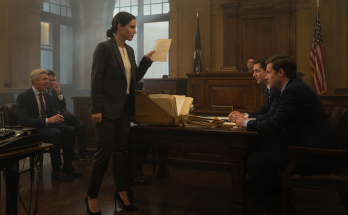
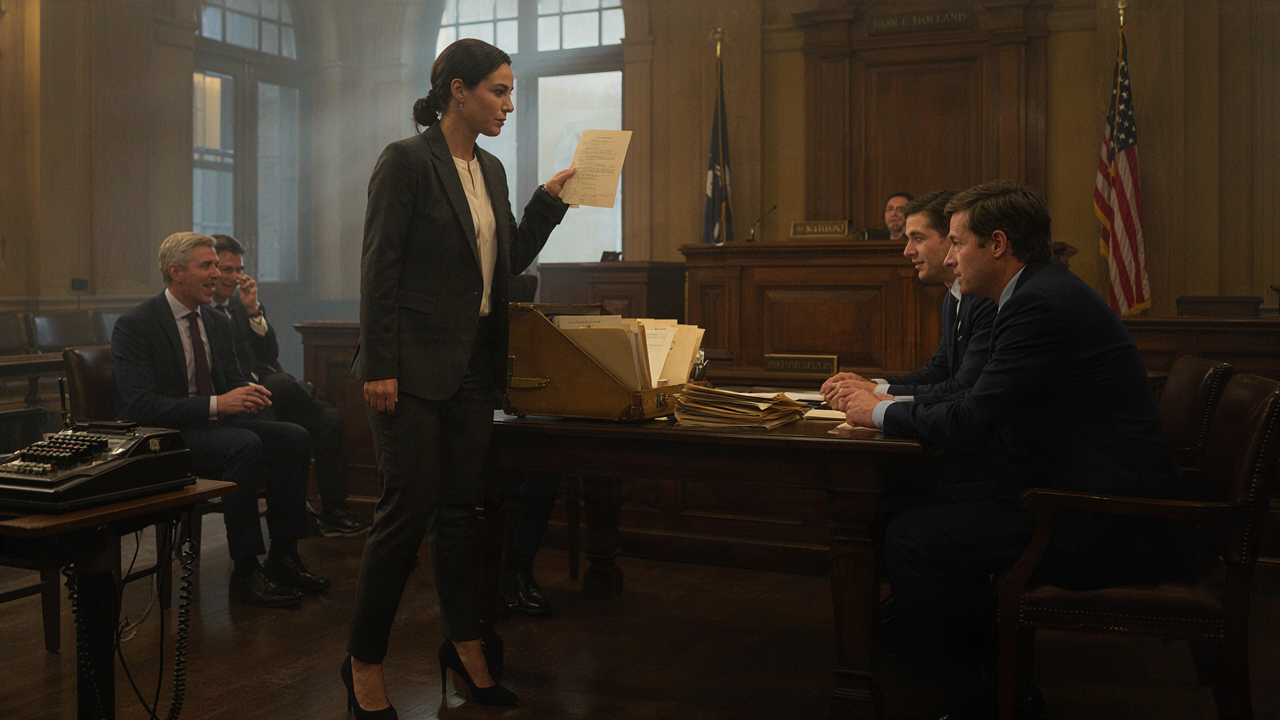
“Before we discuss my husband’s claims, I’d like to address the forged document bearing the judge’s signature.”
The courtroom went completely silent.
Richard’s expression changed.
Daniel stopped moving.
Victoria slowly lowered her pen.
Judge Collins looked directly at me.
“Which document are you referring to?”
I removed a transparent evidence sleeve.
Inside was a copy of the purported court order.
I placed it on the table.
“Exhibit A. This document claims to authorize the transfer of my late mother’s property into a holding company controlled by Whitmore Holdings.”
The judge examined it.
“Where did you obtain this?”
“It was included in the financial and property records submitted by the petitioner.”
Victoria stood immediately.
“Objection, Your Honor. The respondent is making an unsupported allegation of forgery.”
I turned toward her.
“Counsel, I haven’t finished presenting the evidence.”
“Your Honor, this is highly prejudicial.”
Judge Collins raised one hand.
“Sit down, Ms. Shaw. I will determine what is relevant.”
Victoria sat.
I continued.
“The document bears your signature, Your Honor. It also contains a case number associated with an entirely different proceeding.”
Judge Collins looked more closely.
Then she called the court clerk.
“Please bring the original court record.”
The clerk left.
Richard leaned forward.
He whispered something to Daniel.
I couldn’t hear the words.
But I saw Daniel’s face.
He was no longer smiling.
Chapter 9: The First Crack
The clerk returned carrying a file.
Judge Collins reviewed it.
She looked at the document again.
Then she turned to the clerk.
“Is there any order involving this property in the official record?”
“No, Your Honor.”
“Is there any proceeding under this case number involving Catherine Mitchell or Whitmore Holdings?”
“No, Your Honor.”
The judge’s expression hardened.
She looked at me.
“Ms. Mitchell, are you alleging that this document was fabricated?”
“Yes, Your Honor.”
“Do you have evidence beyond the apparent discrepancy?”
I nodded.
I removed a second folder.
“This is the certification received from the court’s judicial records office confirming that the document does not appear in the official case record.”
I handed it to the clerk.
The judge read it.
Then she looked at Victoria.
“Counsel, did your firm submit this document as evidence supporting your client’s position?”
Victoria stood.
“Your Honor, the document was provided by our client’s financial representatives. We relied on the information supplied to us.”
“Did you verify it?”
“We are currently reviewing the issue.”
“That is not what I asked.”
Victoria hesitated.
“No, Your Honor. We did not independently verify the original court order before including it in the financial package.”
Richard shifted in his chair.
The judge looked at me again.
“Do you have the original document?”
“Yes, Your Honor.”
I removed a sealed evidence envelope.
“This is the original copy recovered from the transaction file. It was preserved before being submitted for independent examination.”
The judge examined the seal.
“Who has examined it?”
I handed over a written report from the appropriate document examiner.
The report identified inconsistencies in the signature image, the digital stamp, and the document’s formatting.
It concluded that the signature appeared to have been reproduced from another document rather than executed as an original signature.
Judge Collins read silently.
Then she removed her glasses.
For several seconds, nobody spoke.
Finally, she said:
“This is extremely serious.”
Richard’s face had turned pale.
But I wasn’t finished.
I opened another folder.
“Your Honor, I also have evidence showing that the forged order was used in an attempt to secure a $2.4 million loan against property that I exclusively inherited.”
Victoria rose.
“Objection. The respondent is attempting to introduce unrelated allegations about a third-party financial transaction.”
I looked at the judge.
“The transaction directly concerns the property being claimed in this divorce proceeding.”
Judge Collins nodded.
“Proceed, but keep your presentation focused.”
I placed the loan application on the table.
Then I showed the property description.
The collateral section.
The company name.
And the signature authorizing the application.
Daniel’s signature.
The courtroom became even quieter.
Chapter 10: My Husband’s Signature
“Your Honor,” I said, “this loan application was submitted without my authorization.”
Victoria examined the page.
“Ms. Mitchell, do you have evidence that your client—”
She stopped herself.
Then corrected her words.
“That the petitioner personally submitted this application?”
I handed her the payment authorization.
“Daniel Whitmore approved the financing request.”
Daniel stood abruptly.
“That’s not true.”
Judge Collins looked at him.
“Mr. Whitmore, you will have an opportunity to speak through your counsel.”
He sat down.
I continued.
“The application identifies my mother’s property as collateral. It also includes a purported court order claiming that Whitmore Holdings had legal authority to act on my behalf.”
Richard stood.
“This is ridiculous.”
The judge looked toward him.
“Sir, you are not a party to this hearing. Please remain seated.”
Richard sat.
But I noticed his right hand trembling.
I placed another document before the judge.
“This is a bank communication confirming that the lender requested verification of my authorization. The transaction was not completed because the supporting documentation could not be independently confirmed.”
Judge Collins read it.
Then she looked at Daniel.
“Mr. Whitmore, did you authorize this application?”
Victoria stood.
“Your Honor, we request a brief recess to review the newly presented materials.”
I nodded.
I expected that.
Judge Collins considered the request.
“Granted. Fifteen minutes.”
As everyone stood, Daniel walked toward me.
“What are you doing?” he whispered.
I closed my briefcase.
“Presenting evidence.”
“You could destroy everything.”
I looked at him.
“You tried to take my mother’s home.”
He lowered his voice.
“You don’t understand the business situation.”
“I understand enough.”
He leaned closer.
“Dad said the document was legitimate.”
I froze.
“What?”
Daniel realized what he had said.
His eyes widened.
He glanced toward his attorney.
Then he walked away.
I sat down.
I didn’t know whether anyone else had heard him.
But I had.
And I knew that sentence mattered.
Chapter 11: The Controller’s Evidence
When court resumed, Victoria requested permission to confer privately with her client.
The judge allowed a brief discussion.
Then Victoria stood.
“Your Honor, my client disputes the respondent’s characterization of the documents. However, we request permission to examine the underlying records before making any further representations.”
I nodded.
“That’s reasonable.”
Judge Collins turned toward me.
“Ms. Mitchell, do you have additional evidence?”
“Yes, Your Honor.”
I removed the flash drive.
“This contains internal business communications and accounting records obtained from a former financial controller at Whitmore Holdings.”
Richard immediately stood.
“Where did she get those?”
The judge looked at him.
“Mr. Whitmore, sit down.”
I continued.
“The former controller, Laura Bennett, has provided a sworn statement explaining how the documents were prepared and approved.”
Victoria looked startled.
“Laura Bennett?”
“Yes.”
Richard whispered something to Eleanor.
I handed the judge Laura’s statement.
It described a meeting where Richard instructed employees to prepare documentation supporting the property transfer.
It also described the payment made to a document preparation company.
Most importantly, it identified the internal approval from Daniel.
The judge read the statement.
“Is Ms. Bennett available?”
“She is waiting outside, Your Honor.”
The judge looked toward the clerk.
“Please bring her in.”
A minute later, Laura entered the courtroom.
She looked frightened.
Her eyes briefly met mine.
Then she took the witness stand.
After taking the oath, she explained her position at Whitmore Holdings.
She described the loan application.
The internal emails.
The payment authorization.
And the meeting with Richard.
“Did Mr. Whitmore instruct you to prepare a document showing that Catherine Mitchell had authorized the transfer?” I asked.
“Yes.”
“Did you personally witness Ms. Mitchell sign that authorization?”
“No.”
“Did you witness the judge sign the court order?”
“No.”
“Did Mr. Whitmore explain where the court order came from?”
Laura hesitated.
“He said the legal department had arranged it.”
“Did he identify anyone from the court?”
“No.”
“Did you later discover that the order was not authentic?”
“Yes.”
Victoria stood.
“Objection. The witness is not qualified to determine authenticity.”
Judge Collins nodded.
“Sustained as to that conclusion. The witness may testify to what she personally observed and the records she handled.”
I continued.
“Did you raise concerns about the document?”
“Yes.”
“What happened?”
Laura looked toward Richard.
“He told me to stop asking questions.”
“Did he threaten your employment?”
“Yes.”
“How?”
“He said if I continued interfering, I would lose my position and face legal consequences for mishandling confidential company records.”
The courtroom remained silent.
I asked one final question.
“Did Daniel Whitmore approve the payment associated with the document preparation?”
Laura nodded.
“Yes.”
I handed the judge the payment record.
“Thank you. No further questions.”
Victoria stood for cross-examination.
But before she could begin, Richard interrupted.
“She’s lying!”
Judge Collins struck the desk with her gavel.
“Mr. Whitmore, one more interruption and I will have you removed from this courtroom.”
Richard sat down.
For the first time that morning, he looked afraid.
Chapter 12: The Second Document
I thought the forged court order was the biggest revelation.
I was wrong.
There was one more document.
One that Laura had warned me about.
I reached into my briefcase and removed a thin envelope.
“Your Honor, I have one additional exhibit.”
Victoria looked exhausted.
“Another one?”
“Yes.”
Judge Collins nodded.
“Proceed.”
I removed a printed email.
The date was four months before the divorce filing.
The sender was Richard Whitmore.
The recipient was Daniel.
The subject line read:
Catherine’s Property — Final Structure
I handed it to the clerk.
The judge read the first paragraph.
Then the second.
Her expression changed.
I watched her eyes move toward the bottom.
Then she stopped.
“Ms. Mitchell,” she said, “what is the relevance of this communication?”
“It demonstrates that the petitioner and his father were discussing the use of the property before the divorce proceedings began.”
I pointed to the final paragraph.
“More specifically, it shows that they intended to use the purported court order to establish authority over my inheritance and then rely on that document during the divorce.”
Judge Collins continued reading.
Then she looked at Daniel.
“Mr. Whitmore, is this your email address?”
Daniel leaned toward Victoria.
She whispered something to him.
Then he stood.
“Your Honor, I don’t recall sending that.”
I looked at the judge.
“May I present the accompanying company record?”
She nodded.
I handed over the final exhibit.
It was an internal approval log.
The system recorded the user account, date, time, and approval action.
The approval had been made through Daniel’s company credentials.
It also contained the payment reference for the document preparation company.
Victoria examined it.
Her expression became unreadable.
Then she turned toward Daniel.
I watched her ask him something quietly.
He shook his head.
She looked back at the judge.
“Your Honor, given the seriousness of these allegations, we would request that the court preserve the evidence and allow the appropriate authorities to investigate.”
Richard stared at her.
“Victoria, what are you doing?”
She didn’t answer.
Judge Collins called a brief recess.
But before leaving the bench, she made one statement.
“The court will not treat a document bearing a fabricated judicial signature as an ordinary financial dispute. The evidence presented raises concerns that extend beyond the division of marital property.”
Then she ordered the relevant records preserved and directed that the questionable documents be referred through the appropriate channels for investigation.
The courtroom erupted into whispers.
Richard remained seated.
His face had lost all color.
Daniel looked at me.
And for the first time since our marriage began, he seemed to understand that I wasn’t going to back down.
Chapter 13: The Father and Son Turn on Each Other
The next hearing took place three weeks later.
By then, the story had spread through the local business community.
Richard Whitmore had been questioned by investigators.
Whitmore Holdings had announced an internal review.
The lender had suspended the proposed loan.
The court had ordered the disputed property records preserved while the investigation continued.
Daniel’s attorneys had also withdrawn several of their earlier financial claims.
But Richard wasn’t finished.
He had hired another legal team.
He wanted to portray the entire matter as a misunderstanding caused by careless employees.
Daniel’s position was even more complicated.
He claimed that he had never knowingly approved a fraudulent document.
He said his father had handled the legal arrangements.
He insisted that he had believed the transaction was legitimate.
But the emails contradicted him.
So did the approval records.
At the next hearing, Daniel’s new attorney presented a revised argument.
They now claimed that the money transferred through the holding company had been used for legitimate marital expenses.
I listened carefully.
Then I stood.
“Your Honor, may I address the financial records?”
The judge nodded.
I presented a bank statement showing that none of the alleged payments had entered my personal accounts.
I then showed the corresponding company transfers.
The money had moved from Whitmore Holdings to a private company controlled by Daniel.
From there, it had been divided among several accounts.
Some of the transactions were labeled consulting fees.
Others were described as property management expenses.
But none of them were connected to improvements on my mother’s property.
The judge examined the records.
“Does the petitioner dispute these transfers?”
Daniel’s attorney stood.
“My client disputes the respondent’s interpretation.”
I looked at the judge.
“Then I would respectfully request that the court require the petitioner to identify the specific invoices and payments supporting his claim.”
Judge Collins agreed.
The judge ordered additional financial disclosures.
And that was when the Whitmore family began to collapse.
Because the accounting records revealed something far worse than a fraudulent property transfer.
Richard had been moving money between related companies to conceal the financial condition of Whitmore Holdings.
Some transactions had been recorded twice.
Others had been supported by invoices from companies with no employees or verifiable business operations.
The company was in serious financial trouble.
And the $2.4 million loan against my inheritance had been intended to keep several creditors from discovering the extent of the problem.
Daniel had known more than he admitted.
Richard had known everything.
And now both men were trying to blame each other.
Chapter 14: The Truth About My Husband
A week later, Daniel requested a private meeting.
I refused.
Then he sent an email.
He said he wanted to explain everything.
He said he was sorry.
He said his father had pressured him.
He said he had made mistakes because he was afraid of losing the family business.
I almost deleted the message.
But one sentence caught my attention.
I never wanted you to lose the house.
I read it several times.
Then I replied.
You approved the document.
He responded immediately.
I thought it was temporary.
I stared at the screen.
Temporary?
A forged judicial order.
An unauthorized loan application.
A planned transfer of my mother’s property.
And he thought it was temporary?
I called him.
He answered on the first ring.
“Catherine.”
“Tell me the truth.”
There was a long silence.
“About what?”
“Everything.”
He sighed.
“My father told me the company needed the loan. He said the property was valuable enough to support it.”
“And you knew I hadn’t agreed.”
“I thought he would explain it to you later.”
“Why did you approve the document?”
“Because Dad said the paperwork was already handled.”
“Did you know the court order was forged?”
He didn’t answer.
“Daniel?”
“I didn’t know it was forged.”
“Then why did you tell me not to look into it?”
He became defensive.
“Because you were making everything worse.”
I closed my eyes.
“Did you ever intend to give me the property back?”
Another silence.
Finally, he said:
“I don’t know.”
That was the moment I stopped hoping.
Not because he had admitted to everything.
But because he still couldn’t understand what he had done.
He was more concerned about the company than about the woman he had married.
I ended the call.
Then I forwarded the email and documented the conversation for my legal records.
I had spent seven years believing Daniel was caught between me and his father.
Now I understood.
He wasn’t caught between us.
He had chosen his side long before I realized there was a war.
Chapter 15: Richard’s Last Attempt
Richard’s final attempt came during a settlement conference.
He arrived with his attorneys and a carefully prepared proposal.
He offered to return my mother’s property.
He offered to pay me $350,000.
In exchange, I would withdraw my objections to the disputed financial documents and agree not to pursue further claims arising from the transaction.
I read the proposal.
Then I looked at him.
“Why are you offering this now?”
Richard adjusted his cufflinks.
“Because everyone has made mistakes.”
“Who made the mistake of forging a judge’s signature?”
His expression hardened.
“That is still being investigated.”
“Who submitted the false order?”
“You’re not qualified to make that determination.”
I smiled slightly.
“Neither are you.”
His attorney interrupted.
“Mr. Whitmore is offering a practical resolution. You should consider the financial benefits.”
I closed the folder.
“No.”
Richard leaned forward.
“You’re throwing away a fortune because you’re angry.”
I looked directly at him.
“My mother worked her entire life for that property. She left it to me because she trusted me to protect it.”
“Your mother is dead, Catherine.”
The words landed like a slap.
I stood slowly.
“And that is exactly why you thought you could get away with this.”
His face turned red.
“Watch your tone.”
I picked up my briefcase.
“I spent seven years watching my tone around your family. I’m finished.”
I walked out.
The settlement conference ended without an agreement.
And the investigation continued.
Chapter 16: The Decision
Two months later, the court issued its ruling on the disputed property and financial claims.
I sat alone in the courtroom again.
But this time, I wasn’t frightened.
Daniel sat across from me.
Richard was absent.
His attorneys had informed the court that he was dealing with separate legal matters.
Judge Collins reviewed the evidence.
She found that Daniel had failed to establish a legitimate basis for claiming ownership of my mother’s inherited property.
She also found that the alleged marital contributions had not been adequately supported by reliable records.
The purported court order could not be treated as valid.
The judge emphasized that the authenticity and origin of that document were matters for further investigation.
Then she addressed the financial claims.
The court rejected Daniel’s attempt to include the inherited property in the marital estate based on the evidence presented.
It also ordered the parties to complete the remaining financial disclosures and account for the disputed transfers.
Finally, Judge Collins looked at me.
“Ms. Mitchell, I understand that you have represented yourself throughout these proceedings.”
“Yes, Your Honor.”
“You have organized a substantial amount of evidence and presented it in a clear and relevant manner.”
I nodded.
“Thank you.”
She continued.
“However, the court strongly recommends that you obtain independent legal representation for any further proceedings involving the alleged fraudulent documentation and financial transactions.”
“I understand, Your Honor.”
Then she looked at Daniel.
“Mr. Whitmore, the court expects full compliance with all outstanding financial disclosure requirements. Any attempt to conceal, alter, or destroy relevant records may result in further consequences.”
Daniel stared at the table.
The hearing ended.
Outside the courtroom, he approached me.
“Catherine.”
I stopped.
He looked older.
Tired.
His expensive suit was wrinkled, and his usual confidence had disappeared.
“Can we talk?”
I shook my head.
“There’s nothing left to discuss.”
“I know I hurt you.”
“You did more than hurt me, Daniel.”
He swallowed.
“I never thought it would become this serious.”
I looked at him.
“That was the problem. You never thought about what would happen to me.”
He lowered his eyes.
For a moment, I remembered the man I had married.
The man who had driven through a snowstorm to bring me a book.
But that memory no longer had the power to change what happened.
I walked away.
Chapter 17: The Family’s Collapse
The investigation continued for several months.
Richard was eventually charged in connection with the fraudulent documentation and related financial conduct.
The case also examined the movement of money through several companies associated with Whitmore Holdings.
Daniel was investigated for his role in approving financial transactions and submitting documents he had claimed to understand.
I learned that the company’s financial problems were much worse than Laura had initially described.
Several creditors had been waiting for repayment.
The commercial development had lost millions.
Richard had been moving assets between companies to delay the consequences.
The proposed loan against my mother’s property was supposed to buy him time.
Instead, it exposed the entire arrangement.
Whitmore Holdings eventually entered restructuring proceedings.
Some properties were sold.
Several executives resigned.
Richard stepped away from his position as chairman.
Eleanor stopped attending charity events.
People who had once rushed to greet her suddenly became very busy whenever she entered a room.
Daniel’s situation was different.
He cooperated with investigators and provided additional records.
His legal position remained complicated, and he faced consequences for his own decisions.
He later reached a financial settlement with me concerning the remaining marital claims.
The agreement protected my inherited property and required the return of funds that had been improperly transferred from accounts connected to the marriage.
I also hired an experienced attorney to handle the remaining civil matters.
For the first time in years, I had someone standing beside me.
But I never regretted representing myself in that first hearing.
Because that courtroom was where the Whitmores finally discovered something they had never understood.
A woman without an expensive lawyer was not necessarily a woman without knowledge.
And a woman who had stopped arguing was not necessarily a woman who had surrendered.
Chapter 18: My Mother’s House
Six months after the first hearing, I drove to my mother’s property.
The trees along the driveway had begun turning gold.
The house looked exactly as I remembered it.
The white wooden porch.
The old stone path.
The flower garden she had planted herself.
I parked near the detached cottage and sat quietly for several minutes.
Then I took the photograph from my briefcase.
It showed my mother standing on the porch, smiling at the camera.
I had carried it into court because I wanted to remember her.
Now I placed it on the mantel inside the house.
I walked through every room.
The kitchen where she taught me to make bread.
The living room where we watched old movies.
The small upstairs bedroom where she spent her final weeks.
I opened the window.
Fresh air moved through the curtains.
For months, I had thought about this house as something I needed to defend.
Something I needed to protect from people who wanted to take it.
But standing there, I realized something.
My mother hadn’t left me a property to fight over.
She had left me a place to live.
A place where I could begin again.
I decided to restore the guest cottage and turn it into a small legal support office.
Not a large practice.
Not a corporate firm.
Just a place where people who couldn’t afford expensive representation could receive guidance about protecting their rights and understanding complicated legal documents.
I started with a modest number of clients.
Some were military families.
Some were elderly people facing property disputes.
Others were women dealing with financial control during divorce.
I never promised to solve every problem.
But I knew what it felt like to sit across from someone who believed money made them untouchable.
And I knew how frightening it could be to stand alone.
Chapter 19: The Unexpected Visitor
Nearly a year after the courtroom incident, someone knocked on my office door.
It was Laura Bennett.
She looked healthier.
She was no longer working for Whitmore Holdings.
She had found a new position with a small accounting firm.
“I heard what you’re doing here,” she said.
I smiled.
“Come in.”
She looked around the cottage.
“It’s beautiful.”
“My mother would have liked it.”
Laura sat down.
For a few minutes, we talked about ordinary things.
Then she became serious.
“I wanted to thank you.”
“For what?”
“For not treating me like I was beyond redemption.”
I looked at her.
“You told the truth when it mattered.”
“I should have done it earlier.”
“Maybe. But you did it.”
She looked at the photograph of my mother.
“Do you ever regret fighting them?”
I thought about it.
I remembered the courtroom.
Richard’s laughter.
Daniel’s betrayal.
The forged order.
The weeks of sleepless nights.
The fear of losing everything.
Then I looked at the open office door.
“No,” I said. “I regret that I had to fight people who were supposed to be family. But I don’t regret standing up for myself.”
Laura smiled.
Before leaving, she handed me a small envelope.
“What is this?”
“A copy of the final investigation summary that was made available to me. I thought you might want to see how things ended.”
I thanked her.
After she left, I opened it.
There was a short summary of the financial investigation.
Several transactions had been traced.
The document preparation company had been identified.
And one paragraph caught my attention.
The forged judicial order had been commissioned through a payment approved by Richard Whitmore.
But the email authorizing the final version had come from Daniel’s account.
I sat quietly.
I had suspected it.
Now I knew.
Daniel hadn’t simply been following his father’s instructions.
He had participated in the plan.
I closed the envelope.
Then I placed it in the locked filing cabinet.
There were no more questions I needed to ask.
Chapter 20: The Last Message
A few weeks later, Daniel sent me a letter.
It was handwritten.
I almost threw it away.
But curiosity made me open it.
He wrote about our marriage.
About the early years.
About the mistakes he had made.
He said he had allowed his father to influence him.
He said he had been afraid of losing the business.
He said he had convinced himself that I would eventually agree to the property transaction.
Then came the sentence that made me stop reading.
I never thought you would actually stand up to us.
I put the letter down.
For years, that had been exactly how they saw me.
As someone who would eventually give in.
Someone who would accept an apology.
Someone who would sign whatever document was placed in front of her.
Someone who would remain silent to keep the family peaceful.
I picked up the letter again.
Daniel wrote that he hoped someday we could speak without anger.
I folded the paper and placed it back inside the envelope.
Then I wrote a short response.
I don’t hate you, Daniel. But I will never again confuse love with surrender.
I mailed it the following morning.
And that was the last personal communication I ever sent him.
Epilogue: The Woman Who Walked Into Court Alone
Two years later, I attended a small legal education event at a community center.
I had been invited to speak about protecting inherited property and recognizing suspicious financial documents.
There were about forty people in the room.
Some were elderly.
Some were recently divorced.
Some were simply trying to understand complicated paperwork they had been asked to sign.
After my presentation, a young woman approached me.
She looked nervous.
“Can I ask you something?”
“Of course.”
She held a folder against her chest.
“My husband’s family says I’m too inexperienced to understand our finances. They want me to sign something transferring my inheritance into their company.”
I looked at her.
“Have you read the document?”
She nodded.
“I don’t understand all of it.”
“Then don’t sign it until you’ve had independent legal advice.”
She looked relieved.
“Did something like that happen to you?”
I smiled faintly.
“Something very similar.”
“How did you handle it?”
I glanced toward the windows.
Sunlight was falling across the room.
“I stopped trying to convince people to respect me. Then I started collecting the evidence that proved what they were doing.”
She looked at my briefcase.
It was still the same battered brown leather case I had carried into court.
The handle was worn.
The corners were scratched.
But I had never replaced it.
She pointed toward it.
“Is that the briefcase you took to court?”
“Yes.”
“Why keep it?”
I ran my fingers across the leather.
“Because it reminds me of the day I learned something important.”
“What?”
I smiled.
“That standing alone doesn’t mean standing powerless.”
When I left the community center, my phone rang.
It was the property manager from my mother’s house.
He told me the spring flowers were blooming.
I thanked him and promised to visit that weekend.
Then I drove home.
My home.
My property.
My life.
And for the first time in years, nobody was waiting to tell me what I was allowed to keep.
Richard Whitmore had once laughed because I entered a courtroom without an expensive attorney.
He believed money could silence me.
Daniel believed I was too inexperienced to understand the documents he signed.
They both made the same mistake.
They confused my silence with ignorance.
They confused my kindness with weakness.
And they confused my willingness to walk away from an argument with my willingness to surrender what belonged to me.
But the greatest victory wasn’t watching Richard’s smile disappear.
It wasn’t seeing Daniel’s attorneys withdraw their claims.
It wasn’t even recovering my mother’s property.
The greatest victory was walking out of that courtroom knowing I had finally become the woman my mother had wanted me to be.
A woman who didn’t need anyone’s permission to protect her own future.
And if there’s one thing I learned from everything that happened, it’s this:
Never underestimate the quiet woman sitting across the table with a folder full of documents.
She may not be shouting.
She may not have an expensive lawyer.
She may not even look like she’s fighting.
But sometimes, the person everyone thinks is powerless is the only person in the room who knows exactly what the evidence says.
And sometimes, all it takes is one sentence to make an entire courtroom go silent.