My 73-Year-Old Mother Worked for Our Neighbor for Four Weeks Without Pay—When Claire Told Her She Was Too Old to Need Money, I Walked Into the Garage and Opened a Box She Should Have Been Afraid Of
The night I discovered what our neighbor had done to my mother, I stood in our garage with a flashlight in one hand and a dusty cardboard box at my feet.
Inside that box were things I hadn’t touched in nearly twelve years.
Old photographs.
A stack of business documents.
A set of keys.
And one thick manila envelope containing the name of a woman who had once promised my father she would never take advantage of our family.
That woman was Claire Bennett, the neighbor who had just spent four weeks making my seventy-three-year-old mother work for free.
But I didn’t know that last part yet.
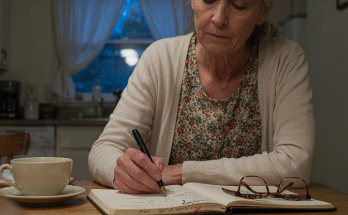
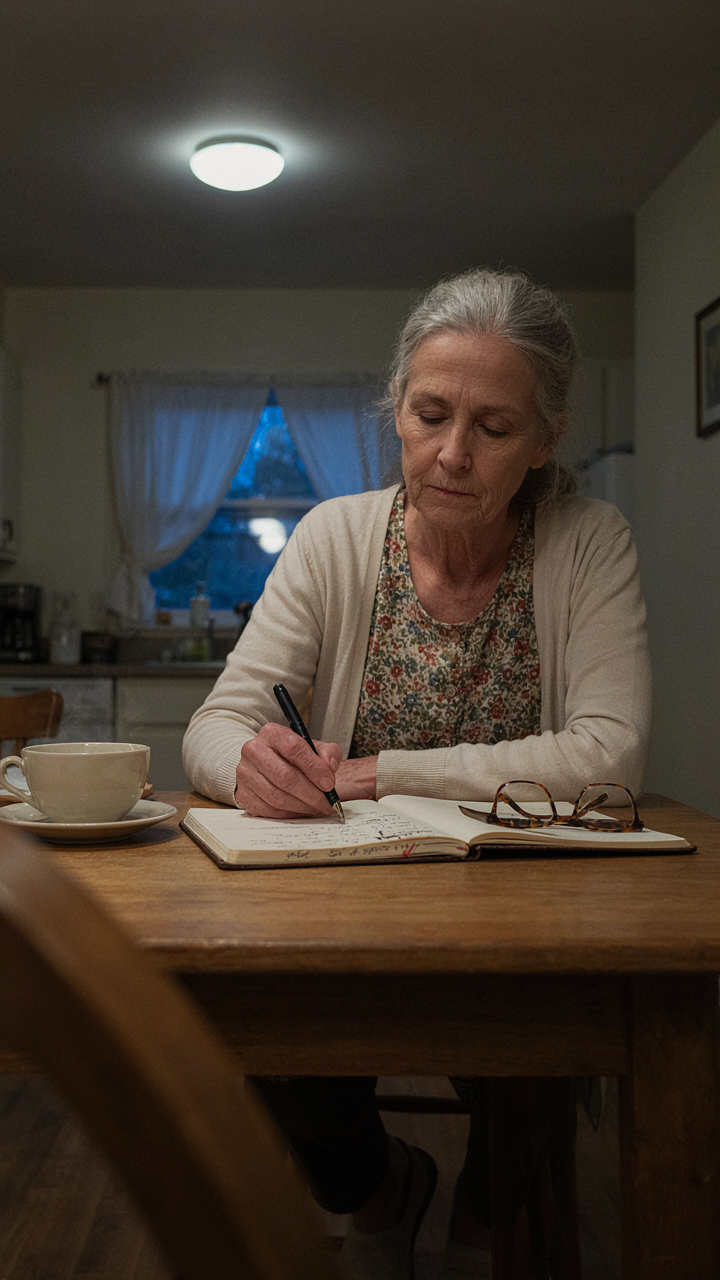
At that moment, all I knew was that my mother had come home, taken off her worn sneakers, and quietly crossed out twenty days of unpaid wages in a little notebook.
Twenty days.
One thousand six hundred dollars.
Money she had earned honestly, one exhausting morning at a time.
And when I asked her why she had crossed it out, she looked at me with the saddest smile I’d ever seen.
“Oh, sweetheart,” she whispered. “Perhaps I should have known better.”
Those words broke something inside me.
Because my mother had spent her entire life believing that if you treated people with kindness, they would eventually treat you the same way.
Claire had mistaken that kindness for weakness.
And she was about to discover how wrong she was.
But to understand what happened next, you need to understand my mother.
Her name was Eleanor Hayes.
She was seventy-three years old, five feet two inches tall, with silver hair she pinned behind her ears every morning and hands that had spent decades working harder than anyone ever noticed.
My father died twelve years earlier.
He had been a mechanic, the kind of man who could repair almost anything with a handful of tools and a little patience. When he passed away, he left my mother with their small house, a modest savings account, and a lifetime of memories.
I was forty-six at the time of this story, married, with two grown children and a job managing a warehouse outside town.
I had offered to help my mother financially countless times.
She always refused.
“I raised you to stand on your own feet,” she would say. “Now let me stand on mine.”
She wasn’t wealthy, but she was careful.
She grew tomatoes in her backyard, clipped coupons, repaired her own clothes, and saved birthday money in a little tin box in her kitchen drawer.
She also had a habit of helping people without expecting anything in return.
When our elderly neighbor broke her wrist, Mom brought over meals for three weeks.
When a young couple moved into the house across the street, she spent an entire Saturday helping them unpack.
And when someone was sick, lonely, or struggling, my mother was usually the first person at their door.
That was how she met Claire.
Claire Bennett was forty-two, recently divorced, and the mother of a four-year-old girl named Lily.
She had moved into the large blue house two doors down about eight months earlier.
The house was beautiful, with white shutters, a manicured lawn, and a two-car garage that always seemed to contain an expensive new purchase.
Claire drove a black luxury SUV and dressed as if she were permanently on her way to an important meeting.
She was polite enough when we first met her, though I always sensed a certain impatience beneath her smile.
She rarely made eye contact with people she considered unimportant.
My mother, of course, saw something different.
She saw a woman trying to raise a little girl while rebuilding her life.
And she saw a child who needed someone to look after her.
One afternoon, Claire knocked on Mom’s door.
I happened to be visiting that day, replacing a loose kitchen cabinet handle.
“Mrs. Hayes,” Claire said, smiling brightly, “I was hoping you might be able to help me with something.”
Mom wiped her hands on a dish towel.
“Of course, dear. What is it?”
Claire explained that her regular babysitter had quit unexpectedly. Her new job required her to be at the office early, and she hadn’t found a replacement.
She needed someone to watch Lily from approximately seven in the morning until four in the afternoon, Monday through Friday.
“Just for a few weeks,” she said. “Until I get everything sorted out.”
Mom looked at Lily, who was hiding behind her mother’s leg.
“Would you like to spend your mornings with me, sweetheart?”
The little girl peeked out.
“Do you have cookies?”
Mom laughed.
“I have oatmeal cookies. We can make chocolate chip ones together if your mother says it’s all right.”
Lily immediately stepped forward.
Claire smiled with visible relief.
“I knew you would understand.”
Then she mentioned payment.
“Eighty dollars a day. Cash or electronic transfer, whichever you prefer. I’ll settle everything at the end of each week.”
Mom hesitated.
She had never babysat professionally before, but she liked children. She also liked the idea of earning a little extra money without having to travel anywhere.
“Eighty dollars a day?” she repeated.
“Absolutely,” Claire said. “You’re doing me a huge favor.”
I remember thinking the arrangement sounded reasonable.
I also remember my mother saying something that should have warned me.
“Claire, I don’t want to be a burden if you change your mind.”
Claire reached out and touched her arm.
“Please. You’re saving my life.”
And just like that, they had an agreement.
No written contract.
No complicated paperwork.
Just a promise between two neighbors.
Mom believed that was enough.
For the first week, everything seemed fine.
Every morning, she woke at five-thirty.
She prepared breakfast for herself, packed a small lunch for Lily, and walked two doors down before seven.
Sometimes she brought homemade muffins.
Other mornings, she brought sliced apples, crackers, or little sandwiches cut into triangles.
She kept a notebook in her kitchen drawer where she recorded the days she worked.
Monday.
Tuesday.
Wednesday.
At the end of the first week, she had worked five days.
Four hundred dollars.
On Friday afternoon, she mentioned the payment to Claire.
“Oh, goodness,” Claire replied, looking at her phone. “My payroll deposit was delayed. Can I pay you next Friday instead?”
Mom smiled.
“Of course. These things happen.”
And she meant it.
The following Monday, she arrived early again.
She fed Lily breakfast, helped her get dressed, read picture books, and took her to the neighborhood park when the weather was nice.
She washed the dishes after lunch.
She wiped down the kitchen counters.
She picked up toys scattered across the living room.
One afternoon, Lily spilled juice on the sofa.
Mom cleaned it immediately, afraid Claire might be upset when she returned.
When Claire arrived that evening, she barely looked at the sofa.
“Did Lily behave?”
“She’s a lovely little girl,” Mom replied.
“Great. See you tomorrow.”
That was all.
No mention of payment.
At the end of the second week, Mom reminded her again.
Claire sighed.
“I’m sorry. The bank flagged a transfer. You know how these systems are. Next week, definitely.”
Mom looked uncomfortable.
“All right, dear.”
Another four hundred dollars went unpaid.
By the third week, Lily had become attached to my mother.
She ran to the door every morning and wrapped her little arms around Mom’s waist.
“Grandma Ellie!”
She had started calling her that without anyone suggesting it.
Mom pretended to scold her.
“I’m not your grandma, little bird.”
“But you’re my Ellie.”
And Mom would laugh.
She told me later that those little moments made the long days worthwhile.
She also told me something else.
Lily had begun asking why her mother was always in such a hurry.
“Does Mommy not like breakfast with me?” she asked one morning.
Mom knelt beside her.
“Your mommy loves you. Sometimes grown-ups have lots of things to do.”
“Then why doesn’t she come home early?”
My mother didn’t know what to say.
She simply hugged the little girl.
During that third week, Mom noticed other things.
Claire frequently returned home carrying shopping bags.
New shoes.
A designer handbag.
Packages delivered to the front porch.
On Thursday, she came home with a large television still wrapped in its box.
Mom didn’t comment.
She wasn’t keeping track of Claire’s money.
She was keeping track of her promise.
By the end of the third week, the unpaid total had reached twelve hundred dollars.
Mom’s knees hurt.
Her back ached.
She had started taking pain medication before bed, though she never told Claire.
Still, she went every morning.
On the twenty-first day, I called her during my lunch break.
“How are things going, Mom?”
“Very well, sweetheart.”
“Did Claire pay you?”
There was a pause.
“Not yet.”
I set down my sandwich.
“What do you mean, not yet? She owes you twelve hundred dollars.”
“Oh, she’s had some trouble with her paycheck.”
“Three weeks of trouble?”
My mother went quiet.
I could hear the familiar sound of her kitchen clock ticking in the background.
“Mom, this isn’t a favor anymore. She’s paying you to work.”
“I know.”
“Then you need to tell her she can’t keep putting you off.”
“I will.”
But she sounded as though she were apologizing for inconveniencing me.
That evening, I drove to her house.
She was sitting at the kitchen table, writing in her notebook.
Beside it sat a small bowl of soup and a slice of toast.
I looked at the notebook.
Twenty days.
Five hours? No. Most days, nearly nine hours.
The agreed rate was eighty dollars per day.
The total was one thousand six hundred dollars.
“Mom, why didn’t you call me sooner?”
She closed the notebook.
“Because I didn’t want you worrying.”
“I’m not worried about the money. I’m worried about you.”
She gave me a tired smile.
“Claire has a little girl. I don’t want to make trouble for them.”
I wanted to tell her that she wasn’t making trouble.
Claire was.
But I held my tongue.
“Tomorrow,” I said, “ask her for the money. If she doesn’t pay, stop going.”
Mom nodded.
“I will.”
The next morning, she did exactly what she had promised.
At four in the afternoon, after Lily had finished her snack and her mother had returned from work, Mom stood near the front door.
“Claire, dear, could we settle the payment today?”
Claire was scrolling through her phone.
“What payment?”
Mom blinked.
“The babysitting. We’ve finished four weeks now.”
“Oh, that.”
Claire slipped her phone into her pocket.
“Honestly, Eleanor, I’ve had a lot going on.”
“I understand. I just need to know when I can expect it.”
Mom’s voice was gentle, almost apologetic.
Claire looked at her for a moment.
Then she smiled.
It wasn’t a friendly smile.
It was the sort of smile someone gives when they’ve decided they’ve found a way out of a problem.
“At your age, you really shouldn’t take jobs without contracts.”
Mom stared at her.
“I’m sorry?”
“You heard me. We never signed anything. I never received an invoice. There isn’t any formal record of an employment arrangement.”
“But we agreed on eighty dollars a day.”
“That’s what you remember.”
Mom’s face went pale.
“Claire, I came every morning. You left Lily with me. You told me you would pay me.”
“And I appreciate your help.”
Claire’s tone had become cold.
“But I never promised that I could pay you on a schedule you dictated.”
My mother gripped the strap of her handbag.
“Then when will you pay me?”
Claire shrugged.
“Besides, it’s not like you had anything better to do anyway.”
For several seconds, Mom said nothing.
I can only imagine what it felt like to hear those words from someone she had trusted.
She had given Claire four weeks of her life.
She had woken before dawn, carried food from her own kitchen, cleaned a house that wasn’t hers, and cared for a little girl as though she were family.
And now Claire was treating her time as worthless.
Mom finally nodded.
“All right, dear.”
She walked out.
She didn’t argue.
She didn’t raise her voice.
She didn’t tell Claire what I would have told her.
She simply walked home.
When she entered her kitchen, she placed her handbag on the chair, sat down, opened her notebook, and looked at the twenty entries.
Then she took her pen and drew a single line through them.
One by one.
At the bottom of the page, she wrote:
Perhaps I misunderstood.
Then she closed the notebook.
When I arrived that evening, I found her standing at the sink, washing a cup that was already clean.
“Mom?”
She turned.
Her eyes were red.
I had seen my mother cry only a handful of times in my entire life.
When my father died.
When my brother moved overseas.
And once when she thought I had failed an important exam.
But this was different.
This wasn’t grief over losing someone.
It was the humiliation of being treated as though she had never mattered.
“What happened?” I asked, even though I already suspected the answer.
Mom shook her head.
“Nothing, sweetheart.”
“Please don’t tell me nothing.”
She dried her hands.
“Claire says we never had a contract. She says I shouldn’t expect payment.”
My jaw tightened.
“And you just accepted that?”
“I didn’t want to argue.”
“She owes you sixteen hundred dollars!”
Mom flinched at the volume of my voice.
I immediately lowered it.
“I’m sorry.”
She sat down.
“I thought I was helping someone. I thought she was a good person who was having a difficult time.”
“She took advantage of you.”
“Maybe.”
“There’s no maybe about it.”
Mom looked at the notebook.
“I suppose I should have known better.”
I reached across the table and took her hand.
“No, Mom. You should never have to assume that someone is lying when they make you a promise.”
She didn’t answer.
And that was when I noticed the crossed-out entries.
Four weeks of work reduced to a line of ink.
My mother had erased the wages from her own notebook because Claire had convinced her that asking for them was somehow unreasonable.
Something inside me snapped.
I stood up.
“Where are you going?” Mom asked.
“To the garage.”
“What for?”
I looked at her.
“To find something I should have dealt with a long time ago.”
Because twelve years earlier, my father had taught me something about people who mistook kindness for weakness.
And I had spent the last twelve years forgetting it.
I walked into the garage and switched on the overhead light.
The room smelled of dust, motor oil, and old cardboard.
My father had died before I could learn everything he knew about repairing engines, but I had inherited most of his tools.
I kept them in labeled drawers along the back wall.
Beside the workbench stood a tall metal cabinet.
At the bottom was a cardboard box marked OLD PAPERS.
I dragged it into the light.
Inside were folders from my father’s former business, photographs from family vacations, and a thick envelope tied with string.
I hadn’t opened it in years.
My father had left me the business documents after he sold his small auto-repair shop.
Most of them were ordinary records.
Invoices.
Receipts.
Insurance papers.
But the envelope contained something different.
A copy of a signed business agreement.
A letter from a local attorney.
And a photograph of my father standing beside a younger woman in front of a commercial building.
The woman was Claire Bennett.
I stared at the photograph.
She looked younger, perhaps thirty, with the same confident smile she wore now.
On the back, in my father’s handwriting, were six words:
Claire Bennett. Never forget what happened.
I felt the hairs on my arms rise.
For twelve years, I had barely thought about Claire.
I remembered hearing her name once or twice when my father was alive, but I had assumed she was someone from his business.
Now I wondered whether the woman who had refused to pay my mother was the same person my father had warned me about.
I opened the letter.
It was dated fourteen years earlier.
My father’s company had owned a small commercial property on the edge of town. He had rented part of the building to a woman who operated a children’s activity center.
Her name was Claire Bennett.
At the time, she had been struggling financially.
My father had agreed to a reduced rent for the first six months, provided she paid the utilities and maintained the space.
The arrangement was written down.
Both parties signed it.
But when the rent became due, Claire stopped paying.
She claimed the business was struggling.
My father gave her additional time.
Then she claimed she had never agreed to the amount written in the contract.
She accused him of changing the terms after she signed.
My father had kept every receipt, every message, and every signed document.
Eventually, the dispute was settled through attorneys.
Claire left the property.
My father recovered most of what she owed, but the process cost him months of stress and a substantial amount in legal fees.
At the bottom of the letter, he had written a sentence in blue ink.
Helping someone who is struggling is a good thing. Allowing them to rewrite the truth when it no longer benefits them is not.
I sat on the workbench and read it twice.
Then I turned over the photograph.
The date was written beneath the warning.
Fourteen years earlier.
Claire hadn’t merely learned how to exploit people’s generosity.
She had done it before.
And my father had documented everything.
I returned to the house carrying the envelope.
Mom was still at the kitchen table.
When I placed the photograph in front of her, she leaned closer.
“Is that Claire?”
“Yes.”
“How do you know her?”
I explained what I’d found.
Mom listened quietly, her expression changing as I described the old business dispute.
When I finished, she shook her head.
“Your father must have been very disappointed.”
“He was.”
I tapped the folder.
“But I’m not going to do what Claire did to him. I’m not going to threaten her or try to embarrass her.”
“What are you going to do?”
“First, we’re going to establish exactly what happened. Then we’re going to ask her to pay what she owes you.”
Mom looked nervous.
“And if she refuses?”
I closed the folder.
“Then we’ll handle it properly.”
The next morning, I began collecting evidence.
I asked Mom to show me every message Claire had sent her.
There were more than I expected.
On the first Monday, Claire had texted:
Thank you again, Eleanor. Lily is so happy with you. I’ll send your first payment Friday.
On the following Friday:
My payroll is delayed. I’ll catch you up next week.
The next week:
You’re an absolute lifesaver. I promise I’ll settle everything soon.
And on the twenty-first day:
I know I owe you. Please give me a little more time.
That last message mattered.
Claire had acknowledged the debt in writing.
Mom also had a calendar where she had marked every day she worked.
I asked her to tell me the exact hours she had spent at Claire’s house.
She remembered almost all of them.
We wrote everything down.
Twenty weekdays.
Eighty dollars per day.
Total owed: $1,600.
I printed copies of the messages and placed them in a folder.
Then I called an attorney I knew through my father’s old business.
Her name was Patricia Morgan.
She had handled several of our family’s legal matters over the years, and she remembered my father well.
When I explained the situation, she became quiet.
“Let me make sure I understand,” she said. “Your mother provided childcare for four weeks at an agreed daily rate, and the parent has acknowledged in writing that she owes the money?”
“Correct.”
“And now she’s refusing to pay because there was no formal contract?”
“That’s what she told Mom.”
Patricia exhaled.
“A written contract isn’t the only way an agreement can be established. Messages, the parties’ conduct, and other evidence may help establish what was agreed. The precise legal options depend on local law, but your mother should not assume she’s out of options.”
I felt some of the tension leave my shoulders.
“What should we do?”
“Send a clear written demand. State the dates, the amount, and a reasonable deadline. Don’t threaten her. Don’t post anything online. Preserve every message. If she refuses, we can discuss the appropriate next step.”
I thanked her.
Before we hung up, Patricia added something.
“And tell your mother she did nothing wrong by trusting someone. The person who breaks a promise is responsible for breaking it.”
I looked at Mom.
She was sitting nearby, pretending not to listen.
But I saw her wipe her eyes.
That afternoon, we delivered a written payment request to Claire.
It was short, professional, and factual.
It listed the twenty days of childcare, the agreed rate of eighty dollars per day, and the total of $1,600.
It included copies of Claire’s messages acknowledging the arrangement and the delayed payment.
We gave her seven days to pay.
I signed my name beneath my mother’s.
We didn’t demand interest.
We didn’t demand compensation for the insults.
We didn’t even mention the old dispute with my father.
We simply asked her to honor her agreement.
I expected Claire to call.
Instead, she responded with a message that evening.
This is ridiculous. Your mother volunteered to help me. I never agreed to a formal employment arrangement. Stop harassing me.
I read it twice.
Then I forwarded it to Patricia.
Her reply came ten minutes later.
Don’t respond emotionally. Save it.
So I did.
For the next three days, nothing happened.
Mom became anxious.
“What if she tells everyone I tried to cheat her?” she asked.
“She can tell people whatever she wants. We have the messages.”
“But I don’t want the neighbors taking sides.”
I sat beside her.
“Mom, you spent four weeks worrying about Claire’s problems because you didn’t want to make her life harder. Who worried about yours?”
She looked down.
“I suppose nobody.”
“That’s exactly why we’re doing this.”
On the fourth day, Claire began telling people her version of the story.
A neighbor called me.
“I heard there was some disagreement about babysitting,” she said cautiously. “Claire says your mother offered to help because she was lonely.”
I gripped the phone.
“Did she mention the eighty dollars a day?”
There was silence.
“No.”
“Did she mention the messages promising payment?”
Another pause.
“No.”
I explained the facts without insulting Claire.
The neighbor was quiet for a moment.
“That doesn’t sound like volunteering,” she finally said.
“Because it wasn’t.”
I hung up.
Then I noticed a car parked outside Mom’s house.
Claire’s black SUV.
She had arrived without warning.
I stepped onto the porch as she approached the front door.
“I need to speak to Eleanor,” she announced.
“She’s inside.”
Claire looked me up and down.
“I assume you’re the one making all this trouble.”
“I’m the one helping my mother collect the money you promised her.”
She gave a short laugh.
“She is seventy-three years old. She shouldn’t be working if she can’t handle the realities of a business arrangement.”
I felt anger rise in my chest, but I kept my voice steady.
“She handled twenty days of childcare. You handled twenty days of excuses.”
Claire’s expression hardened.
“Be careful what you say.”
“I’m being very careful. Everything we’re saying is documented.”
She glanced toward the house.
“Your mother and I had a personal understanding. You have no business interfering.”
“Then you should have honored that understanding.”
She took a step closer.
“Listen to me. I don’t appreciate being threatened.”
“Nobody has threatened you. You’ve received a written request for payment. That’s all.”
For a moment, neither of us spoke.
Then Claire smiled again.
It was the same smile she’d given my mother.
“You really think you’re going to win this?”
I met her eyes.
“I think my mother deserves the money she earned.”
Claire turned sharply and walked back to her SUV.
Before getting in, she called over her shoulder.
“This isn’t over.”
I watched her drive away.
Then I went inside.
Mom was standing in the hallway.
“Did she come to pay?” she asked.
I shook my head.
“No.”
She sighed.
“I was afraid of that.”
I took her hand.
“But we’re not finished.”
On the seventh day, Claire sent another message.
This one was longer.
She claimed my mother had offered to help in exchange for companionship and the opportunity to spend time with Lily. She argued that the money had been discussed informally and that there was no binding arrangement.
Then she made a mistake.
At the end of the message, she wrote:
Even if I did say eighty dollars a day, I never intended for this to become a legal matter.
I showed it to Patricia.
She called me immediately.
“Keep that message. It doesn’t settle every legal question, but it may help establish what she understood the arrangement to be.”
“So what now?”
“Now we prepare the next step. If she won’t pay voluntarily, we’ll consider a small-claims action or whatever procedure applies where you live.”
I told Mom.
She was frightened at the thought of going to court.
“I’ve never sued anyone in my life.”
“Neither have I.”
“What if people think I’m cruel?”
I pulled a chair beside hers.
“Would you think I was cruel if I refused to work for someone for four weeks without pay?”
“Of course not.”
“Then why should you expect less for yourself?”
She stared at the table.
Finally, she nodded.
“All right.”
The following morning, I called Patricia and authorized her to prepare the appropriate paperwork.
We gave Claire one final opportunity to resolve the matter without formal proceedings.
She ignored it.
So we filed a claim seeking the $1,600 owed, following the procedure Patricia recommended.
There was no dramatic confrontation.
No police arriving at Claire’s door.
No public announcement.
Just documents, dates, evidence, and a request for a fair decision.
Claire had assumed my mother would be too embarrassed to insist on payment.
She had assumed a seventy-three-year-old woman would rather swallow an injustice than risk an argument.
She had assumed that because my mother was kind, she would never stand up for herself.
For the first time, Claire was forced to deal with someone who would not quietly disappear.
Three weeks later, we received the hearing date.
And two days after that, Claire made a decision that changed everything.
She called my mother.
I was at the kitchen table when the phone rang.
Mom looked at the screen.
“It’s Claire.”
“Do you want to answer?”
She hesitated, then pressed the button.
“Hello, Claire.”
I could hear Claire’s voice from across the table.
“Eleanor, I think we should put this unpleasantness behind us.”
Mom said nothing.
“I’ve been under a tremendous amount of stress,” Claire continued. “You know how difficult things have been since my divorce.”
“I understand you’ve had difficulties.”
“Then surely you can understand why I couldn’t pay you immediately.”
Mom’s fingers tightened around the phone.
“I understand difficulties, Claire. But I still worked for four weeks.”
There was a pause.
Then Claire said something I will never forget.
“I could offer you two hundred dollars as a goodwill gesture. That seems fair, considering you were happy to spend time with Lily.”
Mom closed her eyes.
Two hundred dollars.
One eighth of what Claire owed her.
And Claire was calling it goodwill.
Mom took a slow breath.
“No, thank you.”
I looked at her in surprise.
Claire’s voice sharpened.
“What do you mean, no?”
“I mean that I worked twenty days at the rate we agreed upon. I am asking you to pay the $1,600 you promised.”
“You’re really going to drag me into court over this?”
“No,” Mom replied quietly. “You dragged us here when you refused to keep your promise.”
Then she ended the call.
I stared at her.
For the first time since this ordeal began, she looked different.
She was still gentle.
Still thoughtful.
But she wasn’t apologizing anymore.
She looked at her notebook, then at me.
“I think your father would have wanted me to do that.”
I smiled.
“I think he would have been proud.”
The hearing took place on a rainy Tuesday morning.
Mom wore a navy-blue dress she’d bought years earlier for my daughter’s wedding. She brushed her silver hair carefully and carried her notebook in a brown handbag.
I drove her to the courthouse.
On the way, she barely spoke.
At one point, she looked out the window and said, “I keep thinking about Lily.”
“What about her?”
“She’s such a sweet little girl. I hope none of this hurts her.”
I reached over and squeezed her hand.
“This isn’t Lily’s fault. And it isn’t your fault, either.”
When we arrived, Claire was already there.
She wore a cream-colored suit and carried a leather folder.
She looked confident.
Too confident.
She nodded at us without smiling.
The hearing itself was surprisingly ordinary.
There were no dramatic speeches.
No shouting.
The judge asked each side to explain the disagreement.
Claire went first.
She described my mother as a kind neighbor who had offered to help with childcare during a difficult period.
She said the payment had been discussed casually and that she had never intended to create a formal employment relationship.
She insisted that Mom’s presence had benefited both of them.
Then the judge looked at my mother.
“Mrs. Hayes, what is your understanding of the arrangement?”
Mom stood.
Her hands trembled slightly, but her voice was clear.
“Claire asked me to watch her daughter while she worked. She offered to pay me eighty dollars a day. I agreed because I thought it would help her and because I enjoy spending time with children.”
She opened her notebook.
“I worked twenty weekdays. I arrived before seven most mornings and stayed until approximately four. I prepared meals, supervised Lily, and kept her safe. Claire repeatedly told me she would pay me later.”
She handed over the printed messages.
“I didn’t ask for anything extra. I didn’t ask for interest. I only asked for the amount we agreed upon.”
The judge examined the documents.
Then she turned to Claire.
“Do you dispute that these messages came from your phone?”
Claire shifted in her seat.
“No.”
“Do you dispute that you wrote, ‘I know I owe you’?”
Claire hesitated.
“I was speaking informally.”
The judge looked at the message again.
“And do you dispute that you offered eighty dollars a day?”
Claire’s lawyer began to speak, but the judge raised a hand.
“Ms. Bennett, please answer the question.”
Claire’s confidence began to fade.
“I remember discussing that amount.”
“Then why have you not paid it?”
Claire glanced at my mother.
“Because I believed she was helping me as a neighbor.”
The judge paused.
“Then why did you tell her that you owed her money?”
Claire had no answer.
For the first time, I saw her look genuinely uncertain.
The judge reviewed the evidence for several more minutes.
Then she delivered her decision.
Based on the written messages, the testimony, and the evidence of the agreed daily rate, she found that my mother had established her claim.
Claire was ordered to pay the $1,600, subject to the terms stated in the court’s order.
It was over.
Four weeks of work.
Seven days to pay.
Weeks of excuses.
And a judgment that recognized what my mother had known all along.
Her time had value.
Claire sat completely still.
Mom gathered her notebook and placed it back in her handbag.
Then she turned toward Claire.
I expected her to say something sharp.
I expected her to remind Claire of the insults, the lies, and the humiliation.
Instead, she spoke softly.
“I hope things get easier for you, Claire.”
Claire stared at her.
Mom continued.
“But please don’t ask another person to work for you unless you’re prepared to pay them.”
Then she walked out of the courtroom.
I followed her.
Outside, the rain had stopped.
Sunlight was breaking through the clouds, illuminating the courthouse steps.
Mom took a deep breath.
“Well,” she said, “that wasn’t as frightening as I expected.”
I laughed.
“No, it wasn’t.”
She looked down at her handbag.
“Do you think she’ll hate me?”
I thought about that question for a moment.
“Maybe she’ll be angry. Maybe she’ll tell herself a story that makes her feel better. But you can’t control what she thinks.”
Mom nodded slowly.
“I suppose you’re right.”
We walked to the car.
Before she got in, she turned toward me.
“Thank you for helping me.”
I shook my head.
“You don’t need to thank me.”
“Yes, I do.”
She reached up and touched my cheek.
“You reminded me that being kind doesn’t mean I have to let people hurt me.”
I couldn’t speak for a moment.
Then I hugged her.
And for the first time in weeks, she hugged me back without feeling as though she had done something wrong.
But the story didn’t end at the courthouse.
Three days later, something unexpected happened.
I was in my garage, putting away the documents from the case, when I heard a small knock on the side door.
I opened it.
Lily stood on the step.
She was wearing a yellow raincoat and holding a folded piece of paper.
Behind her, Claire stood near the sidewalk.
She looked exhausted.
“Hi,” Lily said.
“Hello, sweetheart.”
She held out the paper.
“I made this for Grandma Ellie.”
I unfolded it.
It was a drawing made with colored pencils.
A little house.
A big tree.
A woman with silver hair holding the hand of a little girl.
Above them, in uneven letters, Lily had written:
I LOVE YOU GRANDMA ELLIE.
My throat tightened.
“That’s beautiful.”
“Mom says we can’t come to your house anymore,” Lily said. “Did I do something bad?”
“No, sweetheart. You didn’t do anything bad.”
She looked relieved.
“Can I give Grandma Ellie a hug?”
I glanced toward Claire.
For a moment, I saw something in her expression I hadn’t seen before.
Not arrogance.
Not anger.
Shame.
Mom appeared behind me.
When Lily saw her, she ran forward.
“Grandma Ellie!”
Mom knelt, and Lily threw her arms around her neck.
They stayed like that for several seconds.
Then Lily whispered something in Mom’s ear.
Whatever it was made Mom’s eyes fill with tears.
Claire approached slowly.
“Eleanor, I owe you an apology.”
Mom stood.
Claire looked down at her hands.
“I shouldn’t have spoken to you the way I did. And I shouldn’t have tried to avoid paying you.”
Mom didn’t answer immediately.
Claire swallowed.
“I was angry about my own situation, and I took it out on someone who was trying to help me. That was wrong.”
For the first time, Claire sounded as though she understood what she had done.
Mom looked at her carefully.
“Have you paid the amount the court ordered?”
Claire nodded.
“The payment went through yesterday.”
“Good.”
Claire’s eyes filled with tears.
“I don’t expect you to forgive me.”
Mom glanced down at Lily, who was holding tightly to her hand.
“Forgiveness isn’t something I can promise you today,” she said. “Trust takes longer.”
Claire nodded.
“I understand.”
Mom took a breath.
“But I don’t want Lily to believe that she has to carry the burden of what happened between us.”
Claire wiped her cheek.
“Thank you.”
They stood together in the driveway for a few moments.
Then Lily tugged at Mom’s sleeve.
“Can I come over and make cookies sometime?”
Mom smiled.
“Perhaps. We’ll have to talk with your mother and make sure everyone understands the arrangements.”
Lily grinned.
“Chocolate chip?”
“Chocolate chip.”
Claire gave a small, embarrassed laugh.
Then she took her daughter’s hand, and they walked home.
I watched them until they disappeared behind the blue house.
Mom looked down at Lily’s drawing.
“I’m going to keep this.”
“I thought you might.”
She folded it carefully and slipped it into her handbag.
That evening, I returned to the garage.
The cardboard box was still open on the workbench.
My father’s letter lay beside the photograph of Claire.
I read his handwritten sentence one more time.
Helping someone who is struggling is a good thing. Allowing them to rewrite the truth when it no longer benefits them is not.
For years, I had interpreted that sentence as a warning never to trust people too easily.
But now I understood something else.
My father hadn’t been telling me to stop being generous.
He had been reminding me that generosity and self-respect must exist together.
You can help someone without surrendering your dignity.
You can forgive someone without pretending they did nothing wrong.
And you can love people without allowing them to use that love as an excuse to hurt you.
The next morning, I found Mom at her kitchen table.
Her little notebook was open.
The crossed-out entries were still there.
Twenty lines.
Twenty days.
Sixteen hundred dollars.
I sat beside her.
“Why haven’t you thrown that away?”
She smiled.
“Because I don’t want to forget.”
“Forget what?”
She closed the notebook gently.
“That my time matters, too.”
Then she picked up her pen and wrote a new sentence beneath the old entries.
Kindness is a gift, not a debt.
She underlined it once.
Then she closed the notebook and put it in the drawer.
A week later, Mom began volunteering two mornings a month at the community library, reading stories to children.
She loved it.
Nobody paid her, because she had chosen to volunteer.
And that distinction mattered more than I could explain.
She arrived when she wanted.
She left when she needed to.
She was appreciated for her time, and she never had to wonder whether someone was taking advantage of her.
As for Claire, she didn’t suddenly become a perfect person.
Real life doesn’t work that way.
She remained our neighbor. We exchanged occasional greetings. Over time, the tension faded, although Mom never returned to the old arrangement.
Claire also began making different choices.
She paid the woman who eventually took over Lily’s childcare on time.
She stopped asking neighbors to do things with vague promises of paying them later.
And when she needed help, she learned to ask clearly rather than assuming someone else’s kindness came without limits.
I don’t know whether she changed because she felt ashamed, because she feared another legal dispute, or because she finally understood what she had done.
Perhaps it was a little of all three.
What I do know is that my mother never again crossed out the value of her own work just to keep someone else comfortable.
And that, to me, was worth more than the money.
One Sunday afternoon, several months later, I was helping Mom prune her rose bushes when she brought up the story herself.
“Do you remember the night you went into the garage?”
I smiled.
“I remember.”
“What were you looking for?”
I told her about the photograph, the old business dispute, and my father’s letter.
She listened thoughtfully.
Then she shook her head.
“Your father always believed that people could change. He just didn’t believe they should be allowed to escape responsibility.”
I looked at her.
“That’s a good way to put it.”
She snipped a dead branch from a rosebush.
“I don’t regret helping Claire. I regret that I let her make me feel foolish for expecting her to keep her word.”
I stood beside her in the afternoon sunlight.
“There’s nothing foolish about trusting someone, Mom.”
She smiled.
“Perhaps not. But next time, I’m writing down the agreement.”
I laughed.
“That sounds like a plan.”
She returned to her roses, humming a song my father used to sing while working in his garage.
And I thought about how easily the entire situation could have ended differently.
My mother might have swallowed her humiliation.
She might have decided that $1,600 wasn’t worth the embarrassment of asking for it.
She might have continued believing that her work had no value because someone else had told her so.
Claire might have walked away convinced that she could exploit another person’s kindness without consequences.
But one person had finally said enough.
Not with violence.
Not with revenge.
Not by trying to destroy a neighbor’s life.
By gathering the truth, refusing to be intimidated, and insisting that a promise still meant something.
That was what happened when I walked into the garage that night.
I wasn’t looking for a weapon.
I wasn’t looking for a way to hurt Claire.
I was looking for the evidence my father had left behind, and the courage to stand beside the woman who had spent her entire life standing beside everyone else.
And I found both.
Even now, when I think about those four weeks, I remember the detail that angered me most.
It wasn’t the money.
It wasn’t even Claire’s insult.
It was the image of my seventy-three-year-old mother sitting alone at her kitchen table, crossing out twenty days of honest work because she had been made to feel ashamed of asking for what she was owed.
I wish I could tell you that no one will ever treat her that way again.
I can’t.
But I can tell you this.
The next time someone mistakes her kindness for weakness, they will meet a woman who knows exactly what her time is worth.
And if they still refuse to listen, she knows how to write down an agreement, save a message, and ask for help.
Because my mother is still kind.
She still bakes cookies for neighbors.
She still helps people carry groceries.
She still believes that the world becomes a better place when we look after one another.
She has simply learned that kindness does not require silence.
And I have learned something, too.
Never measure an older person’s worth by how much money they need, how much work they can do, or how quietly they endure disrespect.
My mother didn’t need Claire’s money to prove she mattered.
But she deserved to be paid for the work she did.
She deserved to be spoken to with respect.
And she deserved to come home without wondering whether she had been foolish for trusting someone.
So if you ever find yourself in a situation like hers, remember this:
You can be generous without being exploited.
You can be forgiving without surrendering your boundaries.
And you can be a good person without allowing someone else to decide that your time, your effort, or your dignity is worth nothing.
Because sometimes the most powerful thing you can do for someone who has been mistreated isn’t to fight their battle for them.
It’s to stand beside them until they remember they have the strength to fight it themselves.
And sometimes, all it takes to change everything is one quiet sentence spoken at a kitchen table:
“Your time matters, too, Mom.”