PART 1: THE NIGHT I FINALLY CHOSE MY SON
The pediatric intensive care unit had a rhythm that seemed designed to wear down every nerve in a parent’s body.
Beep. Beep. Whir-click. Hiss.
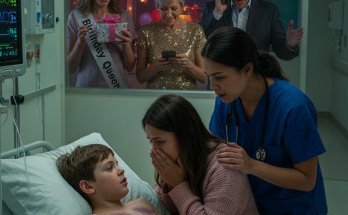
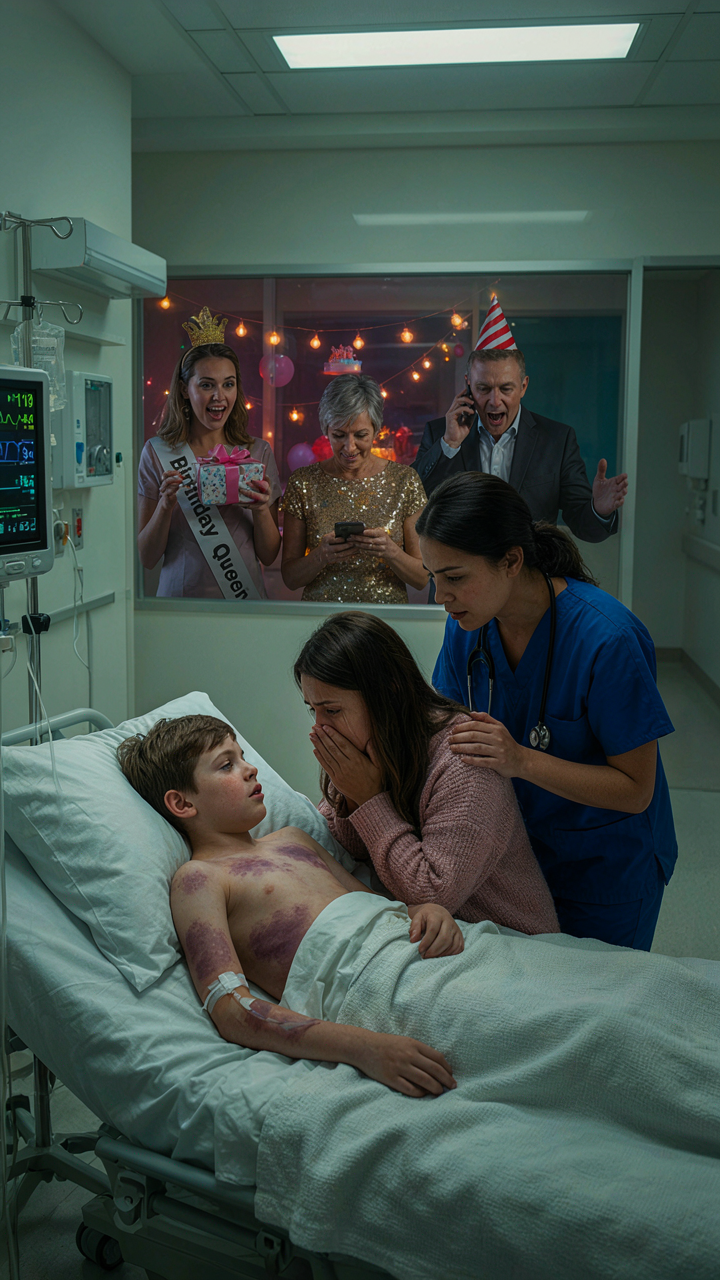
It was 7:30 on a Saturday evening. Cold green and blue lights from the medical monitors washed over the room, illuminating the equipment surrounding my four-year-old son’s hospital bed.
Every few seconds, a bright line jumped across the heart monitor. Each mechanical sound made my stomach tighten.
I sat in a worn vinyl recliner, gripping a damp cloth so tightly that my fingers had gone pale.
My back ached. My eyes burned. I hadn’t slept properly in thirty-six hours.
But I couldn’t bring myself to close them.
Some irrational part of me believed that if I stopped watching my son for even a moment, something terrible would happen.
“Come on, Leo,” I whispered. “Just keep breathing, sweetheart. Breathe with the machine. Mama’s right here.”
Under his clear oxygen mask, Leo looked impossibly fragile.
His little chest pulled inward with every breath. The doctors called it intercostal retraction, but to me it looked like my child was fighting an invisible enemy that refused to release him.
His cheeks were flushed with fever, and his small fingers lay motionless inside my hand.
Twenty minutes earlier, his temperature had reached 104.4 degrees.
The nurses had worked quickly to cool him while administering intravenous fluids and powerful antibiotics.
They were concerned about a serious infection.
And his breathing was becoming dangerously difficult.
Beside me sat my husband, David.
He wore his familiar faded flannel shirt, old jeans, and scuffed work boots.
To anyone who didn’t know him, he looked like an ordinary working-class father who had rushed to the hospital without thinking about his appearance.
He hadn’t spoken for nearly an hour.
His large hand rested gently against Leo’s leg, his thumb moving in slow circles over our son’s skin.
But I knew David well enough to recognize the tension beneath his silence.
His jaw was rigid.
His gray eyes never left Leo.
And the stillness in his body frightened me almost as much as the machines.
My name is Clara Vance.
I was twenty-nine years old, and for most of my life, I had believed that being a good daughter meant accepting whatever my family demanded.
My mother, Eleanor Vance, ruled our family as though everyone existed to serve her.
My younger sister, Chloe, was her pride and joy.
At eighteen, Chloe was everything Eleanor wanted a daughter to be: beautiful, polished, accomplished, and accustomed to getting her way.
I was the daughter who was expected to understand.
To forgive.
To sacrifice.
And above all, never to complain.
If something went wrong at home, somehow it became my responsibility.
When Chloe was upset, I was expected to comfort her.
When my mother wanted something, I was supposed to provide it.
Even my accomplishments were treated as unimportant.
When I graduated at the top of my class with a degree in structural interior design, my mother used the celebration dinner to announce Chloe’s acceptance into an exclusive summer equestrian program in Switzerland.
When I married David in a small courthouse ceremony five years earlier, Eleanor told our relatives that I had settled for a penniless mechanic.
She mocked his clothes, his work, and the modest wedding ring he had given me.
David never argued.
He simply smiled politely and continued treating me with a tenderness I’d never experienced in my childhood home.
For years, I told myself that keeping the peace was worth the humiliation.
Deep down, I was still waiting for my mother to look at me with genuine pride.
I wanted her to say she loved me.
Then my phone vibrated against the metal hospital tray.
The screen displayed Eleanor’s photograph.
I reached for it.
“David,” I whispered. “It’s Mom.”
He didn’t look away from Leo.
“Don’t answer, Clara. Right now, you need to be here with our son.”
“She knows he’s in the hospital,” I said. “Maybe she’s calling to check on him.”
A foolish part of me even hoped she might be downstairs, ready to offer comfort.
I answered.
“Mom? The doctors started another antibiotic. Leo’s fever reached a hundred and four, and they’re checking his blood because they’re worried about sepsis—”
“I don’t give a damn about your medical excuses, Clara!”
I went still.
Behind her voice, I could hear elegant music, laughter, and glasses clinking.
She was already at the St. Regis.
“Mom?”
“Do you know what time it is?” she demanded. “It’s seven-thirty-five! The reception line opened twenty minutes ago, and your seat is empty!”
I looked at Leo.
His chest rose painfully beneath the oxygen mask.
“Mom, Leo is in intensive care. He’s having trouble breathing. The doctor said they may have to put him on a ventilator if his oxygen level drops again.”
“He’s got a stupid cold!” Eleanor snapped. “Children get fevers, Clara. Stop turning everything into a tragedy!”
I couldn’t believe what I was hearing.
“This is Chloe’s eighteenth birthday gala!” she continued. “Do you have any idea what I spent on the Grand Ballroom? Fifty important relatives are here, and the eldest daughter of this family is nowhere to be seen!”
“Mom, my son is fighting for his life.”
“Your son is an excuse! You’re trying to make your sister’s special night about yourself!”
My hand began shaking.
“I’m not leaving Leo.”
Eleanor’s voice dropped into a vicious whisper.
“Listen carefully, you ungrateful girl. Leave the boy with David. That useless husband of yours can sit around doing nothing for once.”
I stared at the wall.
“Put on the emerald gown I chose for you and get to the ballroom in fifteen minutes. You will hand out the programs and escort our relatives to their seats.”
“Mom—”
“If you don’t arrive before the first toast, you’re finished with this family. I’ll remove you from everything. You’ll never receive a penny of our inheritance.”
My throat tightened.
“He’s your grandson.”
There was a brief silence.
Then Eleanor answered with a coldness I would never forget.
“He’s an inconvenient distraction, and you’re a failure of a daughter.”
She paused.
“Fifteen minutes, Clara. Or never call me again.”
The call ended.
I remained motionless, holding the phone against my ear.
For twenty-nine years, I had accepted my mother’s cruelty because I was terrified of losing her.
But as I looked at my little boy struggling for breath, something inside me finally changed.
I realized that the family I had spent my life trying to please was willing to abandon my child when he needed us most.
For illustration purposes only
And suddenly, I no longer cared about being disowned.
“Clara.”
David’s quiet voice interrupted my thoughts.
I looked up.
He was standing beside Leo’s bed.
His expression was unlike anything I had ever seen.
The gentle man who usually ignored my mother’s insults had disappeared.
His eyes were cold.
His jaw was set.
“What did she say?”
I swallowed.
“She told me to leave Leo here and go to Chloe’s party.”
David didn’t move.
“She said he had a stupid cold. She called him an inconvenience.”
His gaze shifted toward our son.
For a long moment, he said nothing.
Then he brushed Leo’s damp hair away from his forehead.
“Clara, there’s something I should have told you years ago.”
I frowned.
“What?”
“For five years, I’ve let your family believe I’m a struggling consultant. I’ve allowed your mother to insult me because I knew how desperately you wanted her approval.”
He looked directly into my eyes.
“But I’ve also been protecting you from things you never knew were happening.”
My confusion deepened.
“What are you talking about?”
“Remember when Eleanor demanded fifty thousand dollars for renovations to the family home?”
I nodded.
“She said a regional development grant covered it.”
“It wasn’t a grant.”
David reached into his pocket.
“I arranged the payment through my private wealth management office.”
I stared at him.
“Your what?”
He placed a sleek black metal card case on the bedside table.
Inside was a heavy card engraved with a silver crest.
Then he took out a slim, encrypted phone.
On its back was the emblem of Vanguard Alpha Capital.
“Clara,” he said quietly, “I’m not an unemployed project consultant.”
I couldn’t speak.
“I’m the founder and majority managing partner of Vanguard Alpha Capital. We control approximately twenty-two billion dollars in private liquidity across five continents.”
I stared at him, waiting for him to smile and tell me he was joking.
He didn’t.
“The company that owns the St. Regis property operates under one of our investment funds. The banking division behind your mother’s corporate cards uses our collateral arrangements. And the family estate she’s always bragged about is heavily financed through a trust in which I control most of the senior debt.”
My mind struggled to absorb his words.
“David… why didn’t you tell me?”
He stepped closer and gently held my face.
“Because I wanted a marriage that wasn’t built around money. I wanted you to love me when you believed I was an ordinary man.”
His voice softened.
“And you did.”
I thought about our little courthouse wedding.
Our quiet evenings.
The way he fixed things around the house rather than replacing them.
The countless times he had held me after my mother’s insults.
“You defended me when your family laughed at my clothes,” he continued. “You stood beside me when they mocked your wedding ring. I was willing to ignore them forever if it meant you could keep the relationship you wanted with your mother.”
For illustration purposes only
His expression hardened.
“But tonight she crossed a line.”
I glanced at Leo.
“She decided our son’s life mattered less than her reputation,” David said. “I won’t allow her to use us anymore.”
He picked up my phone.
“I can stop the financial support I’ve been providing. I can expose what she’s been hiding and make sure she never uses my resources to humiliate you again.”
He paused.
“But this is your family, Clara. I won’t make that decision without you.”
For the first time in my life, I understood what I truly wanted.
Not Eleanor’s approval.
Not a place at her glamorous table.
I wanted my son to live.
And I wanted our family to be safe.
I looked at David.
“Call her back.”
He waited.
“Put her on speaker,” I said.
Then I took Leo’s tiny hand and held it tightly.
Whatever happened next, I was finished begging my mother to love me.
The phone began ringing.
And on the third ring, Eleanor answered.
PART 2: THE NIGHT HER PERFECT WORLD COLLAPSED
“Clara!” Eleanor snapped. “If you’re calling to tell me you’re running late, don’t bother! You should already be in the lobby!”
“Good evening, Eleanor,” David said.
The music on her end continued playing.
Then came a mocking laugh.
“Oh, wonderful. The unemployed husband has decided to speak.”
David remained calm.
“Clara won’t be attending Chloe’s party.”
“Put my daughter on the phone!”
“She’s exactly where she belongs. Beside our son.”
Eleanor scoffed.
“You have no right to interfere with my family. Clara knows what happens if she embarrasses me tonight.”
David glanced at me.
Then he said something that made Eleanor fall silent.
“Let’s discuss the money you’ve been spending.”
“What?”
“The St. Regis ballroom. Ninety thousand dollars in contracted expenses. Twenty thousand deposited, with seventy thousand scheduled through a private credit arrangement.”
Her voice changed.
“How do you know that?”
“Because Vanguard Alpha Capital controls the holding company behind the property’s financing.”
Eleanor laughed.
“You? Don’t be ridiculous.”
“I’m also the person who has been covering the expenses you thought were coming from your family investment distributions.”
“That’s impossible.”
“Your luxury purchases, the renovations, the corporate expense cards, and several other arrangements have been supported by accounts connected to my companies.”
I stared at David.
Even after his confession, hearing the details made my head spin.
“You’re lying,” Eleanor hissed.
“No. I’ve just authorized a review of those accounts. Any expenses that weren’t properly approved will be suspended.”
“You can’t do that!”
“I can stop providing voluntary financial support, Eleanor.”
He glanced down at the encrypted phone.
“And I’ve instructed our legal and compliance teams to examine the existing contracts.”
Her breathing became audible.
“What about the party?”
“The hotel has been notified that no further charges are authorized against our facilities. Its management will deal with your contract according to its terms.”
“David, you listen to me—”
“And the Mercedes you’ve arranged for Chloe?”
Silence.
“The metallic-rose AMG cabriolet,” David continued. “It’s leased through a commercial fleet account connected to my company. That arrangement is also being reviewed, and recovery has been requested.”
“You wouldn’t dare!”
“You told my wife to abandon our critically ill son for a birthday party.”
His voice remained steady.
“That was your decision, Eleanor. What happens to the support I’ve been giving you is mine.”
“David!”
He ended the call.
Then he placed the phone on the table and returned to Leo’s bedside.
For a moment, neither of us spoke.
I looked at the man I had married.
I had thought I knew everything about him.
Clearly, I hadn’t.
But there was one thing I had always known.
He loved our son.
He loved me.
And whatever his bank accounts contained, those things had never been an act.
“David,” I whispered.
He looked up.
“We’re going to have a long conversation about why you kept this from me.”
He nodded.
“I know.”
“But not tonight.”
“Not tonight,” he agreed.
He kissed Leo’s forehead.
“Tonight we stay right here.”
Across the city, Eleanor’s carefully arranged celebration was beginning to unravel.
At the St. Regis, the Grand Ballroom had been decorated with thousands of white gardenias.
Crystal chandeliers illuminated silk ribbons and expensive floral displays.
A live quartet performed while fifty guests drank champagne and admired the lavish surroundings.
Chloe stood at the center of the ballroom in a custom tulle gown that had cost fifteen thousand dollars.
A platinum tiara glittered in her blonde hair.
She had spent months preparing for this evening.
Every detail was supposed to be perfect.
Then Aunt Beatrice approached Eleanor.
“Where is Clara? Isn’t she supposed to present the family brooch?”
Eleanor forced a smile.
“Clara has been having some domestic difficulties.”
Before she could elaborate, the music abruptly stopped.
The decorative lighting dimmed.
Several guests turned toward the entrance.
Julian Sterling, the hotel’s senior general manager, walked into the ballroom accompanied by four security officers.
Eleanor immediately approached him.
“Mr. Sterling! What is happening to my daughter’s party?”
Sterling held a tablet in one hand.
“Mrs. Vance, we need to discuss your payment arrangements.”
“Payment arrangements?”
“The credit facility designated for the outstanding event balance has been withdrawn. The remaining authorization has been declined.”
Eleanor stared at him.
“That’s impossible.”
“I’m afraid the account is no longer available.”
“Run it again!”
She pulled a heavy black card from her purse.
A staff member brought over a payment terminal.
Eleanor inserted the card.
The machine rejected the transaction.
She tried again.
Another rejection.
A murmur spread through the guests.
Aunt Beatrice quietly stepped away.
“This is ridiculous!” Eleanor shouted. “There must be a mistake!”
Sterling kept his voice professional.
“You’re welcome to provide another valid payment method. Until the outstanding charges are resolved, we cannot continue extending services on the existing credit arrangement.”
For illustration purposes only
The servers began pausing the service.
Bartenders stopped opening additional bottles.
The musicians waited awkwardly.
Chloe hurried toward her mother.
“Mom, what’s happening?”
“Nothing, sweetheart. It’s a misunderstanding.”
“Then why did the music stop?”
Eleanor ignored her and tried calling the card issuer.
The account was unavailable.
She called another number.
Then another.
Each conversation ended with the same devastating realization.
The money she had been relying on was not hers to command.
At that moment, a guest near the terrace windows pointed toward the driveway.
“Isn’t that Chloe’s car?”
Outside, a flatbed recovery truck had arrived beside the metallic-rose Mercedes-AMG.
The oversized satin bow was still attached to its hood.
Several guests gathered at the windows.
Phones appeared.
Cameras began recording.
Chloe pushed through the crowd.
When she saw the car being prepared for removal, she screamed.
“Mom! That’s my birthday present!”
Eleanor hurried toward the window.
She watched the vehicle disappear onto the recovery truck.
For the first time that evening, she had no explanation.
“Do something!” Chloe cried.
Eleanor tried calling David.
He didn’t answer.
She called again.
Nothing.
Around them, guests began leaving.
Some whispered.
Others stared openly.
A few pretended not to notice.
But everyone understood that something extraordinary had happened.
The woman who had spent years presenting herself as untouchable had suddenly lost control of the very things she used to impress others.
Chloe sank onto a chair.
“You told me David was poor,” she whispered.
Eleanor didn’t respond.
“You said Clara married a nobody.”
“Chloe, not now.”
“Then how is he doing this?”
Eleanor looked down at her useless card.
For years, she had confused access to money with ownership of it.
And now she was discovering the difference.
Then she remembered the hospital.
She grabbed Chloe’s arm.
“We’re going to see your sister.”
Back in Room 412, I knew nothing about the chaos unfolding at the St. Regis.
My entire world was concentrated on the little boy lying beneath the hospital blanket.
The next hour passed in a blur of blood pressure checks, medication adjustments, and whispered conversations with the nurses.
Then something changed.
Leo’s breathing became less strained.
The frightening inward pull beneath his ribs gradually eased.
His temperature began falling.
The heart monitor settled into a steadier rhythm.
I barely dared to hope.
The pediatric intensivist returned and examined him carefully.
After reviewing his readings, she turned toward us.
“Clara, David, he’s responding well to treatment.”
I covered my mouth.
“His fever is down to 99.1,” she continued. “His breathing has improved significantly, and his oxygen saturation is excellent. We’re going to keep monitoring him closely, but these are very encouraging signs.”
My knees almost gave way.
David wrapped an arm around me.
For the first time in nearly two days, I let myself cry.
Not because I was frightened.
Because I could finally imagine bringing my son home.
A small voice interrupted us.
“Mommy?”
I turned.
Leo’s eyes were open.
His cheeks were still pale, but he was looking directly at me.
“Hi, baby,” I whispered.
“My throat feels funny.”
“I know, sweetheart.”
“Can I have apple juice?”
I laughed through my tears.
David reached for the cup the nurse had approved and helped Leo take a careful sip.
“There you go, little bear,” he murmured.
Leo gave him a tired smile.
“Daddy?”
“Yeah, buddy?”
“Can we go home soon?”
David brushed his hair.
“As soon as the doctors say you’re ready.”
Then a violent pounding echoed from the security doors outside the intensive care unit.
I turned.
Through the glass, I saw Eleanor and Chloe.
They looked nothing like the elegant women who had attended the birthday gala.
Rain had soaked their expensive dresses.
Eleanor’s mascara streaked down her cheeks.
Chloe’s gown was torn near the hem.
Both were shouting at the hospital security staff.
“David!” Eleanor screamed through the glass. “You need to fix this!”
My husband didn’t move.
His attention remained on Leo.
A man named Marcus, who worked with David’s security team, had arrived earlier and was speaking with the hospital guards.
He approached us.
“Would you like them removed?”
I looked at my son.
He was drinking his juice.
His little fingers were wrapped around David’s hand.
I had spent my entire life allowing Eleanor to decide when I was supposed to listen.
Not anymore.
“I’ll speak to her,” I said.
David studied my face.
“Are you sure?”
“Yes.”
I stepped into the hallway.
Eleanor immediately rushed toward me.
“Clara! Thank God! Tell your husband to stop this insanity!”
I stood still.
“Lower your voice. There are sick children here.”
She barely seemed to hear me.
“They humiliated us! The hotel stopped serving dinner! They took Chloe’s car! People recorded everything!”
Chloe began crying.
“Everyone saw it, Clara!”
Eleanor reached for my wrist.
“You have to make David reverse this. We’re family!”
I pulled my hand away.
“Family?”
She blinked.
“Of course we’re family!”
I looked directly at her.
“An hour ago, my son could barely breathe.”
“Clara—”
“His fever was over a hundred and four. Doctors were discussing whether he needed a breathing tube.”
“I was upset about the party!”
“And you told me to leave him.”
She swallowed.
“You know I didn’t mean it that way.”
“You called him an inconvenience.”
“You’re taking everything out of context!”
“No,” I said quietly. “For the first time in my life, I’m hearing you exactly as you are.”
Her expression changed.
“Don’t speak to me like that.”
I almost smiled.
For illustration purposes only
Even now, she expected me to be afraid.
“I spent twenty-nine years trying to be the daughter you wanted. I let you insult my husband. I let you turn every important moment in my life into something about Chloe.”
Eleanor looked around, embarrassed that hospital staff could hear us.
“Clara, lower your voice.”
“My son nearly died tonight,” I continued. “And all you care about is your party.”
She reached toward me again.
“Please. David has to give us the money back.”
“The money was never yours to demand.”
Her face hardened.
“After everything I’ve done for you?”
I felt the old guilt stir.
But it no longer controlled me.
“You raised me,” I said. “That didn’t give you the right to hurt me forever.”
For a moment, she looked genuinely shocked.
Then she began crying.
“I gave you life, Clara!”
I thought of Leo.
The machines.
His tiny hand in mine.
And the terror of wondering whether I would ever hear his laugh again.
“Yes,” I answered. “And now it’s my responsibility to protect the life I brought into this world.”
Eleanor stared at me.
“We aren’t going to continue this relationship.”
“You can’t mean that.”
“I do.”
Chloe stepped forward.
“What about me?”
I looked at my younger sister.
For eighteen years, she had lived inside a world that taught her she deserved everything.
Perhaps losing that world would force her to grow.
But I couldn’t do that growing for her.
“I hope you both find a way to build your lives without hurting other people,” I said.
Then I turned toward Marcus.
“Please make sure they leave.”
Eleanor began protesting.
But the hospital guards calmly escorted them toward the elevators.
I didn’t follow.
I didn’t argue.
I didn’t apologize.
I returned to my son’s room.
David was standing beside the door.
He wrapped his arms around me.
For the first time in my life, I felt no need to chase after my mother.
Then Marcus approached us with a thick folder.
“David, the preliminary accounting review has uncovered something serious.”
David opened it.
Inside were records of corporate expense authorizations connected to Eleanor.
Marcus continued.
“Over the past thirty-six months, twelve authorizations appear to contain Clara’s forged signature. The total is approximately six hundred and forty thousand dollars.”
I stared at him.
“My signature?”
“Yes. The forensic team has identified significant discrepancies.”
David’s expression darkened.
“Have legal review everything before taking further action.”
“They already have. The preliminary evidence has been referred for possible criminal investigation.”
David looked at me.
“Clara, you should decide how involved you want to be.”
I looked through the glass.
Leo was resting beneath his dinosaur blanket.
His breathing was steady.
I thought about the years of manipulation.
The money.
The lies.
The way my mother had used the word family as permission to take whatever she wanted.
Then I looked back at the folder.
“If she forged my name, let the authorities investigate,” I said.
David nodded.
I didn’t want revenge.
I wanted the truth.
And I wanted our son to grow up in a family where love was never used as a weapon.
PART 3: THE FAMILY WE CHOSE TO PROTECT
One year later, sunlight poured across the green lawns of our coastal home in Montecito.
The Pacific Ocean glittered beyond the cliffs.
A warm breeze carried the scent of jasmine and eucalyptus through the garden.
And somewhere near the lawn sprinklers, my son was laughing.
“Mommy! Watch me!”
I looked up from the terrace.
Leo, now five years old, was racing barefoot across the grass.
His dark hair bounced wildly as he ran through the water.
Behind him charged Barnaby, our clumsy golden retriever puppy, barking as though the entire game had been invented for his benefit.
Water sparkled around them.
Leo shrieked with laughter.
And I found myself smiling so hard my cheeks hurt.
A year earlier, I had sat beside a hospital bed wondering whether I would ever hear that sound again.
Now it filled our home every day.
David sat beside me on a teak lounge chair.
He wore faded jeans and a white linen shirt.
His bare feet rested against the warm stone terrace.
There was a glass of lemonade in his hand.
His corporate phone lay untouched on the table.
Vanguard Alpha Capital was working on a multibillion-dollar infrastructure merger, but David hadn’t checked a single business update all afternoon.
He was too busy watching our son chase the dog.
“He’s getting faster,” David said.
I laughed.
“He’s getting harder to catch.”
“Definitely inherited your stubbornness.”
“That’s determination.”
“Of course it is.”
I leaned against his shoulder.
For the first time in years, peace didn’t feel like something I had to earn.
It simply existed.
The months following Leo’s hospitalization had not been easy.
When the investigators examined Eleanor’s financial records, they uncovered extensive evidence of unauthorized corporate transactions.
The disputed expenses totaled approximately six hundred and forty thousand dollars.
The case eventually resulted in a negotiated resolution that required Eleanor to repay the money.
To satisfy the restitution agreement, she sold much of the jewelry, designer clothing, and expensive possessions that had once defined her public image.
The glamorous life she had built around borrowed resources disappeared.
She moved into a modest apartment inland.
Without the financial support she had taken for granted, she found work at a department store, handling customer returns.
Chloe also had to make major changes.
The extravagant lifestyle she had known was no longer possible.
Many of the friends who had surrounded her at parties disappeared when the invitations and expensive gifts stopped.
She left her costly private school program and began working as a restaurant hostess.
For the first time, she had to think seriously about paying bills and managing her own life.
I heard these details through the legal proceedings and occasional updates.
I didn’t celebrate their difficulties.
But I didn’t rush to rescue them, either.
There had been a time when one tear from my mother could make me abandon my own needs.
Now I understood that boundaries were not cruelty.
And protecting my family didn’t require me to keep sacrificing myself.
David and I had also faced difficult conversations.
After that night in the ICU, I had asked him to explain everything about Vanguard Alpha Capital.
Not just the money.
The secrecy.
The years he had spent allowing me to believe he was someone different.
He listened when I told him how frightening it had been to discover that the man I trusted most had concealed such an enormous part of his life.
“I thought I was protecting us,” he admitted.
“I know,” I said. “But I need to be your partner, David. Not someone you protect by keeping her in the dark.”
For illustration purposes only
He took my hand.
“You’re right.”
We spent months learning how to make decisions together with complete honesty.
I met the people who managed his investments.
I learned about the trusts, properties, and business arrangements.
We discussed our finances, our responsibilities, and what kind of life we wanted Leo to grow up knowing.
And I made one thing clear.
“I don’t want our son to believe money makes him better than anyone else.”
David smiled.
“Neither do I.”
Despite everything he owned, he still preferred fixing things himself.
He still wore his old flannel shirts.
And he still spent Saturday mornings making pancakes with Leo.
The difference was that there were no more secrets between us.
“Mommy!”
Leo’s voice brought me back to the present.
He came running up the terrace steps, dripping water everywhere.
Barnaby followed close behind.
“Look what I found!”
Leo held out his cupped hands.
Inside was a tiny red ladybug with black spots.
I leaned closer.
“She’s beautiful.”
“I found her by the roses.”
“Did you?”
He nodded enthusiastically.
“I told her she can stay in our garden forever.”
David smiled.
“That’s very generous of you, buddy.”
Leo looked serious.
“Because nobody’s allowed to be mean to her here.”
My heart tightened.
I wrapped my arms around him.
“That’s right, sweetheart. We take care of the little things that need us.”
He smiled.
Then he carefully carried the ladybug to a jasmine leaf and watched it crawl away.
A moment later, he was racing across the grass again.
Barnaby bounded after him.
I watched until they disappeared behind the sprinklers.
David squeezed my shoulder.
“He’s happy.”
I nodded.
“He really is.”
For a while, we sat quietly.
Then David reached into his pocket.
“I have something for you.”
I turned.
He was holding a thick cream-colored envelope with an embossed seal.
“What’s this?”
“An anniversary present.”
I smiled.
“David, you didn’t have to—”
“Open it.”
Inside were official property documents and an approved architectural development plan.
I read the first page.
Then the second.
My eyes widened.
The documents concerned the former Grand Ballroom and adjoining east wing of the St. Regis property.
But it was the name on the architectural plan that made me stop breathing.
The Leo Vance Pediatric Emergency and Respiratory Center.
I looked at David.
He was watching me quietly.
“What is this?”
“I arranged to acquire the space and secure the approvals for a new nonprofit medical center,” he explained. “A place dedicated to emergency and respiratory care for children.”
I stared at the drawings.
There were treatment rooms.
Specialized respiratory equipment.
Family waiting areas.
And spaces designed so parents could remain close to their children.
David pointed toward the plans.
“We’re working with medical professionals and nonprofit partners to make emergency treatment available to families who can’t afford it.”
My throat tightened.
“David…”
“That night in the hospital, I kept thinking about how frightened we were,” he said. “And we had resources most parents could only dream of.”
He paused.
“I kept thinking about the families who face the same terror while also worrying about how they’re going to pay.”
I looked down at the documents again.
The center would carry our son’s name.
Not because he was wealthy.
Not because he was important to society.
But because he had survived.
And because his survival had reminded us what truly mattered.
“Where Eleanor wanted a ballroom to impress people,” David said softly, “I want us to help build something that actually changes lives.”
Tears slipped down my cheeks.
I laughed and cried at the same time.
“You really bought the ballroom?”
He smiled.
“With the appropriate approvals, we’re turning that space into something much more useful.”
I looked toward the lawn.
Leo was crouched beside Barnaby, showing him something in the grass.
Our little boy had no idea that a building would soon carry his name.
He didn’t know about the financial accounts, the court proceedings, or the complicated history that had brought us here.
And I was grateful.
He deserved a childhood filled with ordinary things.
Puppies.
Ladybugs.
Birthday cakes.
Bedtime stories.
And parents who showed up when he needed them.
I leaned into David’s arms.
“I love you,” I whispered.
He kissed my forehead.
“I love you too.”
For twenty-nine years, I had believed that being a daughter meant enduring whatever my mother demanded.
I had mistaken obedience for love.
I had confused sacrifice with loyalty.
And I had spent far too long trying to earn affection from someone who only valued me when I was useful.
But one terrifying Saturday evening changed everything.
My son had been lying in an intensive care bed, fighting for every breath.
My mother had ordered me to abandon him for a birthday celebration.
And for the first time, I had said no.
I hadn’t known then that David was a billionaire.
I hadn’t known how much of my mother’s lifestyle depended on money he quietly provided.
I hadn’t known the truth about the financial records or the consequences that would follow.
All I knew was that my son needed me.
And I was not leaving him.
That decision cost me the relationship I had spent my entire life trying to preserve.
But it gave me something far more important.
Freedom.
Freedom from the endless guilt.
Freedom from the fear of disappointing my mother.
Freedom to build a family where love wasn’t measured by obedience, money, or public appearances.
Leo suddenly looked up from the lawn.
“Mommy! Daddy! Come play!”
David stood and held out his hand.
“Ready?”
I looked at him.
Then at our son, laughing beneath the sprinklers.
I took David’s hand.
“Absolutely.”
We ran across the grass together.
Barnaby barked.
Leo squealed with delight.
Cold water splashed against my clothes, and I laughed until I could barely breathe.
Above us, the afternoon sky stretched endlessly blue.
For a moment, I remembered the harsh fluorescent lights of Room 412.
The machines.
The alarms.
The terrible fear of losing my child.
Then Leo threw his arms around my waist.
“Got you, Mommy!”
I lifted him into my arms.
“Yes, baby,” I whispered, kissing his cheek. “You did.”
He laughed and hugged my neck.
And I held him close, feeling the strong, steady beat of his heart.
I had once believed that family was something you were obligated to endure, no matter how deeply it hurt.
Now I understood the truth.
Family should be the place where a frightened child finds safety.
Where a husband and wife stand together.
Where love is freely given rather than demanded.
And where nobody is ever expected to sacrifice a child’s well-being to protect someone else’s pride.
My mother had threatened to erase me from her world.
But in choosing my son, I had finally discovered the world where I belonged.
And I would never trade it for anything.