On My 32nd Birthday, My Husband Admitted He Had Slapped Me—But He Didn’t Know Who My Father Really Was
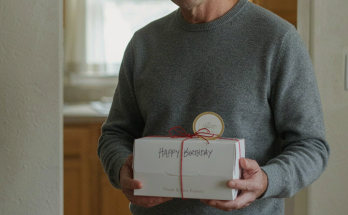
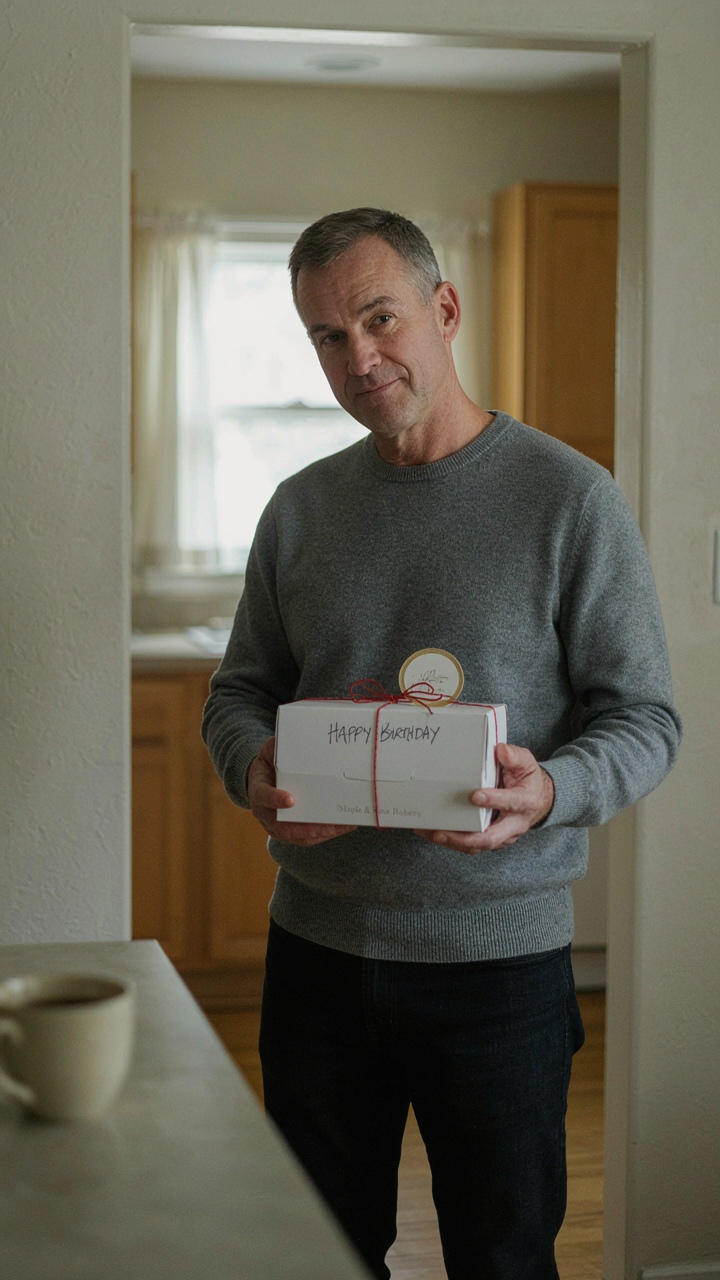
The morning I turned thirty-two, my father walked into my kitchen carrying a white bakery box tied with a red string.
He had a smile on his face.
Then he saw the bruises.
One purple mark stretched beneath my left eye. Another darkened my cheekbone. My lower lip was split, and a faint handprint colored the side of my neck.
The smile disappeared from his face.
“Sweetheart,” he whispered, setting the cake on the counter. “Who did this to you?”
I opened my mouth.
Before I could answer, my husband, Daniel, walked into the kitchen holding a cup of coffee.
He looked at my father, glanced at my bruised face, and smiled.
“I did,” he said casually. “Gave her a slap instead of congratulations.”
For a moment, the entire kitchen went silent.
I expected my father to shout.
I expected him to throw the coffee cup against the wall, grab Daniel by the collar, or demand that I tell him everything.
Instead, my father became perfectly still.
It was a frightening kind of stillness, the sort I had seen only twice in my life: once when a doctor told him my mother had died, and once when a man had threatened our family years ago.
My father slowly turned toward me.
“Sweetheart, go outside for a moment.”
“Dad—”
“Please.” His voice was gentle, but there was something beneath it I had never heard before. “Go outside and shut the door behind you.”
Daniel chuckled.
“What’s this? A private father-in-law meeting? Don’t worry, sir. Your daughter knows how to push my buttons.”
My father didn’t even look at him.
He simply waited until I picked up my coat and walked toward the front door.
As I stepped onto the porch, I heard my father speak.
“Daniel, sit down.”
Then the door closed.
And for the first time in three years of marriage, my husband stopped laughing.
I didn’t know it yet, but that birthday morning would become the day everything Daniel believed about power, money, and control began to collapse.
Because my father wasn’t the helpless old man Daniel had spent years mocking.
And the man who had just admitted to hitting his wife had no idea what he had done.
Chapter One: The Cake With the Red String
My name is Emily Carter.
I was thirty-two years old, and until that morning, I had become very good at pretending my life was normal.
I lived in a two-story house outside Boston with my husband, Daniel Hayes. From the street, our home looked like something out of a real-estate advertisement: white siding, dark shutters, trimmed hedges, and a polished brass knocker on the front door.
Daniel loved appearances.
He loved expensive watches, tailored suits, wine served in the correct glasses, and telling people how successful he had become.
He worked as a senior investment adviser at a financial firm downtown. He earned a comfortable salary, drove a black Mercedes, and introduced himself at parties as a man who understood how money worked.
I worked part-time as a graphic designer from home.
At least, that was what I told people.
The truth was that Daniel had gradually convinced me to give up most of my clients because he said my work interfered with our marriage.
“You don’t need to work so much,” he would say, wrapping an arm around my shoulders. “Let me take care of everything.”
At first, it sounded romantic.
Then it became a rule.
He began checking our bank statements, questioning every purchase, and asking why I needed to visit my father so often.
Eventually, even buying a coffee without telling him became an argument.
The bruises had started six months earlier.
The first time, Daniel apologized for hours.
He cried. He bought flowers. He promised he had been under pressure at work and would never touch me again.
I believed him because I wanted to believe him.
The second time, he blamed me.
The third time, he told me nobody would believe a woman who couldn’t even manage her own marriage.
After that, the apologies became shorter.
The violence became easier for him.
And my silence became easier for everyone else to mistake for happiness.
My father, Robert Carter, had never liked Daniel.
When I first introduced them, Daniel had spent most of dinner discussing his investment portfolio and making jokes about my father’s old-fashioned clothes.
Dad had listened quietly.
After Daniel left, he washed his plate, dried his hands, and asked me one question.
“Does he always need to be the smartest person in the room?”
I laughed.
“Dad, he’s just confident.”
My father studied me for a long moment.
“Confidence doesn’t require making everyone else feel small, Emily.”
I dismissed his concern.
I was twenty-seven, in love, and convinced I understood Daniel better than anyone else.
We married a year later.
Dad attended the wedding in a charcoal suit that had belonged to my grandfather. He gave a short speech, hugged me tightly, and slipped a small silver key into my palm.
“What’s this?” I whispered.
“Something to keep,” he said.
I assumed it was the key to an old keepsake box.
I tucked it into my purse and forgot about it.
Now, three years later, I stood on the porch of my own house with my face aching and my hands trembling while my father sat alone with the man who had hurt me.
I pressed my ear against the door.
I couldn’t hear much.
Then Daniel raised his voice.
“Look, Robert, I don’t know what she’s told you, but this is a private marital matter.”
My father’s reply was too quiet to make out.
Daniel spoke again.
“You can’t just walk into my house and start giving orders.”
Another pause.
Then my father said something that made Daniel fall silent.
“Your house?”
I stepped back from the door.
For the first time, I wondered whether the house I had spent three years calling mine had ever really been what Daniel said it was.
Chapter Two: The Man Daniel Thought He Knew
My father had never been wealthy in the way Daniel understood wealth.
He drove an old Volvo, wore the same brown shoes for years, and bought his shirts from the same department store where he’d shopped when I was a child.
He lived in a modest brick house with a narrow driveway and a maple tree in the front yard.
He liked gardening, crossword puzzles, and making pancakes on Sunday mornings.
After my mother died when I was nineteen, he had raised me alone.
He never remarried.
When I asked why, he would shrug.
“Your mother took up enough room in my heart for two people.”
That was the kind of man I knew.
What Daniel saw was an aging widower with a modest pension and an old car.
At our wedding, Daniel had called him “the retired office guy” when he thought I couldn’t hear.
At Christmas, he once joked that Dad’s biggest investment was the maple tree in his front yard.
And whenever my father offered to pay for dinner, Daniel would insist on splitting the bill, then complain afterward that my father was trying to make him look poor.
Dad never argued.
He simply stopped offering.
What I didn’t know was that my father had spent thirty years building a company that provided logistics and infrastructure services to businesses across the northeastern United States.
He had started with a rented warehouse, two delivery trucks, and a small loan.
By the time I was in high school, his company employed hundreds of people.
He sold his controlling stake years later but retained significant investments, property interests, and a seat on the board of the company that eventually acquired his business.
He never flaunted any of it.
He wanted me to grow up believing that a person’s value had nothing to do with the number on a bank statement.
After my mother died, he became even more private.
He put most of his wealth into trusts and long-term investments. He gave quietly to hospitals, scholarship programs, and families who had fallen on difficult times.
He had paid for my education without making me feel indebted to him.
When I married Daniel, Dad offered to help us buy a home.
Daniel refused.
“I want to provide for my wife myself,” he announced.
Dad nodded.
“All right. Then make sure you provide her with more than a roof.”
Daniel had laughed.
I had been too embarrassed to understand the warning.
The house we moved into was purchased with a mortgage, but my father had quietly helped me establish a separate financial reserve before the wedding. He had insisted it be placed in an account solely under my name.
“Everyone deserves something that remains theirs,” he told me.
I thought he was being sentimental.
Daniel never knew about that account.
He never knew about the investments my father had established for me years earlier.
And he certainly never knew that the company where he worked had been negotiating a major restructuring involving a group of long-term investors connected to my father’s business interests.
Dad had never interfered with Daniel’s career.
He had never called Daniel’s employer.
He had never used his connections to help or hurt him.
He believed adults should be responsible for their own decisions.
But that morning, when Daniel admitted to striking his daughter, my father’s patience ended.
I didn’t know what he said inside the kitchen.
I only knew that, after approximately fifteen minutes, the front door opened.
My father stepped onto the porch.
His expression was calm.
“Come with me, sweetheart.”
“What happened?”
“We’re going to get you somewhere safe.”
I looked past him.
Daniel stood in the doorway with his coffee cup in one hand.
His face had turned pale, but when he noticed me looking, he forced a smile.
“Your father is being dramatic,” he said. “Come inside, Emily. We have a birthday to celebrate.”
Dad placed a protective hand on my shoulder.
“No,” he answered. “You have a decision to make.”
Then he walked me toward his car.
For the first time in months, I didn’t look back to see whether my husband was angry.
I simply kept walking.
Chapter Three: What Happened Behind the Closed Door
My father drove me to a small hotel near the hospital.
He had booked a room before we arrived.
I stared at him.
“How did you know?”
He didn’t answer immediately.
Instead, he took a clean handkerchief from his pocket and gently pressed it against the cut on my lip.
“I didn’t know exactly what I would find,” he said. “But I knew something was wrong.”
I lowered my eyes.
“I’m sorry.”
His hand stopped.
“Don’t apologize to me for someone else’s cruelty.”
That was when I began to cry.
Not the quiet tears I had shed alone in the bathroom after Daniel went to sleep.
These were the kind that shook my shoulders and made it difficult to breathe.
I cried for the birthday cake still sitting on my kitchen counter.
I cried for the woman I had been before I started calculating every word I spoke.
I cried because I had spent months telling myself the next incident would be the last.
My father held me without asking me to explain anything.
When I finally calmed down, he sat beside me.
“Emily, I need to ask you something.”
I nodded.
“Has he hurt you before?”
I wanted to lie.
The old instinct rose automatically: protect Daniel, minimize the truth, make everything sound manageable.
But I looked at my father’s face and couldn’t do it.
“Yes.”
“How many times?”
“I don’t know.”
He closed his eyes briefly.
“Does anyone else know?”
I shook my head.
“Not really. I told my friend Sarah that we were having problems, but I never told her about the hitting.”
“Why not?”
“Because I thought she’d tell me to leave him. And I wasn’t ready.”
My father took a slow breath.
“Are you ready now?”
I looked at my bruised hands.
“I don’t know.”
He nodded.
“Then we won’t force you to answer everything today. But we are going to make sure you’re safe.”
He helped me contact a domestic violence support service and arrange medical care. A clinician documented my injuries, and a counselor explained the options available to me.
My father offered to accompany me, but he let me decide how much help I wanted.
For the first time in a long while, I was allowed to make a decision without someone punishing me for it.
Later that afternoon, I asked him what had happened in the kitchen.
He was quiet for a moment.
Then he told me.
After I left, Daniel had leaned back in his chair and laughed.
“Let’s get one thing straight,” Daniel had said. “Emily can be emotional. She exaggerates. I gave her a slap because she was being disrespectful. It wasn’t a big deal.”
My father had looked at him.
“You struck my daughter in the face.”
“She was provoking me.”
“And you think that makes it acceptable?”
Daniel shrugged.
“Marriage isn’t perfect. You’ll understand when you’ve been in a real relationship.”
Dad hadn’t moved.
“Did she tell you to hit her?”
Daniel rolled his eyes.
“Oh, come on.”
“Did she?”
“No.”
“Then don’t blame her for your choice.”
Daniel had stood up.
“I’m not going to sit here and be lectured by a man who doesn’t even understand how modern marriages work.”
My father remained seated.
“Sit down, Daniel.”
Something in his voice made Daniel hesitate.
Then Dad placed a folder on the table.
Inside were copies of the deed to our house, the mortgage records, and several financial documents.
Daniel frowned.
“What is this?”
“Paperwork.”
“I can see that.”
“Then read it.”
Daniel opened the folder.
The house had been purchased with funds from an arrangement that included my father’s investment company. The mortgage was in Daniel’s and my names, but a separate recorded agreement established additional rights and obligations connected to the property’s financing.
Daniel had never bothered to understand the details.
He had assumed the assistance my father provided before our wedding was simply a generous gift.
My father leaned forward.
“You’ve spent years telling Emily that you provide everything for her. You’ve used money to make her feel dependent on you. You’ve treated my kindness as weakness.”
Daniel’s expression hardened.
“What are you threatening me with?”
“Nothing that isn’t already written in those documents.”
Dad tapped the folder.
“You should speak to your attorney before making any more assumptions about this house.”
Daniel glanced toward the front door.
Then he laughed nervously.
“You think paperwork scares me?”
“No,” my father replied. “I think consequences might.”
Daniel stood.
“You can’t destroy my marriage because of one argument.”
My father rose slowly.
“This isn’t about an argument. It’s about what you admitted doing to your wife.”
He walked toward the door, then stopped.
“One more thing. You told me you slapped Emily instead of giving her birthday congratulations.”
Daniel said nothing.
“My daughter deserved a birthday cake, not a bruise. Remember that the next time you decide your anger matters more than another person’s safety.”
Then my father left.
He did not shout.
He did not threaten violence.
He simply stopped protecting Daniel from the consequences of Daniel’s own behavior.
Chapter Four: The Messages
By the second day, Daniel had called me forty-seven times.
At first, his messages sounded apologetic.
Emily, please come home.
I shouldn’t have said that in front of your father.
Let’s talk like adults.
Then they changed.
Your father is manipulating you.
You’re making a huge mistake.
You know what happens when you turn everyone against me.
I showed the messages to my counselor.
She advised me to preserve them and avoid meeting Daniel alone.
My father never told me what I had to do.
He simply asked what I needed.
I needed a charger.
He bought one.
I needed clothes.
He arranged for a trusted friend to collect them while Daniel was away.
I needed to know whether I was losing my mind.
He listened while I described every incident I could remember.
The night Daniel threw a glass against the wall because dinner was cold.
The morning he grabbed my wrist hard enough to leave fingerprints.
The time he took my phone and accused me of cheating because a male client had emailed me.
The evening he stood in front of the bedroom door and told me I wasn’t going anywhere until I apologized.
Each memory made me feel smaller.
My father listened without interrupting.
When I finished, he asked, “Did you ever believe you deserved any of it?”
I stared at the carpet.
“Sometimes.”
His eyes filled with sadness.
“That’s what frightens me most.”
He took my hand.
“Emily, a person can make mistakes. A person can be difficult, selfish, impatient, even cruel with words. But none of those things gives someone the right to hurt you.”
I wanted to believe him.
Yet some part of me still expected Daniel to call and say the right words.
I thought of our wedding day, our first apartment, the vacation photographs, the mornings he brought me coffee.
I wondered whether any of those memories had been real.
My father seemed to read my thoughts.
“You can miss the person you hoped he was,” he said, “without returning to the person he has shown you he is.”
That night, Sarah came to visit.
She had been my closest friend since college, and the moment she saw my face, she covered her mouth.
“Oh, Emily.”
I began to apologize.
She stopped me.
“No. Don’t you dare apologize.”
Then she sat beside me and cried.
She told me she had suspected something was wrong. She had noticed I stopped attending dinners, canceled plans at the last minute, and began asking Daniel’s permission before accepting invitations.
“I thought he was controlling,” she admitted. “But I didn’t realize he was hurting you.”
“Neither did I,” I whispered.
Sarah stayed until late.
Before leaving, she hugged me and said, “You don’t have to solve the rest of your life tonight. You just have to get through tonight.”
For the first time, I understood how much time I had spent trying to keep everyone else comfortable.
I had made excuses for Daniel so my friends wouldn’t worry.
I had smiled at family dinners so nobody would ask questions.
I had hidden bruises beneath makeup because I didn’t want anyone to know.
But the secret had never protected me.
It had protected him.
And I was finished doing that.
Chapter Five: Daniel’s Biggest Mistake
Three days after my birthday, Daniel arrived at my father’s house.
I was sitting at the kitchen table when I heard his Mercedes pull into the driveway.
My stomach tightened.
Dad looked up from the newspaper.
“Do you want me to answer the door?”
I considered it.
Then I shook my head.
“No. I want to.”
He nodded.
“Would you like me to stay in the room?”
“Yes, please.”
Daniel entered wearing a navy suit and carrying a bouquet of roses.
He looked like the man I had married.
Clean-shaven. Well-dressed. Charming when he wanted to be.
“Emily,” he said softly.
I remained seated.
He placed the flowers on the table.
“I’ve been worried sick.”
I didn’t answer.
He looked at my father.
“Robert, I know things got out of hand. I regret it. I shouldn’t have lost my temper.”
Dad said nothing.
Daniel turned back to me.
“Can we talk privately?”
“No.”
His expression changed slightly.
“Emily, please. We have a life together.”
“You hit me.”
“I know.”
“You told my father you did it like it was funny.”
“I was angry.”
“You smiled when you said it.”
He rubbed his forehead.
“Because I was trying to act like it wasn’t a big deal. I didn’t know what else to do.”
I stared at him.
For months, I had waited for Daniel to acknowledge what he had done.
Now he was standing in front of me, and somehow he was still explaining why I should understand him.
“I’m not ready to come home,” I said.
His jaw tightened.
“Your father has filled your head with nonsense.”
“No one filled my head with anything.”
“Then why are you acting like this?”
“Because I’m tired of being afraid of you.”
For a moment, something flickered across his face.
Then he lowered his voice.
“Listen carefully. I have a reputation to protect. I have a career. If you turn this into some public scandal, you will regret it.”
My father slowly folded his newspaper.
Daniel noticed.
“I’m speaking to my wife.”
Dad looked at him.
“She just told you she’s afraid of you. That should concern you more than your reputation.”
Daniel laughed without humor.
“You don’t understand. You think you can buy your way into every situation.”
My father remained calm.
“No. I understand that my daughter has the right to decide where she feels safe.”
Daniel pointed at him.
“This is exactly why I never wanted your money. You think you own everybody.”
Dad’s expression barely changed.
“Daniel, you’ve mistaken restraint for helplessness for a very long time.”
“What is that supposed to mean?”
“It means I’ve allowed you to make your own choices. Today, I’m allowing you to face them.”
Daniel looked from my father to me.
Then he said the sentence that ended whatever remained of my hope for our marriage.
“If you walk away from me, don’t expect a cent. I’ll make sure you leave with nothing.”
I had heard versions of that threat before.
But this time, I didn’t feel panic.
I felt clarity.
“You don’t get to decide what I deserve,” I said.
Daniel stared at me.
Then he snatched up his flowers, turned toward the door, and left.
My father waited until the sound of the Mercedes disappeared.
Then he asked, “How do you feel?”
I thought about it.
“Terrified.”
He nodded.
“And?”
I looked toward the window.
“Free.”
Chapter Six: The Company Daniel Boasted About
A week later, Daniel’s confidence began to crack.
I didn’t know the details at first.
I was busy meeting with my attorney, arranging a safer living situation, and beginning the difficult process of separating my life from his.
My father never interfered with those decisions.
He paid for an attorney only after I agreed to accept the help, and the attorney explained that every legal step would be handled according to the law.
Then, one evening, Dad asked whether I knew much about Daniel’s workplace.
“Only what he tells me,” I said.
“What has he told you?”
I thought for a moment.
“He says he’s one of the most important advisers there. He says the company is about to make a huge acquisition. He’s been talking about a promotion for months.”
Dad nodded.
“Has he ever mentioned the name Carter Holdings?”
I shook my head.
“No. Why?”
“Because the company is one of several investment groups involved in the proposed transaction.”
I stared at him.
“You’re involved?”
“Through an investment partnership, yes.”
I remembered Daniel’s jokes about my father’s old car.
I remembered how he had once described his own employer as a place where “real money lives.”
I remembered how he had dismissed Dad as a man who had never accomplished anything significant.
“Does Daniel know?”
“I don’t believe he knows the extent of my involvement.”
“Are you going to do something to him?”
My father looked at me carefully.
“No.”
I searched his face.
“Even after what he did?”
“Especially after what he did.”
He explained that the company had independent executives, a board, and established procedures. He would not ask anyone to punish Daniel for a personal matter.
“If Daniel has violated company policy or the law,” Dad said, “those matters should be handled through the proper channels. If he has not, I won’t manufacture a reason.”
I felt a strange mixture of disappointment and relief.
Part of me wanted the universe to deliver an immediate punishment.
I wanted Daniel to lose the job he bragged about, the car he loved, and the status he used to make me feel insignificant.
But my father wasn’t interested in revenge for its own sake.
He wanted the truth to stand on its own.
Two weeks later, the investment transaction was delayed after the company’s compliance team identified irregularities in a set of client accounts.
Daniel was among several advisers asked to provide records.
The review was unrelated to my father’s conversation with him, and my father made no request that Daniel be investigated.
Still, the news shook Daniel.
He called me repeatedly.
At first, he asked whether I had told my father anything about his work.
I hadn’t.
Then he accused me of trying to destroy him.
Finally, he left a voicemail.
“You think you’re untouchable because your father has money? You have no idea what you’ve started.”
I saved the message and forwarded it to my attorney.
That was all.
I didn’t call him back.
I didn’t need to.
For years, Daniel had treated his career as proof that he was better than everyone around him.
Now, for the first time, he had to answer questions from people who weren’t impressed by his expensive suit.
And he couldn’t charm his way out of every conversation.
Chapter Seven: The Silver Key
One rainy afternoon, I returned to my father’s house and found him sitting at the dining table with a small wooden box.
It was old, with brass hinges and a tiny lock.
He pushed it toward me.
“Do you remember the key I gave you at your wedding?”
I blinked.
“The little silver one?”
He nodded.
I went upstairs and searched the bottom of my jewelry drawer.
There it was, wrapped in a piece of tissue paper.
When I returned, Dad took the key and opened the box.
Inside were photographs, letters, a small velvet pouch, and a thick envelope with my name written across the front.
I picked up the photographs first.
There was my mother holding me as a baby.
My father carrying me on his shoulders at a county fair.
The three of us standing beside a Christmas tree, my mother’s head resting against Dad’s shoulder.
I began to cry.
“I haven’t seen some of these in years.”
“Your mother wanted you to have them when you were ready.”
I opened the envelope.
Inside were copies of documents establishing a trust in my name, created years before I met Daniel.
There were investment statements, letters from my father’s attorney, and instructions for accessing the account.
I looked up.
“How much is in here?”
“Enough to give you choices,” he said.
“Dad.”
He smiled sadly.
“I know you’re going to ask for a number. But the important thing isn’t the balance. It’s that this money is yours, subject to the terms of the trust. No one else gets to use it to control you.”
I stared at the papers.
The account was worth substantially more than I had imagined.
I could pay for an apartment, rebuild my design business, and cover my living expenses while I recovered.
I could make decisions without asking Daniel for permission.
“Why didn’t you tell me?”
“Because I didn’t want money to become the center of your life. I wanted you to learn to stand on your own.”
He paused.
“And I wanted you to marry someone who loved you without knowing what you might inherit.”
My throat tightened.
“Daniel never knew.”
“No.”
I thought about all the times Daniel had called me financially dependent.
All the times he had told me I couldn’t survive without him.
All the times he had treated his paycheck like a leash around my neck.
He had spent three years trying to convince me I had no power.
Meanwhile, I had been sitting on a future he couldn’t take away simply by threatening me.
But the realization didn’t make me feel triumphant.
It made me sad.
I would have preferred a husband who loved me when he believed I had nothing.
I would have preferred never to need the trust.
I would have preferred a birthday with strawberry cake and a kiss on the forehead.
My father seemed to understand.
“Money can open a door,” he said. “But it can’t decide what you do when you walk through it.”
I folded the papers and placed them back in the envelope.
Then I leaned across the table and hugged him.
“Thank you for not making me feel ashamed.”
He held me tightly.
“You have nothing to be ashamed of, Emily.”
Chapter Eight: The Day Daniel Came Back
Six weeks after my birthday, Daniel appeared at my new apartment.
I had moved into a small, bright place near a park. It wasn’t luxurious, but it had tall windows, a narrow balcony, and a kitchen where I could make coffee without listening for footsteps behind me.
I had begun taking design projects again.
My first client was a local bakery.
The irony wasn’t lost on me.
When Daniel knocked, I looked through the peephole before opening the door.
He appeared thinner.
His expensive suit was wrinkled, and the confidence that usually filled his face had been replaced by exhaustion.
“Emily,” he said.
I kept the chain on the door.
“What do you want?”
“Can we talk?”
“No.”
He looked down.
“I miss you.”
I said nothing.
“I know I made mistakes.”
I felt the familiar urge to soften the moment.
Then I remembered the kitchen.
The white bakery box.
My father’s face when he saw the bruises.
Daniel smiling as he admitted what he had done.
“What you did wasn’t a mistake,” I said. “You chose to hit me.”
He nodded slowly.
“I know.”
“Do you?”
His eyes filled with tears.
“I’ve been seeing someone. A counselor.”
For a moment, I felt hope trying to rise.
Then I reminded myself that change was not something a person could prove by mentioning a counselor during a difficult conversation.
“What have you learned?” I asked.
He swallowed.
“That I have anger issues. That I take things out on people.”
“That’s a start. But it doesn’t explain why you thought you had the right to hurt me.”
He looked away.
“I don’t know.”
“Then you still have work to do.”
He stepped closer to the door.
“My job is in trouble. The review has been awful. I’ve spent years building my career, and now everything is falling apart.”
There it was.
Not I understand what I did to you.
Not I want you to feel safe.
His career.
His reputation.
His life.
“What does that have to do with me?” I asked.
He looked startled.
“I thought you might help me explain things to your father. He knows people. If you told him I was trying to change—”
I almost laughed.
For three years, Daniel had mocked my father.
Now he wanted to borrow his influence.
“You don’t miss me,” I said quietly. “You miss having someone who makes your life easier.”
“That isn’t fair.”
“Neither was being afraid in my own home.”
He gripped the doorframe.
“Emily, please. We were happy once.”
I looked at him for a long time.
“Yes,” I said. “We were. And I will always be sad about what happened to that version of our life.”
His face softened, as though he believed I was about to let him in.
“But I won’t go back.”
The softness disappeared.
“You’ll regret this.”
The old Daniel had returned.
For one second, I felt the familiar chill.
Then I remembered that the door was between us, that I had people I could call, and that I was no longer alone with him in a house where he controlled the rules.
I closed the door.
I locked it.
And I did not reopen it.
Chapter Nine: The Truth Comes Out
Three months later, the company completed its internal review.
Daniel was no longer employed there.
The official reasons concerned his professional conduct and violations of company policies identified during the review. I never learned every detail, and I didn’t need to.
My father had not ordered his dismissal.
He had not demanded special treatment.
He had simply refused to use his position to shield Daniel from a process that applied to everyone.
Daniel’s professional reputation suffered, and his financial circumstances changed.
But the most important change in my life had nothing to do with his career.
I filed for divorce.
The process was difficult.
There were forms to sign, financial records to review, and painful conversations about the marriage I had once expected to last forever.
Daniel disputed several things.
He claimed I had abandoned him.
He said my father had manipulated me.
He insisted that the slap had been an isolated incident.
But I had preserved his messages. I had medical documentation of my injuries. I had photographs, written records, and accounts of incidents I had finally stopped hiding.
My attorney helped me navigate the process and focus on evidence rather than Daniel’s accusations.
I learned that I didn’t have to convince him that he had hurt me.
I only had to tell the truth.
During one meeting, Daniel’s attorney suggested that my father had influenced my decision because of his wealth.
My attorney calmly explained that I was an adult, represented by independent counsel, and capable of making my own choices.
For once, Daniel couldn’t turn my independence into proof that someone else was controlling me.
The divorce was finalized several months later.
I walked out of the courthouse carrying a folder of documents and a small bag containing my keys.
My father was waiting outside.
He didn’t ask whether I was happy.
He knew happiness wasn’t something that arrived all at once after years of fear.
Instead, he asked, “Would you like lunch?”
I smiled.
“Yes.”
We went to a small café and ordered sandwiches.
We talked about the weather, a book he was reading, and a garden project he wanted to start in the spring.
We didn’t discuss Daniel.
For the first time in years, the past didn’t occupy the entire table between us.
Chapter Ten: The Birthday I Finally Celebrated
Almost a year after the morning my father found me bruised in my kitchen, I invited him to my apartment for dinner.
I had spent the day working on a design project and cleaning the place.
On the counter sat a white bakery box tied with a red string.
Inside was a strawberry shortcake from the little family bakery near Maple Avenue.
The bakery had been there since my childhood.
The owner remembered me, though she said I had grown much taller since the days my father brought me in after school.
I had ordered the cake weeks in advance.
When Dad arrived, he carried a small bouquet of daisies.
He stopped when he saw the box.
“Is that what I think it is?”
I smiled.
“Strawberry shortcake.”
He laughed softly.
“You always did have good taste.”
We ate dinner at my little table.
Afterward, I brought out the cake and two plates.
For a moment, I remembered the first box, the red string, the bruises, and Daniel’s cruel smile.
The memory still hurt.
But it no longer owned me.
Dad watched as I cut the cake.
“You know,” he said, “I’ve been thinking about that morning.”
I put down the knife.
“So have I.”
“I wish I had noticed sooner.”
My eyes filled with tears.
“Dad, you didn’t know.”
“I knew he made you unhappy sometimes. I knew you were pulling away. I kept telling myself you would come to me if things became serious.”
I reached across the table and took his hand.
“I was trying so hard to convince everyone I was fine that I didn’t know how to tell anyone I wasn’t.”
He squeezed my fingers.
“I should have asked more questions.”
“And I should have answered honestly.”
We sat quietly for a moment.
Then he smiled.
“Your mother would be proud of you.”
I wiped my eyes.
“Even though I stayed as long as I did?”
“Especially because you found your way out.”
He looked at the cake.
“Your mother always said that surviving something difficult wasn’t the same as failing to avoid it.”
I let those words settle into my heart.
For a long time, I had believed the worst thing about my marriage was that Daniel had hurt me.
But another wound had followed me everywhere: the belief that I should have known better, left sooner, recognized the warning signs before they became impossible to ignore.
I was learning to let that guilt go.
I had loved someone who hurt me.
I had trusted someone who betrayed me.
I had stayed because I was frightened, confused, hopeful, and ashamed.
None of those things made the violence my fault.
I looked at my father.
“Thank you for coming that morning.”
He frowned gently.
“Of course I came.”
“You could have ignored it. You could have told me to work things out. You could have decided it wasn’t your business.”
He shook his head.
“Emily, loving you means caring when something is wrong. It doesn’t mean deciding your life for you. That morning, I couldn’t make your decision. But I could make sure you had the chance to make it safely.”
I began to cry again, though this time the tears came with a smile.
He reached for my hand.
“And if you ever find yourself in a situation like that again, you call me.”
I laughed through my tears.
“Dad, I’m thirty-three now.”
“And I am still your father.”
That made me laugh harder.
For the first time in a long time, laughter felt uncomplicated.
We finished the cake, wrapped the leftovers, and stood by the window watching the evening lights come on across the street.
When Dad prepared to leave, I walked him to the door.
He hugged me and kissed my forehead.
“Happy birthday, sweetheart.”
“Thank you.”
He started down the hallway.
Then he turned around.
“Emily?”
“Yes?”
“Never let anyone convince you that being loved means being afraid.”
I stood there long after he left, holding the empty cake box against my chest.
That morning, a year earlier, my father had walked into my kitchen expecting to celebrate his daughter’s birthday.
Instead, he found bruises on her face and a man who believed he could admit to hurting her without consequences.
Daniel had thought the slap proved he was in control.
He had thought my silence meant permission.
He had thought my father’s quiet manner meant weakness.
He had been wrong about all three.
My father didn’t rescue me by fighting Daniel, destroying his career, or forcing me to leave.
He helped me by believing me, protecting my choices, and reminding me that I was allowed to build a life without fear.
And I did.
I rebuilt my work.
I made new friends.
I learned to sleep through the night without listening for an angry voice in the next room.
I bought flowers because I liked them, invited people over because I wanted company, and stopped apologizing for taking up space.
Sometimes, I still remembered the woman I had been in that kitchen.
I wished I could reach back through time and tell her that the bruises would fade, the fear would loosen its grip, and the life she thought she had lost was not the only life waiting for her.
But perhaps she had to discover those things herself.
Perhaps the most important moment wasn’t when my father confronted Daniel.
It was when I finally understood that I didn’t need Daniel’s permission to leave.
The following year, on my thirty-fourth birthday, I ordered another strawberry shortcake.
This time, I bought candles, invited Sarah, and played my mother’s favorite music while we ate.
There was no fear hiding beneath the table.
No one watching my face to see whether I had said something wrong.
No one telling me I was too sensitive, too difficult, or too ungrateful.
Just cake, laughter, friends, and the quiet happiness of a life that belonged to me.
Before we cut the final slice, Sarah raised her glass.
“To new beginnings,” she said.
I smiled.
“To being safe.”
Then I looked toward my father, who was sitting beside the window with a fork in his hand and a piece of strawberry cream on his chin.
He caught me staring.
“What?”
“Nothing, Dad.”
He narrowed his eyes playfully.
“That’s never nothing.”
I laughed.
And for the first time in years, I didn’t have to hide my face when I did.
Because the morning my father saw those bruises, he had asked me who hurt me.
And although my husband had answered for me, he had not been allowed to write the ending.
I had done that myself.
The slap was the moment Daniel believed he had won. It became the moment I finally began to take my life back.