Seven months after my mother died, my father married her closest friend.I was fifteen years old.And I hated them both.I hated my father for moving on so quickly.
I hated my stepmother, Elaine, for standing beside him at the altar wearing a pale blue dress when my mother had been buried only months earlier.
But most of all, I hated the way everyone kept telling me I needed to “understand.”
Understand what?That Dad was lonely?
That Elaine was grieving too?That Mom would have wanted him to be happy?I didn’t care.My mother had been dead for seven months.Seven months.
And somehow, my father had already replaced her.
At least, that’s what I believed.
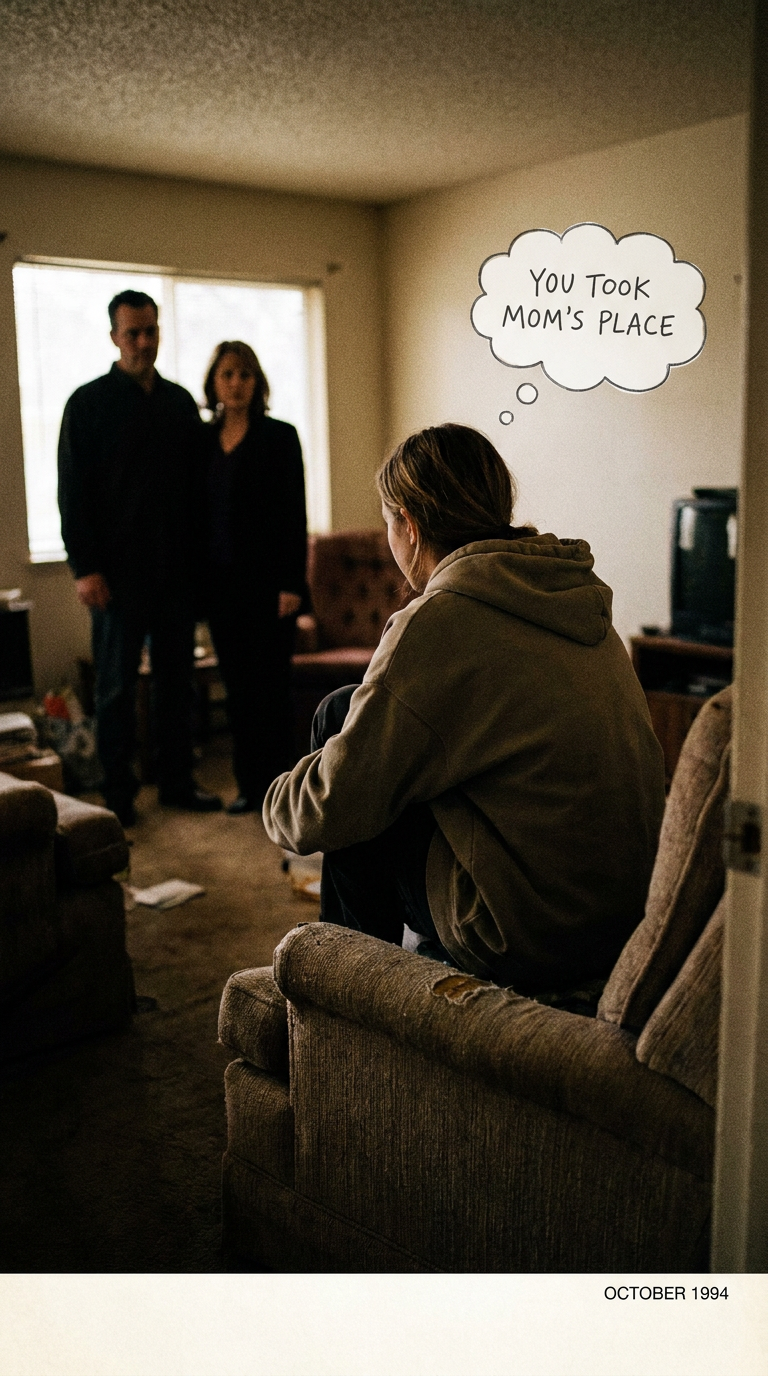
So when Dad introduced Elaine to me as my new stepmother, I looked straight at her and said the cruelest thing I could think of.
“You took Mom’s place.”Elaine’s face crumpled.She didn’t defend herself.She didn’t argue.
She simply lowered her eyes and whispered, “No, sweetheart. I could never do that.”I walked away.
For nearly ten years, I refused to let either of them close enough to prove me wrong.
Then, three weeks before my wedding, Elaine called me.
And what she told me that night changed everything I thought I knew about my mother.
My mother, Claire, had been the center of my world.
She was the person who knew when I was lying before I even finished the sentence.
She knew I hated tomatoes.
She knew I couldn’t sleep during thunderstorms.
She knew exactly how I liked my pancakes—slightly burnt around the edges.
And she knew that when I was scared, I pretended to be angry.
Mom died of cancer.
It happened fast.
Too fast.
One month she was complaining about being tired.
The next month she was spending more time in hospitals than at home.
By the time I understood what was happening, it was already too late.
I remember sitting beside her hospital bed one night.
The lights were dim.
Dad had gone home to shower.
Elaine was sitting in the corner.
Mom looked at her for a long time.
Then she said something I’ll never forget.
“Promise me.”
Elaine leaned forward.
“Anything.”
Mom glanced toward me.
I pretended to be asleep.
“Promise me you’ll stay.”
Elaine’s voice trembled.
“I will.”
I didn’t understand what they were talking about.
At the time, I assumed Mom meant staying close to our family after she died.
I never imagined what would happen seven months later.
After the funeral, Dad became a different man.
He barely ate.
He stopped shaving.
He slept on the couch because he couldn’t bring himself to sleep in their bedroom.
Sometimes I’d find him sitting at the kitchen table at two in the morning, staring at Mom’s coffee mug.
I hated seeing him like that.
But I was grieving too.
And grief made me selfish.
I wanted my father to hurt exactly as much as I did.
I wanted him to stay broken because I was broken.
Then Elaine started coming over.
At first, she brought food.
Then she helped with laundry.
Then she started driving me to school when Dad couldn’t get out of bed.
She had been Mom’s closest friend for twenty years.
They had met in college.
They had traveled together.
They had raised their children at the same time.
I had always called her Aunt Elaine.
But after Mom died, everything changed.
One afternoon, I came home and saw Elaine sitting at our kitchen table with Dad.
They were laughing.
Actually laughing.
I froze in the doorway.
Dad hadn’t laughed like that in months.
Something inside me snapped.
I shouted at him.
“How can you laugh?”
He looked stunned.
Elaine immediately stood.
“Emma—”
“Don’t call me that!”
I ran upstairs.
Three weeks later, Dad told me they were getting married.
I thought I’d misheard him.
“What?”
He stared at the floor.
“We’ve decided to get married.”
I laughed.
It wasn’t a happy laugh.
It was the kind of laugh people make when something hurts so badly their brain can’t process it.
“You’ve got to be kidding.”
“Emma—”
“Mom hasn’t even been gone a year!”
Dad closed his eyes.
“I know.”
“Then how could you do this?”
Elaine was standing behind him.
She was crying.
I pointed at her.
“And you.”
She looked at me.
“You were her best friend.”
“I know.”
“You took her place.”
Elaine shook her head.
“No.”
“Yes, you did.”
“No, Emma.”
Her voice was so soft that it made me angrier.
“You don’t understand.”
“I understand perfectly.”
Then I walked out.
I didn’t attend their wedding.
I stayed with my aunt for three days.
When I returned home, Elaine had moved in.
I stopped calling Dad.
I stopped answering his messages.
When I turned eighteen, I moved to another city for college.
I visited once during my sophomore year.
Dad had aged.
Elaine had aged too.
She stood in the doorway when I arrived.
“I made your favorite cookies.”
“I don’t want them.”
Her smile faded.
“Okay.”
Dad hugged me.
I stood stiffly in his arms.
He whispered, “I miss you.”
I said nothing.
For years, that became our pattern.
Short conversations.
Birthdays.
Christmas cards.
Occasional phone calls.
Nothing real.
I graduated.
I got a job.
I met Daniel.
We fell in love.
And eventually, I got engaged.
Dad was invited to the wedding.
Elaine was too.
I almost didn’t invite her.
But Daniel convinced me.
“She’s been part of your life for almost ten years,” he said. “Maybe you don’t have to forgive her. But maybe you can stop punishing yourself.”
I didn’t answer.
Three weeks before the wedding, Elaine called me.
I almost ignored it.
But something in her voice made me stop.
“Emma?”
“Yes?”
“Can I see you?”
“Why?”
“I need to tell you something.”
“What?”
She started crying.
Not quietly.
Not gracefully.
She was sobbing so hard that she couldn’t form words.
My stomach tightened.
“Elaine, what’s wrong?”
“I should have told you years ago.”
“Told me what?”
“I can’t do this over the phone.”
I agreed to meet her.
The next afternoon, we sat in a small café near my apartment.
Elaine looked exhausted.
Her eyes were swollen.
She had a brown leather purse sitting beside her.
She kept both hands wrapped around a coffee cup she wasn’t drinking.
“Is Dad okay?”
“He’s fine.”
“Then what is it?”
She looked at me.
“Your mother asked me to marry your father.”
I stared at her.
“What?”
“Your mother asked me.”
My mind went blank.
“No.”
“Emma—”
“No.”
She opened her purse.
“Please let me explain.”
She pulled out an old photograph.
It was faded.
The edges were bent.
I recognized it immediately.
It was a picture of Mom and Dad.
They were sitting on a park bench.
Mom was laughing.
Dad was looking at her.
I turned the photograph over.
There was handwriting on the back.
My mother’s handwriting.
My heart started pounding.
“What does this say?”
Elaine whispered, “Read it.”
I turned the photograph over.
There were only six words.
If I die, don’t let him alone.
I stared at them.
“What does this mean?”
Elaine took a shaky breath.
“Your mother knew she was dying.”
I looked up.
“She knew?”
“She knew before you did.”
I felt cold.
“How long?”
“Months.”
“Why didn’t anyone tell me?”
“Because she begged your father not to.”
I stood.
“No.”
“Please sit down.”
“No. You’re lying.”
“I wish I were.”
I stared at her.
“Why would Mom ask you to marry Dad?”
Elaine looked down.
“Because she was afraid.”
“Of what?”
“Of what would happen to you.”
I sat back down.
Elaine’s hands were trembling.
“Your mother told me that your father had never lived alone. He depended on her for everything. Bills. Appointments. Meals. Even remembering his own medications.”
I frowned.
“That’s not true.”
“It was.”
I remembered how Dad used to ask Mom where things were.
Where were the insurance papers?
Where were the house keys?
When was the dentist appointment?
At fifteen, I’d thought it was normal.
Now I wasn’t sure.
Elaine continued.
“Your mother was terrified that after she died, your father would collapse.”
“That’s why you married him?”
“Not immediately.”
She swallowed.
“Your mother made me promise that I would stay close to your father. She knew he wouldn’t accept help from strangers. She knew he trusted me.”
I looked at the photograph again.
“But why marriage?”
Elaine closed her eyes.
“Because your mother believed your father would eventually destroy himself trying to live without her.”
I felt tears burning my eyes.
“She wanted you to replace her.”
Elaine immediately shook her head.
“No.”
“Then what?”
“She wanted me to protect you both.”
I stared at her.
Elaine opened her purse again.
This time she pulled out a small envelope.
It had my name on it.
My hands began to shake.
“Your mother gave this to me two weeks before she died.”
“Why didn’t you give it to me?”
“Because she told me not to.”
I looked at the envelope.
“Why?”
“She said you weren’t ready.”
“Ready for what?”
“To know she had chosen this.”
I opened the envelope.
Inside was a handwritten letter.
I recognized my mother’s handwriting immediately.
The first line destroyed me.
My beautiful Emma,
I pressed the paper against my chest.
Elaine looked away.
I began reading.
“If you’re reading this, I’m gone. And I know you’re angry.”
I stopped.
Tears blurred the words.
“You will probably hate your father for not being strong enough. You may hate Elaine for staying close to him. You may even hate me for leaving you.”
I covered my mouth.
“But please understand something. Elaine is not replacing me. Nobody can replace me. And she is not taking your father away from you.”
My hands were shaking.
“I’m asking her to stay because I know your father. He will tell everyone he’s fine. He will smile. He will go to work. He will pay the bills. But inside, he will be drowning.”
I looked up at Elaine.
She was crying silently.
I continued.
“And Emma, you are going to want to become his parent. Don’t.”
That sentence stopped me.
“You are my daughter. You deserve to be fifteen. You deserve school dances and bad dates and stupid arguments and a life that doesn’t revolve around keeping your father alive.”
I started crying.
Not the quiet kind.
The kind that bends your whole body.
Elaine reached across the table.
I let her hold my hand.
I kept reading.
“Elaine promised me she would protect you from the parts of grief that aren’t yours to carry.”
“If your father asks her to leave because he thinks he’s betraying me, I want her to stay.”
“If you hate her, I want her to stay.”
“If you tell her she took my place, I want her to remember that she didn’t.”
Then came the sentence that broke whatever remained of my anger.
“I am not asking Elaine to become your mother. I’m asking her to become your father’s reason to keep living—and your reason to keep being a daughter instead of a caretaker.”
I couldn’t breathe.
At the bottom, Mom had written:
“One day, when you’re older, you’ll understand that love doesn’t always look like staying with the person you love. Sometimes it looks like making sure they won’t be alone after you leave.”
There was one final line.
“Please forgive me for asking someone else to stay.”
I folded the letter.
I couldn’t speak.
Elaine wiped her face.
“Your mother made me promise never to tell you unless you were ready.”
“How did you know I was ready?”
“I didn’t.”
“Then why now?”
Elaine hesitated.
“Because I’m sick.”
My heart dropped.
“What?”
She looked at me.
“I was diagnosed with heart failure last year.”
I couldn’t move.
“Does Dad know?”
“Yes.”
“How bad is it?”
She gave me a weak smile.
“Bad enough that I wanted you to know the truth before your wedding.”
I grabbed her hand.
“Why didn’t you tell me?”
“Because I didn’t want your wedding to become about me.”
“Elaine…”
“I’ve watched you grow up from fifteen to twenty-four. I watched you graduate. I watched you fall in love. I watched you become the woman your mother knew you’d become.”
She smiled through tears.
“I never needed you to call me Mom.”
I looked at her.
“I know.”
“No,” she whispered. “You don’t.”
She reached into her purse again.
She pulled out another photograph.
It was older than the first.
It showed Mom, Elaine, Dad, and me at the beach.
I was maybe seven.
Mom was holding me.
Elaine stood beside her.
On the back, there was more handwriting.
Someday she’ll know.
I stared at it.
“She wrote that?”
“Yes.”
“Know what?”
Elaine smiled sadly.
“That I never took her place.”
That evening, I went to my father’s house.
I hadn’t been there alone in years.
Dad opened the door.
He looked surprised.
“Emma?”
I stepped inside.
He didn’t ask why I was there.
He simply hugged me.
This time, I hugged him back.
He started crying.
So did I.
We stood there for what felt like forever.
Finally, I whispered:
“Why didn’t you tell me?”
He knew exactly what I meant.
“Because your mother made me promise.”
“She made you promise?”
He nodded.
“She said if I told you, you’d stop being a teenager and start taking care of me.”
I laughed through my tears.
“She knew me too well.”
“She did.”
Dad sat down.
“I didn’t want to marry Elaine.”
I looked at him.
“What?”
“Not because I didn’t love her.”
He swallowed.
“Because I thought marrying her meant I was admitting your mother was gone.”
I sat beside him.
“What changed?”
“Elaine.”
He smiled faintly.
“She told me your mother had given her one job.”
“What job?”
“To make sure I kept living.”
He looked toward the window.
“For months, I refused.”
“And then?”
“Then one night, Elaine found me sitting in the garage.”
My heart stopped.
“What were you doing?”
“Nothing.”
He shook his head.
“I wasn’t planning anything. I just didn’t care whether I woke up the next morning.”
I reached for his hand.
“Elaine sat beside me for three hours.”
He looked at me.
“She didn’t tell me to be strong. She didn’t tell me everything would be okay.”
“What did she do?”
“She talked about your mother.”
Dad smiled.
“She told me the story of how your mother once tried to make lasagna and accidentally used powdered sugar instead of flour.”
I laughed.
“I remember that.”
“Your mother was furious.”
“She blamed the oven.”
“Of course she did.”
We both laughed.
Then Dad’s face became serious.
“Elaine saved me.”
I looked down.
“Why didn’t you tell me?”
“Because your mother told us to let you hate us if you needed to.”
I closed my eyes.
“She really did.”
“She said anger was easier for you than grief.”
I whispered, “She was right.”
Dad squeezed my hand.
“She loved you more than anything.”
“I know.”
Then he said something I’d never expected.
“She loved Elaine too.”
I looked at him.
“She did?”
Dad nodded.
“Your mother told me that Elaine was the only woman she trusted enough to help me after she was gone.”
I cried again.
All those years.
All that hatred.
All those birthdays when Elaine had stood quietly at the edge of the room because she didn’t want to intrude.
All those Christmases when she had sent gifts but never demanded I open them in front of her.
All those times I’d thought she was trying to become my mother.
She had never been trying to.
She had been trying to keep a promise.
Two weeks later, Elaine came to my bridal shower.
She almost didn’t come.
She called me that morning.
“I don’t want to make things uncomfortable.”
I said, “You’re coming.”
“Emma—”
“You’re coming.”
She laughed.
“Okay.”
When she arrived, I walked straight to her.
I hugged her.
A real hug.
The kind I hadn’t given her since I was fifteen.
She held me tightly.
“I’m sorry,” I whispered.
She shook her head.
“You were a child.”
“I still hurt you.”
“You were hurting.”
“I said terrible things.”
“You were grieving.”
“I told you that you took Mom’s place.”
Elaine pulled back.
She touched my cheek.
“You were wrong.”
“I know.”
She smiled.
“Your mother would be very proud of you.”
That sentence made me cry.
She wiped my tears.
“Don’t cry. You’ll ruin your makeup.”
I laughed.
For the first time, she sounded exactly like Mom.
Not because she was replacing her.
Because she had learned some of Mom’s expressions after twenty years of friendship.
That night, I asked her something I’d been afraid to ask.
“Do you regret marrying Dad?”
She was quiet.
Then she said:
“Never.”
“Even knowing what happened?”
“Especially knowing.”
“Did you love him before Mom died?”
She looked toward the window.
“I loved him differently.”
I waited.
“He was your mother’s husband. I respected that.”
“Then when did it change?”
“After she died.”
She smiled sadly.
“Grief changes people.”
“Do you love him now?”
“Yes.”
“Does he love you?”
“Yes.”
I smiled.
“Good.”
She looked at me.
“That’s all?”
I nodded.
“That’s all.”
The wedding day came three weeks later.
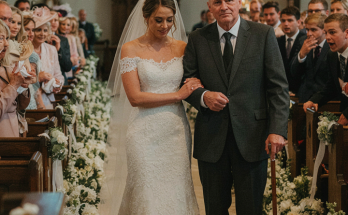
My father walked me down the aisle.
Halfway there, I looked at him.
His eyes were full of tears.
“Mom would have loved this,” I whispered.
He nodded.
“She would.”
At the front row, Elaine was sitting beside him.
She wore the same pale blue color she’d worn at my father’s wedding nearly ten years earlier.
But this time, when I looked at her, I didn’t see someone taking my mother’s place.
I saw the woman who had kept a promise.
After the ceremony, Dad gave me a small wooden box.
“Your mother left this too.”
I opened it.
Inside was Mom’s wedding ring.
I stared at it.
“Why are you giving me this?”
“She wanted you to have it on your wedding day.”
I touched the ring.
There was a folded note underneath.
I opened it.
Only one sentence.
Love is not a chair with one seat. There is always room for another heart.
I looked at Elaine.
She was crying.
I walked toward her.
Then I placed the ring in her hand.
“Keep it.”
She stared at me.
“What?”
“Mom gave it to me. But I think you should have it.”
She shook her head.
“No, sweetheart.”
“Please.”
She closed her fingers around it.
Then she hugged me.
My father joined us.
For a moment, the three of us stood there holding each other.
And for the first time since I was fifteen, I didn’t feel like my family had been broken.
It had changed.
But it hadn’t disappeared.
Six months after my wedding, Elaine’s condition worsened.
She spent more time in the hospital.
Dad stayed beside her every day.
I visited whenever I could.
One afternoon, I found her asleep.
I sat beside her bed and held her hand.
When she woke, she smiled.
“You came.”
“Of course.”
She looked at me.
“You know what your mother told me the last time I saw her?”
“What?”
“She said, ‘She’ll hate you at first.'”
I laughed through my tears.
“She knew.”
Elaine smiled.
“Then she said, ‘But don’t leave.'”
I squeezed her hand.
“You didn’t.”
“No.”
“You kept your promise.”
She looked at me.
“Yes.”
“And I’m glad you did.”
Her eyes filled with tears.
“So am I.”
She died two months later.
My father was beside her.
So was I.
Before she passed, she squeezed my hand.
Then she whispered:
“Tell your mother I kept my promise.”
I couldn’t speak.
I just nodded.
At her funeral, I carried the old photograph.
The one of my mother and father sitting on the park bench.
The one with the six words written on the back.
If I die, don’t let him alone.
I finally understood.
Those words had never been about replacing Mom.
They were about love continuing after loss.
That evening, Dad and I sat together at the kitchen table.
There were three coffee cups on it.
Dad stared at the third one.
“I keep forgetting,” he whispered.
I reached across the table.
“Me too.”
We sat in silence.
Then I smiled.
“Do you remember Mom’s terrible lasagna?”
Dad laughed.
“How could I forget?”
We talked about her for hours.
About her laugh.
Her temper.
Her terrible cooking.
Her habit of leaving every cabinet open.
Her obsession with old movies.
Her ridiculous dancing in the kitchen.
We didn’t talk about death.
We talked about her life.
And somewhere between the laughter and the tears, I finally realized something.
For nearly a decade, I had believed Elaine had stolen something from me.
She hadn’t.
She had protected it.
She had protected my father.
She had protected me.
And most importantly, she had protected the memory of my mother from becoming a source of bitterness.
My mother had never wanted another woman to replace her.
She simply wanted the people she loved to survive her absence.
And Elaine had done exactly that.
Years later, I still keep the photograph.
It’s framed above my desk.
On the front are my mother and father, young and smiling.
On the back are six faded words in Mom’s handwriting.
If I die, don’t let him alone.
Beside it is another photograph.
One from my wedding.
My father is holding my hand.
I’m laughing.
And beside us is Elaine, smiling through tears.
Three people connected by a woman who had been gone for years.
Sometimes I look at those photographs and think about the fifteen-year-old girl I used to be.
I wish I could go back and tell her something.
I’d tell her that grief lies.
It tells you that love has an expiration date.
It tells you that if someone else makes your father smile, they’re betraying your mother.
It tells you that letting someone new into the family means letting someone old out.
But grief is wrong.
Love doesn’t work that way.
People don’t replace each other.
They leave fingerprints on your heart.
Some are permanent.
Some arrive later.
Some stay for decades.
And some keep promises they made to the people who aren’t here anymore.
I spent nine years believing my stepmother had stolen my mother’s place.
The truth was much harder.
She had been standing in the exact place my mother asked her to stand.
Not in front of me.
Not between me and my mother.
Beside us.
Waiting.
And when I was finally old enough to understand, she handed me the photograph that changed everything.
Then she said the words I’ll carry for the rest of my life.
“Your mother never asked me to replace her.”
She smiled through her tears.
“She asked me to make sure you never had to live without love.”