The Poisoned Broth: A Chronicle of Betrayal and Vindication
Chapter 1: The Stifling Tradition
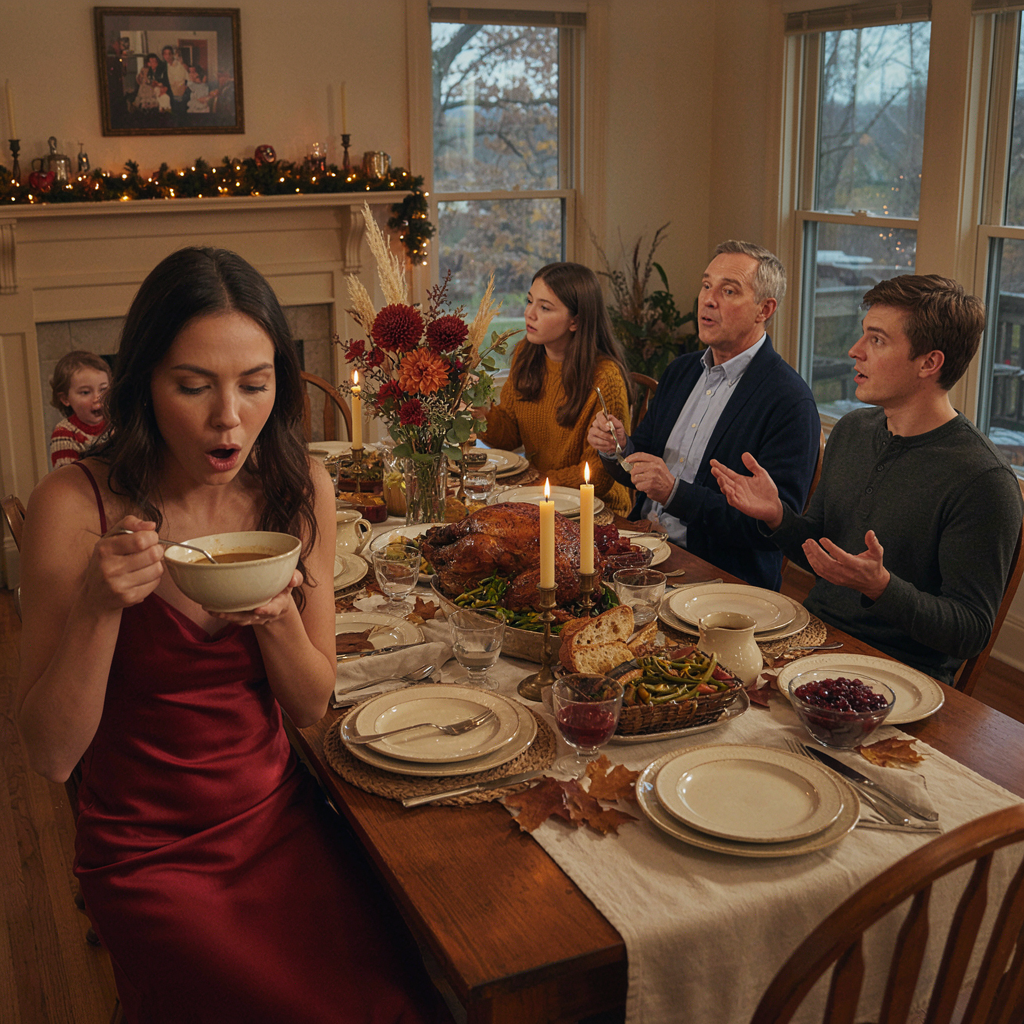
The precise moment my marriage of twenty-six years evaporated, there was no screaming. There were no shattered plates, no tearful accusations echoing through the halls. I didn’t even flinch. I simply watched my husband tip a small, unmarked packet of white powder into my bowl of chicken soup, smiled when he wasn’t looking, and silently counted the seconds.
There are singular moments in a person’s existence when the fabric of time stretches, slowing down so dramatically that every ambient noise becomes deafening. The metallic clink of silverware against porcelain. Ice cubes shifting and settling in a glass of sweet tea. My mother-in-law’s sharp, abrasive laugh cutting through the air from the dining room. Even the low, rhythmic hum of the ancient refrigerator in the kitchen sounded like a siren. I remember the exact pitch of all of it.
My name is Diane Foster. I am fifty years old, and until that brisk Sunday evening, I operated under the absolute certainty that I knew the man I shared my bed with. Mark Foster and I had built a quiet, unremarkable life. We resided in Carmel, Indiana, occupying a sprawling brick ranch house we’d purchased in the late nineties, back when mortgage rates were a gentle breeze and our joints didn’t protest the weekly lawn mowing. We were childless—not by any grand design, but simply because the universe had charted a different course for us. To fill the void, we poured our souls into our careers, our local church, summer escapes to the cooler air of northern Michigan, and, most rigidly, Sunday dinners with his family.
Every. Single. Sunday.
Judith Foster, my formidable mother-in-law, mandated it. She reigned over the family with an iron grip she disguised as maternal devotion, firmly believing that forced traditions were the only glue keeping her bloodline intact. Dinner commenced at 5:30 PM on the dot. The menu was dictated by the season: heavy pot roasts in the dead of winter, charred steaks in July, and her legendary homemade rolls that, admittedly, surpassed anything you could buy in a bakery. Nobody dared challenge Judith’s itinerary, least of all Mark.
Yet, by the time our sedan idled into his parents’ expansive driveway near Geist Reservoir that fateful afternoon, a cold prickle of unease had already taken root at the base of my neck.
Mark had been a ghost during the thirty-minute drive. Ordinarily, he would fill the silence with grievances—complaining about the Colts’ offensive line, the fluctuating gas prices, or the never-ending construction on Interstate 69. Today, he was a statue. His eyes were locked dead ahead, staring through the windshield at nothing. His knuckles were white, his fingers drumming an erratic, nervous rhythm against the steering wheel. Every sixty seconds, his gaze flicked to the dashboard clock.
“Are you okay?” I had finally murmured, the silence becoming too thick to breathe in.
He jolted, forcing a practiced veneer of a smile that didn’t come close to reaching his eyes. “Just drained. Long week.”
The excuse was flimsy. Mark wasn’t tired; he was practically vibrating with a suffocating, suppressed panic. As we stepped out of the car, the autumn wind bit through my sweater, but it was nothing compared to the sudden chill radiating from the man walking beside me. I didn’t know it yet, but I was about to walk into my own execution.