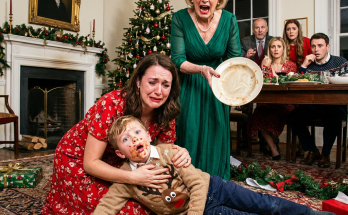
She Said, “That Room Is for Family Only.” Three Days Later, She Knocked on My Door.
During our family vacation, my sister pushed my six-year-old daughter out of our hotel room and left her barefoot, crying in the hallway for three hours.
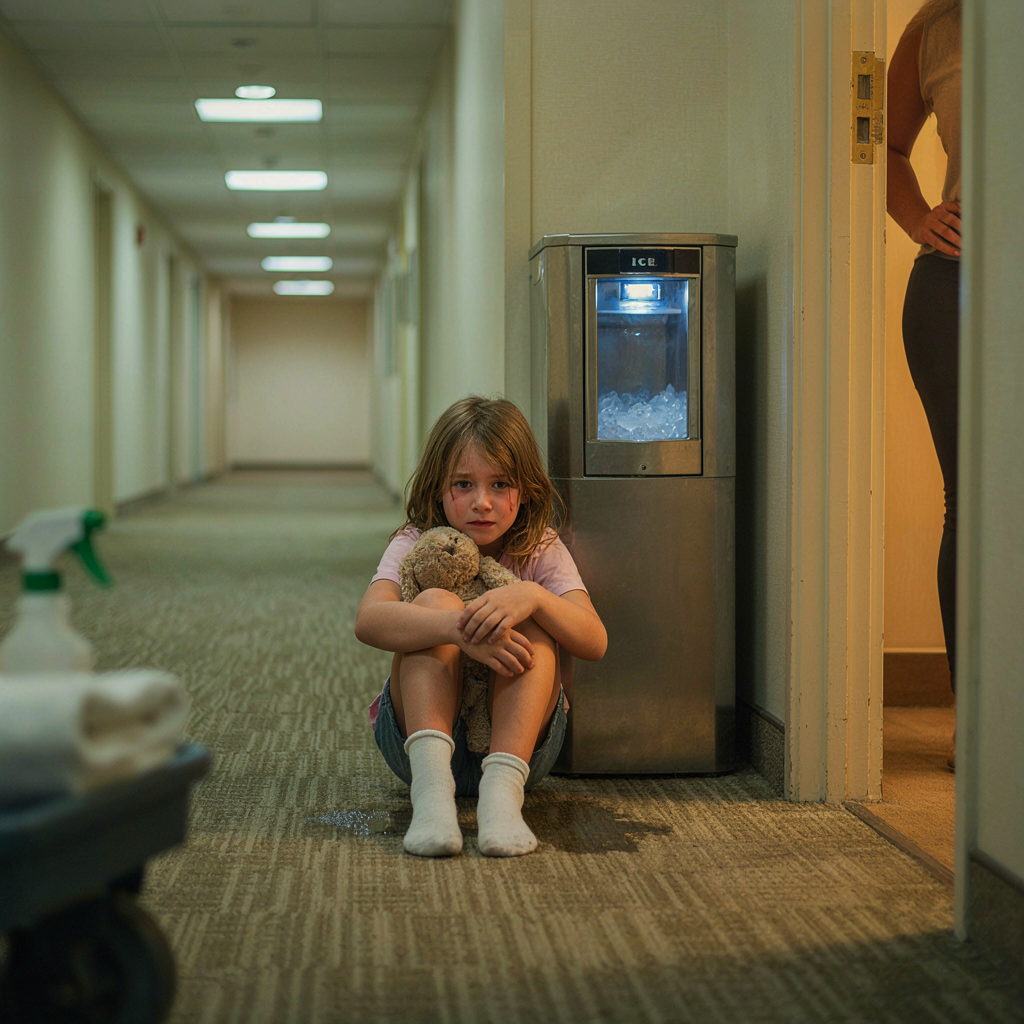
I still remember finding Lily beside the ice machine, clutching her stuffed rabbit while tears covered her face.
She had knocked until her voice went weak, but Vanessa only opened the door to say, “That room is for family only.”
My parents were inside.They watched it happen.I did not scream.
I carried my daughter away, washed her feet, packed our bags, and made three phone calls that night.Because the person who hurt my child forgot one thing:
I had stopped staying silent.And three days later, the first consequence arrived at Vanessa’s door.
But to understand why that moment changed everything, you have to understand my family.
And why I had spent most of my life believing that keeping peace was more important than protecting myself.
My name is Claire.I was thirty-eight years old, married to Daniel for eleven years, and the mother of two children—Lily, six, and Noah, nine.My older sister Vanessa was forty-three.
Growing up, Vanessa had always been the golden child.She was beautiful, confident, successful, and loud enough to make people believe she was always right.
I was the quieter one.If Vanessa wanted the bigger bedroom, she got it.If she broke something, somehow I had been careless.
If we argued, my parents would say, “Claire, you’re younger. Just let it go.”So I learned to let things go.
When Vanessa borrowed my clothes and returned them stained, I let it go.
When she forgot my birthday three years in a row, I let it go.
When she criticized my husband at Christmas dinner, I let it go.
When she told my mother that I was “too sensitive,” I swallowed my feelings.
And when our parents needed help paying bills, I quietly stepped in.
Vanessa always had a reason she couldn’t.
A business expense.
A renovation.
A vacation.
A new car.
I never complained.
I told myself that family wasn’t supposed to keep score.
But somewhere along the way, I had confused love with endurance.
The family vacation had been my mother’s idea.
She had turned seventy and wanted all of us together at a beach resort in Florida.
“Just one week,” she said.
“One beautiful week where everyone gets along.”
I should have known that sentence was a warning.
There were nine of us traveling together.
My parents.
Vanessa and her husband, Greg.
Their teenage daughter, Madison.
Daniel, Lily, Noah, and me.
The resort was expensive—much more expensive than anything I would normally book.
But my mother insisted.
“We’ll split everything evenly,” she promised.
So I agreed.
For the first two days, everything seemed fine.
We went swimming.
We ate dinner overlooking the ocean.
Lily built sandcastles.
Noah played volleyball with Madison.
My father even laughed when Lily put a seashell on his head and called him “Captain Grandpa.”
For the first time in years, I thought maybe things had changed.
Maybe Vanessa had grown up.
Maybe we could finally be a normal family.
Then came Thursday afternoon.
It was hot, and the children had spent hours at the pool.
Lily was exhausted.
She had fallen asleep in the car on the way back to the hotel.
When we reached our floor, Daniel received a call from work.
“I need ten minutes,” he told me.
“I’ll take the kids upstairs.”
Our rooms were next to my parents’ suite.
Vanessa and Greg were staying across the hall.
I unlocked our room.
Noah immediately ran into the bathroom.
Lily shuffled toward the bed, still half asleep, carrying her stuffed rabbit.
“Mommy,” she whispered.
“Yes?”
“Can I have water?”
“Of course.”
I put down my purse.
Then I realized I had left the water bottles in the car.
“I’ll be right back.”
I kissed her forehead.
“You stay with Grandma and Grandpa for a few minutes, okay? Their door is right next to ours.”
She nodded.
I walked downstairs.
I was gone less than ten minutes.
When I came back, I saw Lily standing in the hallway.
Barefoot.
Crying.
Her stuffed rabbit was pressed against her chest.
For a second, I didn’t understand what I was seeing.
Then she looked up.
“Mommy.”
Her voice broke.
I dropped the water bottles.
“Lily?”
I ran toward her.
She threw herself into my arms.
Her little body was shaking.
“Mommy, I knocked.”
“Why were you outside?”
“I couldn’t get in.”
I looked toward our hotel room.
The door was closed.
Then it opened.
Vanessa stood there.
My parents were behind her.
I stared at them.
“What happened?”
Vanessa crossed her arms.
“She was bothering us.”
I looked at Lily.
“Bothering you?”
“She kept knocking.”
My mother said quietly, “Claire, don’t make a scene.”
I felt something inside me go completely still.
I looked down at my daughter.
Her feet were dirty.
There was a red mark on one heel.
“How long has she been out here?”
Nobody answered.
I looked at my father.
“Dad?”
He looked away.
Vanessa sighed.
“Maybe two hours.”
Two hours.
My daughter had been six years old, barefoot, alone in a hotel hallway for two hours.
I looked at my mother.
“You watched this?”
“She wasn’t in danger,” Mom said.
“She was six.”
“She knew where we were.”
“No,” I said quietly. “She knew where her grandmother was.”
Vanessa rolled her eyes.
“Oh, please. Don’t turn this into another Claire drama.”
That was the moment something changed.
I didn’t yell.
I didn’t cry.
I didn’t argue.
I picked up Lily.
“Come on, sweetheart.”
We walked into our room.
Daniel arrived twenty minutes later.
He took one look at Lily and knew something was wrong.
“What happened?”
I told him.
He went silent.
Then his jaw tightened.
“Two hours?”
“Maybe three,” I said.
He looked at Lily’s feet.
“We’re leaving.”
I nodded.
That night, while Lily slept between us, I made three phone calls.
The first was to the hotel manager.
The second was to a family attorney.
The third was to the travel company that had arranged our vacation.
I wasn’t trying to destroy Vanessa.
I wasn’t trying to punish my parents.
I simply wanted a record.
I wanted people outside our family to know what had happened.
Because I finally understood something.
Silence doesn’t keep children safe.
Adults do.
The next morning, I packed our bags.
My mother knocked on the door.
“Claire, can we talk?”
I opened it.
She looked tired.
“I think you’re overreacting.”
I almost laughed.
“My six-year-old daughter was locked out of her room for hours.”
“She could have come into our room.”
“She tried.”
Mom looked uncomfortable.
“Vanessa was upset.”
“So Lily was punished?”
“She didn’t mean anything by it.”
I looked at her.
“Mom, you watched my daughter cry.”
Her eyes filled with tears.
“I didn’t know what to do.”
“You could have opened the door.”
She had no answer.
We checked out before noon.
As we walked through the lobby, Vanessa came running toward us.
“You’re seriously leaving?”
“Yes.”
“You’re ruining Mom’s birthday.”
“No,” I said. “You did that when you left my daughter in the hallway.”
Vanessa’s face hardened.
“You’re unbelievable.”
Daniel stepped forward.
“Don’t talk to Claire like that.”
Vanessa looked at him.
“This is between sisters.”
“No,” Daniel said. “It became my business when you hurt our daughter.”
We left.
On the drive home, Lily sat quietly in the back seat.
After an hour, she finally asked:
“Mommy?”
“Yes?”
“Did I do something bad?”
My heart broke.
“No, baby.”
“Why did Aunt Vanessa make me stay outside?”
I turned around as much as my seatbelt allowed.
“Because Aunt Vanessa made a very bad choice.”
“Does Grandma still love me?”
I couldn’t answer immediately.
Then I said:
“Yes, sweetheart. But sometimes people love you and still fail to protect you.”
She hugged her rabbit.
“Okay.”
That night, I couldn’t sleep.
At 2:13 a.m., my phone buzzed.
It was an email from the hotel.
They had reviewed the hallway security footage.
The footage showed Lily arriving at the door at 3:47 p.m.
She knocked.
She knocked again.
At 4:02, she sat on the floor.
At 4:36, she stood up and knocked again.
At 5:01, Vanessa opened the door.
She stepped outside.
She pointed toward the hallway.
Then she shut the door again.
Lily remained outside.
For another forty-eight minutes.
The footage showed my parents walking in and out of their room twice.
They saw her.
They never opened the door.
I stared at the screen until the words blurred.
I sent the footage to the attorney.
Three days later, the first consequence arrived at Vanessa’s door.
It wasn’t a police car.
It wasn’t a lawsuit.
It was a letter.
A formal notice from the hotel stating that because of the incident, Vanessa and Greg were no longer eligible for the resort’s loyalty program and that the hotel had documented the incident for its internal safety review.
Vanessa called me immediately.
“You reported me?”
“Yes.”
“You’re trying to ruin my reputation!”
“No. I’m documenting what happened.”
“You’re my sister!”
“And Lily is your niece.”
Silence.
Then Vanessa whispered:
“You’ve always hated me.”
I closed my eyes.
“No, Vanessa. I spent my entire life trying to make you happy.”
She hung up.
The next consequence came from somewhere I hadn’t expected.
My father called.
“Claire, your mother is devastated.”
“I know.”
“She wants you to come over.”
“Not yet.”
“Please.”
“No.”
There was a long silence.
Then Dad said something I had never expected to hear.
“I should have opened the door.”
I swallowed.
“Yes.”
“I was afraid of upsetting Vanessa.”
“That was the problem.”
“I know.”
He began crying.
My father had never cried in front of me.
Not when his brother died.
Not when he lost his job.
Not even when my grandmother passed away.
But that day, he cried.
“I failed Lily,” he whispered.
I didn’t know what to say.
Finally, I said:
“Then don’t fail her again.”
Two weeks later, my mother came to my house.
She brought a small gift for Lily.
A stuffed dolphin.
She stood at the door holding it with both hands.
“Can I see her?”
I hesitated.
Then I called Lily.
She came running down the stairs.
When she saw Grandma, she stopped.
My mother knelt.
“I’m sorry.”
Lily looked confused.
“For what?”
“For letting you stay in the hallway.”
Lily’s face changed.
“You knew?”
“Yes.”
“Why didn’t you open the door?”
My mother began crying.
“Because I was scared of making Aunt Vanessa angry.”
Lily thought about that.
Then she said something that broke all of us.
“But Grandma, I’m little.”
My mother covered her face.
“I know.”
Lily walked over and hugged her.
But I could see the difference.
The hug wasn’t automatic anymore.
Trust had been damaged.
And trust doesn’t return because someone says sorry once.
It returns because someone behaves differently repeatedly.
For months, my mother worked to rebuild that trust.
She visited Lily.
She took her to the park.
She listened.
She never pressured her.
My father did the same.
Vanessa was different.
She refused to apologize.
Instead, she told relatives that I had “weaponized my daughter.”
She claimed Lily had exaggerated.
She said I had always been jealous of her.
Then something unexpected happened.
Madison, Vanessa’s sixteen-year-old daughter, contacted me.
She asked if she could come over.
When she arrived, she sat at my kitchen table.
“Aunt Claire?”
“Yes?”
“I saw what happened.”
I froze.
“What do you mean?”
“I was in the hallway.”
She looked down.
“I wanted to help Lily.”
“Why didn’t you?”
“Mom told me to stay out of it.”
My heart sank.
Madison pulled out her phone.
“I recorded part of it.”
She handed me the phone.
The video showed Lily knocking.
It showed Vanessa opening the door.
And it captured Vanessa saying:
“That room is for family only.”
Then she shut the door.
I watched it once.
Then again.
Madison wiped her eyes.
“I’m sorry.”
I hugged her.
“You don’t have to apologize for your mother’s choices.”
“I was scared.”
“I know.”
She looked at me.
“Are you going to tell Grandma?”
“No.”
“Why?”
“Because you trusted me.”
Madison nodded.
But the video changed everything.
The attorney explained that the footage wasn’t necessary for criminal action, but it established a clear record of what had happened.
I didn’t pursue a lawsuit.
Instead, I sent one final letter to my parents and Vanessa.
It contained three conditions.
No unsupervised contact with Lily until she felt comfortable.
No minimizing what happened.
And no family gatherings where Vanessa expected everyone to pretend everything was normal.
Vanessa called me screaming.
“You’re giving me rules?”
“No.”
“I don’t have to follow your rules!”
“Correct.”
“Then what are you doing?”
“Protecting my daughter.”
She laughed bitterly.
“You think you’re better than everyone now?”
I paused.
“No. I just finally think my daughter deserves better than what I accepted.”
She hung up.
For nearly a year, our family barely spoke.
Christmas passed.
Thanksgiving passed.
My mother’s birthday came.
I sent flowers.
But I didn’t attend.
Then, one afternoon, I received an unexpected letter.
It was from my father.
He wrote:
“I used to believe being a good father meant keeping everyone happy.
I understand now that sometimes keeping peace is cowardice.
I should have protected your daughter.
I should have protected you.
I’m sorry.”
I cried when I read it.
Not because the words fixed anything.
They didn’t.
But because for the first time, someone in my family finally understood.
The following spring, my parents asked if Lily could come to their house.
I asked her.
She thought for a long time.
“Will Grandma be there?”
“Yes.”
“Grandpa?”
“Yes.”
“Aunt Vanessa?”
“No.”
She smiled.
“Okay.”
That visit lasted forty minutes.
Then an hour.
Then two.
Slowly, Lily began trusting them again.
Vanessa, however, remained outside our lives.
Until one rainy evening, almost eighteen months after the hotel incident, someone knocked on my door.
It was Vanessa.
She looked different.
Not physically.
Emotionally.
She looked tired.
She held a folder in her hands.
“I need to talk to you.”
I didn’t invite her inside.
“What happened?”
She swallowed.
“Madison won’t speak to me.”
I said nothing.
“She says I taught her that being family means protecting the family image instead of protecting people.”
My throat tightened.
Vanessa looked down.
“She was right.”
For a moment, I saw my sister as the woman she had always been beneath the confidence.
Scared.
Proud.
Broken.
She opened the folder.
Inside was a handwritten letter.
“I wrote this for Lily.”
I took it.
“I’m not asking you to make her forgive me,” Vanessa said.
“I don’t expect that.”
She looked at me.
“I just want her to know that what happened wasn’t her fault.”
I nodded.
“I’ll give it to her.”
Vanessa took a breath.
“I was jealous of you.”
That surprised me.
“Why?”
“Because you had something I didn’t.”
“What?”
“A family that loved you without you demanding it.”
I stared at her.
She laughed sadly.
“I spent my whole life thinking everyone was supposed to prove they loved me.”
“And you punished people when they didn’t.”
“Yes.”
She wiped her eyes.
“I punished Lily because I was angry at you.”
My voice became cold.
“That’s exactly why she can never be left alone with you.”
“I know.”
She nodded.
“I understand now.”
She turned to leave.
“Vanessa?”
She looked back.
“Thank you for saying it.”
She gave me a small smile.
“I’m sorry it took me this long.”
After she left, I gave Lily the letter.
She read it slowly with my help.
At the end, she asked:
“Does Aunt Vanessa hate me?”
“No.”
“Then why did she do that?”
I sat beside her.
“Sometimes people hurt others because they don’t know how to handle their own feelings.”
Lily hugged her rabbit.
“Will I see her again?”
“Maybe someday.”
She nodded.
Then she asked:
“Mommy?”
“Yes?”
“Did you get scared when you found me?”
I smiled through tears.
“Very.”
“But you didn’t yell.”
“No.”
“Why?”
I kissed her forehead.
“Because I needed to be your mom more than I needed to be angry.”
She thought about that.
Then she smiled.
“I like that.”
Years passed.
Lily grew.
The hallway incident became something she barely remembered.
But I never forgot it.
Not because I wanted revenge.
Because it taught me something.
Family is not the people who share your last name.
Family is not the people sitting around the dinner table.
Family is not the people who demand forgiveness because “we’re related.”
Family is the person who opens the door when a child knocks.
Family is the person who notices when you’re hurting.
Family is the person who doesn’t ask you to stay quiet just to keep everyone else comfortable.
My mother eventually became one of those people.
My father did too.
Vanessa?
She changed slowly.
She began therapy.
She apologized to Madison.
She stopped blaming everyone else.
It took years before Lily willingly hugged her.
But eventually, one summer afternoon, it happened.
Lily was eleven.
She walked into my sister’s backyard carrying a basket of strawberries.
“Aunt Vanessa?”
Vanessa turned.
“Yes?”
“Mom said I could give you these.”
Vanessa smiled.
“Thank you.”
Lily nodded.
Then, almost shyly, she stepped forward and hugged her.
Vanessa froze.
Her eyes filled with tears.
She hugged Lily gently.
And for the first time, I saw no pride in my sister.
No defensiveness.
No excuses.
Only gratitude.
Later that evening, Vanessa came to me.
“I’ll never forget that hallway,” she said.
“Neither will I.”
“I wish I could erase it.”
“You can’t.”
“I know.”
She looked toward Lily.
“But maybe I can make sure she never experiences anything like it again.”
I smiled.
“That matters more.”
Vanessa nodded.
Then she said something I never expected.
“You were right.”
I raised an eyebrow.
“About what?”
“You didn’t ruin the family.”
She took a breath.
“You saved it.”
I looked across the yard.
My parents were laughing with Noah.
Daniel was helping Lily roast marshmallows.
Madison was sitting beside Vanessa.
For years, I had thought keeping everyone together was my responsibility.
It wasn’t.
My responsibility was keeping my children safe.
And sometimes protecting your family means walking away from people who call themselves family.
Sometimes it means saying no.
Sometimes it means documenting what happened.
Sometimes it means refusing to accept an apology until someone’s behavior changes.
And sometimes the most powerful consequence isn’t revenge at all.
It’s the moment the person who hurt you realizes they no longer control your silence.
That night in the hotel, Vanessa thought she was teaching my six-year-old daughter that she didn’t belong.
She was wrong.
Lily belonged.
She always had.
What changed that night wasn’t Lily’s place in the family.
It was mine.
For the first time in my life, I stopped asking:
“How can I keep everyone happy?”
And started asking:
“What does my child need from me?”
The answer was simple.
A mother who would open the door.
Every single time.