I was in the middle of a client presentation in Phoenix when my phone began vibrating across the conference table.I ignored it the first time.Then the second.
By the third vibration, I saw the name on the screen.Emma.
My fourteen-year-old daughter never called me three times during a work presentation.
Never.I excused myself, stepped into the hallway, and answered.
At first, there was only silence.Then I heard her breathing.Small, shaky breaths.“Mom?”My stomach tightened.“Emma? What happened?”She didn’t answer immediately.
Then she whispered, “Grandpa and Grandma made me leave.”
For a second, I genuinely thought I had misunderstood her.
“What?”“They said I have to go.”“Where are you?”
“At the bus stop.”My heart stopped.“Emma, what bus stop?”She gave me the name of a street near my parents’ house.I leaned against the hallway wall.“Why are you at a bus stop?”
“Because Grandma told me to pack my things.”I closed my eyes.“Emma, start from the beginning.”
She sniffled.“I woke up this morning, and there was a note on the kitchen table.”
“What did it say?”Her voice cracked.
“It said, ‘Pack your things and leave. We need the room for your cousin. You’re not welcome here.’”For several seconds, I couldn’t speak.
My daughter had been staying with my parents while I was in Phoenix for a three-day work trip.
They had offered to watch her because school was out for a short break and her usual babysitter had a family emergency.
I had trusted them.They were her grandparents.My parents.
I had never imagined they would put my fourteen-year-old daughter out on the street.
“Emma,” I said carefully, “did Grandma and Grandpa actually tell you to leave?”
“Yes.”“Are you sure?”
“They were both there.”
“Did they give you money?”
“No.”
“Do you have your phone?”
“Yes.”
“Your wallet?”
“Yes.”
“Your keys?”
“I have the house key.”
“Okay. Listen to me. Do not get on a bus. Do not go anywhere with anyone you don’t know. Stay exactly where you are.”
“Mom, I don’t know what to do.”
My voice nearly broke.
“You’re going to do exactly what I tell you. You’re going to stay in that spot, and I’m going to get you.”
“But you’re in Phoenix.”
“I know.”
“How long?”
“I don’t know yet.”
She started crying.
“I thought they loved me.”
That sentence hurt more than anything else.
“They do not get to make you feel unwanted,” I said. “You hear me? None of this is your fault.”
“I packed my backpack.”
“Good.”
“And my school stuff.”
“Good.”
“And the picture of us from Disneyland.”
I swallowed hard.
“Good. Keep that with you.”
She was quiet.
Then she whispered, “Mom?”
“Yes?”
“Did I do something wrong?”
I stared at the carpet beneath my shoes.
“No, sweetheart.”
“But Grandma said they needed the room for Tyler.”
Tyler.
My sister’s twelve-year-old son.
Suddenly, pieces began falling into place.
My parents had always treated my sister’s children differently.
They called Tyler “their little man.”
They bought him expensive birthday gifts.
They attended every soccer game.
When Emma was younger, my mother had frequently compared them.
“Why can’t Emma be more outgoing like Tyler?”
“Tyler never argues.”
“Tyler doesn’t need so much attention.”
I had always dismissed it as favoritism.
I never imagined it could become this cruel.
“Emma,” I said, “I need you to do one more thing.”
“What?”
“Go into the coffee shop across the street.”
“Why?”
“Because it’s warm, it’s public, and there are people around. Sit near the counter. Keep your phone with you.”
“Okay.”
“And don’t go back to the house.”
“Okay.”
“I love you.”
“I love you too.”
I ended the call and immediately called the airline.
There was a flight that evening.
I booked it.
Then I called my manager and told him I had a family emergency.
He didn’t ask questions.
“Go,” he said.
I spent the next six hours feeling like time had stopped and accelerated at the same time.
Every few minutes, I called Emma.
She stayed at the coffee shop.
She told me she was embarrassed.
She told me she had cried in front of strangers.
She told me she kept looking at the door because she was afraid my parents would come after her.
And every time she said something, I felt another layer of anger build inside me.
But underneath the anger was something else.
A strange, quiet certainty.
I knew my parents.
I knew their habits.
And I knew they never did anything without a reason.
There was more to this.
Much more.
When my plane landed, I called Emma before I even left the airport.
“I’m here.”
She started crying.
“I’ve got you.”
I drove straight to the coffee shop.
The moment I saw her, my heart shattered.
She was sitting in the corner with her backpack beside her and a small suitcase at her feet.
She looked fourteen.
Not rebellious.
Not dramatic.
Just fourteen.
Too young to understand why adults who were supposed to love her had decided she was disposable.
She ran into my arms.
I held her so tightly she could barely breathe.
“I thought you weren’t coming,” she whispered.
“I would cross the whole country for you.”
She buried her face against my shoulder.
“I was scared.”
“I know.”
“I didn’t know where else to go.”
“You never have to wonder again.”
I picked up her suitcase.
“Let’s go home.”
She hesitated.
“What about Grandma and Grandpa?”
I looked at her.
“We’re going to talk to them.”
She nodded.
“But you’re not going inside alone.”
“I won’t.”
We drove to my parents’ house.
The house looked exactly as it always had.
White shutters.
Flower boxes.
My father’s old pickup truck in the driveway.
Nothing about it looked different.
But when I opened the front door, something felt wrong.
My mother was in the living room.
My father was sitting at the kitchen table.
Neither looked surprised to see me.
My mother crossed her arms.
“You’re home early.”
I stared at her.
“You put my daughter out.”
She sighed.
“We didn’t put her out. We simply told her she couldn’t stay here anymore.”
“She is fourteen.”
“She has a mother.”
“Exactly.”
My father stood.
“Don’t turn this into a dramatic scene.”
I laughed once.
It wasn’t a happy laugh.
“You left my fourteen-year-old daughter at a bus stop with a suitcase.”
“She wasn’t in danger.”
“She was alone.”
“She had a phone.”
I looked at him.
“Do you hear yourself?”
My mother shook her head.
“We needed the room.”
“For Tyler.”
“Yes.”
“So Emma had to leave.”
“He’s family.”
I stared at her.
“So is Emma.”
My mother looked away.
“That’s not the point.”
“No,” I said. “It isn’t.”
My father stepped forward.
“You’re overreacting.”
“Am I?”
“Yes.”
I reached into my bag.
Then I placed a thick folder on the kitchen table.
My father looked at it.
“What is this?”
“Open it.”
He didn’t.
My mother glanced at the folder.
“What did you bring?”
“Documents.”
My father’s expression changed.
“Documents about what?”
“About this house.”
He frowned.
“Why would you have documents about my house?”
I looked directly at him.
“Because it’s not just your house.”
Silence.
My mother slowly sat down.
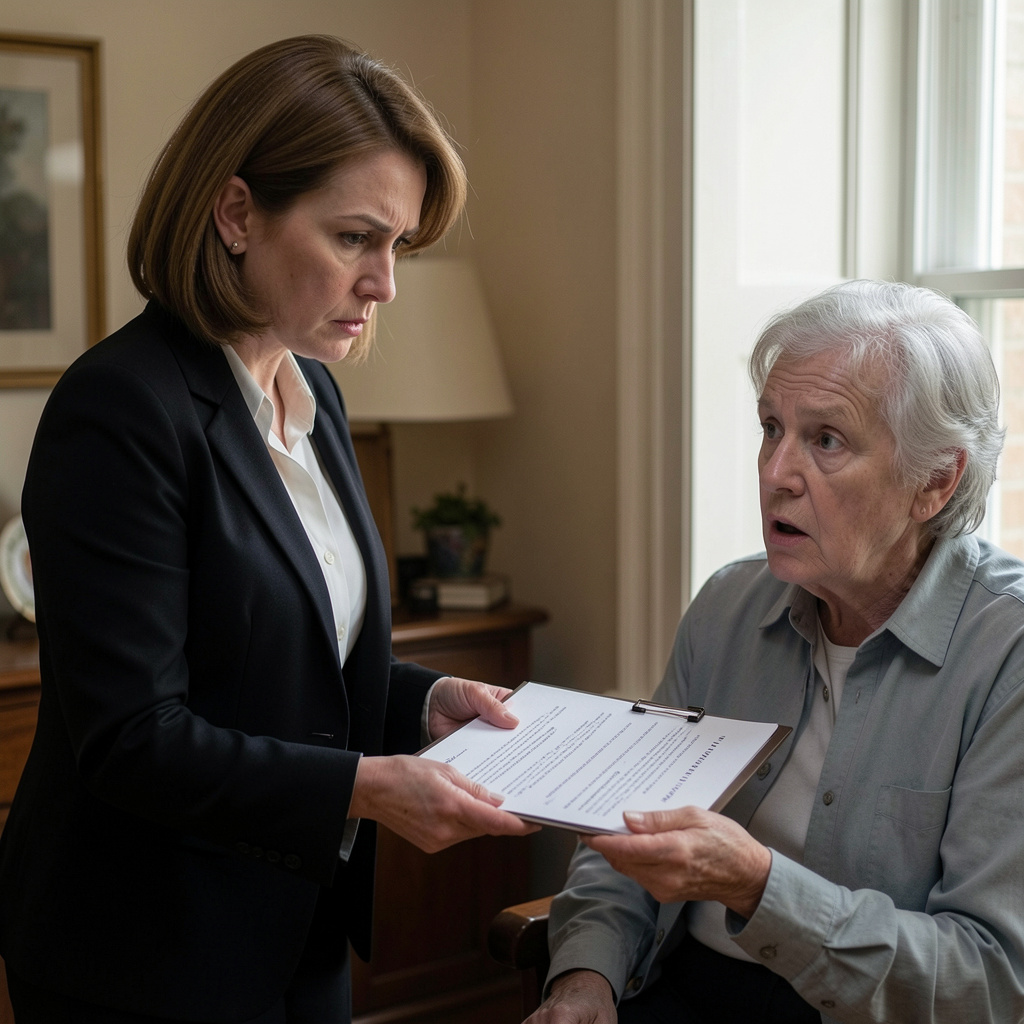
My father opened the folder.
The first page was a property record.
His eyes moved across it.
Then stopped.
His face changed.
“What…?”
He turned the page.
Then another.
His fingers began trembling.
“Wait.”
He looked at me.
“What is this?”
I said nothing.
He looked back at the document.
My mother stood behind him.
“What does it say?”
He didn’t answer.
I did.
“It says the house was transferred into my name eight years ago.”
My mother stared at me.
“That isn’t possible.”
“It is.”
My father shook his head.
“No.”
“Yes.”
He flipped through the documents.
“Where did you get these?”
“I didn’t get them.”
I pointed at the signature.
“You signed them.”
His face went pale.
“You’re lying.”
“I wish I were.”
Eight years earlier, my father had suffered a major heart attack.
He had survived, but the medical bills had nearly destroyed their finances.
At the time, he and my mother had been terrified of losing their house.
I had stepped in.
I had paid the remaining mortgage.
I had covered the hospital bills that insurance didn’t cover.
And because they couldn’t qualify for refinancing, my attorney had suggested a legal arrangement that would protect the property while allowing my parents to remain there.
My father had signed the documents.
So had my mother.
But apparently, over the years, they had forgotten.
Or perhaps they had simply convinced themselves that the arrangement didn’t matter.
My father looked at me.
“You’ve been paying the property taxes.”
“Yes.”
“The insurance.”
“Yes.”
“The repairs.”
“Yes.”
“Why?”
“Because you were my parents.”
He stared at me.
I continued.
“Do you remember the roof?”
He said nothing.
“I paid for it.”
“The plumbing?”
“I paid for it.”
“The furnace?”
“I paid for it.”
His mouth opened.
Then closed.
I looked at my mother.
“And when you needed the upstairs bathroom remodeled, I paid for that too.”
She lowered her eyes.
I took another document from the folder.
“This is the most recent appraisal.”
My father looked at it.
“The house is worth nearly $600,000 now.”
My mother whispered, “What are you saying?”
“I am saying that for eight years, you have been living in a house that legally belongs to me.”
My father slammed his hand against the table.
“You wouldn’t throw us out.”
“No.”
He looked relieved.
Until I finished.
“I wouldn’t do to you what you did to Emma.”
The relief disappeared.
I leaned forward.
“I didn’t bring these papers here because I wanted revenge.”
“Then why?”
“Because today I learned something.”
I looked toward the hallway where Emma was waiting outside.
“I learned that my daughter cannot live somewhere she is treated like a burden.”
My father rubbed his forehead.
“This is ridiculous.”
“No.”
My voice was calm.
“This is accountability.”
My mother began crying.
“We were under pressure.”
“You were under pressure?”
“Yes.”
“Because Tyler needed a room?”
“He’s going through a difficult time.”
“So is Emma.”
“He’s a child.”
“So is my daughter.”
My mother wiped her face.
“You don’t understand.”
“Then explain it.”
She didn’t.
My father finally spoke.
“Your sister lost her job.”
I stared at him.
“What?”
“She and her husband are separating.”
I had heard nothing about it.
My mother continued.
“They needed somewhere to stay.”
“So you decided Emma was the easiest person to move.”
Neither answered.
I nodded slowly.
“That makes sense.”
My father looked surprised.
“What?”
“It explains everything.”
I gathered the documents.
“For years, you’ve treated Emma as if she were less important because she was quiet. Because she didn’t demand attention. Because she didn’t make you feel needed.”
“That isn’t true,” my mother whispered.
“It is.”
I remembered every Christmas when Tyler received a pile of presents while Emma received a gift card.
Every family dinner when my mother praised Tyler’s achievements but barely asked Emma about school.
Every time Emma tried to tell them about something important and they interrupted her.
I had noticed.
I just hadn’t understood the extent of it.
Until today.
My father stared at the documents.
“So what happens now?”
I looked at him.
“You have thirty days.”
My mother froze.
“To do what?”
“To find somewhere else to live.”
My father’s jaw tightened.
“You’re evicting us?”
“No.”
I slid one final paper across the table.
“You’re being given thirty days because I’m choosing to be more compassionate than you were today.”
My father picked it up.
It was a letter from my attorney.
He read it.
Then looked at me.
“You already contacted a lawyer?”
“Yes.”
“When?”
“This afternoon.”
“How?”
“I made the call from the airport.”
He sat down.
For the first time since I’d arrived, he looked old.
Not angry.
Not powerful.
Just old.
My mother whispered, “You planned this.”
“No.”
I shook my head.
“I planned to protect my daughter.”
“That isn’t the same thing.”
“No.”
I looked toward the door.
“It’s much more important.”
That night, Emma and I went home.
She barely spoke during the drive.
When we got inside, she went straight to her room.
I followed a few minutes later.
She was sitting on the bed, holding the old Disneyland photograph.
“Are we really never going back there?”
I sat beside her.
“Not for a while.”
“Did Grandpa really sign those papers?”
“Yes.”
“Does that mean the house is yours?”
“Yes.”
She looked confused.
“Why didn’t you ever tell them?”
“Because it wasn’t about owning the house.”
“What was it about?”
“Keeping my promise.”
“What promise?”
I smiled sadly.
“When Grandpa got sick, I promised I would make sure they never lost their home.”
She looked at me.
“And now you’re making them leave?”
“I am.”
“Isn’t that breaking your promise?”
I took her hand.
“No.”
She waited.
“I promised they would never lose their home because they couldn’t afford it.”
I squeezed her fingers.
“I never promised they could keep a home where they made my daughter feel unwanted.”
Emma looked down.
Then she asked the question I’d been dreading.
“Do you hate them?”
I thought about it.
“No.”
“Are you angry?”
“Yes.”
“Very?”
“Yes.”
She nodded.
“Me too.”
I pulled her close.
“You don’t have to forgive anyone just because they’re family.”
She leaned against me.
“But someday?”
“Someday, if you want to.”
“What if I never want to?”
“Then I will respect that.”
She was quiet for a long time.
Then she whispered, “Thank you for coming home.”
I kissed her forehead.
“There was never another option.”
The next morning, my father called.
I almost didn’t answer.
But I did.
“Hello?”
His voice sounded different.
“Can I see you?”
“Why?”
“I want to talk.”
I agreed.
He came alone.
He sat at my kitchen table.
For several minutes, he said nothing.
Then he looked at me.
“I remember the day you signed those papers.”
I frowned.
“What?”
“The day you saved the house.”
He swallowed.
“You were thirty-two. You’d just gotten that promotion. You came here with your lawyer.”
I said nothing.
“I was embarrassed.”
“I know.”
“No, you don’t.”
He looked down.
“I felt like a failure.”
I softened slightly.
“You weren’t a failure.”
“I was.”
“You were sick.”
“I was supposed to take care of everyone.”
“You did.”
“No.”
He shook his head.
“You did.”
Silence filled the room.
Then he said something I hadn’t expected.
“I was jealous of you.”
I blinked.
“What?”
“You were younger than me, but you had your life together. You had a career. You raised Emma alone. You handled everything.”
He rubbed his hands together.
“And I hated that I needed your help.”
I stared at him.
“That doesn’t explain Emma.”
“No.”
He looked ashamed.
“It doesn’t.”
He took a breath.
“I think I convinced myself that if Tyler needed us more, then we weren’t useless.”
I felt my anger shift.
Not disappear.
Just shift.
“You made Emma pay for that.”
“I know.”
“She is fourteen.”
“I know.”
“She trusted you.”
His eyes filled with tears.
“I know.”
For the first time, I saw genuine regret.
Not because of the house.
Not because of the legal papers.
Because of what he’d done to his granddaughter.
“Does she hate me?” he asked.
“I don’t know.”
“Will you tell her I’m sorry?”
“I will.”
“But don’t ask her to forgive me.”
I nodded.
“I won’t.”
He stood.
At the door, he stopped.
“You know what hurts the most?”
I waited.
“She was sitting at the bus stop holding that suitcase.”
His voice cracked.
“I saw her from the window.”
I stared at him.
“You saw her?”
He nodded.
“And you still let her leave?”
His face collapsed.
“I was ashamed.”
“You should have been.”
“I know.”
He walked away.
I stood there for a long time.
Three weeks later, my parents moved into a smaller rental house.
My sister found an apartment.
Tyler stayed with her.
And Emma didn’t speak to my parents.
Not once.
I didn’t force her.
Then, on a Sunday afternoon, an envelope arrived.
It was addressed to Emma.
Inside was a letter from my mother.
I didn’t read it.
I gave it to Emma.
She stared at it.
“Do I have to open it?”
“No.”
She carried it upstairs.
An hour later, she came back down.
The envelope was empty.
“What did it say?”
She shrugged.
“She said she was sorry.”
“How do you feel?”
“I don’t know.”
“That’s okay.”
Emma sat beside me.
“Mom?”
“Yes?”
“Can I see Grandma someday?”
I smiled.
“If you want.”
“Not yet.”
“That’s okay.”
“Maybe later.”
“That’s okay too.”
She rested her head on my shoulder.
And for the first time since the phone call in Phoenix, I felt the knot in my chest loosen.
The house my parents had once treated as theirs became something else.
Not a weapon.
Not revenge.
A reminder.
A reminder that family isn’t defined by blood alone.
It’s defined by what we do when someone is vulnerable.
My parents had chosen convenience over compassion.
They had chosen one grandchild over another.
And they had assumed that because Emma was fourteen, she would simply accept it.
They were wrong.
But I also learned something I hadn’t expected.
Sometimes protecting your child doesn’t mean fighting the loudest.
Sometimes it means staying calm.
Gathering the truth.
Putting the documents on the table.
And letting people finally see the consequences of choices they thought would never catch up with them.
Months later, Emma and I drove past my parents’ old house.
She looked out the window.
“Mom?”
“Yeah?”
“I’m glad you didn’t sell it.”
I glanced at her.
“I thought you wanted us to.”
“I don’t.”
“Why?”
She smiled faintly.
“Because maybe someday Grandpa and Grandma will understand what home actually means.”
I smiled.
“What does it mean?”
She looked out the window again.
“It’s the place where nobody makes you pack your things.”
I reached over and squeezed her hand.
She squeezed mine back.
And I realized that was the only document that mattered.
Not the property deed.
Not the legal letter.
Not the appraisal.
It was the quiet promise between a mother and her daughter.
No matter what happened.
No matter who turned their back.
No matter how many doors closed.
She would always have a place where she belonged.
Home.
With me.