The Envelope on the Train
I cleaned houses for the same family out in the Connecticut suburbs for fifteen years.Fifteen years is a long time to know a house.
Long enough to know which floorboard squeaks in winter. Long enough to know which window sticks when the humidity rises.
Long enough to recognize the sound of a particular furnace kicking on before the thermostat even reaches the temperature it was set for.
And long enough to know a family without ever really being part of it.
The family was the Whitakers.The house belonged to Harold and Evelyn Whitaker, though everyone called them Mr. and Mrs. Whitaker.
They had raised three children there: Margaret, the oldest; Thomas, their son; and Claire, the youngest.
By the time I started working for them, the children were grown and living elsewhere.
Mr. Whitaker was already in his seventies.
Mrs. Whitaker had a gentle way about her, but she suffered from arthritis and eventually stopped coming downstairs before noon. Mr.
Whitaker was different. Quiet. Particular. The kind of man who noticed if you moved a chair two inches.
But he was never unkind.My name is Rosa Martinez. I was forty-two when I first walked through the Whitakers’ front door carrying a vacuum cleaner in one hand and a bucket of supplies in the other.
I was fifty-seven when I walked out for the last time.Fifteen years.Every Tuesday.
Nine in the morning until somewhere around three.
Sometimes longer around the holidays.
I watched their children come home for Thanksgiving. I watched grandchildren appear, disappear, grow taller, and eventually bring dates to Christmas dinner.
I knew which grandchild liked chocolate milk.
I knew which one was allergic to peanuts.
I knew Mrs. Whitaker kept emergency birthday presents in the linen closet.
I knew Mr. Whitaker hated dust on the bookshelves and loved old jazz records.
And I knew something else.
Mr. Whitaker was lonely.
Not the kind of lonely that comes from being alone.
The kind that comes from being surrounded by people who no longer notice you’re there.
After Mrs. Whitaker died, the house changed.
The laughter became occasional.
The Christmas decorations became smaller.
The dining room table that once seated eight people was eventually used mostly for newspapers.
Mr. Whitaker spent more and more time in his study.
That room was the one place I rarely cleaned.
He always told me, “Leave it, Rosa. I’ll take care of it.”
I never argued.
I respected people’s private spaces.
Still, over the years, I noticed things.
A photograph of Evelyn on his desk.
A framed picture of the three children when they were young.
A stack of handwritten notebooks.
And, on one shelf, a small wooden box with a brass latch.
I never asked what was inside.
Then, two years before his death, Mr. Whitaker began forgetting things.
At first it was harmless.
He would ask me whether I’d already cleaned the kitchen.
Then he’d ask again twenty minutes later.
Sometimes he’d stand in the hallway looking confused.
Once, I found him outside in his slippers during a snowstorm.
“Mr. Whitaker, what are you doing?”
He looked at me.
“I was going to the mailbox.”
“The mailbox is inside the garage.”
He stared at me for several seconds.
Then he smiled.
“Well, that’s embarrassing.”
I helped him back inside.
After that, his children arranged for caregivers.
I still came every Tuesday.
One afternoon, while I was dusting the living room, Mr. Whitaker called me from his study.
“Rosa?”
“Yes?”
“Come here a minute.”
I went in.
He was sitting behind his desk with a yellow legal pad in front of him.
“Close the door.”
I did.
He looked toward the hallway.
Then he lowered his voice.
“Do you remember the first day you came here?”
“Of course.”
“What year?”
I thought.
“2011.”
He smiled.
“April.”
“You remember?”
“I remember everything important.”
I laughed softly.
“Mr. Whitaker, you forgot where the mailbox was.”
“That wasn’t important.”
Then he became serious.
“I wanted to tell you something.”
I waited.
“You’ve done more for this family than you realize.”
I shook my head.
“I just clean.”
“No.”
He pointed toward the legal pad.
“You keep things together.”
I didn’t know what to say.
He continued.
“When Evelyn was sick, you brought her soup.”
“She needed it.”
“When Thomas lost his job, you never mentioned it to anyone.”
I looked at him.
He smiled.
“Yes. I knew.”
I suddenly felt uncomfortable.
“Mr. Whitaker—”
“And when Claire was getting divorced, you sat with her in the kitchen for two hours.”
“She was crying.”
“Exactly.”
He leaned back.
“People think cleaning is about floors and windows.”
He tapped the desk.
“It isn’t.”
I smiled.
“Well, somebody has to clean the floors.”
He laughed.
It was one of the last times I heard him laugh that hard.
A few months later, his health declined quickly.
He stopped walking without assistance.
Then he stopped eating much.
His children began visiting more often.
Not every day.
But often enough that the house felt crowded again.
I remember one Tuesday when Margaret arrived while I was vacuuming the hallway.
She looked at me.
“How long have you worked here?”
“Fifteen years.”
She raised her eyebrows.
“That’s a long time.”
“Yes.”
She walked past me without saying anything else.
I didn’t think much of it.
Then Mr. Whitaker died.
He passed away quietly one morning in his bedroom.
He was eighty-seven.
I attended the funeral.
I stood in the back.
I didn’t want to intrude.
Afterward, the children returned to the house to sort through everything.
For three weeks, I continued cleaning.
But it wasn’t really cleaning anymore.
It was packing.
Boxes appeared everywhere.
“Donate.”
“Keep.”
“Sell.”
“Trash.”
The house slowly disappeared.
Furniture that had been there for decades was carried out.
Mrs. Whitaker’s china disappeared into boxes.
The piano was sold.
The bookshelves emptied.
The study was the last room.
One Tuesday, I asked Margaret whether she wanted me to clean it.
“No,” she said.
She stood in the doorway.
“We’re handling that ourselves.”
I nodded.
That was fine.
A month later, the house went on the market.
The children decided to sell it.
I understood.
It was a beautiful property, but none of them wanted to live there.
My last day was a Thursday.
I had been cleaning the house for fifteen years, and suddenly there was nothing left to clean.
The rooms were empty.
The walls looked strangely large without furniture.
The marks where paintings had hung were still visible.
I vacuumed the last hallway.
Wiped the last windows.
Polished the kitchen counter.
Then I stood in the center of the living room with my cleaning bag in my hand.
I looked around.
I could almost hear Mrs. Whitaker laughing.
I could almost see Mr. Whitaker sitting in his chair reading the newspaper.
I wiped my eyes with the back of my hand.
Margaret came downstairs.
“You’re all finished?”
“Yes.”
She nodded.
“Thank you, Rosa.”
I picked up my bag.
At the front door, she stopped me.
“Wait.”
She disappeared into the kitchen.
When she returned, she was holding a cream-colored envelope.
She handed it to me.
“A little something, for all your years with us.”
I smiled.
“Thank you.”
“Don’t open it here.”
I laughed.
“I wasn’t going to.”
She smiled politely.
Then she turned around and walked back inside.
That was it.
No hug.
No long goodbye.
No final conversation.
I stepped outside.
The front door closed behind me.
I walked to the train station.
The envelope felt heavier than I expected.
I assumed it contained a card.
Maybe a check for a couple hundred dollars.
Possibly a gift card.
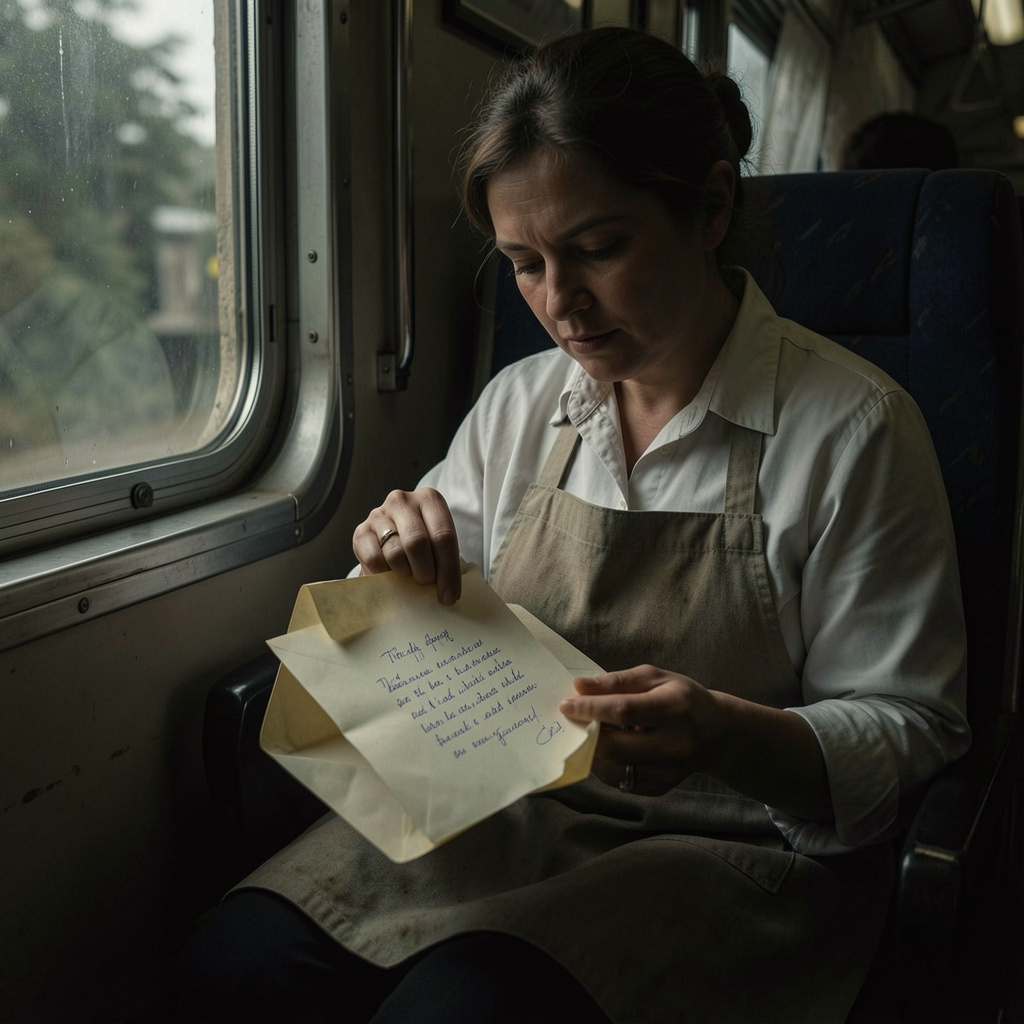
I sat by the train window and waited until we pulled away from the station.
Then I opened it.
There was a folded sheet of paper.
And beneath it, something else.
A key.
An old brass key.
I unfolded the paper.
The handwriting was unmistakable.
Mr. Whitaker’s.
The letters were shaky, but I knew them immediately.
It said:
“Rosa,
If you’re reading this, I am no longer here.
There are many things I should have said while I was alive.
This is the one that matters most.
The house was never really mine.
Not in the way people think.
Evelyn and I bought it together, but she always said a home belongs to the people who make it feel like one.
You did that.
You kept this place alive after we could no longer do it ourselves.
I want you to have something.
The key opens the small wooden box in my study.
Please take what is inside before my children sell the house.
Don’t tell them until you’ve seen it.
You deserve to know the truth.
—Harold”
I read it twice.
Then a third time.
The train rattled beneath me.
I stared at the key in my palm.
For fifteen years, I’d wondered what was inside that wooden box.
Now I knew I had a way to find out.
I got off the train at the next station.
Then I turned around.
I called Margaret.
She answered after four rings.
“Hello?”
“It’s Rosa.”
“Yes?”
“I think I left something at the house.”
“What?”
“A key.”
There was silence.
Then she said, “What key?”
I swallowed.
“Your father’s.”
Another silence.
“I’ll come back tomorrow,” I said.
“No.”
Her voice changed.
“You don’t need to.”
“Your father left me a note.”
I heard her inhale sharply.
“What did it say?”
“I’d rather show you.”
She didn’t answer.
Finally she said, “Come tomorrow morning.”
The next day, Margaret let me into the house.
The property was empty.
She looked nervous.
“Where is the box?”
“The study.”
She followed me upstairs.
The study door opened with a soft creak.
Everything had been removed except the desk.
I walked to the bookshelf.
I knew exactly where the box had been.
The shelf was empty.
I looked at Margaret.
“Where is it?”
She frowned.
“I don’t know.”
“Your father said it was here.”
She searched the room.
Nothing.
Then I remembered something.
“The basement.”
“What?”
“Your father moved things there sometimes.”
We went downstairs.
The basement was full of boxes.
After nearly twenty minutes, we found it.
A small wooden box.
Brass latch.
I inserted the key.
It clicked.
Inside were documents.
Photographs.
A thick envelope.
And a small notebook.
Margaret stared.
“What is all this?”
I picked up the notebook.
The first page said:
“Rosa.”
My hands began shaking.
The notebook contained fifteen years of observations.
Not about me cleaning.
About me.
The first entry was dated April 12, 2011.
“Rosa arrived today. She is quiet. She works carefully. She noticed Evelyn’s medicine had fallen behind the table before any of us did.”
I turned the page.
Another entry.
“Rosa stayed an extra hour because Evelyn was having a difficult morning.”
Another.
“Rosa brought soup.”
Another.
“Rosa noticed that Thomas was ashamed about losing his job and protected his dignity by saying nothing.”
I looked at Margaret.
She was crying.
“I didn’t know he kept this.”
I turned another page.
The handwriting became shakier.
“Children think Rosa works for us.
They don’t understand.
She works for the house.
And somehow, the house works because of her.”
Then I reached the final pages.
The last entry was dated six months before his death.
“I have made arrangements.
The house will be sold.
The money from the sale will be divided equally among the children.
But there is one thing they do not know.
I have already transferred the small cottage on Maple Lane to Rosa.”
I stopped breathing.
Margaret stared at me.
“What cottage?”
I looked at her.
“What cottage?”
She grabbed the notebook.
“My father owns a cottage?”
“Apparently.”
She flipped through the pages.
Then she found another document.
A property deed.
My name was on it.
Rosa Martinez.
I felt dizzy.
“That’s impossible.”
Margaret sat down on an old cardboard box.
“He never told us.”
“He didn’t want you to know until after the sale.”
“Why?”
I looked at the final note.
There was another page.
I read it aloud.
“I know my children will think this is unfair.
They will say Rosa was paid to clean.
They will say I gave away something that belonged to them.
But they forget one important fact.
Rosa never asked me for anything.
She gave us something none of them could buy.
She gave us her time.
She gave Evelyn dignity.
She gave me companionship without ever treating me like a helpless old man.
She gave this house a heart.
The cottage is not payment.
It is gratitude.
If they are angry, let them be angry with me.
I am old enough to handle it.”
Margaret covered her mouth.
For several minutes, neither of us spoke.
Then she whispered,
“My father loved you.”
I shook my head.
“He loved your family.”
She looked at me.
“Maybe.”
Then she laughed through her tears.
“But he trusted you more than he trusted us.”
That hurt.
I didn’t want that.
I didn’t want a house.
I didn’t want a fight.
I didn’t want money to turn fifteen years of kindness into something ugly.
“I can’t take it,” I said.
Margaret looked at me.
“Why not?”
“Because it will destroy your family.”
She shook her head.
“No.”
She wiped her face.
“He knew exactly what he was doing.”
The cottage was a small yellow house about forty minutes away.
I had never seen it.
Mr. Whitaker had apparently bought it years earlier as an investment.
It wasn’t luxurious.
Two bedrooms.
Small kitchen.
Tiny garden.
But it was beautiful.
There were trees around it.
A porch in front.
A river behind the property.
And a little stone path leading to the water.
I stood there with Margaret beside me.
She handed me the keys.
“You should see the basement.”
“Why?”
“He left something else.”
Downstairs, we found another box.
Inside were photographs.
Pictures of me.
Not posed.
Not staged.
Me washing windows.
Me carrying groceries.
Me laughing with Mrs. Whitaker.
Me sitting beside Mr. Whitaker at the kitchen table.
And one photograph stopped me.
It was from my first year working there.
I was standing in the kitchen holding a mop.
Mr. Whitaker was sitting at the table.
The caption underneath read:
“She doesn’t know it yet, but she belongs here.”
I started crying.
Margaret hugged me.
It was the first time she’d ever hugged me.
“I’m sorry,” she whispered.
“For what?”
“For all the times we treated you like the help.”
I didn’t know what to say.
So I hugged her back.
The following weeks were difficult.
The house sold quickly.
The children divided the money.
Nobody challenged the cottage.
Not even Thomas.
Claire called me once.
She said, “Dad wanted you to have it.”
I asked her whether she was angry.
She said,
“I was at first.”
Then she paused.
“But I found something in his desk.”
“What?”
“A letter.”
“What did it say?”
She laughed softly.
“He wrote that if any of us tried to take the cottage from you, he’d come back and haunt us.”
I laughed.
That sounded exactly like him.
I moved into the cottage three months later.
It was the first home I’d ever owned.
Not rented.
Not borrowed.
Mine.
I planted tomatoes in the garden.
I painted the kitchen.
I bought a secondhand dining table.
And on the first Tuesday morning after moving in, I woke up at nine.
For fifteen years, nine o’clock had meant work.
That morning, there was nowhere I had to go.
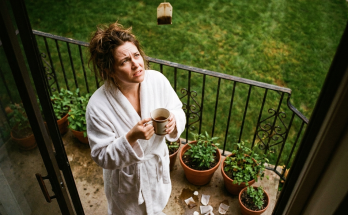
I sat on the porch with coffee.
The river moved quietly behind the house.
For the first time in a very long time, I realized something.
I had spent fifteen years cleaning someone else’s home.
And somehow, without knowing it, I’d been cleaning a path toward my own.
A year later, Margaret came to visit.
She brought flowers.
We sat on the porch.
She looked around.
“Dad would have loved this.”
I smiled.
“I think he did.”
She looked at me.
“What do you mean?”
I pointed toward the river.
“Maybe that’s why he bought it.”
She smiled.
“Maybe.”
We sat quietly.
Then she said,
“You know what I finally understood?”
“What?”
“My father didn’t give you a house.”
I looked at her.
“He gave you proof.”
“Proof of what?”
“That the years you spent caring for people mattered.”
I looked down at my hands.
Those hands had scrubbed floors.
Washed windows.
Folded towels.
Carried groceries.
Held Mrs. Whitaker’s hand when she was sick.
Held Mr. Whitaker’s coffee cup when his fingers became too weak.
For years, I’d thought my work disappeared the moment I finished it.
A clean floor got dirty again.
A polished window collected fingerprints.
A folded towel became unfolded.
Everything I did seemed temporary.
But Mr. Whitaker had seen something I hadn’t.
He understood that kindness works the same way.
You don’t always get to see what it becomes.
Sometimes you hold a door for someone who remembers it twenty years later.
Sometimes you make soup for a lonely woman.
Sometimes you sit beside an old man who thinks nobody notices him.
Sometimes you simply show up.
Every Tuesday.
For fifteen years.
And one day, years later, you discover that none of it disappeared.
It stayed.
In somebody’s memory.
In somebody’s heart.
In a handwritten notebook hidden inside a wooden box.
And sometimes, if you’re very lucky, it comes back to you.
I still have Mr. Whitaker’s note.
It’s framed above my desk.
The ink has faded slightly.
The paper is beginning to yellow.
But I can still read every word.
Especially the last line.
“I hope, Rosa, that someday you will live in a place where you never have to wonder whether you belong.”
I didn’t understand that sentence when I first read it on the train.
I understand it now.
For fifteen years, I had entered the Whitaker house through the back door carrying a bucket and a vacuum.
I had never thought of myself as someone who belonged there.
I was the cleaner.
The woman who came on Tuesdays.
The person who knew where the extra trash bags were kept.
The person who noticed when the flowers needed water.
But Mr. Whitaker had been watching.
He had seen me.
Really seen me.
And when he died, he left me more than a house.
He left me a truth I had spent my whole life forgetting.
That your worth is not measured by the title on your paycheck.
Not by the size of your bank account.
Not by whether people invite you to sit at their table.
Sometimes your worth is measured by the lives that became a little easier because you were there.
The cottage is quiet now.
Sometimes too quiet.
But on Tuesday mornings, I still clean.
Not because I have to.
Because I like it.
I open the windows.
Sweep the porch.
Wipe the kitchen counters.
Water the flowers.
Then I make coffee and sit beside the river.
And every once in a while, I imagine Mr. Whitaker sitting beside me.
He’d probably complain about the weeds.
He’d probably tell me the porch needed repainting.
And he’d probably ask whether I remembered where the mailbox was.
I’d laugh.
Then I’d tell him,
“Yes, Mr. Whitaker.
I know exactly where it is.”
Because now, finally, I do.
I know where home is.
And I know I belong there.