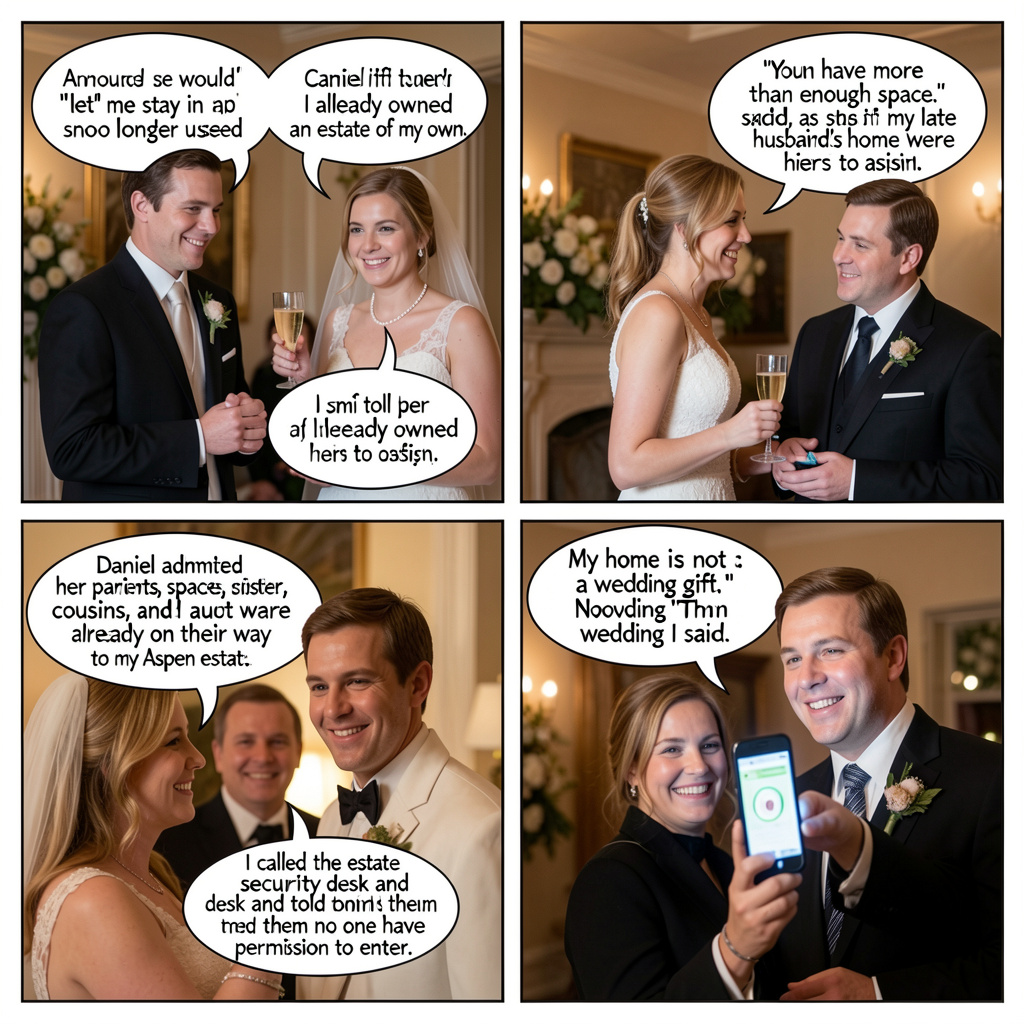
At my son’s wedding, his bride announced she would “let” me stay in the apartment she no longer used.I smiled and told her I already owned an estate of my own.
Claire lifted her champagne glass.
“You have more than enough space,” she said, smiling as though she were doing me a tremendous favor.
“There’s no reason you should keep living alone in that enormous house.”The ballroom was filled with two hundred guests, all dressed in black tie and silk.
For one strange second, nobody seemed to know whether Claire was joking.
She wasn’t.I could tell by the way she tilted her head.
It was the same expression she’d worn three months earlier when she’d suggested I sell my late husband’s home and “downsize into something practical.”
The home she was talking about wasn’t some ordinary suburban house.
It was our Aspen estate.
My husband, Richard, and I had bought the property twenty-six years earlier, long before Aspen became the playground of celebrities and billionaires.
Back then, it had been a secluded piece of land surrounded by pine trees, mountains, and enough silence to make you forget the rest of the world existed.
Richard had built the house with his own hands and the help of a small team of craftsmen.
When he died two years ago, he left everything to me.
The estate.The investment accounts.
The family foundation.
And, most importantly, the life we’d built together.
Claire knew all of this.
Daniel knew it even better.
So when Claire raised her champagne glass and said, “Honestly, Evelyn, the apartment is perfect for you,” I simply smiled.
“That’s very generous,” I said.
She smiled back.
“You’ll be much more comfortable there.”
I looked at my son.
Daniel was standing beside his new wife, wearing the tuxedo I’d watched him try on six weeks earlier.
He wouldn’t meet my eyes.
That was when I knew something was wrong.
I took a sip of champagne.
“I’ll think about it.”
Claire’s smile widened.
“Wonderful.”
Then she turned away and began greeting her relatives.
I watched her mother kiss her cheek.
Her father shook Daniel’s hand.
Her sister laughed.
Everything looked normal.
Except Daniel.
He kept glancing at his phone.
Ten minutes later, I understood why.
He approached me near the edge of the dance floor.
“Mom.”
“Yes?”
“We need to talk.”
“About the apartment?”
He swallowed.
“Not exactly.”
I waited.
Daniel rubbed the back of his neck.
“Claire’s family is coming to Aspen.”
I stared at him.
“What?”
“After the wedding.”
“When?”
“Tonight.”
I thought I’d misheard him.
“Tonight?”
He nodded.
“They’re already driving up.”
I looked toward Claire.
She was dancing with her father.
“Who is ‘they’?”
Daniel hesitated.
“Her parents. Her sister. Her cousins. Her aunt.”
I blinked.
“How many people?”
“Mom…”
“How many?”
He whispered, “Nine.”
For several seconds, I couldn’t speak.
Then I laughed.
Not because it was funny.
Because sometimes your mind laughs when reality is too absurd to process.
“You invited nine people to my house?”
“I didn’t exactly invite them.”
“Daniel.”
“They’re family now.”
I stared at him.
“Family doesn’t mean trespassers.”
He flinched.
“Mom, please.”
“Where are they staying?”
He looked away.
“At the estate.”
My champagne glass suddenly felt very heavy.
“Who gave them permission?”
“Claire thought—”
“I didn’t ask what Claire thought.”
I looked directly into my son’s eyes.
“Who gave them permission?”
He didn’t answer.
That was answer enough.
I reached into my handbag and took out my phone.
Daniel grabbed my wrist gently.
“Mom, don’t make a scene.”
I looked at his hand.
Then at him.
“Daniel, I’m not making a scene.”
I pulled my hand free.
“I’m preventing one.”
I called the estate security desk.
The head of security, Marcus, answered immediately.
“Mrs. Whitmore?”
“Marcus, this is important.”
“Yes, ma’am.”
“No one is permitted onto the property tonight unless I personally authorize them.”
There was a pause.
“Understood.”
“Not Daniel.”
Another pause.
“Not Claire.”
“Understood.”
“Nobody.”
“Yes, ma’am.”
“Call me immediately if anyone approaches the gate.”
“Of course.”
I ended the call.
Daniel looked devastated.
“Mom.”
I put my phone away.
“You should have called me before making plans involving my home.”
“I didn’t make the plans.”
“Then you should have stopped them.”
He opened his mouth.
Nothing came out.
Then his phone buzzed.
He looked down.
His face changed.
“What is it?” I asked.
He didn’t answer.
I took one step closer.
“Daniel.”
He turned the screen toward me.
The message was from Claire.
We’re almost there. Dad says the gate code still works.
I looked at my son.
“Still works?”
He closed his eyes.
I understood.
They already had access.
At least, they thought they did.
“Call Claire,” I said.
“Mom—”
“Call her.”
He did.
She answered immediately.
“Daniel! We’re almost at the gate.”
I could hear laughter in the background.
Claire continued.
“Your mother doesn’t need to worry. We’re going to keep the noise down.”
Daniel looked at me.
I motioned for him to put it on speaker.
He hesitated.
Then did.
“Claire,” I said.
Silence.
“Oh.”
Her voice suddenly became cautious.
“Evelyn.”
“You’re going to the estate?”
“Yes.”
“Why?”
“We discussed this.”
“No, Claire. You discussed it.”
She laughed nervously.
“It’s our wedding night. I didn’t want to burden you with details.”
“You invited nine people into my house.”
“Our house,” she corrected.
The ballroom suddenly seemed very quiet.
I heard Daniel whisper, “Claire.”
She ignored him.
“Once Daniel and I are married, that property is essentially family property.”
I smiled.
“Interesting.”
“What?”
“You’ve been married for three hours.”
She said nothing.
“And you’ve already decided what belongs to the family.”
“That’s not what I meant.”
“Then tell them to turn around.”
Her tone hardened.
“Evelyn, we’re already there.”
“Then they’ll be leaving.”
She laughed.
“You can’t be serious.”
“I’ve never been more serious.”
There was a pause.
Then I heard her father in the background.
“What does she say?”
Claire covered the phone.
I could hear muffled voices.
Then she returned.
“My father says you’re being unreasonable.”
“Your father is welcome to have an opinion about his own house.”
“It’s not like we’re stealing anything.”
“No.”
I looked at Daniel.
“You’re trying to take something without asking.”
Claire’s voice sharpened.
“You have an entire estate and you’re refusing to let your own son’s family stay there?”
“My son’s family is welcome.”
“Then why aren’t we?”
“Because you didn’t ask.”
She went silent.
Then she said something I’ll never forget.
“Maybe Daniel should have a say in his mother’s estate.”
I looked at my son.
His face went pale.
“Maybe,” I said, “he should.”
Then I hung up.
Daniel stared at me.
“I’m sorry.”
I didn’t answer.
“Mom, I’m sorry.”
“Are you?”
“Yes.”
“Then tell me the truth.”
He looked down.
“What truth?”
“Why does Claire think your home belongs to her?”
He rubbed his face.
“She thinks we’re going to move there.”
I felt something inside me go still.
“Who is ‘we’?”
“Claire and me.”
“You’re moving into my house?”
“She says it’s temporary.”
“How temporary?”
He didn’t answer.
“Daniel.”
“She wants to live there for a year.”
I stared at him.
“And what happens after the year?”
“She thinks we’ll renovate.”
“Renovate.”
“Mom…”
“Using whose money?”
Silence.
I understood.
I looked at my son, the boy I’d raised after Richard died, the boy who had once slept beside my bed because he was afraid of thunderstorms.
Now he was standing in front of me asking me to surrender the home his father had built.
And he couldn’t even say it himself.
Claire was saying it for him.
I took a slow breath.
“Did you tell her no?”
He shook his head.
“Why?”
“Because I didn’t know how.”
That hurt more than anything else.
“You didn’t know how to tell your wife that my house wasn’t hers?”
“I was scared she’d cancel the wedding.”
I looked at him.
“Then maybe you married the wrong woman.”
His eyes filled with tears.
“Mom.”
I softened for half a second.
Then I remembered something Richard had told me years ago.
People show you who they are when they think you need them.
And sometimes they show you even more clearly when they think they don’t need you.
The wedding continued.
The music played.
People danced.
The cake was cut.
Guests laughed.
But I barely heard any of it.
I left before midnight.
When I reached the Aspen estate, snow was falling.
Marcus met me at the gate.
“Mrs. Whitmore.”
“Are they here?”
“Yes.”
My heart sank.
“How?”
“They arrived twenty minutes ago.”
“Did you let them in?”
“No, ma’am.”
I looked through the gate.
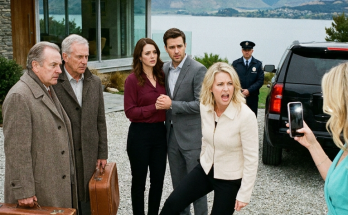
Nine people stood beside three SUVs.
Claire’s father was arguing with one of the security officers.
Claire was holding a suitcase.
Her mother was filming.
I stared.
“They actually came.”
Marcus nodded.
“They’ve been demanding entry.”
“Good.”
I walked toward them.
Claire saw me first.
Her expression changed.
“Seriously?”
I stopped several feet away.
“This property is private.”
Her father stepped forward.
“We’re family.”
“No.”
He looked offended.
“I’m your son’s father-in-law.”
“And I’m the owner of this property.”
He opened his mouth.
I raised my hand.
“I’m not discussing ownership with you.”
Claire stormed toward me.
“You humiliated me.”
“I prevented you from entering my house without permission.”
“You could have let us stay for one night.”
“You could have asked.”
“It’s our wedding!”
“And tomorrow it will still be my house.”
Her face twisted.
“You’re doing this because you don’t like me.”
“No.”
I looked at her.
“I’m doing this because you don’t respect boundaries.”
She scoffed.
“You’ve always treated me like I wasn’t good enough for Daniel.”
I almost laughed.
“I paid for your engagement ring when Daniel couldn’t afford it.”
She froze.
“I paid for the wedding venue deposit.”
Her father looked at her.
“I paid for the flowers.”
Her mother looked away.
“I gave you both a honeymoon.”
Claire’s face reddened.
“And now you want my house too.”
“I never said—”
“You didn’t have to.”
I turned to Marcus.
“Please escort them off the private access road.”
Claire shouted after me.
“You’ll regret this!”
I stopped.
Turned around.
“Claire?”
She glared at me.
“You’ll regret choosing a house over your son.”
I smiled sadly.
“No.”
“I chose respect.”
Then I walked inside.
The next morning, Daniel came alone.
He stood on the front porch for almost a minute before knocking.
I opened the door.
He looked exhausted.
“Can I come in?”
I stepped aside.
He entered.
The house was quiet.
Our house.
The walls held photographs of Richard and me.
Daniel as a child.
Christmas mornings.
School graduations.
Family vacations.
Daniel looked around.
“I remember Dad’s workshop.”
“It’s still there.”
He nodded.
“I was wrong.”
I didn’t answer.
“I should’ve told Claire no.”
“Yes.”
“I was afraid.”
“Of what?”
“Losing her.”
I looked at him.
“And now?”
He swallowed.
“I’m afraid of losing you.”
That broke something inside me.
I walked to the kitchen.
He followed.
“I don’t want to lose you either.”
“I know.”
“But love doesn’t mean giving someone everything they demand.”
“I know.”
“You need to understand that.”
He nodded.
Then he said, “There’s something else.”
I turned.
“What?”
“Claire’s father knows about your foundation.”
I froze.
“What about it?”
“He asked me how much money you have invested.”
I stared at my son.
“Why?”
“I don’t know.”
“Daniel.”
He looked down.
“I think they believed you were going to give us the estate.”
I sat down.
“Because?”
“Claire told them you’d eventually put the house in my name.”
My stomach tightened.
“Did she?”
“She said you had no reason to keep it.”
I closed my eyes.
Richard had been dead for two years.
But suddenly I could hear his voice.
Evelyn, promise me something.
What?
Never let guilt make decisions for you.
I opened my eyes.
“Daniel.”
“Yes?”
“Did Claire ask you to marry me?”
He looked confused.
“What?”
“Did she ask you to pressure me?”
“No.”
“Did she tell you to get me to sign anything?”
His face changed.
That was enough.
“What did she give you?”
He slowly reached into his jacket.
A folder.
I didn’t touch it.
“What is this?”
“She said it was for the estate.”
I opened it.
The first page was a proposed transfer document.
The property would be placed into a family trust.
The beneficiaries were Daniel and Claire.
Not me.
I read it twice.
Then I looked at my son.
“Did you sign this?”
“No.”
“Good.”
“Mom, I didn’t know what it was.”
“You should have read it.”
“I know.”
I closed the folder.
“Where is Claire?”
“At her parents’ hotel.”
“Does she know you’re here?”
“No.”
“Then we’re going to find out exactly what happened.”
We spent the next two hours going through everything.
Texts.
Emails.
Messages between Claire and her family.
At first, they seemed harmless.
Then we found one from Claire to her sister.
Once we’re in Aspen, Mom and Dad can stay as long as they want. Evelyn won’t say no once Daniel talks to her.
Another read:
The estate is worth more than enough. We can finally have a proper family property.
Then one from Claire’s father:
Make sure Daniel gets her to sign before she changes her mind.
I looked at Daniel.
He covered his face.
“I didn’t know.”
“I believe you.”
He looked up.
“Do you?”
“Yes.”
“But I should have.”
“Yes.”
We sat in silence.
Finally, Daniel said, “What do we do?”
I thought about the wedding.
The champagne.
The laughter.
The woman who had told two hundred people she was going to “let” me live in an apartment.
And I realized something.
Claire had made one terrible mistake.
She assumed my silence meant weakness.
She didn’t know my silence was the result of twenty-six years of running businesses, negotiating contracts, surviving grief, and learning exactly when not to speak.
I stood.
“We’re going to the hotel.”
Claire opened the door wearing yesterday’s wedding dress.
Her eyes widened when she saw Daniel.
“Where have you been?”
He didn’t answer.
I stepped forward.
“Claire, we need to talk.”
She crossed her arms.
“About what?”
I held up the folder.
Her face went white.
“Where did you get that?”
“From my son.”
“You went through his things?”
“He gave it to me.”
She looked at Daniel.
“How could you?”
He shook his head.
“Don’t.”
She stared at him.
“Daniel?”
“You lied to me.”
Her expression hardened.
“I was trying to build our future.”
“By taking my mother’s house?”
“It’s not taking.”
She pointed at me.
“Your mother has more money than she could ever spend.”
I felt a chill.
“You’ve reduced my entire life to a number.”
“No.”
“Yes.”
I looked at Daniel.
“This is why I was worried.”
Claire stepped closer.
“You think you’re better than us.”
“No.”
“You’ve always looked down on my family.”
“I’ve never judged your family.”
“Then why won’t you share?”
“Because sharing is voluntary.”
She said nothing.
I continued.
“You didn’t ask for my help. You planned to take it.”
Daniel finally spoke.
“Claire, did you marry me because you loved me?”
She stared at him.
“Of course.”
“Then why was there a plan to get my mother’s property?”
She looked away.
“Daniel…”
“Answer me.”
She started crying.
“I wanted security.”
“You had me.”
“I wanted more.”
The words hung in the room.
Daniel closed his eyes.
I knew then that the marriage was already over.
Not because of the house.
Because of the truth.
Three days later, Daniel filed for an annulment.
Claire’s family disappeared from Aspen.
The wedding photographs were never displayed.
The gifts were returned.
The apartment Claire had offered me remained empty.
And my estate remained exactly as it had always been.
Mine.
But the story didn’t end there.
Six weeks later, Daniel came to visit me.
He looked different.
Older.
Wiser.
He carried a small wooden box.
“What is that?” I asked.
He placed it on the table.
“Something Dad gave me.”
I opened it.
Inside was Richard’s old pocket watch.
I hadn’t seen it since the funeral.
“Why do you have this?”
“Dad gave it to me before he died.”
I touched the watch.
“He told me to give it to you when I finally understood what he meant.”
I looked at him.
“What did he mean?”
Daniel smiled sadly.
“He said, ‘Your mother will give you everything she can. Don’t ever confuse her generosity with an obligation.'”
Tears filled my eyes.
Richard had always understood.
Even when I didn’t.
Daniel reached across the table and took my hand.
“I’m sorry.”
“I know.”
“I almost traded my family for something that wasn’t mine.”
“You didn’t.”
He looked at me.
“I almost did.”
I squeezed his hand.
“But you came back.”
He nodded.
Outside, snow began falling over the mountains.
The same mountains Richard and I had watched together for twenty-six years.
Daniel looked through the window.
“Mom?”
“Yes?”
“Can I come here sometimes?”
I smiled.
“You never needed permission for that.”
He laughed.
“What about the estate?”
“What about it?”
“Would you ever sell it?”
I looked toward the mountains.
“No.”
“Good.”
“Why?”
“Because someday, if I have children, I want them to know this place.”
I smiled.
“Then we’ll make sure they do.”
Years later, people still asked me about the wedding.
They asked about the bride who tried to claim an Aspen estate before she’d even finished her champagne.
They asked why I didn’t simply give Daniel the house.
They asked whether I regretted losing my daughter-in-law.
My answer was always the same.
I didn’t lose a daughter-in-law.
I lost an illusion.
The illusion that kindness requires surrender.
The illusion that family means unlimited access.
The illusion that saying no makes you selfish.
And most importantly, I learned that sometimes the strongest way to love your child is to refuse to rescue them from the consequences of their choices.
Daniel rebuilt his life.
He became a better son.
A better man.
And eventually, he met someone who never asked what his mother owned.
She asked what kind of person he was.
That woman became my daughter-in-law.
When they married, I gave them a gift.
Not the estate.
Not a bank account.
Not property.
I gave them a framed photograph of Richard standing beside the Aspen house on the day we finished building it.
On the back, I wrote:
A home is not defined by its walls.
It is defined by the people who respect the door.
Daniel read it twice.
Then hugged me.
Years earlier, at his first wedding, someone had told me I should be grateful to be “allowed” to stay in an apartment.
At his second wedding, I watched my son open the door for his new wife.
She turned to me and said, “Your home is beautiful.”
I smiled.
“Thank you.”
Then she added, “And whenever you visit, you don’t need to ask permission.”
I laughed.
“Neither do you.”
She smiled.
“Good.”
And that was when I realized the difference between family and ownership.
Family doesn’t ask what it can take.
Family asks how it can help.
Family doesn’t measure love in square footage.
Family doesn’t arrive with suitcases and assume the door will open.
Family knocks.
Family waits.
And family understands that when someone says,
“My home is not a wedding gift,”
the right answer isn’t an argument.
It’s respect.
The Aspen estate remained in my name until the day I died.
But it never became a symbol of money.
It became something far more valuable.
A place where Daniel brought his children every Christmas.
A place where we gathered around Richard’s old dining table.
A place where the mountains reminded us that some things cannot be bought, inherited, or demanded.
Trust.
Love.
Respect.
Those have to be earned.
And once they’re earned, they are worth more than any estate in the world.