The Woman Who Knew How to Save the Cannery
My husband died at seventy-one on a Tuesday morning.There was nothing dramatic about it.No final argument. No mysterious phone call. No last-minute confession.
He simply went to sleep on Monday night and never woke up.
For forty-three years, I had measured my life by the rhythm of his breathing beside me.
That first morning without it, the silence in our bedroom felt louder than any alarm clock.
His name was Robert.We had been married for forty-five years.He had worked maintenance at the paper mill until his knees gave out, and I had spent twenty-eight years at the Riverside Cannery, first packing cans, then operating machines, then training new employees.
Between our two incomes, we had never been rich.But we had always managed.
Robert used to say, “We’re not wealthy, Margaret.
We’re just good at making ten dollars behave like twenty.”
I used to laugh.After he died, I learned exactly how much those ten dollars had been doing.His pension became mine, but only a portion of it.
The house was paid off, thankfully, but electricity still arrived every month. So did property taxes, insurance, groceries, medication, car repairs, and all the small expenses that somehow became enormous when there was only one income.
I sat at the kitchen table three weeks after his funeral with a calculator, a stack of bills, and eleven dollars in my purse.
Eleven.I stared at that number for a long time.
Then I opened the drawer where I had kept my old cannery identification badge.
Riverside Cannery.
Employee 1847.
I ran my thumb across the faded photograph.
I had looked thirty-eight in that picture.
Now I was sixty-six.
The next morning, I drove back to the place where I had spent most of my working life.
The cannery looked different.
New loading bays had been added. The parking lot was freshly paved. A giant sign advertised automated production, artificial-intelligence monitoring, and “next-generation processing technology.”
I almost laughed.
The cannery where I had once known every machine by sound now looked like a factory from another world.
I walked into the office and asked for an application.
The receptionist looked at my age before she looked at my face.
That was the first warning.
The second came when the new manager entered.
His name was Evan Cole.
He was thirty-two.
He wore a clean blue shirt, expensive boots, and the expression of a man who had never had to ask whether there would be enough money left after paying the electric bill.
He glanced at my application.
“You worked here for twenty-eight years?”
“Yes.”
“What position?”
“Production floor. Eventually senior line operator.”
He nodded.
“That’s quite a while ago.”
“I left four years ago.”
He leaned back.
“We’ve changed a lot since then.”
“I can learn.”
“I’m sure you can.”
He said it politely.
That almost made it worse.
His eyes moved over me.
Not my experience.
Me.
“Mrs. Harper,” he said, “we need people with more stamina.”
The room went very still.
I swallowed.
“I can still work.”
“I didn’t say you couldn’t.”
“You just did.”
He looked uncomfortable.
“I think we’re going in a different direction.”
I took my application.
“Thank you for your time.”
I walked out before he could say anything else.
I made it to my car.
I started the engine.
Then I sat there with both hands on the steering wheel.
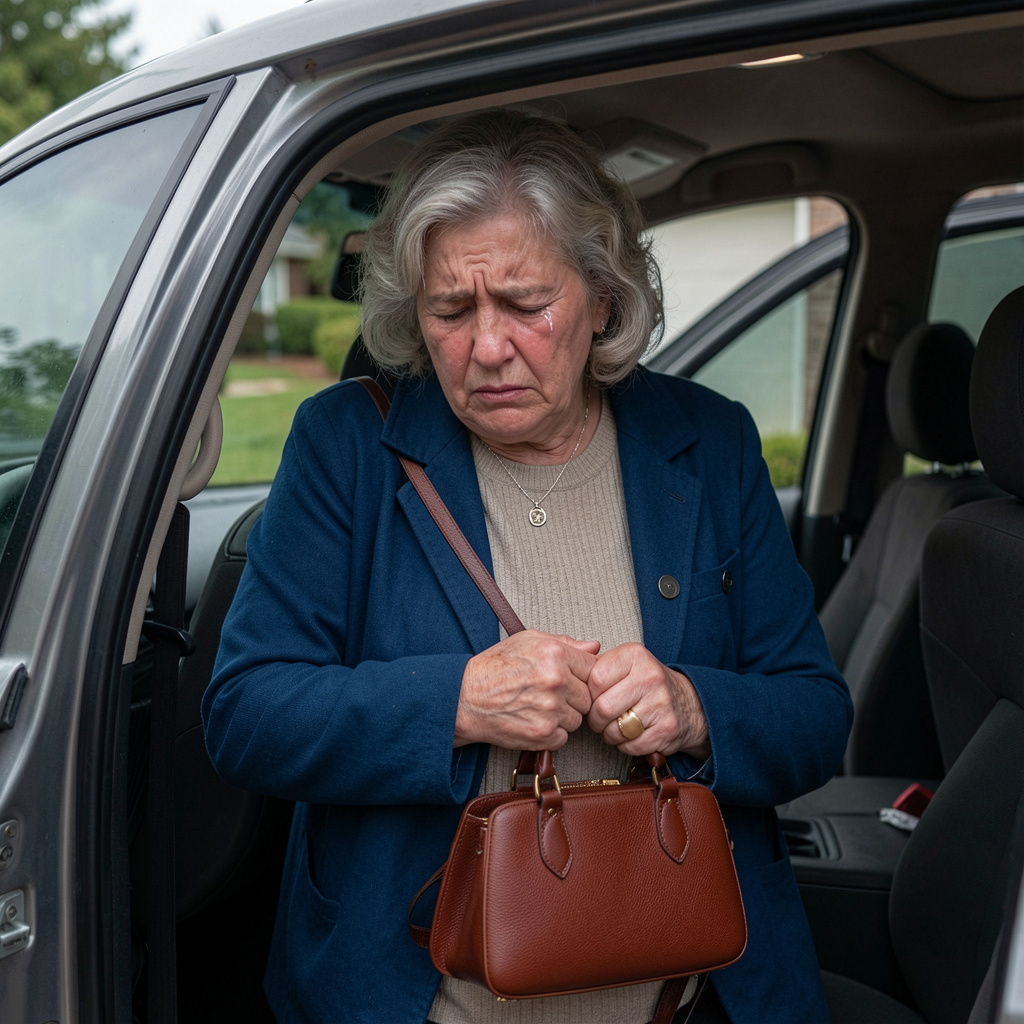
I didn’t cry until I got home.
I parked in the driveway, turned off the engine, and finally let myself break.
I cried because Robert was gone.
I cried because I was sixty-six and suddenly felt invisible.
I cried because twenty-eight years of experience had apparently become less valuable than a man’s age.
And I cried because there were only eleven dollars in my purse.
Three weeks passed.
I survived by cutting everything I could.
I bought cheaper food.
I stopped turning on lights in rooms I wasn’t using.
I postponed a dental appointment.
I canceled my little monthly subscription to the newspaper.
Every night, I sat at the kitchen table and calculated.
Then, one Thursday morning, my telephone rang.
It was Evan Cole.
I almost didn’t answer.
“Mrs. Harper?”
“Yes?”
“This is Evan from Riverside.”
“I know.”
There was a pause.
“We have a situation.”
“What kind?”
“The automated sealing system went down.”
I frowned.
“Can’t maintenance fix it?”
“They’ve been trying for six hours.”
“Call the manufacturer.”
“We did.”
“And?”
“They can’t get a technician here until Monday.”
My eyes narrowed.
“What are you producing?”
“Peaches.”
“How much?”
“Almost forty thousand units.”
“And they’re already processed?”
“Yes.”
“Then you’ve got about another day before the product becomes unusable.”
Silence.
“How did you know that?”
“Because I worked there for twenty-eight years.”
Another pause.
Then he said, “Can you come in?”
I almost laughed.
“You told me I didn’t have enough stamina.”
“Mrs. Harper—”
“You told me my experience wasn’t what you needed.”
“I was wrong.”
I looked toward Robert’s empty chair.
“Yes,” I said quietly. “You were.”
He came to my house that afternoon.
I was surprised when he stepped out of his truck.
He wasn’t wearing his confident manager’s expression.
He was carrying his hat in his hands.
He stood on my porch and looked strangely young.
“Ma’am,” he said, “we’re desperate.”
I folded my arms.
“That’s what you said on the phone.”
“We’re losing product by the hour.”
“How much?”
“About sixty-three thousand dollars so far.”
I let the silence sit.
“What do you want me to do?”
“Come back.”
“As what?”
“Whatever you want.”
That answer caught me off guard.
He continued.
“Temporary operator. Consultant. Trainer. I don’t care what we call it.”
I stared at him.
“You don’t care?”
“No.”
“You should.”
He looked confused.
I smiled slightly.
“I cared when I worked there. That’s why the machines worked.”
His cheeks reddened.
“I understand.”
“No, you don’t.”
He lowered his head.
I opened the door wider.
“Come inside.”
We sat at my kitchen table.
I made coffee.
He didn’t touch it.
“I need to know something,” I said.
“What?”
“How many people are standing around that broken machine right now?”
“Six.”
“How long have they been trying to fix it?”
“Since five this morning.”
“And none of them knows the old hand-crimp system?”
“No.”
I shook my head.
“That’s your problem.”
“What?”
“You automated yourselves right out of your own backup plan.”
He stared at me.
Then I said the words that changed everything.
“I’ll come back—but not as your employee.”
His eyebrows lifted.
“Then what?”
“I want a contract.”
“For how long?”
“Fourteen days.”
“Fourteen?”
“That’s enough time to stabilize your production, train your people, and teach them what your machines apparently forgot.”
He nodded.
“Okay.”
“I want consultant pay.”
“How much?”
I named a number.
He nearly choked.
“That’s more than some supervisors make.”
“Then hire a supervisor.”
He stared at me.
I stared back.
Finally, he said, “Fine.”
“And one more thing.”
“What?”
“Nobody calls me ma’am.”
He smiled.
“What should I call you?”
“Margaret.”
“Margaret.”
“Good.”
The next morning, I walked back into Riverside Cannery.
This time, I didn’t carry an application.
I carried a contract.
The production floor looked exactly as chaotic as I expected.
Boxes were stacked everywhere.
Workers stood around the automated sealer.
A technician was arguing with a supervisor.
I walked over.
“Move.”
Everyone looked at me.
One young employee said, “Who are you?”
I looked at Evan.
He answered.
“This is Margaret Harper.”
Then he added something that made me smile.
“She’s here to save us.”
I took off my coat.
“Not yet,” I said.
“First, we’re going to stop making things worse.”
For the next eleven hours, I worked.
I found the old hand-crimp machine in storage.
It was dusty.
Someone had piled broken pallets around it.
I wiped it down.
Then I taught six employees how to use it.
At first, they struggled.
Then something happened.
The line started moving.
One box.
Then ten.
Then a hundred.
By midnight, we had recovered almost half the product that would otherwise have been lost.
At two in the morning, Evan stood beside me watching the workers.
“You really remember all of this?”
I kept working.
“You remember your children’s birthdays?”
“Of course.”
“Your anniversary?”
“Yes.”
“This place was my life for twenty-eight years.”
He nodded.
“I understand now.”
“No,” I said. “You’re beginning to.”
The next fourteen days changed Riverside Cannery.
I didn’t just repair a machine.
I repaired something far more important.
I taught the workers why the machines worked.
I taught them how to listen.
How to recognize a belt slipping before it snapped.
How to tell from the vibration of a motor that something was wrong.
How to smell overheating rubber.
How to feel a jam coming before the warning light appeared.
The younger workers were fascinated.
One of them, a twenty-four-year-old named Luis, followed me everywhere.
“How do you know all this?” he asked.
“Experience.”
“Did somebody teach you?”
I smiled.
“People taught me.”
“Who?”
“People older than me.”
He laughed.
“So now you’re teaching us.”
“That’s how it works.”
On the fourteenth day, Evan came to my workstation.
“We want to extend your contract.”
“For how long?”
“Six months.”
I shook my head.
“One year.”
He blinked.
“You want a year?”
“I want a year.”
“Done.”
“And I want the training program put into writing.”
“Absolutely.”
“And I want older workers considered based on skill, not age.”
He hesitated.
I looked at him.
“That’s non-negotiable.”
He nodded.
“Agreed.”
I thought that was the end.
It wasn’t.
Three months later, Riverside held its annual company meeting.
The owner stood onstage and announced that production losses had dropped dramatically.
Then he said something I never expected.
“Margaret Harper didn’t just save us during an equipment failure. She exposed a weakness in our entire hiring philosophy.”
The room went quiet.
He continued.
“We were hiring for speed and ignoring experience.”
Then he called me onto the stage.
I walked up.
The owner handed me a plaque.
“Lifetime Achievement Award.”
I looked at it.
Then I looked at the crowd.
Evan was standing near the back.
I walked toward him.
He smiled.
“You deserve it.”
I handed him the plaque.
“No.”
He looked confused.
“Keep it.”
“What?”
“Put it in the training room.”
“Why?”
“Because it shouldn’t remind people what I did.”
I looked around the room.
“It should remind them what experience is worth.”
He nodded.
But there was one more surprise.
A week later, I received a letter.
It wasn’t from Riverside.
It was from a regional food-processing company.
They had heard about what happened.
They wanted me to train their older employees and help design emergency procedures for automated facilities.
I laughed when I read the offer.
The salary was more than I had earned during some years of my marriage.
I almost threw the letter away.
Then I looked at Robert’s photograph.
He was smiling in it.
I could almost hear him saying, “Margaret, make that ten dollars behave like twenty.”
So I accepted.
Not because I needed to prove Evan wrong.
Not because I wanted revenge.
And not because I suddenly cared about money.
I accepted because I had spent too many years believing that getting older meant becoming less useful.
It didn’t.
Getting older had made me better at things no machine could teach.
Patience.
Judgment.
Memory.
Knowing what to do when the instructions stopped making sense.
Knowing when a problem was about to become a disaster.
And knowing the difference between being needed and being respected.
One afternoon, nearly a year after Evan had stood on my porch with his hat in his hands, I returned to Riverside for a training session.
I noticed something immediately.
There was a photograph hanging beside the old hand-crimp machine.
It showed twelve employees standing together.
Young.
Old.
Men.
Women.
Different generations.
Above them was a sign.
EXPERIENCE IS NOT AN EXPIRATION DATE.
I stood there for a long time.
Evan walked up beside me.
“I put that up.”
“I can see that.”
“You like it?”
“Yes.”
He smiled.
“Can I tell you something?”
“Sure.”
“When you first came in here with your application, I thought I was protecting the company.”
“By refusing to hire me?”
“Yes.”
“And now?”
He looked at the photograph.
“Now I think I was protecting my own ignorance.”
I laughed.
“That’s probably the smartest thing you’ve ever said.”
He laughed too.
Then he became serious.
“Margaret, I owe you an apology.”
“You already gave me one.”
“I know.”
“But?”
“But I still remember the look on your face when I told you we needed people with more stamina.”
I looked at him.
“I remember it too.”
“I’m sorry.”
I nodded.
“Then don’t waste the apology.”
“What do you mean?”
“Make sure the next sixty-six-year-old who walks through that door doesn’t have to cry in her driveway before you realize what she’s worth.”
He nodded.
“I won’t.”
That evening, I drove home.
The sun was setting behind the trees.
My house was still the same small house Robert and I had bought decades ago.
His chair was still in the living room.
His old work boots were still by the back door.
I had stopped moving them.
Some people might have thought I was stuck in the past.
I didn’t see it that way.
I was carrying him forward.
I went into the kitchen and opened the drawer where I had once kept my old employee badge.
Beside it was something new.
My consultant contract.
My first paycheck.
And the eleven dollars I had once carried in my purse.
I had framed those eleven dollars.
Not because they represented poverty.
Because they represented the morning I discovered something important.
I had thought I was going back to the cannery because I needed a job.
I was wrong.
I was going back because I had spent twenty-eight years becoming someone who could solve a problem other people didn’t even know how to name.
The cannery had forgotten my value.
For a little while, so had I.
But the broken machine had reminded me.
And so had that thirty-two-year-old manager standing on my porch with his hat in his hands.
He had come expecting a desperate woman who needed work.
Instead, he found a woman who finally understood her worth.
At sixty-six, I wasn’t finished.
I wasn’t obsolete.
I wasn’t too old.
I wasn’t lacking stamina.
I had simply been waiting for someone to stop looking at my age long enough to see what I knew.
And when they finally did, I didn’t ask for a favor.
I asked for a contract.
I asked for respect.
I asked for a seat at the table.
And I got all three.
Years later, people at Riverside still told the story of the day the automated sealer failed.
They remembered the $63,000 worth of product.
They remembered the panic.
They remembered the young manager who didn’t know what to do.
But whenever someone asked me about it, I always corrected them.
“The machine didn’t fail,” I would say.
“The machine did exactly what machines do.”
“What failed, then?”
I would smile.
“We forgot that people are the backup system.”
And that was the lesson I wanted every worker—young or old—to remember.
Technology can make things faster.
Automation can make things cheaper.
Machines can work around the clock.
But experience?
Experience knows what to do when everything else stops working.
And sometimes, the person everyone assumes is too old to matter…
is the only person in the building who knows how to save the day.