On My Terms
When my grandfather unexpectedly noticed the signs I had been trying to hide, I broke down and admitted that my stepmother was responsible.His expression hardened.
“Pack your things,” Grandpa Elias said quietly. “You’re coming with me. Tomorrow we’ll deal with this—but on my terms.”
He did not ask me to explain everything twice.
He did not react dramatically or suggest I might have misunderstood.
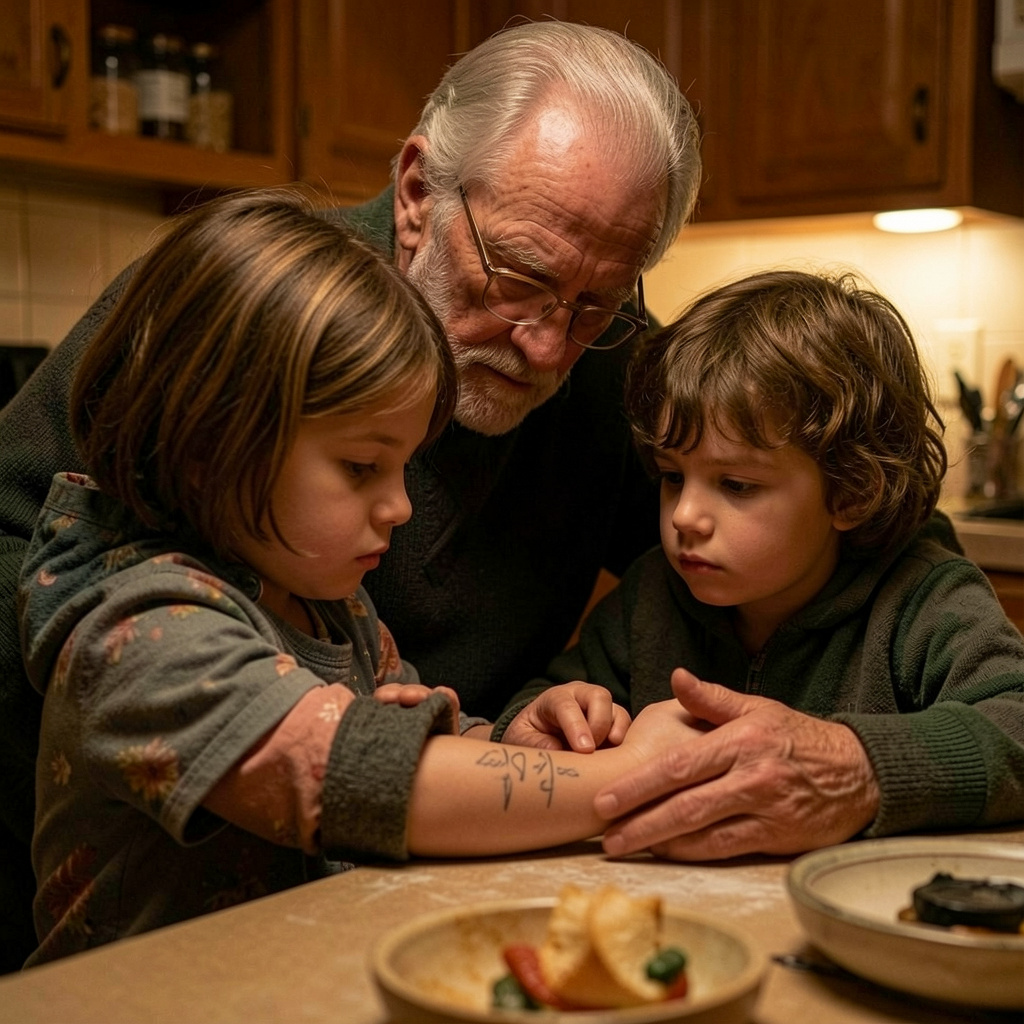
He simply stood beneath the warm kitchen light in our Dayton, Ohio, home, studying the marks visible on my arms and shoulder when my shirt shifted as I reached for a glass.
I was seventeen.And for the first time in nearly two years, I believed someone might actually believe me.
My name is Noah Carter.
My mother died when I was twelve.
After that, it was just my father and me for several years.Dad worked long hours at a manufacturing plant outside Dayton, and I learned early not to complain about being alone.
He always told me he was working so I could have a better life.Then, when I was fifteen, he married Claire.
At first, I liked her.
She was warm, funny, and seemed genuinely interested in getting to know me.
She bought me a new winter coat that first Christmas and told me I could call her Claire instead of pretending she was something she wasn’t.“I know I’m not your mother,” she said. “I’m not trying to replace her.”
I believed her.That was the first mistake I made.The second was believing the change happened overnight.It didn’t.It happened slowly.
So slowly that every individual moment seemed explainable.
The first time she grabbed my wrist hard enough to leave red fingerprints, she said I had startled her.
The first time she shoved me against the hallway wall, she said I had been disrespectful.
The first time she slapped me, she cried afterward and told me she was overwhelmed.
“I’ve never been a stepmother before,” she whispered. “I’m learning too.”
I apologized.
I actually apologized to her.
Because that was what Claire was good at.
She never made herself look like the villain.
She made me feel like one.
Whenever Dad came home, she became the woman I remembered from those first months.
She laughed.
She cooked.
She kissed him on the cheek.
And if he noticed a bruise on my arm, she already had an explanation.
“Noah’s been acting reckless lately.”
“He fell playing basketball.”
“He’s been getting angry at school.”
“He’s seventeen. You know how teenagers are.”
Dad believed her because believing her was easier than imagining the woman he loved could hurt his son.
I understood that eventually.
But understanding it didn’t make it hurt less.
By the time Grandpa Elias noticed the bruises, I had become an expert at hiding them.
Long sleeves in summer.
Hoodies indoors.
Excuses at school.
“I bumped into something.”
“I fell.”
“I don’t remember.”
I stopped playing basketball because changing clothes in the locker room meant someone might see.
I stopped swimming.
I stopped going to friends’ houses.
I became quiet.
Claire loved that.
“You’re finally learning some discipline,” she’d say.
I thought no one noticed.
But Grandpa did.
He always did.
He had been my mother’s father, and after she died, he became the one person in the family who never stopped talking about her.
He lived about forty minutes away in a small brick house surrounded by maple trees.
Every Sunday, he’d call.
Every other weekend, he’d visit.
I always told him I was fine.
I lied because I was afraid.
And because Claire had taught me to be.
The night everything changed, Dad was working a late shift.
Claire had been angry since dinner.
I had forgotten to take the trash out.
It was a stupid thing.
A completely ordinary teenage mistake.
But she came into my room holding the trash bag and asked why she had to do everything herself.
“I said I was sorry.”
“Sorry doesn’t mean anything anymore.”
She grabbed my shirt.
I pulled away.
She pushed me.
My shoulder hit the edge of the desk.
Then she slapped me.
Hard.
My ears rang.
I stared at her.
She stared back.
For a few seconds, neither of us spoke.
Then she whispered something I’ll never forget.
“Your father will believe me.”
I didn’t answer.
She smiled.
And walked out.
I waited until I heard the front door open.
Then I went downstairs for water.
That was when Grandpa was standing in the kitchen.
I froze.
He had apparently arrived early because he’d called Dad and wanted to drop off some paperwork.
His eyes moved from my face to my arm.
“What happened?”
“Nothing.”
He looked at me.
“Show me your arm.”
“Grandpa—”
“Noah.”
His voice wasn’t loud.
That made it worse.
I slowly pulled up my sleeve.
The fingerprints around my wrist were darkening.
His jaw tightened.
“Who did this?”
I shook my head.
“No one.”
He stepped closer.
“Look at me.”
I did.
And I broke.
Everything I had been holding inside for almost two years came rushing out.
I told him about the grabbing.
The slapping.
The threats.
The lies.
The times Claire locked me outside for hours because she said I needed to “learn respect.”
The times she took my phone.
The times she told me Dad would send me away if I caused trouble.
The time she pushed me down the stairs and then told Dad I’d tripped.
I told him everything.
Grandpa listened.
He didn’t interrupt once.
When I finished, there were tears in my eyes.
I expected him to hug me.
Instead, he stood perfectly still.
His face had changed.
I had never seen my grandfather look like that.
Not angry.
Something deeper.
Something controlled.
He looked toward the staircase.
Then toward the front door.
Then back at me.
“Pack your things.”
“What?”
“You heard me.”
“Dad’s going to be home.”
“I know.”
“She’ll—”
“She won’t touch you tonight.”
“How do you know?”
He reached into his coat pocket and pulled out his phone.
“Because I’m here.”
He called my father.
Dad answered on the third ring.
“Hey, Elias. Everything okay?”
Grandpa looked directly at me.
“No.”
Silence.
Then Dad asked, “What happened?”
Grandpa’s voice was calm.
“I’m taking Noah home with me tonight.”
Dad laughed nervously.
“What? Why?”
“Because he doesn’t feel safe here.”
Another silence.
Then Dad said, “Elias, whatever Claire told you—”
“I haven’t spoken to Claire.”
My grandfather’s voice became colder.
“I spoke to Noah.”
Dad stopped talking.
Grandpa continued.
“And tomorrow, we’re going to the doctor. Then we’re going to the police. Then we’re going to a lawyer.”
“Dad, wait—”
“No.”
The word was quiet.
Absolute.
“You had plenty of time to notice.”
Dad’s breathing became audible through the phone.
“Please don’t do anything until I get home.”
Grandpa looked at me.
“That depends on what happens tonight.”
Then he hung up.
We left.
I packed one duffel bag.
That’s all I took.
Clothes.
My school laptop.
A photograph of my mother.
And an old baseball glove Dad had given me when I was eight.
As I walked out the front door, Claire appeared in the hallway.
Her face changed when she saw Grandpa.
“Noah,” she said, “where are you going?”
I didn’t answer.
She looked at Grandpa.
“Elias, this is ridiculous.”
He didn’t respond.
She followed us outside.
“You’re making a huge mistake.”
Grandpa turned.
“You’re right.”
She smiled slightly.
Then he finished.
“I made one by waiting this long.”
Her smile disappeared.
We drove to his house in silence.
I stared out the passenger window the entire way.
When we arrived, he made me something to eat.
I wasn’t hungry.
He put the plate in front of me anyway.
“You don’t have to talk anymore tonight.”
I nodded.
“Can I sleep?”
“Yes.”
I went upstairs.
But I couldn’t.
I stared at the ceiling until sometime after midnight.
At 2:13 a.m., I heard Grandpa’s footsteps on the stairs.
He knocked softly.
“Come in.”
He opened the door.
“I want you to know something.”
I sat up.
“What?”
“None of this was your fault.”
I looked down.
“I should’ve told you sooner.”
“Yes,” he said.
I looked at him, surprised.
He sat on the edge of the bed.
“You should have. But you were a kid who was scared. Adults are supposed to make it safe for children to tell the truth.”
His voice cracked slightly.
“I should have noticed.”
I shook my head.
“You didn’t know.”
“I should have.”
He reached over and squeezed my shoulder gently.
“Tomorrow, we start fixing this.”
And he did exactly what he promised.
At 8:00 the next morning, he took me to a doctor.
The doctor documented every injury.
Some were old.
Some were recent.
The nurse asked me privately what had happened.
This time, I didn’t lie.
Afterward, Grandpa took me to the police station.
That was harder.
I sat in a small interview room and told my story again.
Every detail.
Every incident.
Every excuse Claire had made.
When I finished, the detective asked whether I had ever told my father.
I said yes.
“But he never believed me.”
The detective wrote something down.
Then she asked, “Do you have any evidence?”
I thought about it.
“No.”
Grandpa looked at me.
“Maybe you do.”
He reached into his coat.
He had brought the phone from the night before.
“I recorded the call with your father,” he said.
My heart stopped.
“You did?”
“I knew I’d need documentation.”
It wasn’t enough to prove everything.
But it established something important.
My father knew there was a problem.
And he had been warned.
The investigation began.
Then something unexpected happened.
A school counselor contacted Grandpa.
Apparently, one of my teachers had noticed my behavior changing.
I had stopped participating.
My grades had fallen.
I’d missed twenty-three days of school.
And one teacher had written a note six months earlier saying, “Noah appears frightened when asked about home.”
I had never known.
Neither had Dad.
The detective collected the school records.
Then she found another piece.
A neighbor.
Mrs. Thompson lived two houses away.
She had heard shouting.
Several times.
She had never interfered because Claire told her I was “a difficult teenager.”
But one evening, Mrs. Thompson had seen Claire shove me near the driveway.
She had written the date down because she was considering calling someone.
She never did.
Now she agreed to speak.
The pieces began fitting together.
Slowly.
Painfully.
But they fit.
Three days later, Dad came to Grandpa’s house.
He looked exhausted.
He stood on the porch for several seconds before Grandpa opened the door.
“Can I see Noah?”
Grandpa didn’t move.
“Why?”
“Because he’s my son.”
“And?”
Dad swallowed.
“And I need to apologize.”
Grandpa looked at him for a long moment.
Then he stepped aside.
I came downstairs.
Dad saw me.
His eyes filled with tears.
“Oh, Noah.”
I didn’t move.
He approached slowly.
“I didn’t know.”
I almost laughed.
Not because it was funny.
Because it was unbelievable.
“You knew enough.”
He looked down.
“I should have listened.”
“Yes.”
“I was wrong.”
“Yes.”
“I love you.”
That hurt the most.
Because I loved him too.
And love didn’t erase what had happened.
“I love you too,” I said.
His face crumpled.
“But I don’t trust you.”
He nodded.
“I understand.”
“No, you don’t.”
He wiped his eyes.
“Then help me understand.”
I stared at him.
“I needed you.”
He couldn’t answer.
“I needed you to look at me and ask why I was wearing a hoodie in July.”
He nodded.
“I needed you to notice I stopped playing basketball.”
Another nod.
“I needed you to believe me before Grandpa had to save me.”
Dad covered his face.
“I know.”
“No,” I said quietly. “You know now.”
That sentence stayed between us.
Eventually, Dad left.
The investigation continued.
Claire was arrested weeks later.
I won’t pretend seeing her in handcuffs magically healed me.
It didn’t.
There were court dates.
Interviews.
Counseling.
Documents.
Questions.
Memories I wished I could forget.
But there was one thing I never had to do again.
Lie.
I stayed with Grandpa.
He turned the small spare bedroom into my room.
He bought me a desk.
A new basketball.
And, despite my protests, a ridiculous orange blanket because he said every teenager needed something “that wasn’t depressing.”
I started therapy.
At first, I hated it.
Then I started looking forward to it.
I learned that fear doesn’t disappear simply because you’re safe.
Sometimes your body stays afraid after the danger is gone.
I jumped whenever someone raised their voice.
I apologized constantly.
I couldn’t sleep with my bedroom door closed.
My therapist told me none of those reactions meant I was broken.
They meant I had survived.
Slowly, I changed.
I returned to basketball.
I made friends again.
My grades improved.
I stopped wearing long sleeves when it was hot.
And six months after leaving that house, I stood in front of my school gym wearing a short-sleeved shirt.
My scars were visible.
For the first time, I didn’t care.
Grandpa sat in the front row.
When he saw me walk onto the court, he smiled.
After the game, he hugged me.
“You looked happy.”
“I was.”
He nodded.
“Good.”
I looked at him.
“Grandpa?”
“Yes?”
“Why did you believe me?”
He thought about it.
“Because you didn’t need to convince me.”
I didn’t understand.
He continued.
“People think truth always comes with perfect evidence. Sometimes it doesn’t. Sometimes you see someone’s eyes. Their posture. The way they flinch when someone walks into a room.”
He paused.
“And sometimes you simply love someone enough to listen.”
I hugged him.
Years later, I would understand something else.
Grandpa hadn’t saved me because he was stronger than everyone else.
He saved me because he acted when it mattered.
He didn’t spend days debating whether I was telling the truth.
He didn’t ask whether Claire had a good reason.
He didn’t worry about what the neighbors would think.
He protected me first.
Then he dealt with everything else.
My father eventually completed counseling and worked for years to rebuild our relationship.
It wasn’t easy.
Trust came back slowly.
There were no dramatic overnight miracles.
But he kept showing up.
He listened.
He apologized without defending himself.
He never asked me to forgive Claire.
He never told me to “move on.”
He simply accepted the consequences of his failure.
And, eventually, I forgave him.
Not because what he did was acceptable.
But because I didn’t want his mistake to control the rest of my life.
As for Claire, she was convicted.
She received a sentence that reflected the evidence presented in court.
I never spoke to her again.
I didn’t need to.
My life had moved beyond her.
Years passed.
I graduated college.
I became a youth counselor.
People sometimes ask why.
I usually tell them the truth.
“Because I know what it feels like when a kid thinks nobody will believe them.”
One afternoon, years after that night in the kitchen, I drove back to Dayton.
Grandpa was older by then.
His hair had turned almost completely white.
His hands shook slightly when he poured coffee.
We sat together on his porch.
The same porch where I had once arrived carrying a single duffel bag.
He looked at me.
“You remember that night?”
“Every detail.”
“Do you regret leaving?”
I smiled.
“No.”
He nodded.
“Good.”
We sat quietly.
Then I said, “You told me we’d deal with it on your terms.”
He laughed.
“I remember.”
“What exactly did that mean?”
He looked toward the street.
“It meant you weren’t going to spend another day being controlled by someone who hurt you.”
I smiled.
“You know, I thought you meant you’d destroy her.”
“I considered it.”
I laughed.
He laughed too.
Then his expression softened.
“But revenge wasn’t the point.”
“What was?”
“You.”
He looked directly at me.
“Getting you safe was the point.”
I looked down at my hands.
For years, I had thought the most important moment of my life was the night Grandpa confronted the truth.
I was wrong.
The most important moment came afterward.
The moment I realized I didn’t have to remain the person fear had created.
I didn’t have to be silent.
I didn’t have to hide my scars.
I didn’t have to apologize for needing help.
And I didn’t have to earn the right to be protected.
Sometimes, people imagine rescue as something dramatic.
Sirens.
Courtrooms.
Handcuffs.
A hero breaking down a door.
But sometimes rescue looks like an old man standing beneath a warm kitchen light, noticing what everyone else had overlooked.
Sometimes it sounds like four simple words.
Pack your things.
You’re coming with me.
And sometimes the most powerful promise isn’t that someone will make the past disappear.
It’s that they will stand beside you while you build a future that no one can take from you again.
That night, Grandpa Elias didn’t just take me out of a house.
He gave me back my voice.
And once I had it, I never let anyone take it away again.