The Gardener Who Owned the Estate
The rain had been falling since late afternoon.By seven o’clock, the stone driveway was a ribbon of black mud, and the old oak trees along the property line were dripping steadily onto the gravel.
I stood beneath the porch roof and looked down at my boots.They were ruined.
Mud covered the leather from heel to toe.
One boot had a clump of wet earth stuck to the sole.
My old green jacket was damp at the shoulders, and there was a streak of dirt across my left sleeve.I could have changed.I should have changed.But that night, I had a reason for walking into my own dining room looking exactly as I did.
I wanted to see something.More importantly, I wanted to hear something.
My son Ethan had brought his fiancée home for dinner.
Her name was Victoria.
And for the past six months, I had heard nothing but praise about her.”She’s sophisticated, Dad.””She’s ambitious.””She understands business.””She’ll be good for the family.”Family.
That word had become increasingly complicated since Ethan started dating her.
I wasn’t worried about her being wealthy. Money had never impressed me.
I wasn’t worried about her being beautiful. Beauty fades.
I wasn’t even worried about her being ambitious.
Ambition can be a wonderful thing.
What worried me was the way she spoke to people who couldn’t give her anything.
I had noticed it during the few times we’d met.
A waiter would take too long, and she’d sigh dramatically.
A hotel employee would make a mistake, and she’d roll her eyes.
A housekeeper once brought her the wrong brand of sparkling water, and Victoria said, “Do they hire anyone competent here?”
Ethan always laughed it off.
“She’s just particular.”
Maybe.
Or maybe she was showing us exactly who she was.
That evening, I decided to stop guessing.
I decided to let her show me.
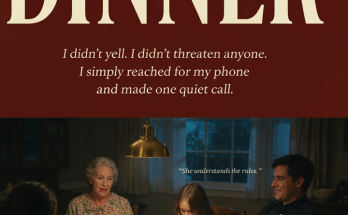
The dining room was warm and elegant, with twelve-foot ceilings, an antique chandelier, and a long walnut table my wife and I had bought nearly thirty years earlier.
Victoria sat beside Ethan.
She wore a cream-colored dress and a diamond necklace that caught the chandelier light every time she moved.
I sat across from them.
My hands were rough from years of work.
My fingernails still carried traces of soil.
Victoria looked at me for several seconds.
Then she leaned toward Ethan.
She didn’t whisper quietly enough.
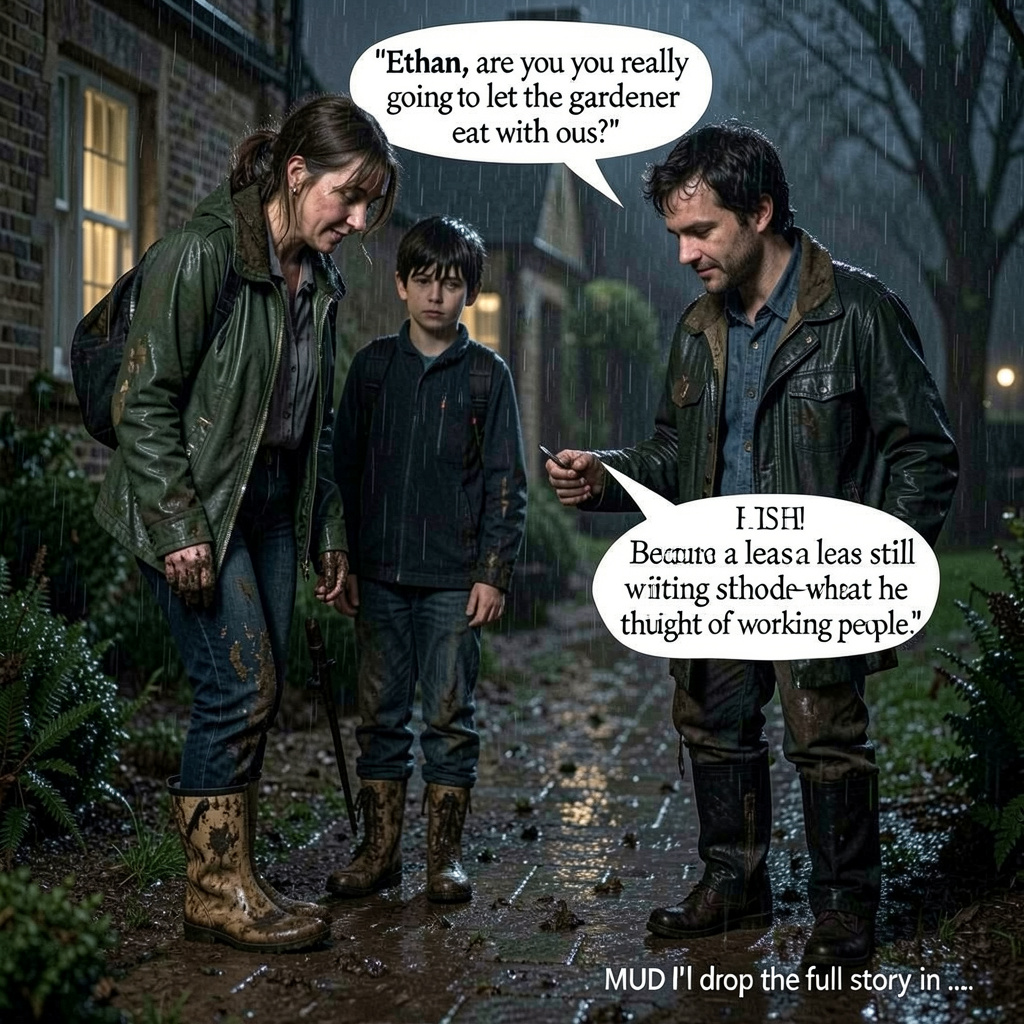
“Ethan,” she said, “are you really going to let the gardener eat with us?”
The room went silent.
I didn’t move.
Ethan’s face changed.
“Victoria.”
“What?” she asked innocently.
“I think Dad can sit wherever he wants.”
She looked back at me.
“Sorry. I just assumed staff had their own dining area.”
I smiled.
Not because it was funny.
Because I suddenly understood everything.
“Don’t worry,” I said calmly. “I’m used to eating with muddy boots.”
Victoria gave a small laugh.
“Apparently.”
She turned back toward Ethan.
“I was just surprised. I thought tonight was supposed to be a family dinner.”
That sentence stayed with me.
Not because she didn’t know who I was.
She did.
Ethan had told her.
She knew I was his father.
She knew I owned the property.
She knew I’d built the family business.
But she still called me the gardener.
And that told me something far more important than any title could.
She respected wealth.
She did not respect work.
Dinner continued.
Or at least, everyone pretended it did.
Victoria complained about the rain.
Then the mud.
Then the condition of the driveway.
Then the old barn.
“Honestly,” she said, looking through the window, “this place has incredible potential.”
I looked up.
“What kind of potential?”
She smiled.
“Development.”
Ethan shifted in his chair.
“What do you mean?”
“I mean this land is wasted.”
She pointed toward the dark fields beyond the glass.
“Do you know how much this property is worth now?”
“I have a general idea.”
She laughed.
“You clearly don’t.”
Then she began explaining her plans.
Luxury cottages.
A private clubhouse.
A vineyard.
A wedding venue.
“Or,” she said, “we could sell half the acreage and build something truly modern.”
Ethan listened carefully.
I listened even more carefully.
Because I’d heard this before.
Three weeks earlier, Ethan had asked me to sign something.
He told me it was a preliminary document.
Nothing serious.
Just permission for him and Victoria to explore development possibilities.
I had refused.
Not permanently.
I’d told him I wanted to see the complete proposal first.
He hadn’t brought it back.
Now I understood why.
Victoria had already decided what she wanted.
And apparently, she believed my signature was merely a formality.
After dinner, she walked into the library.
Ethan followed.
I stayed behind for a few minutes.
Then I heard their voices.
“You need to convince him.”
“I’m trying.”
“He can’t keep treating this place like a farm.”
“It’s his property.”
“Not forever.”
Silence.
Then Victoria said something that made me stop breathing for a moment.
“Once we’re married, Ethan, this becomes our future. You shouldn’t let an old man with a gardening hobby stand between us and millions.”
Old man.
Gardening hobby.
I looked down at my hands.
These hands had poured concrete foundations.
These hands had repaired fences in freezing weather.
These hands had planted the first row of apple trees on land everyone said was useless.
These hands had held my wife’s hand while she died.
And these hands had signed every mortgage, every loan, every contract that eventually turned that muddy acreage into an estate worth millions.
But Victoria saw only dirt.
That night, I didn’t confront her.
I didn’t confront Ethan either.
Instead, I went upstairs to my office.
On the desk was the document Victoria had been talking about.
The lease.
Her proposal wasn’t simply to develop the land.
She wanted a long-term lease on the most valuable section of the estate.
Twenty-five years.
And buried in the final pages was a clause allowing the development company to sell portions of the leased property.
My signature would give them control.
My signature would give Victoria exactly what she wanted.
I picked up a pen.
Then I put it down.
I wasn’t going to sign.
But I wasn’t finished.
The next morning, I called my attorney.
“Martin,” I said, “I need you to review something.”
He arrived that afternoon.
After reading the lease, he looked at me over his glasses.
“You know what this is?”
“Yes.”
“This is effectively a transfer of control.”
“I know.”
“Does Ethan understand?”
“I don’t think he does.”
Martin sighed.
“Then don’t sign anything.”
“I won’t.”
I paused.
“But I want one more thing.”
“What?”
“Find out everything you can about the development company.”
Three days later, Martin called.
“You’re going to want to sit down.”
I was already sitting.
“The company is owned by Victoria’s father.”
I closed my eyes.
“Of course it is.”
“And there’s more.”
“Go on.”
“The company has significant debt.”
“How significant?”
“Enough that the land would solve most of their problems.”
There it was.
The truth.
Victoria wasn’t marrying Ethan simply because she loved him.
She wanted access.
Access to the estate.
Access to the land.
Access to the money.
And perhaps most importantly, access to the signature of the man she believed was nothing more than a gardener.
I could have exposed everything immediately.
Instead, I waited.
The wedding was six weeks away.
I gave Ethan one chance to tell me the truth.
I invited him to lunch.
Just the two of us.
He arrived nervous.
“Dad, is something wrong?”
I looked at him.
“Do you love Victoria?”
He smiled.
“Yes.”
“Do you trust her?”
He hesitated.
“Of course.”
“Then tell me about the lease.”
His smile disappeared.
“What lease?”
“The one you’ve been asking me to sign.”
He looked down.
“Victoria thinks it’s a good opportunity.”
“That’s not what I asked.”
He rubbed his forehead.
“Dad, we’re getting married. We need to build a future.”
“You can build a future without selling mine.”
“I’m not selling anything.”
“Did you read the entire document?”
Silence.
“Did you?”
He finally admitted, “Not every page.”
I leaned back.
“Then you don’t know what you’re asking me to sign.”
“Dad, I trust her.”
“I know.”
He looked hurt.
“Why are you making this difficult?”
“Because it’s my land.”
He stood.
“You’ve always been like this.”
I frowned.
“Like what?”
“Controlling.”
That word hurt more than I expected.
I had spent my entire life making sure my son never felt powerless.
Now he believed I was the one holding him back.
I didn’t argue.
I simply said, “Before you marry her, read everything.”
He walked out.
Two days later, Victoria came to see me.
She didn’t bother pretending.
“You embarrassed me at dinner.”
“I didn’t say anything.”
“You made me look foolish.”
“I didn’t call you a gardener.”
She stiffened.
“I was joking.”
“I know.”
She stepped closer.
“Ethan is going to inherit everything eventually.”
“Eventually.”
“You should be thinking about his future.”
“I am.”
“Then sign the lease.”
“No.”
Her face hardened.
“Why?”
“Because I don’t want to.”
She stared at me.
“You really think you can keep this land forever?”
“I don’t need forever.”
“What does that mean?”
“It means I need only one signature.”
She laughed.
“Yours?”
“Yes.”
She didn’t understand.
Not yet.
“I think you’ve forgotten who you’re dealing with,” she said.
“No,” I replied. “I think you’ve forgotten.”
She left furious.
The wedding was still scheduled.
Ethan barely spoke to me.
For a while, I considered telling him everything.
Then something happened.
One evening, I found him sitting alone in the barn.
He looked exhausted.
“Can I sit?”
He nodded.
We sat on overturned buckets like we had when he was a boy.
After several minutes, he said, “Dad, did Mom ever regret staying here?”
I looked toward the fields.
“No.”
“She loved this place.”
“She did.”
“Why?”
I smiled.
“Because she knew what it was before anyone else did.”
He looked at me.
“What was it?”
“Home.”
His eyes became wet.
“Do you think I’m making a mistake?”
I could have answered immediately.
Instead, I said, “I think you need to make your own decision.”
“Even if it’s the wrong one?”
“Especially then.”
He nodded.
That was the last conversation we had before the wedding.
The ceremony was held at a hotel downtown.
I attended.
I sat in the front row.
Victoria wore a spectacular gown.
Ethan looked nervous.
Not happy.
Nervous.
After the ceremony, Victoria approached me.
“Congratulations,” I said.
She smiled.
“Thank you.”
Then she whispered, “You should sign the papers.”
I stared at her.
“Not tonight.”
“Why?”
“Because tonight is about your marriage.”
She smiled tightly.
“Tomorrow, then.”
I said nothing.
The next morning, I received a call.
It was Martin.
“She did it.”
“What?”
“Victoria’s father filed for bankruptcy protection.”
I closed my eyes.
“How much debt?”
“Enough to explain everything.”
I asked Martin to prepare the evidence.
Then I drove to Ethan’s house.
He opened the door.
His face told me he already knew something was wrong.
“Dad?”
I handed him a folder.
“Read it.”
He sat at the kitchen table.
For the next forty minutes, he turned page after page.
Bank records.
Corporate filings.
Emails.
Property proposals.
And finally, a message from Victoria to her father.
I watched my son read it.
His hands began shaking.
“What is this?”
“I don’t know,” I said.
He read it aloud.
“‘Once I get Ethan to secure the estate, we’ll refinance everything and move forward. He’ll never understand the numbers.'”
Ethan stopped.
His face went pale.
There were other messages.
One called me “the obstacle.”
Another referred to the estate as “our exit strategy.”
Then came the message that broke him.
“‘He thinks she’s marrying him for love. Let him believe it until the papers are signed.'”
Ethan dropped the phone.
For a long time, neither of us spoke.
Then he whispered:
“I married her yesterday.”
“I know.”
“What do I do?”
I reached across the table.
“Tell the truth.”
That afternoon, Ethan confronted Victoria.
I wasn’t there.
I didn’t need to be.
The marriage ended before the honeymoon.
The legal process was ugly.
The financial consequences for Victoria’s family were worse.
But the story didn’t end there.
Because Victoria wasn’t willing to lose quietly.
Three weeks later, she arrived at my estate.
She came without Ethan.
Without her father.
Without the confidence she’d once carried.
I was outside planting roses.
She walked toward me.
“Can we talk?”
I kept working.
“About what?”
“You knew.”
I looked at her.
“About the lease?”
“About everything.”
“I suspected.”
“You let me insult you.”
“Yes.”
“You let me call you a gardener.”
“Yes.”
“Why?”
I put down my shovel.
“Because you showed me who you were.”
She looked away.
“I was angry.”
“You were entitled.”
“I thought you were keeping Ethan from his future.”
“I was protecting him from a future he hadn’t chosen.”
She swallowed.
“Do you hate me?”
“No.”
That seemed to surprise her.
“I don’t hate you,” I continued. “But I don’t trust you.”
She nodded.
Then she said something I didn’t expect.
“I’m sorry.”
I waited.
“I’m sorry for the way I treated the staff.”
“That’s good.”
“I’m sorry for what I said about you.”
“That’s necessary.”
“And I’m sorry because I thought money made people important.”
I looked at her.
“What changed?”
She laughed bitterly.
“Losing it.”
That answer was honest.
Maybe the first honest thing she’d ever said to me.
She left a few minutes later.
I watched her disappear down the driveway.
Then I went back to my roses.
A week later, Ethan came home.
He stood beside me in the garden.
“I’ve been thinking.”
“That’s dangerous.”
He smiled.
“I deserved that.”
We worked in silence for a while.
Then he said, “I thought success meant owning something like this.”
“What do you think now?”
“That I was looking at the wrong thing.”
I handed him a pair of gloves.
“Here.”
He looked at them.
“You want me to garden?”
“I want you to learn.”
He laughed.
“I already know how to use a computer.”
“That’s not what I meant.”
He put on the gloves.
We spent the afternoon repairing the greenhouse.
By sunset, both of us were covered in mud.
Ethan looked at his hands.
“Now I understand why you never cared about getting dirty.”
I smiled.
“Some things are worth the dirt.”
He looked across the fields.
“Are you ever going to sell any of this?”
“Maybe.”
He looked surprised.
“Really?”
“One day.”
“Why?”
“Because land isn’t meant to be worshiped.”
I gestured toward the farm.
“It’s meant to be lived on.”
That became our new plan.
We didn’t sell the estate.
We didn’t turn it into luxury condos.
Instead, we restored the old barns.
We hired local workers.
We opened part of the property for community events.
We kept the farm.
And every spring, Ethan and I planted together.
Years passed.
One rainy evening, I sat at the same dining table where Victoria had once asked whether the gardener was allowed to eat with the family.
Ethan sat across from me.
His wife now was someone else.
Someone kind.
Someone who had spent the afternoon helping the kitchen staff prepare dinner.
She walked in carrying a bowl.
“Mr. Hayes,” she said, “I think we need more chairs.”
I smiled.
“Why?”
She pointed toward the doorway.
A dozen workers from the farm stood there.
Ethan laughed.
“Looks like we’re feeding everyone.”
I looked around the table.
Mud-stained boots.
Work-worn hands.
Laughter.
People who had spent the day building something together.
I raised my glass.
“Then let’s eat.”
Years earlier, someone had looked at my muddy boots and decided they revealed my place in the world.
She was wrong.
The mud had never been something to hide.
It was proof.
Proof that I had planted something.
Built something.
Protected something.
And when the rain came, I had stayed outside long enough to make sure it survived.
The estate was never just land.
It was every sacrifice my wife and I had made.
Every early morning.
Every broken fence.
Every failed harvest.
Every mortgage payment.
Every time I came home exhausted and still read Ethan a bedtime story.
It was a life.
And I had finally learned something important.
You don’t discover someone’s character by watching how they treat people who can make them rich.
You discover it by watching how they treat the people they believe are beneath them.
Victoria thought she was insulting a gardener.
She didn’t realize she was insulting the man who owned the land.
But even that wasn’t the lesson.
The real lesson was that ownership was never what made me worthy of respect.
The work did.
And when the door finally closed behind her, I didn’t feel victorious.
I felt relieved.
Because sometimes the greatest reckoning isn’t watching someone lose what they wanted.
It’s realizing they never deserved it in the first place.
And sometimes the strongest answer to an insult isn’t anger.
It’s silence.
You let people talk.
You let them reveal themselves.
And when the time comes, you simply hold the pen.
Then you decide what happens next.