For 8 Years, I Sent My Parents $2,000 Every Month. My Sister Sent Nothing. Then Mom Gave Her the House.
For eight years, I sent my parents $2,000 every single month.Not sometimes.Not when I had extra money.Every month.On the first of the month, like clockwork, I transferred the money into their account.$2,000.That was $24,000 a year.
Over eight years, it added up to $192,000.My sister?She didn’t send them a single dollar.Not for groceries.
Not for the electric bill.
Not even when Dad’s old truck broke down and they needed $1,800 for repairs.
But I never complained.Because they were my parents.And because my mother always said the same thing whenever I mentioned money.“You’re the responsible one, honey. Your sister has children.”I understood.
My sister, Melissa, had three kids.She always said she was struggling.She always had a reason.Daycare.
School supplies.
Medical bills.
Car payments.Birthday parties.Something was always happening.So I helped my parents.I paid their property taxes when they fell behind.I replaced their broken refrigerator.I paid for Dad’s dental surgery.
When their roof started leaking, I paid the contractor.When Mom needed new glasses, I paid for those too.I never asked for anything in return.
Not even a thank-you.
Then came my 45th birthday.
And that was the day I learned exactly what my family thought I was worth.My parents invited me over for dinner.I thought it was going to be simple.Mom made lasagna.Dad bought a small chocolate cake from the grocery store.
Melissa arrived twenty minutes late with her husband and three children.The kids ran through the house while everyone talked.
Eventually, Mom tapped her glass.
“I have an announcement.”
Everyone went quiet.
She smiled at Melissa.
Then she said:
“Your father and I have decided to leave the house to Melissa.”
I stared at her.
For a second, I honestly thought I had misunderstood.
“The house?” I asked.
Mom nodded.
“The whole house.”
I looked at Dad.
He wouldn’t meet my eyes.
Melissa smiled.
“Mom finally made the right decision.”
Something inside me went completely still.
I swallowed.
“Why?”
Mom looked almost confused by the question.
“Because she has kids.”
I waited.
Mom continued.
“You don’t.”
The room went silent.
I laughed once.
Not because it was funny.
Because I didn’t know what else to do.
“I’ve been paying your bills for eight years.”
Mom waved her hand.
“We never asked you to.”
That sentence hurt more than the inheritance.
Because it was true.
They hadn’t asked me.
They had simply allowed me to believe I mattered.
I looked at Dad.
“Did you know about this?”
He sighed.
“Your mother and I talked about it.”
“Of course you did.”
Melissa leaned back in her chair.
“You can’t seriously be upset. You’re doing fine. You have your career. You don’t have kids.”
I looked at her.
“You haven’t contributed a dollar to them.”
She shrugged.
“They’re my parents too.”
Exactly.
They were her parents too.
But somehow, I was the one who had been paying for them.
For eight years.
$2,000 every month.
I didn’t argue.
I didn’t yell.
I didn’t demand the house.
I simply stood up.
“Happy birthday to me,” I whispered.
Then I left.
I didn’t send my parents another dollar.
Not the next month.
Not the month after that.
Nothing.
And for the first time in eight years, I waited.
I wanted to see what would happen when the daughter without children stopped paying.
Three weeks later, Mom called.
I didn’t answer.
She called again.
Then Dad.
Then Melissa.
I ignored all of them.
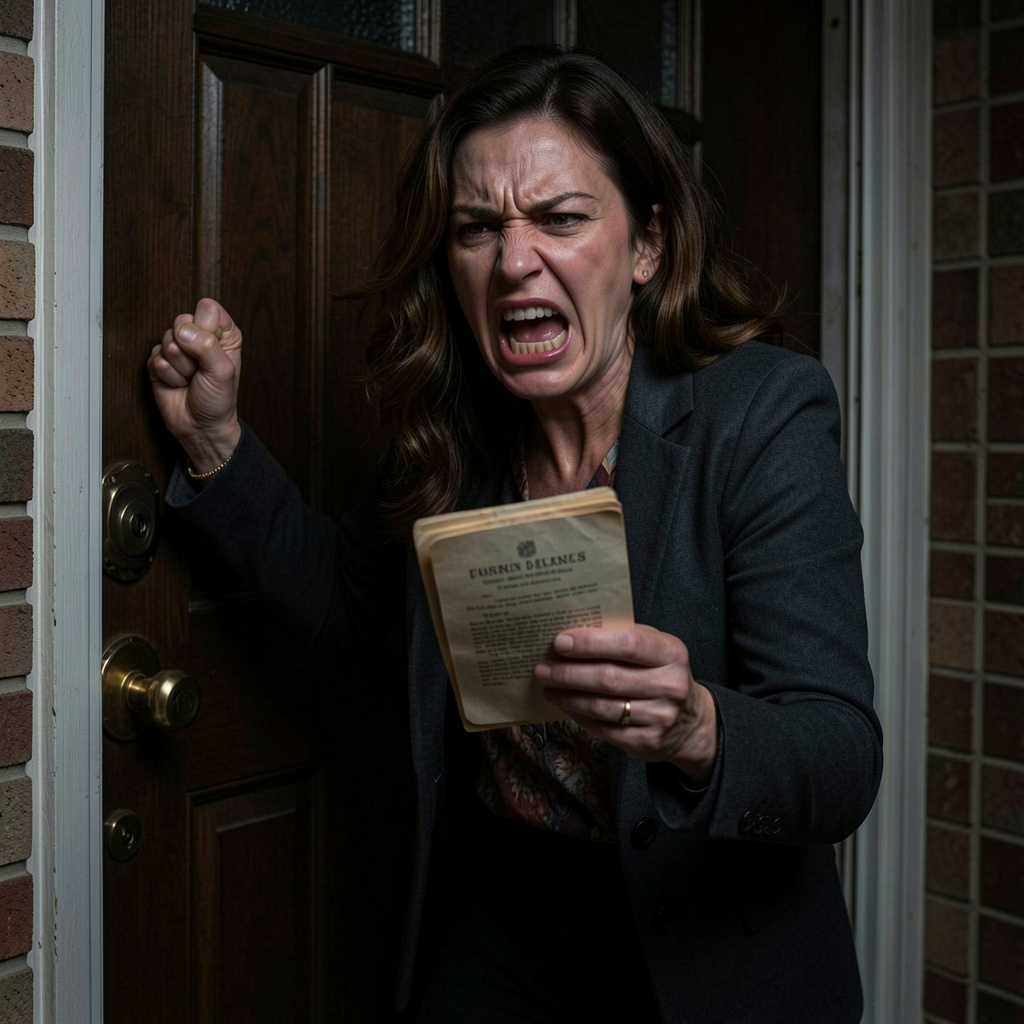
Until one evening, someone started pounding on my front door.
I opened it.
Melissa stood there.
Her face was red.
Her hands were shaking.
She looked furious.
“You lied to me!”
I blinked.
“What?”
“You’ve been lying to me for years!”
I stared at her.
“What are you talking about?”
She stepped inside without waiting for an invitation.
“I found the paperwork.”
My stomach tightened.
“What paperwork?”
She pulled a folder from her purse.
And when I saw the name on the top page, I knew.
My parents had never told her the truth.
Melissa threw the folder onto my kitchen table.
“You’ve been secretly paying them for eight years.”
I said nothing.
“Almost two hundred thousand dollars!”
Her voice cracked.
“You gave them almost $200,000?”
“Yes.”
“And Mom told me you barely helped them!”
I closed my eyes.
There it was.
The lie.
The lie I’d suspected but never proved.
Melissa started pacing.
“She told me you were selfish. She told me you didn’t care about the family.”
I laughed bitterly.
“Apparently, I was very good at not caring.”
She stopped.
Then she looked at me.
“Why didn’t you tell me?”
“Would you have believed me?”
She didn’t answer.
I pointed at the folder.
“What else did you find?”
Her face changed.
She slowly sat down.
“There are bank statements.”
“Yes.”
“Receipts.”
“Yes.”
“Copies of checks.”
I nodded.
“And…”
She hesitated.
“What?”
“There was another account.”
I felt my chest tighten.
“What account?”
Melissa opened the folder again.
“An investment account.”
I stared at her.
“Whose?”
She whispered:
“Mom’s.”
I felt cold.
“How much?”
Melissa looked at me.
“$238,000.”
I couldn’t speak.
“Mom has $238,000 in an investment account.”
I shook my head.
“That doesn’t make sense.”
“It gets worse.”
She slid another document toward me.
“Read this.”
I picked it up.
It was a financial statement.
And beside the account balance was a list of deposits.
Monthly.
$2,000.
For years.
My money.
But the account wasn’t being used for household expenses.
It was being invested.
My mother had taken the money I sent to help keep them afloat…
And invested it.
For eight years.
I stared at the statement.
Then something clicked.
“Wait.”
I looked at Melissa.
“How did you find this?”
She swallowed.
“Mom gave me the documents because she wanted me to sign something.”
“What?”
“Transfer paperwork.”
“For the house?”
Melissa nodded.
“She wanted me to sign the final inheritance documents.”
I stared at her.
“And you found the investment account?”
“No.”
She pulled out another paper.
“I found it because of this.”
I read the page.
It was a copy of a trust.
My father’s name was on it.
My mother’s name was on it.
And mine.
My name.
Not Melissa’s.
I read it twice.
Then a third time.
“Why am I on this?”
Melissa’s eyes filled with tears.
“I don’t know.”
I kept reading.
Then I reached the final page.
My hands began to shake.
The house wasn’t actually being left to Melissa.
Not completely.
The document stated that the property had been placed into a family trust years earlier.
And the beneficiary was…
me.
I looked up.
“Melissa.”
“I know.”
“What does this mean?”
“It means Mom lied.”
I sat down.
For the first time, the pieces began fitting together.
The monthly payments.
The investment account.
The trust.
The sudden announcement about giving Melissa the house.
It wasn’t about inheritance.
It was about control.
But there was still one question.
Why?
Why would my mother spend eight years pretending I was just the daughter who was useful for money?
Why would she promise the house to Melissa if the house was already in a trust?
Then Melissa pulled out one final document.
“I think you need to see this.”
It was dated seven years earlier.
My mother had signed it.
Dad had signed it.
And so had a lawyer.
I read the first paragraph.
Then the second.
Then I stopped.
My mother had written a letter.
Not to Melissa.
To me.
It said:
“If you’re reading this, then the truth has finally come out.”
My heart began pounding.
I continued.
“I know you believe we favored your sister.”
I almost laughed.
“Believe?”
Melissa whispered.
“Keep reading.”
I did.
“The reason we treated you differently was not because we loved you less.”
I stared at the page.
“It was because we knew something about your sister that you didn’t.”
My breath caught.
“What?”
Melissa leaned closer.
I read the next sentence.
“Melissa is not financially struggling.”
I looked up.
Melissa’s face had gone pale.
“What does that mean?”
She shook her head.
“I don’t know.”
I kept reading.
“For years, Melissa has been receiving money from someone who wants to remain anonymous.”
Then:
“She has also been taking money from us.”
I stopped.
“Taking money?”
Melissa whispered:
“That’s impossible.”
But the letter continued.
“We discovered that Melissa has been withdrawing money from our accounts without our permission.”
Melissa stood up.
“No.”
She started shaking her head.
“No, no, no.”
I looked at her.
“Did you?”
“I didn’t know about any of this.”
The room suddenly felt too small.
Then we heard a car pull into my driveway.
Headlights flashed through the window.
Melissa looked outside.
“It’s Mom.”
My heart dropped.
Mom stepped out of the car.
Dad followed.
They walked toward my front door.
Three knocks.
I opened it.
Mom looked at me.
Then at Melissa.
Her face collapsed.
“I hoped you’d never find out this way.”
Melissa stepped forward.
“You lied to me.”
Mom’s eyes filled with tears.
“I was trying to protect you.”
“Protect me from what?”
Mom looked at me.
Then she said something I never expected.
“Your sister was being blackmailed.”
Melissa froze.
I stared at Mom.
“What?”
Dad closed the door behind him.
“We’ve been dealing with this for years.”
Mom sat down.
She looked exhausted.
“Seven years ago, Melissa’s husband lost his business.”
Melissa whispered:
“What?”
“He owed people money.”
Mom continued.
“Serious people.”
Melissa shook her head.
“I didn’t know.”
“You knew enough,” Dad said quietly.
Mom continued.
“Someone threatened to take the children.”
My stomach twisted.
“So you paid them?”
Mom nodded.
“But we couldn’t tell you.”
“Why not?”
“Because if you knew, you’d try to fix everything.”
She looked at me.
“And you always try to fix everything.”
I didn’t know whether to cry or scream.
“So you let me believe I was just your bank account?”
Mom began crying.
“We thought we’d pay them quietly and protect everyone.”
I looked at Dad.
“And the $238,000?”
He sighed.
“That was never supposed to be spent.”
“What was it for?”
“To get Melissa and the children away safely if things became dangerous.”
I looked at my sister.
She was crying now.
But something still didn’t make sense.
“The house,” I said.
Mom looked down.
“What about it?”
“You told me you were leaving it to Melissa.”
Mom nodded.
“Yes.”
“Why?”
Mom’s eyes met mine.
“Because we needed to make someone believe she had something worth protecting.”
I stared at her.
“Who?”
Nobody answered.
Then Dad’s phone rang.
He looked at the screen.
His face changed.
“He’s found us.”
Mom stood up immediately.
“Who?”
Dad didn’t answer.
The phone rang again.
Then a message appeared.
He read it.
His hands began shaking.
I looked at Melissa.
“What is happening?”
She whispered:
“I think it’s over.”
But she was wrong.
It was just beginning.
Because ten minutes later, a car stopped outside my house.
A man got out.
He wasn’t young.
He wasn’t old.
He wore a dark suit and carried a leather folder.
He walked to the door.
Dad opened it.
The man looked directly at me.
Then he said:
“Are you the daughter who sent the $2,000 every month?”
I nodded slowly.
He smiled.
“Then you’re the person I’ve been looking for.”
I stepped backward.
“Who are you?”
He opened the leather folder.
“My name is Robert Hayes. I’m an attorney.”
He handed me a document.
“I represented your grandfather.”
I stared at him.
“My grandfather died twenty years ago.”
“I know.”
“Then why are you here?”
He took a breath.
“Because your grandfather left instructions.”
I looked at the paper.
There was my grandfather’s signature.
And beneath it was a clause I’d never seen.
Robert continued.
“Your grandfather created a trust before he died.”
I frowned.
“For whom?”
He looked at my sister.
Then at my parents.
Then back at me.
“For both of you.”
My heart pounded.
“What does that mean?”
“It means the house was never your parents’ to give away.”
He opened another document.
“The house belonged to the trust.”
I looked at Mom.
She nodded through tears.
“But there’s more.”
Robert pulled out a final page.
“Your grandfather specifically required that one beneficiary receive nothing unless the other beneficiary fulfilled a certain condition.”
Melissa whispered:
“What condition?”
Robert looked at me.
“Eight years of documented financial responsibility.”
Silence.
I couldn’t breathe.
“Eight years?”
He nodded.
“Your grandfather knew that one day your parents might become financially vulnerable. He wanted to make sure the person who actually cared for them would never be punished for doing so.”
I stared at him.
“So the $2,000…”
“Wasn’t just helping your parents.”
He smiled sadly.
“It was fulfilling the condition of the trust.”
My knees nearly gave out.
All those years.
Every transfer.
Every sacrifice.
Every time I skipped something for myself because my parents needed help.
It had counted.
But then I remembered my birthday.
Mom’s words.
“She has kids. You don’t.”
I looked at her.
“Why did you do that to me?”
Mom cried.
“Because we were afraid.”
“Of what?”
“That if you knew the truth, you’d stop helping us.”
I stared at her.
“So you manipulated me.”
She nodded.
“I did.”
I turned away.
I expected to feel victorious.
Instead, I felt empty.
Because money had never been the point.
I had wanted my parents to love me.
Not reward me.
Not compensate me.
Just love me.
The next morning, I went to the bank.
I canceled the automatic transfer.
For the first time in eight years, I kept my $2,000.
And strangely…
I didn’t feel guilty.
A week later, the trust was finalized.
The house belonged to both sisters.
The investment account was divided according to my grandfather’s original instructions.
But there was one more surprise.
The attorney handed me an envelope.
“Your grandfather wrote this for you.”
I opened it.
His handwriting was shaky.
The letter was short.
It said:
“My dear girl,
If you’re reading this, then you probably think your kindness cost you something.
It didn’t.
Kindness is never wasted.
But remember something I learned late in life:
You should never have to buy your place in your own family.
If someone only loves you when you are useful, walk away.
You are not a wallet.
You are not a backup plan.
You are not less important because your life looks different.
And never let anyone convince you that having no children means you have no legacy.
You are my legacy.
Love, Grandpa.”
I cried so hard I could barely see the page.
Melissa found me sitting there.
She sat beside me.
For a while, neither of us spoke.
Then she said:
“I’m sorry.”
I looked at her.
“For what?”
“For letting them make me believe you didn’t care.”
I nodded.
“And I’m sorry I believed you were getting everything.”
She gave a weak smile.
“I was jealous of you.”
“Why?”
“Because you had freedom.”
I laughed softly.
“And I was jealous of you because you had a family.”
She looked at me.
“Maybe we both thought the other person had the better life.”
“Maybe.”
She took my hand.
“We’re sisters.”
I squeezed her fingers.
“We are.”
And for the first time in years, it felt true.
Not because of the house.
Not because of the money.
Not because of the trust.
But because we finally knew the truth.
My parents still lived in the house for another year.
But I stopped paying their bills.
They had enough money now.
And I finally learned something I’d spent eight years refusing to learn:
Helping people is love.
But sacrificing yourself so people will love you…
isn’t.
My 45th birthday was supposed to be the day my mother told me I wasn’t getting the house because I didn’t have children.
Instead, it became the day I discovered something worth far more than a house.
I discovered that my grandfather had been watching over me long after he was gone.
And that every $2,000 I had sent…
every month…
for eight years…
had been building something I never knew existed.
Not just an inheritance.
A record.
Proof.
Proof that when everyone else looked at me and saw the daughter without children…
my grandfather had looked at me and seen exactly what I was.
A woman who showed up.
A woman who gave without being asked.
A woman who stayed when it would have been easier to walk away.
And perhaps the greatest twist of all?
The house wasn’t my inheritance.
The money wasn’t my inheritance.
The trust wasn’t my inheritance.
The truth was.
And once I had it…
I didn’t need anyone’s permission to know my worth.