I Found My Mother’s Hidden Yearbook After She Died. The Message Inside Changed Everything
The key to my mother’s desk had always fascinated me.It was small, brass, and oddly ornate, hanging from a faded blue ribbon inside the kitchen junk drawer. Growing up, I asked countless times what it unlocked.
“My private drawer,” Mom would answer with a smile that never quite reached her eyes.”What do you keep in there?”
“Old memories.”
Nothing more.
She never raised her voice. Never scolded me for asking. Yet somehow I understood that drawer belonged to another life—a chapter she had carefully folded shut before I was born.
After she died at seventy, I inherited everything inside our modest white farmhouse outside Macon, Georgia.
There wasn’t much.
An aging pickup truck.
A mortgage nearly paid off.Boxes of recipes written in looping cursive.Christmas ornaments she’d collected every year since I was a baby.And the old oak writing desk.
As I sorted through paperwork for probate, the tiny brass key slipped from an envelope labeled “Important.”
For the first time in my life, I unlocked the drawer.
Inside rested only three things.
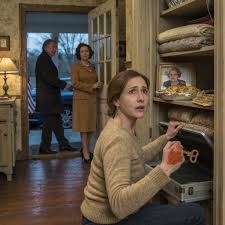
A dried white rose.A bundle of faded letters tied with green ribbon.And a thick maroon yearbook.Jefferson High School.Class of 1974.I smiled despite my grief.Mom had graduated long before I was born. She rarely talked about high school except to say she hated algebra and loved choir.
I carried the yearbook to the living room, made coffee, and settled into her favorite recliner.
The pages smelled like dust and old libraries.
Teenagers with feathered hair smiled from every page.
Signatures covered the inside covers.
“Stay sweet!”
“Don’t forget me!”
“See you at reunion!”
Typical high school messages.
Then I reached the back page.
Written in neat blue ink was a single message.
To Margaret.
I will find you again.
I promise.
Love always,
James.
I read it three times.
My mother’s name had been Margaret Ellis.
My father’s name was Robert Thompson.
Who was James?
I flipped backward until I found the senior portraits.
There he was.
James Fuller.
Class President.
Captain of the debate team.
“Most Likely to Succeed.”
He had dark hair, confident eyes, and the easy smile of someone who believed life would unfold exactly as planned.
Something about his face felt strangely familiar.
Not enough to place.
Just enough to unsettle me.
I stared at his picture longer than I should have.
Then I opened my laptop.
“James Fuller Savannah Judge.”
Results appeared instantly.
The Honorable James Edward Fuller.
Retired Superior Court Judge.
Savannah, Georgia.
Age seventy-one.
Married.
Widowed three years earlier.
Volunteer with several legal charities.
There was even a recent interview in the local newspaper.
The older man in the photograph looked remarkably like the smiling teenager in the yearbook.
Only his hair had turned silver.
My pulse quickened.
Should I call?
No.
Absolutely not.
What would I even say?
“Hello. My dead mother’s yearbook says you loved her fifty years ago?”
Ridiculous.
I closed the laptop.
Five minutes later I opened it again.
Curiosity has a way of overpowering common sense.
After another hour of arguing with myself, I found a publicly listed phone number.
I dialed.
Once.
Twice.
Three rings.
No answer.
I almost hung up.
On the eighth ring, someone picked up.
There was silence.
Then an older man’s voice.
Soft.
Steady.
“Margaret’s daughter.”
The coffee mug slipped from my fingers and shattered across the hardwood floor.
“…Excuse me?”
“I’ve been wondering if this day would ever come.”
My throat tightened.
“How do you know who I am?”
Another long silence.
Then he sighed.
“Because every birthday…every Christmas…every month…”
His voice cracked.
“Six hundred dollars. For thirty-eight years. Sent to a post office box in your mother’s name.”
I stopped breathing.
“What?”
“I never missed a payment.”
I gripped the kitchen counter to steady myself.
“I don’t understand.”
“No,” he whispered.
“I imagine you don’t.”
I found my voice.
“Who are you?”
“You already know.”
“No.”
“I think you do.”
I glanced toward the yearbook lying open on the couch.
James.
“I need you to tell me.”
Another pause.
Then words that rearranged my entire understanding of my life.
“Because you’re my daughter.”
Everything around me disappeared.
The refrigerator humming.
The birds outside.
The ticking wall clock.
Only those four words remained.
You’re my daughter.
“No.”
It came out louder than I intended.
“No, that’s impossible.”
“I understand why you’d say that.”
“My father was Robert.”
“He raised you.”
“He was my father.”
“Yes.”
His answer surprised me.
“He was.”
I frowned.
“What does that mean?”
“It means biology and fatherhood aren’t always the same thing.”
I wanted to hang up.
Instead, I asked the question I dreaded.
“Are you lying?”
“No.”
“Can you prove it?”
“Yes.”
“How?”
“I have every letter your mother ever wrote me.”
My knees weakened.
“Every one?”
“Forty-three letters.”
I closed my eyes.
“My mother never mentioned you.”
“I know.”
“Did you have an affair?”
“No.”
“Were you engaged?”
“No.”
“Then what happened?”
James exhaled slowly.
“The Vietnam War happened.”
“I thought it ended before 1974.”
“It did.”
“But lives continue long after wars end.”
His voice carried decades of exhaustion.
“I came home different.”
“What does that mean?”
“I came home broken.”
He continued before I could interrupt.
“Margaret and I planned to marry after graduation.”
I stared at my mother’s smiling senior picture.
“I left for officer training.”
“My father?”
“Robert was my best friend.”
The room tilted.
“My mother married your best friend?”
“Yes.”
“Why?”
“Because I disappeared.”
“What?”
“I didn’t die.”
“I simply…vanished.”
Nothing he said made sense.
“I don’t understand.”
“You will.”
“Tell me.”
“I’d rather show you.”
I hesitated.
“No.”
“I know that’s asking a great deal.”
“It is.”
“I’ve carried this secret for nearly forty years.”
“Why now?”
“Because Margaret is gone.”
His voice became almost inaudible.
“And because she asked me never to contact you while she lived.”
I looked toward the locked drawer.
The dried white rose.
The letters.
The yearbook she’d hidden for decades.
“What if I don’t believe you?”
“I wouldn’t.”
“What if you’re mistaken?”
“I’m not.”
“What makes you so sure?”
“I held you the day you were born.”
I froze.
“My mother told me Dad cut the cord.”
“He did.”
“What?”
James laughed softly through obvious tears.
“He handed you to me first.”
I couldn’t speak.
“He said…”
James stopped.
“What did he say?”
“‘Meet your daughter.'”
The world I had believed in for forty-three years suddenly felt built on sand.
Part 2: The Letters That Changed Everything
For three days, I ignored James’s phone number.
I went through the motions of normal life—answering emails, signing probate paperwork, thanking neighbors who brought casseroles—but every quiet moment ended the same way. My eyes drifted to the yearbook on my dining room table.
“To Margaret. I will find you again. I promise.”
And then I heard his voice again.
“Because you’re my daughter.”
I had ordered an at-home DNA test that same afternoon, but I knew it would take weeks for the results. Weeks felt unbearable. If there was any chance the man in Savannah held the answers my mother had guarded for nearly fifty years, I had to hear them.
On Friday morning, I packed an overnight bag and pointed my car east toward Savannah.
The four-hour drive felt longer.
Every mile was filled with questions.
Had my entire life been a lie?
Had my father—Robert Thompson, the man who taught me to ride a bicycle, walked me down the aisle, and held my hand through my first miscarriage—known?
If he had, why had he never told me?
He’d died eight years before my mother. A heart attack at sixty-seven. I had grieved him without ever questioning the word “Dad.”
Now I wondered how many times he’d looked at me and seen another man’s eyes.
James lived in a modest brick house beneath towering live oaks draped with Spanish moss.
It wasn’t the mansion I’d imagined for a retired judge.
The yard needed mowing.
A wind chime tinkled softly on the porch.
He opened the door before I knocked.
For a moment, neither of us spoke.
He was taller than I expected, though age had bent his shoulders slightly. His silver hair was neatly combed, and his blue eyes—those same eyes from the yearbook photograph—studied my face with heartbreaking tenderness.
Then he smiled.
“My goodness.”
“What?”
“You have Margaret’s smile.”
I folded my arms.
“I’m not here for compliments.”
“I know.”
He stepped aside.
“Please.”
The house was warm and quiet.
Books lined every wall.
Family photographs sat on shelves.
I noticed a wedding picture of James with a woman I assumed had been his wife. They looked happy.
Another photograph showed two grown sons and several grandchildren gathered around a Thanksgiving table.
A full life.
One that had existed completely separate from mine.
“I made coffee,” he said.
“I’m fine.”
“I figured you might say that.”
He poured himself a cup anyway.
Finally he looked at me.
“You want proof.”
“I want the truth.”
He nodded.
“I owe you both.”
Without another word, he disappeared down the hallway.
He returned carrying an old cedar box.
Its brass hinges had dulled with age.
He placed it gently on the coffee table.
“I haven’t opened this in eleven years.”
He lifted the lid.
Inside were dozens of envelopes tied in bundles.
Each one was addressed in the same elegant handwriting.
Margaret.
My mother’s handwriting.
I recognized it instantly from the recipe cards she’d left behind.
“There are forty-three letters,” James said quietly.
“The first one was written in July of 1974.”
He handed me the earliest envelope.
My fingers trembled as I unfolded the yellowed paper.
Dear James,
I don’t know where you are. Nobody does. Robert says your parents haven’t heard from you either.
The Army says you’re alive. That’s all they’ll tell us.
If you ever read this, know that I’m waiting.
Always,
Margaret
I swallowed hard.
“What happened to you?”
James leaned back slowly.
“I never told anyone the whole story.”
“You should start now.”
He nodded.
“When I came home from Vietnam, I wasn’t the man who had left.”
His hands shook slightly around his coffee mug.
“I couldn’t sleep. Loud noises made me dive to the ground. I’d wake up believing I was still there.”
He stared out the window.
“Today they’d call it PTSD.”
“In 1974?”
“They called it weakness.”
I listened.
“My commanding officer recommended psychiatric treatment.”
“But back then, admitting you needed help could end a career before it began.”
“So you ran?”
“I disappeared.”
He nodded once.
“I drove west without telling anyone.”
“For how long?”
“Almost two years.”
I stared.
“You abandoned everyone.”
“I know.”
“You abandoned my mother.”
“I did.”
His voice carried no defensiveness.
Only regret.
“I believed she’d be better off forgetting me.”
“You didn’t even write?”
“I wrote dozens of letters.”
“Then why didn’t she get them?”
“I never mailed them.”
The confession hung between us.
“I was ashamed.”
I looked down at another envelope.
This one had been written months later.
James,
Your mother came by today. She cried in my kitchen. She still believes you’ll come home.
I believe it too.
But every day gets harder.
Another.
James,
I’m pregnant.
I don’t know if you’ll ever read this.
I had to tell someone, even if it’s only paper.
I stopped reading.
My chest tightened.
“She knew?”
James nodded.
“She found out a month after I disappeared.”
My voice barely worked.
“She was carrying me.”
“Yes.”
“So why did she marry Robert?”
James closed his eyes.
“Keep reading.”
The next letter was blotched with faded water stains.
Tears.
James,
Robert proposed today.
Not because he loves me that way.
Because he says a child deserves a father, whether that father shares her blood or not.
He said he’d rather spend a lifetime protecting your daughter than let the town whisper about her.
I told him I’d never stop loving you.
He answered, “You don’t have to.”
I lowered the letter.
“What?”
James nodded slowly.
“Your father knew.”
“No…”
“He knew you weren’t biologically his.”
I covered my mouth.
“No…”
“He insisted on putting his name on your birth certificate.”
“Why?”
“Because he loved you before you were born.”
I began crying before I realized it.
Every birthday.
Every fishing trip.
Every bedtime story.
Every school recital.
Every scraped knee he’d bandaged.
He had chosen all of it.
Not because he had to.
Because he wanted to.
James reached for another envelope.
“This one changed my life.”
It had never been opened.
The stamp was still intact.
“The post office finally forwarded it after years.”
He handed it to me.
Across the front, in my mother’s handwriting, were the words:
If you ever come home…
James looked away.
“I couldn’t bring myself to open it until after Margaret died.”
My fingers carefully broke the brittle seal.
Inside was a single page.
James,
If you’re reading this, then somehow life has given us one last miracle.
Our daughter is beautiful.
Robert loves her as if she came from his own heart.
He has given us a life when we had none.
Please don’t take that away from him.
If you love me…if you ever loved the girl you wrote in that yearbook…let him be her father.
Love isn’t possession.
It’s sacrifice.
Promise me you’ll watch over her from a distance if you can.
Promise me she will never know she was unwanted.
Because she never was.
Always,
Margaret
The room was silent except for my sobbing.
James quietly handed me a handkerchief.
“I answered that letter.”
“You found her?”
“Three years later.”
“What happened?”
“I came back to Georgia.”
“I saw them together.”
He smiled sadly.
“You were four.”
My heart pounded.
“You saw me?”
“Many times.”
“You were at the county fair.”
I blinked.
“The carousel.”
“You wore a yellow dress.”
A memory surfaced.
Not clear.
Just a man buying cotton candy while watching from across the midway.
I had always assumed he was someone’s grandfather.
“I watched Robert lift you onto his shoulders.”
James’s voice cracked.
“I knew then that Margaret had been right.”
He reached into the cedar box one last time.
“I asked only one thing.”
He slid a stack of bank receipts across the table.
Every receipt showed the same amount.
$600.00
Month after month.
Year after year.
Thirty-eight years.
“I wanted to help.”
“They refused?”
“They accepted one condition.”
“What condition?”
“That you would never know where the money came from.”
I stared at the receipts.
College tuition.
Braces.
Piano lessons.
The down payment on my first car.
Had those monthly payments quietly helped make all of it possible?
“Robert told me,” James whispered, “‘If you love her, help her future. Don’t confuse her childhood.'”
Tears blurred my vision again.
The two men who should have hated each other had spent decades protecting the same little girl.
Not out of obligation.
Out of love.
And for the first time since finding the yearbook, I realized the greatest secret my mother had kept wasn’t about betrayal.
It was about three people who had sacrificed their own happiness so that one child would never have to carry the burden of their heartbreak.
As I sat there surrounded by fading letters and decades of silence, my phone buzzed.
The DNA laboratory had finished processing my sample.
I stared at the notification.
Neither James nor I moved.
Some truths were already undeniable.
Others were about to become official.