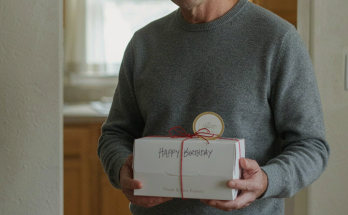
Before I lost my husband, I thought I understood what loneliness looked like.I was wrong.Loneliness wasn’t an empty house.
It wasn’t eating dinner by yourself or sleeping on one side of a king-size bed.
Loneliness was hearing the mailbox close and realizing there would never again be someone calling from the kitchen, “Honey, did anything interesting come today?”
It was walking past his favorite recliner every morning, unable to move it because somehow it still felt like he might come back and complain that I’d changed the living room.
My name is Eleanor Hayes. I was sixty-eight years old when my husband, Robert, passed away after forty-two years of marriage.
Cancer is a cruel teacher.It doesn’t simply take the person you love.
It slowly trains you to imagine life without them before finally making that life permanent.
When the funeral flowers wilted and the casseroles stopped arriving from neighbors, the silence settled over my little white house like a heavy blanket.The lawn was the first thing I let go.
Robert had always loved taking care of it. Every Saturday morning, he’d push our old mower across the yard wearing the same faded baseball cap he’d owned since the eighties.
By the end of summer, the grass reached my knees.
My daughter, Melissa, lived six hours away with three children and a full-time job. She begged me to hire someone.
“You can’t do everything yourself anymore, Mom.”
She was right.
The next Monday, I called the local hardware store where people often posted jobs for teenagers looking to earn extra money.
That’s how Noah Bennett entered my life.
He was sixteen.
Tall and painfully skinny.
Brown hair that never seemed interested in staying brushed.
The kind of quiet that made you wonder whether he was shy or simply preferred listening to talking.
He arrived exactly at four o’clock wearing worn work boots and pushing a secondhand lawn mower he’d loaded into the back of an old pickup truck.
“Mrs. Hayes?” he asked.
I nodded.
“I’m Noah.”
He didn’t say much else.
We agreed on twenty-five dollars every Saturday.
He simply got to work.
The first few weeks followed the same routine.
He’d arrive precisely on time.
Mow the lawn.
Trim around the flower beds.
Sweep the sidewalk.
Collect his money.
Say, “See you next week.”
Then leave.
If someone had asked me then what I thought of him, I would’ve said he was polite, hardworking, and remarkably quiet.
Nothing more.
Then little things began happening.
One Tuesday morning, I walked outside to discover my trash bins sitting neatly beside the garage.
I frowned.
I distinctly remembered leaving them at the curb after garbage collection.
“Maybe a neighbor did it,” I muttered.
The following week, it happened again.
Then again.
I never saw anyone move them.
They simply appeared back where they belonged.
A few days later, I returned from the grocery store carrying far too many bags.
Halfway up the walkway, my arthritis reminded me I wasn’t thirty anymore.
I set everything down and sighed.
“I’ll make two trips.”
When I reached for the bags again…
They were gone.
Startled, I looked toward the porch.
Every grocery bag had been lined up neatly beside my front door.
No broken eggs.
No crushed bread.
No spilled milk.
I looked around, confused.
No one.
Just silence.
A week after that, my porch light suddenly worked again.
It had been burned out for months.
I’d bought a replacement bulb but never found the courage to climb the ladder alone.
Yet somehow…
It glowed warmly every evening.
I assumed maybe I’d forgotten changing it.
Grief plays strange tricks on memory.
Or so I thought.
Winter approached.
One Saturday, Noah finished mowing the last leaves before snowfall.
As I handed him his payment, I noticed grease on his hands.
“Were you working on your truck?”
He looked at his fingers.
“No, ma’am.”
I pointed toward the porch light.
“Do you happen to know anything about that?”
His cheeks turned slightly pink.
“I changed the bulb.”
“You did?”
“It would’ve been dangerous if you slipped coming home in the dark.”
I stared at him.
“You should’ve told me.”
He shrugged.
“It only took a minute.”
Then he climbed into his truck as though changing light bulbs for elderly widows was the most ordinary thing in the world.
That evening, I couldn’t stop thinking about him.
The next Saturday, I baked banana bread.
When he finished mowing, I wrapped half a loaf in foil.
“This is for you.”
He hesitated.
“You don’t have to.”
“I know.”
He accepted it carefully.
“Thank you.”
That was the first time I ever saw him smile.
It transformed his entire face.
The following month brought an ice storm.
My driveway disappeared beneath frozen snow.
When I opened my front door the next morning…
A perfectly shoveled path stretched from my porch to the mailbox.
Fresh salt sparkled across every icy patch.
There were neat shovel marks leading toward the road.
Someone had arrived before sunrise.
I knew exactly who.
Saturday couldn’t come quickly enough.
When Noah arrived, I crossed my arms.
“You shoveled my driveway.”
He looked uncomfortable.
“It snowed.”
“I can see that.”
“You would’ve fallen.”
“You didn’t have to do that.”
“I know.”
“So why?”
He looked away.
“I was already awake.”
That wasn’t really an answer.
But it was all he’d give.
Months passed.
Spring returned.
The flowers Robert planted years earlier bloomed brighter than ever.
Every now and then, I’d notice weeds disappearing from the garden.
Loose fence boards suddenly secured.
Packages moved out of the rain.
Bird feeders refilled.
None of it was dramatic.
Each task took only minutes.
Yet together they carried me through days that felt impossibly heavy.
Then came the afternoon that changed everything.
I’d been struggling to move an old rocking chair from the porch into the garage.
It had belonged to Robert’s mother.
The wood was solid oak and impossibly heavy.
Noah arrived early and immediately picked it up without asking.
“Garage?” he said.
I nodded.
After he set it down, I finally asked the question that had been growing inside me for months.
“Noah…”
“Yes, ma’am?”
“Why do you keep helping me?”
He frowned.
“I pay you to mow my lawn.”
“Yes.”
“I don’t pay you to fix lights.”
“No.”
“I don’t pay you to shovel snow.”
“No.”
“I certainly don’t pay you to carry groceries.”
He stood quietly.
Hands shoved into his pockets.
Eyes fixed on the ground.
After several long seconds, he spoke so softly I almost missed it.
“My mom used to struggle like this.”
He swallowed.
“I know how heavy small things can feel.”
The words hit me harder than I expected.
“What do you mean?”
He hesitated.
“When I was little… my dad left.”
He spoke carefully, choosing every word.
“Mom worked two jobs.”
“Sometimes she’d come home so tired she’d just sit in the car before coming inside.”
He paused.
“I used to bring the groceries in.”
His voice remained calm, but I could hear years hidden underneath.
“I’d take the trash out before she remembered.”
“I fixed little things around the apartment because I didn’t want her worrying.”
He looked toward my porch.
“I remember wishing somebody would’ve helped her.”
Silence filled the yard.
“So now…” I whispered.
He nodded once.
“If I see something I can do…”
He shrugged.
“I just do it.”
My eyes filled with tears.
Not because of what he’d done.
But because I suddenly understood why.
His kindness wasn’t random.
It had been built out of childhood heartbreak.
He had become the person he once needed.
That realization stayed with me long after he drove away.
The following week, I did something unexpected.
I invited him inside for lemonade after he finished mowing.
At first he refused.
Then, after some gentle encouragement, he accepted.
As we sat at my kitchen table, conversation came easier.
He told me his mother, Denise, worked nights as a nursing assistant.
He hoped to become an engineer someday.
He loved fixing things.
Math was his favorite subject.
College felt impossible financially.
“But I’ll figure it out,” he said.
His quiet confidence reminded me of Robert.
Not loud.
Not boastful.
Just steady.
Over the next year, Saturdays became something I looked forward to.
Sometimes we’d talk for five minutes.
Sometimes an hour.
I learned that Noah never complained.
Never spoke badly about anyone.
Never expected praise.
He simply noticed what needed doing.
One afternoon, he found me staring at Robert’s old workbench.
“I can’t bring myself to clean it.”
He nodded.
“You don’t have to.”
“It’s been two years.”
“So?”
“I should probably move on.”
He thought for a moment.
“My grandpa says moving forward isn’t the same thing as leaving someone behind.”
I blinked.
“What does he mean?”
“He says you carry people with you.”
Those words stayed with me for weeks.
That Christmas, I wrapped a small package for Noah.
Inside was Robert’s toolbox.
Every wrench.
Every screwdriver.
Every measuring tape carefully cleaned.
He looked shocked.
“I can’t take this.”
“I want you to.”
“It was your husband’s.”
“Exactly.”
He ran his fingers over the worn handle.
“I’ll take care of it.”
“I know you will.”
The following spring, Noah graduated high school.
His mother invited me to the ceremony.
When his name was called, I stood and applauded louder than anyone.
Afterward he walked over wearing his graduation cap.
“I’ve got something to tell you.”
“What is it?”
“I received a scholarship.”
“Oh, Noah!”
“And…”
He smiled.
“I’ve been accepted into the state engineering program.”
I hugged him before he finished speaking.
Robert would’ve been proud.
Years continued passing.
My lawn still needed mowing.
But eventually Noah became too busy with college.
One Saturday, he arrived in a button-down shirt instead of work clothes.
“I found someone else to take care of your yard.”
“You don’t have to worry anymore.”
I smiled sadly.
“I suppose you’ve outgrown this job.”
He laughed.
“A little.”
Before leaving, he handed me a small envelope.
Inside was a handwritten note.
“Thank you for reminding me that kindness keeps growing when someone notices it.”
There was also a tiny brass keychain shaped like a lawn mower.
I still carry it.
Five years later, I received another surprise.
A sleek blue pickup truck pulled into my driveway.
Out stepped a young man in a crisp work shirt embroidered with the logo of an engineering company.
Behind him stood a smiling woman holding the hand of a little girl.
Noah.
His wife.
His daughter.
He lifted the little girl into his arms.
“Emma, remember the lady I told you about?”
She nodded shyly.
“This is Mrs. Hayes.”
“The one with the flowers?” she asked.
He smiled.
“That’s right.”
Emma ran over and handed me a daisy she’d picked from the yard.
“For you.”
I looked at Noah.
“You’ve taught her already.”
He smiled the same quiet smile I’d first seen over banana bread years earlier.
“I hope so.”
Before they left, he walked over to the porch.
Without saying a word, he tightened one loose railing screw he’d noticed while talking.
I laughed.
“You still can’t help yourself.”
He grinned.
“Old habits.”
After they drove away, I sat in Robert’s old rocking chair, watching the sunset spread gold across the freshly cut lawn.
People often believe kindness comes from having an easy life.
I’ve learned the opposite can be true.
Sometimes the gentlest people carry invisible memories of burdens they once watched someone else bear.
They remember what exhaustion looked like in their mother’s eyes.
They remember wishing an adult had shown up.
So when they grow older, they quietly become that person for someone else.
I hired Noah because I needed someone to mow my lawn.
What I didn’t realize was that God—or perhaps simply life itself—had sent me someone who understood that healing rarely arrives in grand gestures.
More often, it arrives disguised as a trash bin returned from the curb.
A porch light glowing after dark.
A shoveled driveway before sunrise.
Groceries carried without being asked.
Small acts.
Quiet hearts.
The kinds of kindness that never make headlines.
Yet somehow, they carry people through the heaviest seasons of their lives.
And every time I look out across my neat little yard, I remember that compassion has a remarkable way of growing—just like grass after the rain—especially in the hearts of those who once longed for someone to care enough to notice the small things.