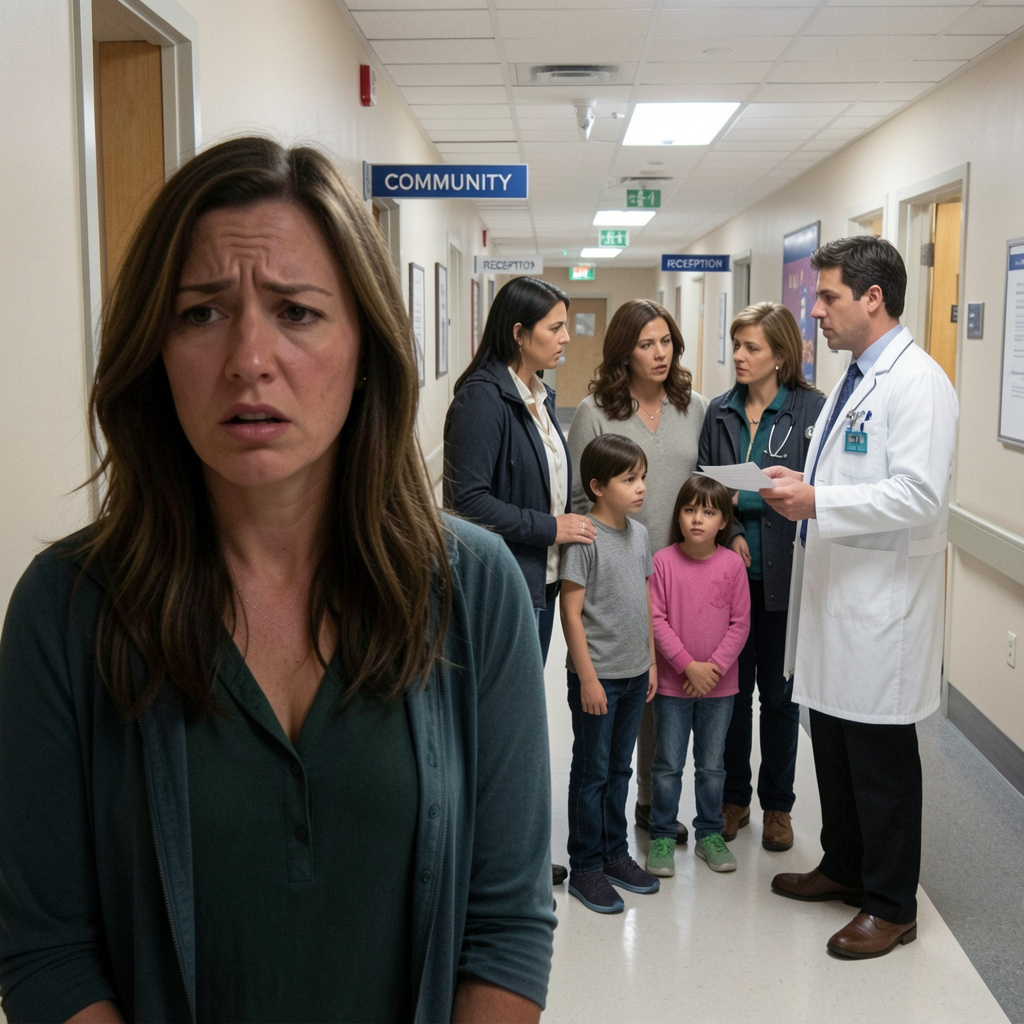
The waiting room at Dr. Hassan’s clinic smelled the way it always did — like antiseptic trying to cover something sweeter, maybe the vanilla candle the receptionist kept by the window. I sat with my hands folded in my lap, watching my husband flip through a golf magazine he wasn’t reading. Wei had come in for his annual checkup, the one I’d scheduled for him every year for nineteen years because he never remembered to do it himself.
I’d stopped keeping track of which year this was. Nineteen, maybe twenty. The numbers didn’t matter anymore. Numbers were for things you still believed had a future.
“You don’t have to wait,” he said, not looking up. “It’s just bloodwork and the usual.”
“I know.”
“You could go get coffee.”
“I’m fine here.”
He glanced at me then, the particular glance he’d perfected over the last two years — quick, assessing, gone before it could become a real look. He was checking whether I’d changed my mind about something. I never had. That was the thing about me he’d never understood, not in twenty-three years of marriage: I did not change my mind. I simply let things settle, the way silt settles in water you’ve stopped stirring.
They called him in. I stayed in the molded plastic chair, my purse on my knees, and waited the way I always waited — present, patient, and entirely elsewhere.
I want to tell this in order, though order is a strange thing when you’re the only person who’s been awake while everyone else sleepwalked through years of their own choosing.
Two years and four months ago, I found out about Mei Lin.
I didn’t find out the way wives find out in movies — no lipstick on a collar, no perfume that wasn’t mine, no dramatic phone call answered by a woman’s voice. I found out because I am an accountant, and Wei is not careful, and a man who is not careful leaves a trail that someone who reads numbers for a living will eventually read.
A second phone bill, forwarded to an address I didn’t recognize, three blocks from his office. A withdrawal pattern that didn’t match any expense he’d ever mentioned. A line item, twice, then four times, then monthly: Sunshine Pediatric Clinic.
We had two children of our own — a daughter, nineteen, off at university in Melbourne, and a son, sixteen, who still lived with the particular fury of teenage boys who suspect their parents are hiding something but can’t name what. We didn’t need a pediatric clinic. I didn’t need a pediatric clinic.
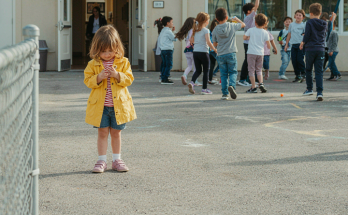
I drove past the address on a Tuesday afternoon, the kind of ordinary gray Tuesday when nothing is supposed to happen, and I saw her. Mei Lin. Wei’s secretary of six years, the one who sent me a card every Lunar New Year with careful, lovely handwriting, the one who had organized his fortieth birthday party and remembered that I don’t eat cilantro. She was getting out of a car with a baby carrier, and a toddler — maybe two years old — was already walking beside her, holding the hand of an older woman I assumed was her mother.
The toddler had Wei’s ears. Not might have. Had. I would know those ears anywhere; I’d been looking at a smaller, softer version of them since our daughter was born.
I sat in my car for forty minutes. I did not cry. I want to be honest about that, because the not-crying is the part of this story that explains everything that came after. I sat very still, the way you sit still when you’ve stepped on thin ice and you can feel, rather than hear, the crack spreading beneath your weight, and you understand that any sudden movement will be the thing that puts you through.
I went home. I made dinner. Wei came home late, as he often did by then, smelling of a cologne he’d started wearing that I hadn’t bought him. He kissed my forehead. I let him.
That night I lay beside him and made a decision that I have never been able to fully explain, not to myself, not in the two years since, and certainly not to him, because he still doesn’t know I know.
I decided to wait.
People will tell you that silence is weakness. That the wife who says nothing is the wife who has given up, who has accepted her own erasure, who is too afraid or too dependent or too broken to do the brave thing and confront the man across the dinner table.
I want to offer another possibility: that some silences are not surrender. Some silences are surveillance.
I did not stay quiet because I was waiting for him to confess on his own — I am not that naive, and I never believed Wei capable of that particular kind of courage. I stayed quiet because the moment I spoke, the story would become his to manage. He is a man who has spent thirty years managing rooms — boardrooms, dinner parties, his own mother’s disapproval — and I had watched him turn every confrontation in our marriage into a renegotiation of the terms, always slightly in his favor, always ending with me apologizing for something that had started as his failure.
So I decided that if I was going to lose something, I would at least keep the one thing he couldn’t take from me: the timing.
I watched him build a second life with the careful invisibility of a man who believes his wife is too tired, too occupied, too incurious to notice. I watched the withdrawals grow. I watched a second child arrive — a girl, this time, with my husband’s exact laugh, which I heard once, by terrible accident, when he didn’t know I’d come home early and he was on a video call in his study with the door not quite closed, laughing at something his daughter had done, in a voice I hadn’t heard him use with our own children in a decade.
I went and sat in my car in the garage for an hour that night too. Then I came back inside and asked him what he wanted for dinner.
Here is the thing I never told anyone, not even my sister, not even the friend I’ve had since secondary school who would have driven across the country to sit with me if she’d known: six months after I learned about Mei Lin, I learned something else, something that had nothing to do with Wei at all.
I found a lump in the shower. I was thorough about checking, because that’s who I am, the woman who reads the fine print, who keeps every receipt. The mammogram led to a biopsy. The biopsy led to a word I had always assumed would happen to someone else, the way wives always assume infidelity will happen to someone else, until it happens to you twice in one year, in two completely different rooms of your life.
Stage two. Then, eight months later, after a surgery I told Wei was “a minor procedure, nothing to worry about,” and a round of treatment I scheduled around his work trips so he wouldn’t notice the pattern of my absences — stage three. The oncologist, a quiet, careful woman named Dr. Okafor, asked me more than once if there was someone I wanted to bring into these conversations. Someone to share the weight.
I told her no. I told her I preferred to handle things on my own.
She didn’t push, though I could see in her face that she suspected there was more to that sentence than I was offering. There always is. That’s the strange intimacy of being sick — doctors learn to read the spaces around what you say, the way I had learned to read the spaces around what Wei didn’t say.
I did not tell Wei because some bitter, clear-eyed part of me did not want my illness to become the thing that finally made him kind to me. I did not want sympathy that was really just guilt wearing a softer face. I had watched him be tender to Mei Lin in a voicemail I wasn’t supposed to hear, and I did not want the leftover version of that tenderness, redirected toward me because I happened to be dying and he happened to feel responsible.
I wanted, if I was going to go, to go as the woman who had figured everything out and said nothing. Not the woman who’d had to beg to be noticed.
That is its own kind of vanity, I know. I have had a great deal of time, lying in hospital beds with a chemical taste in the back of my throat, to consider whether it is also its own kind of cruelty — toward him, toward myself, toward our children, who didn’t know any of it, not the secretary, not the babies, not their mother’s scans.
I still don’t have an answer. I only have the silence, which by now had become less a decision and more a kind of architecture — load-bearing, holding up the whole shape of my days.
Today, in Dr. Hassan’s waiting room, I knew something was going to break, because I had asked Dr. Hassan to tell Wei something I had specifically asked him not to mention for two years.
This requires explanation. Dr. Hassan has been our family doctor for over a decade. He had treated my children’s chicken pox and Wei’s blood pressure and, eighteen months ago, he had been the one to refer me to Dr. Okafor when my own scans came back equivocal and I’d needed a doctor outside my usual network who wouldn’t accidentally mention anything to Wei at a dinner party. Dr. Hassan knew everything. He had asked me, gently, more than once, whether my husband knew. I had always said the same thing: not yet. Let me choose when.
Three weeks ago, I told him I was ready. Not to confront Wei myself — I still didn’t trust myself to keep my voice steady in that particular conversation, to keep the years of silence from coming out of me sounding like rage instead of fact — but to let it surface naturally, in the most mundane setting imaginable, a place where Wei could not perform, could not manage the room, could not turn it into a story about his own innocence.
A checkup. A doctor who’d run my labs, by request, alongside Wei’s, knowing I would be sitting in that same waiting room. A doctor who, when reviewing both of our charts that I had quietly, deliberately, had merged into the same family file years ago, back when things were simple, would have no choice but to reference what he assumed Wei already knew, because what kind of husband wouldn’t know his wife was fighting stage three cancer.
I am not proud of engineering it this way. I want to say that clearly. There was a version of myself — the version who still believed in clean confrontations, in saying I know about Mei Lin, I know about the children, and you should know I am sick and you never noticed — that I could never quite become. So I built the smallest possible stage and let the truth walk onto it on its own.
When the nurse called my name too — “Mrs. Tan, Dr. Hassan would like to see you both together for a few minutes” — Wei looked at me with mild confusion. We did not usually do joint appointments. I had asked for this one specifically.
We sat in Dr. Hassan’s office, the same brown leather chairs we’d sat in a hundred times before, discussing cholesterol and flu shots and once, years ago, our daughter’s asthma. Dr. Hassan had Wei’s chart open, and beside it, though Wei couldn’t see the screen from his angle, mine.
“Your numbers look fine, Wei,” Dr. Hassan said. “Cholesterol’s a touch high, nothing urgent.” He paused, the way he does when he’s about to say something that requires a different kind of care. Then he looked at me, briefly, a question in his eyes — are you sure — and I gave the smallest nod I have ever given in my life.
“I do want to check in,” Dr. Hassan said, turning to Wei, “on how things are going at home, given everything with your wife’s treatment. The last chemo cycle can be hard on a marriage, even a strong one.”
Wei’s face did something I will remember until the day I die, whenever that day decides to come. It wasn’t confusion exactly. It was the specific, total stillness of a man whose internal architecture has just been told, without warning, that a wall he didn’t know existed has been load-bearing for two years, and someone has just removed it.
“Hasn’t your wife told you yet?” Dr. Hassan asked, gently, and I understood in that moment that he hadn’t fully grasped how literal that sentence was about to become — he meant it as a doctor’s small assumption, surely you’ve discussed the side effects, not as the detonation it actually was.
I watched my husband’s smile disappear. Not fade — disappear, the way a light disappears when you flip a switch, total and immediate, leaving only the shape of where brightness used to be.
“Told me what,” he said. His voice came out smaller than I had heard it in years. Twenty-three years, maybe. Maybe smaller than I’d ever heard it.
I could have let Dr. Hassan answer. Instead, I found that the moment had finally, after two years of careful architecture, arrived at the place where I wanted my own voice to be the one doing the telling.
“I have breast cancer,” I said. “Stage three. I’ve known for eighteen months. I had a mastectomy in March of last year, while you were in Jakarta for the merger. I’ve done eleven rounds of chemotherapy. I told the office I was on a wellness retreat each time I went in for treatment, and Linh covered for me without asking questions, because she’s a good friend and she doesn’t ask questions she suspects she won’t like the answer to.”
The room was very quiet. Dr. Hassan, to his credit, did not try to fill the silence with professional reassurance. He simply watched, the way you watch weather you can no longer stop.
“Why,” Wei said, and could not finish the sentence. There were several ways to finish it — why didn’t you tell me, why would you hide this, why would you let me find out like this — and I think even he didn’t know which one he meant.
“Because I found out about Mei Lin two years and four months ago,” I said. “I know about your son. I know about your daughter, the one who has your laugh, the one I heard you doing bedtime calls with from your study in March, the night you told me you were working late on the Hartono account. I have known for two years and four months, and I decided, the way you apparently decided about your other family, that I would choose my own timing for when the truth came out.”
I will not pretend the rest of that hour was elegant. It wasn’t. There was a kind of unraveling in Wei that I had genuinely not anticipated — not denial, not the practiced smoothness he brought to every other crisis of his adult life, but something closer to a man watching the floor of a building he’d assumed was load-bearing simply not be there anymore. He said my name several times, the way you say a word to check whether it still means what you thought it meant. He reached for my hand and I let him take it, not because I had forgiven anything, but because some part of me — the part that had shared a bed and two children and twenty-three New Year’s Eves with this man — still recognized grief when it arrived, even his grief, even grief he had no right to feel surprised by.
Dr. Hassan, eventually, excused himself to “give us a moment,” which is doctor for I cannot continue to be in this room.
What I remember most clearly isn’t the conversation that followed — the apologies that came too late to be anything but noise, the explanations about loneliness and the slow drift of a marriage and Mei Lin being “just supposed to be temporary,” words men always reach for as if temporary excuses permanence. What I remember is that somewhere in the middle of his unraveling, I felt something I had not expected to feel after two years of waiting for this exact moment.
I felt calm.
Not relief, not vindication, not even anger, though I’d expected all three. Calm — the specific, clean calm of a woman who has finally set down something she has been carrying for so long that her body had stopped registering the weight as separate from her own.
I think often now of the first time I actually saw him holding the second baby. It wasn’t in a hospital, and it wasn’t planned the way that office visit had been. It happened three weeks after the conversation with Dr. Hassan, in a parking lot outside the children’s hospital where I now go for my follow-up scans. Wei had insisted on driving me, which I’d allowed, mostly out of curiosity about what kind of man he would become now that the architecture of his secrecy had collapsed.
Mei Lin was there too, in the lobby, by coincidence or fate or simply the ordinary cruelty of a city too small to keep its broken arrangements separate — her daughter sick with a fever, needing tests. Wei went to them on instinct, the way you go toward people you love without remembering, for one unguarded second, that anyone else is watching. He took the baby from Mei Lin’s arms so she could fill out forms, and he held her against his chest with the easy, practiced tenderness of a man who has held that particular child many times before, in many ordinary, unremarkable moments I would never get to see.
I stood ten feet away in the waiting room I knew too well by then, and I smiled.
I have thought about that smile more than almost anything else in this story, because I know what it looked like from the outside — calm, unbothered, almost serene — and I know what people assumed, the way Dr. Hassan’s receptionist, who’d seen the whole strange tableau, told my sister later: something in her must have finally broken.
But that isn’t what the smile was. The smile was the face of a woman who had spent two years curating the exact moment of her own revelation, who had been sick and frightened and entirely alone with both kinds of news, who had finally, finally stopped being the only person in the marriage who knew the truth — and who understood, watching her husband hold a child that was not hers, that she did not need to perform devastation for an audience that had never once, in twenty-three years, earned the right to witness her unravel.
I was not broken. I had simply finished waiting.
We are separated now, Wei and I, in the unglamorous, paperwork-heavy way that separations actually happen, nothing like the clean dramatic exits of films. My daughter flew home from Melbourne and sat with me through round twelve of chemo, furious on my behalf in the specific, righteous way of nineteen-year-olds who have just learned their parents are people. My son, sixteen and quieter than his sister, started coming to my appointments too, doing his homework in the corner of the infusion room, glancing up every twenty minutes to check that I was still there, still breathing, still his.
Mei Lin and I have not spoken. I don’t know if we ever will. I think, in some private corner of myself I’m not entirely proud of, that I do not hate her the way I expected to — she was, after all, also kept in a kind of dark, told a story about being chosen and loved that may have been just as carefully managed as the story I was told about my own marriage. We are, perhaps, two women who were each allowed to believe they alone held the truth.
Dr. Okafor tells me my latest scans look promising. I have started, slowly, to believe her.
And some nights, when the house is quiet and my children are asleep down the hall, I think about that waiting room, and the particular shape of a smile that everyone mistook for breaking, and I understand it now for what it actually was: not the sound of something shattering, but the sound — quiet, almost imperceptible, easy to miss if you didn’t know what you were listening for — of a woman finally setting something down.