The morning I told my mother she had to leave, the sky was the color of old newspaper — grey and used up, the kind of sky that doesn’t promise anything. I had rehearsed the words a dozen times in the bathroom mirror while shaving, watching my reflection mouth sentences that sounded reasonable in my head but felt like stones in my throat.
“Ma, the kids need more room. Priya’s in high school now. Dev needs a study. The baby — well, she’s not really a baby anymore, she’s six and she needs her own space. You understand, don’t you?”
I told myself it was practical. I told myself it was necessary. I told myself that reasonable people make reasonable decisions and that this was, above all else, a reasonable thing to do.
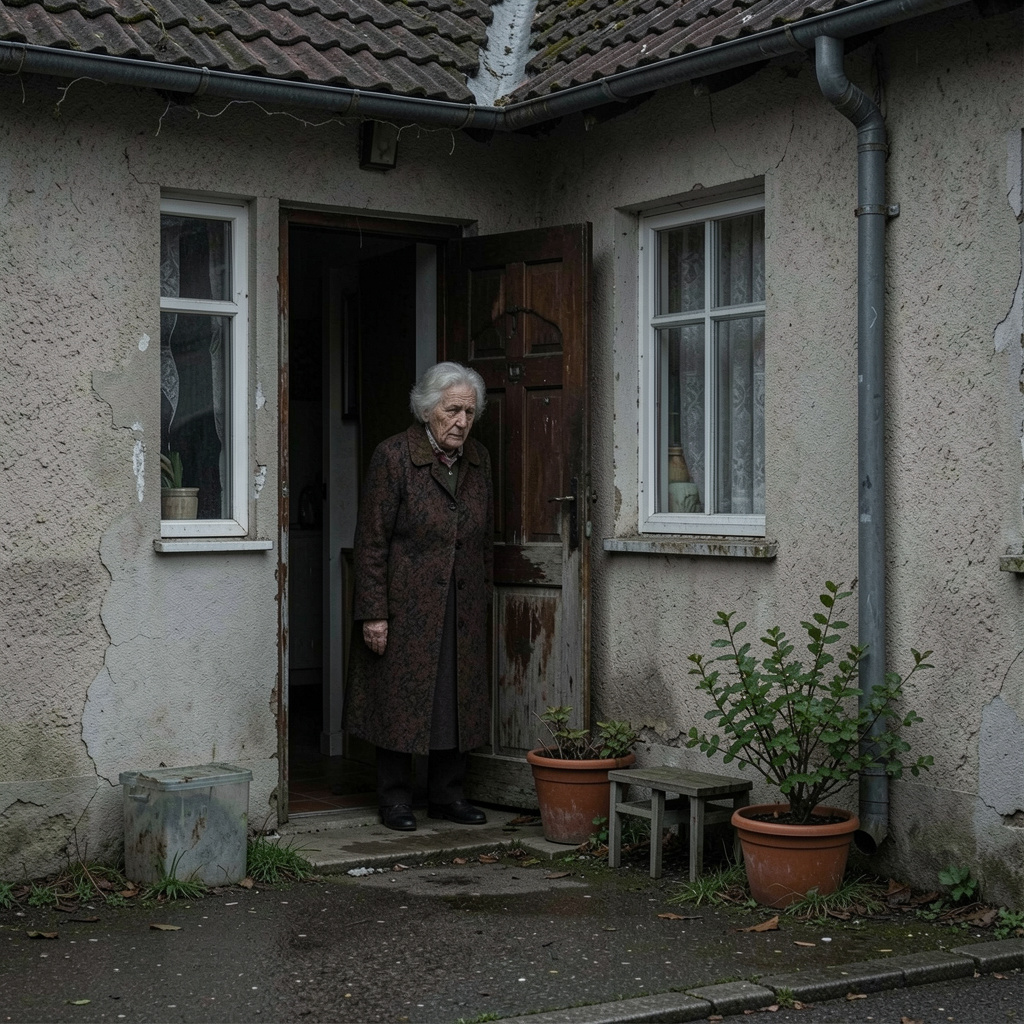
My mother was sitting in the chair by the window — the armchair my father had bought at a furniture shop in Lajpat Nagar thirty years ago, the one with the faded floral pattern that she had reupholstered twice because she couldn’t bear to part with it. She had a cup of tea in her hands. She didn’t look up when I walked in. She just kept looking out at the small garden below, at the curry leaf tree my father had planted the year they moved in, at the jasmine that climbed the rusted iron railing.
I said my piece. I said it as gently as I could, which wasn’t very gently at all.
She was quiet for a long time. The kind of quiet that doesn’t ask for anything — not reassurance, not argument, not mercy. Just quiet.
Then she smiled. Not a broken smile, not a bitter one. A genuine, soft, unsurprised smile, as though she had been waiting for this conversation for years and had long since made her peace with it.
“I will only take my plant with me,” she said.
I looked at the plant on the windowsill. It was a money plant — the kind people keep in glass bottles of water, or in terracotta pots like this one. Unremarkable. Heart-shaped leaves, trailing vines. She had had it for as long as I could remember. As a child, I had watched her water it with the leftover water from washing rice. I had watched her talk to it sometimes, murmuring things I couldn’t hear.
“Of course,” I said. “Take whatever you want.”
“I only want the plant,” she repeated, and turned back to the window.
I drove her around the city for two hours, asking her where she wanted to go. She sat in the passenger seat with the pot in her lap, cradling it the way she used to cradle me when I was sick with fever, the way she’d cradled each of my children in turn. She had her handbag on the floor by her feet, the same brown leather bag she’d carried for fifteen years, its handles worn smooth.
“There’s a good place in Vasant Kunj,” I offered. “Nisha aunty’s mother-in-law stayed there. She said it was nice.”
“How much?”
I told her.
She shook her head. “Too much. You don’t earn much, beta. I know that. The EMI on the flat, the children’s school fees, Meena’s job situation — I know everything. I don’t want you spending all your money on your sick mother.”
“You’re not that sick, Ma.”
She looked at me then, and I understood that she was. That there were things she hadn’t told me. That she had been carrying something in her body for a while now, quietly, in the way she carried everything — without fuss, without demand.
“Take me to the least expensive place,” she said. “A clean one. That’s all I ask. Clean and quiet.”
We ended up at a place in the outer edge of the city, a low building with a small garden out front and pale yellow walls that had not been repainted in some years. It smelled of phenyl and boiled lentils and something else beneath both of those — the particular smell of lives being waited out. The woman at the front desk had kind eyes and a tired smile. The room was small. There was a window, and enough light.
My mother walked in, set her pot on the windowsill, and turned to me.
“It’s fine,” she said. “Go home, beta. The children will be waiting.”
I hugged her. I don’t remember if I held her long enough. I have tried, many times since, to remember if I held her long enough, and I cannot.
I drove home through the grey city and told my wife it had gone fine, and we had dinner, and Dev complained about his homework, and the baby wanted a story, and I read her one, and then I sat in front of the television without watching it, and told myself I had done a reasonable thing.
I visited three times in forty days.
The first time, she was sitting up in bed with a library book on her lap, the plant beside her on the sill. She asked about the children by name, asked Priya about her exams, sent a packet of the cashew sweets she’d somehow procured for Dev. She held my hand when I sat beside her and didn’t ask for anything.
The second time, she was thinner. The nurse said she was eating less. My mother waved this away as though the nurse were being dramatic. She had me re-pot the plant — the soil’s compacted, she said, it needs fresh soil, there’s a bag of it under the bed — and I did, my hands dark with earth, while she watched and directed with the authority she had always applied to any task she considered important.
“Talk to it sometimes,” she told me.
“To the plant?”
“To the plant. When I’m not here to do it.”
I laughed. She didn’t.
The third time, she was sleeping. I sat beside her for forty minutes and watched her breathe. The plant was still there on the sill. Three new leaves had grown since the last visit — small, bright, almost aggressively alive in that still room. When she woke, she held my face in her hands the way she had when I was small, cupping my cheeks, looking at me as though memorising something.
“You are a good boy,” she said. “You have always tried.”
I wanted to tell her that trying wasn’t enough, that I should have done better than trying, that trying was what people said when they couldn’t bring themselves to say they had failed. I said none of this. I said I loved her. She said she knew.
That was the last time I saw her.
The call came on a Tuesday morning, forty days after I had carried her pot into that pale yellow building and left her beside it. It was the kind nurse, the one with the tired smile. She used careful words. She said my mother had gone quietly, in her sleep, in the early hours. She said there had been no pain that anyone could see. She said my mother had been at peace.
I sat in my car in the parking garage beneath my office for a long time. I didn’t cry immediately. I sat and I thought about the curry leaf tree in the garden of the old flat — the flat that was now Priya’s study and Dev’s study and the baby’s room, the flat that had been my father’s and then my mother’s and was now efficiently redistributed among the living — and I thought about how my mother had tended that tree for thirty years, watering it, talking to it, collecting its leaves for cooking.
I thought about how, when I had told her she had to leave, she had looked out at that tree one last time and said nothing about it. She had asked only for the plant.
She had taken only the plant.
The plant came home with me in the back of the car, still in the terracotta pot. Beside it was her handbag — the brown leather one, handles worn smooth — and a small envelope with my name on it in her handwriting, which had always been beautiful, precise and slanted, the handwriting of a woman who had gone to school when penmanship was still considered a form of character.
I put the plant on the kitchen windowsill. Meena asked if I was all right. I said I was. The children moved around me carefully, the way children do when they understand that something has broken without quite knowing what or how.
That evening, I opened the envelope.
The note inside was short. She had never been a woman who used more words than necessary.
My darling,
The plant is yours now. Please take care of it. Talk to it sometimes — it doesn’t mind foolish conversation, and neither does the soil.
Search inside the soil.
All my love, always —
Your Ma
I read it three times. Then I read it a fourth time, because I thought I must be misunderstanding something, that there must be a meaning I was glossing over in my grief. But it said what it said.
Search inside the soil.
I went to the kitchen window. I looked at the plant, its trailing green vines, its heart-shaped leaves. Then I got a spoon from the drawer and I began, carefully, to dig.
The spoon touched something hard about four inches down.
I set the spoon aside and used my fingers, working gently so as not to disturb the roots that had woven themselves through the dark earth over years and years of careful tending. The soil was cool and faintly damp. It smelled of rain, though it hadn’t rained. It smelled, somehow, of her kitchen.
I found it wrapped in a small piece of oilcloth — the kind she had used to line her kitchen shelves, white with a pattern of faded blue flowers. Inside the oilcloth, sealed in a plastic zip-lock bag that she must have placed there with great deliberateness, was a roll of currency notes and a folded piece of paper.
I counted the notes with shaking hands. Two lakhs and forty thousand rupees. Savings in cash, tucked into the soil of a money plant, in the particular logic of a woman who had grown up trusting earth more than banks.
I unfolded the paper. It was a letter, longer than the note, written on both sides in her careful slanted hand. It was dated six months ago — six months before I had sat her down in the armchair by the window and explained, reasonably, that she needed to go.
My darling,
If you are reading this, I am gone, and you have found what I left. I am sorry for the theatre of it — the note, the soil, the searching. Your father would have laughed at me. But I wanted to be sure you would find it at the right time, and not before.
The money is for you. Not for the nursing home — I hope that wasn’t too much of a burden. Not for the children’s school, or the EMI, or any practical thing, though you may use it for whatever you need. I want you to understand where it came from first.
Your father left the flat to you, which was right. You were the one who stayed, who visited, who called. Your sister in Canada has her own life. The flat was yours, and I always knew that. I was never confused about this, even if I sometimes pretended otherwise.
But the flat was also my home for thirty years. I cooked in that kitchen. I sat in that garden. I grew old in those rooms. When you told me I had to go, I was not surprised. I had felt it coming for some time — the way the house reorganised itself around your family, the way my presence required accommodation rather than being simply part of things. I am not saying this to cause you pain. I am only saying I understood.
What I want you to know is this: I was never angry.
I was sad, yes. I missed your father. I missed the garden. I missed the smell of the house in the morning, before anyone else was awake, when it was just me and the light. But I was never angry with you, because I know you. I know you are a man who does his best with what he has, and sometimes the best is not enough, and that is not a crime. That is just life.
The money. I saved it over forty years, a little at a time, from the household money your father gave me. Every month I put a small amount aside — he knew, and he didn’t ask questions, because he understood that a woman needs something of her own, even in a good marriage, maybe especially in a good marriage. After he died, I continued. The interest from the fixed deposit I closed last year is in there too.
I thought about giving it to you before. I thought about handing it over and saying: here, take it, use it. But I was afraid you would spend it on my nursing home, or feel obligated to put me somewhere better because of it, and I didn’t want that. I didn’t want money to make things complicated between us. Money makes everything complicated. Soil keeps secrets better.
So I put it in the soil of the plant your father gave me the year we were married. He bought it from a man selling plants on a cart near Connaught Place. Five rupees, he said. He was very proud of himself. I have had it for forty-six years.
Please keep the plant alive. That is the only thing I ask.
And please don’t spend too much time feeling guilty. You gave me a roof and a window and a pot to put my plant in. That is more than many people get. And you visited. You came and sat with me. The third time, you held my face and said you loved me, and I saw in your eyes that you meant it, and that is not nothing. That is, in fact, everything.
I am not a woman who needed much.
I needed the plant.
I needed to know you were all right.
I am leaving now knowing both of those things.
All my love, always, and after —
Your Ma
I sat on the kitchen floor for a long time.
The plant was above me on the sill, its vines trailing down toward me in the dim evening light, and I sat beneath it with the letter in one hand and the roll of notes in the other and I thought about forty-six years of marriage and five rupees spent near Connaught Place. I thought about a woman who had put her savings into soil because she trusted soil. I thought about the smile she had given me when I told her she had to go — not a broken smile, not a bitter one — and I understood it now, finally. It was the smile of someone who had already settled their accounts with the world. Who had already made their arrangements. Who was leaving nothing unfinished except the one thing that can never be finished, which is love.
Meena found me there. She didn’t ask questions. She sat down beside me on the floor and put her arm around me, and I showed her the letter. She read it twice. When she looked up, her eyes were wet.
“She never said a word,” Meena said.
“No,” I said. “She never said a word.”
We sat together under the plant for a long time. Priya came in looking for dinner and found us there and didn’t say anything, just sat down on my other side. Dev appeared and leaned in the doorway, reading the room. Even the baby came and climbed into Meena’s lap and was, for once, quiet.
All five of us, sitting on the kitchen floor in the fading light, under a trailing money plant that was forty-six years old, that had come from a cart near Connaught Place, that had traveled in the lap of a woman who smiled when her heart was breaking, that had grown three new leaves in a nursing home window while its keeper grew quieter and quieter and made ready.
I moved the plant to the living room after that. I put it where it would get morning light. I bought a bag of good soil and repotted it the way she had shown me — gently, disturbing the roots as little as possible, pressing the fresh earth around the base with both hands.
I talk to it sometimes.
I know how that sounds. I know that a plant cannot hear, that it does not understand grief or guilt or gratitude, that it processes sunlight and water and nothing more complex. I know all of this. I talk to it anyway, because she told me to, and because there are not many instructions she gave me that I followed well enough, and I would like, now, to follow this one.
I tell it about the children. I tell it that Priya got into the college she wanted, that Dev has started playing guitar badly and enthusiastically, that the baby — who is not a baby anymore — has developed an inexplicable passion for dinosaurs. I tell it about the ordinary days: the traffic, the rain, the good meal, the argument forgotten by morning.
Sometimes I just sit beside it and don’t say anything.
I put some of the money toward a small bench in the garden of the nursing home, with a little plaque on it. Not my mother’s name — she would have found that embarrassing, too grand, too much fuss. Just a line from a poem she used to murmur sometimes when she thought no one was listening: The root is not visible, but it holds.
I put the rest of the money in a fixed deposit, in an account I opened in Priya’s name.
There is, I have come to understand, no way to pay a debt like this. There is no transaction that settles it, no gesture adequate to what was given. A woman saved money for forty years in the dark of a pot and buried it in soil and smiled when she was asked to leave and did not complain and left instructions for a plant and died in a clean, quiet room and asked for nothing except that the plant be kept alive and that her son not spend too much time being guilty.
I am trying to honor the second request. I am not succeeding perfectly. But I am trying.
The plant is alive. It has grown. It has sent out new vines that trail almost to the floor now, heart-shaped leaves overlapping like a held hand.
I water it with the leftover water from washing rice.
I don’t know why that matters. It just seems right to do it the same way. To carry the gesture forward, even if I can’t carry everything forward. To say, with water and attention and a little quiet conversation, what I failed to say with enough of the things that counted when it mattered most:
I see you. I know what you did. I know what it cost.
Thank you.