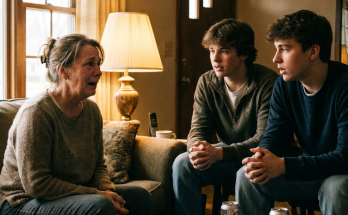
My mother and brother burst into laughter the moment I entered the courtroom.
“Look at her,” my mother sneered loudly enough for everyone nearby to hear. “By the time this is over, she won’t have a single thing left.”
Julian chuckled beside her and shook his head. “She’s never had the backbone to fight us. This will be easy.” Several people turned to stare. For a moment, I felt exactly as they expected me to feel—small, embarrassed, and afraid.
But I kept walking.
Neither of them realized how badly they had underestimated me.
And neither of them expected what happened when the judge looked up and recognized my name.
I was twenty-five years old when the people who were supposed to love me most decided to destroy me in open court.
My mother, Eleanor Owens, and my older brother, Julian, had spent most of my life treating me like an afterthought.
Julian was the golden child.
He could do no wrong.
If he broke something, it was an accident.
If I broke something, I was careless.
If he failed, he needed support.
If I succeeded, it was luck.
I spent years trying to earn their approval.
I studied hard.
Worked multiple jobs.
Graduated near the top of my class.
None of it mattered.
In their eyes, Julian would always be the star.
I would always be the spare.
When our father died, things became even worse.
Dad had been the only person who treated me fairly.
He saw how hard I worked.
He encouraged me when no one else did.
Losing him felt like losing the ground beneath my feet.
The funeral had barely ended before my mother and brother began discussing his estate.
At first, I assumed we would handle everything together.
I was wrong.
Within weeks, I learned that major decisions were being made without me.
Property was being transferred.
Accounts were being closed.
Documents were being signed.
Whenever I asked questions, I received vague answers.
“Don’t worry about it.”
“We’re handling things.”
“You wouldn’t understand.”
Eventually, I hired a lawyer.
What we discovered shocked me.
Several assets belonging to my father had disappeared from estate records.
A vacation property.
Investment accounts.
A substantial amount of cash.
According to official documents, my father had supposedly transferred many of those assets to my mother shortly before his death.
There was only one problem.
The signatures looked wrong.
Very wrong.
Dad had been an accountant.
He was meticulous.
His signature was always precise.
The signatures on those documents appeared rushed and uneven.
My lawyer immediately suspected fraud.
When we requested additional records, my mother became furious.
“How dare you accuse your own family?” she shouted during a phone call.
“I’m asking questions,” I replied.
“You’re trying to steal from us!”
“From us?” I said quietly. “You mean from me?”
The line went silent.
Then she hung up.
A month later, I was served with legal papers.
My mother and brother were suing me.
Their claim was outrageous.
They alleged I was attempting to challenge legitimate transfers and harass the family for money.
They wanted the court to dismiss my claims entirely.
They also demanded legal fees.
In other words, they wanted to bankrupt me.
The courtroom on the day of the hearing felt colder than winter.
My mother wore an expensive navy suit.
Julian sat beside her, smirking.
Every few minutes, they exchanged confident glances.
Their attorney looked equally relaxed.
I sat quietly with my lawyer, Rachel Bennett.
Rachel leaned toward me.
“Nervous?”
“A little.”
“That’s normal.”
“You think we have a chance?”
Rachel smiled.
“I think they’ve made a mistake.”
“What kind of mistake?”
“The kind arrogant people make.”
Before I could ask more, the courtroom doors closed.
The judge entered.
Everyone stood.
“Be seated.”
The room settled into silence.
The judge began reviewing paperwork.
Then something unexpected happened.
He paused.
Looked down again.
And then looked directly at me.
For a brief moment, his expression changed.
Not dramatically.
Just enough to notice.
Recognition.
My mother seemed to notice it too.
A small frown crossed her face.
The judge continued reading.
Finally, he spoke.
“Miss Owens?”
“Yes, Your Honor.”
“You are the daughter of Michael Owens?”
“Yes.”
He nodded slowly.
“I knew your father professionally for many years.”
A murmur rippled through the courtroom.
My mother’s confident smile disappeared.
The judge immediately added, “That relationship will not affect these proceedings. However, I want it disclosed for the record.”
The attorneys acknowledged the statement.
The hearing continued.
But something had changed.
For the first time all morning, my mother looked uneasy.
The opposing attorney presented his argument first.
According to him, my father had willingly transferred assets before his death.
Everything had been legal.
Everything had been documented.
And my challenge was supposedly motivated by greed.
I listened quietly.
Then Rachel stood.
She began introducing evidence.
Bank records.
Property records.
Communication logs.
Expert analysis.
The atmosphere shifted.
One document after another exposed inconsistencies.
Dates didn’t match.
Witness signatures conflicted.
Transactions appeared suspicious.
Julian’s confidence began fading.
Then Rachel called her first expert witness.
A forensic document examiner.
The expert explained how signatures could be analyzed scientifically.
He displayed enlarged images on a screen.
The differences were impossible to ignore.
Pressure patterns.
Stroke sequences.
Writing angles.
“All indicators suggest these signatures were not written by the same individual,” the expert concluded.
The courtroom fell silent.
My mother’s attorney objected repeatedly.
None of the objections changed the facts.
The evidence remained.
Then came the second expert.
A digital forensics specialist.
He revealed metadata from scanned documents.
Several supposedly old files had actually been created months after my father’s death.
The room became so quiet I could hear papers turning.
Julian suddenly stopped smiling.
The real turning point came after lunch.
Rachel called an unexpected witness.
A retired nurse named Margaret Lewis.
I had never met her before.
Apparently, she had cared for my father during his final weeks.
Margaret took the stand and adjusted her glasses.
She seemed calm.
Confident.
Truthful.
Rachel asked a simple question.
“Did Michael Owens discuss his estate with you?”
“Yes.”
“Can you tell the court what he said?”
Margaret nodded.
“He talked about his children often.”
My chest tightened.
“He was proud of both of them?”
“Yes.”
“But he worried about his daughter.”
My mother rolled her eyes.
The judge immediately noticed.
“Mrs. Owens, please refrain from commentary.”
Margaret continued.
“He told me he wanted everything divided equally.”
The courtroom froze.
“Are you certain?”
“Absolutely.”
“Did he ever indicate plans to exclude his daughter from major assets?”
“No.”
“Never?”
“Never.”
The opposing attorney tried to challenge her memory.
Margaret remained unwavering.
Then she delivered a statement that changed everything.
“Michael told me he was concerned someone might pressure him regarding financial documents.”
Every head in the courtroom turned.
Even the judge leaned forward slightly.
“Did he specify who?” Rachel asked.
Margaret hesitated.
Then answered.
“Yes.”
My mother’s face turned pale.
The next hour felt surreal.
Additional records surfaced.
Emails.
Messages.
Financial transfers.
A pattern emerged.
One that painted a very different picture than the story my mother and brother had presented.
The evidence suggested Julian had played a central role in managing disputed transactions.
The more questions he faced, the more uncomfortable he became.
Finally, Rachel requested he take the stand.
Julian agreed.
At first, he appeared composed.
Then Rachel began asking detailed questions.
Specific dates.
Specific signatures.
Specific transfers.
His answers grew inconsistent.
Several times, he contradicted documents already entered into evidence.
Then came the moment everything unraveled.
Rachel displayed an email.
Julian stared at it.
Color drained from his face.
“Do you recognize this message?”
“Yes.”
“You wrote it?”
“Yes.”
“Please read the highlighted section.”
Julian swallowed.
The room waited.
Reluctantly, he read aloud.
“Once the paperwork is done, she won’t know what happened until it’s too late.”
A collective gasp swept through the courtroom.
My mother looked horrified.
The judge’s expression hardened.
Rachel said nothing.
She didn’t need to.
The email spoke for itself.
By the end of the hearing, the arrogance that had filled the room that morning was gone.
My mother sat rigidly.
Julian avoided eye contact.
Their attorney looked exhausted.
The judge reviewed his notes carefully.
Then he delivered his decision.
His words felt almost unreal.
The court found substantial evidence supporting further investigation into fraudulent asset transfers.
The disputed assets would be frozen immediately.
An independent administrator would be appointed.
Additional proceedings would follow.
Most importantly, my claims would move forward.
My mother’s attempt to dismiss them failed completely.
Her request for legal fees was denied.
Then came the final blow.
The judge ordered sanctions related to several misleading statements presented to the court.
Julian closed his eyes.
My mother stared straight ahead.
Neither of them looked victorious anymore.
As people began leaving, I remained seated.
For months, I had imagined this moment.
I thought victory would feel triumphant.
Instead, I felt strangely sad.
Because winning meant accepting something painful.
My family had truly tried to betray me.
Not because they needed money.
Not because they were desperate.
Because they believed they could.
They thought I was too weak to resist.
Too frightened to fight back.
Too eager for their approval.
They were wrong.
Rachel touched my shoulder.
“You okay?”
I nodded.
“I think so.”
“You should be proud.”
“Maybe.”
She smiled.
“You know what impressed me most?”
“What?”
“You never made this about revenge.”
I considered that.
She was right.
I hadn’t filed the case to punish anyone.
I simply wanted the truth.
As I walked toward the courthouse exit, I heard footsteps behind me.
My mother.
For a moment, neither of us spoke.
The years between us felt impossibly heavy.
Finally, she said, “I never thought you’d go this far.”
I looked at her.
“That was the problem.”
Her eyes lowered.
For the first time in my life, she seemed unsure of herself.
Almost vulnerable.
“I thought you would just let it go.”
“I know.”
A long silence followed.
Then I continued walking.
Not because I hated her.
Not because I wanted to hurt her.
But because some distances can’t be crossed in a single conversation.
Outside, the late afternoon sun bathed the courthouse steps in gold.
I stopped for a moment and looked up at the sky.
Dad used to tell me something whenever life became difficult.
“People will show you who they are eventually. Believe them when they do.”
For years, I hadn’t wanted to believe what my family was showing me.
I kept hoping they would change.
Kept hoping they would finally value me.
That day, I stopped hoping.
And strangely, that gave me freedom.
Because my worth had never depended on their approval.
It never depended on being chosen.
Or favored.
Or loved correctly.
It existed long before any courtroom battle.
Long before any inheritance.
Long before their laughter.
As I descended the courthouse steps, my phone buzzed.
A message from Rachel.
Your father would be proud of you.
I stared at the screen.
A lump formed in my throat.
Then I smiled.
For the first time since Dad’s death, the future didn’t feel frightening.
It felt open.
The people who had spent years convincing me I was weak had finally learned the truth.
Strength isn’t loud.
It doesn’t mock.
It doesn’t boast.
It doesn’t laugh when someone walks into a courtroom.
Strength is standing up when everyone expects you to surrender.
And on the day my mother and brother laughed at me, they discovered something they had never bothered to learn.
I was far stronger than they had ever imagined.