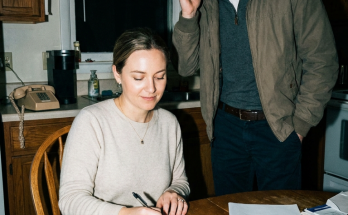
I fired Maria on a bright Thursday morning.
The sun streamed through the kitchen windows of our old house, turning the granite countertops gold. Movers were loading boxes into trucks. My daughters, Lily and Emma, chased each other around the living room, unaware that one of the biggest constants in their lives was about to disappear.
Maria had worked for us for fifteen years. Fifteen years. Longer than some marriages lasted.
She had arrived when Lily was only six months old. She was there for first steps, first words, scraped knees, piano recitals, nightmares, and teenage heartbreaks. She knew where every Christmas ornament belonged and exactly how Emma liked her hot chocolate.
But we were moving.
Moving up.
At least that’s what I told myself.
The new neighborhood was exclusive—a gated community perched on a hill overlooking the city. Every house looked like it belonged in a luxury magazine.
My husband, Richard, loved it.
“Fresh start,” he kept saying.
A fresh start apparently included replacing Maria.
“We need someone younger,” Richard had insisted.
“More energetic.”
“More modern.”
I hated how those words sounded, but I didn’t argue very hard.
The truth was uglier.
Maria was fifty-eight.
Her hair had gone silver.
She dressed simply.
She wasn’t the image that matched our new life.
And somewhere deep inside, I had allowed appearances to matter.
So that Thursday morning, I sat her down.
“Maria,” I began carefully.
She looked at me with those calm brown eyes.
“I know.”
The words caught me off guard.
“You know?”
She nodded.
“You’ve been packing for weeks. You stopped asking if I wanted a room in the new house.”
I swallowed.
“I’m sorry.”
Maria smiled gently.
“It’s all right.”
No anger.
No tears.
Nothing.
She simply stood, folded her apron, and placed it on the table.
Then she walked upstairs.
Twenty minutes later, she came down carrying a single suitcase.
Everything she owned fit inside it.
My chest tightened.
Lily ran forward first.
“You’re leaving?”
Maria knelt.
“Yes, sweetheart.”
Emma started crying immediately.
Maria hugged both girls.
She kissed their foreheads.
Then she walked toward the front door.
Before leaving, she handed me a plain sealed envelope.
No name.
No writing.
Nothing.
“Open it only when the new house feels too quiet,” she said.
I frowned.
“What does that mean?”
But she was already smiling.
“You’ll know.”
Then she walked away.
I never saw her again.
At least not for a while.
Life in the gated community felt perfect.
At first.
The house was enormous.
Five bedrooms.
A home theater.
An indoor gym.
A finished basement larger than our previous home.
The neighbors drove luxury cars and hosted elegant parties.
Richard thrived there.
The girls adapted quickly.
And for the first month, I barely thought about Maria.
We hired a new nanny named Kayla.
She was twenty-four.
Stylish.
Energetic.
Always posting on social media.
Exactly what Richard wanted.
Yet something felt off.
The house never seemed settled.
The girls stopped laughing as much.
Dinner conversations felt forced.
And every evening, the silence grew heavier.
Then the break-ins began.
The first house belonged to the Millers.
Nothing was stolen.
The intruders appeared to know exactly where security cameras were positioned.
A week later, another house was hit.
Then another.
Always at night.
Always without signs of forced entry.
People became frightened.
Neighborhood meetings were held.
Security patrols increased.
The gates were monitored around the clock.
Still, the break-ins continued.
Nobody understood how.
One evening, police officers went door-to-door advising residents to be vigilant.
I barely slept afterward.
Every creak in the house made me jump.
Every shadow looked suspicious.
Then something happened that truly terrified me.
I came home from grocery shopping and found our front door slightly open.
Just an inch.
Nothing appeared missing.
Nothing appeared disturbed.
But I knew I’d locked it.
I knew it.
That night, I couldn’t stop shaking.
Richard checked every room.
“You’re imagining things.”
But I wasn’t.
Someone had been inside.
I could feel it.
For days afterward, anxiety followed me everywhere.
Then, one rainy afternoon, I found Maria’s envelope.
It had slipped behind files in my desk drawer.
The new house suddenly felt very quiet.
Exactly as she’d said.
My hands trembled as I opened it.
Inside wasn’t a letter.
It was a blueprint.
A detailed blueprint of our house.
The new house.
Not the old one.
The new one.
My heart stopped.
How could she possibly have this?
We’d hired the architect months after deciding to move.
Maria had never even visited the property.
Yet there it was.
Every room.
Every hallway.
Every staircase.
Marked perfectly.
And in the basement, three red X’s had been drawn.
Beneath them were seven handwritten words.
THEY WILL ENTER HERE. DIG BEFORE THEY DO.
I stared.
Confused.
Terrified.
Certain it was some kind of joke.
Yet Maria never joked.
Not like this.
I waited until Richard got home.
He laughed.
Actually laughed.
“This is insane.”
“Maria wasn’t insane.”
“Then how did she get blueprints?”
“I don’t know.”
He tossed them onto the counter.
“Forget about it.”
But I couldn’t.
Something about those red X’s haunted me.
For three nights, I barely slept.
Finally, on the fourth day, curiosity overcame common sense.
Richard was away on business.
The girls were at school.
I went into the basement alone.
The room was enormous.
Finished concrete floors.
Storage shelves.
Exercise equipment.
Wine racks.
Nothing unusual.
Yet according to the blueprint, the three X’s formed a perfect triangle near the eastern wall.
I fetched a hammer.
Then a crowbar.
And began pulling up floor panels.
The first spot revealed nothing.
The second spot revealed only dirt.
The third spot changed everything.
My crowbar struck metal.
A hollow clang echoed through the basement.
I froze.
Slowly, I cleared more dirt.
A steel hatch emerged.
Old.
Hidden.
Locked.
My pulse hammered.
This wasn’t on any official building plans we’d received.
I called the police immediately.
Two officers arrived within thirty minutes.
The hatch required specialized tools to open.
When they finally lifted it, a stale rush of air escaped from below.
The tunnel beneath stretched into darkness.
One officer shined his flashlight.
“What the…”
The passage extended far beyond the property.
Police sealed the area instantly.
Within hours, detectives swarmed the house.
The investigation uncovered something unbelievable.
The tunnel system had been built nearly eighty years earlier.
During Prohibition.
Originally used for smuggling.
Over decades, forgotten maps disappeared.
Records were lost.
Developers unknowingly built luxury homes directly above portions of it.
The tunnel connected to multiple properties throughout the neighborhood.
Including every house that had experienced break-ins.
The intruders had been using the underground network the entire time.
They never entered through doors.
Never climbed windows.
Never bypassed gates.
They came from below.
Police eventually arrested four suspects.
Career criminals.
They’d discovered part of the tunnel during nearby construction and quietly exploited it for months.
The entire community was stunned.
The story made local news.
Everyone praised law enforcement.
Nobody knew about Maria’s blueprint.
Except me.
But one question remained.
How had she known?
The mystery consumed me.
After weeks of searching, I finally located an old address connected to Maria.
A small house on the outskirts of town.
I drove there immediately.
The house looked abandoned.
An elderly man worked in the garden next door.
When I asked about Maria, his expression softened.
“You’re looking for Maria Alvarez?”
“Yes.”
He nodded.
“Her grandfather built half the tunnels under this county.”
I blinked.
“What?”
“He was an engineer. During Prohibition, he designed underground routes for transporting goods.”
The world tilted.
The old man continued.
“Maria grew up hearing stories about them.”
My throat tightened.
“Did she know about the tunnels beneath our neighborhood?”
“Oh, certainly.”
“Why didn’t she tell anyone?”
The old man smiled sadly.
“Would they have listened?”
I didn’t answer.
Because I knew the truth.
We wouldn’t have.
Not then.
Months later, life slowly returned to normal.
The tunnels were sealed.
Security improved.
The break-ins stopped.
But guilt remained.
Every time I passed the basement stairs, I thought about Maria.
Every time my daughters mentioned her.
Every time the house felt empty.
One evening, Lily asked a question that broke my heart.
“Why did we let Maria go?”
I didn’t know how to answer.
Because children have a way of stripping away excuses.
The real reason sounded awful when spoken aloud.
So I told the truth.
“We made a mistake.”
She nodded quietly.
“I miss her.”
“So do I.”
It took another year before I finally found her.
She was working at a small community center across town.
Teaching reading classes.
Helping immigrant families.
Exactly the kind of thing Maria would do.
When she saw me, she smiled.
No bitterness.
No resentment.
Just kindness.
The same kindness she’d always shown.
“I’m sorry,” I said immediately.
Her smile deepened.
“I know.”
“No, Maria. I mean it.”
She studied my face.
Then nodded.
“I know.”
I felt tears gathering.
“You saved us.”
Maria looked away.
“I simply gave you information.”
“You gave us more than that.”
She remained silent.
I took a shaky breath.
“The girls want to see you.”
That finally changed her expression.
A warmth spread across her face.
“Really?”
“Every week they ask about you.”
For the first time, her eyes glistened.
The reunion happened the following Sunday.
When Maria stepped through our front door, Lily and Emma ran toward her.
They were older now.
Taller.
But in that moment they became little girls again.
They wrapped their arms around her.
And Maria cried.
The first tears I’d ever seen her shed.
Not because she’d been fired.
Not because she’d been forgotten.
But because she was home.
In a way.
Watching them together, I understood something I should have realized years earlier.
Families aren’t defined by blood.
Or contracts.
Or paychecks.
They’re defined by loyalty.
By love.
By the people who stay through every season of your life.
Maria had never simply been our nanny.
She had been family.
And family isn’t something you replace because it no longer matches your image.
As the girls laughed around her, I remembered the envelope.
The blueprint.
The red X’s.
The warning.
And I finally understood why she hadn’t written a letter.
A letter would’ve been ignored.
Advice would’ve been dismissed.
But a mystery?
A mystery would eventually force me to listen.
And in the end, the greatest thing Maria left behind wasn’t a map.
It was a lesson.
Some people carry quiet wisdom that only becomes visible after they’re gone.
If you’re lucky, you get a second chance to recognize it.
I was lucky.
Many aren’t.
That night, for the first time since moving into the house, it no longer felt too quiet.
Maria sat at our dinner table.
The girls were laughing.
The kitchen was alive again.
And somehow, the place finally felt like home.