The human skin, our largest organ, is a complex and dynamic barrier. While often a picture of smooth resilience, it is also susceptible to a variety of conditions, notably those related to the sebaceous glands and hair follicles. The image presented offers a stark, close-up view of several dermatological issues—a visual that, for many, is both intensely fascinating and deeply uncomfortable. This article will explore the nature of the blemishes seen in the image, the underlying physiological processes, and the professional procedures often employed to address them.
Understanding the Blemishes: A Closer Look
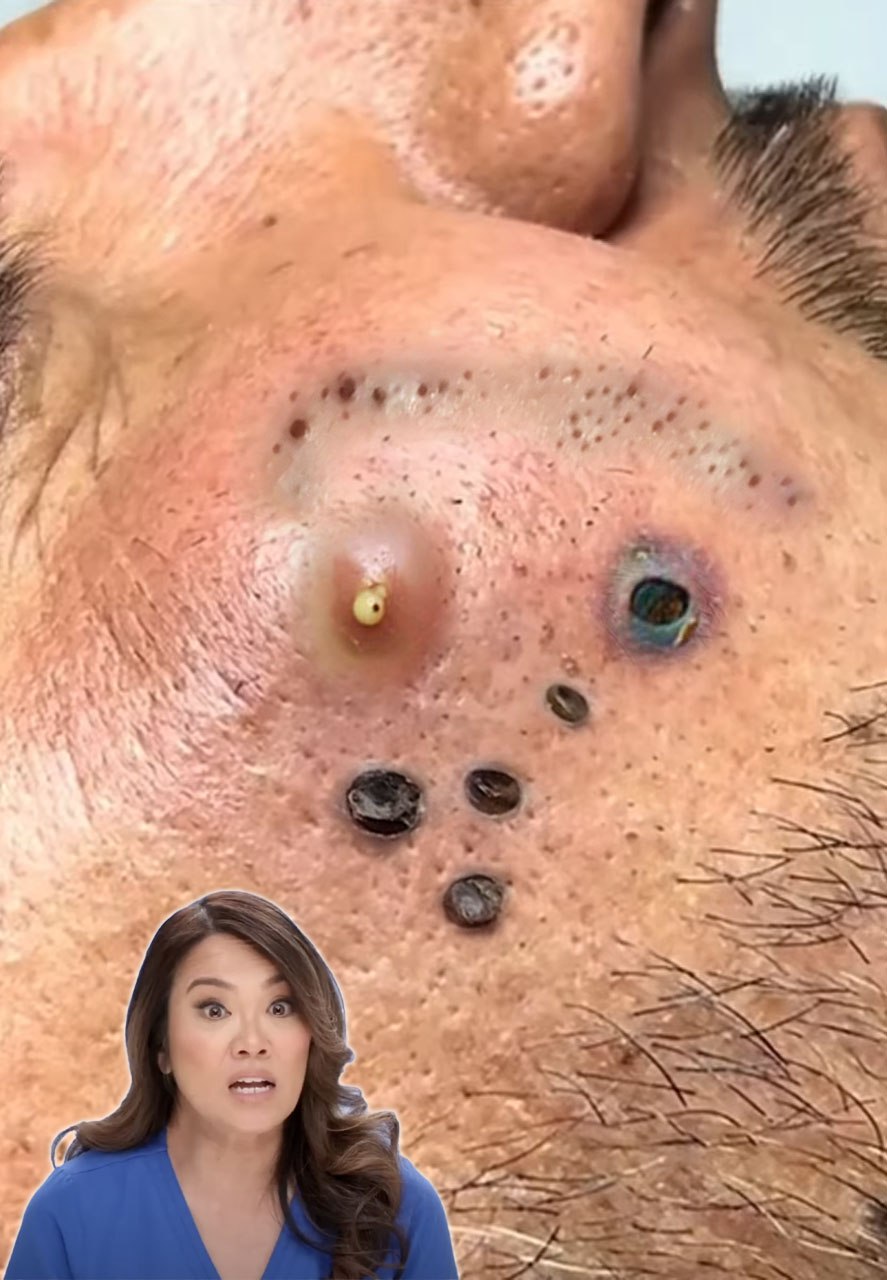
The photograph captures a section of skin afflicted by multiple forms of acne and follicular disturbances. Three distinct types of lesions are immediately visible, each representing a different stage or type of skin condition:
1. The Pustule (The Yellowish Core)
Prominently featured is a raised, inflamed lesion with a distinct yellowish-white center. This is characteristic of a pustule—a common type of inflammatory acne.
-
Physiology: Pustules form when the wall of a hair follicle, already clogged with sebum (oil) and dead skin cells (forming a microcomedone), ruptures. This rupture allows Propionibacterium acnes (or C. acnes) bacteria, which thrive in the anaerobic environment of the clogged follicle, to spill into the surrounding dermis.
-
Appearance: The body’s immune system rushes to the site, leading to inflammation and the formation of pus, which is a collection of dead white blood cells, bacteria, and tissue fluid. The yellowish tip represents the surface accumulation of this pus, making it prime for manual extraction.
2. The Blackheads (Comedones)
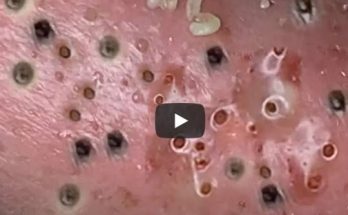
Several dark, crater-like openings are visible. These are likely large, chronic open comedones, commonly known as blackheads.
-
Physiology: Blackheads are non-inflammatory acne lesions where the pore is clogged but the opening to the skin remains open. The dark color is not dirt, but rather the result of the trapped sebum and cellular debris undergoing oxidation when exposed to the air. This process, similar to how an apple browns after being cut, causes the material to turn dark.
-
Chronic Nature: The depth and dark appearance of the lesions in the image suggest they have been present for some time, possibly leading to a hardened, deeply impacted plug of keratin and sebum.
3. The Deep, Healing/Post-Extraction Lesion (The Dark Blue/Black Area)
One large area appears dark blue or black, suggesting either a very deep, congested lesion or a site that has recently undergone an extraction procedure and is now showing signs of bruising, residual debris, or healing crust.
-
Possibilities:
-
Deep Comedone/Cyst: It could be a highly impacted blackhead or a residual sign of a nodule or cystic lesion that has ruptured deep within the skin.
-
Post-Procedural Bruising: Following aggressive or deep extraction, capillaries can be damaged, leading to bruising (a dark, purplish-blue color) around the treated follicle.
-
Hemosiderin Staining: In the healing process, blood released during inflammation or extraction can leave behind iron deposits (hemosiderin) as it breaks down, which can appear dark and persistent.
-
The Professional Response: The Art of Dermatological Extraction
The presence of a dermatologist or aesthetician in the foreground suggests the context is a professional extraction procedure. Dermatological extraction is a core component of acne treatment, particularly for comedonal acne (blackheads and whiteheads) and certain superficial pustules.
The Extraction Procedure
-
Preparation: The skin is typically cleansed and often steamed or treated with desincrustation solutions to soften the sebum and keratin plugs, making them easier to remove.
-
Lancing and Puncturing: For a closed lesion like a pustule or deeply impacted whitehead, a sterile lancet or needle is used to gently create a tiny opening in the surface of the skin. This step is critical to prevent tearing the follicle wall deeper within the skin, which can worsen inflammation and scarring.
-
Applying Pressure: The technician then uses a comedone extractor tool—a small, metal instrument with a loop or a pointed tip—or sterile cotton swabs/fingertips to apply slow, even pressure around the base of the lesion. The goal is to evacuate the impacted material (sebum, keratin, pus) from the follicle.
-
Post-Procedure Care: After extraction, the area is typically disinfected, and soothing or anti-inflammatory topical agents are applied to aid in healing and minimize potential post-inflammatory hyperpigmentation (PIH).
Why Professional Extraction is Crucial
Attempting to extract deep or inflammatory lesions at home is highly discouraged for several reasons:
-
Increased Risk of Infection: Non-sterile tools and hands introduce bacteria.
-
Worsened Inflammation and Scarring: Improper technique can push the debris deeper, causing the follicular wall to rupture internally. This leads to bigger, deeper pimples (nodules or cysts) and a significantly higher risk of permanent scarring (atrophic or hypertrophic scars) and PIH.
-
Incomplete Removal: Often, home attempts only remove the surface material, leaving the root of the clog to refill and recur.
The Deeper Significance: Why These Images Resonate
Images like the one provided frequently go viral across social media and specialized video platforms. This widespread fascination with dermatological procedures—often dubbed “pop culture”—can be attributed to several psychological and evolutionary factors:
-
The Satiation of Curiosity: Humans have a natural curiosity about the inner workings of the body, even when those workings involve the repulsive.
-
The “Resolution” Factor: Watching the process of removal provides a powerful sense of resolution and closure. The viewer witnesses a clear problem being solved, a blocked system being cleared, which can be immensely satisfying.
-
Empathy and Shared Experience: Acne is a universal affliction. For many viewers, watching a successful extraction is cathartic, as it mirrors their own desire to be rid of their blemishes.
While these images serve as compelling visual content, they also underscore the importance of proper dermatological care. They are a vivid reminder that while skin concerns are common, professional intervention is often necessary for safe, effective, and scar-minimizing treatment.
Would you like to know more about the different types of acne scarring that can result from these kinds of lesions?