The Critical Role of Professional Intervention
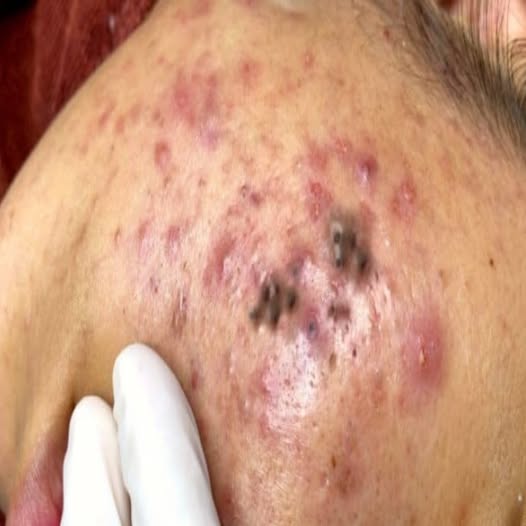
The images depicting the hands and tools of a practitioner highlight the necessity of professional care for lesions of this magnitude. Attempting to manage such severe cysts and deep blackheads at home can lead to permanent scarring, hyperpigmentation, and the spread of infection.
1. Safely Draining Severe Lesions
The images showing the white-gloved hand and the expelled contents demonstrate the crucial step of professional draining and extraction.
-
The Procedure: For deep pustules or cysts, a professional may use a sterile scalpel or needle to create a small incision. This carefully controlled opening is necessary to safely release the pressure and drain the infected material (pus) without forcing it deeper into the skin tissue.
-
The Exudate: The expelled material is thick and yellow, confirming the presence of a deep bacterial infection and inflammatory response. Handling this requires utmost sterility to prevent secondary infection.
2. Meticulous Comedone Extraction
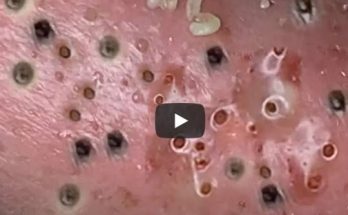
While the inflammatory lesions require immediate management, the dense field of blackheads requires a systematic approach. Professional extraction uses specialized tools (like comedone extractors) after the skin has been properly prepped (often with steam or chemical exfoliants) to loosen the plugs. This minimizes trauma to the surrounding pores, a key difference from damaging at-home squeezing.
Beyond the Extraction: Long-Term Skin Health
The goal of these procedures is not just temporary clearing but setting the stage for long-term health. Severe acne, as displayed, is often a chronic condition requiring ongoing management.
1. Scarring and Post-Inflammatory Marks
The severity of the inflamed lesions means the patient is at a high risk for Post-Inflammatory Hyperpigmentation (PIH)—dark spots left after the inflammation subsides—and Acne Scarring (indented or raised marks). Professionals will follow up the extraction process with treatments aimed at minimizing this damage, such as:
-
Chemical peels
-
Microdermabrasion
-
Laser therapy
2. Preventative Skincare and Medical Treatment
To prevent the recurrence of such severe congestion, a sustained, therapeutic approach is necessary, often guided by a dermatologist:
-
Topical Retinoids: Medications like Tretinoin or Adapalene are essential for regulating cell turnover and preventing the formation of new comedones.
-
Oral Medications: For cystic acne, oral antibiotics, hormonal therapies, or Isotretinoin may be necessary to control inflammation and oil production systemically.
-
Gentle Cleansing: Despite the severe oiliness and congestion, the skin is highly sensitive post-extraction, requiring non-irritating, gentle cleansers and non-comedogenic moisturizers.
In conclusion, these high-magnification images serve as a powerful reminder of the complexity of acne management. They underscore the necessity of skilled, professional intervention to address severe lesions, clear chronic congestion, and establish a foundation for healing to prevent lasting dermatological damage.
Would you like to learn more about the different types of acne scarring and how they are typically treated?