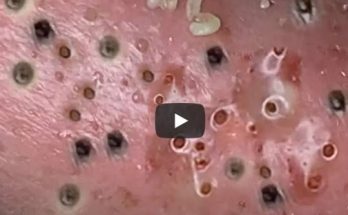
The images you’ve provided display a highly complex and severe array of skin conditions, primarily centered around follicular plugging and inflammation. The images show:
-
Image 1 (Lower Lip/Chin Area): A dense row of large, dark blackheads (open comedones) lining a skin fold, along with surrounding hair growth and some inflammation.
-
Image 2 (Cheek/Chin Area): A mixture of blackheads, whiteheads (closed comedones), and signs of inflammation/extraction with a tool visible.
-
Image 3 (Ear/Fold Area): Severe inflammatory lesions, including large, deep comedones and a prominent pustule or small nodule, indicating complicated, deep-seated acne.
-
Image 4 (Extraction): A close-up view of multiple blackheads undergoing manual extraction, showing the large, dark, oxidized plugs being expelled.
-
Image 5 (Eye/Temple Area): A dense, clustered patch of extremely widened, deep, and dark pores, highly suggestive of Nevus Comedonicus or severe Dilated Pores of Winer.
Here is a comprehensive article detailing these complex follicular disorders, their causes, and the specialized treatments required for management.
Severe Follicular Disorders: A Comprehensive Guide to Complex Acne and Nevus Comedonicus
The skin conditions captured in the images represent a severe spectrum of follicular pathology, extending from aggressive acne vulgaris to rare developmental disorders of the hair follicle. These conditions are characterized by chronic, deep plugging of the pores (follicles) and often lead to significant inflammation and scarring. Effective management requires precise diagnosis and intensive medical intervention.
The Anatomy of the Blockage: Comedones and Follicular Plugs
The foundation of the issues seen in Images 1, 2, and 4 is the comedo, the primary lesion of acne. It forms when the hair follicle becomes plugged with a mixture of:
-
Sebum (Oil): Overproduced by the sebaceous gland, often due to androgen (hormonal) stimulation.
-
Dead Skin Cells (Keratinocytes): These cells fail to shed properly (hyperkeratinization) and stick together inside the follicle.
Blackheads and Whiteheads
-
Blackheads (Open Comedones): The plug is exposed to air, causing the melanin and lipids within the plug to oxidize, resulting in the dark color seen so clearly in Images 1 and 4.
-
Whiteheads (Closed Comedones): The plug remains sealed beneath a layer of skin, preventing oxidation.
The density and size of the plugs shown, particularly the uniform row in Image 1 and the expelled material in Image 4, indicate a long-standing and severe problem with follicular cell turnover and oil control.
Severe Inflammatory Acne (Nodulocystic Lesions)
Image 3, showing a mix of large, deep plugs and a prominent, inflamed pustule or nodule in a complex skin fold, signifies a breakdown of the follicular structure.
The Mechanism of Deep Inflammation
Inflammation occurs when the wall of the plugged follicle ruptures, releasing its irritating contents (sebum, keratin, and Cutibacterium acnes bacteria) into the surrounding skin tissue (the dermis).
-
Pustules: Raised, inflamed lesions containing visible pus.
-
Nodules/Cysts: Large, painful, hard lumps that form deep within the skin. They cause extensive tissue damage and are the lesions most likely to result in permanent scarring (atrophic or pitted scars).
The location of the lesions in a crease or fold (Image 3) can exacerbate inflammation due to friction, moisture, and difficulty in cleaning.
Rare and Clustered Follicular Diseases: Nevus Comedonicus
Image 5, featuring a dense, clustered patch of extremely widened and deep dark pores, suggests a diagnosis beyond standard acne vulgaris. This presentation is highly characteristic of Nevus Comedonicus (NC).
Characteristics of Nevus Comedonicus
-
Nature: NC is a developmental anomaly of the hair follicle—a type of hamartoma (a tumor-like overgrowth of normal tissue). It is often present from birth or early childhood.
-
Appearance: It appears as groups or clusters of adjacent, dilated follicular openings packed with dark, keratinous material, often arranged in a linear or patchy pattern. The affected follicles are structurally abnormal.
-
Treatment Resistance: Unlike typical acne, NC is highly resistant to standard topical acne treatments because the issue is a structural defect in the follicle itself, not just a matter of hormone-induced oil overproduction.
The precise, clustered pattern distinguishes it from the scattered lesions of typical acne, necessitating a more aggressive treatment plan.
Specialized Treatment and Management Strategies
The combination of severe comedonal acne and suspected Nevus Comedonicus requires a tailored, intensive dermatological approach focusing on clearance, prevention, and scar mitigation.
1. Professional Clearance and Extraction
As clearly shown in Images 2 and 4, manual extraction performed by a dermatologist or licensed aesthetician is the essential first step for relieving the pressure and removing the bulk of the deep plugs.
-
Technique: Extraction must be performed hygienically using sterile instruments (like comedone extractors) to minimize trauma, infection, and the risk of forcing the plug deeper into the skin.
-
Inflammatory Lesions: Deep nodules or cysts (Image 3) may require an intralesional corticosteroid injection to rapidly reduce inflammation and prevent scar formation.
2. Long-Term Medical Therapy
A. The Role of Topical Retinoids
For both preventing new comedones and treating the non-inflammatory components of acne, topical retinoids (e.g., Tretinoin, Adapalene) are critical. They are the only agents that effectively normalize follicular keratinization, preventing the clumping of dead cells that initiates the plug.
B. Systemic Treatment
-
Oral Isotretinoin (Accutane): This powerful oral medication is reserved for severe, disfiguring acne, especially nodulocystic lesions. It works by dramatically reducing the size and activity of the sebaceous glands, often leading to long-term remission.
-
Oral Antibiotics: May be used in short courses for severe inflammatory acne to reduce bacterial load and inflammation, but they do not treat comedones.
3. Treatments for Nevus Comedonicus (Image 5)
Since NC is a structural defect, clearance often requires permanent removal of the abnormal follicles:
-
Surgical Excision: Complete surgical removal of the affected patch of skin may be curative for smaller areas.
-
Ablative Laser Therapy: Lasers, such as the $\text{CO}_2$ laser, can be used to precisely destroy the defective follicular units and resurface the affected area.
4. Post-Lesion Care
Given the deep inflammation and potential for tissue damage, scarring is a major concern. Once the active disease is controlled, treatments such as microneedling, laser resurfacing, and chemical peels may be employed to improve the texture and appearance of residual scars.
The complexity and severity of the skin issues depicted necessitate consulting a board-certified dermatologist for accurate diagnosis and the establishment of a rigorous, multi-modality treatment plan.
Would you like to know more about the proper recovery steps following professional manual extraction?