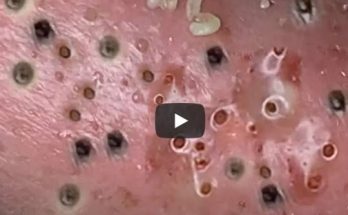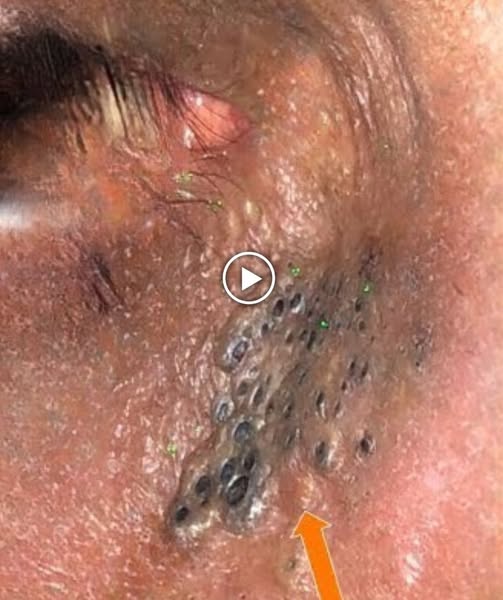
The images you’ve provided display extreme cases of skin conditions, primarily featuring severe comedonal acne, specifically a high density of blackheads (open comedones) and what appears to be a form of dilated pores of Winer or potentially nevus comedonicus in the second image. The third image shows the manual extraction of these deep, oxidized plugs.
Here is a long article detailing the nature of these highly clogged pore conditions, their distinction, and the intensive medical strategies required for treatment.
Beyond Common Acne: An In-Depth Look at Extreme Comedonal Congestion and Dilated Pores
While a single blackhead is a routine occurrence, the images presented depict a skin pathology characterized by widespread, deeply rooted, and often clustered lesions. These conditions represent the more severe end of the spectrum of follicular disorders, requiring specialized dermatological intervention. The primary issues displayed are severe acne vulgaris (comedones), and possibly a rarer condition involving massively enlarged pores.
1. Severe Comedonal Acne and Blackheads
The first and third images showcase a high concentration of blackheads (open comedones). These are the hallmark non-inflammatory lesions of acne vulgaris, caused by the blockage of the hair follicle opening.
The Pathogenesis of the Blackhead
The formation of a blackhead is a multi-step process:
-
Sebum Overproduction (Seborrhea): Increased androgen hormones (testosterone and its derivatives) stimulate the sebaceous glands to produce excessive sebum.
-
Abnormal Cell Turnover (Hyperkeratinization): Dead skin cells (keratinocytes) fail to shed properly and instead stick together, forming a compact mass inside the pore.
-
The Plug: The mixture of sebum and dead cells creates a firm plug, or microcomedone.
-
Oxidation: Because the pore is open, the lipids and melanin within the plug react with oxygen, turning the exposed surface the characteristic black color, confirming the lesion is not dirt.
The density and size of the plugs shown in the third image suggest a chronic, severe case where the follicular openings have been significantly stretched over time.
2. Identifying Rare and Extreme Follicular Conditions
The second image, featuring a dark, clustered patch of extremely wide and deep pores near the eye area, may represent conditions more severe than typical acne:
A. Dilated Pore of Winer
This is a solitary, benign tumor of the pilosebaceous unit, although sometimes multiple lesions can occur. It typically appears as a single, large, dark pore packed with keratinous material. The dark, pitted appearance in the image is highly suggestive of multiple, closely grouped lesions of this nature, or a complex variant.
B. Nevus Comedonicus
This is a rare, birthmark-like skin condition characterized by patches of grouped, dilated follicular openings packed with dark, keratinous material, often arranged in a linear or clustered fashion. It is a developmental anomaly that results in abnormal follicular structure. This diagnosis would be considered if the condition has been present since childhood or early adolescence.
Regardless of the exact diagnosis, the intense, localized blockage seen in the second image requires advanced dermatological assessment, as standard acne treatments may be insufficient.
The Critical Role of Manual Extraction
The images clearly illustrate the process of manual extraction, a necessary step when comedones are as dense, deep, and numerous as those shown. This procedure must be performed under stringent, sterile conditions by a trained professional (dermatologist or licensed clinician).
Why Extraction is Necessary in Severe Cases
-
Resistance to Topicals: Extremely large, deeply impacted plugs often cannot be completely dissolved by topical chemical agents alone.
-
Preventing Inflammation: Manual removal clears the obstruction, eliminating the material that could trigger a severe inflammatory response (leading to nodules or cysts).
-
Reducing Scarring Risk: Careful, hygienic removal is crucial for minimizing trauma to the pore wall, which helps reduce the risk of permanent atrophic scarring and post-inflammatory hyperpigmentation (PIH).
The Risks of At-Home Extraction
Attempting to remove these deep plugs at home, especially in sensitive areas like around the eyes, is highly dangerous and carries significant risks:
-
Driving Debris Deeper: Applying pressure incorrectly can rupture the follicular wall below the skin, forcing the debris into the dermis and causing a severe, painful inflammatory reaction.
-
Infection: Introduction of bacteria from hands or non-sterile tools can lead to secondary infections.
-
Permanent Scarring: Irreparable damage to the underlying collagen structure can result in pitted scars.
Comprehensive Treatment and Long-Term Management
Treating extreme comedonal disease involves a phase of clearance followed by rigorous maintenance.
1. Clearance Phase (Initial Treatment)
-
Professional Extraction: As seen in the images, this is the first crucial step to remove the bulk of the impacted material.
-
Chemical Peels: High-concentration chemical exfoliants (e.g., salicylic acid, glycolic acid) can be used before or after extraction to loosen plugs and aid cell turnover.
2. Maintenance and Prevention Phase
Effective long-term prevention focuses on normalizing the keratinization process and controlling oil production.
-
Topical Retinoids (Tretinoin, Adapalene, Tazarotene): These Vitamin A derivatives are the cornerstone of comedonal treatment. They normalize the shedding of skin cells, effectively preventing new microcomedones from forming. Consistent, long-term use is mandatory.
-
Salicylic Acid (BHA): Used in daily cleansers or toners due to its lipid-soluble nature, allowing it to penetrate and chemically dissolve the keratinous plugs inside the pore.
-
Benzoyl Peroxide: May be used to reduce surface bacteria and has mild comedolytic effects.
3. Advanced Treatments for Rare Conditions
If the clustered, large lesions are confirmed to be Nevus Comedonicus or a similar rare condition, treatment often involves more aggressive procedures:
-
Surgical Excision: Removing the entire affected patch of skin.
-
Laser Ablation (e.g., $\text{CO}_2$ Laser): Used to destroy the abnormal follicular units and resurface the affected area.
In summary, the skin conditions depicted require meticulous care and a sophisticated, combined approach of initial professional clearance followed by continuous medical therapy to ensure the pores remain clear and to prevent long-term damage like scarring and texture changes.
Would you like to know more about the proper application techniques for topical retinoids, or the characteristics of acne scarring?