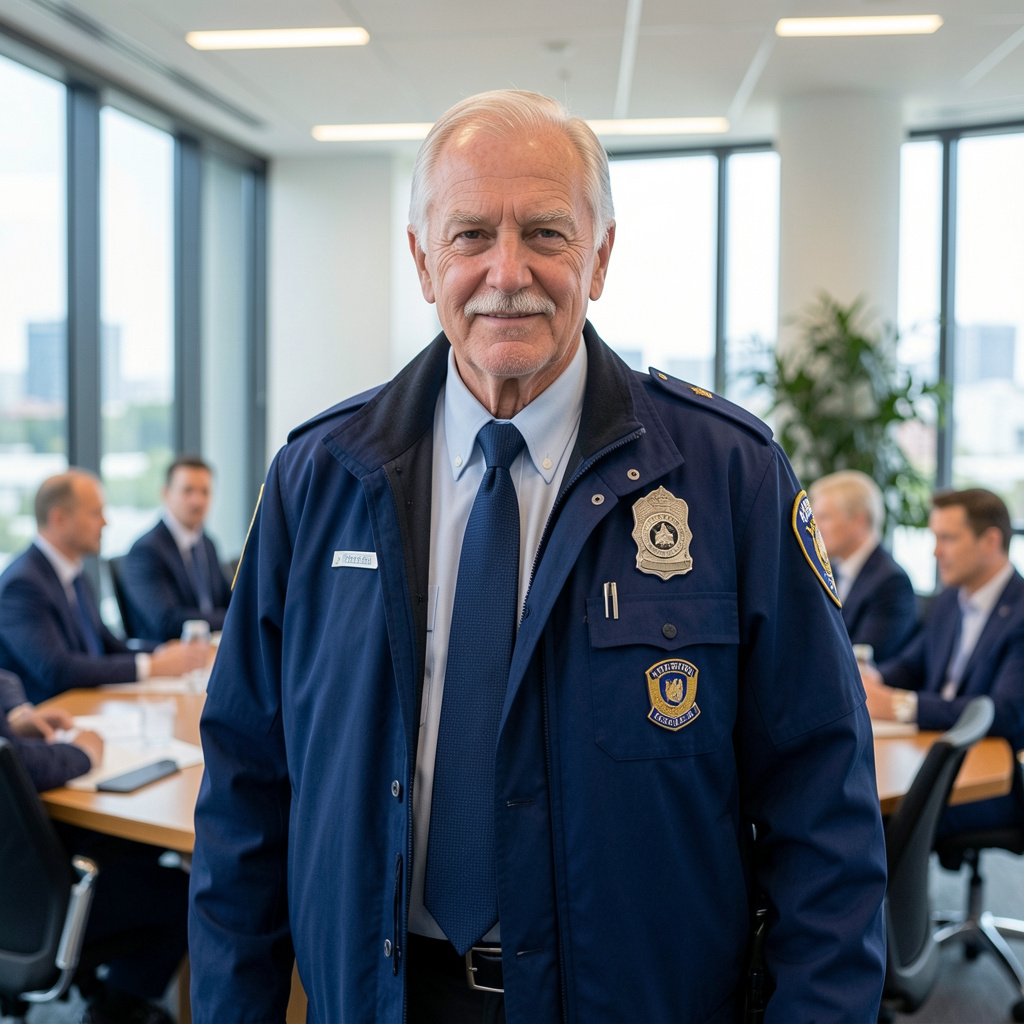
For thirty-two years, I wore the same kind of shoes to work.Black. Comfortable. Cheap enough that nobody would notice if I scuffed them.
I worked security at one of the biggest department stores in Flint, Michigan.
I won’t name the store because, even after everything that happened, I don’t want the story to become about a corporation’s name.
I want it to be about something else.Respect.
Because after thirty-two years, I learned that respect isn’t what somebody gives you when they need you.It’s what they show you when they don’t.
And the morning I walked into that district meeting, I was about to find out exactly how much respect my company had for the man who had protected its customers for more than three decades.
My name is Walter Hayes.
I was sixty-two years old when they called me a thief.
I’d spent most of my working life catching thieves.I knew the faces.The nervous kid pretending to browse electronics.The woman with an oversized purse who kept checking whether anyone was watching.
The teenagers who came in groups because one would distract an employee while another slipped something into a backpack.
I knew all the tricks.
But more importantly, I knew when somebody was simply having a bad day.
That mattered.My job wasn’t to humiliate people.It was to keep people safe.Over thirty-two years, I probably caught more shoplifters than I could count. I broke up fights.
I called ambulances. I helped lost children find their mothers. I walked elderly customers to their cars when the parking lot was dark.
There was one woman named Mrs. Donnelly who used to shop every Thursday.
She was eighty-four, tiny, and stubborn.
Every Thursday at 7:15 p.m., she’d come out of the store with two bags of groceries and insist she didn’t need an escort.
Every Thursday I’d say, “And every Thursday I’m walking you to your car anyway.”
She’d roll her eyes.
Then she’d smile.
“You just like having someone to boss around, Walter.”
“That’s exactly right.”
People laughed when they saw us.
I became part of the store.
Not management.
Not corporate.
Just Walter.
The security guy.
The one standing near the entrance.
The one who knew which register was always short on change.
The one who noticed when a customer looked confused.
The one managers called when something went wrong.
For years, they trusted me with things they didn’t trust other employees with.
Keys.
Cameras.
Alarm systems.
Cash-office access.
Confidential incidents.
I never complained.
I believed loyalty went both ways.
Apparently, I was wrong.
It happened on a Tuesday.
I remember that because Tuesdays were usually slow.
At about 9:40 in the morning, the regional manager, a man named Richard Cole, arrived unexpectedly.
Richard had been with the company for less than three years.
He was younger than my oldest son.
He wore expensive suits and always looked like he was in a hurry to get somewhere more important than wherever he was standing.
He shook hands with the store manager, asked about sales numbers, and then disappeared into the back office.
I didn’t think much of it.
Around noon, the front-end manager came looking for me.
“Walter, Richard wants you in the office.”
I walked in.
Richard was sitting behind the store manager’s desk.
The store manager, Linda, stood against the wall.
There was another person there too.
A young employee named Tyler.
Tyler had been working in the store for about six weeks.
He was nineteen.
Nice kid.
Quiet.
Always seemed nervous.
Richard folded his hands on the desk.
“We’re missing five hundred dollars from the cash office.”
I looked at Linda.
Then Tyler.
Then Richard.
“Okay,” I said. “When did it disappear?”
“Yesterday.”
“Who had access?”
Richard stared at me.
“That’s what we’re discussing.”
I immediately felt something was wrong.
I asked to see the footage.
Richard shook his head.
“We don’t need to.”
That was the moment I knew.
“You don’t need to?”
“No.”
“Then what do you need?”
He leaned back.
“You had access to the cash office.”
I stared at him.
“So did Tyler.”
Richard didn’t even blink.
“Tyler’s access was temporary.”
“Who gave him the key?”
Silence.
Linda looked at the floor.
Richard finally said, “I did.”
I laughed once.
Not because anything was funny.
Because sometimes your brain makes a sound when it can’t believe what your ears are hearing.
“So you gave a nineteen-year-old employee a key to the cash office, five hundred dollars went missing, and you’re accusing me?”
Richard’s face hardened.
“You’ve been with this company a long time.”
“Thirty-two years.”
“I know.”
“Then you know I wouldn’t steal five hundred dollars.”
He leaned forward.
“I know you had access.”
“That’s not the same thing.”
“We’re not going to argue semantics.”
“I want the footage.”
“No.”
“I want the footage.”
Richard’s voice became colder.
“You need to understand something, Walter. This isn’t a courtroom.”
“No,” I said. “It’s my job.”
He stood.
“You had access to that office, so the theft is yours.”
Linda’s eyes widened.
I looked at her.
She didn’t say anything.
Then Richard said the words that would stay with me for the rest of my life.
“Sign the resignation, or I bring in the real police and let them cuff you in front of every person in this building.”
The door was open.
People could hear.
Front-end employees.
Cashiers.
Managers.
Customers walking past.
Thirty-two years of service reduced to one accusation.
I looked at Richard.
Then at Linda.
Then at Tyler.
Tyler wouldn’t look at me.
I understood something then.
This wasn’t an investigation.
It was a decision.
They had already decided who would take the blame.
And they needed me gone.
I took off my security badge.
I placed it on the desk.
“I understand.”
Richard looked surprised.
Maybe he expected me to scream.
Maybe he wanted me to.
Instead, I walked out.
The front-end went silent.
I could feel people watching me.
One cashier covered her mouth.
Another looked like she was about to cry.
I walked through those automatic doors for the last time.
I didn’t turn around.
At home, I sat in my truck for almost twenty minutes.
My wife, Carol, had died six years earlier.
The house was quiet.
Too quiet.
I finally walked inside.
I hung my coat on the chair.
Then I sat at the kitchen table.
For thirty-two years, I’d come home with stories.
That day, I had only one.
“They called me a thief.”
My daughter, Melissa, arrived an hour later.
She took one look at me.
“What happened?”
I told her.
She stared at me.
“Did they actually accuse you?”
“Yes.”
“Did they show you evidence?”
“No.”
“Did they call the police?”
“No.”
“Did they show you the camera footage?”
“No.”
She slammed her hand on the table.
“Dad.”
“I know.”
“No, you don’t understand. They’re trying to get rid of you.”
I looked at her.
“I think you’re right.”
She sat down.
“Why?”
I didn’t answer immediately.
Then I remembered something.
Three months earlier, Richard had come into the store and asked about my pension.
Not directly.
He’d said, “You’ve been here a long time, Walter. Ever think about slowing down?”
I’d laughed.
“I’ve got another three years.”
He smiled.
“Sometimes people don’t realize when it’s time.”
At the time, I’d thought he was making conversation.
Now I understood.
My pension was expensive.
A thirty-two-year employee with benefits was worth more to the company gone than present.
Especially if they could make me leave voluntarily.
Or make it look like I had stolen.
That night, Melissa said something that changed everything.
“Dad, don’t fight them emotionally.”
“What do you mean?”
“Fight them with paperwork.”
She was right.
The next morning, I started writing everything down.
Every date.
Every conversation.
Every person who had access to the cash office.
Every time Tyler had been seen near the office.
Every time Richard had discussed my retirement.
I wrote down the names of witnesses.
I wrote down exactly what Richard had said.
I wrote down where everyone had been standing.
I wrote down the time.
And then I remembered something.
The district meeting.
The company held an open district meeting on the second Tuesday of every month.
Any employee could stand up and speak.
Management hated those meetings.
They liked them when everyone talked about sales.
They didn’t like them when employees talked about problems.
The next meeting was Tuesday.
I looked at the calendar.
Five days.
Melissa asked, “What are you going to do?”
“I’m going to the meeting.”
“Dad, they might not let you in.”
“They can’t stop me.”
“You don’t work there anymore.”
“No.”
I looked at her.
“But I’m still an employee until they finish processing my resignation.”
She smiled.
“Did you sign it?”
“No.”
“Then you’re not resigned.”
That was when I realized something important.
I had never signed the resignation.
I had handed over my badge.
Nothing more.
They had told me to resign.
I hadn’t.
The company had simply treated my leaving as resignation.
So Monday morning, I called human resources.
I said one sentence.
“I have not resigned.”
The woman on the phone became very quiet.
Then she said, “Mr. Hayes, we’ll have someone contact you.”
Nobody called.
Instead, an email arrived.
It said I was under investigation for “loss of company property.”
No mention of theft.
No mention of police.
Just vague corporate language.
I printed it.
Then I printed every pay stub I had.
Every performance review.
Every commendation.
Every employee award.
I found one certificate from 1998.
“Outstanding Commitment to Customer Safety.”
Another from 2007.
“Employee of the Year.”
Another from 2019.
“Thirty Years of Service.”
I put them all in a folder.
Tuesday morning came.
I put on my good jacket.
The same jacket I’d worn to my daughter’s wedding.
I drove to the district office.
My hands were shaking.
Not because I was afraid.
Because I was angry.
There were dozens of employees in the room.
Store managers.
Cashiers.
Assistant managers.
Security officers.
Regional executives.
And Richard.
He looked at me when I walked through the door.
His face went pale.
“Walter.”
“Richard.”
“You shouldn’t be here.”
“I disagree.”
He walked toward me.
“This meeting is for current employees.”
“I never resigned.”
His jaw tightened.
“I’ll have HR deal with you.”
“I’d prefer that.”
He walked away.
The meeting began.
Sales numbers.
Customer satisfaction.
Shrink percentages.
New policies.
Everyone sat quietly.
Then the district director said, “We have time for employee comments.”
Nobody moved.
He looked around.
“Anyone?”
I stood.
The room became silent.
I walked toward the microphone.
My hands stopped shaking.
“My name is Walter Hayes.”
A few people smiled.
Some looked confused.
I continued.
“I worked security for this company for thirty-two years.”
Someone in the back whispered, “I know him.”
I looked at the district director.
“Five days ago, I was accused of stealing five hundred dollars.”
The room changed.
People started looking at Richard.
He shifted in his chair.
I continued.
“I was told that because I had access to the cash office, the theft was mine.”
I paused.
“I asked to see the footage.”
The district director looked at Richard.
Richard said, “This isn’t appropriate.”
I ignored him.
“I was refused.”
Then I said the sentence I’d been carrying all week.
“I was told to sign a resignation or be arrested in front of my coworkers.”
Silence.
Absolute silence.
Then the district director asked, “Richard, is that accurate?”
Richard stood.
“There’s more to this.”
“I agree,” I said.
I opened my folder.
“I have the names of every person who had access to that cash office.”
Richard’s face changed.
“And I have copies of my employment record.”
I held up the stack.
“Thirty-two years. No theft. No disciplinary action. No written warning for dishonesty. Not one.”
I looked at the employees.
“Do you know what I did have?”
Nobody answered.
“Thirty-two years of people trusting me.”
My voice cracked slightly.
“I walked your mothers and grandmothers to their cars.”
A woman in the front row started crying.
“I found lost children.”
A cashier covered her face.
“I stood between teenagers and fights.”
I looked directly at Richard.
“And I protected this company from thieves.”
Then I pulled out another sheet.
“This is the security access report from the day the five hundred dollars disappeared.”
Richard stood up.
“Where did you get that?”
I smiled.
“I requested it.”
The district director took the paper.
His eyes moved across the page.
Then stopped.
“What’s this?”
I answered.
“Tyler’s key access.”
Richard said, “That’s irrelevant.”
“No.”
I looked at Tyler, who was sitting near the back.
“It’s very relevant.”
The district director looked at the report again.
“Tyler accessed the cash office at 11:14 p.m.”
Everyone looked at Tyler.
Tyler’s face went white.
Richard immediately said, “He had authorization.”
“From you,” I said.
Richard said nothing.
I reached into my folder.
“And there’s something else.”
I placed another document on the table.
A copy of the security footage log.
“The footage wasn’t deleted.”
The district director looked at me.
“What?”
“According to the system, the footage was archived.”
Richard’s expression collapsed.
I said, “I couldn’t access it after they took my badge. But I knew the system well enough to know exactly where the footage would be.”
The district director turned to IT.
“Get that footage.”
A technician left the room.
Nobody spoke.
Ten minutes later, he returned with a laptop.
He connected it to the projector.
The video appeared.
Black-and-white.
Timestamped.
11:12 p.m.
Tyler entered the cash office.
He looked around.
Then he opened the drawer.
He removed an envelope.
Five hundred dollars.
He put it inside his jacket.
Then he left.
The room erupted.
Tyler started crying.
Richard sat completely still.
The district director turned toward him.
“You knew he had access?”
Richard didn’t answer.
“You gave him the key?”
Silence.
Then Tyler spoke.
“I was told to.”
Everyone looked at him.
Richard stood.
“That’s a lie.”
Tyler shook his head.
“No.”
His voice trembled.
“You told me Walter was being retired.”
My stomach dropped.
Tyler continued.
“You said the company wanted him gone and that if there was a problem, you would handle it.”
Richard said, “Stop talking.”
Tyler looked terrified.
“You told me to take the money.”
The room went silent again.
Richard stared at him.
“You have no idea what you’re saying.”
Tyler began to cry.
“You said it was only five hundred dollars.”
I looked at Richard.
Suddenly, the entire story made sense.
The missing money wasn’t the plan.
It was the excuse.
Richard wanted me gone.
He needed a reason.
Tyler was supposed to create one.
But Richard had underestimated two things.
The security system.
And thirty-two years of my knowing how that system worked.
The district director asked security to call the police.
This time, I didn’t object.
The police arrived.
They reviewed the footage.
They interviewed Tyler.
They took statements.
They asked me if I wanted to press charges against the company.
I said, “I want the truth documented.”
That was enough.
Within two weeks, Richard was gone.
Tyler confessed.
He said Richard had promised him a permanent position and told him Walter would never be able to prove anything.
The company eventually admitted that the investigation against me had been improper.
They reinstated my employment record.
They restored my pension.
They apologized.
But something strange happened after that.
I didn’t want my old job back.
I had spent thirty-two years protecting a company.
Now I realized I wanted to protect people.
So I accepted a settlement and retired on my own terms.
My pension was secure.
My reputation was intact.
But the best part came six months later.
I was sitting in a coffee shop when a woman walked up to me.
I didn’t recognize her at first.
Then she smiled.
“Mr. Hayes?”
I looked up.
“Yes?”
“I’m Mrs. Donnelly’s granddaughter.”
I smiled.
“How is she?”
“She passed away last year.”
My smile disappeared.
“I’m sorry.”
She reached into her purse.
“Before she died, she told me to give you this if I ever saw you.”
She handed me a small envelope.
Inside was a handwritten note.
Walter,
You always walked me to my car even when I told you I didn’t need you to.
You said your job was to make people feel safe.
You did.
Don’t ever let one dishonest man make you think those thirty-two years meant nothing.
They meant something to me.
They meant something to my family.
And I know they meant something to a lot of people.
Thank you.
I sat there for a long time.
Then I folded the letter carefully.
I keep it in my desk today.
Because that’s the part of the story I remember most.
Not the five hundred dollars.
Not Richard.
Not the meeting.
Not even the footage.
I remember what it felt like to walk into that district office thinking I had lost everything.
And then looking around that room and realizing something.
A job can be taken away.
A badge can be taken away.
A paycheck can be taken away.
But thirty-two years of doing the right thing?
Nobody can take that.
A few months after I retired, the store called me.
They were having a customer appreciation event.
The manager asked if I’d come.
I almost said no.
Then I remembered all the people I’d helped over the years.
So I went.
When I walked through the doors, people began clapping.
Not politely.
Not because management told them to.
They stood.
Cashiers.
Stockroom workers.
Managers.
Customers.
Even people I’d never met.
Mrs. Donnelly’s granddaughter was there.
She smiled at me.
The store manager handed me a small plaque.
It read:
Walter Hayes
32 Years of Service
Protecting Our Customers
Protecting Our People
Protecting What Was Right
I looked at it.
Then I laughed.
“That’s too much.”
The manager shook his head.
“No, Walter. It’s not enough.”
I took the plaque.
And for the first time since that terrible Tuesday, I felt the weight in my chest disappear.
I hadn’t lost my dignity.
They had only tried to convince me I had.
There’s a difference.
I still drive past that store sometimes.
I see the parking lot.
The entrance.
The security desk.
The spot where I stood for thousands of hours.
Sometimes I wonder what would have happened if I’d signed that resignation.
If I’d gone home and stayed quiet.
If I’d let five hundred dollars destroy thirty-two years of my life.
But then I remember something my daughter told me that week.
“Fight them with paperwork.”
She was right.
Because facts don’t get tired.
Facts don’t get embarrassed.
Facts don’t care how expensive someone’s suit is.
And facts don’t care how badly somebody wants you gone.
The truth waits.
Sometimes it waits in a security camera.
Sometimes it waits in an access log.
Sometimes it waits in a frightened nineteen-year-old’s confession.
And sometimes it waits in the memory of every person who watched you do the right thing for thirty-two years.
I was called a thief.
In front of everyone.
For five hundred dollars.
But when the truth finally came out, nobody remembered the five hundred.
They remembered Walter.
The security guard who walked old ladies to their cars.
The guy who broke up fights without throwing a punch.
The man who found lost children.
The employee who never raised his voice unless somebody was in danger.
The man who protected people.
And that’s when I finally understood something.
My badge had never made me who I was.
Thirty-two years of doing the right thing did.
They could take the badge.
They could take the uniform.
They could take the job.
But they couldn’t take that.
And neither could Richard Cole.
Not for five hundred dollars.
Not for five million.
Not for anything.