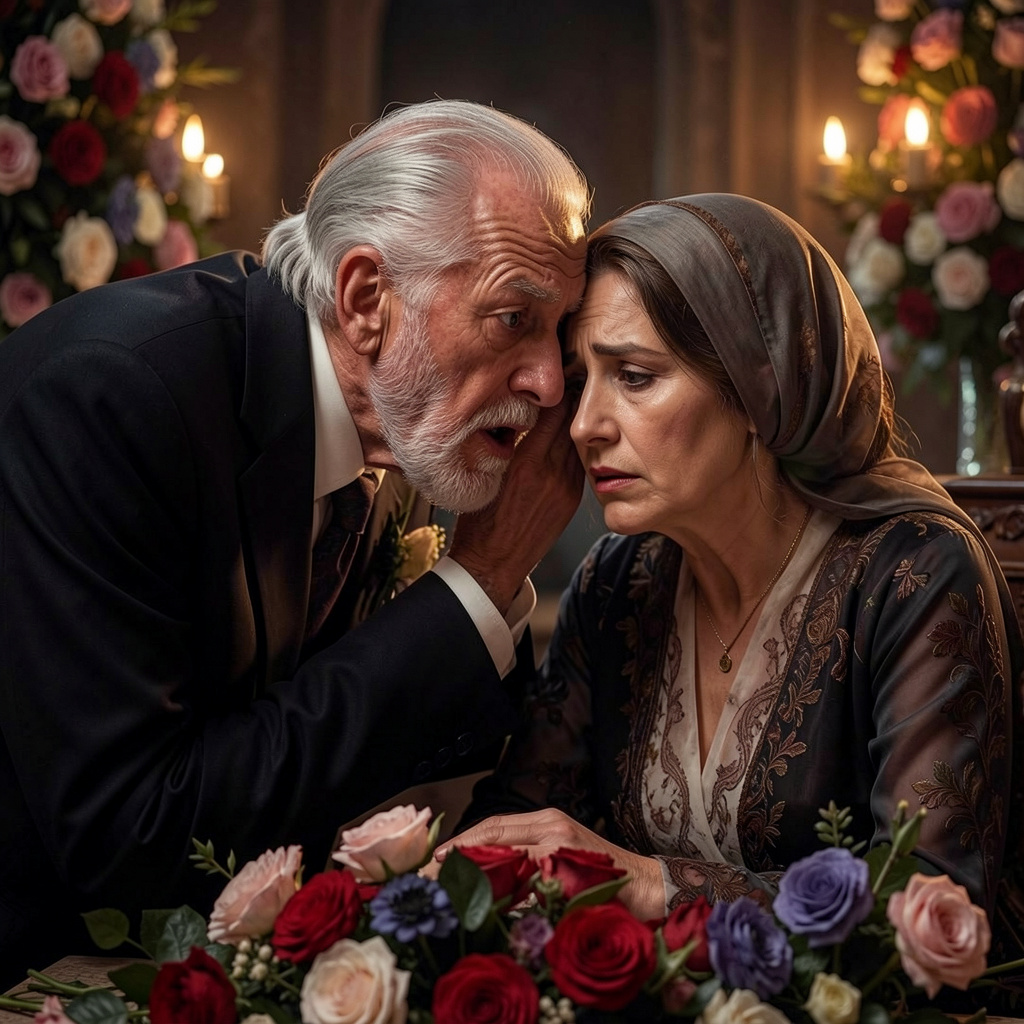
It was a chilly October morning when I stood in the back of the church, staring at the polished oak casket that held the man I had loved, hated, forgiven, and divorced.
Troy Anderson.
My husband for thirty-six years.
My ex-husband for just over two.
The irony wasn’t lost on me. We had ended our marriage believing we’d finally become strangers, yet here I was, wearing black, clutching a single white rose, grieving as though the divorce papers had never existed.
People whispered as they passed.
“She came.”
“Of course she came.”
“They were together almost their whole lives.”
None of them knew the whole story.
Neither did I.
Troy had been part of my life since we were five years old.
Our families lived in neighboring houses in a quiet Ohio neighborhood where children rode bicycles until sunset and everyone knew everyone else’s business.
He was the skinny boy who climbed my father’s apple tree without permission.
I was the little girl who chased him with a garden hose after he stole my lunch.
By middle school, we were inseparable.
By high school, everyone assumed we’d marry.
They were right.
At twenty years old, standing in my mother’s tiny church wearing a borrowed wedding dress, I looked into Troy’s blue eyes and believed we would spend forever together.
For a very long time, we did.
We weren’t wealthy.
Troy worked construction.
I became an elementary school teacher.
We bought a modest three-bedroom house with peeling paint and a backyard that flooded every spring.
Together we fixed it.
Every paycheck went toward something.
A leaking roof.
The children’s braces.
College savings.
Unexpected car repairs.
Life wasn’t glamorous.
It was ordinary.
And ordinary was beautiful.
We raised two incredible children, Emma and Luke.
Every Christmas, Troy insisted on stringing lights around the roof himself despite my annual warnings that he’d fall.
Every summer, we’d drive to the same lake cabin we’d rented since our honeymoon.
Every anniversary, he’d leave a handwritten note inside my coffee mug.
Small traditions became the foundation of our marriage.
Or so I thought.
Things changed after retirement.
Not dramatically.
Quietly.
Almost invisibly.
The children moved away.
The house became too silent.
Conversations became shorter.
We stopped laughing over dinner.
Stopped reaching for each other’s hands.
We became roommates sharing memories instead of creating new ones.
I suggested counseling.
He agreed.
For nearly a year, we tried.
The therapist asked difficult questions.
“What do you need from each other?”
Neither of us seemed able to answer.
Eventually Troy looked across the therapist’s office and quietly said,
“I think we’ve spent our whole lives taking care of everyone else and forgot how to take care of us.”
It wasn’t cruel.
It was honest.
Two months later we signed the divorce papers.
No screaming.
No cheating.
No betrayal.
Just two exhausted people acknowledging that love sometimes changes shape.
Friends called it “the most peaceful divorce they’d ever seen.”
Peaceful didn’t mean painless.
I cried every night for months.
Even after the divorce, Troy remained part of my life.
We shared holidays with the children.
Celebrated birthdays together.
Texted pictures of the grandchildren.
Sometimes he’d stop by to fix something around my house before I even realized it needed repairing.
Our relationship transformed into something resembling old friendship.
Comfortable.
Familiar.
Bittersweet.
Then, one rainy Tuesday morning, Emma called.
“Mom…”
The moment I heard her voice, I knew.
“Dad had a heart attack.”
He’d been driving home from volunteering at Habitat for Humanity.
His truck drifted gently onto the shoulder.
By the time paramedics arrived…
He was gone.
Sixty-one years old.
Just like that.
The funeral drew hundreds of people.
Former coworkers.
Neighbors.
Friends.
People whose homes he’d helped build decades earlier.
Everyone had a story about Troy.
“He repaired my porch and refused payment.”
“He shoveled my driveway after my surgery.”
“He secretly paid my son’s football fees.”
I smiled politely.
Some stories I’d heard before.
Others surprised me.
Apparently my ex-husband had spent years quietly helping people without telling anyone.
That sounded exactly like Troy.
The reception afterward was held at the church hall.
Coffee.
Sandwiches.
Too many casseroles.
Too much silence.
Troy’s father, Harold, sat alone nursing what was definitely not his first glass of whiskey.
At eighty-seven, grief and alcohol had loosened his tongue.
As I walked past, he reached out and grabbed my wrist.
“You have no idea what he did for you, do you?”
I frowned.
“What do you mean?”
He looked toward the ceiling before whispering,
“He promised me he’d never tell.”
Something inside me tightened.
“What are you talking about?”
Harold leaned closer.
“The scholarship.”
I blinked.
“What scholarship?”
He stared at me in disbelief.
“He really never told you.”
My mind drifted back forty years.
The summer after our wedding.
I’d been accepted into a prestigious graduate program for education.
Then my father suffered a stroke.
Medical bills piled up.
I quietly gave up my dream.
A week later, I received an anonymous scholarship covering every expense.
The letter simply read:
“Someone believes in your future.”
I spent two years earning my master’s degree.
It transformed my career.
Eventually I became principal of Lincoln Elementary.
I’d always believed the scholarship came from an educational foundation.
Harold shook his head.
“Troy worked three jobs.”
I stared.
“No.”
“He worked construction during the day, stocked grocery shelves at night, and cleaned office buildings on weekends.”
I felt dizzy.
“He told everyone he liked staying busy.”
Harold wiped his eyes.
“He sold his motorcycle too.”
The motorcycle.
His pride and joy.
He’d claimed the engine had become unreliable.
He’d lied.
“He used every penny to create that scholarship under someone else’s name because he knew you’d never accept the money if you knew it came from him.”
My knees nearly gave out.
That night I couldn’t sleep.
I searched through old photo albums.
There he was.
Always smiling.
Always tired.
How had I never noticed?
Had I been so consumed with work and motherhood that I’d missed the sacrifices standing directly beside me?
The next morning Emma knocked on my door carrying a cardboard box.
“Dad wanted you to have this.”
Inside were journals.
Neatly dated.
Spanning nearly twenty years.
I hesitated before opening the first.
The handwriting was unmistakably Troy’s.
June 18.
Linda received her scholarship today.
She cried.
She thinks luck finally found her.
I wanted to tell her it wasn’t luck.
It was love.
But she’d only argue.
I don’t mind working nights.
Seeing her smile is worth every aching muscle.
My tears blurred the ink.
I kept reading.
One entry described skipping lunch for months so we could afford Emma’s piano lessons.
Another explained how he’d repaired neighbors’ homes for free because “everyone deserves a safe place to sleep.”
Then I found an entry dated just weeks before our divorce.
Linda thinks we’ve fallen out of love.
Truth is…
I’m just tired.
Not tired of her.
Tired of pretending my heart still works the way it used to.
The doctor says my arteries are narrowing again.
I didn’t tell her.
She deserves freedom, not another hospital room.
My breath caught.
Again?
I dug through the remaining journals until I found the explanation.
Years earlier, Troy had suffered a minor heart attack while working out of town.
He recovered quickly.
He told almost no one.
Not even me.
The doctors warned him that his heart disease would likely return.
Instead of burdening the family, he’d quietly managed medications and appointments around my work schedule.
Why?
Why wouldn’t he tell me?
The answer came three pages later.
She already sacrificed enough dreams for our family.
I’m not asking her to sacrifice retirement too.
If my health worsens, I want her to be free to travel, enjoy the grandchildren, and finally live for herself.
If staying married makes her feel obligated to spend her life taking care of me…
Then letting her go might become the last loving thing I can do.
I dropped the journal.
The room spun.
Our divorce.
The counseling.
The emotional distance.
Had it all been…
Intentional?
I confronted Harold the next day.
“You knew?”
He nodded sadly.
“I begged him to tell you.”
“Why didn’t you?”
“He made me promise.”
“He let me believe our marriage failed.”
Harold looked heartbroken.
“No.”
“He believed ending it would save you years of watching him slowly die.”
I cried harder than I had at the funeral.
Not because he’d died.
Because he’d carried such enormous love completely alone.
A week later I visited the lawyer handling Troy’s estate.
“There is one more item,” she said gently.
She slid an envelope across the desk.
My name was written in familiar handwriting.
Linda,
If you’re reading this, then my stubborn heart finally quit.
First…
I’m sorry.
Not for loving you.
Never for that.
I’m sorry for convincing you that our story ended because love disappeared.
It never did.
I just couldn’t bear becoming another responsibility.
You spent thirty-six years carrying this family beside me.
You earned peace.
I hoped divorce would give you permission to build a life untouched by hospitals and medications.
Maybe it was selfish.
Maybe I underestimated your strength.
If I hurt you…
I’m sorry.
Please don’t spend whatever years you have left mourning what we lost.
Remember what we built.
Two beautiful children.
Four incredible grandchildren.
Thousands of ordinary days that became an extraordinary life.
And one more thing.
Check the bottom drawer of my old workshop.
Love always,
Troy.
His workshop smelled exactly as it always had.
Sawdust.
Motor oil.
Coffee.
The bottom drawer held a worn wooden box.
Inside were hundreds of handwritten notes.
Every anniversary letter.
Every birthday card he’d planned but never given.
Tiny observations collected over decades.
“Linda laughed in her sleep tonight.”
“She still sings while making pancakes.”
“She thinks I don’t notice when she leaves the bigger piece of pie for me.”
There were also photographs.
Not posed ones.
Candid moments.
Me gardening.
Reading.
Holding newborn Emma.
Dancing barefoot in the kitchen.
On the very bottom rested a single folded paper.
It was the first note he’d ever written me.
Age twelve.
Do you think we’ll always be friends?
I smiled through tears.
He’d kept it for nearly fifty years.
Months passed.
Grief softened into gratitude.
One spring afternoon Emma suggested creating something in Dad’s memory.
“What if we continue the scholarship?”
Luke agreed immediately.
We gathered donations from family, old coworkers, and people whose lives Troy had quietly touched.
The response overwhelmed us.
Within six months we established the Troy Anderson Quiet Kindness Scholarship.
Not for top grades.
Not for athletic achievement.
For students who consistently helped others without expecting recognition.
Exactly as Troy had lived.
Every year, when I hand that scholarship to another young person, I tell them only one thing.
“The greatest acts of love are often the ones nobody ever sees.”
I never mention the motorcycle.
Or the three jobs.
Or the secret sacrifices.
Those belong to him.
Sometimes I visit his grave.
Not because I’m trapped in the past.
Because gratitude deserves somewhere to go.
I bring fresh flowers.
Sit quietly.
Tell him about the grandchildren.
About Emma’s promotion.
Luke’s new house.
The scholarship recipients.
The ordinary moments he’d have loved.
I once believed our marriage ended in failure.
Now I understand something entirely different.
Love isn’t measured by how long two people remain married.
It’s measured by the quiet choices they make every single day, especially the ones no one else ever notices.
Troy spent his life choosing me.
Even when I didn’t know it.
Even when it cost him sleep, comfort, dreams, and finally the chance to let me stand beside him through his final battle.
His father was right.
I had no idea what he had done for me.
Now I do.
And if there’s one lesson our story leaves behind, it’s this:
Sometimes the deepest love isn’t spoken aloud. It is hidden inside sacrifices, carried in silence, and only fully understood long after the person who made them is gone. Yet once revealed, that love doesn’t end. It becomes a light that continues to guide everyone left behind.