The Sterling Estate in Connecticut was less a home and more a monument to old money. It was a sprawling, Gothic-revival fortress of cold marble floors, vaulted ceilings, and corridors that echoed with centuries of unearned arrogance. I moved through those shadowed hallways like a ghost haunting my own life, my hand perpetually resting beneath the heavy, agonizing weight of my nine-month pregnant belly. My lower back throbbed with a dull, relentless ache, but I didn’t dare stop to rest. In this house, every floorboard that creaked beneath my weight felt like a mortal sin.
I don’t belong here, I thought, pressing my palm against the chill of a stone pillar as a Braxton-Hicks contraction tightened my stomach. I am a trespasser in my own marriage. In the grand dining room, the air was suffocatingly thick with the scent of silver polish and expensive Earl Grey. My mother-in-law, Eleanor Sterling, sat at the head of the mahogany table, draped in a vintage Chanel suit that likely cost more than the modest, middle-class suburban home I grew up in. She didn’t look up from her tablet as I crossed the threshold.
I swallowed the hot lump of humiliation in my throat, forcing my eyes to the floor. I had learned early on that defending myself only prolonged the torture. I was the “gold digger,” the commoner who had somehow ensnared her only son and polluted the pristine Sterling bloodline.
Just then, the heavy oak doors opened, and my husband, Caleb, walked in. He was a jarring contrast to the oppressive formality of the room. Wearing a faded gray hoodie, soft denim jeans, and carrying a small silver tray with my prenatal vitamins and a glass of water, he looked like a college student who had wandered into a museum.
Eleanor sneered, the corners of her perfectly painted lips curling in disgust. “Look at you,” she spat, her eyes raking over his casual clothes. “Jobless, aimless, tethered to a commoner. You spend your days hovering over her like a nursemaid. You should have married the Rothschild girl. At least she knows how to walk without announcing her presence to the entire county.”
Caleb didn’t flush with anger. He didn’t raise his voice. He just smiled—a small, enigmatic, almost pitying curve of his lips that never quite reached his eyes. He turned his back on the matriarch of the Sterling empire, gently cupping my face and pressing a warm kiss to my forehead.
He handed me the water glass. “I have to run a brief errand. I’ll be back in an hour to help you pack your hospital bag. Just rest.”
I nodded, watching him walk out. The moment the front door clicked shut, the temperature in the room seemed to drop ten degrees. I turned to leave the dining room, desperate for the sanctuary of our bedroom.
As I reached the doorway, I glanced back. Eleanor was standing up, her manicured hands gripping the edge of the mahogany table. Her eyes were narrowed, fixed on the doorway Caleb had just exited, gleaming with a dark, predatory calculation that made the hair on the back of my neck stand up.
“This farce ends today,” she whispered to the empty room.
The Gravity of Malice
The silence of the house pressed against my eardrums as I carefully navigated the grand, sweeping staircase later that afternoon. My throat was parched, and I was heading down to the kitchen for ice water. The marble steps were wide and slick, and I kept a death grip on the polished mahogany banister. My baby was restless, kicking sharply against my ribs.
Just a few more days, I told myself, taking it one agonizing step at a time. Just a few more days and he’ll be here, and we can leave this awful place.
I was halfway down, twelve steps from the foyer floor, when I heard the sharp, rhythmic click of Eleanor’s heels behind me on the landing. I didn’t turn around. I just tried to move a little faster, to get out of her way.
Suddenly, a sharp, violent shove caught me squarely between the shoulder blades.
The world tilted violently on its axis. My hand was ripped from the banister. For a split second, I was suspended in the cold air, my mind unable to comprehend the sheer impossibility of what was happening. Then, gravity reclaimed me.
I tumbled down the twelve marble steps. The world became a chaotic blur of white stone, shattering pain, and sickening impacts. My shoulder hit first, then my hip, and then, with a terrifying, hollow thud, the side of my heavy abdomen struck the sharp edge of a stair. Every impact was a jagged bolt of pure agony tearing through my flesh and bone.
I landed at the bottom in a crumpled, broken heap. I couldn’t breathe. The wind had been entirely knocked out of my lungs, replaced by a searing, white-hot fire radiating from my stomach. I gasped, my vision swimming with black spots, as a terrifying warmth began to pool beneath me, staining the pristine white stone of the foyer a brilliant, horrifying crimson.
My baby. Oh god, my baby.
From above, the rhythmic clicking of heels resumed, unhurried and steady, like the ticking of a metronome counting down my final seconds. Eleanor stepped gracefully down the stairs, carefully avoiding the smears of my blood.
She knelt beside me, the scent of Chanel nauseatingly strong. But she didn’t reach out to help. She didn’t check my pulse. She leaned in close, her face hovering inches from mine, her breath cold against my ear.
“I told you that you walked too loud,” Eleanor hissed, her eyes completely devoid of human empathy. “Now, you’ve finally stopped.”
I tried to speak, to beg for help, but only a wet, copper-tasting bubble of blood slipped past my lips.
“Listen closely, girl,” she whispered, her voice a venomous rasp. “Lose the baby or lose your life; my son needs a wealthy wife to save this legacy, not a breeder from the suburbs. If the fall didn’t do it, I’ll make sure the surgeons finish the job.”
My eyes began to roll back in my head. Through the dimming tunnel of my vision, I watched her stand up. She calmly pulled her phone from her pocket and dialed 911. As the line connected, her face twisted into a grotesque mask of theatrical grief, her voice pitching up into a flawless imitation of a hysterical, terrified grandmother-to-be.
“Help! Please, my daughter-in-law! She fell down the stairs!”
The distant wail of sirens bled into the roaring in my ears. As the paramedics finally burst through the heavy oak doors and began frantically loading my broken body onto a stretcher, my consciousness tethered by a thread, Eleanor leaned over me one last time, brushing a strand of sweaty hair from my face for the benefit of the EMTs.
Under the guise of a comforting whisper, she delivered her final sentence: “Don’t bother waking up.”
The Hallway of Giants
I would learn later, piecing together the fragmented nightmares of my emergency surgery and the hushed, terrified testimonies of the hospital staff, exactly what transpired while I was being sliced open to save my dying child.
Eleanor sat in the VIP surgical waiting room of St. Jude’s Medical Center, her posture impeccable, crossing her legs at the ankle. She casually checked her reflection in a gold-plated compact mirror, wiping a microscopic smudge of my blood from her designer shoe. With steady hands, she pulled out her phone and sent a discreet, coded message to Vivienne Astor, the heiress to a massive shipping fortune. Caleb will be navigating a tragic transition soon. Let’s arrange lunch.
In Eleanor’s mind, the chessboard had been cleared. The parasite was removed, the legacy was secured, and her “jobless” son would finally be forced to step into the role she had designed for him.
She was entirely unprepared for the reality of the universe she actually lived in.
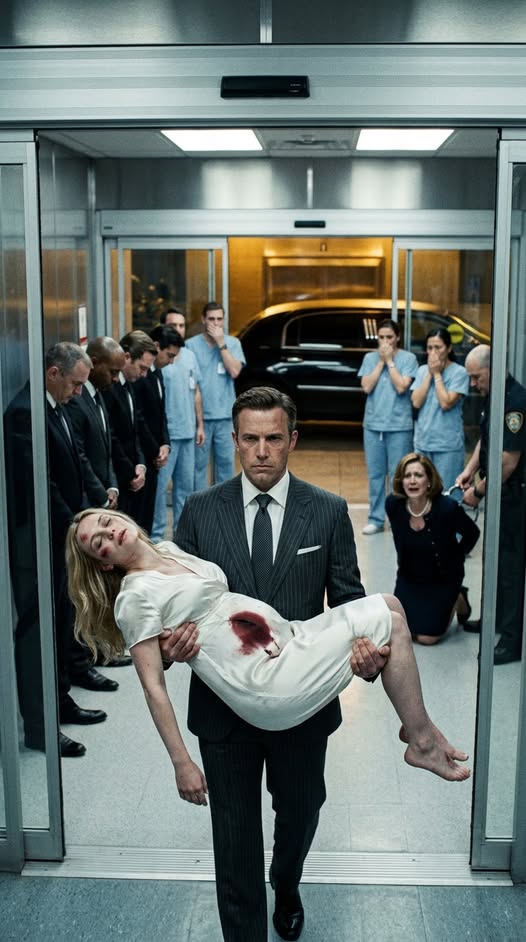
Suddenly, the heavy, reinforced double doors of the private surgical wing didn’t just open; they were thrust apart with an authoritative violence. A phalanx of men marched into the sterile hallway. They were older men, terrifying men, clad in bespoke Italian suits and carrying an aura of unimaginable, world-altering wealth.
Eleanor lowered her phone, her brow furrowing in confusion. She recognized them from Forbes covers and global summits. There was the CEO of Goldman Sachs. The Chairman of the Federal Reserve. And behind them, walking in a tight, protective diamond formation, was the entire Board of Directors of Sterling Global—the trillion-dollar international conglomerate that her family supposedly only held a minor, passive aristocratic stake in.
They didn’t look at Eleanor. They didn’t even acknowledge her presence. They lined the walls of the surgical hallway, their hands clasped in front of them, their heads bowed in a synchronized posture of absolute, terrified reverence.
“What… what is the meaning of this?” Eleanor demanded, standing up, her voice shrill as her carefully constructed reality began to warp. “What are you doing here? This is a private family matter! Security!”
None of the billionaires moved. None of them spoke.
Then, the private VIP elevator at the end of the hall dinged.
The doors slid open. A man stepped out. He wasn’t wearing a faded gray hoodie or soft denim. He was dressed in a tailored, three-piece black suit that seemed to absorb the fluorescent hospital light, casting a long, suffocating shadow down the linoleum. He was flanked by the city’s Chief of Police and a high-ranking military attaché whose chest was heavy with medals.
It was Caleb.
But it wasn’t the soft-spoken man who rubbed my swollen feet. His posture was rigid, his jaw set in granite, and his eyes—normally warm and teasing—were glacial, radiating a lethal, oppressive authority that made the air in the hallway feel instantly thin.
He walked past the bowing billionaires without a glance. He walked toward the operating room doors. He didn’t look at his mother. He looked entirely through her, as if she were nothing more than a pathetic, invisible smudge on the pristine white wall of his empire.
Caleb stopped abruptly in front of the Chief of Police, who was sweating profusely, trembling so hard his metal handcuffs rattled audibly against his leather duty belt. Slowly, deliberately, Caleb reached into the inner breast pocket of his suit jacket and pulled out a card that no ordinary bank on earth issued.
The Black Card Decree
Eleanor’s polished facade cracked, a sudden, cold panic bleeding into her aristocratic features. She rushed forward, her hands fluttering in a desperate attempt to reclaim the narrative.
“Caleb, darling, thank God you’re here,” Eleanor began, her voice trembling with a sickly-sweet artificiality. She reached out to touch his arm, but one of the board members discreetly stepped in her path, blocking her. “The girl… she was so clumsy. She fell. It was a tragic, terrible accident. But we can move on now. Vivienne is waiting in the wings—”
Caleb finally turned his head. He locked eyes with the woman who had given birth to him. The sheer, unadulterated hatred in his gaze hit her with the physical force of a tidal wave. They were as cold as a deep-sea trench.
He didn’t speak to her. He extended his hand, holding out the matte black titanium card to the Chief of Police.
“There is a digital recording on the estate’s hidden, encrypted cloud server,” Caleb said. His voice was no longer a gentle murmur; it was a low, vibrating growl that commanded the entire corridor. “Audio and high-definition video. From the exact moment she stepped onto the second-floor landing to the moment she whispered into my bleeding wife’s ear that my son was a parasite.”
Eleanor choked on a gasp, her face draining of all color.
“She attempted to assassinate my heir,” Caleb stated, the words dropping like anvils onto the floor. “Handle it.”
The Chief of Police took the black titanium card with shaking hands, treating it as if it were a holy relic. He swallowed hard. “Understood, Mr. Chairman. Immediate arrest. No bail. Federal custody, solitary confinement pending trial.”
Eleanor’s arrogant smile shattered entirely, falling to pieces like cheap, brittle glass.
“Chairman?” she shrieked, the reality finally tearing through her delusions. She lunged forward, her voice raw with hysteria. “Caleb, what are you talking about? I am the matriarch! I own this family! You are nothing without my trust fund!”
Caleb took a single step toward her, invading her space, looking down at her from a terrifying height.
“You own a stipend,” Caleb said, his voice dropping to a lethal whisper only she could hear. “A monthly allowance I gave you through a shell corporation because I felt a lingering shred of pity for my late father’s memory. I am the majority shareholder. I am the silent architect. I am Sterling Global.”
Eleanor staggered backward, clutching her throat as if she were choking on the very air.
“As of sixty seconds ago,” Caleb continued mercilessly, “your bank accounts are frozen. Your properties are seized. The Sterling name is legally stripped from you, and you are a Jane Doe in the eyes of the law. You wanted a wealthy wife for me, Mother? You should have worried about having a son who could destroy your entire world with a whisper.”
Two heavy-set police officers stepped forward, roughly grabbing Eleanor’s arms. She screamed, thrashing wildly in her Chanel suit, demanding her lawyers, demanding respect, but the billionaires in the hallway merely turned their backs to her.
As the cold steel of the handcuffs clicked loudly around Eleanor’s wrists, the heavy doors of the operating room burst open.
A surgeon ran out, his scrubs soaked in my blood, his face pale behind his mask. He scanned the intimidating crowd, his eyes locking onto my husband.
“Mr. Sterling!” the doctor yelled, his voice cracking with panic. “The baby is crashing! Her heart rate is dropping! We need your immediate authorization for a high-risk thoracic procedure, or we’re going to lose them both!”
The Rebirth of Sterling
The next few days were a blur of morphine dreams and the rhythmic, reassuring beep of heart monitors. When I finally clawed my way back to full consciousness, the harsh fluorescent lights of the surgical theater had been replaced by the soft, warm, golden sunlight of a private recovery suite. The air smelled faintly of lavender and sterile cotton.
I blinked my heavy eyelids open. Sitting in a leather chair drawn right up to the edge of my bed was Caleb. The terrifying, tailored black suit was gone, replaced by a soft henley shirt. In the crook of his arm, wrapped in a pristine white swaddle, was a tiny, sleeping bundle.
I let out a ragged, dry sob.
Caleb’s head snapped up. His eyes, rimmed with the deep purple bags of sleepless nights, instantly filled with tears. He leaned forward, gently laying the bundle against my chest.
“He’s okay, El,” Caleb whispered, his voice thick with emotion, pressing his forehead against mine. “He’s a fighter. Just like his mother.”
I looked down at the tiny, perfect face of my son. His chest rose and fell in steady, beautiful breaths. I touched his impossibly soft cheek, a profound, overwhelming wave of relief washing away the lingering terror of the stairs.
Then, the memory of the cold marble, the blood, and the venom in the foyer came rushing back. I tensed, looking up at Caleb with wide, frightened eyes. “Your mother… Caleb, she pushed me. She said…”
“I know,” Caleb interrupted softly, his hand gently stroking my hair. “I saw the security footage. I saw everything.”
“Where is she?” I asked, my voice trembling.
“She will never say anything to you ever again,” Caleb promised, a flash of that glacial, unyielding authority returning to his eyes. “She’s in a maximum-security psychiatric and holding wing at a federal facility, awaiting a trial for double attempted homicide. I’ve made sure no lawyer in this hemisphere will take her case, and no judge will grant her bail.”
He brushed his thumb across my knuckles. “She wanted wealth above all else. She wanted status. Now, she has a two-inch foam mat, a plastic tray for her meals, and a number instead of a name.”
I let out a long, shaky breath, absorbing the magnitude of what he was saying. I looked at the man holding my hand. The man I had loved when I thought he was a struggling artist, the man I defended when his family called him a jobless dreamer. He was a king. He held the financial world in his palm. But as he looked at me, with tears staining his cheeks, he was still just my Caleb.
“I don’t care about the money, Caleb,” I whispered, my throat tight. “I never did. I just wanted us to be safe. I just wanted us.”
“The money is just a tool, El,” he replied, leaning down to kiss my palm, his lips lingering against my skin. “A tool I kept hidden because I wanted to know I was loved for me, not my empire. But now? It’s a tool I will use to build a fortress around you. I will use it to make sure no one ever walks too loud near you again, unless they are cheering for you.”
Miles away, in a stark, sterile concrete cell, Eleanor Sterling threw herself against a reinforced steel door, screaming at the concrete walls, demanding a phone call that would never come. Her voice echoed in the void, her name already actively being erased from the social registers, bank ledgers, and history books of the world she used to rule.
I nestled deeper into the pillows, pulling my son closer. As I adjusted the soft blue blanket around him, my fingers brushed against something hard and cold tucked into the folds of the fabric.
I pulled it out. It was a small, heavy, ancient-looking brass key. Tied to it was a small piece of heavy cardstock with a note written in Caleb’s precise, architectural handwriting:
The Legacy of the True Heir
One year later.
The grand ballroom of the Pierre Hotel in New York City was a sea of light, music, and purpose. The annual gala for the Sterling Global Foundation was the crown jewel of the philanthropic season. I stood at the crystal podium, the flashes of a hundred cameras illuminating the room. I wasn’t the trembling, pregnant girl terrified of her own shadow on a marble staircase anymore.
I wore a tailored crimson gown that commanded the room. I spoke with a steady, resonant power about our new global initiatives funding safe houses and legal defense for women escaping domestic abuse. I had walked through fire, bled on the altar of someone else’s arrogance, and come out forged in unbreakable steel.
After my speech concluded to a standing ovation, I slipped out through the French doors, joining Caleb in the private, manicured garden terrace overlooking Central Park.
Our son, now a robust, toddling whirlwind of boundless energy, was laughing hysterically as he chased a stray butterfly across the manicured lawn. He was “walking loud” on the grass, his joyful, heavy little footsteps echoing beautifully through the autumn trees.
Caleb wrapped his arms around my waist from behind, resting his chin on my shoulder as we watched our boy.
“I saw the news alerts on my phone earlier,” I said quietly, leaning back into his solid warmth. “The sentencing came down. Life without the possibility of parole. The article said she stood up in the courtroom and still demanded to be addressed as the Queen of Sterling.”
Caleb didn’t flinch. He looked at our son, and then turned his head to kiss my temple. This garden, this family—this was the only empire that truly mattered to him.
“Let her keep her crown of straw in her concrete castle,” Caleb said, his voice entirely devoid of anger, replaced only by a cold, factual finality. “She lost the only thing of actual value she ever had—the chance to know you, and the chance to know him.”
I looked up at the night sky. The stars over Manhattan were faint, but they were the same stars that had watched me bleed into the mud and marble a year ago. I realized, with a profound sense of peace, that Eleanor had been right about one single thing: Caleb did need a wealthy wife to anchor him.
But wealth wasn’t measured in offshore accounts, vintage Chanel, or aristocratic bloodlines. True wealth was measured in the raw courage to survive the darkest nights, the resilience to heal, and the infinite capacity to love the people who stand in the fire with you.
“I’m ready to go home,” I said, turning in his arms and looking up into his eyes.
“We are home,” Caleb replied, smiling.
He scooped our giggling son up into his arms, and together, we walked toward the glowing lights of our estate. Our footsteps on the stone path were firm, confident, and—most importantly—loud enough for the whole world to hear.
As we stepped through the threshold into the foyer, Caleb’s head of international security, a stoic man named Vance, stepped out of the shadows of the library. His expression was incredibly grim, a stark contrast to the joy of the evening.
“Sir. Ma’am. Apologies for the intrusion,” Vance said in a hushed, urgent tone. He held out a crumbling, leather-bound ledger. “We finally decrypted the files recovered from Eleanor’s hidden safe. She wasn’t acting alone in the board manipulation.”
Vance swallowed hard, glancing nervously at me before looking back at Caleb. “Your father’s ‘death’ in the avalanche in Switzerland ten years ago? We have the wire transfers. It wasn’t an accident.”
The warmth of the evening vanished. Caleb slowly handed our son to me. I watched his eyes shift, the loving father disappearing as the glacial, terrifying Chairman of Sterling Global returned. The air in the room grew heavy, and I felt a familiar thrill of adrenaline spike in my veins. I tightened my grip on my son, standing tall beside my husband.
I knew then that while this battle was definitively won, the war for our family’s legacy had only just begun.
If you want more stories like this, or if you’d like to share your thoughts about what you would have done in my situation, I’d love to hear from you. Your perspective helps these stories reach more people, so don’t be shy about commenting or sharing.