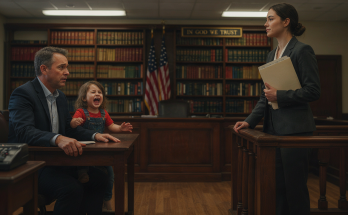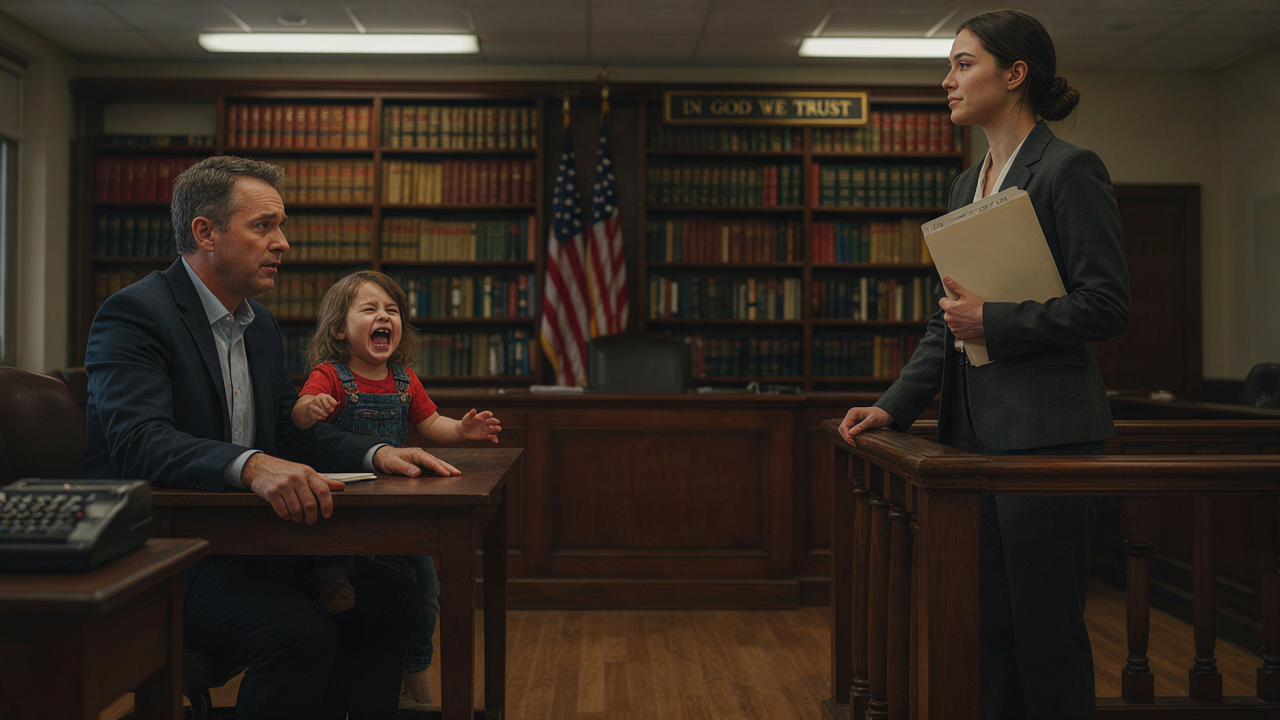
I’m 67 and I work as a greeter at a big-box store. I stopped a man from walking out with a screaming 3-year-old girl who kept crying, “You’re not my daddy!” He said he was her father. The man sued me for $250,000. Then, on the first day of trial, a young woman stood up.
“Why wasn’t Mr. Haller arrested?” the judge asked.
Rachel Mercer tightened her arms around her daughter.
For a moment, she looked as though she might collapse.
Then she answered.
“Because when the police found him, he had already left Quinn with someone else. And because the man who claimed to be her father had documents showing he was authorized to pick her up.”
Wayne Haller’s attorney stood.
“Your Honor, I object. This woman has not been sworn in, and her statements have nothing to do with the alleged assault committed by the defendant.”
The judge looked at Rachel, then at me.
“Mr. Whitaker, I understand your objection. We will not take testimony from the gallery. Ms. Mercer, please remain available. Counsel, approach.”
My attorney, a twenty-nine-year-old man named Benjamin Tate, rose beside me.
He had been assigned to my case through a legal assistance program after three other lawyers told me I couldn’t afford to fight a lawsuit this size.
Benjamin carried an old briefcase with a broken clasp.
His shoes were polished, but the soles were worn.
He looked nervous as he approached the bench.
Wayne’s lawyer, Charles Renner, looked irritated.
And Wayne?
Wayne was staring at Rachel as though she had climbed out of a grave.
I couldn’t stop looking at the little girl in her arms.
Quinn.
The same curly hair.
The same round cheeks.
The same bright eyes that had begged me for help beside the automatic doors.
Except now she wasn’t screaming.
She was clutching a stuffed rabbit and watching me with an expression I couldn’t understand.
Then she lifted one small hand.
And waved.
My eyes filled.
I waved back.
That was when I realized something.
For seven months, I had lived with the fear that I had done too little.
That I should have found a way to keep the man in the store.
That I should have ignored my manager and refused to move.
That I had allowed a frightened child to disappear because I was afraid of losing an eleven-dollar-an-hour job.
But there she was.
Alive.
Safe.
And looking right at me.
***
The judge called a recess before opening statements.
Benjamin returned to our table looking stunned.
“Mavis,” he whispered, “did you know that woman was coming?”
I shook my head.
“No, sir.”
“Did you know the child had been recovered?”
“No.”
He stared at me.
“Why didn’t you tell me any of this?”
“Because nobody told me.”
He looked toward Wayne Haller.
Wayne was whispering urgently to his attorney.
Rachel had been escorted to a conference room so that the lawyers could establish the circumstances of her appearance.
Benjamin pulled out his phone.
“I need to make some calls.”
I caught his sleeve.
“Benjamin?”
He looked at me.
“Is that really her mother?”
“I believe so.”
I swallowed.
“Then why did Wayne say he was Quinn’s father?”
Benjamin looked across the courtroom.
“That,” he said quietly, “is exactly what we’re going to find out.”
***
My name is Mavis Keller.
I’m sixty-seven years old.
I’ve lived in Fort Smith, Arkansas, most of my life.
My husband, Harold, died eleven years ago after a stroke.
We’d been married thirty-eight years.
We never had children.
Not because we didn’t want them.
Because sometimes life doesn’t give you everything you pray for.
Harold and I tried for years.
There were doctors.
Treatments.
Two pregnancies that ended before we ever got to hold a baby.
Eventually, we stopped trying.
We built another kind of family.
Church friends.
Neighbors.
His nieces and nephews.
Children on our street who came over for cookies and left with their pockets full of candy.
Harold used to say I could turn a grocery store checkout line into a family reunion.
After he died, the house became too quiet.
I retired from the post office, spent six months gardening, and discovered that being home all day wasn’t nearly as pleasant as I’d imagined.
So I applied for a job at a big-box store.
The manager who hired me asked whether I had retail experience.
I told him I’d spent thirty-one years delivering mail to people who sometimes answered their doors wearing bathrobes and holding angry dogs.
He laughed.
I got the job.
For nine years, I stood near the entrance wearing a blue vest, greeting customers and handing children smiley-face stickers.
Some people barely noticed me.
Some smiled.
A few regulars brought me homemade cookies at Christmas.
I liked the work.
I liked watching families come through the doors.
And I liked believing that being friendly to strangers still mattered.
Until that Tuesday in March.
The day Wayne Haller carried Quinn toward the exit.
***
I remember every second.
The little pink boots.
Her tiny fingers gripping my vest.
The way her voice cracked when she screamed that the man wasn’t her daddy.
I’ve heard children throw tantrums before.
Goodness knows, I’ve heard enough of them to recognize when someone is upset because they can’t have a toy.
This was different.
Quinn wasn’t reaching for candy.
She wasn’t demanding something.
She was trying to get away.
When Wayne shifted her higher against his chest, she twisted her body and reached toward me.
“Help me!”
Those two words weren’t in the original complaint Wayne filed against me.
His lawyer claimed I had frightened the child.
That I’d caused a scene.
That I’d grabbed Wayne’s arm and accused him of kidnapping.
None of it was true.
I had simply asked him to wait for a manager.
When Mr. Darby ordered me to step aside, I did.
But something inside me wouldn’t let the matter end there.
So I photographed the car.
The license plate.
The man’s face.
And the little girl through the window.
Then I called 911.
The dispatcher asked whether I had witnessed a possible abduction.
I told her exactly what I’d seen.
I didn’t say I knew he was a kidnapper.
I said I was worried.
I gave her the license plate.
The description of the vehicle.
The store address.
And the direction the car had traveled.
The dispatcher thanked me.
She said officers would follow up.
Then the call ended.
I didn’t hear anything else.
Not that evening.
Not the following morning.
Not even after Mr. Darby fired me.
For seven months, I wondered whether Quinn had been found.
And every time I saw a little girl in pink boots, my stomach tightened.
***
During the recess, Benjamin returned with several pages of notes.
He sat beside me.
“Mavis, I spoke with the attorney assigned to represent Rachel’s interests in another matter. There’s more to this than we knew.”
I folded my hands.
“Is Quinn safe?”
“Yes.”
I exhaled.
“Thank the Lord.”
Benjamin continued.
“Rachel filed a missing-child report on March eighteenth. Quinn was located that same evening.”
I stared at him.
“The same day?”
He nodded.
“Just over four hours after you made your call.”
My eyes filled.
“Where?”
“At a house outside Van Buren.”
I stared.
“That’s not far.”
“No.”
“What happened?”
Benjamin lowered his voice.
“According to the records Rachel’s attorney described, Wayne wasn’t acting alone.”
I felt cold.
He continued.
“Quinn had been taken from her babysitter’s home. Wayne drove her away, but when law enforcement started looking for his vehicle, she was left with a woman who was later questioned.”
I swallowed.
“Did he hurt her?”
“The information available to us says she was physically unharmed.”
I pressed my hand against my chest.
For months, I’d imagined every terrible possibility.
And now I was learning that the child had been found on the very same day.
“Why didn’t anybody tell me?”
Benjamin’s expression softened.
“Because you weren’t her family, and the investigation involved a child. The authorities weren’t required to share everything with you.”
I nodded.
That made sense.
But it still hurt.
Then he said something else.
“The police have records of your photographs.”
I looked up.
“What?”
“Your 911 report led them to contact the store and obtain the images you took.”
I stared at him.
“I never gave the pictures to the police.”
“You told the dispatcher you had them. An officer followed up with the store, and they obtained copies from your phone through the appropriate process.”
I remembered.
A police officer had called me the evening after I was fired.
He’d asked me to send the photographs through an official evidence submission link.
I’d done it from my kitchen table.
He thanked me.
Then said he couldn’t discuss an active investigation.
I’d nearly forgotten that call.
Benjamin looked at me.
“Mavis, your photographs may have helped establish the vehicle and its movements.”
I closed my eyes.
For seven months, I’d believed my actions had accomplished nothing.
Now I wasn’t so certain.
***
The hearing resumed that afternoon.
Rachel was not permitted to deliver an emotional speech from the gallery.
The judge made that clear.
Instead, after discussions between counsel, the court allowed time for Benjamin to seek permission to present newly identified evidence and witnesses.
The trial did not turn into a criminal proceeding.
Wayne’s lawsuit against me was a civil case.
The question was whether I’d assaulted him, defamed him, or intentionally caused him emotional harm.
But the newly disclosed information was directly relevant to whether his claims were truthful and whether my actions had been reasonable.
The judge ordered the parties to address the late evidence properly.
Proceedings were continued so the records could be reviewed and the lawyers had a fair opportunity to respond.
I won’t pretend I understood every legal term.
I didn’t.
But I understood the look on Wayne Haller’s face.
For the first time since he’d sued me, he wasn’t smiling.
***
Three weeks later, I returned to the courthouse.
This time, Rachel was waiting outside.
Quinn wasn’t with her.
I felt a small disappointment.
I’d hoped to see that little girl again.
Rachel approached me slowly.
“Mrs. Keller?”
“Yes, honey?”
Her eyes filled.
“Can I hug you?”
I didn’t answer.
I simply opened my arms.
She hugged me so tightly that I could feel her shaking.
Then she began crying.
“Thank you.”
I held her.
“Oh, sweetheart.”
She pulled back and wiped her face.
“I’ve wanted to meet you for months.”
“Why didn’t you?”
Her expression changed.
“Because I didn’t know who you were.”
I frowned.
“What do you mean?”
“The police told me an employee at the store had provided information that helped them. But they didn’t give me your name.”
I nodded.
“Then I saw a local news article about Wayne suing a store greeter.”
I stared at her.
Rachel continued.
“The article mentioned your age and the store location. I called the reporter. She couldn’t give me much, but I found your name in the court filings.”
She took a breath.
“When I realized you were the person who’d tried to stop him, I knew I had to come.”
I looked at her.
“Did Quinn remember me?”
Rachel smiled through tears.
“She does.”
My heart nearly stopped.
“She calls you the sticker lady.”
I began crying.
And Rachel cried with me.
***
Before the hearing, Rachel told me what had happened.
Wayne Haller had been involved with her older sister, Amanda, several years earlier.
Not romantically.
He had been Amanda’s business partner in a small car dealership.
The business failed.
There were accusations about missing money.
Lawsuits.
Angry messages.
Eventually, Amanda cut all contact with him.
Wayne blamed Rachel’s family for the collapse of the business.
Rachel had met him only twice.
Quinn had seen him at a family gathering when she was a baby.
He was not her father.
He had no legal right to take her.
But somehow, Wayne had obtained enough information about the family to know where Quinn stayed on Tuesdays.
He knew the babysitter’s name.
He knew Rachel worked at a dental office.
He knew that Patricia Corliss sometimes stepped into her backyard to let her dogs out.
And on March eighteenth, he arrived at the babysitter’s home while Patricia was outside.
The front door had been unlocked.
Quinn had been playing in the living room.
Wayne picked her up and carried her outside.
By the time Patricia came back, they were gone.
Rachel told me that Wayne’s true plan was still being examined in the criminal case.
Investigators suspected he intended to use Quinn to pressure her family over the old business dispute, but she was careful not to present every suspicion as established fact.
I appreciated that.
She wasn’t trying to make the story more dramatic.
It was already terrible enough.
Then she explained the photograph.
The one Wayne had shown my manager.
He was holding a baby.
Quinn.
It had been taken at Amanda’s house years earlier.
Wayne had attended a family barbecue.
Someone had handed him the baby for a photograph.
That was all.
One ordinary photograph.
And he’d used it to convince Mr. Darby that he was Quinn’s father.
I remembered my manager’s face.
The way he’d glanced at the picture and immediately decided Wayne was telling the truth.
I felt sick.
Rachel reached for my hand.
“You were the only person who listened to Quinn.”
I shook my head.
“I should’ve done more.”
“No.”
Her voice became firm.
“You did what you could. You questioned him. You called for help. And you gave police the information they needed.”
I looked down.
She squeezed my fingers.
“Mrs. Keller, the police told me your plate photograph helped them confirm which car to look for. They were already responding to the missing-child report, but your information gave them another lead.”
My eyes filled.
I whispered, “I was so afraid she wouldn’t be found.”
Rachel covered her mouth.
Then she said something I’ll remember until the day I die.
“She was found, Mavis. And she remembers you trying to help.”
***
The second hearing was very different.
Wayne’s attorney had lost some of his confidence.
Benjamin had obtained store security footage through discovery.
The video wasn’t perfect.
The camera was mounted high above the entrance.
It showed Wayne carrying Quinn toward the doors.
It showed me stepping in front of him.
It showed the little girl reaching toward me.
It showed Mr. Darby arriving.
And it showed something Wayne’s complaint had conveniently left out.
I never grabbed his arm.
Not once.
I kept my hands visible.
The only physical contact came when Quinn grabbed my vest.
Wayne’s attorney had written that I’d violently confronted his client.
The video showed me standing beside a display of shopping carts, speaking calmly.
Benjamin played it without saying anything.
The courtroom watched.
I could barely breathe.
There I was.
A sixty-seven-year-old woman in a blue vest.
A roll of stickers in my pocket.
A little girl reaching for me.
And a man trying to get past.
At the end of the video, Wayne turned toward the exit.
Mr. Darby gestured for me to move.
I stepped aside.
Wayne left.
The judge watched carefully.
Then Benjamin asked whether the video fairly represented the incident.
The store’s records custodian confirmed that it came from the surveillance system and had been preserved in the ordinary course of the investigation.
Wayne’s lawyer challenged the interpretation.
He argued that my position near the doors had made Wayne feel threatened.
Benjamin didn’t argue emotionally.
He simply asked questions.
“Where on this video does Mrs. Keller grab Mr. Haller?”
There was no clear answer.
“Where does she strike him?”
No answer.
“Where does she tell customers that he is a kidnapper?”
Again, no evidence supported that claim.
I looked across the courtroom.
Wayne stared at his hands.
***
Then Rachel testified.
She described the missing-child report.
The frantic search.
The call telling her Quinn had been found.
And the fact that Wayne was not Quinn’s father.
Wayne’s attorney objected several times.
The judge ruled on each objection.
Some questions were limited.
Others were allowed because they related to Wayne’s claim that he’d been an innocent father humiliated by a store employee.
Rachel’s voice shook.
But she never stopped speaking.
“Mrs. Mercer,” Benjamin asked, “did you give Mr. Haller permission to take your daughter from Patricia Corliss’s home?”
“No.”
“Was he Quinn’s legal father?”
“No.”
“Did he have custody or visitation rights?”
“No.”
“Did you know where Quinn was during the hours she was missing?”
Rachel swallowed.
“No.”
Then Benjamin asked one final question.
“Did you ever tell Mrs. Keller that Wayne Haller was not Quinn’s father before the incident?”
“No. I’d never met Mrs. Keller.”
Benjamin nodded.
“Thank you.”
Rachel stepped down.
As she passed our table, she looked at me.
I smiled.
She smiled back.
And for the first time since the lawsuit began, I felt as though I might actually survive it.
***
Wayne took the stand the following morning.
His attorney asked him about his reputation.
His emotional distress.
The embarrassment he claimed to have suffered at the store.
Wayne spoke softly.
He said he’d been humiliated.
That strangers had stared.
That I’d treated him like a criminal.
He claimed he’d suffered anxiety and sleeplessness.
Then Benjamin began his questions.
“Mr. Haller, you stated in your complaint that Quinn was your daughter. Is that correct?”
Wayne shifted.
“Yes.”
Benjamin looked at the papers in front of him.
“Biologically?”
Wayne cleared his throat.
“Not biologically.”
“Legally?”
“No.”
“Had you adopted her?”
“No.”
“Were you her guardian?”
“No.”
“Did you have permission from her mother to take her that day?”
Wayne’s attorney rose.
“Objection. My client has pending criminal matters related to these events.”
The judge addressed the issue outside the jury’s hearing.
Wayne was advised of his rights and the potential consequences of testimony touching on the pending case.
After consulting his attorney, he declined to answer certain questions.
The judge handled the matter through the appropriate civil procedures.
I won’t pretend it was the dramatic confession I’d imagined.
There was no moment when Wayne slammed his fists against the table and admitted everything.
Real courtrooms aren’t like television.
But the jury had already seen the video.
They’d heard Rachel.
And they’d seen the documents supporting the police investigation.
Wayne’s version of the incident no longer looked convincing.
***
Then Benjamin asked him about the photograph.
The picture of Wayne holding baby Quinn.
“Mr. Haller, you showed this photograph to the store manager, correct?”
“Yes.”
“And told him it proved you were the child’s father?”
Wayne hesitated.
“I don’t remember my exact words.”
Benjamin referred to Wayne’s earlier sworn statement.
“In your deposition, you testified that you told the manager, ‘This is my daughter.’ Do you recall that?”
Wayne looked toward his attorney.
“Yes.”
Benjamin nodded.
“Did you explain that the photograph had been taken at a family barbecue and that you weren’t the child’s father?”
Wayne said nothing.
“Did you tell Mr. Darby that you had no legal authority to take Quinn?”
Wayne’s attorney objected.
The judge ruled.
The question was addressed within the limits of the proceedings.
And then Benjamin asked something that made Wayne look directly at me.
“Mr. Haller, when Quinn was crying for her mother, why did you insist that Mrs. Keller step aside instead of allowing store security to verify the situation?”
Wayne’s jaw tightened.
He declined to answer.
Benjamin let the silence stand.
Then he sat down.
***
I testified that afternoon.
I had never been in a courtroom before.
I’d watched enough television to know witnesses were supposed to tell the truth.
But I’d never imagined how frightening it would feel to sit under oath with strangers watching my every movement.
Benjamin approached gently.
“Mrs. Keller, how long have you worked in customer service?”
“Long enough to know people get upset about all kinds of things.”
A few people smiled.
He asked about my years at the post office.
My job at the store.
The stickers.
The regular customers.
Then he asked me to describe March eighteenth.
I told him everything.
No exaggeration.
No dramatic language.
Just what I remembered.
The little girl’s pink boots.
Her screaming.
Her hands grabbing my vest.
Wayne saying he was her father.
Mr. Darby telling me to move.
My photographs.
The 911 call.
When I finished, Benjamin asked, “Why did you stop him?”
I looked toward the jury.
“Because the child was scared.”
“Did you know Wayne Haller wasn’t her father?”
“No, sir.”
“Did you know he had committed a crime?”
“No.”
“Then why didn’t you simply let him leave?”
I swallowed.
“Because she was asking for help.”
The courtroom became quiet.
I continued.
“I’m sixty-seven years old. I’ve seen children cry because they want a toy or because they’re tired or because their parents won’t buy candy. I know children can say things when they’re upset.”
I looked toward the bench.
“But this little girl wasn’t asking for a toy.”
My voice trembled.
“She was asking for her mommy.”
I wiped my eyes.
“And I thought somebody ought to listen.”
Benjamin paused.
Then asked, “Did you intend to harm Mr. Haller?”
“No.”
“Did you touch him?”
“No.”
“Did you publicly accuse him of kidnapping?”
“No. I asked him to wait while we checked on the child.”
He nodded.
“Thank you, Mrs. Keller.”
***
Wayne’s attorney approached.
He was a tall man with silver hair and a voice that sounded polite even when his questions weren’t.
“Mrs. Keller, you’re not a police officer, correct?”
“No, sir.”
“Not a social worker?”
“No.”
“Not trained in child custody law?”
“Certainly not.”
He smiled.
“Then what gave you the authority to decide my client couldn’t leave the store?”
I thought carefully.
“I didn’t decide he couldn’t leave forever. I asked him to wait for a manager because the little girl said she was being taken.”
He looked irritated.
“Were you aware that young children sometimes make false statements during tantrums?”
“Yes.”
“So you understood that Quinn might not have been telling the truth?”
“I understood I didn’t know.”
He paused.
I continued.
“That’s why I wanted somebody to check.”
He glanced at his notes.
“Instead, you created a disturbance.”
“I asked a question.”
“You interfered with a customer.”
“I asked for help.”
“You took photographs of him without permission.”
“In the parking lot, after he’d left the store.”
He leaned forward.
“And you called the police.”
“Yes.”
“Even though your manager told you everything was fine.”
I looked at him.
“Mr. Darby didn’t know who that little girl’s mother was.”
He frowned.
“That wasn’t my question.”
I took a breath.
“Then yes. I called the police.”
He stopped pacing.
“Mrs. Keller, do you believe your judgment was superior to your manager’s?”
I looked toward the jury.
“No, sir.”
Then I looked back at him.
“But I believe a frightened child deserves to be heard, even when the adults around her are in a hurry.”
The courtroom fell silent.
Wayne’s attorney returned to his table.
He didn’t ask another question.
***
The jury deliberated for less than two hours.
I sat beside Benjamin holding Harold’s old handkerchief.
It was white cotton with a blue border.
I’d carried it in my purse since the day of his funeral.
Whenever I was nervous, I folded it into a little square.
Then unfolded it.
Then folded it again.
Benjamin watched me do that for nearly an hour.
Finally, he smiled.
“Mavis, if that handkerchief could talk, it would ask for a vacation.”
I laughed.
It was the first real laugh I’d managed in days.
Then the bailiff entered.
The jury had reached a verdict.
My stomach tightened.
We stood.
The judge returned.
The jury foreperson was asked to announce the findings.
I held my breath.
The jury found against Wayne Haller on his claims.
He would receive no damages from me.
Not $250,000.
Not $25,000.
Not one penny.
I sat down so suddenly that Benjamin reached out to steady me.
The room blurred.
I heard the judge thanking the jurors.
I heard chairs moving.
I heard Benjamin whisper, “You did it, Mavis.”
But all I could think about was Harold.
How he would have squeezed my shoulder.
How he’d have told me not to spend one more minute worrying about that lawsuit.
I covered my mouth.
And cried.
***
Outside the courthouse, Rachel was waiting.
She had Quinn with her.
The little girl wore a yellow dress and the same pink rain boots.
I wondered whether she’d insisted on wearing them.
Rachel smiled when she saw me.
“Mavis.”
I walked toward them.
Quinn looked up.
For a second, I didn’t know whether she’d remember my face.
Then she pointed.
“Sticker lady!”
I felt my knees weaken.
“Oh, sweetheart.”
She ran toward me.
I knelt as quickly as my old knees allowed.
She threw her little arms around my neck.
I held her carefully.
There was no panic in her voice now.
No screaming.
No fear.
Just a little girl hugging an old woman she’d seen once in a store.
I began crying again.
Quinn pulled back and studied my face.
“Why are you sad?”
I laughed through my tears.
“I’m not sad, honey.”
She touched my cheek.
“Then why you crying?”
I smiled.
“Because I’m happy you’re okay.”
She considered that.
Then nodded seriously.
“Mommy says happy crying is okay.”
I laughed.
“Your mommy’s right.”
Then Quinn reached into the pocket of her little jacket.
She pulled out something folded and worn.
A yellow smiley-face sticker.
My breath caught.
It wasn’t one I’d given her that day.
I’d never managed to place one in her hand.
Rachel smiled.
“She asked me to buy some stickers after she came home.”
I looked at her.
“She kept saying she wanted the lady from the store.”
My eyes filled.
Rachel continued.
“For a while, Quinn was frightened of going shopping. But she said she wanted to find the sticker lady because the sticker lady tried to help.”
Quinn held out the sticker.
“For you.”
I took it.
My hands trembled.
“Thank you, sweetheart.”
Then she looked at me and said something I’ll never forget.
“You listened.”
I could barely breathe.
She repeated it.
“When I said he wasn’t Daddy, you listened.”
I pulled her gently into another hug.
And there, on the courthouse steps, I cried harder than I had when the verdict was announced.
***
The lawsuit was over.
But my troubles weren’t.
I was still unemployed.
Seven months without that little greeter job had drained my savings.
My Social Security and pension covered the basics, but there wasn’t much left over.
I’d stopped buying fresh flowers.
Stopped eating out with friends.
Canceled a weekend trip to visit my sister in Missouri.
And there were still legal expenses and other costs that had to be resolved.
Benjamin had provided his services through a program, but there had been practical expenses along the way.
I tried not to worry.
I’d survived worse.
Losing Harold had taught me that.
Still, I missed working.
I missed the children.
The stickers.
The Saturday regulars.
The little old man who came in every Wednesday just to ask whether I’d seen his wife, then laughed because she’d been dead for fifteen years and he liked hearing someone say her name.
I missed feeling useful.
Three days after the verdict, my phone rang.
It was Mr. Darby.
My former manager.
“Mavis?”
I almost hung up.
But I answered.
“Yes?”
He cleared his throat.
“I wanted to talk about what happened.”
I waited.
He sighed.
“Corporate reviewed the situation.”
I said nothing.
“They’ve seen the court records.”
“That’s good.”
Another pause.
“Some people think we handled things poorly.”
I looked toward my kitchen window.
“Do they?”
He sounded uncomfortable.
“Mavis, I’d like to offer you your job back.”
I didn’t answer.
He continued.
“Same position. Same schedule. We can even discuss a raise.”
I thought about the morning he’d fired me.
How he’d barely looked at me.
How he’d said I was bad for the store’s image.
How he’d told me I should have obeyed him.
“Mr. Darby,” I said quietly, “do you remember what you told me the morning you fired me?”
He hesitated.
“I don’t remember the exact conversation.”
“I do.”
I looked at Harold’s photograph on the windowsill.
“You said I cared more about playing hero than following instructions.”
Silence.
“And you said my age was making me emotional.”
He cleared his throat.
“Mavis, I was under a lot of pressure.”
“I imagine you were.”
“Corporate was worried about liability.”
“I understand.”
He sounded relieved.
“So you’ll come back?”
I took a breath.
“No, sir.”
Silence.
“Excuse me?”
“I’m grateful for the offer, but I won’t be returning.”
He sounded genuinely surprised.
“Why not?”
“Because I spent nine years greeting people at your doors. And the one day a little girl needed someone to listen, you told me to get out of the way.”
He said nothing.
I continued.
“I don’t hate you, Mr. Darby. But I don’t trust you to stand behind me if something like that ever happens again.”
He was quiet for a long time.
Then he whispered, “I understand.”
For once, I believed him.
***
The following Sunday, I went to church.
I’d missed several services during the trial because I couldn’t face people asking questions.
But that morning, I put on my favorite blue dress.
Pinned Harold’s old silver brooch to the collar.
And drove to the little Methodist church we’d attended for thirty-five years.
The moment I walked through the doors, Mrs. Landry grabbed my hand.
“Mavis!”
Then three other women came over.
Then the pastor.
Then half the congregation.
Someone had heard about the verdict.
Someone else had read the local newspaper.
And before I knew it, people were hugging me and telling me how proud they were.
I felt embarrassed.
I hadn’t done anything extraordinary.
I’d simply listened to a child.
During the service, Pastor Allen asked whether I wanted to say a few words.
I almost refused.
Public speaking had never been my favorite thing.
But then I thought about Quinn.
So I walked to the front.
I held the microphone with both hands.
And looked out at the familiar faces.
“Most of you know I’ve had a difficult year.”
A few people nodded.
I took a breath.
“I’m grateful for everybody who prayed for me and helped me through it.”
My voice trembled.
“But I want to tell you something.”
I looked toward the back row.
“There are people in this world who don’t have the words to explain what’s happening to them.”
I paused.
“Sometimes they’re very old.”
“Sometimes they’re frightened.”
“And sometimes they’re three years old, wearing pink rain boots.”
The church grew quiet.
I continued.
“I don’t think we always have to know exactly what to do. I certainly didn’t know that day.”
I wiped my eyes.
“But I think we ought to take people seriously when they ask for help.”
I looked down.
“Especially the ones who are too small or too frightened to make themselves heard.”
Then I stepped away from the microphone.
And the congregation stood.
Not because I was a hero.
But because everybody in that room understood what it meant to hope someone would listen when you were afraid.
***
A month later, Rachel called.
She sounded nervous.
“Mavis, I hope this isn’t inappropriate.”
“What’s wrong, honey?”
“Nothing. I just wanted to ask you something.”
“Go ahead.”
“Quinn’s birthday is next Saturday.”
I smiled.
“How old?”
“Four.”
“Oh, my goodness.”
Rachel laughed.
“She insists she’s practically grown.”
I laughed too.
Then Rachel said, “We’d love for you to come.”
My chest tightened.
“To her birthday?”
“Yes.”
I looked around my quiet kitchen.
For years, I’d watched other people’s children grow up.
I’d attended baby showers.
Birthday parties.
School plays.
But after Harold died, the invitations had become less frequent.
People were busy.
Families grew.
Lives moved on.
And I didn’t want to impose.
So I asked, “Are you sure?”
Rachel’s voice softened.
“Mavis, Quinn asked for you.”
I felt my eyes fill.
“She did?”
“Yes.”
I smiled.
“Then you tell that little girl I’ll be there.”
***
Quinn’s birthday party was held in Rachel’s backyard.
There were pink balloons.
A small inflatable slide.
A table covered with cupcakes.
And about twelve children running around like they’d all been given espresso.
I arrived carrying a wrapped present and a bag of smiley-face stickers.
Rachel met me at the gate.
“Mavis!”
She hugged me.
Then called toward the yard.
“Quinn! Somebody’s here!”
A little girl in a pink dress turned around.
Her eyes widened.
“STICKER LADY!”
She ran toward me so fast I barely had time to put down my purse.
I laughed and opened my arms.
“Happy birthday, sweetheart.”
She hugged me.
Then immediately asked, “Did you bring stickers?”
I laughed harder.
“Well, of course I did.”
I took out the roll.
Her eyes sparkled.
For the next twenty minutes, I stood beside the picnic table handing stickers to every child who wanted one.
It felt like being back at work.
Only better.
Because nobody was rushing me.
Nobody was worrying about complaints.
Nobody was telling me to smile while ignoring something important.
I was simply enjoying children being children.
Then Rachel came over.
“Mavis, could you come inside for a minute?”
I followed her into the kitchen.
She closed the door gently.
There was a man standing beside the counter.
Mid-forties.
Dark hair.
Kind eyes.
Rachel introduced him.
“This is my brother, Daniel.”
He stepped forward.
“Mrs. Keller.”
I shook his hand.
“Nice to meet you.”
He looked emotional.
“I wanted to thank you personally.”
I smiled.
“That’s very kind.”
He shook his head.
“No. I mean it.”
His voice trembled.
“I was the person Rachel called when Quinn disappeared. I drove over and watched my sister fall apart because she didn’t know where her daughter was.”
I felt my heart tighten.
He continued.
“The police were looking everywhere. And then they got information about a vehicle seen leaving the store.”
I nodded.
Daniel swallowed.
“Your photographs helped them identify the car.”
My eyes filled.
He looked at me.
“I don’t know whether you understand what that meant to us.”
I shook my head.
“I just wanted her safe.”
He nodded.
“That’s what makes it matter.”
Then he reached into his jacket.
He pulled out an envelope.
I immediately stepped back.
“Oh, no.”
He looked surprised.
“What?”
“I don’t need money.”
He smiled gently.
“It’s not what you think.”
I folded my arms.
“People keep trying to give me things lately.”
Rachel laughed softly.
Daniel handed me the envelope anyway.
“Please just open it.”
Inside was a letter.
From a nonprofit organization in Fort Smith that provided support and advocacy for children and families.
They were inviting me to serve as a volunteer community ambassador.
Not a security officer.
Not an investigator.
A volunteer who would help with outreach, community education, and programs encouraging adults to recognize when children might need assistance and contact appropriate authorities.
I looked up.
“What is this?”
Daniel smiled.
“I serve on the board. After everything that happened, we thought you might like to help us.”
I stared at the letter.
Then at Rachel.
She nodded.
“We know you miss working with people.”
My eyes filled.
“And we know you’re good at making children feel comfortable.”
I laughed through my tears.
“Well, I’ve had some practice.”
Daniel smiled.
“We’d be honored.”
I looked down at the invitation.
For seven months, I’d believed Wayne Haller had taken away the only work I had left.
Now I was being offered something that felt more meaningful than standing beside a store entrance.
I nodded.
“I’d love to.”
***
The volunteer work began slowly.
I attended training.
Learned about child safety.
Met social workers, teachers, and community advocates.
I was careful never to present myself as an expert.
I wasn’t.
I was a retired postal worker who’d spent nine years handing out stickers.
But I could tell my story.
And sometimes that was enough to begin an important conversation.
At one event, a young mother approached me.
She had a little boy holding her hand.
“Mrs. Keller?”
“Yes?”
“I heard about what happened at the store.”
I smiled.
“Oh, goodness.”
She looked serious.
“I just wanted to say thank you.”
I shook my head.
“You don’t need to thank me.”
She squeezed her son’s hand.
“Yes, I do.”
Then she told me something I’ll never forget.
“When I was little, I tried to tell an adult that someone was hurting me. She told me I was being dramatic.”
My smile faded.
The woman looked down.
“I stopped telling people after that.”
I felt a sharp ache in my chest.
She wiped her eyes.
“Your story reminded me that some adults do listen.”
I reached for her hand.
“I’m sorry nobody listened when you needed them.”
She nodded.
Then smiled faintly.
“Me too.”
After she left, I sat alone for a few minutes.
I thought about Quinn.
About the way she’d grabbed my vest.
About the people who had walked past while she screamed.
And I understood something.
Being heard can change a person’s life.
But being ignored can change it too.
***
Wayne Haller’s criminal case continued separately from the lawsuit he’d brought against me.
I followed the proceedings through the information made publicly available.
I didn’t attend every hearing.
I had no desire to see him again.
Eventually, he entered a negotiated plea to charges arising from Quinn’s unlawful removal.
The court imposed a sentence that included incarceration and other conditions.
I won’t pretend the outcome erased what happened.
Quinn still needed support.
Rachel still worried when her daughter was out of sight.
And I still sometimes woke in the night remembering the sound of that little girl’s scream.
But the justice system had finally addressed the central wrongdoing.
The man who had claimed to be the victim of an elderly store employee’s harassment was being held accountable for his own actions.
As for Mr. Darby, I heard he eventually left the store.
I don’t know whether he resigned or was transferred.
I never asked.
That chapter of my life was finished.
***
Nearly a year after the trial, Rachel invited me to dinner.
It was a Sunday evening.
She’d made pot roast.
Mashed potatoes.
Green beans.
And peach cobbler.
Quinn had insisted on helping set the table.
When I arrived, there was a little place card beside my plate.
It was written in purple crayon.
MAVIS.
Underneath was a crooked smiley face.
I stared at it.
Rachel smiled.
“She made it herself.”
I sat down slowly.
Quinn climbed into the chair beside me.
“Do you like it?”
I swallowed.
“I love it, sweetheart.”
She grinned.
Then leaned close.
“Mommy said you might be my extra grandma.”
I froze.
Rachel stopped moving.
For a moment, nobody spoke.
Then Rachel looked embarrassed.
“Quinn, honey—”
I raised my hand gently.
“It’s all right.”
I turned toward the little girl.
“An extra grandma?”
She nodded enthusiastically.
“Because Grandma Jo lives in Oklahoma, and you’re here.”
I laughed through my tears.
“Well, that sounds like a pretty good arrangement.”
She smiled.
“Can I call you Grandma Mavis?”
I couldn’t speak.
I thought about Harold.
About the babies we never got to bring home.
About the empty nursery we’d eventually turned into a sewing room.
About all the years I’d spent telling myself that being a mother simply hadn’t been part of my life’s story.
And now a little girl with curly hair and pink rain boots was looking at me as though I belonged to her family.
I nodded.
“Yes, sweetheart.”
My voice broke.
“You can call me Grandma Mavis.”
She threw her arms around me.
Rachel covered her mouth.
And I cried.
Not because I was lonely.
Not because I felt sorry for myself.
Because sometimes life gives you a kind of love you stopped expecting.
And you don’t realize how much you needed it until it arrives.
***
On the second anniversary of the day I met Quinn, I visited Harold’s grave.
I brought yellow flowers.
They were his favorite.
I sat on the little stone bench beside his headstone.
The cemetery was quiet.
Birds moved through the trees.
A breeze carried the smell of fresh grass.
I looked at his name carved into the stone.
HAROLD JAMES KELLER.
Beloved Husband.
I smiled.
“Well, Harold,” I whispered, “you wouldn’t believe the last two years.”
I told him about the trial.
About Rachel.
About Quinn.
About the volunteer work.
About the birthday parties.
And about how a little girl had started calling me Grandma Mavis.
I laughed softly.
“You always said I couldn’t go anywhere without bringing somebody home.”
My eyes filled.
“I reckon you were right.”
Then I told him something I hadn’t said out loud to anyone.
“For a long time after you died, I thought the best part of my life was over.”
I looked toward the trees.
“I thought all I had left was remembering.”
The wind moved gently through the leaves.
“But I was wrong.”
I wiped my eyes.
“There’s still people to love.”
I sat there for a while.
Then stood.
Brushed the grass from my skirt.
And went home.
***
These days, I’m sixty-nine.
I still live in Fort Smith.
I still drive my old silver Buick.
I still make too much cornbread.
And I still carry a roll of smiley-face stickers in my purse.
Only now, I hand them out at community events, school programs, and whenever Quinn brings a friend over.
She’s five.
She loves dinosaurs.
Peanut butter sandwiches.
And asking questions that make me laugh so hard I have to sit down.
Last Saturday, she came over wearing her pink rain boots.
The same pair Rachel had saved from that terrible day.
They barely fit anymore.
I told her she needed new ones.
She shook her head.
“Nope.”
I laughed.
“Why not?”
She looked at the boots.
Then at me.
“Because these are my brave boots.”
My throat tightened.
“Your brave boots?”
She nodded.
“Mommy says I was brave when I told that man he wasn’t my daddy.”
I knelt beside her.
“You were very brave.”
She smiled.
Then asked, “Were you scared too?”
I thought about that day.
The way Wayne had glared at me.
The way Mr. Darby ordered me to move.
The sound of Quinn crying.
“Yes, sweetheart,” I said. “I was scared.”
She looked surprised.
“Really?”
“Really.”
“But you helped me.”
I smiled.
“I tried.”
She thought about that.
Then said something that made my heart ache.
“Mommy says being brave means helping even when you’re scared.”
I pulled her into my arms.
“Your mommy’s a smart woman.”
Quinn nodded seriously.
“Yep.”
Then she reached into my purse.
Pulled out the roll of smiley-face stickers.
And stuck one on my sweater.
“There.”
I laughed.
“What’s that for?”
She grinned.
“For being brave.”
I looked down at the little yellow sticker.
Then at the child standing in front of me.
And I remembered the day Wayne Haller sued me for $250,000.
His lawyer called me a confused old woman.
My manager said I was a liability.
For months, I wondered whether I’d ruined my life by refusing to ignore a frightened child.
I lost my job.
Spent my savings defending myself.
Lay awake worrying about a little girl whose last name I didn’t even know.
And I nearly convinced myself that I should have minded my own business.
But standing in my living room with Quinn’s arms wrapped around my neck, I knew something for certain.
If I could go back to that Tuesday afternoon in March, I’d do the same thing again.
I’d hold out the sticker.
I’d ask the little girl her name.
I’d ask the man to wait.
And if nobody listened, I’d call for help.
Because sometimes doing the right thing doesn’t look heroic.
Sometimes it looks like a sixty-seven-year-old woman in a blue vest standing beside an automatic door.
Sometimes it costs you something.
Sometimes it frightens you.
Sometimes people call you foolish.
But that doesn’t make it wrong.
Quinn pulled away from my hug and looked up at me.
“Grandma Mavis?”
“Yes, sweetheart?”
“Can we make cookies?”
I laughed.
“Well, I suppose we could.”
“With sprinkles?”
“Of course.”
She grabbed my hand.
And together, we walked into the kitchen.
I looked down at the smiley-face sticker she’d placed on my sweater.
Two years earlier, I’d been afraid I’d never know what happened to that little girl.
Now she was standing on a chair beside my kitchen counter, carefully pouring far too many sprinkles into a mixing bowl.
I smiled.
Harold would have loved her.
And I knew that somewhere, if there was a place where the people we’ve lost could see us, he was probably laughing.
Because after all those years of thinking our house would never be filled with a child’s laughter, it finally was.
Not the way we’d planned.
Not the way we’d imagined.
But in a way that mattered just as much.
I reached for the flour.
Quinn looked up.
“Grandma?”
“Yes?”
“I’m glad you were at the store that day.”
I stopped.
My eyes filled.
I leaned down and kissed the top of her curly head.
“So am I, sweetheart.”
Then we went back to making cookies.
And for the first time in my life, I understood that one small moment of courage could give you an entirely new family.