PART 2: THE SIGNATURE THAT BETRAYED ME
For several seconds, I couldn’t speak. My eyes remained fixed on the ceiling. Somewhere above me, footsteps crossed the floor. Logan’s footsteps. The same son whose first shoes
I had tied with trembling fingers. The same little boy who once cried whenever I left for work.
Now someone had submitted a document giving him control of my money.
Without my permission. Without my knowledge.
And apparently, without the slightest shame. “Mrs. Beckett? Are you still there?” Sarah Jenkins sounded genuinely concerned. “I’m here,” I finally answered. My voice surprised me. It was steady.
Almost unnaturally steady. “Please tell me something, Sarah.” “Of course.” “Has that document been accepted?”
There was a brief pause. “No, ma’am. Not yet.” I closed my eyes.
“For your protection, our verification department placed the request on hold.” “Good.”
“May I ask whether you signed it?” “No.” The word came out immediately. “I have never given my son power of attorney over my finances.” Sarah became very quiet. Then I heard faint typing. “Thank you for confirming that.”
“Is Logan standing in your branch?” “No. The paperwork was delivered yesterday.” “By whom?” “I’m afraid I cannot disclose everything until our investigation is completed.”
I understood. I had spent thirty-two years working behind banking counters and desks.
First as a teller. Then a loan officer. Eventually, a branch manager.
I knew exactly how carefully employees had to handle suspected fraud. But knowing the rules didn’t make my hands stop shaking. “Sarah, please listen carefully.” “I’m listening.” “I believe someone is attempting to steal my identity.”
“That is our concern as well.” “Then place every necessary security restriction on my accounts.” “We can begin that process immediately.”
“And make a record of this conversation.” “Already done.”
I looked toward the ceiling again. “One more thing.” “Yes?” “Do not call the telephone number listed on that power-of-attorney form.”
Another pause followed. “May I ask why?” “Because I suspect it isn’t mine.” She checked something. “Actually, Mrs. Beckett…” Her voice changed. “The telephone number belongs to the person requesting authorization.”
I felt cold. “Logan?” “I cannot verify that over this line.” But she didn’t need to. I already knew.
Sarah explained the next steps. I would visit the branch personally.
Bring identification. Review the disputed documents with
the bank’s fraud department. I agreed to arrive that afternoon. Before hanging up, she added something. “Mrs. Beckett, I want you to understand one important thing.” “What is it?” “This wasn’t a routine request.”
I gripped the receiver. “The documents asked for unusually broad authority.” “How broad?” “Authority to manage accounts, withdraw funds, and change certain account instructions.”
The kitchen seemed to tilt. All those years of saving.
All those winters working overtime.
All those small sacrifices
Martin and I had made.
Someone wanted to erase them
with a handful of forged papers.
“Thank you for catching it,” I whispered.
“You’re welcome, ma’am.”
After the call ended,
I remained beside the kitchen counter.
The coffee had gone cold.
My reflection stared back from
the dark microwave door.
I was sixty-eight years old.
My hair had become mostly silver.
There were small wrinkles around my mouth.
My hands carried the familiar stiffness
that came with age.
But nothing about me
made me incapable of managing money.
Nothing about me
made my possessions available for taking.
I picked up the receiver again.
This time, I called my attorney.
Helen Park had handled
my estate planning for fifteen years.
She had prepared Martin’s will.
She had helped settle his affairs.
And three years earlier,
she had reviewed the duplex purchase.
Her assistant answered immediately.
“This is Evelyn Beckett.”
I heard papers shifting.
“Mrs. Beckett, how can we help?”
“I need to see Helen today.”
“Is this about your estate documents?”
“In a manner of speaking.”
I took a careful breath.
“Someone is trying to take my estate
while I’m still alive.”
Twenty minutes later,
Helen called me herself.
She didn’t waste time on pleasantries.
“Tell me exactly what happened.”
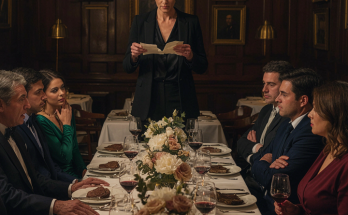
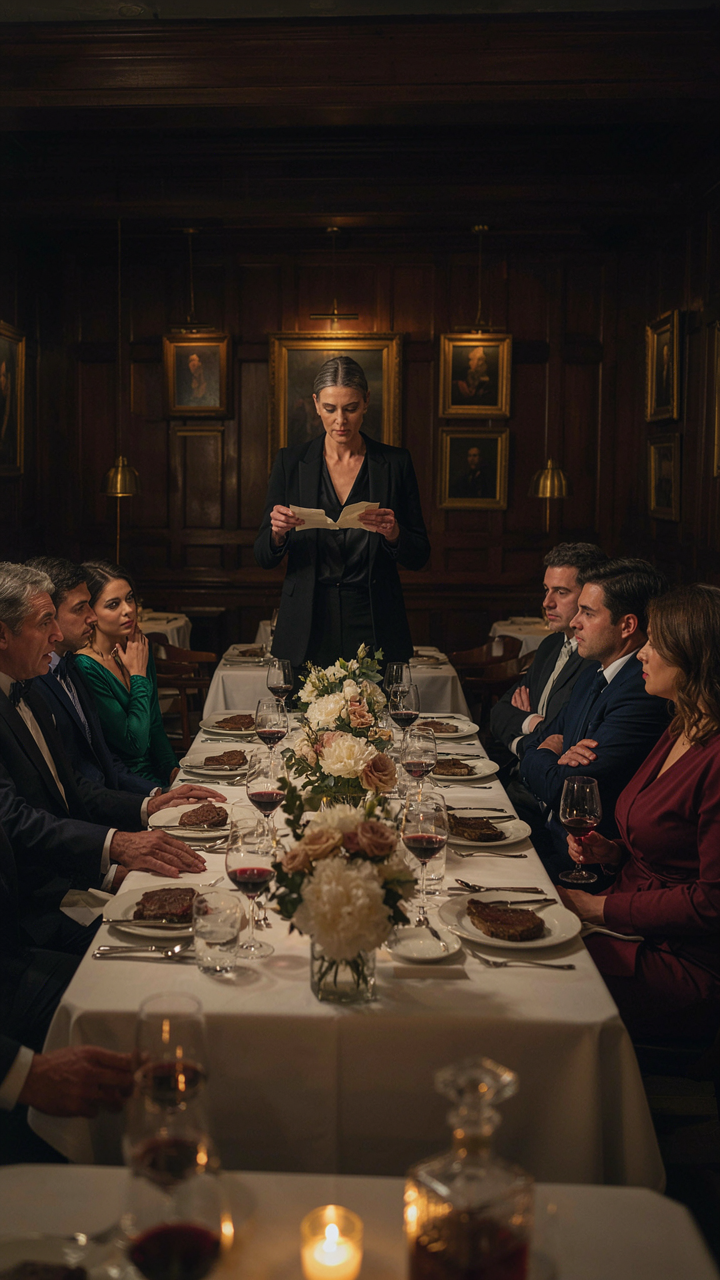
I explained the restaurant dinner.
The canceled transfers.
Chloe’s threats.
Then Sarah’s telephone call.
Helen listened without interrupting.
When I finished,
I heard her chair move.
“Evelyn, have you signed any new documents
for Logan recently?”
“No.”
“Anything involving the house?”
“Absolutely not.”
“Have they ever had access
to your identification documents?”
My stomach tightened.
“Years ago, Logan helped me
replace my driver’s license.”
“And your Social Security information?”
“He knows where I used to keep it.”
Helen went silent.
Then she asked another question.
“Do they have a key
to your downstairs apartment?”
I looked toward the hallway.
“Not officially.”
“That wasn’t what I asked.”
A memory surfaced.
Last Christmas.
I had developed a fever
and spent three days in bed.
Logan brought soup downstairs.
He used my spare key
because I was too weak
to answer the door quickly.
I never remembered getting it back.
“Helen…”
“Yes?”
“I think Logan still has a key.”
“Change the locks on your private apartment.”
“Today?”
“Today. Not their occupied unit.
Your own apartment.”
My heart thudded.
“Do you think they entered?”
“I don’t know.”
That answer frightened me
more than reassurance would have.
Helen continued.
“Bring your deed, identification,
and estate binder to my office.”
“I can be there by eleven.”
“Good. I’ll clear my schedule.”
Before hanging up,
she spoke in the firm voice
I remembered from Martin’s probate.
“Evelyn, don’t confront either of them yet.”
“I wasn’t planning to.”
“Good.”
Then her tone softened.
“And don’t blame yourself for trusting your son.”
I looked at Martin’s photograph.
“Trusting him wasn’t the mistake.”
My throat tightened unexpectedly.
“Refusing to see what he’d become was.”
The next hour passed strangely.
I moved through familiar rooms
as though entering someone else’s home.
Every drawer seemed suspicious.
Every misplaced object felt important.
In the bedroom,
I opened the small fireproof cabinet
where I kept essential papers.
The original deed remained inside.
So did Martin’s death certificate.
Our marriage certificate.
My passport.
The documents looked undisturbed.
But one folder sat crookedly.
I remembered placing it upright.
It contained old banking records
and copies of identification documents.
Inside, several pages were missing.
I checked again.
Then a third time.
My driver’s license photocopy was gone.
So was an old signature card
from the account Martin and I shared.
The room became very quiet.
I sat on the edge of the bed.
Had I misplaced them?
Had I used them somewhere?
Or had someone been searching
through my private belongings?
I wanted to believe
there was an innocent explanation.
That was the most painful part.
Even after the bank’s call,
some stubborn corner of my heart
kept searching for excuses.
Perhaps Logan misunderstood a document.
Perhaps Chloe filled out something incorrectly.
Perhaps the bank had confused customers.
But the missing pages
made those excuses harder to hold.
I picked up my phone.
For a moment,
my thumb hovered over Logan’s name.
His photograph appeared on the screen.
He was smiling beside me
at his college graduation.
Martin had taken that picture.
The sunlight had been so bright
that all three of us squinted.
Logan had wrapped an arm
around my shoulders and whispered,
“We made it, Mom.”
I remembered laughing.
“No, sweetheart. You made it.”
He had shaken his head.
“I couldn’t have done it without you.”
I stared at that younger face.
Then I placed the phone facedown.
There would be time for questions.
First, I needed answers.
At ten forty-five,
I parked outside Helen’s office.
The building stood between
a florist and a small bookstore.
Martin used to complain
that the stairs were too steep.
He always took them anyway.
Today, I noticed every step.
Helen met me at reception.
She was in her early sixties,
with neatly cut dark hair
and glasses hanging from a silver chain.
Her expression changed when she saw me.
“Evelyn.”
She embraced me briefly.
That small kindness nearly broke me.
“I brought everything.”
I lifted the gray binder.
Helen guided me into her office.
A large window overlooked the street.
On the wall hung a framed photograph
of Helen’s daughter graduating law school.
I remembered when that girl
was still wearing braces.
Time had moved so quickly.
Apparently, trust could disappear just as fast.
Helen opened a legal pad.
“Let’s start with the facts.”
For nearly an hour,
I described the financial arrangement.
The rent-free apartment.
The SUV loan.
The monthly transfers.
The repairs.
The dinner.
Chloe’s ultimatum.
And finally, the bank.
Helen wrote without judgment.
When I showed her the total,
she studied it carefully.
“Fifty-eight thousand,
four hundred twelve dollars and thirty cents.”
“Over three years.”
“Does that include the housing benefit?”
“No.”
She looked up.
“What would their apartment rent for?”
“Approximately eighteen hundred a month.”
Helen made another calculation.
“Thirty-six months?”
“Yes.”
She set down her pen.
“That’s another sixty-four thousand eight hundred.”
I looked at her.
The number stunned me.
She continued carefully.
“And that’s before insurance,
property taxes, or other indirect expenses.”
I watched her write a second total.
One hundred twenty-three thousand dollars.
More than that, actually.
And somehow,
I had still been called selfish.
“I thought I was helping them,” I said.
“You were.”
Helen folded her hands.
“But they apparently stopped understanding
that help was voluntary.”
I stared at the binder.
“Logan used to be different.”
“Tell me.”
I hesitated.
Then I remembered a rainy afternoon
twenty-five years earlier.
Logan was eleven.
Martin had been laid off
from the manufacturing plant.
Money was tight.
We canceled our summer vacation
and stopped eating at restaurants.
One evening, Logan found me
sorting grocery coupons at the kitchen table.
He watched for several minutes.
Then he disappeared upstairs.
When he returned,
he carried his little blue savings bank.
There were forty-three dollars inside.
Birthday money.
Money from mowing the neighbor’s lawn.
Coins he had carefully saved.
He pushed it toward me.
“For groceries, Mom.”
I remembered staring at him.
My little boy.
Trying to rescue his parents.
I had pulled him into my arms.
“Sweetheart, that’s your money.”
“I know.”
“And we’re going to be okay.”
He looked uncertain.
“Promise?”
“Promise.”
I kissed his forehead.
“You don’t have to save us.”
He never mentioned it again.
But I kept that blue savings bank.
It was still in my closet.
Helen waited while I finished.
Then she asked quietly,
“When did things begin changing?”
I knew the answer.
I simply hated saying it.
“After he married Chloe.”
Helen watched my face.
I shook my head.
“No. That’s too easy.”
“What do you mean?”
“Chloe encouraged things.
But Logan made choices.”
For years, I had blamed her.
Every unnecessary purchase.
Every missed birthday.
Every cruel remark.
I told myself Logan was being influenced.
Manipulated.
Pulled away from his values.
Yet he was a grown man.
He had watched his wife
hand me that restaurant bill.
And he had said nothing.
The silence belonged to him.
Not just Chloe.
Helen nodded slowly.
“That distinction matters.”
She turned another page.
“Now, about your property.”
She confirmed my ownership documents.
The duplex was solely in my name.
There was no mortgage.
No lien appeared in my records.
Logan and Chloe had no ownership interest.
But Helen warned me
against handling their housing impulsively.
“We’ll use the proper legal process.”
“I don’t want a scene.”
“Then we’ll avoid one.”
She explained written occupancy notices,
local requirements, and court procedures
if they refused to leave.
No sudden lock changes upstairs.
No shutting off essential utilities.
No removing belongings without legal authority.
I listened carefully.
I had spent too many years
following rules at the bank
to abandon them now.
“I want them out,” I admitted.
Helen studied me.
“Are you certain?”
I looked toward the window.
A young mother was passing outside,
holding a little boy’s hand.
He skipped to avoid sidewalk cracks.
Something inside my chest ached.
“No,” I whispered.
Helen said nothing.
“I want my son to apologize.”
My voice became rough.
“I want him to remember who I am.”
I swallowed.
“But I don’t believe
either of those things will happen
while I keep paying for his life.”
Helen nodded.
“Then we protect your rights first.”
We arranged several immediate steps.
A formal challenge to the purported authorization.
Additional banking safeguards.
A review of my credit reports.
A fresh estate-planning assessment.
And written notice that no one
could represent me without verification.
Helen also recommended a police report
if the bank confirmed forgery.
I didn’t resist.
But saying the words
felt like swallowing broken glass.
Police.
Forgery.
My son.
I had never imagined
those words appearing together.
At noon, I left Helen’s office.
Before returning home,
I stopped at a hardware store.
A locksmith named Arthur
met me at the duplex an hour later.
He was a broad-shouldered man
with kind eyes and gray whiskers.
While he examined my private entrance,
he asked about the old lock.
“Giving you trouble?”
“Not exactly.”
“Lost key?”
I considered my answer.
“Someone may have a copy
who shouldn’t have one.”
Arthur nodded without further questions.
He installed a new deadbolt.
Then another lock on
the interior door connecting the stairwell.
When he finished,
he handed me three fresh keys.
“These are yours.”
The metal felt unexpectedly heavy.
“Thank you.”
He pointed toward the upper staircase.
“Want me to do that door too?”
“No.”
I shook my head.
“Only the part of the house
that’s mine to secure.”
Arthur gave a small approving nod.
“Good distinction.”
I paid him and watched him leave.
Then I stood inside my doorway.
The new lock clicked into place.
For the first time in months,
I felt a small measure of control.
But it lasted only seconds.
Above me,
a door slammed.
Chloe appeared at the stair railing.
She wore cream-colored trousers
and an expensive cashmere sweater.
The gold bracelet from the restaurant
gleamed at her wrist.
“What are you doing?”
Her voice carried through the hallway.
“Changing my locks.”
“Why?”
“Because I wanted new locks.”
She descended several steps.
“Since when?”
“Since today.”
Her eyes narrowed.
“Logan said you were acting strangely.”
I looked up at her.
“Did he?”
“Yes. And honestly,
this is getting embarrassing.”
I remained beside my door.
“What’s embarrassing?”
“Your behavior.”
She gestured at the locksmith’s van.
“Changing locks. Cutting off payments.
Acting like everyone’s after you.”
I watched her carefully.
The woman standing above me
had once called me her second mother.
At her bridal shower,
she had cried while opening my gift.
A pearl necklace
that belonged to Martin’s mother.
She had hugged me so tightly
I could hardly breathe.
Now she looked at me
as though I were an inconvenient employee.
“Chloe, have you entered my apartment
when I wasn’t home?”
Her expression shifted.
Only slightly.
But I saw it.
“Why would I do that?”
“That wasn’t my question.”
She crossed her arms.
“Are you accusing me of something?”
“I’m asking.”
“Well, maybe your memory isn’t
what it used to be.”
The hallway seemed to darken.
There it was.
The first small stone
in a wall they were building.
My memory.
My age.
My supposed confusion.
I felt Helen’s warning return.
Don’t confront them yet.
So I kept my voice mild.
“Perhaps.”
Chloe smiled thinly.
“Exactly.”
“But I remember my appointments.”
Her smile faltered.
“And I remember what happened
at your anniversary dinner.”
“You’re still obsessed with that?”
“No.”
I looked straight at her.
“I’m learning from it.”
For a moment,
we simply stared at one another.
Then her phone rang.
She glanced at the screen.
The name displayed was Sylvia.
Her mother.
Chloe answered immediately.
“Mom, I’ll call you back.”
She ended the call.
Then she lowered her voice.
“You know, Evelyn,
you’re making this difficult for everyone.”
I touched my new key.
“Not everyone.”
Her jaw tightened.
“What does that mean?”
“It means I’m finally taking care
of someone I neglected for years.”
“Who?”
“Myself.”
I stepped inside and closed the door.
Chloe remained on the staircase.
I could hear her breathing.
Then she muttered something
I couldn’t quite make out.
I waited until her footsteps retreated.
Only then did I move.
My knees had become weak.
I leaned against the wall.
And for one terrible moment,
I wanted to cry.
Not because she frightened me.
Because she had sounded so certain.
As if my independence
were an offense she could punish.
At two fifteen,
I arrived at the bank.
Sarah Jenkins met me
in a private conference room.
She was younger than I expected.
Perhaps forty.
Dark hair pinned neatly back.
A navy blazer.
A serious expression that reminded me
of my own younger banking days.
She offered water.
I accepted.
My mouth was painfully dry.
“Mrs. Beckett, thank you for coming.”
“Thank you for calling.”
She sat across from me.
A second employee joined us.
He introduced himself as Daniel Ruiz,
a senior fraud investigator.
He explained the review process
and asked me to confirm my identity.
I handed over my documents.
After verification,
Sarah placed several printed pages
in front of me.
My name appeared at the top.
Evelyn Margaret Beckett.
I recognized the document format.
A durable financial power of attorney.
The authority listed was extensive.
Bank accounts.
Investments.
Financial records.
Certain property-related transactions.
The appointed agent was Logan Beckett.
My son.
I turned the page.
My date of birth appeared correctly.
So did my address.
And my Social Security number.
My stomach dropped.
Whoever prepared this document
had possessed sensitive information.
Then I reached the signature page.
The name looked like mine.
At first glance,
it was frighteningly convincing.
The long loop of the E.
The sharply angled B.
The small final flourish.
But I knew my handwriting.
I had signed thousands of documents
during my career.
And one thing had changed
after Martin died.
My hand had developed mild arthritis.
My signature became shorter.
Less decorative.
I stopped making elaborate loops
because they hurt my fingers.
The signature on this document
was the one I used years earlier.
The one preserved on
my old bank identification cards.
“This isn’t my current signature.”
Daniel leaned forward.
“Can you explain the difference?”
I showed him.
“The lower loop is too wide.”
He studied the page.
“And this flourish…”
I pointed to the final letter.
“I haven’t signed like that
in almost eight years.”
Sarah exchanged a look with Daniel.
He made a note.
I turned another page.
A notarization block appeared below.
There was a stamp.
A date.
A signature.
I read the name aloud.
“Sylvia Monroe.”
Chloe’s mother.
The same woman
who had brought chocolates to my door.
My fingers went numb.
“Do you know her?” Sarah asked.
I almost laughed.
I wanted to.
The alternative was screaming.
“She’s my daughter-in-law’s mother.”
Daniel’s pen stopped.
“Are you certain?”
“Absolutely.”
I looked at the stamp again.
“Sylvia works at a medical office.”
“Do you know whether she’s a notary?”
“I didn’t.”
But apparently, I did now.
I stared at the document.
The pieces were arranging themselves.
Chloe’s threat.
The missing identification copies.
The stolen signature.
And Sylvia’s visit.
That box of chocolates
had not been an apology.
Perhaps it had been reconnaissance.
Perhaps she had wanted to see
whether I knew what was happening.
Daniel asked several more questions.
Had I met Sylvia recently?
Had I signed anything before her?
Had I discussed financial authorization?
No.
No.
And no.
Then Sarah brought forward
another document.
“This accompanied the submission.”
It was a typed letter.
The heading read:
“Statement Regarding Financial Assistance.”
I read the first paragraph.
According to the letter,
I had recently experienced
episodes of confusion and forgetfulness.
It claimed I frequently misplaced money.
It claimed I made contradictory decisions.
It claimed I needed help
managing complicated financial matters.
I felt something break inside me.
The letter was signed:
Logan Beckett.
My only child.
My little boy with the blue savings bank.
He had described his mother
as a woman who couldn’t trust herself.
I read every sentence twice.
The words didn’t change.
“I don’t understand.”
Sarah said nothing.
I looked up.
“This isn’t medical evidence.”
“No,” Daniel answered.
“It’s a statement from the proposed agent.”
“Does the bank accept statements like this?”
“Not as proof of incapacity.”
He spoke carefully.
“But we preserve everything submitted
as part of the review.”
I nodded.
My training understood the distinction.
My heart did not.
Logan hadn’t simply asked
for permission to help me.
Someone had constructed a story
in which I needed rescuing.
And they had made him the rescuer.
“What happens now?” I asked.
Daniel explained that the attempted authorization
would remain blocked during investigation.
The bank would document my denial.
It would review authentication concerns.
They could provide appropriate records
through formal legal channels.
He encouraged a police report.
Sarah showed me how to establish
new account security procedures.
We reviewed recent transactions.
No unauthorized withdrawals had cleared.
That was the first good news.
Then Daniel looked at another screen.
“Mrs. Beckett, there’s something else.”
My stomach tightened again.
“A request was also made
for information about your available balances.”
“From whom?”
“The person identifying himself
as your proposed agent.”
“When?”
“Yesterday afternoon.”
I looked at the signature page.
“Was the information released?”
“No.”
Sarah shook her head firmly.
“Our staff referred the request
to the verification department.”
I breathed slowly.
“What information did he want?”
Daniel hesitated.
“Combined available funds.
Account types.
And whether large transfers required notice.”
I could feel my pulse
beating beneath my collar.
This wasn’t about helping me
remember to pay electric bills.
This was about finding out
how much money they could access.
I looked at Sarah.
“May I ask who noticed the signature?”
She glanced at Daniel.
Then smiled faintly.
“An employee named Rebecca.”
“Is she here?”
“She’s working the front counter.”
“I’d like to thank her.”
Sarah hesitated.
Then nodded.
After our meeting,
she introduced me to Rebecca Ellis.
Rebecca was a young teller
with round glasses and nervous hands.
When Sarah explained who I was,
her cheeks turned pink.
“I just thought something looked unusual.”
I took her hand.
“You did your job beautifully.”
She smiled.
“Thank you.”
I looked at her name badge.
“How long have you worked here?”
“Eight months.”
Eight months.
I had spent decades telling employees
that details mattered.
That asking one additional question
could protect a lifetime of savings.
Now this young woman
had protected mine.
“You may never know
how much this meant,” I said.
Rebecca’s smile softened.
“I’m glad we called.”
Outside the bank,
the afternoon sky had darkened.
Rain clouds gathered above the parking lot.
I sat in my car
with my hands resting on the wheel.
The documents lay inside
a sealed envelope beside me.
I wanted to throw them away.
Burn them.
Pretend they had never existed.
Instead, I called Helen.
She listened to everything.
When I mentioned Sylvia’s notarization,
her voice sharpened.
“Don’t contact her.”
“I wasn’t going to.”
“And don’t tell Logan
what the bank showed you.”
I watched a couple
cross the parking lot together.
The man held an umbrella
over the woman’s head.
Martin always did that.
Even when it meant
his own shoulders got soaked.
“Helen, I don’t know
how much more I can discover.”
“Then we proceed one fact at a time.”
“The letter says I’m confused.”
“I heard you.”
“He signed it.”
“I know.”
I swallowed.
“He signed a letter saying
his mother couldn’t manage her money.”
Helen remained quiet.
Then she asked,
“Are you safe at home tonight?”
I considered the upstairs apartment.
The shared driveway.
The staircase.
The people who had already threatened me.
“I have new locks.”
“That’s good.”
“But I don’t know
what they might do next.”
“Then don’t spend tonight alone.”
I almost objected.
For years,
I had prided myself on independence.
I could fix a leaking faucet.
Balance complicated accounts.
Manage the duplex.
Drive across three states alone.
But independence didn’t mean
refusing help when danger appeared.
“I’ll call June.”
June Mercer had been my closest friend
since before Logan was born.
We met in a childbirth class.
Her daughter arrived six weeks
before Logan.
Our husbands became fishing partners.
Our families shared holidays.
And when Martin died,
June stayed beside my bed
the first night I couldn’t sleep.
I called her from the parking lot.
She answered on the second ring.
“Evelyn, you sound terrible.”
I hadn’t even spoken yet.
“How did you know?”
“Because you never call before supper
unless something’s wrong.”
I tried to smile.
“Could you stay over tonight?”
She didn’t ask why.
“Of course.”
Then she paused.
“Should I bring pajamas
or my emergency casserole?”
Despite everything, I laughed.
“Both.”
“That serious?”
“Yes.”
Her voice became gentle.
“I’m on my way.”
By the time I reached home,
rain was tapping against the windows.
The upstairs apartment was quiet.
Too quiet.
Usually, Chloe played music
while cooking or scrolling through her phone.
Logan often turned on the television.
Tonight, nothing.
I entered through my private door.
The new lock worked smoothly.
I placed the bank envelope
inside my fireproof cabinet.
Then I checked each room.
The living room.
The kitchen.
My bedroom.
The office.
In the office,
I noticed something strange.
The bottom drawer of my desk
wasn’t completely closed.
I always kept that drawer locked.
Inside were old tax records,
banking statements, and family documents.
I tried the key.
The lock turned.
I opened it slowly.
A yellow folder had been moved.
Beneath it,
I found a small indentation
in the paper lining the drawer.
As though someone had used a screwdriver
to pry at the inner panel.
I sat down.
My heart was beating too quickly.
Then I noticed the family photograph
on my desk.
Martin.
Logan.
Me.
Taken beside the lake
during our last vacation together.
Someone had turned the photograph facedown.
I was certain.
That morning,
I had dusted around it.
Had I done it accidentally?
Possibly.
But the missing documents
made every possibility frightening.
I reached for my phone.
Then stopped.
Helen had told me
to preserve potential evidence.
I photographed the drawer.
The folder.
The damaged lining.
The photograph.
Then I left everything untouched.
At six,
June arrived carrying a suitcase
and a covered dish.
She wore a bright yellow raincoat.
Her white curls were damp.
“Well,” she announced,
“I brought chicken and an attitude.”
I let her inside.
She took one look at my face.
“Oh, Evelyn.”
I started crying.
Not delicately.
Not quietly.
The kind of crying
that surprises you with its violence.
My shoulders shook.
My breath caught.
June put down the casserole
and wrapped both arms around me.
For several minutes,
I couldn’t explain anything.
She simply held me.
When the tears finally slowed,
I led her into the kitchen.
We ate chicken casserole
at the little table Martin built.
I told her everything.
The dinner.
The money.
The forged documents.
Sylvia.
Logan’s statement.
June’s fork remained untouched.
When I finished,
she leaned back slowly.
“That boy needs to be ashamed.”
I stared at my plate.
“I don’t know him anymore.”
June looked toward the ceiling.
“Maybe you haven’t known him
for a long time.”
The words hurt.
But they weren’t cruel.
She reached across the table.
“Do you remember when Logan
borrowed your car at seventeen?”
I nodded.
“He dented the passenger door.”
“And blamed a shopping cart.”
A sad smile crossed my face.
“Martin found blue paint
from the neighbor’s fence.”
June shook her head.
“Logan cried when he confessed.”
“He did.”
“And Martin made him pay
for the repair with summer wages.”
I remembered.
Logan worked every Saturday
at the local hardware store.
For three months,
he brought home his paycheck.
Martin took only enough
to cover the repair.
Then he returned the remainder
in a savings envelope.
“He learned something that summer,” I whispered.
June nodded.
“He learned consequences weren’t the same
as losing his parents’ love.”
I looked up.
She squeezed my hand.
“That lesson still applies.”
The rain became heavier.
Upstairs, a door opened.
Footsteps crossed the hallway.
June glanced toward the ceiling.
“Are they home?”
“Yes.”
“Do they know I am?”
“Not yet.”
She took another bite.
“Good. Let them wonder.”
We both laughed.
It felt strange.
Almost forbidden.
But laughter was something
I had missed inside my own home.
Later, while June washed dishes,
I checked my phone.
There were seven missed calls.
Four from Logan.
Three from Chloe.
A new message had arrived.
Logan wrote:
“Mom, we need to discuss some paperwork.”
I stared at the screen.
Paperwork.
What a small word
for something so terrible.
Another message followed.
“Please don’t make this a legal issue.”
My breath caught.
I showed June.
She read both messages.
“Interesting.”
“What?”
“He doesn’t ask what happened.”
I looked at her.
“He already knows there’s a problem.”
June nodded.
“And he’s worried about consequences.”
I saved the messages.
Then I forwarded screenshots to Helen.
I didn’t reply.
At eight thirty,
someone knocked on my door.
Three careful knocks.
Then Logan’s voice.
“Mom?”
June looked at me.
I shook my head.
“Mom, I know you’re in there.”
His voice sounded tired.
Almost pleading.
“Can we talk?”
I remained seated.
He waited.
Then knocked again.
“Please.”
June whispered,
“You don’t have to answer.”
I knew.
But hearing him outside
made every memory rise at once.
His first fever.
His first bicycle.
His high school graduation.
The hospital waiting room
where Martin died.
Logan had held my hand that day.
He promised I would never be alone.
Now I felt lonelier
than I had since the funeral.
I approached the door.
I didn’t open it.
“What do you want, Logan?”
Relief filled his voice.
“Mom. Thank God.”
“What do you want?”
“We need to straighten things out.”
“Which things?”
He hesitated.
“The bank stuff.”
My body went rigid.
I glanced at June.
She stood quietly behind me.
“What bank stuff?”
“Come on, Mom.”
His voice lowered.
“You know what I’m talking about.”
I kept my hand
away from the lock.
“Explain it.”
A long silence followed.
Then he said,
“Chloe was trying to help.”
The words struck like a slap.
“Help whom?”
“Us.”
I closed my eyes.
There it was.
Not me.
Us.
The household above my head.
The people who had mistaken
my savings for their inheritance.
“How does forging my signature help me?”
He made a sharp sound.
“Nobody forged anything.”
“Then why is your name
on a document I never signed?”
He didn’t answer.
Behind him,
I heard Chloe’s voice.
“Don’t let her twist this!”
Logan muttered something.
Then he turned back toward the door.
“Mom, you’re overreacting.”
I felt June stiffen beside me.
I remained calm.
“Did you submit those papers?”
“I don’t want to discuss legal details
through a closed door.”
“Then answer one simple question.”
“What?”
“Did you submit them?”
Silence.
For several seconds,
I heard only rainwater
dripping from the porch roof.
Finally, Logan whispered,
“It was supposed to protect everyone.”
My knees weakened.
“What does that mean?”
He exhaled impatiently.
“You’re making unpredictable financial decisions.”
I stared at the door.
“Such as?”
“Canceling the transfers.”
“Those are my transfers.”
“Removing Chloe from the credit card.”
“That is my credit card.”
“Threatening our housing.”
“This is my property.”
His voice rose.
“See? Everything is yours!”
I stepped backward.
Something in his tone
reminded me of Chloe.
Then he said the sentence
that I would remember forever.
“Do you know how hard it is
to build a life around you
when you keep changing the rules?”
The words emptied the room.
Build a life around me.
Not beside me.
Not with me.
Around what I provided.
I looked toward Martin’s photograph.
For years, I had believed
my son needed a little help.
But he had built his entire adult life
on the assumption that my money
would always be available.
“Logan,” I said quietly,
“you are thirty-eight years old.”
“So?”
“You’ve had ten years of marriage
and three years of free housing.”
“Mom…”
“You have a job.
Chloe has a job.”
“That’s not the point.”
“Then what is?”
He didn’t answer.
I continued.
“At what age were you planning
to support your own household?”
His response was immediate.
“We support ourselves.”
I almost laughed.
Instead, I asked,
“Then why does losing my transfers
threaten your marriage?”
That silenced him.
Behind the door,
Chloe said something angrily.
Then her heels clicked away.
Logan remained outside.
His voice changed.
“Mom, can you please
just open the door?”
For one moment,
I wanted to.
Every maternal instinct
urged me to turn the key.
To see his face.
To believe whatever explanation
might allow us to become a family again.
But June gently touched my shoulder.
And I remembered the forged signature.
“No,” I said.
“Mom…”
“Not tonight.”
I heard his breathing change.
Then he spoke softly.
“If you keep treating us like criminals,
things are going to get ugly.”
I froze.
“Is that a threat?”
“No.”
He answered too quickly.
“It’s just a warning.”
I swallowed.
“Good night, Logan.”
I stepped away.
He knocked once more.
Then footsteps moved up the staircase.
A door slammed.
June looked at me.
“Are you okay?”
I shook my head.
“No.”
She embraced me again.
“But I will be.”
The following morning,
Helen called before breakfast.
She had reviewed the photographs.
She wanted me to contact police
and make a formal report.
I agreed.
At nine,
June drove me downtown.
The police station smelled
of coffee and disinfectant.
A wall clock clicked steadily
above the waiting area.
I sat beneath a bulletin board
covered in community safety notices.
I felt ridiculous.
An elderly mother
reporting her own son.
Then I remembered
the letter describing me as confused.
My embarrassment disappeared.
A detective named Mara Ortega
met us in an interview room.
She was calm and attentive,
with dark eyes that missed little.
She asked me to explain
the events chronologically.
I began with the anniversary dinner.
She listened without judgment.
Then I described the banking documents.
The missing identification copies.
The notarization.
Logan’s conversation at my door.
Detective Ortega wrote carefully.
“Have you retained the messages?”
“Every one.”
“Have you changed your passwords?”
“Yes.”
“Have you checked your credit?”
“My attorney is helping.”
She nodded.
“Good.”
Then she leaned forward.
“Mrs. Beckett, I want to be clear.”
I waited.
“Financial exploitation can happen
inside otherwise ordinary families.”
I looked down.
“He’s my son.”
“I understand.”
“No.”
My voice trembled.
“I don’t think anyone understands
what it feels like
to say that sentence here.”
Her expression softened.
“You’re right.”
She placed her pen down.
“I don’t know exactly
what you’re experiencing emotionally.”
Then she continued.
“But I do know
you deserve protection.”
I stared at my hands.
They were trembling again.
Mara waited until I looked up.
“We’ll review the information available
and seek the appropriate records.”
“Will he be arrested?”
“Not simply because you made a report.”
I nodded.
She explained that investigators
would need to establish
who prepared the documents,
who signed them,
and whether anyone knowingly attempted fraud.
The bank’s records mattered.
The notary records mattered.
Any communications about the paperwork mattered.
I appreciated her precision.
I had spent a career
teaching employees not to leap
from suspicion to accusation.
Now I needed
to practice the same discipline.
Before leaving,
I asked one final question.
“What should I do
if they become more aggressive?”
She gave me practical advice
about documenting threats,
protecting my private space,
and contacting emergency services
if I felt physically unsafe.
Then she handed me her card.
“Please keep this number.”
I tucked it into my purse.
“Thank you.”
Outside,
the sun had finally returned.
June drove silently for several blocks.
Then she asked,
“Do you want coffee?”
I looked at her.
“At a café?”
“Unless you’d rather buy
the entire coffee company.”
I laughed unexpectedly.
“Just coffee.”
We stopped at a little diner
where Martin used to order pie.
The waitress recognized me.
“Evelyn Beckett!”
Her name was Rosie.
She had worked there
for nearly twenty years.
“Where have you been hiding?”
“Mostly at home.”
She smiled.
“Well, that’s no good.”
Then she glanced at June.
“Two coffees?”
“And apple pie,” June answered.
I protested weakly.
“It’s barely eleven.”
June raised an eyebrow.
“Your son is trying to steal your money.
I think pie is permitted.”
Rosie laughed,
unaware of the truth behind the joke.
As she walked away,
June looked toward the window.
“You know what I think?”
“What?”
“I think you’ve been so busy
being useful to everyone
that you forgot how to be happy.”
I studied the sugar dispenser.
“Martin used to say something similar.”
“What?”
“He said I could manage
everyone’s emergencies except my own.”
June smiled sadly.
“He knew you.”
“Yes.”
I thought of the years after his death.
The quiet bedroom.
The empty place at dinner.
The weekends that stretched endlessly.
When Logan began visiting more often,
I felt grateful.
When he suggested buying the duplex,
I liked the idea immediately.
Two separate homes.
One shared building.
Family nearby without losing privacy.
It seemed perfect.
Martin would have loved it.
Or so I told myself.
But gradually,
the upstairs family became the center
of every decision I made.
If Chloe wanted a new appliance,
I adjusted my budget.
If Logan needed help,
I postponed my own plans.
When the roof required repairs,
I paid without complaint.
When my old car needed replacing,
I decided it could wait.
I had confused being needed
with being loved.
And the discovery made me feel foolish.
June watched me carefully.
“What are you thinking?”
“That I gave away my retirement
one little favor at a time.”
She shook her head.
“No.”
I looked up.
“You gave from love.”
“Does that make it better?”
“It makes your intentions honorable.”
She reached for her coffee.
“But their response still matters.”
Rosie returned with pie.
Warm cinnamon rose from the plates.
For a little while,
we spoke about ordinary things.
Her granddaughter’s new job.
June’s garden.
A neighbor’s noisy dog.
I hadn’t realized
how much I missed ordinary conversation.
Nobody asked me for money.
Nobody criticized my boundaries.
Nobody expected me
to solve a financial crisis.
For forty minutes,
I was simply Evelyn.
And that felt wonderful.
When we returned home,
a silver sedan sat in my driveway.
Sylvia Monroe stood beside it.
She wore a pale pink coat
and carried a large handbag.
Her expression brightened when she saw me.
“Evelyn, darling!”
June stopped walking.
I felt my stomach tighten.
Sylvia hurried toward us.
“I’ve been so worried about you.”
I didn’t answer.
She glanced at June.
“Oh. You have company.”
“Yes.”
June stepped closer.
“Hello, Sylvia.”
Sylvia’s smile became thinner.
“We should talk privately.”
I looked at her handbag.
The same bag she’d carried
when she brought chocolates.
“I’m not available for a private conversation.”
Her eyes flickered.
“Really, Evelyn, don’t be difficult.”
I stood very still.
There it was again.
Difficult.
Unpredictable.
Confused.
Every objection transformed
into a defect in my character.
“What did you want?” I asked.
Sylvia lowered her voice.
“Logan and Chloe are devastated.”
June made a small sound.
Sylvia ignored her.
“They’ve been so hurt
by this misunderstanding.”
“What misunderstanding?”
“The restaurant.”
I waited.
Sylvia smiled sadly.
“You know how celebrations can get expensive.”
“Yes.”
“And Chloe simply assumed
you would want to contribute.”
“By paying for fourteen people
who finished eating before I arrived?”
Her smile stiffened.
“Evelyn, family doesn’t keep score.”
I considered the sentence.
Then I said,
“Someone at that table kept the bill.”
June coughed into her hand.
Sylvia’s cheeks flushed.
“This attitude isn’t helping.”
“What would help?”
“An apology.”
I stared at her.
“From whom?”
“You, of course.”
The audacity almost impressed me.
She continued quickly.
“Chloe was embarrassed in front of everyone.
Logan is under tremendous stress.”
I folded my arms.
“Stress about what?”
Sylvia hesitated.
“Financial matters.”
“Whose finances?”
She looked away.
“Evelyn, you’re being intentionally unpleasant.”
I took one step closer.
“Sylvia, are you a notary public?”
Her entire expression changed.
The transformation was immediate.
Her shoulders stiffened.
Her fingers tightened around her purse.
“Why do you ask?”
“Because I’m curious.”
“Yes.”
She swallowed.
“I am.”
“Do you notarize many documents?”
“Occasionally.”
I watched her eyes.
She was calculating.
That much was obvious.
“Have you notarized anything recently
for my son?”
Sylvia’s face became pale.
June stood silently beside me.
Finally, Sylvia said,
“I don’t discuss confidential business.”
I nodded.
“Of course.”
Her eyes darted toward the building.
“Did someone call you?”
I didn’t answer.
“Evelyn?”
I reached for my front door.
“I think our conversation is finished.”
She stepped forward.
“Wait.”
I stopped.
Her voice became urgent.
“Whatever you think happened,
you should understand that Logan loves you.”
I turned.
“Then why is everyone so afraid
of letting me make my own decisions?”
She opened her mouth.
Nothing came out.
I looked directly at her.
“Love does not require control, Sylvia.”
Then I entered my apartment.
June followed.
I locked the door.
Through the window,
we watched Sylvia stand motionless
beside her car.
She pulled out her phone.
Dialed.
Spoke urgently.
Then drove away.
June looked at me.
“Well.”
I sat down slowly.
“She knows.”
June nodded.
“She absolutely knows.”
That afternoon,
Helen sent formal letters
challenging any purported financial authorization.
She also began reviewing
the proper process for ending
Logan and Chloe’s rent-free occupancy.
I spent hours gathering documents.
Utility bills.
Insurance statements.
Repair invoices.
Loan records.
Bank transfers.
Every page told a story.
Not merely about money.
About an imbalance
I had allowed to grow unnoticed.
At four thirty,
I found an old handwritten note
inside the SUV loan folder.
It was from Chloe.
Dated two years earlier.
“Thank you for always believing in us.
We promise we’ll make you proud.”
A small heart followed her signature.
I studied the handwriting.
Then I remembered the day
she first asked for the loan.
She had sat in my kitchen
with tears in her eyes.
Her old car was unreliable.
She needed something safe.
She promised to repay me
within eighteen months.
I wrote the check that afternoon.
She kissed my cheek.
Logan hugged me.
For two weeks,
they called me almost every day.
Then the calls slowed.
Payments never began.
When I asked about repayment,
Chloe said her expenses were higher
than she expected.
Then she purchased expensive jewelry.
Then new furniture.
Then a weekend trip.
Each time,
I told myself repayment could wait.
Now I looked at the little heart
on the thank-you note.
And wondered whether Chloe
had ever intended to repay me.
I placed it in the binder.
Not because I wanted revenge.
Because evidence mattered.
At six,
a certified envelope arrived.
Helen had arranged service
of the appropriate written occupancy notice.
The paperwork explained their legal obligations.
It did not demand instant departure.
It did not threaten illegal eviction.
It simply established
that the free arrangement was ending.
I held my copy for a long time.
Then I placed it beside Martin’s photograph.
“I’m doing it,” I whispered.
His familiar smile stared back.
For years,
I had imagined what he would say
about everything that happened.
Would he be disappointed in Logan?
Would he blame Chloe?
Would he ask me to forgive them?
I didn’t know.
But I remembered something
he told me after Logan’s childhood car accident.
“Being a parent doesn’t mean
preventing every consequence.”
At the time,
I thought he was being stern.
Now I understood.
An hour later,
I heard shouting upstairs.
The certified notice had apparently arrived.
A chair scraped.
Something heavy struck the floor.
Then Chloe screamed.
“She can’t do this!”
June looked up from her book.
I remained on the sofa.
Logan’s voice followed.
Low.
Angry.
Then Chloe shouted again.
“Your mother thinks she owns everything!”
June slowly lowered her book.
“Doesn’t she?”
I almost smiled.
The shouting continued for several minutes.
Then stopped.
My phone lit up.
Chloe.
I let it ring.
A moment later,
another call arrived.
Then another.
Finally, a message.
“You’re making a huge mistake.”
I saved it.
Another appeared.
“We have rights.”
I answered that one.
“Yes. And so do I.
The legal process will protect them.”
Her response came almost immediately.
“You are unbelievable.”
I put the phone away.
My hands were shaking.
But I didn’t regret the message.
For the first time,
I had answered a threat
without defending my right to exist.
At eight twenty,
Helen called again.
Her voice sounded different.
More urgent.
“Evelyn, are you sitting down?”
I looked at June.
“Yes.”
“I received a response
to our property-record inquiry.”
My pulse quickened.
“What did they find?”
“Someone recently requested title information
for your duplex.”
“Who?”
“A company called
North Ridge Property Solutions.”
I had never heard the name.
Helen continued.
“That alone wouldn’t prove anything.
Public property information can be requested.”
“But?”
“But the inquiry also involved
a proposed transaction.”
My hands went cold.
“What transaction?”
“A transfer of your property
to a limited liability company.”
I stared across the room.
“That’s impossible.”
“No transfer has been confirmed
in the records I’ve reviewed.”
She spoke carefully.
“But someone appears to be preparing one.”
I pressed my fingers against my forehead.
“Helen, I never agreed
to sell my home.”
“I know.”
“This is where I live.”
“I know.”
“Martin and I…”
My voice broke.
“This is all I have left
that feels like a family home.”
Helen waited.
Then she asked,
“Do you know anyone named Aaron Bell?”
I frowned.
“No.”
“He’s associated with the inquiry.”
“What does that mean?”
“We’re working to establish his role.”
I looked toward the ceiling.
Upstairs,
Logan and Chloe had gone quiet.
Too quiet.
Helen continued.
“I want you to remain cautious.
Don’t sign anything.
Don’t meet anyone alone.”
“All right.”
“And Evelyn?”
“Yes?”
“Your son may not be the only person involved.”
After the call,
I sat without moving.
June came beside me.
“What happened?”
I told her.
She closed her eyes.
“Dear God.”
We sat together
while the evening darkened outside.
At nine fifteen,
my phone received a message
from an unfamiliar number.
There was no greeting.
No explanation.
Only seven words.
“You need to see what he did.”
Below the message
was a video attachment.
I stared at it.
June leaned closer.
“Don’t open anything suspicious.”
I nodded.
Instead, I forwarded the message
and its details to Helen,
asking whether she could verify it safely.
A few minutes later,
Helen called.
“I’ve received it.”
“Can you open it?”
“Give me a moment.”
I listened to faint tapping.
Then silence.
“Helen?”
She didn’t answer immediately.
When she finally spoke,
her voice was strained.
“Evelyn, I need you to prepare yourself.”
My chest tightened.
“What is it?”
“It’s a video from an office.”
“What office?”
“It appears to be
a document preparation business.”
I closed my eyes.
“And?”
Helen took a breath.
“There’s a man seated at a desk.”
I gripped June’s hand.
“He has several papers in front of him.”
“Who is it?”
Helen paused.
“Evelyn…”
“Tell me.”
“It’s Logan.”
I stopped breathing.
Helen continued.
“Chloe is standing beside him.”
There was another pause.
Then she said the words
that shattered the last excuse
I had been holding onto.
“Your son is practicing your signature.”
I made a small sound.
June’s hand tightened around mine.
Helen’s voice remained low.
“He writes it several times.
Chloe points to an example.
Then he tries again.”
The room seemed to vanish.
I could hear my heartbeat.
Nothing else.
“Does he know he’s being recorded?”
“I can’t tell.”
“Is there sound?”
“Yes.”
I swallowed.
“What does he say?”
Helen hesitated.
Then she answered.
“Chloe tells him
the signature must look natural.”
I pressed a hand against my mouth.
“And Logan replies…”
She stopped.
“Helen, please.”
Her next words came quietly.
“He says,
‘I know how my mother signs.
I’ve watched her do it my whole life.'”
I stared at Martin’s photograph.
My beautiful boy.
My little boy
who once offered me forty-three dollars
because he thought we needed groceries.
Now he was using a lifetime
of watching me sign documents
to steal what I had spent
that same lifetime building.
I wanted to believe
the recording showed a misunderstanding.
A rehearsal.
A practical joke.
Anything.
Then Helen spoke again.
“There’s something else in the video.”
I struggled to breathe.
“What?”
“Chloe asks whether you’re likely
to discover the transaction.”
My throat tightened.
“And what does Logan say?”
Helen’s voice nearly disappeared.
“He says you won’t find out
until after the property belongs to them.”
I closed my eyes.
But the next sentence
was the one that destroyed me.
Helen continued.
“Then he laughs and says,
‘By then, she’ll have nowhere else to go.'”