“Just a tax thing, babe. Don’t even read it.”My husband placed the document beside my coffee while I was helping our daughter glue paper wings onto a cardboard butterfly.
“Where?” I asked.He tapped a yellow tab.I signed.
Three months later, I discovered he had transferred our house into his mother’s name and emptied our savings account.
One hundred eighty thousand dollars.Gone.Then came the divorce papers.
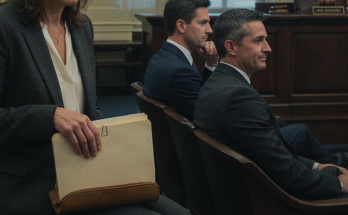
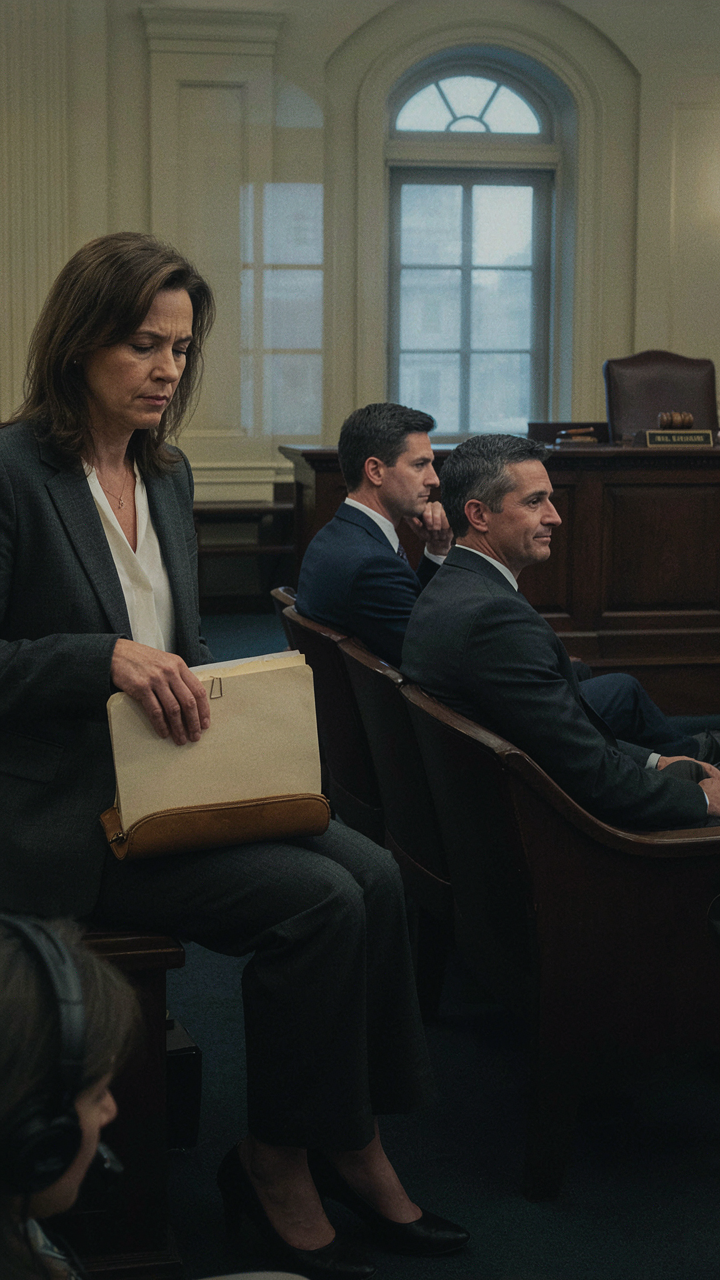
And in court, his lawyer smiled while explaining that I had nothing.No assets. No home. No savings.Across the aisle, my husband adjusted his expensive watch.
The one I had bought him for our tenth anniversary.Then the judge looked at me.
“Mrs. Reynolds, do you have anything you wish to present?”
I reached into my purse.
For the first time all morning, my hands stopped shaking.
“Yes, Your Honor.”
Before all that, I thought betrayal would be loud.
A slammed door. A midnight confession. Another woman calling during dinner.
Mine arrived beside a cooling cup of coffee.
Daniel and I had been married twelve years. Our daughter, Sophie, was eight. I worked as an elementary school librarian, and he managed a construction supply company.
We weren’t rich, but we were comfortable.
At least, that was what he told me.
Daniel handled the finances because he said numbers relaxed him.
I handled appointments, school forms, groceries, birthdays, and remembering which nights the trash went out.
For years, that arrangement seemed reasonable.
Then reasonable became convenient.
And convenient became unquestioned.
My father noticed before I did.
“Do you know what’s in your retirement account?” he asked once.
We were sitting on his porch, watching Sophie chase bubbles.
“Daniel keeps track.”
Dad turned toward me.
“That wasn’t my question, Ellie.”
I laughed because I didn’t want an argument.
He didn’t laugh back.
My father, Thomas Mercer, had spent thirty-seven years repairing industrial refrigeration equipment.
He drove the same pickup until the driver’s seat split. He saved rubber bands. He washed aluminum foil if it hadn’t gotten too dirty.
Daniel called him cheap.
Dad called himself prepared.
When Daniel and I bought our house, we were short on the down payment. Dad offered to lend us the difference, along with money for repairs.
Ninety-five thousand dollars.
I protested.
He said, “You can pay me back. I’m helping you buy a house, not asking you to stop being adults.”
We signed papers at his attorney’s office.
Daniel barely glanced at them.
Outside, he whispered, “Your dad acts like we’re strangers.”
“He wants everything clear,” I said.
“He could’ve just given it to us.”
That was the first thing I should have remembered later.
Dad had helped us.
Daniel believed that meant the money belonged to him.
Eight years passed.
We repainted the kitchen. Replaced the roof. Measured Sophie against the pantry door every birthday.
Daniel changed slowly enough that I kept finding explanations.
He became impatient when I asked about bills.
He started leaving the room to answer calls.
His mother, Patricia, began telling me I was lucky.
“Some husbands resent wives who earn so little.”
I earned enough to buy groceries, pay for Sophie’s activities, and cover our health insurance.
But after hearing something often enough, you begin defending yourself silently.
I started working summer programs.
Daniel bought a newer car.
I stopped mentioning it.
My father died on a Thursday in February.
Three weeks before, while he was still strong enough to sit at his kitchen table, he handed me a blue folder.
The elastic closure had stretched loose.
“Keep this somewhere safe.”
“What is it?”
“Copies of the house loan. The original documents are with Ruth.”
Ruth Bell was his attorney.
“Daniel has our paperwork.”
Dad held the folder a moment longer before letting go.
“These are yours.”
I remember being irritated.
He was dying, and he wanted to discuss documents.
“Dad, please.”
His face softened.
“I hope you never need them.”
I put the folder in a box with his watch, an old birthday card, and the photograph of him holding Sophie at the hospital.
For months, I couldn’t open that box.
Grief made even ordinary things difficult. I bought his favorite crackers twice before remembering.
Daniel attended the funeral, shook hands, and left the reception early.
Work emergency.
I believed him.
The document appeared six months later.
A Wednesday morning.
Sophie’s butterfly project was due that day. My coffee had gone cold. Daniel stood beside me wearing his work jacket.
“Accountant needs this before noon.”
“Should I read it?”
“It’s the same tax election we talked about.”
We hadn’t talked about a tax election.
But Sophie was crying because one wing had torn, and Daniel was checking his watch.
“Just a tax thing, babe. Don’t even read it.”
I signed where he pointed.
He kissed the top of my head.
That detail stayed with me longest.
He kissed me after I signed.
The next three months were full of small disappearances.
My access to the savings account stopped working.
“Bank update,” Daniel said.
A statement arrived addressed to Patricia Reynolds at our house.
“Mom’s helping refinance.”
Then my debit card was declined at the grocery store.
I stood beside a cart full of food while the cashier politely tried again.
I paid with a credit card and called Daniel from the parking lot.
He sighed.
“You need to stop buying so much.”
That night, I opened the banking application on our old tablet.
It still remembered his login.
The savings account balance was eleven dollars and forty-three cents.
I refreshed the screen.
Then again.
There had been one hundred eighty thousand dollars in that account.
Years of deposits. Bonuses. My summer pay. Money we had called Sophie’s future.
There were two large withdrawals.
Both to an account I didn’t recognize.
When Daniel came home, I was sitting at the kitchen table.
“Where’s the money?”
He looked at the tablet.
Then at me.
He didn’t even pretend to be surprised.
“I’m filing for divorce.”
For a moment, I couldn’t connect the sentence to the question.
“What?”
“This hasn’t been working.”
“Where is our money?”
“I moved it.”
“Where?”
“Somewhere you can’t spend it.”
I stood.
He remained by the doorway, holding his keys.
“And the house?”
His expression changed then. A little satisfaction around his mouth.
“It’s Mom’s now.”
I heard Sophie moving upstairs.
I lowered my voice.
“You can’t just give away our house.”
“You signed.”
The room seemed to tilt.
“The tax document?”
“You should read things before signing them, Ellie.”
I stared at the man who had handed it to me.
He shrugged.
“You have thirty days to figure something out.”
I didn’t sleep that night.
At two in the morning, I sat on the bathroom floor, trying to cry quietly enough that Sophie wouldn’t hear.
At six, I made her toast.
At seven, I braided her hair.
At eight, Daniel left for work as though we had argued about a restaurant.
By lunch, Patricia called.
“I hope you won’t make this ugly.”
I was standing between shelves of children’s books.
“You took my house.”
“Daniel needed protection.”
“From what?”
“An emotional woman can become vindictive.”
I ended the call.
Then I went into the supply closet and shook so badly I couldn’t unlock my phone.
The divorce papers arrived Friday.
Daniel wanted possession of his personal property, division of what remained, and a parenting schedule built around his work.
His financial statement listed almost nothing.
A checking account with a modest balance.
A car with a loan.
No real estate.
The savings were described as funds used to repay a family debt.
I read that phrase six times.
Family debt.
Apparently, his mother had become a creditor at exactly the moment I became disposable.
I called three attorneys.
Two quoted retainers I couldn’t afford.
The third offered a consultation the following week.
That Sunday, while searching for my birth certificate, I opened Dad’s box.
The blue folder was underneath his watch.
I nearly put it aside.
Then I remembered his hand resting on it.
“These are yours.”
The first page was a promissory note.
Ninety-five thousand dollars.
Daniel’s signature sat beside mine.
Behind it was a recorded mortgage securing the loan against our house.
I had forgotten that part entirely.
Dad hadn’t.
There was also a later agreement Daniel and I had signed when we asked to postpone payments during a difficult year.
And finally, a letter from Ruth Bell.
Following my father’s death, the note and mortgage had been assigned to me through his estate.
Ruth had written asking me to arrange a meeting.
I remembered the envelope.
I had put it away during those months when opening anything bearing Dad’s name felt unbearable.
At the bottom of her letter, one sentence was underlined.
Please retain these records with your important property documents.
I called her Monday morning.
Ruth’s office smelled like coffee and old paper.
She listened without interrupting.
When I finished, she asked for copies of the deed transfer and Daniel’s financial statement.
“I don’t have the deed.”
“We can get it.”
She looked through the blue folder.
Then she removed her glasses.
“Your father’s loan was secured against the property. Transferring the deed doesn’t simply erase that.”
I leaned forward.
“So Patricia still owes it?”
“The property remains subject to the recorded mortgage. The obligations of each person involved require a closer look.”
“Daniel says I have nothing.”
Ruth glanced down at his signature.
“Daniel appears to have overlooked several things.”
For the first time in days, I could breathe deeply.
Ruth referred me to a family attorney named Miriam Cole.
Miriam wore plain suits, asked precise questions, and never promised to destroy anyone.
Instead, she asked what I needed immediately.
“A place for Sophie to sleep.”
“What else?”
“Money for food.”
“What else?”
I looked at her.
“To stop feeling like he can decide what happens to us.”
She nodded.
“We’ll start with temporary orders and complete financial records.”
I showed her the folder.
She read every page.
Then she asked, “Did Daniel list this debt anywhere?”
“No.”
“And he signed both the original note and the extension?”
“Yes.”
She tapped the page once.
“All right.”
I learned to appreciate those two words.
From Miriam, they usually meant someone else was about to have a difficult afternoon.
We didn’t wait silently for a dramatic courtroom surprise.
Miriam sent document requests. She sought records of the transfers and asked that the remaining funds be preserved.
Ruth supplied certified estate documents and the recorded mortgage.
Daniel’s attorney received copies.
His response was dismissive.
The loan, he claimed, had been an informal family arrangement, effectively forgiven years earlier.
There was no signed release.
There was no recorded satisfaction of the mortgage.
There was, however, an email from Daniel to Dad asking to defer payments.
Miriam printed it.
Then another.
In the second, Daniel wrote, We understand the balance remains due.
I sat across from her desk, reading his words.
He had understood perfectly when he wanted something.
Daniel cornered me in the kitchen after receiving the requests.
“You called your father’s lawyer?”
“Yes.”
“That loan was never real.”
“Then why did you sign it?”
“You know what he meant.”
“What did he mean?”
Daniel opened his mouth.
Closed it.
Upstairs, Sophie’s bedroom door clicked shut.
He lowered his voice.
“You’re going to spend money fighting over money?”
I looked at the empty place where our family calendar used to hang.
He had taken it down because it looked cluttered.
“I’m going to find out where it went.”
He laughed, but it sounded forced.
The temporary hearing took place on a rainy Tuesday.
Miriam had warned me that one hearing would not settle everything.
“We’re asking for stability while we establish the facts.”
Still, I felt as though my entire life had been packed into a courtroom.
Daniel arrived with Patricia.
She wore pearls.
His lawyer, Mr. Vance, wore the expression of someone expecting a routine morning.
He described our situation in tidy sentences.
My husband had transferred property voluntarily.
The household savings had satisfied an obligation to his mother.
I had signed the deed.
There was little available for division.
Then he said it.
“Mrs. Reynolds has no assets, no home in her name, and no significant savings.”
Daniel leaned back.
The judge looked down at the papers before her.
Then toward me.
“Mrs. Reynolds, do you have the original documents referenced in your attorney’s submission?”
I reached into my purse.
“Yes, Your Honor.”
Miriam approached with the blue folder and the certified copies.
The judge read quietly.
Mr. Vance shifted a page on his desk.
Daniel looked toward his mother.
The judge raised her eyes.
“Mr. Reynolds, your sworn statement identifies the property as unencumbered before its transfer.”
“That’s what I understood,” he said.
She looked at the note.
“Is this your signature?”
He hesitated.
“Yes.”
“And this agreement acknowledging the unpaid balance?”
“Yes, but her father—”
“Did he provide a written release?”
“No.”
“Did you disclose this obligation to your attorney?”
Daniel looked at Mr. Vance.
That was answer enough.
The judge set the document down.
“Sir, you have a very serious problem.”
She didn’t award me the house on the spot.
She didn’t have Daniel arrested.
What she did was quieter, and far more useful.
She ordered financial disclosure, restricted further transfers, and scheduled an evidentiary hearing.
Temporary arrangements allowed Sophie and me to remain in the house while the competing claims were addressed.
The judge also made clear that Patricia’s ownership claim could not be resolved merely by repeating that a deed existed.
The transfer, its purpose, and the existing lien needed examination.
Outside the courtroom, Daniel caught my arm.
Miriam stepped between us.
“You can speak through counsel.”
He stared past her.
“You planned this.”
I looked down at his hand until he released me.
“No. I signed something without reading it. You planned this.”
The bank records arrived four weeks later.
The first transfer had gone to Patricia.
The second had passed through an account Daniel had opened alone.
From there, money had funded a luxury apartment deposit, furniture, and a vacation.
Two airline tickets.
Two names.
One of them belonged to a woman from his office.
I expected that discovery to break me.
Instead, I sat very still.
For weeks, I had been wondering what I could have said differently. Whether I had missed some chance to save our marriage.
The receipts answered those questions.
He had been making plans while I was buying school supplies.
Miriam let me sit with that.
Then she asked whether I wanted water.
I said yes.
My voice sounded surprisingly normal.
Patricia’s family debt turned out to have no loan agreement, no payment history, and no records showing she had advanced the claimed amount.
There were messages, though.
Daniel had sent them from the tablet that still synced with our home account.
Miriam arranged to preserve and review what was there.
One message from Patricia read:
Get the house moved before you tell her.
Another:
She won’t have the money to fight.
I read that one in Miriam’s office.
Then I read it again.
Not because I didn’t understand.
Because I finally did.
The case took months.
There were hearings, negotiations, and afternoons when I had to leave work early to sign forms.
I borrowed money for legal fees against what I expected to recover. I kept receipts. I learned our account numbers.
Sophie began seeing a counselor.
Once, she asked, “Did Daddy leave because I was bad?”
I held her so tightly she complained.
“No, sweetheart. Nothing you did caused this.”
“Are we moving?”
“Not today.”
That became my promise.
Only what I knew.
No beautiful assurances I couldn’t guarantee.
At bedtime, she sometimes asked me to stay until she fell asleep.
I did.
Downstairs, the blue folder remained on my desk.
Eventually, the evidence made continuing the fight more expensive for Daniel and Patricia than undoing what they had done.
The settlement returned the house transfer, accounted for the missing marital funds, and addressed the secured loan I had inherited.
The figures were worked through carefully. Nothing was counted twice.
Patricia returned a substantial portion of what remained in her account. Daniel’s share of other property and a structured payment obligation covered the rest of what he owed me.
Some money was gone forever in the practical sense: spent on hotels, furniture, and lawyers.
But it was no longer treated as though I had simply lost my claim to it.
We refinanced the house into my name.
I couldn’t afford every room full of old furniture.
I could afford the payments.
That mattered more.
Daniel asked to meet before the divorce became final.
We sat in a coffee shop near Miriam’s office.
He looked tired.
For a moment, I remembered the young man who used to bring me soup when I was sick.
Then he spoke.
“If your father hadn’t interfered, this could’ve been simple.”
I put down my cup.
“My father’s been dead nearly a year.”
“You know what I mean.”
I did.
That was the sad part.
“Did you come here to apologize?”
He rubbed his face.
“I didn’t think you’d end up with nothing.”
I waited.
“I thought you’d go to your aunt’s. Start over.”
“With Sophie?”
He looked away.
There it was.
He had pictured where to put us.
He just hadn’t pictured us as people who might refuse.
I stood.
“We’ll follow the parenting schedule. Everything else goes through Miriam.”
The first Saturday after the divorce, Sophie and I painted the kitchen yellow.
She chose the color.
Daniel had always preferred gray.
We got paint on the floor and ate sandwiches on the porch while it dried.
That evening, I measured her against the pantry door.
She had grown almost an inch.
“Can we keep these marks forever?” she asked.
“As long as we live here.”
She considered that, then nodded.
After she went to bed, I opened the blue folder one last time before putting it in the safe.
Behind the legal papers was a small envelope I had missed.
My name was written in Dad’s crooked handwriting.
Inside was a note.
Ellie,
Ruth says this is all properly documented now. You’ll probably roll your eyes when I hand it over.
Do it anyway. I like knowing you’re annoyed with me. Means I’m still here to annoy you.
Read what you sign. Ask questions. Anyone worth trusting can wait while you do both.
Love,
Dad
I sat at the kitchen table until the yellow walls blurred.
Then I folded his note carefully and placed it on top.
The next morning, Sophie brought me a school permission slip.
“Just sign at the bottom, Mom.”
I smiled.
“Give me a minute to read it.”
She climbed into the chair beside mine.
We read it together.