My Husband Made Me Wait Seven Days With a High Fever—Then the ER Doctor Saw My Ankle and Called the Police
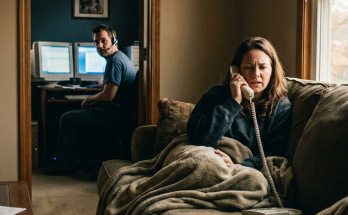
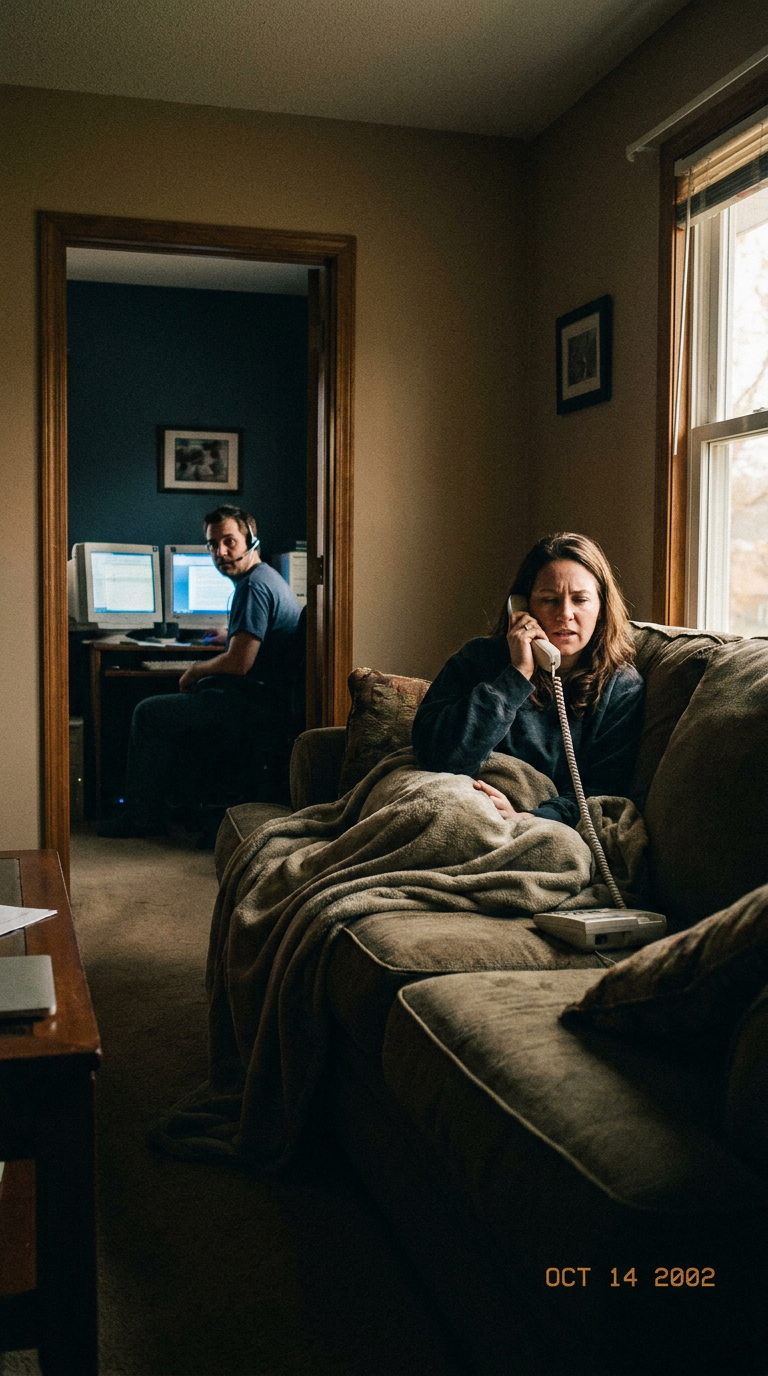
By the seventh day, I was curled beneath sweat-soaked sheets, shaking so violently that my teeth clicked together.
Every joint in my body ached. My head felt as though someone were driving a nail behind my eyes, and even the faint light coming through the bedroom curtains made me want to scream.
I had a high fever for seven days.Seven days of asking my husband for help.Seven days of hearing the same answer.“Let’s wait until tomorrow, Jessi.”
My husband, Luca, stood in the doorway of his home office, his face illuminated by two computer screens. He was wearing the expensive navy sweater I had bought him for his birthday, and a half-empty cup of coffee sat beside his keyboard.
I gripped the edge of the mattress.
“Luca, please. I need to go to the emergency room.”
He didn’t move.
“You’ve been watching too many medical videos,” he replied, barely looking at me. “Fever comes with infections. Your body needs rest.”
“I can barely stand.”
“Then stay in bed.”
I stared at him, trying to understand how the man who had promised to love me in sickness and in health could look at me trembling beneath a blanket and seem so irritated by my existence.
“Can you please drive me?” I whispered.
He glanced at his watch.
“I have an important meeting in twenty minutes. If I leave now, I’ll lose the contract I’ve been working on for months.”
“I’m your wife.”
“And I’m trying to keep our lives together.”
He said it as if I were asking him to abandon a dying stranger rather than help the woman he had married six years earlier.
I reached for my phone.
Luca noticed.
“What are you doing?”
“Calling a cab.”
He laughed quietly.
“Fine. If you want to waste money sitting in an emergency room for six hours, go ahead. But don’t expect me to drop everything because you have a fever.”
I didn’t answer.
My fingers were shaking so badly that I had to enter the address twice.
When the driver called to say he had arrived, I forced myself out of bed. I put on the first clothes I could reach, wrapped myself in a cardigan, and shuffled toward the front door.
My ankle throbbed beneath my sock.
It had been hurting for days, but every time I mentioned it, Luca told me I had probably twisted it without realizing.
I didn’t even have the strength to argue anymore.
At the door, I turned back.
For one foolish moment, I hoped he would come after me.
I hoped he would see my pale face, my trembling hands, and the way I leaned against the wall just to remain upright.
Instead, he called from his office.
“Text me when they tell you it’s nothing.”
Then he shut his door.
I walked out of my own house alone.
I had no idea that by the end of the day, a doctor would look at my ankle, go completely still, and say five words that would change everything.
“Call security and the police. Right now.”
And I had no idea that my husband would soon be begging me not to tell them what I had found.
Chapter One: Seven Days of Waiting
My name is Jessi Bennett. I was thirty-four years old when I learned that the person sleeping beside you can sometimes be the person you need protection from most.
Luca and I had been married for six years.
When we first met, he was charming in a quiet, thoughtful way. He remembered little things about me, like how I hated carnations but loved white roses, and how I always ordered hot tea even in summer.
He would drive across town after work just to bring me soup when I caught a cold.
Once, when I had food poisoning, he stayed awake all night holding a damp cloth against my forehead.
“You never have to face anything alone,” he had told me.
I believed him.
We bought our house three years into our marriage. Luca worked in cybersecurity, managing contracts for private companies. I was an accountant at a small architectural firm.
He earned more than I did, but we shared expenses and talked about our future. We had discussed having children, buying a cabin near the lake, and traveling through Italy once we had saved enough money.
Then, about eight months before I became ill, Luca began changing.
At first, the changes were small.
He started locking his home office whenever he left the room.
He changed the passwords on our shared accounts and told me it was because of his company’s security policies.
He became strangely interested in my phone, asking who had called me and why I had received messages late at night.
When I questioned him, he accused me of being suspicious.
“I’m protecting us,” he would say.
Eventually, I stopped asking.
Then came the fever.
It began on a Monday afternoon.
I was preparing dinner when a wave of chills swept through me. Within an hour, I was shivering so hard that I couldn’t hold a spoon.
I took my temperature.
103.1 degrees Fahrenheit.
I showed Luca the thermometer.
He barely glanced at it.
“Take some medicine and lie down.”
I did.
By midnight, my temperature had climbed higher, and my muscles hurt so much that turning over in bed made me cry.
The next morning, I asked Luca to take me to urgent care.
He said he had a presentation.
On Wednesday, I told him I was getting worse.
He said the medication needed time.
On Thursday, I woke up drenched in sweat, with my heart pounding so hard I could feel it in my throat.
He brought me a glass of water and told me to stop frightening myself.
On Friday, I noticed a dark, reddish patch near my right ankle.
I pulled up my pajama leg.
The skin was swollen and unusually warm.
“Look at this,” I said.
Luca glanced at it.
“You probably bumped it against something.”
“I don’t remember bumping it.”
“You’ve been lying in bed for days. Your circulation is probably off.”
He returned to his computer.
On Saturday, the pain became sharp enough that I couldn’t put my full weight on that foot.
I asked him to call a doctor.
He became angry.
“Jessi, I cannot spend every waking hour managing your anxiety.”
I remember those words more clearly than almost anything else from that week.
Managing your anxiety.
As if my fever were an inconvenience I had invented.
As if the shaking, the pain, and the strange discoloration beneath my skin were all part of some elaborate performance designed to interrupt his work.
By Sunday morning, I was barely able to think.
My fever had lasted seven days.
My ankle had swollen so much that my sock left a deep indentation around it.
And my husband was still telling me to wait until tomorrow.
That was when I finally stopped waiting for him to care.
Chapter Two: The Doctor Who Went Silent
The cab ride felt endless.
Every bump in the road sent pain shooting through my ankle. I sat curled against the door, pressing a cold bottle of water to my forehead while the driver watched me in the rearview mirror.
“Ma’am, are you sure you don’t want me to call an ambulance?”
“I just need the hospital,” I whispered.
He drove faster.
When we arrived at the emergency department, a nurse took one look at me and rushed over with a wheelchair.
My temperature was 104.2 degrees.
My blood pressure was dangerously low, and my pulse was racing.
The nurse asked when my symptoms had started.
“Seven days ago.”
Her expression changed.
“Seven days?”
I nodded.
“Have you been seen by a doctor during that time?”
“No.”
“Why not?”
I opened my mouth.
Then I closed it again.
I didn’t want to explain that my husband had watched me deteriorate for an entire week while insisting that I was fine.
Not yet.
The nurse wheeled me into a treatment area and called for a physician.
A few minutes later, a tall doctor with silver hair entered the room. His name tag read Dr. Samuel Reed.
He introduced himself, asked a series of questions, and examined my breathing, abdomen, and legs.
When he reached my right ankle, he paused.
“Does this hurt?”
He pressed gently near the swollen area.
I cried out.
He immediately stopped.
“I’m sorry. Don’t move.”
He pulled on a pair of gloves and carefully examined the discoloration around my ankle.
Then he looked at my face.
“How long has your ankle looked like this?”
“Maybe three or four days.”
“Did you injure it?”
“No.”
“Did anyone examine it before you came here?”
I shook my head.
His expression became unreadable.
He asked another question.
“Jessi, I need you to answer honestly. Has anyone given you an injection, medication, or anything else that you weren’t told the purpose of?”
I stared at him.
“No. Why?”
He didn’t answer immediately.
Instead, he asked the nurse to bring the attending emergency physician and requested urgent blood tests, cultures, imaging, and a specialist evaluation.
Then he stepped into the hallway.
I heard him speak in a low voice.
“I’m concerned about the pattern of the lesion and the systemic symptoms. We need to rule out a serious infection and assess the possibility of an injury caused by something other than an accident.”
I couldn’t hear the response.
When he returned, two nurses followed him.
One started an intravenous line. Another attached monitors to my chest.
Dr. Reed looked at me again.
“Jessi, we’re going to treat this as a medical emergency. Your fever, low blood pressure, and the appearance of your ankle are concerning. We need to move quickly.”
I began to cry.
“Am I going to die?”
His expression softened.
“We’re going to do everything we can to keep you safe. Right now, I need you to tell us everything you remember about the last seven days.”
I told him about the fever.
The chills.
The swelling.
My husband’s insistence that I wait.
And then I mentioned something I had almost forgotten.
On Thursday evening, I had woken from a confused, feverish sleep to find Luca standing beside the bed.
He had been holding a small bottle.
When I asked what it was, he said it was a topical treatment for my ankle.
He had rubbed something onto the swollen skin.
It burned terribly.
I remembered pulling away, and I remembered him gripping my foot to keep it still.
But I had been so weak and disoriented that I couldn’t recall what happened afterward.
Dr. Reed stopped writing.
“What kind of bottle?”
“I don’t know. It was small and dark. Maybe brown glass.”
“Did you see a label?”
“No.”
“Did you notice a smell?”
I closed my eyes, trying to remember.
“Sharp. Almost like chemicals.”
The doctor exchanged a look with the nurse.
Then he stepped outside again.
This time, I heard him clearly.
“Contact hospital security. Notify the appropriate authorities. We need to document the findings and preserve anything relevant.”
My heart began pounding.
“Doctor?”
He returned to my bedside.
“Why are you calling the police?” I asked.
He pulled up a chair.
“I’m not saying that we know exactly what happened. We don’t. But the combination of your symptoms and the lesion on your ankle raises concerns that we cannot ignore. We need to investigate whether there was an exposure or an injury that requires further attention.”
He paused.
“Is there anyone you feel unsafe around?”
I stared at him.
The question seemed impossible.
Then I thought of Luca.
His locked office.
His changing passwords.
The bottle in his hand.
The way he had looked at me that morning.
And the seven days he had spent telling me not to seek help.
My voice came out barely above a whisper.
“My husband.”
Chapter Three: The Photograph on My Phone
The emergency department moved quickly after that.
A nurse administered fluids and medication while the doctors investigated the source of my fever. They took blood samples and examined the swelling around my ankle.
Dr. Reed explained that a severe skin or soft-tissue infection could cause dangerous complications, including sepsis. The discoloration alone could not establish what had caused it, and he refused to speculate before the test results arrived.
But he also told me something that frightened me even more.
“Your blood pressure is low, and your body is showing signs of a serious systemic illness. We cannot wait for every answer before treating you.”
He ordered urgent treatment and arranged for me to be admitted for close monitoring.
I watched the ceiling lights pass as the nurses moved my bed.
My phone buzzed on the mattress beside me.
Luca.
Where are you?
I stared at the message.
A second message arrived.
You said you’d text me.
Then another.
Jessi, answer your phone.
For the first time in seven days, I felt something stronger than fear.
Anger.
I had been too sick to argue with him at home. Too exhausted to insist that my pain was real.
Now, lying beneath hospital lights with an IV in my arm, I could finally see how little his concern had cost him.
He had been worried enough to send messages.
Not worried enough to drive me to the hospital.
I typed a response.
I’m in the emergency room. They’re treating me for a serious illness.
His reply came immediately.
What do you mean, serious?
I didn’t answer.
My phone rang.
I let it ring.
Then a message appeared.
Don’t tell them anything about the bottle.
I went cold.
I read it once.
Then again.
I had not told Luca that I had mentioned the bottle to the doctor.
I had not told him what the doctor had said.
I hadn’t even told him that the police had been contacted.
Yet somehow, he knew.
My hands began to tremble.
I took a screenshot.
Then I forwarded it to my sister, Natalie.
Natalie lived two hours away. She and Luca had never gotten along particularly well, but I had always believed their differences were ordinary family tension.
When she called, I answered immediately.
“Jessi? What’s happening?”
“I’m in the hospital.”
“Why didn’t you call me?”
I began crying.
“I thought I was going to be okay. Luca kept saying we should wait.”
There was a long silence.
Then Natalie asked, “How long have you been sick?”
“Seven days.”
“What?”
“He kept saying it wasn’t serious.”
“Jessi, you told me on Thursday that you couldn’t stand up.”
I closed my eyes.
“I know.”
“Did he take you to a doctor?”
“No.”
Her voice sharpened.
“I’m coming.”
“Natalie, you don’t have to—”
“I’m coming,” she repeated. “And don’t let him come into your room alone.”
The call ended.
I looked at the screenshot again.
Don’t tell them anything about the bottle.
For the first time, I understood why Dr. Reed had gone silent when I described what happened on Thursday.
He wasn’t simply concerned about an infection.
He was concerned that the infection might not tell the whole story.
Chapter Four: The Woman in the Hospital Room
By late afternoon, my fever had begun to respond to treatment, although I remained weak and confused.
A specialist examined my ankle and ordered additional testing. The doctors still had to determine the cause of the infection, and they warned me that recovery might take time.
Dr. Reed returned with a hospital social worker and a police officer.
The officer introduced herself as Detective Elena Morris.
She was in her forties, with short brown hair and a calm, direct manner.
“I understand you may have concerns about your husband’s behavior,” she said. “I want you to know that you can speak freely here. We are not going to assume anything before we investigate.”
I showed her Luca’s messages.
She read them twice.
“Did your husband know you were coming to this hospital?”
“He knew I was going to the emergency room. I called a cab.”
“Did you tell him which hospital?”
“No.”
She looked at Dr. Reed.
The doctor explained that the hospital had followed its safeguarding procedures after identifying concerning circumstances. The police had not reached a conclusion about whether a crime had occurred, but the messages and my account gave them reasons to ask further questions.
Detective Morris turned back to me.
“Do you have any idea why your husband would tell you not to mention a bottle?”
“I don’t know.”
I wanted that answer to be true.
I wanted there to be a reasonable explanation, something that would make all of this feel like a terrible misunderstanding.
Then I remembered the way Luca had held my ankle.
The pain.
The smell.
The burning sensation.
I swallowed.
“I think he knows more than he’s telling me.”
The detective nodded.
“That’s important. We’ll document it.”
She asked me to describe the bottle as precisely as I could. I told her about its dark glass, its small size, and the chemical smell.
I couldn’t provide a label or identify the substance.
I hadn’t seen one.
Before leaving, Detective Morris gave me her contact information and asked me not to delete any messages or confront Luca.
“Let us handle the investigation,” she said.
Then she asked a question I hadn’t expected.
“Have you noticed any unexplained changes in your health before this week?”
I thought about it.
For months, I had been unusually tired. I’d experienced headaches, occasional dizziness, and several episodes of nausea.
I had blamed my workload.
Luca had blamed stress.
Once, when I suggested scheduling a medical appointment, he had said I couldn’t afford to spend money chasing every little symptom.
Now those memories felt different.
“I’ve been unwell off and on for months,” I admitted.
The detective wrote something down.
“Tell your doctors. They may need to investigate those symptoms separately.”
After she left, I stared at the hospital window.
The city outside continued as though nothing had happened.
Cars moved through intersections. People hurried along sidewalks. Somewhere, a family was probably eating dinner around a table, complaining about work or laughing at something on television.
And my husband was still in our house.
Perhaps sitting in his office.
Perhaps looking at the same computer screens.
Perhaps wondering what I had told the police.
My phone vibrated again.
This time, the message was longer.
Jessi, please don’t turn this into something it isn’t. I was trying to help you. You were confused because of the fever. Come home, and we’ll talk privately.
I didn’t respond.
A minute later, another message arrived.
You know what happens if people start asking questions about my work.
I read that sentence until the words blurred.
Then I handed the phone to Detective Morris when she returned.
She photographed the screen and asked me to preserve the original message.
“Your husband seems very concerned about what you might say,” she observed.
I whispered, “He’s never spoken to me like this before.”
She didn’t argue.
She simply said, “Sometimes people show us a side of themselves when they believe they are losing control.”
Chapter Five: The Locked Office
Natalie arrived just before sunset.
The moment she saw me, she covered her mouth.
“Oh, Jess.”
She rushed to my bedside and took my hand.
I had lost several pounds during the week, and my face looked hollow. My hair was tangled, my lips were cracked, and the hospital gown hung loosely around my shoulders.
Natalie began to cry.
“I should have come sooner.”
“You didn’t know.”
“I knew you were sick.”
“You thought I had the flu.”
“I thought Luca was taking care of you.”
Neither of us spoke for a moment.
Then she asked, “What happened?”
I told her everything.
When I finished, she looked furious.
“He left you alone for seven days?”
I nodded.
“And now he’s telling you not to mention some bottle?”
I nodded again.
Natalie stood up.
“I want to go to that house.”
“Don’t,” I said quickly. “The detective told me not to confront him.”
“I’m not going to confront him. I want to know what he’s hiding.”
Before she could say anything else, Detective Morris entered the room.
She had received permission to ask us a few additional questions and explained that investigators were working to establish a clear timeline.
I told her about Luca’s locked office.
Her expression sharpened.
“Does he keep any medications or chemicals there?”
“I don’t know. He keeps everything locked away.”
“What kind of work does he do?”
“Cybersecurity. He handles sensitive contracts for private clients.”
“Has he ever asked you to sign documents you didn’t understand?”
The question made my stomach tighten.
“Yes.”
I remembered a stack of papers he had brought home several months earlier.
He said they were insurance updates and changes to our household accounts.
He had placed sticky notes where he wanted me to sign.
I had asked to read them.
He became irritated and told me I was making a simple task unnecessarily difficult.
Eventually, I signed several pages after glancing over them.
“I don’t know exactly what they were,” I admitted.
Detective Morris asked me to describe the documents and whether I had copies.
“I might have some in my email.”
“Don’t access anything that would put you at risk. If you have copies already, preserve them. We’ll follow the proper process for anything else.”
Natalie sat back down.
“Jessi, what if this isn’t just about the fever?”
I looked at her.
“What do you mean?”
“What if he’s been hiding something from you for months?”
I wanted to reject the idea.
Luca had been my partner, my best friend, and the person I called when something went wrong.
But there was one memory I couldn’t dismiss.
Three weeks earlier, I had received a notification from our bank about an attempted transfer from our joint savings account.
The transfer had been for $38,000.
I had asked Luca about it.
He told me it was a routine business payment that had accidentally been linked to the wrong account. He said the bank had already corrected the problem.
I believed him.
Now I wondered whether the transfer had been connected to something else.
Detective Morris wrote down the amount and date.
“Don’t assume the financial issue and your illness are connected,” she said. “But we should make sure the relevant records are preserved.”
For the first time, I realized how much of my life I had stopped questioning simply because Luca insisted that he knew better.
I had trusted him with my money.
My health.
My home.
My signature.
And perhaps that trust had given him more power over me than I had ever understood.
Chapter Six: The Call He Didn’t Expect
At eight that evening, Luca called again.
This time, I answered with Detective Morris present.
“Jessi?” His voice sounded strained. “Thank God. Where are you?”
“At the hospital.”
“I know that. Which hospital?”
I looked at the detective.
She gestured for me to continue only if I felt comfortable.
“Why do you need to know?”
“Because I’m your husband. I want to see you.”
“You told me to text you when they said it was nothing.”
He exhaled sharply.
“Jessi, I was frustrated. I didn’t realize it was this serious.”
“You saw my temperature.”
“I thought you were exaggerating.”
The words hurt more than I expected.
“You thought I was exaggerating when I could barely stand?”
“I was under a lot of pressure.”
“So was I.”
There was a pause.
Then his voice changed.
“Listen to me carefully. Whatever you told the doctors, you need to correct it.”
My fingers tightened around the phone.
“Correct what?”
“The stuff about the bottle. You were feverish. You weren’t thinking clearly.”
I looked at Detective Morris.
She silently indicated that I should keep my questions neutral.
“What was in the bottle, Luca?”
Silence.
Then he said, “It was a treatment for your ankle.”
“What treatment?”
“Something I had at home.”
“What was it called?”
“Jessi, this isn’t the time.”
“When is the time?”
He lowered his voice.
“Do you understand what you’re doing? You’re involving strangers in our marriage. You’re putting everything at risk.”
I felt my heart pounding.
“What is everything?”
He didn’t answer.
Then he said something that made my skin crawl.
“You need to remember who has been taking care of you.”
I stared at the wall.
“You haven’t been taking care of me.”
“I’ve paid the mortgage. I’ve paid the bills. I’ve kept a roof over your head.”
“And I asked you to take me to the hospital.”
“You could have waited one more day!”
The words burst out of him so loudly that I pulled the phone away from my ear.
Detective Morris raised her eyebrows.
I brought the phone back.
“Why did you want me to wait?”
“Because I knew it wasn’t serious.”
“Then why are you so worried about the bottle?”
He said nothing.
For several seconds, all I could hear was his breathing.
Then he spoke again.
“Come home, Jessi. We can fix this.”
“I can’t come home. I’m being treated.”
“Then tell them you misunderstood.”
“No.”
His voice became cold.
“If you do this, you will regret it.”
The call ended.
I stared at my phone.
My hands were trembling again, but this time it wasn’t the fever.
Detective Morris asked the hospital staff to document the conversation and advised me not to contact Luca further without discussing it with the authorities.
Then she made another call.
I didn’t hear what she said.
But when she finished, she looked at me and said, “We’re going to take this seriously.”
Chapter Seven: What the Tests Revealed
The following morning, Dr. Reed returned with an update.
The laboratory results supported the doctors’ concern that I had a serious infection. My blood pressure had improved with treatment, but I would need continued monitoring and additional evaluation.
The exact source of the infection remained under investigation.
The doctors were also concerned about the appearance of my ankle and the possibility that an exposure or injury had contributed to the problem.
They collected further samples and arranged for specialists to examine the affected tissue.
When I asked whether someone could have caused the infection deliberately, Dr. Reed was careful.
“We cannot determine intent from these findings alone,” he said. “We need the medical evidence, and the police will need to investigate the circumstances. What matters right now is treating you and documenting everything accurately.”
I appreciated that he didn’t promise me an answer he couldn’t yet provide.
For the first time in days, I felt as though someone was listening without trying to persuade me that I was wrong.
That afternoon, Detective Morris returned.
She told me that investigators had begun examining the timeline surrounding my illness. They were also working to identify the substance Luca had described as an ankle treatment.
She did not tell me that he had been arrested.
He hadn’t.
She did not claim that the messages proved he had harmed me.
They didn’t.
But she did say that his statements had raised additional questions, and that the investigators wanted to understand why he had repeatedly discouraged me from seeking medical attention.
Then she asked about our finances.
I told her about the attempted $38,000 transfer.
She asked whether Luca had access to my email and financial accounts.
“Yes.”
“Does he know your passwords?”
“He knows most of them.”
“Has he ever told you to change them back after you changed them?”
I thought about it.
“Yes. He said our accounts needed to remain consistent because of the way he managed our household finances.”
She wrote that down.
I felt embarrassed as I spoke.
How had I allowed myself to become so dependent on him?
Why had I accepted his explanations without checking them?
Detective Morris seemed to sense my thoughts.
“Trusting your spouse isn’t a crime,” she said. “You don’t need to blame yourself for believing someone you loved.”
I looked down at my hands.
“I should have left on the first day.”
“Perhaps. But you were sick, and you were asking for help. The responsibility for your husband’s choices belongs to him.”
Those words stayed with me.
For months, Luca had made me feel as if every problem in our marriage was my fault.
If he was angry, I had provoked him.
If he was distant, I had become needy.
If I was ill, I was being dramatic.
If I questioned him, I didn’t trust him.
Now I began to understand the pattern.
He had made me doubt my own judgment until I couldn’t tell the difference between reasonable caution and blind obedience.
And the more I doubted myself, the more power he had.
Chapter Eight: The Hidden Documents
Three days after I entered the hospital, Natalie brought me a small bag containing clean clothes and my tablet.
She had gone home briefly to collect my belongings, following the arrangements recommended by the authorities.
“I didn’t touch Luca’s office,” she assured me. “I stayed out of it.”
“Thank you.”
She sat beside me.
“But I did find something in the kitchen drawer.”
She took out a folded envelope.
Inside were several printed pages from our bank.
My name appeared at the top of each document.
So did Luca’s.
The pages showed multiple attempted transfers from our joint savings account over the previous four months. Some had been canceled. Others had been redirected to accounts I didn’t recognize.
The total amount was far more than $38,000.
I counted the figures twice.
Nearly $146,000.
My mouth went dry.
“Where did this come from?”
“I don’t know,” Natalie said. “The papers were beneath the old warranty documents. I didn’t remove anything else.”
I stared at the statements.
The money represented years of savings, bonuses, and the proceeds from selling the small apartment I had owned before our marriage.
I had believed that money was safe.
I had believed Luca was managing our accounts carefully.
Instead, someone had been trying to move it.
I handed the pages to Detective Morris when she arrived later that day.
She photographed them, recorded where Natalie had found them, and explained that investigators would need to verify the records with the bank.
“Don’t confront your husband about these,” she warned.
“I won’t.”
But I could barely breathe.
The fever had made me weak, but the discovery of those documents made me feel as though the floor had disappeared beneath me.
Luca had not merely dismissed my pain.
He might also have been trying to take money that belonged to both of us.
And the attempted transfers had started months before I became ill.
Was there a connection?
I didn’t know.
The detective didn’t pretend to know either.
She simply said, “We’re looking at the financial evidence separately while we continue investigating the medical circumstances.”
That evening, I received another message from Luca.
I know Natalie is interfering. Tell her to stay out of our business.
Then:
You don’t understand the consequences of what you’re doing.
I took a screenshot.
I forwarded it to Detective Morris.
And for the first time since our wedding, I blocked my husband’s number.
My hands shook as I pressed the button.
But once the screen went quiet, I felt something unexpected.
Relief.
Chapter Nine: The Evidence in the Office
Two days later, Detective Morris returned with information she was able to share.
Investigators had obtained appropriate authorization to examine relevant records and property connected to the investigation.
She emphasized that the process was ongoing and that no final conclusion had been reached.
But they had found something significant.
In Luca’s office, investigators had located a container that appeared consistent with my description of the bottle. It had been secured for examination.
They had also found documents relating to the attempted financial transfers.
Some records appeared to have been altered.
Others contained account details I didn’t recognize.
The detective explained that specialists would need to authenticate the documents and determine whether any laws had been broken.
I listened in silence.
Then I asked the question that had haunted me since the emergency room.
“Did they find out what was in the bottle?”
“It’s being examined,” she replied. “I don’t want to give you a result before the laboratory confirms it.”
I nodded.
I wanted an answer immediately.
I wanted to know whether Luca had put something dangerous on my ankle.
I wanted to know whether he had knowingly allowed me to deteriorate.
I wanted to know why the man who once drove across town to bring me soup had become someone who could watch me suffer.
But the truth would not arrive simply because I desperately wanted it.
So I waited.
This time, I waited with doctors monitoring my health, my sister sitting beside me, and investigators treating my concerns as something worth examining.
Not because I was certain of what had happened.
Because I finally understood that uncertainty was not a reason to remain silent.
Chapter Ten: The Arrest
The call came on the eighth day after I entered the emergency room.
Detective Morris asked whether I felt well enough to speak privately.
My fever had finally subsided, and I was able to sit upright without becoming dizzy. The doctors were encouraged by my progress, although I still needed treatment and rehabilitation for the damage around my ankle.
I nodded.
The detective pulled a chair beside my bed.
“Jessi, I have an update. The preliminary examination of the container recovered from your husband’s office has identified a substance that requires further investigation. We are also examining evidence suggesting that the bottle may have been used on your ankle.”
My throat tightened.
“Was it poison?”
“We’re not describing it that way at this stage. The laboratory findings are being reviewed alongside your medical records. We need to establish exactly what the substance was, how it was used, and whether it contributed to your illness.”
I swallowed.
“What about the money?”
“Investigators have obtained additional financial records. There is evidence supporting further investigation into unauthorized transfer attempts involving your accounts.”
I stared at her.
“Does that mean Luca did this to me?”
“It means we have grounds to take the situation very seriously. I cannot tell you that every question has been answered.”
Then she paused.
“But Luca has been taken into custody for questioning in connection with the investigation.”
My eyes filled with tears.
I didn’t feel triumphant.
I didn’t feel powerful.
I felt exhausted.
For seven days, I had asked my husband to take me to the hospital.
Now he was being questioned by police while I lay in a hospital bed, trying to understand how my life had changed so completely.
“Is he going to prison?” I whispered.
“That will depend on the evidence, the charges, and the legal process. We are not going to promise an outcome before the investigation is complete.”
I appreciated her honesty.
After she left, Natalie took my hand.
“It’s over for now,” she said gently.
I shook my head.
“No. I think it’s only beginning.”
She didn’t argue.
Because we both knew that even if the investigation eventually established what had happened, I would still have to face the life Luca had left behind.
The house.
The money.
The marriage.
The memories.
And the question that hurt most of all.
How could I have loved someone so deeply without recognizing how unsafe I had become?
Chapter Eleven: The Truth About Thursday Night
The definitive laboratory findings arrived several weeks later.
By then, I had been discharged from the hospital, although I still needed follow-up appointments and physical therapy. The doctors had treated the infection and were monitoring the lasting effects of the illness.
Detective Morris called me to explain the results in the presence of my attorney.
The substance recovered from the container was a chemical preparation not intended for application to damaged skin in the manner described. The laboratory findings, medical records, and other evidence supported the conclusion that the exposure had contributed to the injury around my ankle.
Investigators were still working to establish the full extent of Luca’s actions and his intent.
But the evidence was no longer limited to my recollection of a feverish night.
There were laboratory reports.
Photographs.
Medical records.
Messages.
Financial documents.
And the bottle.
The detective also told me that investigators had uncovered evidence of a series of financial transactions that appeared designed to move marital assets without my informed authorization.
Some transfers had failed.
Others had not been completed.
The total amount under review was approximately $146,000.
I sat in my attorney’s office, staring at the papers.
“What was he trying to do?” I asked.
My attorney answered carefully.
“We can establish what the records show. We still need to distinguish between what we can prove and what we suspect.”
I nodded.
It was a lesson I had learned the hard way.
For weeks, I had tried to make every piece fit into one explanation.
Perhaps Luca had wanted the money.
Perhaps he had been afraid of something I might discover.
Perhaps my illness had become an opportunity for him to keep me distracted and dependent.
But suspicion wasn’t proof.
And I no longer wanted to build my life around guesses.
I wanted facts.
I wanted accountability.
Most of all, I wanted to stop being afraid of what would happen if I asked questions.
When I left the attorney’s office, I sat in Natalie’s car and watched the rain slide down the windshield.
“I don’t know what hurts more,” I said. “What he might have done, or the fact that I kept believing him when he told me nothing was wrong.”
Natalie turned toward me.
“You were sick. You were frightened. You trusted your husband.”
“I should have trusted myself.”
“Yes,” she said softly. “But you can start doing that now.”
I looked at my ankle.
The wound was healing, although a scar remained.
For the first time, I didn’t see it as proof of my weakness.
I saw it as a reminder of the day I finally chose to save myself.
Chapter Twelve: The Last Message
Three months later, Luca contacted me through his attorney.
He wanted to speak.
My attorney advised me not to meet him alone, and I agreed.
The message he sent was brief.
I never wanted things to go this far. We both made mistakes. I hope someday you can remember the good years.
I read it several times.
There had been good years.
There had been laughter in our kitchen, long drives through the countryside, and nights when we stayed awake talking about the future.
I wasn’t going to pretend those memories never existed.
But they didn’t erase what had happened afterward.
They didn’t erase the seven days I spent begging for help.
They didn’t erase the messages telling me to stay quiet.
And they didn’t erase the evidence investigators had gathered.
I wrote a reply.
I remember the good years, Luca. I also remember asking you for help when I could barely stand. You had choices. So did I. I chose to get in that cab.
I sent it through the appropriate legal channel and put my phone away.
The criminal investigation continued, as did the proceedings concerning our finances and marriage. I did not know how long everything would take, and I stopped measuring my recovery by the speed of the legal process.
Some days, I still woke from dreams in which I was back in that bedroom, shivering beneath damp sheets while Luca told me to wait until tomorrow.
Some days, I became angry over small things.
A locked door.
An unanswered phone call.
A sudden pain in my ankle.
But I learned to recognize those moments for what they were: reminders of something frightening, not predictions of what would happen next.
I returned to work gradually.
I opened a new bank account.
I changed my passwords.
I began making decisions without first wondering whether Luca would approve.
And every morning, when I woke up, I reminded myself of one simple fact.
I had survived.
Not because my husband had rescued me.
Not because I had waited long enough.
Because when I could no longer depend on him, I had finally acted on my own behalf.
Epilogue: The Doctor’s Five Words
Six months after that terrible week, I returned to the hospital for a follow-up appointment.
Dr. Reed recognized me immediately.
“How is the ankle?”
“Better,” I said. “Still stiff when the weather changes.”
He smiled.
“And how are you doing otherwise?”
I thought about the question.
My marriage was ending.
The legal proceedings were still moving forward.
I was rebuilding my finances, my routines, and my sense of safety.
I wasn’t the woman who had entered the emergency department that Sunday morning.
But I wasn’t broken, either.
“I’m learning to trust myself again,” I answered.
He nodded.
“That’s important.”
Before I left, I asked him something that had been bothering me since the day we met.
“Doctor, when you looked at my ankle and called security and the police, did you already know what my husband had done?”
He shook his head.
“No. I suspected that there might be more to the situation than a routine infection. But I didn’t know who was responsible, or whether anyone was responsible at all. We had to treat your illness, document what we found, and make sure the appropriate people could investigate.”
“Then why did you look so frightened?”
He considered the question.
“Because you were seriously ill, and you had waited a long time to receive care. I was concerned about your immediate safety. I didn’t want us to miss something important.”
I looked down at the scar around my ankle.
For months, I had imagined that moment as the instant the doctor discovered my husband’s secret.
Now I understood that it had been something else.
It was the instant someone finally believed that my suffering deserved attention.
Someone examined the evidence instead of dismissing my fears.
Someone acted when I could no longer act alone.
And that was enough to change the course of my life.
When I stepped outside, the autumn air felt cool against my face.
I called a cab.
Not because I had nowhere else to go.
Not because I was afraid of asking for help.
But because I had an appointment across town, and I was perfectly capable of deciding how to get there.
As the car pulled away, my phone buzzed with a message from Natalie.
Dinner tonight? My treat. And no arguing.
I smiled and typed back.
Only if we get dessert.
Then I watched the city pass through the window.
For seven days, I had believed that tomorrow would bring relief if I could only endure one more night.
I had believed that my husband knew better than I did.
I had believed that love meant giving someone the benefit of the doubt, even when their actions made me afraid.
Now I knew better.
Sometimes, the most dangerous words in a marriage aren’t shouted in anger.
Sometimes they’re spoken calmly by the person you trust most.
Let’s wait until tomorrow.
And sometimes, the most important decision of your life is the moment you stop waiting.
Because the day I called that cab wasn’t the day my marriage ended.
It was the day I finally understood that my life belonged to me.