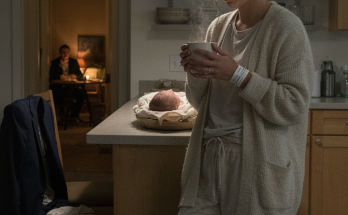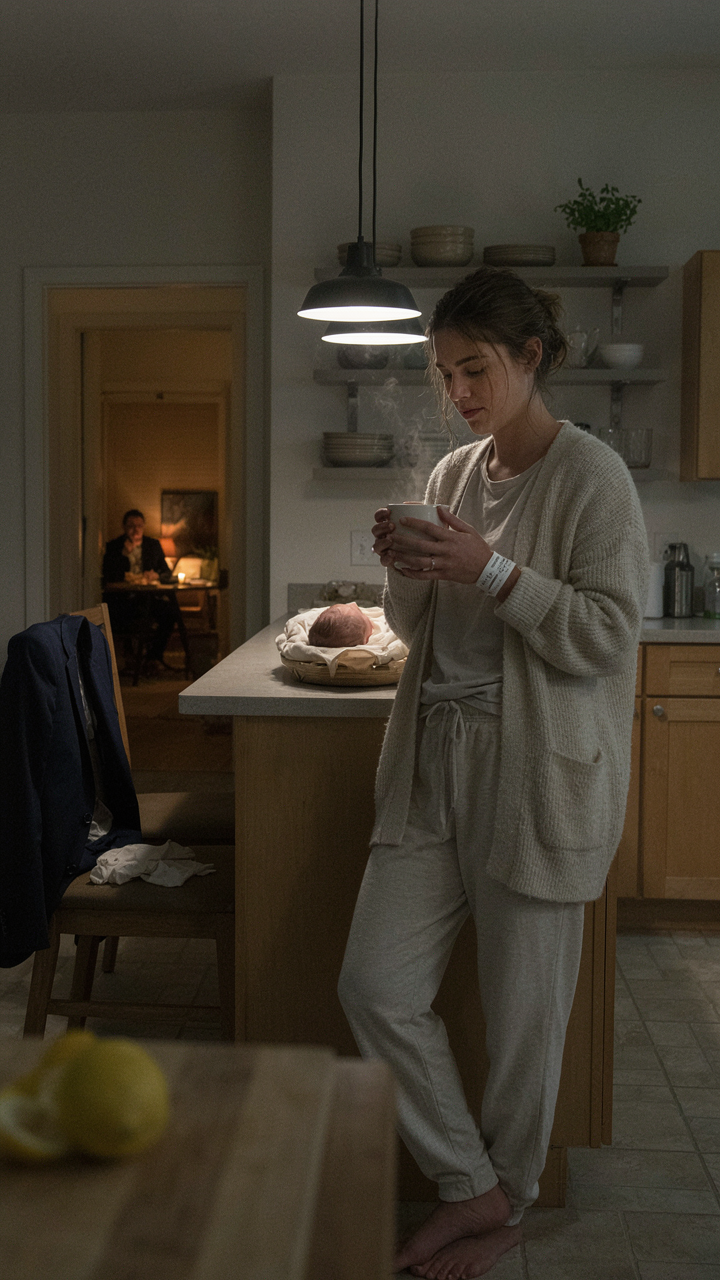
Wren was six days old when Roland came downstairs wearing his navy dinner jacket.I was standing beside the kitchen island, warming soup a neighbor had left on our porch.
My hospital bracelet was still around my wrist.I hadn’t taken it off because every time I looked at it, I remembered the moment Wren had been placed against my chest.
Tiny.Red-faced.Furious at the world.Perfect.
I was exhausted in a way I hadn’t known was possible.
My body hurt when I stood, hurt when I sat, and hurt most when I tried to lie down. I hadn’t slept more than two hours at a time since Wren was born.But I was happy.Or at least, I thought I was.
Roland walked into the kitchen, adjusted his cufflinks, and glanced at me.”You haven’t showered?”
I looked down at my oversized gray sweatshirt.”No. Wren was up most of the afternoon.”
He sighed.”Right.”I waited for him to say something kind.He didn’t.
Instead, he picked up the keys to my SUV from the counter.
“I’m taking your car.”
I frowned.
“Why?”
“Mom’s hosting dinner.”
I stared at him.
“Tonight?”
“Obviously.”
“I thought we were staying home.”
He gave me a look that made me feel like I’d said something ridiculous.
“Well, plans changed.”
“Wren is six days old.”
“I know.”
“And I’m still recovering.”
“I know that too.”
He slipped the keys into his pocket.
“That’s why you should stay home.”
I blinked.
“What?”
“It’ll be easier for everyone if you stay here with the baby.”
The words landed harder than they should have.
“For everyone?”
“Don’t start.”
“I wasn’t starting anything.”
He grabbed his coat.
“My mom has invited everyone. My sister, her husband, the cousins. It’ll be crowded. Wren will probably cry. You’ll be stressed. I’ll be stressed.”
I stared at him.
“So I’m supposed to stay home because I’m inconvenient?”
“That’s not what I said.”
“It sounds like what you said.”
Roland’s jaw tightened.
“You’re six days postpartum. You’re emotional. I’m not doing this.”
He walked toward the door.
I followed him.
“At least take the baby monitor.”
He turned.
“No.”
“No?”
“My mother doesn’t want a baby monitor at dinner.”
I actually laughed because I couldn’t believe what I was hearing.
“It’s your mother who doesn’t want a baby monitor?”
“She thinks we need one evening where we’re not completely consumed by the baby.”
I looked toward the bassinet in the living room.
Wren was asleep.
Her tiny fists were curled beside her cheeks.
“She’s six days old.”
“I know.”
“You keep saying that like it makes this better.”
He opened the door.
“Just relax tonight, okay?”
Then he left.
The front door clicked shut.
I stood there for several seconds.
Then I heard his car start.
My car.
My mother’s wedding ring was still in the center console. My phone charger was plugged into the dashboard. Wren’s emergency bag was in the trunk.
He hadn’t even thought about any of that.
Or maybe he had.
I picked up my phone.
There was a message.
From Roland’s mother.
Elaine: He deserves one peaceful night away from you. Don’t make him feel guilty.
I stared at it.
Then another message appeared.
Elaine: You’ve been difficult since the baby was born. Give him space.
My hands began to shake.
I looked at Wren.
Then at the message.
Something inside me went very quiet.
I didn’t cry.
I didn’t argue.
I didn’t call Roland.
I walked upstairs.
I packed one bag.
Three changes of clothes.
Wren’s diapers.
A bottle.
A blanket.
My wallet.
The folder containing our birth certificate paperwork.
And the small silver locket my father had given me when I graduated college.
I didn’t know exactly where I was going.
I only knew I wasn’t staying in that house alone.
I called my father.
He answered on the second ring.
“Claire?”
“Dad?”
His voice changed immediately.
“What happened?”
I swallowed.
“Can you come get me?”
There was a pause.
“Are you safe?”
“Yes.”
“Is the baby safe?”
“Yes.”
“Then I’m already leaving.”
I sat on the edge of the bed.
“Dad…”
“I’m coming.”
“Bring the Escalade.”
He didn’t ask why.
He never did when I sounded like that.
Twenty-three minutes later, headlights swept across the front windows.
A black Escalade rolled into the driveway.
My father got out.
He didn’t honk.
He walked to the front door and knocked once.
I opened it with Wren against my shoulder.
Dad looked at me.
Then at my hospital bracelet.
Then at the bag.
His expression hardened.
“Let’s go home.”
I nodded.
But before I stepped outside, I looked back at the house.
The nursery.
The framed wedding photo.
The kitchen where Roland had kissed my forehead the morning Wren was born.
I had believed that man loved me.
Maybe he did.
Maybe people could love you and still treat you like something disposable.
Dad took the bag.
I carried Wren.
And we left.
At Elaine’s house, Roland was laughing.
He had no idea I was gone.
He was sitting at the long dining table beneath a chandelier that Elaine had spent six months bragging about.
There were twelve people around the table.
His sister Mara was telling a story about her vacation.
Elaine was pouring wine.
Roland was smiling.
“He really needed this,” Elaine said.
“He looks so relaxed,” Mara replied.
Roland raised his glass.
“Exactly.”
Then his phone buzzed.
He glanced at it.
A camera notification appeared.
Front Door Camera: Motion detected.
He almost ignored it.
Then he saw the name attached to the alert.
Daniel Mercer.
His father-in-law.
Roland frowned.
“That’s strange.”
Elaine leaned over.
“What’s strange?”
“Nothing.”
His phone buzzed again.
This time the notification showed a thumbnail.
Black Escalade.
His face changed.
Mara noticed.
“What?”
Roland opened the notification.
The camera showed my father walking toward our front door.
Then another notification appeared.
Garage Camera: Motion detected.
The thumbnail showed my father’s Escalade.
Roland stood abruptly.
“What’s going on?”
Elaine frowned.
“Who is that?”
Roland didn’t answer.
Then his phone buzzed a third time.
Nursery Camera: Connection interrupted.
Everyone at the table went silent.
Roland stared at the screen.
His face had gone pale.
Mara whispered,
“Why would your nursery camera be connected to your phone?”
Roland looked at his mother.
Elaine looked back at him.
And then another notification appeared.
This one wasn’t from our house.
It was from a security camera.
A camera Roland hadn’t known existed.
The notification read:
Camera: Mercer Residence — Front Drive
And beneath it was a name.
Daniel Mercer.
Dad had installed cameras around his house years ago.
But there was something else.
A second line.
Live sharing enabled: Claire Mercer.
Roland’s thumb stopped moving.
He opened the video.
It showed me walking into my father’s house with Wren.
Alive.
Safe.
Gone.
Mara whispered,
“She left?”
Roland looked up.
“She wouldn’t.”
Elaine’s face tightened.
“What did you do?”
He didn’t answer.
The room went quiet.
Then his phone rang.
My father.
Roland stared at the screen.
Nobody moved.
Finally, he answered.
“Daniel—”
My father’s voice was calm.
Too calm.
“Don’t call my daughter tonight.”
Roland swallowed.
“Where is she?”
“With me.”
“I need to talk to her.”
“No.”
“She’s my wife.”
“And she’s my daughter.”
Roland stood frozen.
Dad continued.
“She gave birth six days ago. She was still wearing a hospital bracelet when she packed one bag and left your house.”
“She misunderstood—”
“No.”
My father’s voice sharpened.
“She understood perfectly.”
Roland glanced around the table.
Everyone was watching him.
“I didn’t mean—”
“Then you should have thought before you said it.”
Dad hung up.
Roland slowly lowered the phone.
Elaine whispered,
“Claire left?”
Nobody answered.
Then Mara looked at her mother.
“What did you tell her?”
Elaine stiffened.
“Nothing.”
Mara stared.
“Mom.”
Elaine looked away.
Roland suddenly stood.
“I’m going home.”
Elaine grabbed his sleeve.
“No.”
He turned.
“What?”
“Don’t go there tonight.”
“Why?”
“Because if she left, she’s angry.”
Roland stared at her.
“You told me she was being dramatic.”
Elaine’s expression changed.
“What?”
“You said she was making everything about the baby.”
“I said she needed to give you space.”
“You told me she was difficult.”
Elaine crossed her arms.
“Because she is.”
Mara stood.
“Mom, stop.”
The entire table seemed to shift.
Mara looked at Roland.
“Did Claire really leave because you went to dinner without her?”
Roland said nothing.
Mara shook her head.
“No. Something else happened.”
Elaine’s face went pale.
Then Roland’s phone buzzed again.
Everyone looked down.
Another camera notification.
This time it wasn’t from our house.
It was from a private security account.
Motion detected — Mercer Family Estate.
Below it was a name.
Claire Mercer.
And a message.
New device added to shared family account.
Roland frowned.
“What is this?”
Mara looked at him.
“Did Claire have access to your mother’s cameras?”
“No.”
Elaine suddenly reached for her phone.
“She shouldn’t.”
Roland opened the notification.
A video began playing.
It was timestamped two weeks earlier.
The camera showed Elaine standing in her kitchen.
She was talking to someone.
Roland recognized the voice.
His mother.
“I told him once the baby came, Claire would become impossible.”
The video continued.
Elaine laughed.
“She’s always been needy.”
Then another voice answered.
Mara’s husband.
“You really think she’ll leave?”
Elaine said,
“She won’t. She has nowhere to go.”
The video stopped.
Nobody at the table breathed.
Roland looked at his mother.
“Where did that come from?”
Elaine’s mouth opened.
No words came out.
Then the phone buzzed again.
A second video.
Another date.
Three weeks before Wren was born.
Elaine was speaking to Roland.
“Once Claire has the baby, you’ll have to start setting boundaries.”
Roland’s voice came through the recording.
“What kind?”
“Take the car when you go places. Don’t let her come to everything. Don’t let her make you feel guilty.”
Roland’s own voice answered.
“She’ll get upset.”
Elaine laughed.
“Let her.”
The room went dead silent.
Roland looked at his mother as if he’d never seen her before.
“Where did you get this?”
Mara whispered,
“She installed cameras.”
Elaine snapped,
“No.”
Mara stared at her.
“Then why is your voice on it?”
Elaine stood.
“This is manipulation.”
Roland shook his head.
“No.”
He looked at his phone.
“No, this is proof.”
His mother stepped toward him.
“Roland—”
“You knew.”
“I was trying to help you.”
“You knew I was going to leave Claire alone tonight.”
“Because you deserve time away from—”
“Stop saying that!”
His voice echoed through the dining room.
Everyone froze.
Roland stared at his mother.
“She gave birth six days ago.”
Elaine’s eyes narrowed.
“And?”
He looked stunned.
“And you told me to leave her.”
“I told you to reclaim your life.”
“No.”
His voice broke.
“You told me to abandon my wife.”
At my father’s house, I was sitting in the guest bedroom.
Wren was asleep beside me.
Dad knocked softly.
“Can I come in?”
“Yes.”
He entered carrying a mug of tea.
He set it on the nightstand.
Then he sat in the chair.
For a while, neither of us spoke.
Finally, I whispered,
“Dad, am I overreacting?”
He looked at me.
“No.”
I stared at the blanket covering Wren.
“I keep thinking maybe I should have stayed.”
“Why?”
“Because he’s her father.”
Dad leaned forward.
“Being a father isn’t something you earn by showing up to dinner.”
I swallowed.
“I don’t know what to do.”
“You don’t have to know tonight.”
“What if he comes here?”
“He won’t.”
“You can’t promise that.”
Dad smiled.
“I can.”
I looked at him.
“Why?”
“Because before I came here, I called my attorney.”
I blinked.
“Dad.”
“I know.”
“What did you tell him?”
“Everything.”
My stomach dropped.
“Everything?”
“Everything you’ve told me over the last year.”
I looked away.
The little things.
Roland criticizing my clothes.
Elaine making comments about my weight.
The pressure to return to work immediately.
The arguments over money.
The way Roland had insisted that my father’s house was “not really family anymore” because I was married.
I had told Dad those things.
But always softly.
Always with excuses.
“He was stressed.”
“His mother doesn’t mean it.”
“We’re adjusting.”
Dad nodded.
“I kept hoping things would change.”
“So did I.”
Then his phone rang.
He answered.
“Hello?”
His expression changed.
“What?”
He looked at me.
Then stood.
“Send it.”
He hung up.
“What happened?”
Dad looked at me.
“Roland’s attorney just contacted mine.”
My heart raced.
“What does he want?”
“He wants to know if Wren is with you.”
I stared at him.
“What did you say?”
“The truth.”
Dad paused.
“Then I told him Roland is not welcome here tonight.”
I let out a breath.
For the first time all day, I felt safe.
But Dad wasn’t finished.
“There’s something else.”
“What?”
He handed me his phone.
On the screen was a photograph.
It was a document.
A bank transfer.
My name.
Roland’s name.
And Elaine’s name.
My stomach tightened.
“What is this?”
Dad sat beside me.
“Something I found tonight.”
The transfer was dated three months earlier.
$85,000.
From our joint savings account.
To an account I didn’t recognize.
I looked at Dad.
“I didn’t authorize this.”
“I know.”
“Roland did?”
“I don’t know.”
“Then whose account is it?”
Dad zoomed in.
The account holder was listed as:
Elaine Whitaker.
His mother’s name.
I felt the room tilt.
“That’s impossible.”
Dad nodded.
“I thought so too.”
He swiped.
There were six more transfers.
$12,000.
$9,500.
$18,000.
$7,400.
$15,000.
$23,000.
All to Elaine.
All from our joint account.
My voice barely worked.
“That’s over $170,000.”
Dad nodded.
“Yes.”
I stared at the screen.
Then something clicked.
The mortgage.
The car.
The nursery.
The wedding savings.
I had thought we’d been struggling because Roland’s business had slowed down.
But we’d never been struggling.
Someone had been taking money.
And my husband knew.
Or at least, I was suddenly afraid he did.
At Elaine’s house, the dinner had ended.
Nobody was eating anymore.
Roland was standing by the window.
Mara had left the table.
Her husband was on the phone with his lawyer.
Elaine was crying.
But Roland wasn’t comforting her.
He was scrolling through his phone.
More camera footage.
More messages.
More evidence.
Then he found something that made him stop.
A video from four months earlier.
Elaine was sitting in her living room.
Roland was beside her.
They were discussing money.
“You said she’d never check the account,” Roland’s voice said.
Elaine replied,
“She doesn’t understand finances.”
Roland laughed.
“I know.”
My husband.
Laughing.
About me.
The video continued.
Elaine asked,
“How long can we keep doing this?”
Roland answered,
“Until the house is paid off.”
Mara covered her mouth.
“Mom…”
Roland closed his eyes.
He remembered.
Not everything.
But enough.
The transfers.
The account.
The paperwork.
The conversations he’d convinced himself weren’t serious.
He had signed them.
He had helped move the money.
He had told himself it was temporary.
He had told himself his mother needed help.
He had told himself I wouldn’t notice.
Then the video played another sentence.
Elaine asked,
“And if Claire finds out?”
Roland answered,
“She won’t.”
The room went silent.
Then his mother said,
“Good.”
Roland turned off the phone.
His face was gray.
Mara whispered,
“How much?”
He didn’t answer.
“Roland.”
He finally looked at her.
“Enough to destroy us.”
At 2:14 in the morning, someone knocked on my father’s door.
Dad checked the camera.
It was Roland.
Alone.
Dad opened the door but kept the chain on.
Roland stood outside.
He looked nothing like the man who had left that afternoon in his navy jacket.
His hair was messy.
His eyes were red.
He looked exhausted.
“Daniel.”
Dad said nothing.
“I need to see Claire.”
“No.”
“Please.”
Dad stared at him.
“You should go home.”
“I can’t.”
“Why?”
Roland’s voice cracked.
“Because I finally understand what I did.”
Dad opened the door slightly.
“Then understand it somewhere else.”
“I love her.”
Dad’s expression didn’t change.
“Love isn’t a sentence you say after someone leaves.”
Roland lowered his head.
“I know.”
“Do you?”
He nodded.
“I didn’t protect her.”
“No.”
“I let my mother convince me that Claire was the problem.”
Dad stared at him.
“And now?”
Roland looked through the doorway.
“Now I know Claire was never the problem.”
Dad was quiet.
Then he said,
“You can come back tomorrow.”
Roland looked up.
“Tomorrow?”
“Not tonight.”
“Why?”
“Because my daughter needs one night where nobody asks anything from her.”
Roland nodded slowly.
“Okay.”
He turned to leave.
Then Dad called after him.
“Roland.”
He stopped.
“One more thing.”
Roland turned.
“If you want any chance of fixing what you broke, tell the truth.”
Roland swallowed.
“To Claire?”
“To everyone.”
The next morning, I woke before Wren.
Sunlight was coming through the curtains.
For the first time in six days, I wasn’t listening for Roland’s footsteps.
I looked at my daughter.
She opened her eyes.
Tiny.
Blue.
Uncertain.
I touched her cheek.
“Mommy’s here.”
She wrapped her fingers around mine.
And I cried.
Not because I was broken.
Because I finally understood something.
I didn’t have to stay somewhere just because I had once loved it.
I didn’t have to accept cruelty just because someone called it family.
And I didn’t have to raise my daughter believing that love meant tolerating humiliation.
At breakfast, Dad sat across from me.
“Roland wants to meet.”
I nodded.
“Where?”
“Here.”
I looked toward the window.
“Okay.”
At ten, Roland arrived.
He wasn’t wearing his navy jacket.
He wore jeans and a plain gray sweater.
He looked nervous.
Dad let him inside.
Roland stopped when he saw Wren.
His eyes filled with tears.
“She’s beautiful.”
I didn’t answer.
He looked at me.
“I’m sorry.”
I waited.
“I was cruel.”
I waited.
“I let my mother convince me that you were the problem.”
I waited.
“And I lied to you about money.”
That got my attention.
Dad placed a folder on the table.
Roland looked at it.
“I know about the transfers,” I said.
He closed his eyes.
“How much?”
“Enough.”
He nodded.
“Your father found out?”
“My father found everything.”
Roland sat down.
“I’ll repay it.”
“With what?”
“My business.”
I stared at him.
“You’re selling it?”
“If that’s what it takes.”
I looked at him for a long time.
Then I said,
“I don’t want your business.”
He looked confused.
“I don’t want your money.”
His eyes lowered.
“Then what do you want?”
I looked at Wren.
“I want my life back.”
Roland began crying.
“I know.”
“No, you don’t.”
He looked up.
“You don’t know what it felt like to stand in that kitchen with a hospital bracelet still on my wrist while the man who promised to protect me told me everyone would be happier if I stayed home.”
He wiped his face.
“I know.”
“You don’t.”
My voice shook.
“Because you still went to dinner.”
He nodded.
“I did.”
“You laughed.”
“I did.”
“And while you were laughing, your mother was telling everyone how difficult I was.”
He closed his eyes.
“I heard the recordings.”
I stared at him.
“You heard them?”
“All of them.”
He looked at Dad.
“Your father was right.”
Dad said nothing.
Roland turned back to me.
“I thought I was choosing my family.”
His voice cracked.
“I didn’t realize I was destroying mine.”
Silence.
Then Wren started crying.
Roland stood instinctively.
I picked her up.
He stopped.
For once, he didn’t reach for her.
He waited.
That mattered.
I walked toward him.
Then stopped several feet away.
“You’re still her father.”
He nodded.
“But being her father doesn’t automatically mean being my husband.”
His eyes filled again.
“I understand.”
“And if you ever want a relationship with her…”
“I’ll do whatever you ask.”
“No.”
I shook my head.
“Not whatever I ask.”
I looked him directly in the eyes.
“Whatever she needs.”
He nodded.
“I will.”
Dad stood.
“It’s time for you to leave.”
Roland looked at me.
“Claire…”
I didn’t answer.
He walked to the door.
Before leaving, he turned.
“I really am sorry.”
I believed him.
That was the hardest part.
Because sometimes forgiveness and reconciliation are not the same thing.
Sometimes you can believe someone’s apology and still choose not to return.
Three weeks later, I was sitting in a lawyer’s office.
The financial records were on the table.
The marriage documents were beside them.
The evidence from the cameras had been preserved.
Roland had signed an agreement returning every dollar he and his mother had taken.
He had also admitted everything.
His mother was facing her own legal consequences.
The house was sold.
The money was divided.
And I moved into a small white house with a blue front door.
It wasn’t the house I’d dreamed of.
It was better.
Because it was mine.
Wren was sleeping in the nursery.
I was sitting beside her crib when my phone buzzed.
A message from Roland.
I dropped off the last box. I left Wren’s blanket on the porch. I hope you’re okay.
I stared at the message.
Then typed:
We’re going to be okay.
I didn’t say we miss you.
I didn’t say come back.
I didn’t say maybe someday.
I had learned to stop promising things I wasn’t ready to give.
I put the phone down.
Then I heard the doorbell.
Dad stood outside holding a small package.
“What’s that?”
He smiled.
“Something Roland asked me to give you.”
I opened it.
Inside was the hospital bracelet.
The one I’d thought I’d lost.
Beneath it was a folded piece of paper.
I opened it.
There were only six words.
I should have chosen you that night.
I stared at the sentence.
Then I looked toward Wren’s crib.
She was awake.
Watching me.
I smiled.
“Too late, sweetheart.”
I wasn’t sure whether I meant Roland.
Or myself.
Maybe both.
Because the truth was, I should have chosen me that night too.
I should have chosen the woman standing in the kitchen with the hospital bracelet.
The exhausted woman.
The frightened woman.
The woman who had just become a mother.
The woman who deserved tenderness.
Respect.
Protection.
Love.
I had spent years believing that leaving meant losing.
But sometimes leaving is how you finally find yourself.
Six days after giving birth, my husband took my car and told me to stay home because it would be easier for everyone.
His mother told him he deserved a peaceful night away from me.
They thought I would sit quietly and wait for him to come home.
Instead, I called my father.
And when that black Escalade pulled into the driveway, I left.
What they didn’t know was that the night they tried to make me feel unwanted was the night I stopped asking to be wanted.
And that camera notification—the one name that made everyone at the table go silent—wasn’t just the beginning of my escape.
It was the moment the truth finally stopped being something I whispered about.
It became something everyone had to see.
Including my husband.
Including his mother.
And most importantly,
including me.