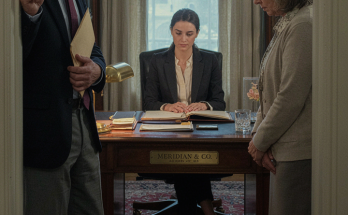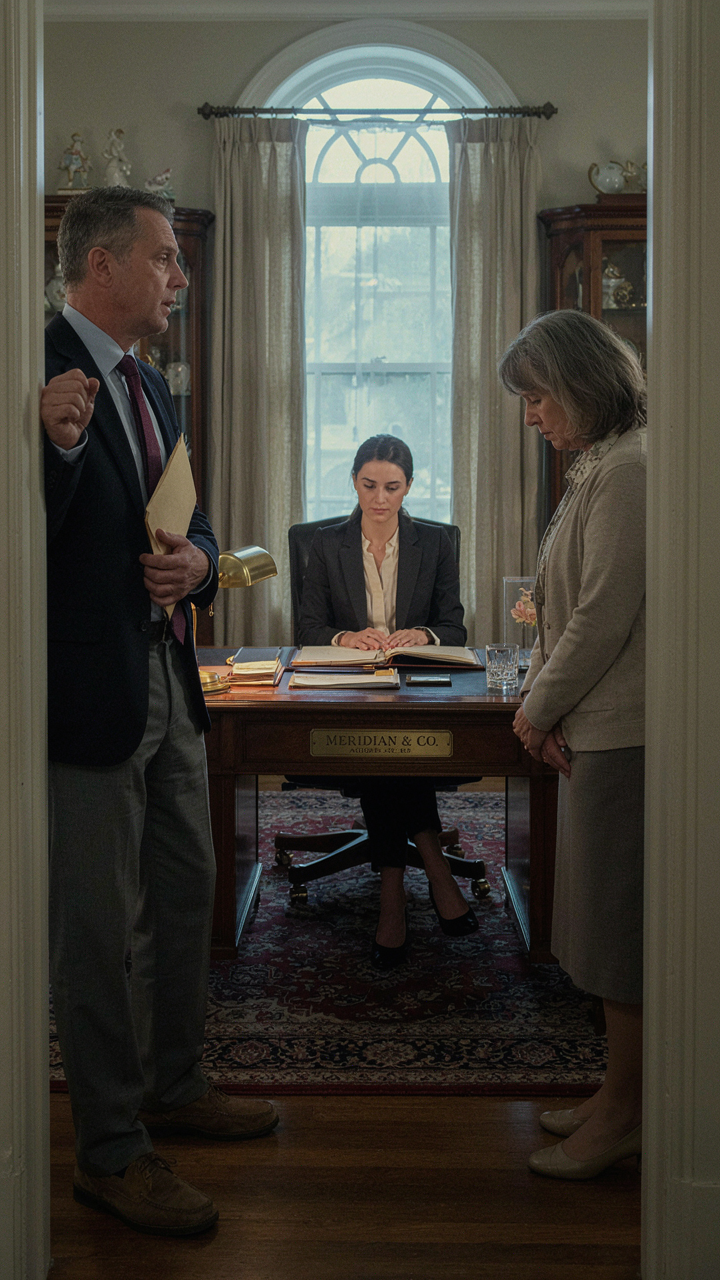
My Father Threw Me Out at 16 for Choosing Art. Twelve Years Later, He Walked Into My Office Begging the CEO for Help—Then He Saw Me Behind the Desk.
Chapter 1: The Letter He Destroyed
The day my father threw me out of our house, he didn’t just reject my dream.He made sure I understood that, in his eyes, I wasn’t worth keeping.
I was sixteen years old, standing in our small kitchen in Portland, Oregon, holding an acceptance letter from the prestigious Pacific Northwest School of Art in Seattle.
I’d spent three years preparing for that moment.
Three years of drawing after school, painting late into the night, and selling little watercolor portraits to neighbors so I could afford better brushes.
I’d even entered a national student art competition without telling my parents.
When the envelope arrived, I thought my father might finally be proud of me.
Instead, he read the first paragraph, frowned, and crumpled the letter in his fist.
“Art school?”
His voice was so cold that I immediately stopped smiling.
“Yes, Dad. I got a scholarship, too. It covers most of the tuition, and I can work part-time to pay for the rest.”
He looked at me as if I’d announced I was planning to become a criminal.
“You’re going to waste your life painting pictures?”
“It’s not a waste. It’s what I want to do.”
He laughed.
Not a happy laugh.
A cruel one.
“Do you know how much money I’ve spent raising you? And this is what you give me? A daughter who wants to play with crayons?”
My mother sat at the kitchen table, folding laundry.
She didn’t look up.
“Dad, please. Just read the whole letter.”
He threw it onto the counter.
“I don’t need to read anything else. You’re going to community college, studying accounting, and getting a real job.”
“I don’t want to study accounting.”
His face turned red.
“Then get out.”
I stared at him.
“What?”
“You heard me. If you’re so grown-up that you can ignore everything I say, you’re grown-up enough to leave.”
My mother finally stopped folding.
“Richard, she’s only sixteen.”
He turned toward her.
“Then maybe you should have taught her some respect.”
And just like that, my mother lowered her eyes.
I waited for her to stand up.
I waited for her to tell him that I was her daughter, that I had worked hard, that I deserved a chance.
She said nothing.
My father pointed toward the front door.
“Get out, and don’t come crawling back when you fail.”
I didn’t cry.
Not then.
I went upstairs, packed two changes of clothes, my sketchbooks, my pencils, and the small wooden box where I’d been saving money.
Inside were $1,186 in cash.
I’d earned every dollar through weekend jobs, birthday money, and selling paintings.
I also took the crumpled acceptance letter.
I carefully flattened it beneath my jacket.
When I came downstairs, my mother was still sitting at the table.
I stood in front of her.
“Mom?”
She wouldn’t meet my eyes.
“Please don’t make this harder than it already is.”
“Are you really going to let him do this?”
Her fingers tightened around a dish towel.
“I don’t know what you expect me to do.”
“I expect you to be my mother.”
For a moment, I thought she might finally look at me.
Instead, she whispered, “Your father is very angry.”
That was her answer.
I walked out carrying everything I owned.
The door closed behind me.
And I made myself a promise.
I would never ask either of them for money.
I would never beg them to love me.
And one day, I would build a life so completely my own that nobody could ever throw me out of it again.
I just didn’t know how much that promise would cost me.
Chapter 2: The Girl With $1,186
The first night, I slept at a bus station.
I kept my backpack on my lap and my sketchbooks beneath my arms.
Every time someone walked past, I woke up.
The next morning, I used some of my money to buy a bus ticket to Seattle.
It wasn’t a perfect plan.
It was barely a plan at all.
But Seattle was where my art school was, and I had nowhere else to go.
When I arrived, I went straight to the admissions office.
The woman behind the desk looked surprised when I explained my situation.
“You’re sixteen?”
“Yes, ma’am.”
“Where are your parents?”
“They’re not involved.”
She studied my face for a moment.
Then she picked up the phone.
By the end of the afternoon, I was sitting in a small office with the school’s student-support coordinator.
She helped me contact a youth housing organization, arranged a meeting with a counselor, and explained what documents I’d need to enroll as a minor.
The process wasn’t easy.
There were forms, interviews, and uncomfortable questions about my family.
But nobody crumpled my acceptance letter.
Nobody laughed at my dream.
And for the first time in my life, I began to understand that my father’s opinion wasn’t the same thing as the truth.
I eventually found a room in a supervised youth residence.
It was tiny, with a narrow bed, a shared bathroom, and a window overlooking an alley.
But it had a lock.
That first night, I sat on the bed and cried until my head hurt.
Then I opened my sketchbook.
I drew the kitchen where my father had thrown me out.
I drew my mother’s hands folding laundry.
I drew the front door.
And beneath the picture, I wrote four words.
I will remember everything.
The next morning, I started working.
I washed dishes at a café before school, cleaned tables after class, and took whatever weekend jobs I could find.
My scholarship covered most of my tuition, but it didn’t cover rent, food, transportation, supplies, or emergencies.
I learned how to stretch a dollar until it practically screamed.
I bought discounted groceries.
I repaired old clothes.
I walked whenever I could.
And I painted.
I painted everything.
Old buildings, abandoned storefronts, forgotten furniture, cracked porcelain, and the faces of strangers who looked like they were carrying stories they couldn’t tell.
My teachers noticed something unusual about my work.
I wasn’t particularly interested in making things look beautiful.
I wanted to understand why they mattered.
One instructor, a woman named Eleanor Hayes, noticed that I kept drawing damaged objects.
One afternoon, she stopped beside my easel.
“Why do you keep painting broken things?”
I shrugged.
“Because people throw them away too quickly.”
She smiled.
“Sometimes broken things are more interesting because they’ve survived.”
I never forgot that sentence.
Neither did I forget the night I received my first real rejection.
A local gallery had agreed to consider three of my paintings.
The owner looked at them for less than two minutes.
“You’re talented,” she said, “but your work is too emotional. Collectors want something more polished.”
I walked home with my paintings wrapped in brown paper.
For a few hours, I considered quitting.
Then I remembered my father’s voice.
Don’t come crawling back when you fail.
I went into my room, unwrapped the paintings, and started again.
I wasn’t going to let him be right.
Chapter 3: The Secret Behind the Old Things
At nineteen, I graduated with honors.
I had a small ceremony, a secondhand dress, and exactly two people cheering for me.
Eleanor was there.
So was Marcus Bell, the owner of a modest antique shop in Seattle.
I had met Marcus a year earlier when I was sketching an old Victorian chair in his storefront.
He’d watched me draw for twenty minutes before asking whether I knew anything about antiques.
“Not much,” I’d admitted.
“Then why are you drawing that chair?”
“Because somebody spent a lot of time making it, and now it’s sitting here covered in dust.”
Marcus laughed.
“That’s a surprisingly good reason.”
He invited me inside.
His shop was filled with old clocks, oil paintings, carved wooden cabinets, tarnished silver, and objects that seemed to belong to another century.
I loved it immediately.
Over the following months, I began helping him catalog pieces, research their histories, and create illustrations for his listings.
I discovered that I had an unusual ability.
I could look at an object and notice details other people missed.
A tiny change in a painting’s brushwork.
A repair mark on a cabinet.
A signature hidden beneath a frame.
A difference between an original piece and a convincing reproduction.
Marcus taught me how to research provenance, evaluate condition, and recognize when an object’s history was worth more than its appearance.
But the most important lesson came one rainy afternoon.
A woman brought in an old landscape painting she’d inherited from her grandmother.
She wanted to sell it quickly.
Marcus examined it, then asked me to take a look.
I noticed the unusual pigment, the brushwork, and a small inscription beneath the frame.
After researching the painting, I discovered that it was an overlooked work by a regional artist whose paintings had recently begun attracting attention.
Marcus contacted a specialist to verify my findings.
The painting sold at auction for almost twenty times the amount the woman had expected.
Marcus gave me a share of the commission.
It was the first time I’d earned meaningful money doing something I genuinely loved.
More importantly, it showed me a possibility I’d never considered.
What if I didn’t have to choose between art and financial security?
What if I could build a business around discovering, preserving, and selling beautiful old things?
At twenty-one, I opened my first tiny gallery.
I called it Second Story Antiques.
The name had two meanings.
Every antique had a story.
And every person deserved the chance to write a second one.
The gallery was barely large enough for six paintings, a few pieces of furniture, and a narrow desk.
I borrowed money from a small-business lender, used nearly all my savings, and signed a lease that frightened me every time I looked at it.
The first three months were brutal.
Some days, nobody walked through the door.
Other days, people came in, admired everything, and left without buying a thing.
I questioned myself constantly.
Then I remembered that first night in the bus station.
I remembered the $1,186.
And I kept going.
My breakthrough came when a wealthy collector visited looking for an unusual nineteenth-century landscape.
I didn’t have what he wanted.
But I knew a retired collector who might.
I spent two days tracking down the painting, arranged an inspection, negotiated the purchase, and delivered it personally.
The collector bought it.
Then he recommended me to three friends.
Within a year, Second Story Antiques had developed a reputation for finding remarkable pieces that larger dealers overlooked.
Within three years, I had opened a second gallery.
Then a third.
And eventually, I began acquiring struggling antique businesses, restoring their collections, and bringing them under one name.
By twenty-six, I owned a chain of antique galleries across the Pacific Northwest.
By twenty-eight, I had diversified into commercial real estate.
My first major property purchase was an aging office building in downtown Seattle.
It had an outdated lobby, old elevators, and a roof that leaked whenever it rained.
Everybody told me to walk away.
I saw something different.
The building had beautiful bones, a central location, and enormous potential.
I renovated it floor by floor, attracted new tenants, and transformed it into a modern commercial tower.
Eventually, I acquired neighboring properties and expanded my holdings.
I wasn’t simply selling antiques anymore.
I was running a growing company with galleries, restoration workshops, storage facilities, and real estate investments.
And through a series of carefully structured acquisitions, my company also became a major investor in a regional lending institution.
That institution later acquired a portfolio of commercial and residential mortgages.
One of those mortgages belonged to my parents.
I didn’t know that yet.
And I certainly didn’t plan it.
Chapter 4: The Family That Forgot Me
For twelve years, I had almost no contact with my parents.
At first, I expected them to call.
I imagined my mother eventually apologizing.
I imagined my father admitting he’d been wrong.
I even imagined returning home someday, successful and confident, with enough proof of my accomplishments to make him proud.
But the calls never came.
Not when I graduated.
Not when I opened my first gallery.
Not when I bought my first apartment.
Not when I appeared in a local business magazine.
I sent my mother a graduation announcement.
It came back unopened.
I sent a postcard after my first gallery opening.
There was no reply.
Eventually, I stopped sending anything.
My younger sister, Olivia, was the only person who occasionally contacted me.
She was thirteen when I left.
Unlike me, she had always been good at keeping the peace.
She learned to agree with Dad, laugh at his jokes, and avoid anything that might start an argument.
When we spoke during those first years, she never mentioned what had happened.
She would ask about my classes, my work, or the weather in Seattle.
Sometimes she’d say, “Mom misses you.”
But she’d never say, “Dad is sorry.”
And I eventually stopped asking.
As the years passed, our conversations became shorter and less frequent.
I was busy building a business.
She was busy building her own life.
Then, twelve years after the day I walked out, an email arrived.
The subject line read:
Please call me. It’s about Mom and Dad.
I opened it immediately.
Olivia’s message was short.
“Dad lost his job. Mom’s drowning in bills. They are behind on the mortgage, and the bank is threatening foreclosure. Dad is too proud to ask anyone for help, but I don’t know what else to do. Please, I know things were terrible between you, but they’re still our parents.”
I read it three times.
My father had lost his job.
My mother was drowning in bills.
They were about to lose their house.
And Olivia wanted me to rescue them.
I stared at the screen for a long time.
Part of me felt a sharp, ugly satisfaction.
Not because I wanted them to suffer.
But because the man who had once told me I’d never survive without him was now struggling to keep a roof over his own head.
Then another feeling arrived.
Sadness.
I remembered the little kitchen.
The crumpled letter.
My mother’s silence.
And the girl I’d been, standing in the doorway with nowhere to go.
I could have ignored the email.
Instead, I called Olivia.
She answered immediately.
“Thank God.”
“What’s happening?”
She explained that Dad had been laid off after decades at the same company.
Mom’s medical expenses had increased.
They’d accumulated credit-card debt, fallen behind on utilities, and missed several mortgage payments.
The bank had sent them a notice.
“How much do they owe?”
“Olivia, I need an actual number.”
She hesitated.
“About $186,000 on the mortgage. But with the missed payments, fees, and everything else, I don’t know.”
I closed my eyes.
“Have they asked you for money?”
“Yes. I’ve helped with groceries, but I can’t afford their mortgage.”
“Have they asked me?”
“No.”
That surprised me.
“Then why are you emailing me?”
“Because I think they know you might be doing well, and they don’t know how to approach you.”
I almost laughed.
They had spent twelve years pretending I didn’t exist.
Now they suspected I might have money.
And suddenly, my existence had become relevant again.
“Does Dad know you’re contacting me?”
“Not yet.”
“Does Mom?”
“No.”
I looked through the glass wall of my office at the city below.
Then I asked a question that changed everything.
“What’s the name of their mortgage lender?”
Olivia gave it to me.
I recognized it immediately.
It was one of the institutions in which my investment company held a controlling interest.
I asked my assistant to investigate the loan through the appropriate internal channels.
By the next morning, I knew the situation.
My parents’ mortgage had been transferred into a portfolio managed by our lending subsidiary.
Their loan was significantly delinquent.
But the property still had substantial equity.
There was a way to restructure the debt, avoid foreclosure, and give them time to recover.
There was also a way to make sure nobody could accuse me of abusing my position.
I instructed our legal and compliance teams to review the situation independently.
I would not personally change their loan terms.
I would not erase their debt.
And I would not use confidential financial information to embarrass them.
But I could arrange a meeting with the executive responsible for the institution’s hardship-relief program.
I could ensure their application received the same thorough review as anyone else’s.
And I could decide whether I wanted to meet them.
That last decision was the hardest.
Because the thought of seeing my father again made my hands shake.
Chapter 5: The 11:00 Appointment
Two days later, my assistant, Grace, walked into my office carrying a tablet.
“Your eleven o’clock appointment has arrived.”
I looked up from the contract on my desk.
“Both of them?”
“Yes. Richard and Susan. They came together.”
I nodded slowly.
“Please show them into the conference room.”
Grace hesitated.
“Would you like me to tell them you’re joining the meeting?”
“No. Let them speak with the lending executive first. I’ll come in when they’re ready.”
She left.
For the next twenty minutes, I couldn’t concentrate.
I stood by the window, staring at the city.
My tower rose above the surrounding buildings, its glass reflecting the morning sunlight.
I remembered the girl who’d once slept in a bus station.
I remembered the cheap groceries, the freezing walks to work, and the nights when I was so exhausted I fell asleep with a pencil in my hand.
And I remembered my father pointing at the door.
Don’t come crawling back when you fail.
A soft knock interrupted my thoughts.
Grace opened the door.
“They’re ready for you.”
I straightened my jacket.
“Thank you.”
Then I walked into the conference room.
My mother sat with both hands wrapped around a paper cup of water.
She looked older than I remembered.
Her hair had turned almost completely gray.
My father sat beside her, wearing an outdated suit and a tie that was slightly crooked.
His shoulders were slumped.
A folder filled with financial documents lay on the table.
They both turned when I entered.
My mother looked at me first.
Her eyes widened.
Her mouth opened.
But no sound came out.
My father frowned.
Then he stared.
For several seconds, he seemed unable to understand what he was seeing.
Finally, he whispered my name.
“Emily?”
I walked toward the empty chair at the head of the table.
“Good morning, Dad.”
He stood so abruptly that his chair scraped against the floor.
“What are you doing here?”
I sat down.
“This is my office.”
He looked around.
Then he looked at the executive sitting beside him.
“Who is she?”
The executive answered calmly.
“Emily is the founder and chief executive of Second Story Holdings, the parent company overseeing this property and several related businesses.”
My father stared at him.
Then at me.
“You’re the CEO?”
“Yes.”
He shook his head.
“No. That’s impossible.”
My mother finally found her voice.
“Emily, sweetheart…”
She reached toward me.
I didn’t move.
She withdrew her hand.
My father remained standing.
“This is some kind of joke.”
“No, Dad.”
“You own this building?”
“I do.”
“And those galleries?”
“Yes.”
“All of them?”
“All of them.”
He slowly sat down.
For the first time in my life, I watched my father struggle to find words.
And for the first time, I wasn’t afraid of his silence.
Chapter 6: The Man Who Came to Beg
The lending executive cleared his throat.
“Mr. and Mrs. Carter, perhaps we should continue discussing the hardship application.”
My father looked at him.
“Before we do that, I want to know why my daughter is sitting in this room.”
I folded my hands.
“Because you came here asking for help from a company that I own.”
He stared at me.
“You knew about our situation?”
“My sister contacted me.”
My mother lowered her eyes.
“Olivia shouldn’t have bothered you.”
“Why not?”
“Because we didn’t want to interfere with your life.”
I almost smiled.
“That’s an interesting way to describe twelve years of silence.”
My father’s expression hardened.
“Don’t start with that.”
I looked directly at him.
“Start with what? The day you threw me out? The day you destroyed my acceptance letter? Or the day Mom watched you do it and said nothing?”
My mother began crying.
“Emily, please.”
“No. I’ve spent twelve years not talking about it. Today, we’re going to talk about it.”
My father leaned forward.
“I was trying to teach you responsibility.”
“You were trying to control me.”
“I was your father!”
“And I was sixteen!”
The words echoed through the conference room.
Nobody moved.
I continued.
“You didn’t ask where I would sleep. You didn’t ask whether I had enough money. You didn’t ask whether I was safe. You just pointed at the door.”
My father looked down at the folder.
“I didn’t think you’d actually leave.”
“That was the problem.”
He swallowed.
“I thought you’d come back the next day.”
“Why would I?”
“Because you were my daughter.”
I felt something tighten in my chest.
“You told me not to come crawling back.”
He rubbed his forehead.
“I was angry.”
“So was I.”
My mother cried harder.
“I should have stopped him.”
I turned toward her.
“Yes. You should have.”
She nodded repeatedly.
“I know.”
“No, Mom. You don’t know what that was like.”
She covered her face.
“I’ve thought about it every day.”
I wanted to believe her.
But I couldn’t erase twelve years simply because she was finally crying.
My father suddenly pushed his chair backward.
“Enough. We came here because we need help. If you’re going to humiliate us, we can leave.”
I looked at him quietly.
“You’re right. You came here because you need help.”
His face changed.
“But you still haven’t asked me for forgiveness.”
He stared at me.
“What do you want me to say?”
“The truth.”
He looked away.
Then, very quietly, he said, “I was wrong.”
It wasn’t much.
It wasn’t even close to enough.
But it was the first time I’d ever heard those words from him.
Chapter 7: The Mortgage
The lending executive opened the folder.
“Mr. Carter, your account is delinquent, but your situation may qualify for a restructuring program.”
My father leaned forward.
“What does that mean?”
“It means we may be able to modify your repayment schedule, depending on a full review of your income, expenses, and the property’s equity.”
“Can you stop the foreclosure?”
“If the application meets the program requirements, we can discuss a temporary hold while the review is completed.”
My mother began crying again, this time from relief.
“Thank you.”
The executive nodded.
“There’s no guarantee of approval today. We’ll need the requested documents.”
My father looked at me.
“Can’t you just fix it?”
I held his gaze.
“I could give you money. I could pay off the entire mortgage tomorrow.”
His eyes widened.
“Then do it.”
My mother looked at him sharply.
“Richard!”
But he continued.
“You’re rich. You have all this money. You could solve this in five minutes.”
I leaned back.
“You’re right. I could.”
He exhaled.
“Then why are we sitting here?”
“Because money isn’t the only thing you owe.”
He looked confused.
“What does that mean?”
“It means I won’t buy an apology.”
My father stared at me.
“I didn’t ask you to.”
“You just asked me to pay off the house after spending twelve years refusing to acknowledge what you did.”
He opened his mouth, then closed it.
I continued.
“I’m willing to help you understand your options. I’m willing to consider supporting you if you make a realistic plan. But I won’t pretend that the past didn’t happen just because your mortgage is due.”
My mother wiped her eyes.
“What would you want us to do?”
I looked at her.
“First, complete the hardship application. Second, be honest about your finances. Third, stop treating Olivia like she’s responsible for saving you.”
My mother nodded.
“And fourth?”
I paused.
“Fourth, understand that helping you doesn’t mean giving you control over my life.”
My father looked offended.
“I would never control your life.”
I stared at him.
He looked away first.
Chapter 8: The Letter Beneath My Jacket
I opened the drawer beside my desk.
Inside was a small wooden box.
I hadn’t shown it to anyone in years.
I placed it on the table and opened the lid.
Inside was a faded acceptance letter.
Its edges were worn.
The paper had a deep crease down the middle.
My father recognized it immediately.
His face turned pale.
“Where did you get that?”
I looked at him.
“You crumpled it.”
He stared at the letter.
I unfolded it carefully.
“I carried this beneath my jacket when I left home. I kept it through school, through my first apartment, through every gallery opening, and through every moment when I thought I couldn’t keep going.”
My mother leaned forward.
“Emily…”
I continued.
“For years, I thought I kept it because I wanted to prove you wrong.”
I looked down at the paper.
“But eventually, I realized I was keeping it for a different reason.”
My father whispered, “What reason?”
“Because it was the first time someone outside our family told me I was good enough.”
I swallowed.
“And I needed something to remind me that your rejection wasn’t the end of my story.”
My mother began sobbing.
My father stared at the letter for a long time.
Then he did something I never expected.
He reached into his jacket pocket and pulled out a folded piece of paper.
It was an old photograph.
A picture of me at fourteen, standing beside an easel at a school art exhibition.
I barely remembered the event.
My father had attended.
He’d stood in the back, looking uncomfortable, while my teacher praised my painting.
He placed the photograph beside the acceptance letter.
“I kept this,” he said.
I stared at him.
“Why?”
He rubbed his eyes.
“Because I knew you were talented.”
The words hurt more than I expected.
“Then why did you throw me out?”
He looked down.
“Because I was afraid.”
“Afraid of what?”
“That you’d leave and never need us again. That you’d fail, and I’d have to watch you suffer. That you’d choose a life I couldn’t understand.”
I shook my head.
“So you made sure I suffered anyway.”
He began to cry.
Not dramatically.
Not loudly.
Just a quiet, defeated kind of crying I’d never seen from him before.
“I thought I was protecting you.”
“You were protecting your pride.”
He nodded.
“Maybe I was.”
For a long time, nobody spoke.
Then my mother whispered something that changed the conversation.
“Your father wasn’t the only one who was afraid.”
I turned toward her.
She stared at her hands.
“I was afraid he’d leave me, too. I knew what he was doing was wrong, but I thought if I challenged him, our marriage would fall apart.”
I felt my stomach tighten.
“So you sacrificed me to keep your marriage comfortable.”
She flinched.
“Yes.”
It was the first honest answer she’d given me.
And somehow, it hurt more than all the excuses.
Chapter 9: The Offer
The meeting ended an hour later.
My parents had a list of documents to submit and a date for their next appointment.
The lending executive had explained the review process and made it clear that no special approval had been promised.
But as my parents stood to leave, my mother hesitated.
“Emily, could we have dinner sometime?”
I looked at her.
“Why?”
She looked devastated.
“Because I miss you.”
I wanted to say that she had no right to miss someone she’d abandoned.
But the truth was more complicated.
I missed her, too.
I missed the mother I thought I had.
I missed the possibility of a childhood in which I could bring home a painting and know she’d be happy for me.
I missed having someone to call when life became difficult.
But I didn’t know whether I could ever trust her again.
“Not yet,” I said.
She nodded.
“Okay.”
My father stood beside her.
“Emily, I know I don’t deserve anything from you.”
I waited.
“But if you ever decide to let me be part of your life again, I’d like that.”
I looked at him.
“You don’t get to decide what being part of my life looks like.”
“I understand.”
“No, Dad. You don’t. But you can start learning.”
He nodded.
Then they walked toward the door.
My father stopped with his hand on the handle.
He turned around.
“One more thing.”
I waited.
“I’m proud of what you’ve built.”
I felt my throat tighten.
For twelve years, I’d imagined hearing those words.
I’d imagined how happy I’d feel.
How complete.
How vindicated.
But when they finally came, they didn’t repair anything.
They were just words.
Words I could appreciate without pretending they were enough.
“Thank you,” I said.
Then he left.
Chapter 10: What Success Couldn’t Buy
Three weeks later, the mortgage review was completed.
My parents qualified for a restructuring arrangement based on their documented financial circumstances.
Their monthly payment was reduced, and the lender granted them additional time to stabilize their finances.
There was no miraculous debt cancellation.
No secret fortune appeared.
My father had to find work.
My mother had to reduce expenses.
And they had to follow the repayment plan.
I didn’t pay off their mortgage.
I didn’t buy them a new house.
I didn’t become their personal bank.
But I did something I hadn’t expected.
I helped Olivia find an independent financial counselor who could assist her in setting boundaries with our parents.
And I paid for a professional home repair assessment after learning that several neglected maintenance issues were making their expenses worse.
I made it clear that the support was limited and that they would have to take responsibility for the rest.
For the first time, my parents had to confront the consequences of their decisions without expecting someone else to quietly absorb them.
My father eventually found a part-time position managing inventory for a local supplier.
It wasn’t the career he’d once imagined for himself.
But he worked hard.
My mother started volunteering twice a week at a community center.
And slowly, cautiously, they began rebuilding their lives.
As for me, I went back to work.
I opened another gallery.
I negotiated a major property acquisition.
I spent long afternoons discussing restoration projects with artists who reminded me of the girl I’d once been.
And I kept the acceptance letter.
But something changed.
I no longer needed it to prove that my father was wrong.
I had built an entire life beyond that argument.
Six months after the meeting, my father sent me a handwritten letter.
It wasn’t long.
He apologized for throwing me out.
He apologized for destroying the acceptance letter.
He apologized for making my dreams feel like a betrayal.
He admitted that he’d confused obedience with love.
And he wrote something that made me stop reading.
“I thought that if you succeeded without my approval, it meant I had failed as your father. I couldn’t accept that you could become someone wonderful without becoming the person I wanted you to be.”
I read that sentence several times.
Then I folded the letter and placed it beside the original acceptance letter.
I didn’t call him immediately.
I needed time.
Eventually, I agreed to have coffee with my parents.
It was awkward.
There were long silences.
My father apologized again.
My mother cried.
And I told them that forgiveness wasn’t a switch I could turn on because they were finally ready to receive it.
They would have to earn trust through their actions.
They agreed.
Over the following months, we met occasionally.
Sometimes we talked about ordinary things.
Sometimes we talked about the past.
Sometimes we argued.
But I learned something important.
Reconciliation wasn’t the same as returning to the relationship we’d had before.
That relationship had never been safe for me.
If we were going to build something new, it would have to be different.
There would be boundaries.
There would be honesty.
And there would be no pretending that my success erased what happened.
One evening, nearly a year after the meeting, my father visited my newest gallery.
He stood in front of a large oil painting of a young girl sitting beside an open doorway.
The painting was mine.
He studied it for a long time.
“Is this about the day you left?”
I nodded.
“Partly.”
He looked at the doorway.
“Why is the girl facing away?”
“Because she doesn’t know what’s waiting outside.”
He swallowed.
“Is she afraid?”
“Yes.”
“Does she make it?”
I looked at the painting.
Then I looked at him.
“She does more than make it.”
He nodded slowly.
“She builds a life.”
“Exactly.”
He stood there for another minute.
Then he said something I hadn’t expected.
“I’m glad you didn’t come back when I told you to.”
I raised an eyebrow.
“Really?”
He nodded.
“Because if you had, I might never have understood how wrong I was.”
I considered that.
Then I gave him an answer that surprised even me.
“I’m glad I didn’t come back, too.”
Not because I wanted him to suffer.
Not because I wanted revenge.
But because leaving had forced me to discover something I’d never learned inside that house.
My worth wasn’t something my father could grant.
And it wasn’t something he could take away.
That night, after everyone had gone home, I returned to my office.
The city lights glittered beyond the windows.
My tower stood quietly above the streets.
My galleries were full of objects that had survived neglect, abandonment, and the passing of time.
And on my desk sat the acceptance letter that had once been crumpled in my father’s fist.
I touched its worn edges.
Then I placed it in a new frame.
Not as a reminder of the father who rejected me.
Not as proof that I had become rich enough to make him regret it.
But as a reminder of the sixteen-year-old girl who walked out with $1,186, a backpack, and a dream.
She hadn’t known how to build a company.
She hadn’t known how to buy a building.
She hadn’t known that one day she’d sit behind a desk while the people who once dismissed her came asking for help.
All she knew was that she wanted to make art.
And she refused to let anyone convince her that wanting something beautiful made her foolish.
I had spent twelve years believing that the greatest satisfaction would be watching my father freeze when he saw me.
But the real victory came afterward.
When he walked out of my office, I didn’t feel like a rejected daughter waiting for an apology anymore.
I felt like a woman who could decide what happened next.
And that was worth more than the entire tower.