The back door opened.
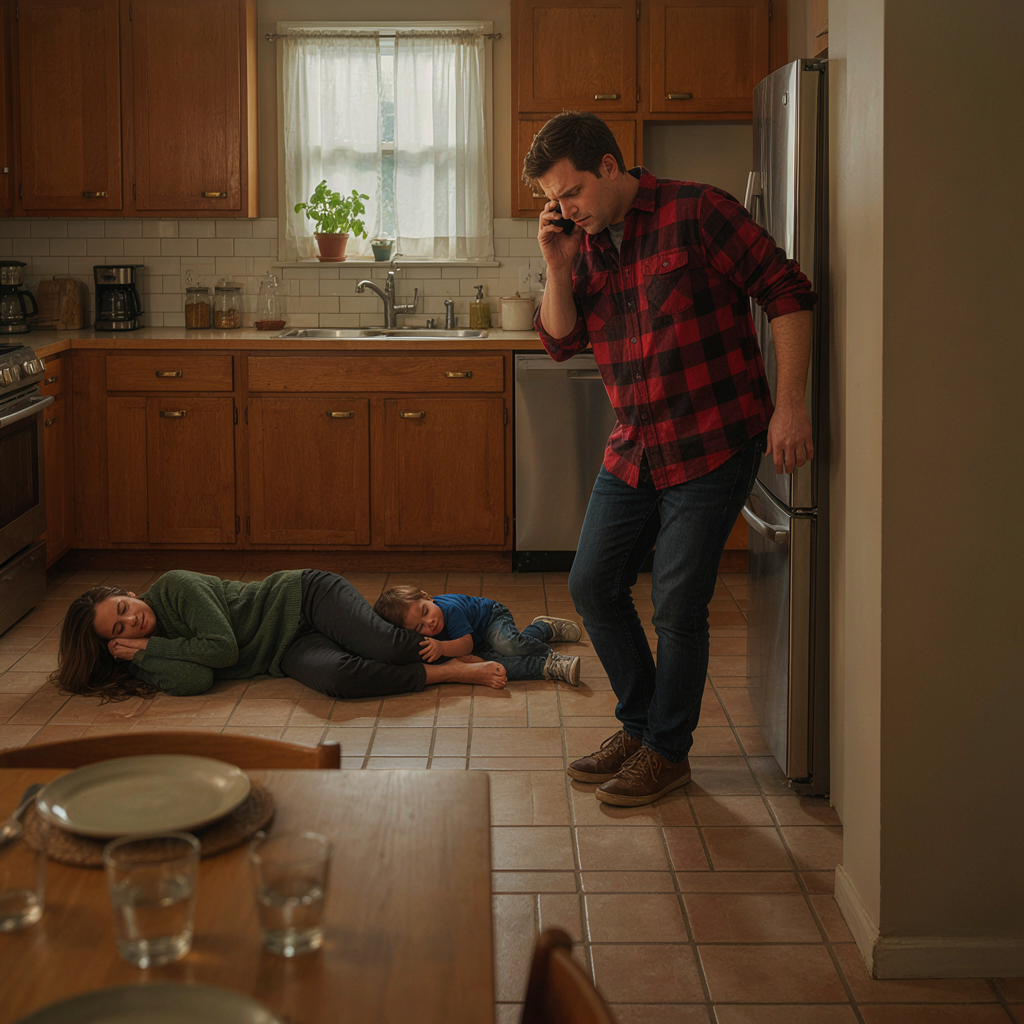
I lay perfectly still on the kitchen tile while the man I had slept beside for seventeen years stepped into the room and quietly locked the door behind him.
Daniel didn’t call my name.
He didn’t rush toward me.
He simply stood there.
Watching.
My cheek was pressed against the cold ceramic floor.
Through the narrow slit between my eyelashes, I could see the toes of his shoes.
Beside the dining table, my sixteen-year-old son Noah had gone limp again, one arm bent beneath his chest exactly as it had been when Daniel left.
I prayed Daniel couldn’t hear my heartbeat.
It sounded enormous to me.
Then his shoes moved.
One step.
Two.
Three.
He stopped beside my head.
“Claire?”
I didn’t answer.
He crouched.
His fingers touched my neck.
I fought every instinct in my body as he checked my pulse.
For seventeen years, those hands had buttoned the back of my dresses, held mine during Noah’s birth, rubbed my shoulders when migraines left me nauseated.
Now I had no idea whether those same hands were deciding if I was dead enough.
Daniel exhaled slowly.
Then he whispered something that froze the blood in my veins.
“Why are you still breathing this well?”
He stood.
My mind screamed.
Beside the refrigerator, Noah’s fingers twitched once.
Daniel turned toward him.
I thought it was over.
Instead, the telephone rang.
Not my phone.
Not Noah’s.
Daniel’s.
He answered immediately.
“Yes.”
Silence.
His posture changed.
“What do you mean?”
Another pause.
“No.
Nobody called anyone.”
My stomach clenched.
Whoever was speaking had told him about the 911 call.
Daniel’s voice dropped.
“That’s impossible.”
He looked directly toward the pantry.
Toward the narrow cabinet containing the old corded telephone.
My hand went cold against the floor.
“They’re unconscious,” he said.
“Both of them.”
Silence.
Then Daniel’s face drained of color.
“No.”
Whatever he heard made him walk backward.
“No, I followed your instructions.”
Instructions.
The word hit me harder than anything else.
Someone had told my husband what to do.
Daniel lowered his voice.
“I said it’s done.
Soon they’ll both be gone.”
The exact words I had heard earlier.
But this time his voice didn’t sound triumphant.
It sounded terrified.
He ended the call.
For several seconds, he stood motionless.
Then he crossed the kitchen and opened the freezer.
My hidden bag of food was tucked behind a package of frozen peas.
If he moved one thing—
Daniel stared inside.
My lungs stopped.
He reached toward the shelf.
His hand disappeared behind the peas.
Then headlights swept across the kitchen blinds.
Daniel spun around.
A vehicle stopped outside.
The front doorbell rang.
Daniel whispered one word.
“Damn.”
He hurried from the kitchen.
The second he disappeared around the hallway corner, Noah opened his eyes.
“Mom.”
“Don’t move yet.”
“Who called him?”
“I don’t know.”
The doorbell rang again.
Then a man’s voice shouted from the porch.
“Police department!”
Relief nearly made me sob.
I pushed myself upright.
Noah did the same, although his face had gone pale and his movements were sluggish.
“Stay behind me.”
“Mom, you’re shaking.”
“I know.”
We had barely reached the hallway when Daniel returned.
He stopped so abruptly that we nearly collided.
His eyes widened.
“You were awake.”
I backed away.
Noah moved in front of me.
“Don’t come near her.”
Daniel looked from Noah to me.
Something crossed his face.
Not anger.
Not guilt.
Fear.
“Claire, listen to me.”
“Get away from us.”
“I didn’t—”
The front door shook under a heavy knock.
“Police!”
Daniel grabbed my shoulders.
Noah lunged toward him.
“Get off her!”
Daniel released me immediately.
Then he said something I would replay hundreds of times afterward.
“If those are really police, open the door.
If they’re not, take Noah and run.”
I stared at him.
“What?”
Another pounding knock.
“Mrs.
Mercer?
This is Officer Bennett.
You called emergency services.”
Daniel closed his eyes.
Relief passed through him so quickly I almost missed it.
Real relief.
That confused me more than anything.
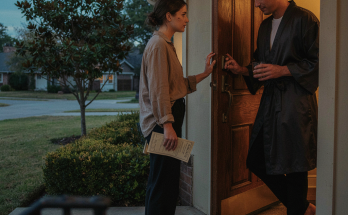
I unlocked the front door.
Two uniformed officers entered.
Everything happened at once.
Noah stumbled.
I shouted that Daniel had drugged us.
One officer grabbed Daniel and turned him toward the wall.
The other called paramedics.
Daniel didn’t resist.
He only kept repeating my name.
“Claire.
Claire, please.”
“Don’t talk to me.”
“You need to tell them about the food.”
My body went rigid.
“How do you know?”
Daniel stared at me.
Then his eyes shifted toward the freezer.
“Because whatever was in your dinner wasn’t what I put there.”
Six hours later, I was lying beneath fluorescent lights at St.
Catherine’s Medical Center with an IV in my arm and my entire marriage collapsing around me.
Noah was in the room beside mine.
Doctors said we were lucky.
Whatever we had consumed had acted quickly, but neither of us had eaten enough to cause permanent damage.
The word lucky felt obscene.
My husband had cooked dinner.
My son and I had collapsed.
I had heard Daniel say we would soon be gone.
Yet Daniel was claiming someone else had poisoned us.
Detective Lena Ortiz sat across from my hospital bed with a notebook resting against her knee.
She was in her early forties, with dark hair pulled into a practical knot and the calm expression of someone who knew panic made people remember badly.
“Start from dinner,” she said.
So I did.
Daniel had come home unusually early.
That alone should have felt strange.
For the last three months, he had been working late almost every night.
He told me the architecture firm was preparing a major commercial bid.
That evening, however, he walked through the door carrying groceries and kissed me on the forehead.
“I thought I’d cook.”
Noah had laughed.
“Should we order pizza as backup?”
Daniel threw a dish towel at him.
It had felt normal.
Painfully normal.
He made pasta, chicken, roasted vegetables, and salad.
He poured sparkling water for me and Noah.
Daniel barely ate.
He claimed he’d sampled too much while cooking.
About fifteen minutes after dinner began, my arms started feeling heavy.
Noah dropped his fork.
“You okay?”
I asked.
He rubbed his forehead.
“Everything’s spinning.”
I stood.
The room tilted.
The next thing I remembered was hitting the tile.
I never fully lost consciousness.
Neither did Noah.
Then I heard Daniel on the phone.
“It’s done.”
And later—
“They won’t be a problem after tonight.”
Detective Ortiz wrote every word.
When I finished, she asked, “Did your husband know about the old pantry telephone?”
“He knew it existed.
He thought it had been disconnected.”
“But it wasn’t.”
“No.”
“Who maintains the line?”
“I don’t know.
It came with the house.”
She nodded.
Then she asked, “Has Daniel ever threatened you?”
“No.”
“Been violent?”
“Never.”
“Financial problems?”
“Not that I know of.”
“Affair?”
“I don’t know anymore.”
She closed the notebook.
“Mrs.
Mercer, your husband admits adding something to the food.”
The monitor beside me seemed suddenly louder.
I gripped the blanket.
“He admits it?”
“Yes.”
“Then why are we talking about anything else?”
“Because he says what he added was supposed to make you and Noah sleepy for a few hours.”
I stared at her.
“That’s supposed to make me feel better?”
“No.”
Her answer was immediate.
“It shouldn’t.”
She leaned forward.
“But preliminary testing suggests there may have been two separate substances in the food.”
I stopped breathing.
“Two?”
“One appears consistent with a sedative.
The other doesn’t.”
“What is it?”
“We’re waiting for confirmation.”
“Would it have killed us?”
Ortiz hesitated.
That hesitation told me enough.
“Possibly.”
My skin went cold.
“So Daniel drugged us.”
“According to his statement, yes.”
“And someone else poisoned us?”
“That’s one possibility.”
I laughed.
It came out broken.
“Detective, how many people usually get to poison one family over dinner?”
She didn’t smile.
Instead, she removed a clear evidence sleeve from her folder.
Inside was a photograph.
My blue dinner plate.
“Your food sample from the freezer may be the reason we can answer that question.”
I closed my eyes.
The freezer bag.
For a few terrible minutes, I’d wondered if saving that food had been foolish.
Now it might be the only uncontaminated evidence we had.
Ortiz turned the photograph over.
“There’s something else.”
I opened my eyes.
“Your husband had three life insurance policies.”
My mouth went dry.
“On me?”
“Two on you.
One on Noah.”
“How much?”
“Together, approximately four million dollars.”
I felt like the room had tilted again.
“Daniel never told me.”
“Apparently they were opened years ago.”
I couldn’t speak.
Detective Ortiz continued.
“But your husband isn’t the beneficiary.”
I looked at her.
“Who is?”
She studied my face before answering.
“The Evelyn Hart Family Preservation Trust.”
For several seconds, the words meant nothing.
Then the name reached a place inside me that had been closed since childhood.
“Evelyn Hart?”
“Yes.”
“That isn’t possible.”
“Why?”
I heard myself whisper the answer.
“Because Evelyn Hart was my mother.”
Ortiz waited.
I forced out the rest.
“And my mother has been dead for thirty-three years.”
My mother died when I was five.
At least, that was what I had believed my entire life.
Her car went off a mountain road during a rainstorm outside Ashford, Virginia.
It burned before rescuers arrived.
My father told me there wasn’t enough left for me to see her.
All I remembered was the funeral.
Rain against black umbrellas.
My father’s hand crushing mine.
A photograph of my mother beside a closed casket.
Her name was Evelyn Hart Mercer.
She had been thirty-four years old.
My father never remarried.
He raised me alone until he died of pancreatic cancer when I was twenty-seven.
I hadn’t spoken my mother’s full name aloud in years.
Now it was attached to insurance policies on me and my son.
Detective Ortiz watched my reaction carefully.
“Could your father have established the trust?”
“I don’t know.”
“Could your mother have created it before she died?”
“I was five.
How would I know?”
“Do you have siblings?”
“No.”
“Aunts?
Uncles?”
“My mother’s sister died before I was born.
Dad’s family is gone.”
Ortiz nodded.
“Your husband recognized the trust name.”
My eyes snapped toward her.
“What did he say?”
“He asked for a lawyer.”
Of course he did.
I turned toward the window.
Dawn was starting to gray the sky.
After seventeen years of marriage, Daniel had become a stranger between dinner and sunrise.
But the worst thing wasn’t imagining that he had been lying to me.
It was beginning to wonder how long.
Noah was awake when I entered his room.
He looked younger in a hospital bed.
Sixteen years old, six feet tall, perpetually hungry, endlessly sarcastic—and suddenly small beneath white blankets.
I sat beside him.
“You scared me.”
He gave me a tired smile.
“You told me not to move.”
“So for once you actually listened?”
“Near-death experiences change people.”
I laughed despite myself.
Then his expression became serious.
“Was it Dad?”
I didn’t know how to answer.
“He put something in the food.”
Noah looked away.
“But?”
“But there may have been something else.”
His eyes came back to mine.
“Someone else?”
“Maybe.”
I told him about the insurance trust.
When I said my mother’s name, Noah went completely still.
“Say that again.”
“The Evelyn Hart Family Preservation Trust.”
He pushed himself upright.
“Mom.”
“What?”
His face had changed.
Not fear.
Recognition.
“Remember my genealogy project last spring?”
Of course I did.
Noah’s history teacher had assigned students to build family trees.
He had spent a weekend scanning boxes of photographs from my father’s attic.
“Yes.”
“I found pictures of Grandma Evelyn.”
My stomach tightened.
“So?”
“There was one from some company picnic.
She was standing next to a sign.”
“What sign?”
“I don’t remember.
Something Foundation.”
He rubbed his forehead.
“I scanned the picture because it was clearer than the funeral photo.”
“Noah, what are you trying to tell me?”
He looked toward the closed door.
Then lowered his voice.
“I ran one of those image comparison tools.”
“Why?”
“Because I thought Grandma looked like someone.”
My hands went cold.
“Who?”
He hesitated.
“Dr.
Vale.”
I stared at him.
Noah swallowed.
“Mom, I thought Grandma Evelyn looked like your therapist.”
Dr.
Helen Vale had been my therapist for six years.
I had started seeing her after my father’s death finally caught up with me.
For years I believed grief had an expiration date.
Then one afternoon, while cleaning the attic, I opened a box containing my father’s shaving mug and spent forty minutes sitting on the floor unable to breathe.
A friend recommended Dr.
Vale.
She was patient.
Warm.
Never dramatic.
She helped me through grief, panic attacks, arguments with Daniel, the terrifying year when Noah developed a heart rhythm problem, and the complicated guilt I carried about barely remembering my mother.
Especially my mother.
Once, during a session three years earlier, I had told her I felt ashamed because I could no longer remember Evelyn’s voice.
Dr.
Vale had leaned forward.
“You were five, Claire.”
“I know.”
“Children remember love differently.”
“What does that mean?”
She had smiled sadly.
“Sometimes the body remembers what the mind loses.”
At the time, I thought it was beautiful.
Now the memory made me nauseated.
I called Detective Ortiz immediately.
She came to Noah’s room twenty minutes later.
“Do not contact Dr.
Vale,” she said.
“I have an appointment with her Thursday.”
“Cancel it.”
“Won’t that make her suspicious?”
Ortiz paused.
Then looked at me differently.
“Maybe don’t cancel.”
Noah spoke.
“Are you going to investigate her?”
“We’re going to investigate everyone.”
“Can you compare pictures?”
“We can do more than compare pictures.”
Ortiz turned toward me.
“Claire, did your husband know you saw Dr.
Vale?”
“Of course.”
“Did he ever object?”
“No.”
“Recently?”
I thought back.
Three months earlier, Daniel had asked an odd question over breakfast.
How long had Helen been my therapist?
Why?
Just wondering.
Another time, he asked if I had ever seen her family photographs.
I thought he was making conversation.
Then, two weeks before the dinner, I found Daniel standing in my office holding the old photograph album from my father’s attic.
He closed it when he saw me.
“I was looking for Noah’s baby pictures,” he said.
I had believed him.
My stomach sank.
“He knew.”
Ortiz didn’t answer.
But I could see she thought the same thing.
Daniel remained in custody for thirty-six hours.
Then his attorney requested that I hear his statement.
I refused.
He asked again.
I refused again.
The third time, he sent a handwritten note through Detective Ortiz.
It contained only eleven words.
I know what happened to your mother.
Please let me explain.
I agreed.
Daniel sat behind thick glass in the county detention center.
I’d never seen him look so exhausted.
No suit.
No wedding ring.
No confident half-smile.
Just my husband in a gray jail uniform with bruised shadows beneath his eyes.
I picked up the telephone.
He did the same.
“You have five minutes.”
“Claire—”
“Don’t say my name like we’re still married.”
His face tightened.
“You have every right—”
“I know.”
That silenced him.
I leaned closer to the glass.
“You drugged our child.”
“I know.”
“You drugged me.”
“Yes.”
“You took our phones.”
“Yes.”
“And then you told somebody we’d both be gone.”
“Yes.”
Every answer hurt more because he didn’t deny anything.
“Who were you talking to?”
Daniel looked toward the guard.
Then back at me.
“Helen Vale.”
My hand tightened around the telephone.
“She is Evelyn.”
“I believe so.”
My chest constricted.
“You believe?”
“I couldn’t prove it.”
“Then how did you find out?”
“Noah.”
I stared.
“His genealogy project.”
Daniel nodded.
“He showed me the photo comparison.
He thought it was funny.”
Noah had never told me.
Probably because the software had given only a probability, nothing definitive.
Daniel continued.
“I looked at it again that night.”
“And?”
“The resemblance was too strong.”
“So you investigated my therapist instead of telling me?”
“I ran Helen’s background.”
“You’re an architect.”
“My father was a fraud investigator.”
I almost laughed.
“What does that have to do with anything?”
“Before he died, he left me access to old research files.
Evelyn Hart’s name was in them.”
The air seemed to disappear from the visitation room.
“Why?”
“Your mother worked for an organization called the Bellweather Children’s Foundation.”
Something moved at the edge of my memory.
A sign in an old photograph.
Bellweather.
Daniel continued.
“In the late eighties and early nineties, Bellweather moved millions of dollars through charitable accounts.
Your mother was a financial administrator.”
“You’re saying my mother stole money?”
“I’m saying the foundation was laundering it.”
“For whom?”
Daniel looked directly at me.
“People who sold children.”
I stopped breathing.
He spoke carefully.
“Illegal adoptions.
Forged birth records.
Babies moved between states and sometimes countries.
Wealthy families paid enormous amounts of money.”
“No.”
“Claire—”
“No.”
“My father’s files included evidence that Evelyn discovered what was happening.”
“Then she was a whistleblower.”
“At first.”
I heard the change in his voice.
“At first?”
Daniel’s jaw tightened.
“She started taking money too.”
I stood so quickly the chair scraped backward.
“I’m leaving.”
“Claire, wait.”
“You have no right to say this about her.”
“I know.”
“No, you don’t know anything.”
“Your mother didn’t die in that car.”
I froze.
Daniel pressed closer to the glass.
“No body was ever conclusively identified.
Your father identified jewelry and dental fragments, but the original report was altered.”
My knees weakened.
“How do you know?”
“Because Helen sent me a copy of the unaltered report.”
“Why would she do that?”
“Because she’d already realized I was investigating her.”
I slowly sat back down.
Daniel whispered, “Three months ago, she contacted me.”
“What did she want?”
“You.”
My fingers went numb.
“And Noah.”
I shut my eyes.
Daniel continued.
“She told me the truth about the trust.
The Bellweather money was eventually hidden through shell organizations.
Some of it ended up in a protected account linked to your identity.”
“I don’t have millions of dollars.”
“Not yet.”
“What does that mean?”
“You turn forty next month.”
I stared at him.
“The trust becomes irrevocably yours on your fortieth birthday.”
“How much?”
Daniel hesitated.
“Almost nineteen million dollars.”
I laughed once.
Not because it was funny.
Because the number was absurd.
“My mother supposedly died with nineteen million dollars?”
“No.
The account grew over thirty years.”
“Why me?”
“Because your identity was clean.
You were five.
Nobody was looking at you.”
I understood slowly.
My mother’s little girl had been the perfect hiding place.
“What happens if I die before forty?”
Daniel looked sick.
“It transfers to Noah.”
“And if Noah dies?”
Silence.
“Daniel.”
He finally answered.
“It returns to the original trustee.”
My heart pounded.
“Helen.”
“Evelyn.”
I dropped the telephone from my ear.
The purpose of the insurance policies suddenly became clear.
Not the money they paid.
The structure they established.
Proof of death.
A financial paper trail.
My mother didn’t need four million dollars.
She needed legal death certificates for me and Noah before my birthday.
I lifted the phone again.
“Then why did you put something in our food?”
Daniel’s eyes filled with something I had never seen in them before.
Shame.
“Because she told me she had people watching the house.”
“What?”
“She knew our schedules.
She knew where Noah went to school.
She sent photographs of you at the grocery store.
Noah at soccer practice.”
My stomach turned.
“I went to the FBI.”
“You what?”
“They didn’t have enough to arrest her.
Most of the Bellweather evidence was decades old.
She had used different names.
Fingerprints didn’t match any available records.”
“So what was dinner?”
“A trap.”
I stared.
Daniel continued.
“Helen believed I’d agreed to help her.”
“Help her murder us.”
“I told her I could make you both disappear without creating questions.”
I could barely listen.
“The sedative was supposed to keep you asleep while federal agents removed you from the house through the garage.
Helen was supposed to believe you were dead long enough to make a move on the trust.”
“Federal agents?”
“They were meant to be outside.”
“Were they?”
Daniel looked down.
“No.”
“Why?”
“Someone changed the timing.”
I remembered his panic on the telephone.
The headlights.
The police.
“Then who told you about my 911 call?”
“Helen.”
My grip tightened.
“How could she know?”
“I don’t know.”
“Was she watching the house?”
“Maybe.”
“Did she have cameras?”
“We found one in the smoke detector three weeks ago.”
A chill went through me.
“You knew someone was watching our home and you left me there?”
“I replaced the camera feed with a loop.”
“You should have told me.”
“Yes.”
“You should have trusted me.”
“Yes.”
“You drugged our son.”
Daniel’s voice broke.
“Yes.”
For the first time, he couldn’t look at me.
“I thought I was saving both of you.”
“You don’t get to decide that.”
“I know.”
“Did you put poison in the food?”
“No.”
“Can you prove it?”
“No.”
I stared at the man I had loved for almost half my life.
Then Daniel whispered, “But I think I know who did.”
I waited.
He raised his eyes.
“The woman who gave me the sedative was Helen.”
The laboratory report came back that afternoon.
The food from my freezer contained two substances.
One was the sedative Daniel admitted using.
The second was a powerful prescription compound that, in sufficient quantity, could dangerously disrupt heart function.
Doctors believed that was why Noah and I had collapsed so quickly.
Daniel had not known it was there.
At least, that was becoming plausible.
Then came the detail that changed everything.
The second substance had been found primarily in the grated cheese Daniel sprinkled onto our plates after serving dinner.
His own plate had no cheese.
Daniel hated Parmesan.
I remembered teasing him about it for years.
The container had come from our refrigerator.
Detective Ortiz searched the house.
No fingerprints belonging to Helen Vale were found.
No obvious forced entry.
Then Noah remembered something.
“Tuesday.”
We were sitting in a protected interview room at the police station.
“What about Tuesday?”
I asked.
“Dr.
Vale came to the house.”
I stared at him.
“What?”
“You weren’t home.”
“Why would my therapist come to our house?”
“She said you left a journal in her office.”
My skin prickled.
“I didn’t.”
Noah nodded.
“I know.
I told her you were at work.
She said she’d leave it in your study.”
“Did you let her inside?”
He looked ashamed.
“For maybe five minutes.”
Detective Ortiz asked, “Was she ever alone?”
“I went upstairs because I was gaming.”
“How long?”
“Ten minutes?”
The room went silent.
Daniel hadn’t been the only person with access to our kitchen.
My mother—or the woman we increasingly believed was my mother—had stood inside my home forty-eight hours before dinner.
And my son had unknowingly opened the door for her.
Police went to Helen Vale’s office.
It was empty.
Her computer was gone.
So were several filing cabinets.
Her condominium had been cleared out.
The woman who had spent six years listening to my grief had vanished within twelve hours of the failed poisoning.
That was confirmation enough for me.
Except Detective Ortiz wasn’t satisfied.
“We need evidence.”
“She’s gone.”
“Running isn’t a confession.”
“She poisoned us.”
“We think she did.”
“She is my mother.”
“We think she is.”
Every answer contained those two words.
We think.
I wanted certainty.
I wanted one thing in my life to stop moving beneath my feet.
Then Ortiz received a call from the lab.
She listened for several minutes without speaking.
When she hung up, she looked at Noah.
“Did you touch the food bag before your mother put it in the freezer?”
“Yes.”
“Anyone else?”
“No.”
Ortiz looked at me.
“We found a partial DNA profile on the outer seal that doesn’t belong to you, Noah, or Daniel.”
My pulse quickened.
“Helen?”
“We need something to compare it with.”
I knew immediately where to find it.
The old attic boxes.
My father had saved everything.
Photographs.
Letters.
Christmas cards.
My kindergarten drawings.
And one object I hadn’t thought about since childhood.
My mother’s hairbrush.
Police escorted me back to the house.
The kitchen still smelled faintly of disinfectant and abandoned dinner.
I couldn’t look at the tile where Noah and I had fallen.
Instead, I climbed into the attic.
Dust floated through the flashlight beam.
After nearly an hour, I found the cedar box.
Inside was my mother’s brush.
Dark wooden handle.
Silver initials.
E.H.
Several strands of hair remained tangled between the bristles.
Detective Ortiz sent it to the laboratory.
The results came back two days later.
The DNA from the hairbrush matched the partial profile from the freezer bag strongly enough to establish a maternal connection.
Someone closely related to the woman whose hair had been preserved for three decades had handled that bag.
That alone didn’t make sense.
Helen had never touched the freezer bag.
I had created it after she had supposedly left the house.
Then Ortiz asked me the question that cracked the case open.
“Where did the bag come from?”
“The drawer beside the freezer.”
“Was the box already opened?”
“Yes.”
“How long had it been there?”
“I don’t know.”
“Could Helen have touched the bags during her visit?”
Yes.
But why?
Then I understood.
She hadn’t handled my evidence bag.
She had handled the unused freezer bags in advance.
Her DNA wasn’t on the evidence because she knew I would collect food.
It was there because she had anticipated I might.
Which meant something even more terrifying.
The poisoning wasn’t improvised.
She had studied me.
She knew how I responded under stress.
She knew I was meticulous.
She knew I saved receipts, photographed damaged packages, labeled leftovers.
Of course she knew.
For six years I had sat three feet away from her and explained exactly how my mind worked.
I had paid my own mother to study me.
Three days later, Dr.
Helen Vale called.
Not the police.
Me.
My protected phone rang at 11:42 p.m.
Unknown number.
I answered because some part of me already knew.
“Hello?”
A woman breathed softly.
Then came the voice that had comforted me through years of grief.
“Claire.”
I closed my eyes.
“Mom?”
Silence.
For one second, I was five years old.
Then Helen laughed.
Not warmly.
Sadly.
“Oh, sweetheart.”
My stomach twisted.
Detective Ortiz, seated across the hotel room, immediately started recording.
I kept my voice steady.
“Is it true?”
“Which part?”
“Are you Evelyn?”
A long pause.
Then—
“Yes.”
One syllable erased thirty-three years of my life.
Tears filled my eyes.
“You watched me bury you.”
“I wasn’t there.”
“You let me think you were dead.”
“I had no choice.”
“You had thirty-three years.”
“I was protecting you.”
“By poisoning my son?”
The warmth disappeared from her voice.
“Daniel wasn’t supposed to ruin everything.”
“So he was supposed to kill us?”
“He was supposed to follow instructions.”
My chest tightened.
Ortiz silently motioned for me to keep her talking.
“What instructions?”
Helen sighed.
“Claire, you don’t understand what your father did.”
“My father?”
“He took you from me.”
“You disappeared.”
“He made disappearing necessary.”
“What are you talking about?”
“He discovered the Bellweather accounts.”
“You were laundering money.”
“I was moving money.”
“For people selling babies.”
Silence.
“Is that what Daniel told you?”
“Is it true?”
Another silence.
Then Helen said, “The world is rarely as clean as frightened men make it sound.”
I almost laughed.
“You really are my mother.”
“Yes.”
“Then tell me something only she would know.”
Helen answered instantly.
“When you were four, you cut the left side of your hair because you wanted to look like a boy in your preschool class named Andrew.
Your father cried harder than you did.”
My hand covered my mouth.
I had never told anyone that.
Not Daniel.
Not Noah.
Not Helen.
Not as Helen.
She continued.
“You called strawberries ‘redberries.’
You slept with a stuffed rabbit named Captain even though Captain was missing one ear.
And when thunder frightened you, you crawled into my bed and put your feet beneath my legs because you said I was warm.”
Tears ran down my face.
For one horrible moment, I wanted my mother.
That was the cruelest part.
Some five-year-old version of me wanted to ask why she had left.
Instead, I whispered, “You tried to kill me.”
Helen’s voice hardened.
“The trust was never yours.”
“You put it in my name.”
“To protect it.”
“You used your child as a bank account.”
“I used what was available.”
The sentence killed something inside me.
Perhaps whatever remained of the mother I had imagined.
I looked at Ortiz.
She nodded.
I asked, “Where are you?”
Helen laughed softly.
“Still trying to be organized, Claire?”
“Why call me?”
“Because I want you to understand that Daniel is lying to you.”
“About what?”
“Everything.”
My heart tightened.
“He didn’t discover me because of Noah’s photograph.”
“What?”
“He knew who I was before he married you.”
Across the room, Ortiz’s eyes sharpened.
Helen continued.
“Ask him about his father.”
I couldn’t speak.
“Ask Daniel what his father’s real investigation was.”
The call ended.
Daniel was released the next morning.
Not cleared.
Released.
The evidence against him no longer supported attempted murder, though he still faced charges related to drugging us.
I met him in an interview room at the federal building.
He looked at my face and knew immediately.
“She called you.”
“Your father.”
Daniel went pale.
“What about him?”
“Tell me the truth.”
“Claire—”
“No more protecting me.
No more deciding what I can handle.
Tell me.”
Daniel sat down.
For several seconds, he stared at his hands.
Then he spoke.
“My father didn’t investigate Bellweather after the fact.”
I waited.
“He worked for them.”
Every muscle in my body tightened.
“He was their attorney.”
I sat opposite him.
Daniel continued.
“When he realized children were being moved illegally, he started collecting evidence.”
“And my mother?”
“She helped him at first.”
“Then took money.”
“Yes.”
“What does that have to do with you?”
“My father spent the rest of his life trying to find Evelyn.”
Daniel’s eyes met mine.
“Before he died, he made me promise to finish it.”
The implication reached me slowly.
“When did you meet me?”
Daniel didn’t answer.
My stomach dropped.
“When did you know who I was?”
“Before our first date.”
I stood.
“No.”
“Claire—”
“You married me because of her?”
“No.”
“You knew who I was.”
“Yes.”
“You researched me.”
“Yes.”
“You approached me deliberately.”
“At first.”
The words cut deeper than anything else that week.
Seventeen years of memories flashed through me.
The coffee shop where we met.
Our first date.
The proposal beside the river.
Noah’s birth.
Every anniversary.
Every whispered promise.
I slapped him.
The sound cracked through the room.
Daniel didn’t move.
“I deserved that.”
“Don’t tell me what you deserve.”
I was crying now.
“Was any of it real?”
His face broke.
“After the first week?
Almost everything.”
“Almost?”
“I approached you because of Evelyn.
I stayed because I loved you.”
“How convenient.”
“I stopped investigating after we got married.”
“Why?”
“Because you weren’t evidence anymore.”
His voice shook.
“You were my wife.”
I turned away.
“And Noah?”
“My son.”
“You poisoned him.”
Daniel closed his eyes.
“I will regret that every day I’m alive.”
I believed him.
That didn’t mean I forgave him.
Some betrayals can be understood without being erased.
Federal investigators found Evelyn six weeks later.
She hadn’t fled the country.
She had done something far more arrogant.
She had moved into a rental property fourteen miles away under another identity.
Inside, investigators found files on me.
Hundreds of pages.
Therapy notes.
Photographs.
Bank statements.
School schedules.
Medical records.
Copies of Noah’s report cards.
My wedding photographs.
There were surveillance photographs of Daniel and me taken before we ever met.
That discovery proved something even he hadn’t known.
Evelyn had been watching Daniel too.
My mother knew the son of Bellweather’s former attorney had found me.
She had allowed him to approach.
She had allowed us to fall in love.
Why?
The answer was hidden in one final file.
A sealed envelope labeled:
CLAIRE — PATERNITY.
I thought nothing could shock me anymore.
I was wrong.
Inside was my original birth certificate.
Not the one my father had kept.
A different one.
My mother’s name was the same.
The father’s name wasn’t.
I stared at the document until the letters blurred.
Daniel stood across the evidence room.
Detective Ortiz beside him.
No one spoke.
Finally I whispered, “Who is Robert Mercer?”
“The man who raised you,” Ortiz said.
“I know.”
My finger touched the other name.
“Who is Thomas Hale?”
Ortiz looked toward Daniel.
His face had gone white.
I understood before anyone said it.
“No.”
Daniel stepped backward.
“No.”
I looked at him.
“Who is Thomas Hale?”
Daniel’s lips parted.
He couldn’t answer.
Detective Ortiz did.
“Thomas Hale was Daniel’s father.”
The world stopped.
I looked at Daniel.
He looked as horrified as I felt.
“No.”
I shook my head violently.
“No.
That would mean—”
Ortiz interrupted.
“We already ran the necessary DNA tests.”
Daniel gripped the back of a chair.
I couldn’t breathe.
Then Ortiz said the sentence that changed everything again.
“Thomas Hale was listed as your father, Claire.”
I closed my eyes.
Daniel whispered, “Oh God.”
“But the document was forged.”
My eyes snapped open.
Ortiz placed a second report on the table.
“Daniel is not your biological brother.”
Air rushed back into my lungs so violently I nearly collapsed.
Daniel sat down.
“Then why?”
Ortiz looked at the evidence.
“Because Evelyn wanted Thomas Hale to believe Claire was his daughter.”
I stared.
“Why?”
“Leverage.”
Daniel spoke slowly.
“My father tried to expose Bellweather.”
Ortiz nodded.
“Evelyn convinced him that exposing her would destroy his own child’s life.”
Me.
Except I wasn’t his child.
I had been another instrument.
Another account.
Another lie.
But there was one last page in the envelope.
A DNA report dated only two years earlier.
Noah’s name appeared at the top.
I stared at it.
“Why did she test Noah?”
Detective Ortiz’s expression changed.
This was the part she hadn’t wanted to tell me.
“Because Noah was the only person who could expose the deepest part of Bellweather.”
“How?”
Ortiz pushed an old photograph toward me.
It showed five infants lying in hospital bassinets.
A number was taped to each blanket.
I felt sick.
“Bellweather didn’t only arrange illegal adoptions,” she said.
“They falsified parentage.”
I looked at Noah’s DNA report.
Then at my own.
The room seemed to narrow.
“What did Evelyn find?”
Ortiz answered carefully.
“Your father—Robert Mercer—was your biological father.”
Relief flickered through me.
Then died when she continued.
“But Evelyn Hart was not your biological mother.”
I stared at her.
“What?”
“The woman who raised you until age five was not the woman who gave birth to you.”
My legs went weak.
Daniel caught my arm.
For once, I didn’t pull away.
Ortiz turned over the final photograph.
A young woman stood outside a hospital.
She had dark hair.
A tired smile.
And my eyes.
Written on the back were three words.
Anna Mercer — 1986.
“Robert Mercer’s younger sister,” Ortiz said.
“My aunt?”
“According to surviving records, Anna gave birth to a daughter in 1986.”
I stopped breathing.
“What happened to her?”
“She disappeared from the hospital.”
I knew before Ortiz finished.
“Bellweather took me.”
“Yes.”
“And Evelyn?”
“She and Robert later raised you as their daughter.”
“Why would my father agree to that?”
“He may not have known the full truth initially.
We found letters suggesting Evelyn told him Anna had abandoned you.”
I sat down slowly.
My entire childhood rearranged itself.
Evelyn wasn’t the mother who abandoned me.
She was the woman who had helped steal me.
My father wasn’t perfect.
But he had spent the rest of his life trying to uncover the truth after discovering it.
And my biological mother—
“What happened to Anna?”
Ortiz’s eyes softened.
“We found her.”
I stopped breathing.
“Alive?”
“Yes.”
I couldn’t speak.
“She’s been living under another name in Oregon for almost forty years.”
“Why didn’t she find me?”
“She tried.”
Ortiz slid a photocopied letter toward me.
“According to her statement, Evelyn threatened to kill you if Anna contacted authorities.
She was young, frightened, and told you had been placed overseas.”
My hands trembled.
“Does she know?”
“That you’re alive?”
Ortiz nodded.
“Yes.”
I covered my mouth.
For three decades, I had mourned the wrong mother.
And somewhere across the country, another woman had mourned me.
I didn’t meet Anna immediately.
I needed time.
So did Noah.
So did Daniel and I.
Daniel moved out.
People expected me either to divorce him immediately or forgive him because he had ultimately tried to protect us.
Life isn’t that simple.
Daniel had lied to me from the day we met.
He had also loved me.
He had risked prison trying to stop Evelyn.
He had drugged our son without permission.
He had also spent sixteen years waking at midnight whenever Noah coughed.
All of those things were true.
Love doesn’t erase betrayal.
Betrayal doesn’t erase love.
Sometimes adulthood means learning that two opposite truths can exist in the same room.
Evelyn eventually pleaded guilty to multiple federal charges connected to financial crimes, identity fraud, obstruction, and the attempt on our lives.
The surviving Bellweather cases were reopened.
Several families learned truths they’d been denied for decades.
The nineteen-million-dollar trust was frozen.
Months later, most of the money was ordered into a victim compensation fund.
I didn’t fight it.
I never wanted it.
That money had already cost enough.
I met Anna on a rainy afternoon almost eight months after the dinner.
She waited for me in a private room at a small hotel outside Richmond.
No cameras.
No reporters.
No police.
Just us.
When I entered, a seventy-year-old woman rose from a chair.
She didn’t run toward me.
She didn’t say my name.
She simply stared.
Her hands covered her mouth.
Then she started crying.
I did too.
For several seconds neither of us moved.
Finally she whispered, “You tilt your head like my mother.”
That was the first thing my real mother ever said to me.
Not dramatic.
Not perfect.
Just human.
I crossed the room.
She opened her arms.
And for the first time in thirty-nine years, Anna Mercer held the daughter she had been told was gone forever.
Noah eventually asked me whether I regretted calling 911.
We were standing in the kitchen.
The same kitchen.
I had considered moving.
Instead, we replaced the tile.
Changed the locks.
Removed every smart device.
And kept the old corded telephone.
“Why would I regret it?”
I asked.
“Because Dad’s plan might have worked if we hadn’t.”
I thought about that.
Maybe Daniel’s plan would have worked.
Maybe federal agents would have staged our disappearance.
Maybe Evelyn would have exposed herself.
Maybe none of the rest would have happened.
Or maybe Noah and I would have died quietly because Daniel never knew his sedative had been contaminated.
My hand rested on the freezer handle.
Inside, behind a new package of frozen peas, sat an empty blue evidence bag Detective Ortiz had returned to me after the trial.
I kept it for one reason.
To remember.
Not the poison.
Not Daniel’s betrayal.
Not Evelyn’s lies.
Something else.
The moment I woke up on that floor, I had believed the most important question was whether my husband wanted me dead.
It wasn’t.
The real question was how many people had spent decades deciding what I deserved to know about my own life.
Evelyn decided I didn’t deserve to know who my mother was.
My father decided some secrets were safer buried.
Daniel decided I couldn’t be trusted with the danger surrounding me.
Even Anna, terrified and threatened, had been forced into silence.
Every person believed secrecy was protection.
And every secret became another cage.
Noah opened the freezer and grabbed ice cream.
“You know,” he said, “normal families just argue about whose turn it is to do dishes.”
I smiled.
“We can try that.”
“Cool.
It’s your turn.”
“Absolutely not.”
He grinned.
For the first time in months, the sound of his laughter didn’t make me afraid of losing him.
It made me grateful he was there.
Alive.
Daniel and I were still separated.
We were in counseling, though I refused to promise him an ending.
He accepted that.
Sometimes rebuilding trust isn’t about returning to what existed before.
Sometimes what existed before was built partly on lies.
If Daniel and I ever created something again, it would have to be new.
No hidden investigations.
No secret plans.
No deciding for each other.
No locked rooms inside the truth.
As for Anna, we speak every Sunday.
She has never asked me to call her Mom.
That matters to me.
She understands that biology can explain where a story began without giving anyone the right to rewrite the middle.
One Sunday, she told me something I think about often.
“When you were born, they let me hold you for eleven minutes.”
“Only eleven?”
“I counted.”
Her voice cracked.
“I spent thirty-nine years remembering those eleven minutes.”
I couldn’t answer.
Then she said, “Everything after that is a gift.”
Maybe she’s right.
Because the night Daniel cooked dinner, somebody expected two people to disappear.
Instead, an entire buried history came back to life.
The poison exposed the trust.
The trust exposed Bellweather.
Bellweather exposed Evelyn.
Evelyn exposed Daniel.
Daniel’s secrets exposed my birth.
And my birth led me to Anna.
All because of one unfinished plate of food I scraped into a freezer bag with shaking hands.
People sometimes ask me which revelation hurt the most.
That Daniel lied?
That Evelyn lived?
That the woman I mourned as my mother had helped steal me?
There is no useful answer.
Pain isn’t a competition.
But I know which moment changed everything.
It wasn’t hearing Daniel whisper, “Soon they’ll both be gone.”
It wasn’t waking on the floor.
It wasn’t discovering nineteen million dollars hidden behind my name.
It wasn’t even learning that my dead mother had been sitting across from me in a therapist’s chair for six years.
It was something much smaller.
A freezer drawer.
A plastic bag.
My sixteen-year-old son’s trembling hands holding the drawer open while I saved three spoonfuls of food.
Because without that bag, Daniel might have looked like a murderer forever.
Evelyn might have disappeared again.
Bellweather might have stayed buried.
Anna might have died believing her daughter was lost somewhere she could never reach.
And I might never have understood the final truth:
That night, someone really did try to make my son and me disappear.
They simply had no idea that by trying to erase us, they were about to uncover everyone who had already tried to erase me before.