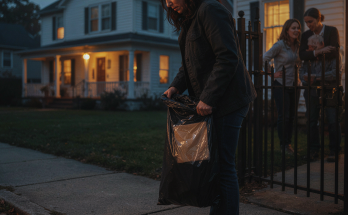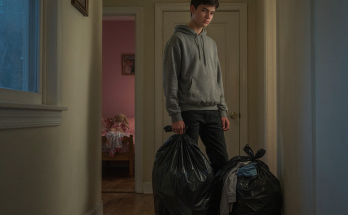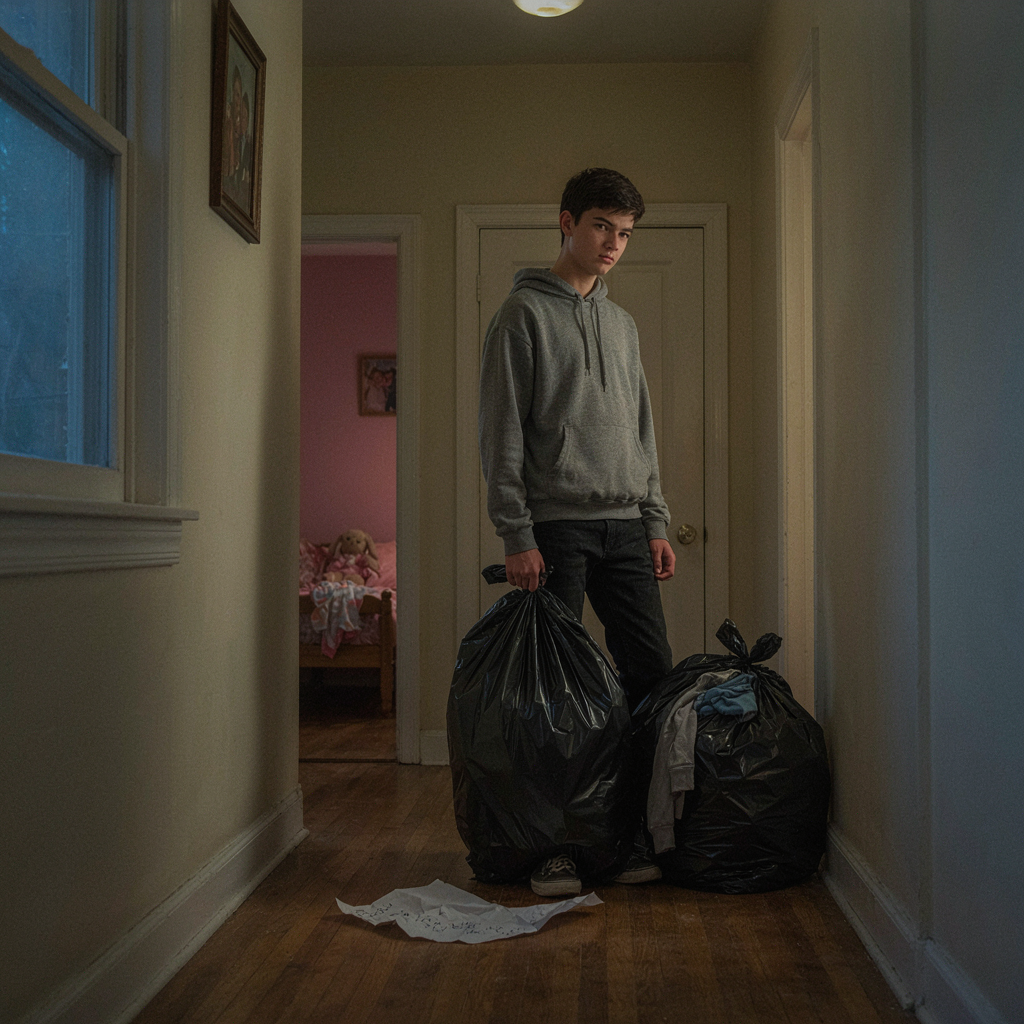
My 16-year-old son came home from his dad’s house carrying his clothes in three black trash bags.He didn’t have a suitcase.He didn’t have a duffel bag.
He didn’t even have the old blue backpack he’d used for years.
Just three black trash bags stuffed so tightly with clothes that one of them had a sleeve sticking through a torn corner.
He set them down in the hallway.
Then he looked at me and said, very quietly,“Dad says I can visit, but I don’t live there anymore.”For a second, I honestly didn’t understand him.
I stared at the bags.Then at Eli.Then back at the bags.“What do you mean you don’t live there anymore?”
He shrugged.“His wife needs my room.”
I felt something cold settle in my stomach.“Why?”“They’re having the baby.”
I knew my ex-husband, Daniel, had remarried four years after our divorce. I knew his wife, Megan, was pregnant. I knew they were expecting another baby.
What I didn’t know was that they’d apparently decided my son could be erased from their home to make room for it.
I walked over and touched one of the trash bags.
“Where’s your suitcase?”
“Dad said we didn’t need to waste time packing.”
That sentence hurt more than it should have.
Not because of the suitcase.
Because of what it meant.
They hadn’t packed his things like someone who belonged there.
They had thrown them away from the house like he was moving out of an apartment he’d never owned.
“Did your dad say you weren’t allowed to stay there anymore?”
Eli looked at the floor.
“He said I can come over whenever he has time.”
“When he has time?”
“Yeah.”
His voice cracked just slightly.
“He said I’m almost an adult.”
I picked up one of the bags.
“Come upstairs.”
He nodded.
That was all.
No tears.
No anger.
No teenage explosion.
Just a sixteen-year-old boy carrying his life in trash bags because the adults who were supposed to make him feel wanted had decided a crib was more important than his bed.
I helped him unpack.
His soccer clothes.
School uniforms.
Hoodies.
A few books.
His headphones.
The framed photograph of him and Daniel fishing when Eli was seven.
The frame was cracked.
I noticed it immediately.
“Did this break?”
Eli shook his head.
“It fell.”
“Where?”
He hesitated.
“Dad’s garage.”
I put it carefully on his dresser.
He watched me.
Then he said, “Mom?”
“Yeah?”
“Don’t call him tonight.”
I turned.
“Why?”
“Because he’ll say I’m making you angry at him.”
I sat on the edge of his bed.
“Eli, you didn’t make me angry.”
He gave me a tired little smile.
“I know.”
But I called Daniel anyway.
He answered on the fourth ring.
“What’s wrong?”
I could hear a television in the background.
“Eli came home with three garbage bags.”
Daniel sighed.
“Please don’t make this dramatic.”
My grip tightened around the phone.
“Where is his room?”
“We’re converting it.”
“Into what?”
“You know we’re having a baby.”
“I know you’re having a baby.”
“He’s sixteen, Laura. He’s almost grown.”
“He’s sixteen.”
“He has a perfectly good room at your house.”
I looked through Eli’s open bedroom door.
My son’s room.
His trophies.
His books.
His childhood photographs.
His whole life.
“Did you tell him he doesn’t live with you anymore?”
“I told him the arrangement is changing.”
“That isn’t what he said.”
“Well, he’s emotional.”
I almost laughed.
“Emotional?”
“He’ll be fine.”
“Daniel, he came home carrying his clothes in garbage bags.”
Silence.
Then he said,
“Look, I love my son. But Megan is pregnant. We have to prioritize the baby.”
I closed my eyes.
“Your son is standing ten feet away from me.”
“I know.”
“No, you don’t.”
I hung up.
Eli had heard everything.
He was sitting on his bed, staring at the floor.
“I told you,” he whispered.
I walked over and hugged him.
He didn’t resist.
But he didn’t hug me back either.
He just stood there.
Rigid.
Like he’d learned that needing someone was dangerous.
That night, I made his favorite dinner.
He barely ate.
The next morning, he went to school.
I expected anger.
Instead, he became quieter.
That frightened me more.
For the next two days, he stopped mentioning his father.
He stopped asking whether Daniel had called.
He stopped talking about weekends.
And when I asked if he wanted to see his little half-sister, Sophie, he said,
“I don’t know.”
Sophie was eight.
She was Daniel’s daughter with Megan.
And despite everything complicated about our family, Eli loved her.
When she was four, he’d taught her how to ride a bicycle.
When she was six, he helped her build a cardboard castle in the living room.
Last Christmas, she’d given him a handmade bracelet with his name spelled in crooked blue letters.
He’d worn it for months.
So when Eli suddenly didn’t want to see her, I knew this wasn’t about his father.
Something else had happened.
I just didn’t know what.
Then, two nights later, someone rang my doorbell.
It was almost ten o’clock.
I wasn’t expecting anyone.
I opened the door.
And there stood Sophie.
Eight years old.
Wearing pink pajamas.
Her hair was messy.
She was clutching a stuffed white rabbit under one arm.
And in her other hand was a folded piece of paper.
I stared at her.
“Sophie?”
She looked terrified.
“Is Eli here?”
I stepped outside.
“Where’s your mother?”
She shook her head.
“She’s sleeping.”
“Where’s your dad?”
“He’s watching TV.”
“How did you get here?”
She pointed toward the driveway.
A neighbor’s teenage daughter was sitting in a car.
She’d apparently driven Sophie over after Sophie begged her to.
I crouched down.
“Sophie, what’s happening?”
She held out the paper.
“Please tell Eli I didn’t take his room.”
I unfolded it.
In shaky child handwriting, it said:
Please tell Eli I didn’t take his room. I told Dad he could keep his room. I told him I would sleep in the baby’s room. I don’t want his room. Please don’t be mad at me.
My heart broke.
I looked at her.
“Eli isn’t mad at you.”
She immediately started crying.
“I told Dad!”
“I know.”
“I told him it was Eli’s room!”
“I know.”
“He said I didn’t understand because I’m little.”
She wiped her cheeks with the sleeve of her pajamas.
“He said Eli is almost seventeen and doesn’t need it.”
I sat down on the front step.
“Sophie, did your dad tell Eli to leave?”
She nodded.
“And did he throw his clothes in those bags?”
Her face crumpled.
“I saw him.”
I looked toward the house.
“Why didn’t you stop him?”
“I tried.”
Her voice became tiny.
“Dad yelled at me.”
I felt sick.
“What did he say?”
“He said, ‘This is grown-up stuff. Go to your room.’”
Sophie squeezed the rabbit.
“But my room is going to be the baby’s room too.”
I looked at her.
“What?”
She nodded.
“They’re moving me into the little room by the laundry.”
That was when I understood.
This wasn’t about Eli being almost grown.
It wasn’t even really about the nursery.
It was about a family that had decided children were pieces on a board.
Move this one here.
Move that one there.
Take this room.
Give it to the baby.
And somehow, because Eli was sixteen, everyone assumed he’d be mature enough to swallow the humiliation.
I brought Sophie inside.
Eli came downstairs.
The second he saw her, his face changed.
“Sophie?”
She ran to him.
“I didn’t take your room!”
Eli froze.
Then he knelt down and hugged her.
“I know.”
“I told Dad not to.”
“I know.”
“I told him you should keep it.”
“I know, Soph.”
She started sobbing into his sweatshirt.
Eli held her tightly.
And for the first time since he’d arrived home, I saw my son’s anger.
Not toward her.
Toward the adults.
After Sophie went home, Eli sat at the kitchen table.
“I don’t want her thinking this is her fault.”
“It isn’t.”
“I know.”
He stared at his hands.
“Dad doesn’t understand.”
“What doesn’t he understand?”
“That I don’t care about the room.”
I waited.
“I care that he didn’t ask me.”
That sentence stayed with me.
Because he was right.
A bedroom is four walls.
A bed.
A dresser.
A closet.
But to Eli, that room represented something else.
It represented proof that he belonged in his father’s life.
They hadn’t simply taken away his room.
They had taken away his place.
The next morning, I called Daniel again.
This time I didn’t yell.
I asked one question.
“Did you ask Eli if he wanted to give up his room?”
“No.”
“Why?”
“Because it was obvious.”
“No. It wasn’t.”
“Laura, stop turning this into some huge rejection story.”
“Your son came home believing you didn’t want him.”
“That isn’t true.”
“Then tell him.”
“I don’t need to prove that I love him.”
“You do when your actions are saying something else.”
He hung up.
Three hours later, I received a text.
Eli can come over Sunday for dinner.
Not stay.
Not spend the weekend.
Dinner.
I showed Eli.
He stared at it.
Then he said,
“I don’t want to go.”
“That’s your decision.”
He looked surprised.
“You’re not going to make me?”
“No.”
He nodded.
“Thank you.”
That Sunday, Daniel came to my house.
Not to pick up Eli.
To talk.
He stood on the porch with his hands in his jacket pockets.
“I want to see him.”
“He doesn’t want to go.”
“I figured you’d say that.”
“Don’t make this about me.”
He looked away.
“I made a mistake.”
I said nothing.
“I thought he would understand.”
“He’s sixteen.”
“I know.”
“You keep saying he’s almost an adult.”
Daniel swallowed.
“I know.”
Then he said something I wasn’t expecting.
“I’ve been trying to convince myself that because he’s sixteen, this shouldn’t hurt him.”
I looked at him.
“Why?”
“Because if I admit it hurt him, then I have to admit I caused it.”
That was the first honest thing he’d said.
But honesty wasn’t enough.
I told him Eli wasn’t ready.
He nodded.
Before leaving, he said,
“Can I at least give him something?”
He handed me an envelope.
Inside was a photograph.
Eli at seven, holding a fish beside his father.
On the back Daniel had written:
I never wanted you to think you weren’t my son.
I took it upstairs.
Eli read it.
He didn’t cry.
He just said,
“It’s too late for words.”
But he put the photograph on his desk.
Weeks passed.
Daniel kept calling.
Sometimes Eli answered.
Sometimes he didn’t.
Sophie began visiting more often.
She’d come over after school and sit beside Eli while he did homework.
One afternoon, she brought her stuffed rabbit.
“I think Bunny misses you.”
Eli smiled.
“Bunny can stay here anytime.”
She nodded seriously.
Then she whispered,
“Dad said you might not come back.”
Eli stopped writing.
“What?”
“He said you might decide you don’t want to be part of our family.”
Eli looked at me.
I knew immediately.
That wasn’t going to happen.
But before I could speak, Eli said,
“Sophie, none of this is your fault.”
“I know.”
“And I’m not leaving you.”
She smiled.
That became their little promise.
A month later, something unexpected happened.
Daniel called me at work.
His voice was shaken.
“Laura, I need help.”
“What happened?”
“Megan went into labor early.”
I froze.
“Is the baby okay?”
“They’re at the hospital.”
“Is Sophie with you?”
“No.”
“Where is she?”
Silence.
“Daniel?”
“She heard us arguing and left.”
My stomach dropped.
“When?”
“About an hour ago.”
“Where would she go?”
“I don’t know.”
I immediately called Eli.
He answered on the first ring.
“Mom?”
“Sophie is missing.”
There was silence.
Then Eli said,
“I know where she went.”
He grabbed his jacket.
We found her twenty minutes later.
She was sitting behind the old community center, clutching Bunny.
Eli approached slowly.
“Soph.”
She looked up.
“I knew you’d find me.”
He sat beside her.
“Why did you leave?”
She stared at the ground.
“I thought Dad was going to give my room away too.”
Eli looked at me.
Then back at her.
“He might change rooms.”
“I don’t want my room.”
“Then tell him.”
“He doesn’t listen.”
Eli nodded.
“I know.”
She leaned against him.
“I just wanted to know where I belonged.”
Eli closed his eyes.
Because he understood that sentence better than anyone.
We brought Sophie to the hospital.
Daniel was standing outside the maternity ward when he saw her.
He ran toward her.
She stepped behind Eli.
Daniel stopped.
For a moment, nobody moved.
Then Daniel crouched.
“Sophie.”
She didn’t answer.
“I was scared.”
“So was I.”
Daniel’s face collapsed.
“I shouldn’t have said those things.”
She looked at him.
“Did you give Eli away because of the baby?”
Daniel glanced at Eli.
“No.”
“But you took his room.”
“Yes.”
“Why?”
He struggled for words.
“Because I thought I could fix everything later.”
Eli finally spoke.
“You can’t.”
Daniel looked at him.
“I know.”
“You don’t get to make me disappear and then decide later that I’m important.”
Daniel nodded slowly.
“You’re right.”
Eli’s jaw tightened.
“I don’t need the room.”
“I know.”
“I needed you to want me there.”
Daniel’s eyes filled with tears.
“I do.”
Eli looked away.
“Then prove it.”
The baby was born that night.
A healthy little girl.
And for the first time, Daniel made a decision without treating one child like an inconvenience to another.
He told Megan they would not turn Eli’s old room into the nursery.
They would rearrange the house.
They would move their office.
They would make space.
Not because Eli demanded it.
Because he shouldn’t have had to surrender his place to begin with.
But repairing the room didn’t repair everything.
Eli didn’t immediately move back.
He stayed with me.
Daniel began rebuilding trust slowly.
He showed up to Eli’s soccer games.
He called without asking for anything.
He apologized without adding excuses.
He asked about school.
He listened.
And eventually, Eli started spending weekends there again.
Not because anyone forced him.
Because he chose to.
Six months later, I walked into Daniel’s house for the first time since the incident.
Eli’s room looked different.
Fresh paint.
New shelves.
His old fishing photograph hung above the desk.
But there was something else.
On the door was a small wooden sign.
ELI’S ROOM.
Underneath it, in smaller letters:
Always.
I looked at Daniel.
He shrugged.
“I thought he should know.”
Eli stood in the hallway.
Sophie ran past him carrying Bunny.
“Come see the baby’s room!”
Eli laughed.
“Your baby sister has a whole room now?”
“Yep.”
“And you didn’t steal mine?”
Sophie grinned.
“I told you I wouldn’t.”
Then she ran downstairs.
Eli looked at the sign.
For a long moment, he didn’t say anything.
Then he touched it.
“Mom?”
“Yeah?”
“I think I’ll stay tonight.”
I smiled.
“Okay.”
He looked toward his father.
“Dad?”
Daniel nodded.
“Yeah?”
“Can you help me hang my fishing picture straight?”
Daniel smiled.
“Absolutely.”
I watched them walk into the room together.
And I realized something.
Sometimes adults think children are hurt by the obvious thing.
The room.
The furniture.
The move.
The inconvenience.
But children remember something much deeper.
They remember who made space for them.
Who didn’t.
Who listened.
Who told them they were almost grown when what they really needed was to hear,
“You still belong here.”
That night, Sophie came into Eli’s room carrying her stuffed rabbit.
She climbed onto his bed.
“I wrote you another note.”
Eli laughed.
“Another one?”
She handed it to him.
He unfolded it.
It said:
You can live here again. I saved your room.
Eli looked at her.
Then he smiled.
“I think you did.”
She hugged him.
And this time, when he hugged her back, there was no hesitation.
Across the hallway, Daniel stood quietly watching.
He didn’t say anything.
He didn’t need to.
Because some things don’t get fixed by one apology.
They get fixed by showing up again.
And again.
And again.
Until the person you hurt finally believes your actions more than your words.
Eli didn’t get his childhood back.
None of us could give him that.
But he got something else.
A father who finally understood that making room for a new baby never required pushing an older child out.
A little sister who never stopped loving him.
And a home where nobody would ever again put his life into a black trash bag and call it a practical decision.
Years later, that little wooden sign was still on the door.
The paint had chipped around the edges.
Sophie had grown taller.
The baby had learned to walk.
Eli had graduated high school.
And on the morning he left for college, he stood in that doorway with his backpack over one shoulder.
Daniel hugged him.
Then he said,
“You always have a room here.”
Eli smiled.
“I know.”
And that was the difference.
Those three words were everything.
I know.
Because after everything that happened, Eli no longer needed to be convinced that he belonged.
He knew.