The $100,000 Account My Family Thought I Would Never Find
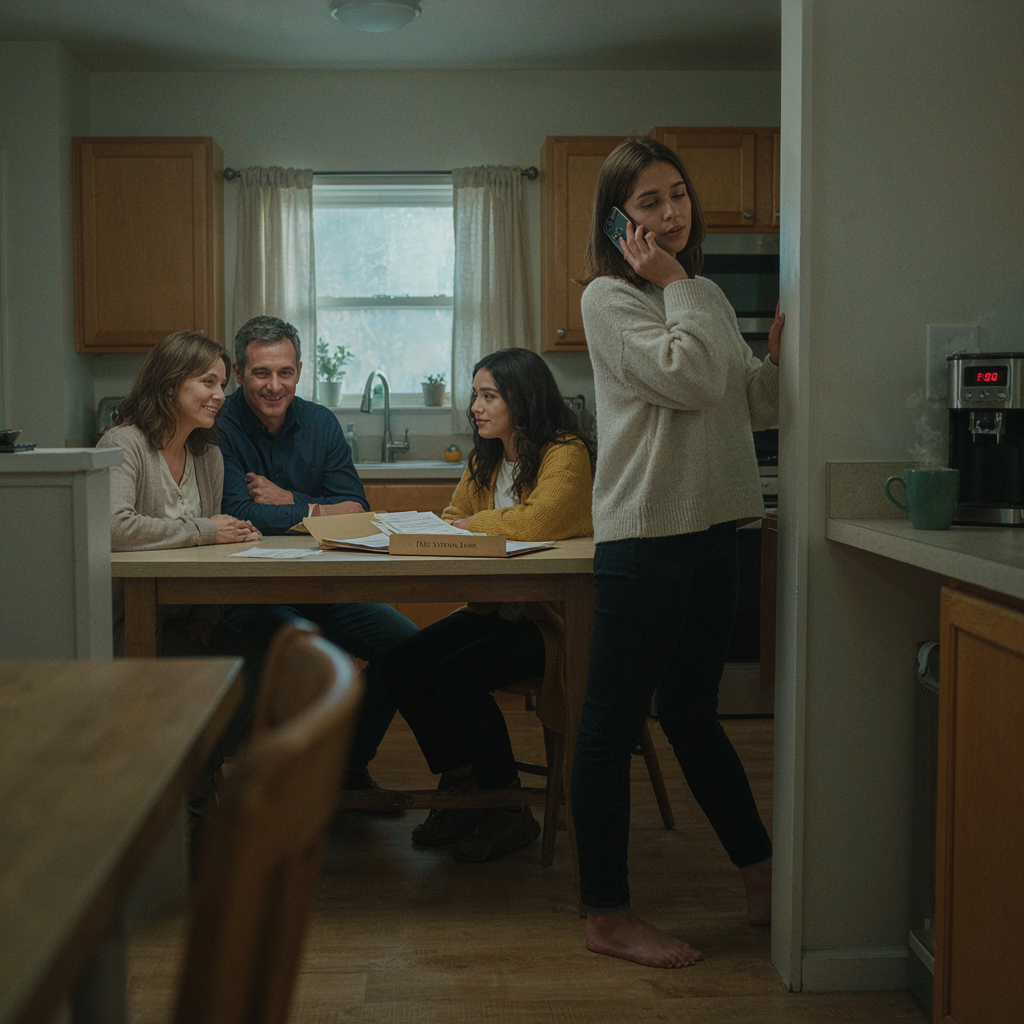
The call came before my coffee had finished brewing.The microwave clock read exactly 7:00 a.m., and the kitchen was still quiet except for the hum of the refrigerator and the slow drip of the coffee machine.
When the bank’s main number appeared on my screen, I answered.”Sloan,” the branch manager said, his voice lower than usual, “I need you to come in with your identification.”
My hand tightened around the counter.”Is something wrong?”There was a pause.
“I’d rather discuss it in person.”That sentence was enough to make my stomach drop.
“What happened?”Another pause.”We have an account application connected to your name. There’s a balance of one hundred thousand dollars.”
I almost laughed.Not because it was funny.Because it was impossible.
“I don’t have one hundred thousand dollars.””I understand.”
“No, I mean I don’t have an account like that. I don’t have an account anywhere with that kind of money.””I understand, Ms. Bennett. That’s why I need you to come in.”
My coffee machine clicked off.I stared at it without seeing it.”Who opened the account?”
“I can’t discuss the details over the phone.”
“Was there suspicious activity?”
“We’re investigating.”
My heart began pounding.
“Did someone steal my identity?”
“I don’t know yet.”
That answer frightened me more than anything else.
“I’ll be there in twenty minutes.”
“Bring your driver’s license and passport if you have them.”
“I do.”
“And Sloan?”
“Yes?”
“Please don’t discuss this with anyone before you arrive.”
I looked toward the hallway.
“Why?”
“Because we need to verify some information first.”
He hung up.
I stood there for several seconds with the phone still pressed against my ear.
Then I looked at the coffee.
It had gone cold.
Twenty-three minutes later, I walked into the downtown branch of Bellmore National Bank.
I expected security guards.
Police.
At least some sign that the situation was serious.
Instead, I saw my parents.
My father sat in the waiting area wearing his navy blazer, his hands folded neatly over his cane.
My mother sat beside him.
And next to them was my younger sister, Camille.
All three looked at me.
And smiled.
Not nervous smiles.
Not guilty smiles.
Smiles that said they knew exactly why I had been called.
Camille stood first.
“There she is.”
My stomach tightened.
“What are you doing here?”
Mom rose and hugged me.
I didn’t hug her back.
“Sweetheart, don’t look so frightened.”
My father chuckled.
“You’re making this more dramatic than it needs to be.”
I stared at him.
“How did you know I was coming here?”
He exchanged a glance with Mom.
Then Camille smiled.
“Because we’re the reason you’re here.”
My blood went cold.
“What?”
Before anyone could answer, the branch manager stepped out of his office.
Mr. Harris had managed my accounts for almost eight years.
He had always been warm with me.
Today, he wasn’t.
His eyes moved from my parents to Camille.
Then back to me.
“Ms. Bennett, come with me.”
My mother reached for my arm.
“Don’t worry. This is actually good news.”
I pulled away.
“I don’t know what’s happening.”
Camille rolled her eyes.
“You always make everything complicated.”
I followed Mr. Harris into his office.
He closed the door.
My parents and sister remained outside.
For a moment, neither of us spoke.
Then he opened a folder.
“Before we begin, I need you to confirm something.”
He placed a printed application on the desk.
I looked at it.
My name was at the top.
SLOAN BENNETT.
My address.
My date of birth.
My Social Security number.
Everything appeared correct.
My mouth went dry.
“I didn’t fill this out.”
Mr. Harris nodded.
“I suspected you might say that.”
“Who did?”
He scrolled through his computer.
“That’s where this gets unusual.”
“What do you mean?”
He turned the monitor toward me.
“The application was submitted electronically six months ago.”
I frowned.
“Six months ago?”
“Yes.”
“For what?”
“A secured family trust account.”
I stared at him.
“Family trust?”
He nodded.
“The initial deposit was $100,000.”
I leaned back.
“Where did that money come from?”
“That’s one of the questions we’re trying to answer.”
I looked at the application again.
There was something familiar about the signature.
Not mine.
But close.
Very close.
“Who signed this?”
Mr. Harris zoomed in.
“According to our records, you did.”
“I didn’t.”
“I believe you.”
“Then why is my signature on it?”
He didn’t answer immediately.
Instead, he scrolled farther down.
“There’s another issue.”
“What?”
He pointed to a section titled:
AUTHORIZED BENEFICIARY
I read the name.
My sister.
Camille Bennett.
My heart stopped.
“What?”
Mr. Harris watched my face carefully.
“Camille is listed as the sole beneficiary.”
I looked through the glass wall at my sister.
She was talking to my mother.
Smiling.
My father sat quietly.
I turned back.
“Why would I make my sister the sole beneficiary of an account I never opened?”
Mr. Harris lowered his voice.
“That’s what I need you to tell me.”
“I can’t.”
“Because you didn’t open it.”
“Exactly.”
He nodded.
Then he said something that made my entire body go still.
“There is one more detail.”
“What?”
He tapped the application.
“The account wasn’t originally opened under your current address.”
I frowned.
“What address was used?”
He hesitated.
Then he read it aloud.
“Your parents’ house.”
I stared at him.
My parents’ house.
The same house where I had grown up.
The same house where my father still lived.
The same house my mother had inherited from her parents.
The same house where Camille had lived until she was twenty-nine.
I looked through the glass again.
My mother was watching me.
Her smile had disappeared.
“Mr. Harris,” I whispered, “I think my family has been lying to me.”
He closed the folder.
“I think you should let us finish verifying everything before you confront anyone.”
“How much money is actually in that account?”
“$100,000 exactly.”
“Is it mine?”
He looked at me.
“That’s complicated.”
“Why?”
“Because the deposit didn’t come from your personal account.”
“Then where did it come from?”
He hesitated.
“An insurance settlement.”
My heart began pounding.
“What insurance settlement?”
He turned the monitor around again.
A transaction appeared.
Six months earlier.
$100,000.
Source:
Bennett Family Life Trust.
I stared at those words.
“Bennett Family Life Trust?”
Mr. Harris nodded.
“Does that mean anything to you?”
“No.”
Then I remembered.
Three years earlier, my grandmother had died.
Her estate had been small.
Or at least, that’s what I had been told.
A house.
Some furniture.
A few pieces of jewelry.
Nothing significant.
My father had handled everything.
He had told me Grandma left almost nothing.
“She spent most of it caring for herself,” he had said.
I had believed him.
Why wouldn’t I?
He was my father.
Mr. Harris interrupted my thoughts.
“Sloan?”
I looked up.
“Yes?”
“There’s something else you should know.”
“What?”
“The trust was established twenty-two years ago.”
My breath caught.
“Twenty-two?”
“Yes.”
“Before I opened my first bank account.”
“Correct.”
“Who established it?”
He looked at the paperwork.
“Your grandmother.”
I felt dizzy.
“My grandmother?”
He nodded.
“Apparently, she created a trust for you when you were fourteen.”
I couldn’t speak.
Fourteen.
That was the year everything in my family had changed.
That was the year my grandmother had taken me aside after my birthday dinner and told me something I had never forgotten.
“You are going to have to learn the difference between family and people who only share your blood.”
At the time, I thought she was talking about my parents.
I had been fourteen.
I hadn’t understood.
My grandmother had died three years later.
And my father had handled everything.
Mr. Harris slid another document across the desk.
“This is the original trust agreement.”
I read it.
The beneficiary was me.
Sloan Bennett.
The trustee was my grandmother.
And after her death, the successor trustee was supposed to be…
I froze.
“Who is this?”
Mr. Harris leaned closer.
“Your father.”
I stared at the signature.
Daniel Bennett.
My father’s name.
“Why didn’t he ever tell me?”
Mr. Harris didn’t answer.
Because neither of us knew.
But then I remembered the way my parents were waiting outside.
The way Camille had smiled.
They knew.
They had always known.
I stood.
“I want to see the original documents.”
Mr. Harris nodded.
“We’ll provide certified copies.”
“And I want to know exactly how my signature ended up on that application.”
“That will take an investigation.”
“I understand.”
“And Sloan?”
I looked at him.
“If you didn’t authorize the account, don’t sign anything today.”
I nodded.
Then I walked out.
My family stopped talking the moment I entered the waiting area.
Camille stood.
“Well?”
I looked at her.
“How long have you known?”
Her smile vanished.
“Known what?”
“About the account.”
My father sighed.
“Sloan, sit down.”
“No.”
My mother looked frightened.
My father slowly stood.
“Let’s go somewhere private.”
“No. I’m staying right here.”
Camille crossed her arms.
“You’ve always been paranoid.”
I laughed.
“Someone opened a $100,000 account in my name.”
“That’s not what happened.”
“Then tell me what happened.”
Silence.
I looked at my father.
“Grandma created a trust for me.”
His face changed.
Only slightly.
But I saw it.
The tiny tightening around his eyes.
The way his hand gripped his cane.
He knew.
“You knew,” I whispered.
My father looked away.
“Of course I knew.”
My mother started crying.
Camille snapped, “Dad, don’t.”
I looked at her.
“Don’t what?”
Nobody answered.
I stepped closer.
“How much money was supposed to be in the trust?”
My father’s silence was my answer.
“How much?”
“One hundred thousand.”
I felt my knees weaken.
“Was?”
My father finally looked at me.
“It was supposed to be more.”
“How much more?”
He said nothing.
I turned to Mr. Harris.
“Can you tell me?”
He looked uncomfortable.
“According to the original trust documents, the trust was funded with a life insurance policy and investment assets.”
“How much?”
He took a breath.
“The original value was approximately $420,000.”
My entire body went numb.
Four hundred and twenty thousand dollars.
I looked at my father.
“What happened to the rest?”
He shook his head.
“It’s not that simple.”
“Then make it simple.”
My mother whispered, “Your father borrowed against it.”
I stared at her.
“Borrowed?”
She wiped her eyes.
“He needed money.”
“For what?”
Nobody answered.
Then Camille said quietly:
“For me.”
I looked at her.
She looked down.
“What did you need?”
“College.”
“You went to a public university.”
“I needed more than that.”
“How much?”
She whispered:
“$86,000.”
I almost laughed.
“You borrowed $86,000 from my trust?”
“It was family money.”
“No.”
My voice shook.
“It was my money.”
Camille’s eyes hardened.
“You’re acting like we stole from you.”
“You did.”
My father slammed his cane against the floor.
“Enough!”
Everyone went silent.
“I was the trustee,” he said. “I had a right to make decisions.”
“Did you have a right to take the money?”
“I intended to replace it.”
“Did you?”
He looked away.
“No.”
“How much is left?”
He didn’t answer.
Mr. Harris did.
“$100,000.”
I closed my eyes.
Four hundred and twenty thousand.
Gone.
Except for one hundred thousand.
And they had tried to put even that beyond my control by making Camille the beneficiary.
I looked at my sister.
“Why are you the beneficiary?”
She shook her head.
“I didn’t make that decision.”
“Who did?”
She looked at Dad.
My father said nothing.
I felt something inside me break.
Not anger.
Something deeper.
Trust.
The kind of trust that doesn’t return once destroyed.
“Why did you bring me here today?”
My father sighed.
“We needed your signature.”
“For what?”
“The trust needed to be restructured.”
I stared at him.
“So you called me to the bank so I could sign away the last $100,000?”
“No.”
“Then what?”
Camille stepped forward.
“It was going to be transferred into an investment account.”
“Whose name?”
She didn’t answer.
I looked at Mr. Harris.
He opened another document.
“The proposed account listed Camille as joint owner.”
I laughed.
A short, broken laugh.
“Of course.”
My mother cried harder.
“Sweetheart, you don’t understand.”
“I understand perfectly.”
“No, you don’t.”
“Then explain it.”
She looked at me.
“We were afraid.”
“Of what?”
“That you would take the money.”
I stared at her.
“It’s mine.”
“Your father thought you might use it against us.”
“What does that mean?”
She didn’t answer.
My father did.
“You were angry with us.”
“I was angry because you lied to me about Grandma’s estate.”
“You weren’t supposed to know.”
“I was never supposed to know anything, was I?”
Silence.
Then Mr. Harris cleared his throat.
“There’s one more thing.”
Everyone turned toward him.
He opened the original trust document.
“There’s a clause here that none of you seem to have mentioned.”
My father went pale.
I leaned closer.
“What clause?”
Mr. Harris pointed to the bottom.
“In the event that the trustee uses trust assets for personal or unauthorized family expenses, the beneficiary can petition for immediate removal of the trustee and an independent accounting.”
I looked at my father.
He looked terrified.
“That means,” Mr. Harris continued, “the trustee may be personally liable for improperly distributed funds.”
My mother whispered, “Daniel…”
My father sat down.
For the first time in my life, he looked old.
Not powerful.
Not intimidating.
Just old.
I turned to Mr. Harris.
“What do I need to do?”
“An attorney.”
“Today?”
“Today.”
I nodded.
Then I looked at my family.
“I’m not signing anything.”
Camille stepped toward me.
“Sloan, please.”
I looked at her.
“You knew.”
“I knew Dad borrowed the money.”
“You knew he used my trust.”
“I didn’t know he was going to hide it forever.”
“But you agreed to become beneficiary.”
She looked down.
“I was scared.”
“Of what?”
“That I’d lose everything.”
I stared at her.
“You were willing to let me lose everything.”
She began crying.
I felt no satisfaction.
Only exhaustion.
I left the bank.
That afternoon, I met with an attorney.
Her name was Rebecca Morris.
I brought every document the bank had given me.
She spent nearly three hours reviewing them.
Finally, she looked up.
“Sloan, your grandmother was very careful.”
“What do you mean?”
“This trust was designed specifically to protect you.”
“From whom?”
She tapped the paperwork.
“From anyone who might control your inheritance.”
I stared at her.
“She knew.”
“Apparently.”
“She knew my father would take it?”
“Maybe not specifically. But she anticipated someone might.”
Rebecca showed me another clause.
“If the beneficiary reaches twenty-five, the trust becomes fully controlled by the beneficiary.”
I frowned.
“I turned twenty-five years ago.”
“Exactly.”
“Then why did my father remain trustee?”
“He shouldn’t have.”
My stomach dropped.
“You’re saying he had no authority?”
“Not after your twenty-fifth birthday.”
I thought back.
That was the year I had moved out.
The year Dad had told me Grandma’s estate was worthless.
The year I had struggled to pay rent while my family apparently controlled hundreds of thousands of dollars belonging to me.
Rebecca continued.
“There may be more.”
She contacted the bank.
Then an insurance company.
Then an investment firm.
Over the next two weeks, the truth emerged piece by piece.
The trust had originally contained $420,000.
My father had withdrawn $86,000 for Camille’s tuition and living expenses.
Then $41,000 for a failed business investment.
Then $27,500 to pay off credit-card debt.
Then another $63,000 to refinance my parents’ house.
There were dozens of smaller withdrawals.
By the time the accounting was complete, more than $300,000 had disappeared.
My father had replaced some of it.
But not enough.
And the $100,000 that remained?
That wasn’t a gift.
It was the final insurance payment from a policy Grandma had deliberately structured so the principal couldn’t be accessed by anyone except me once I reached adulthood.
My father had spent years trying to figure out how to control it.
The bank had flagged the new application because the electronic signature didn’t match my verified signature.
That’s why Mr. Harris had called me.
That’s why my family had rushed to the branch.
They had been minutes away from convincing me to sign.
But there was another detail.
One that changed everything.
Rebecca called me late one Friday afternoon.
“Sloan, I found something.”
I sat up.
“What?”
“The signature on the application.”
“What about it?”
“It wasn’t copied from your driver’s license.”
“Then how did they forge it?”
“They didn’t.”
My stomach tightened.
“What?”
“The signature was digitally authorized using an old banking token.”
I didn’t understand.
“Whose token?”
“Your father’s.”
Silence.
“He used his access to submit the application under your name.”
I closed my eyes.
“Can he be charged?”
“If you want to pursue it.”
I looked out my window.
For years, I had imagined the moment I would finally confront my father.
I thought I’d scream.
I thought I’d demand justice.
Instead, I felt tired.
“What happens if I don’t?”
“Your choice.”
I thought about Grandma.
About the strange things she had said when I was fourteen.
About the envelope she had once tried to give me.
I remembered my father walking into the room before she could.
He had taken the envelope from her.
“Not now, Mom.”
Grandma had looked at me.
Her eyes had said something I hadn’t understood.
Now I did.
I asked Rebecca to help me find the original letter.
It took several days.
But eventually, we found it.
It had been stored with the trust documents.
The envelope was yellowed.
My name was written across the front in Grandma’s handwriting.
I opened it with trembling fingers.
Inside was a single page.
Sloan,
If you’re reading this, you’re old enough to understand why I did what I did.
Money changes people.
Sometimes it changes them slowly.
Sometimes it only reveals who they already were.
I don’t know what will happen after I’m gone.
But I know you.
You have always been kind.
Don’t let anyone convince you that kindness means surrendering what belongs to you.
I have placed these assets in trust because I want you to have something your parents cannot take from you.
Not because I don’t love them.
Because I love you enough to protect you.
And if someday you discover that the people closest to you betrayed your trust, remember this:
You are not cruel for choosing yourself.
You are not selfish for protecting your future.
And you are not responsible for saving people who were willing to sacrifice you to save themselves.
Love,
Grandma.
I cried.
Not because of the money.
Because she had known.
Somehow, she had known.
Two months later, my father called.
I almost didn’t answer.
But I did.
“Sloan.”
His voice sounded smaller than I remembered.
“Yes?”
“Your mother wants to see you.”
I closed my eyes.
“Why?”
“She misses you.”
I didn’t respond.
“Please.”
I thought about Grandma’s letter.
You are not responsible for saving people who were willing to sacrifice you to save themselves.
“I’ll come tomorrow.”
When I arrived at my parents’ house, Mom was sitting at the kitchen table.
The same table where I had eaten breakfast every morning as a child.
She looked older.
Much older.
She reached for my hand.
I let her take it.
“I’m sorry,” she whispered.
I said nothing.
“Your father thought he was protecting us.”
“From what?”
“From losing everything.”
I looked around.
The house was still beautiful.
They hadn’t lost it.
Not yet.
Mom continued.
“He made one bad decision. Then another. Eventually, he was so afraid of admitting what he’d done that he kept digging.”
“And you?”
She began crying.
“I should have stopped him.”
“Yes.”
“I know.”
We sat quietly.
Then she pulled something from a drawer.
An old photograph.
Grandma.
Me.
And my sister.
I looked at it.
“She loved you very much,” Mom said.
“I know.”
“She worried about you.”
“I know.”
Mom swallowed.
“She didn’t trust your father with the money.”
I looked at her.
“Did she tell you?”
“Yes.”
“When?”
“Six months before she died.”
My heart sank.
“And you never told me?”
Mom looked down.
“I was afraid.”
I nodded.
That was the word everyone used.
Afraid.
Afraid of losing money.
Afraid of confrontation.
Afraid of consequences.
And somehow, every one of their fears had required me to pay the price.
I stood.
“I’m not taking the house.”
Mom looked up.
“What?”
“The house.”
“But why?”
“Because I don’t want it.”
My father appeared in the doorway.
He had been listening.
I looked at him.
“I don’t want revenge.”
He stared at me.
“But I want accountability.”
His jaw tightened.
“I understand.”
“You need to repay what you can.”
“I will.”
“And Camille?”
He looked toward the hallway.
“She’s moving out.”
I nodded.
“Good.”
My father lowered his eyes.
“I’m sorry.”
I believed he meant it.
But forgiveness wasn’t the same thing as trust.
And trust wasn’t something he could ask for.
It had to be earned.
Months passed.
The legal process continued.
My father eventually agreed to a settlement.
He sold several investments and refinanced what remained of the house.
Camille got a job and began paying back part of what she had taken.
The final amount returned to my trust wasn’t the original $420,000.
It couldn’t be.
Some money was simply gone.
But the $100,000 remained mine.
And, finally, it was truly under my control.
I opened a new account.
Only my name.
Only my signature.
Only my authorization.
The first thing I did was move $20,000 into a separate emergency fund.
Then I invested the rest.
Not because I wanted to become rich.
Because I wanted never again to wake up wondering whether someone else had decided what my future was worth.
A year after that morning at the bank, I visited Grandma’s grave.
I brought the letter with me.
I sat beneath the old oak tree beside the cemetery path.
“Thank you,” I whispered.
The wind moved through the leaves.
For a moment, I could almost hear her voice.
You are not selfish for protecting your future.
I smiled.
Then my phone buzzed.
It was a message from my father.
I’m proud of you.
I stared at it for a long time.
Then I typed one sentence.
I hope someday you can be proud without needing to control me.
I pressed send.
Then I put the phone away.
For the first time, I understood what Grandma had been trying to teach me.
Family wasn’t the people who demanded access to what belonged to you.
Family wasn’t the people who smiled while hiding the truth.
Family wasn’t the people who called betrayal protection.
Family was the person who protected your future even when you weren’t there to see it.
Grandma had been gone for years.
But that morning at the bank, when one tiny detail on a computer screen made the manager stop scrolling and look at me differently, she had somehow been there.
She had left me more than money.
She had left me proof.
Proof that someone had believed I deserved to have a future of my own.
And perhaps that was the greatest inheritance of all.