There was a lady who lived near us, and in all the years I’d known her, I had never once seen anyone visit.She was very old—old enough that people in the neighborhood sometimes wondered whether she had any family at all.
She lived alone in a small, weathered house at the end of our street, surrounded by rose bushes that had grown wild and a crooked white fence that needed painting.
Her name was Eleanor Whitmore.
Most people simply called her Mrs. Whitmore.
I was thirty-four, married, with a nine-year-old daughter named Lily. I worked at a small accounting office downtown, and my husband, Daniel, repaired air-conditioning systems. We weren’t wealthy.
We weren’t struggling terribly either. We were the kind of family that checked the grocery receipt twice and thought carefully before making a large purchase.
Mrs. Whitmore was different from everyone else in the neighborhood.
She never complained.She never asked for money.
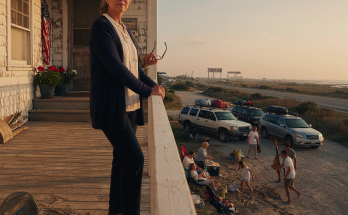
She rarely spoke to anyone.Every morning, she sat on her front porch in the same wooden chair, wrapped in a cardigan, watching the world go by.
Sometimes I’d wave.She always waved back.”Good morning, sweetheart.”
That was usually the extent of our conversations.
Then, one rainy Tuesday afternoon, everything changed.
I was coming home from work when I noticed Mrs. Whitmore standing outside her house, struggling with two grocery bags.I pulled my car over.”Mrs. Whitmore, let me help you.”
She looked embarrassed.”Oh, I shouldn’t trouble you.””It’s no trouble.”I carried the bags inside.
Her house was much larger than it looked from outside, but it was strangely empty.
There were old photographs on the walls. Beautiful furniture covered in white sheets. Shelves filled with books. A piano stood against one wall, though it looked as if no one had touched it in decades.
“Would you like me to put these in the kitchen?””Yes, dear.”I set the groceries down.As I turned to leave, she said something that surprised me.
“Would you perhaps have some time tomorrow?””Of course. Is everything okay?”
She hesitated.”I need help cleaning.”
I smiled.”I can do that.”
She looked relieved.
“Thank you.”
The next afternoon, I returned.
I expected to spend an hour or two helping her dust and vacuum.
Instead, I stayed nearly four hours.
The house was incredibly dusty. Years of accumulated belongings filled every room.
Mrs. Whitmore followed me slowly from one room to another, pointing out things she wanted cleaned.
At one point, I found an old box of photographs.
“Would you like me to throw these away?”
Her expression changed immediately.
“No.”
She reached for the box.
“Never those.”
“I’m sorry.”
She smiled softly.
“It’s all right.”
That was when I realized something.
This woman wasn’t simply living alone.
She was living surrounded by memories.
Over the following weeks, I began helping her regularly.
Every Wednesday after work, I’d stop by.
Sometimes I cleaned.
Sometimes I went grocery shopping.
Sometimes I drove her to appointments.
And sometimes we simply sat at her kitchen table drinking tea.
I learned little pieces of her life.
She had been married once.
Her husband, Thomas, had died many years earlier.
They had no children.
At least, that’s what she told me.
She never mentioned siblings.
She never mentioned cousins.
She never talked about anyone coming to visit.
One afternoon, I asked gently, “Mrs. Whitmore, don’t you have any family nearby?”
She stared into her tea.
“Family is complicated.”
I didn’t press.
She changed the subject.
“What size do you wear?”
I laughed.
“Why?”
“Because you need a new coat.”
“I’m fine.”
“Your coat has a hole in the sleeve.”
I looked down.
She was right.
“It’s still usable.”
“So are old shoes,” she said. “That doesn’t mean you should keep wearing them.”
I laughed.
Two days later, she insisted on giving me money to buy a new coat.
I refused.
She became almost offended.
“I’m not buying you a coat because I feel sorry for you.”
“Then why?”
“Because I want you to have one.”
I finally agreed.
That was how our friendship grew.
I started buying clothes for her too.
Her old dresses were worn and faded, and she had trouble shopping by herself.
So one Saturday, I took her to a department store.
She tried on dresses for nearly two hours.
Every time she found something she liked, she’d look at the price tag and put it back.
Finally I said, “Mrs. Whitmore, you’re allowed to buy yourself something nice.”
She smiled.
“I haven’t heard someone say that to me in a very long time.”
She bought three dresses.
On the drive home, she looked happier than I’d ever seen her.
“You’ve done something for me that you don’t understand,” she said.
“What?”
“You reminded me that I’m still here.”
I didn’t know what to say.
So I reached over and squeezed her hand.
From then on, I visited her even when she didn’t ask.
Lily loved going with me.
Mrs. Whitmore adored Lily.
She taught her how to play old songs on the piano.
She gave her books.
Sometimes they baked cookies together.
For the first time in years, Mrs. Whitmore’s house seemed alive.
Then, one morning, she didn’t answer her door.
I knocked several times.
“Mrs. Whitmore?”
Nothing.
I called her phone.
No answer.
I became frightened and called emergency services.
They found her unconscious in the bedroom.
She had suffered a severe stroke.
I spent the entire day at the hospital.
When she finally opened her eyes, she looked at me.
“You’re here.”
“Of course I’m here.”
Her fingers closed around mine.
“Promise me something.”
“Anything.”
“Don’t let them take the house.”
I frowned.
“Who?”
But she had already closed her eyes.
She died three days later.
I was devastated.
I cried harder than I expected.
She wasn’t my mother.
She wasn’t my grandmother.
She wasn’t even a relative.
But somehow, she had become family.
Her funeral was small.
There were fewer than ten people there.
I recognized none of them.
An older man stood several rows ahead of me. He wore an expensive black suit and never looked at anyone.
After the funeral, I returned home exhausted.
For the next month, I thought about Mrs. Whitmore constantly.
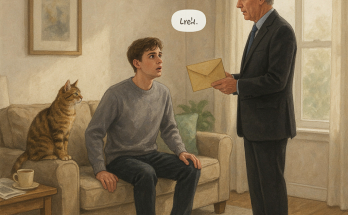
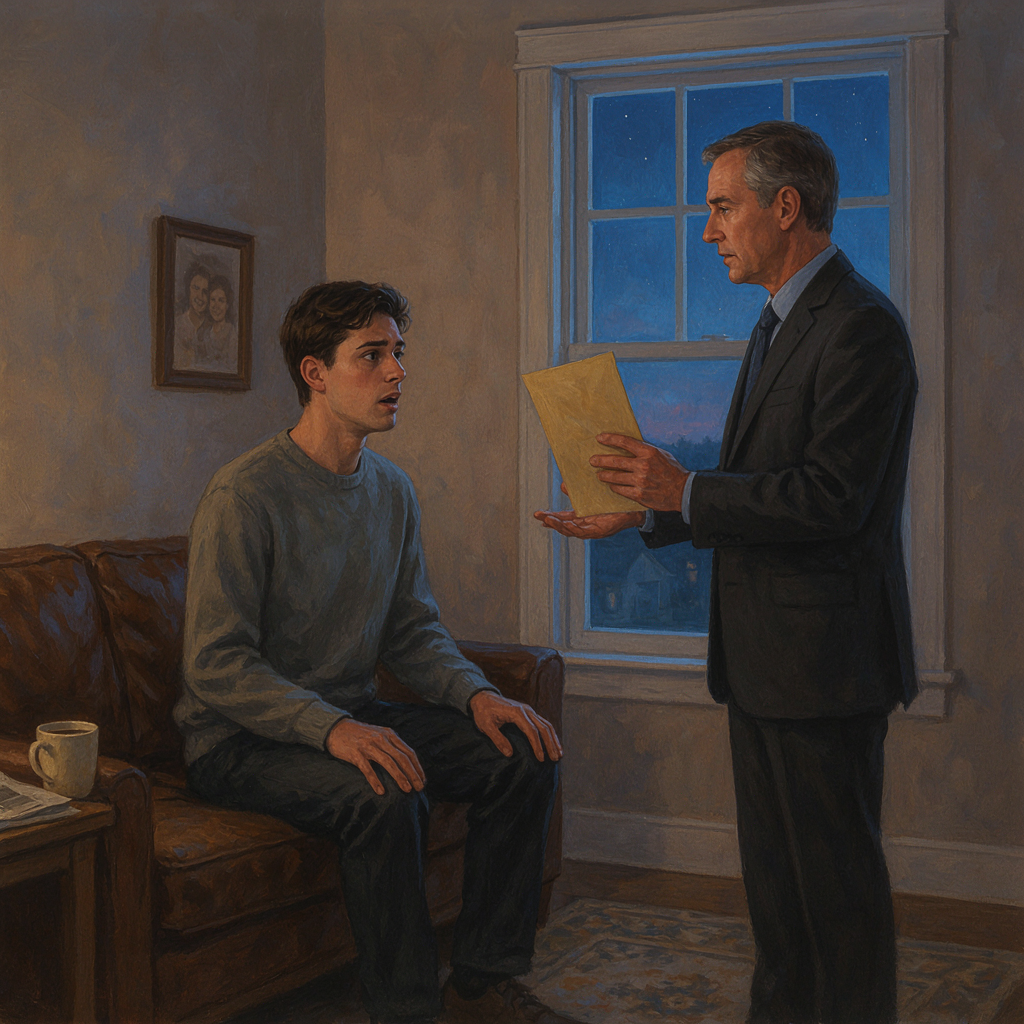
Then, one Thursday afternoon, someone knocked on my door.
When I opened it, a distinguished-looking man stood there carrying a leather briefcase.
“Are you Sarah Miller?”
“Yes.”
“My name is Jonathan Reed. I’m an attorney.”
My heart sank.
“Is this about Mrs. Whitmore?”
He nodded.
“May I come inside?”
I stepped aside.
He sat at the dining table.
“I represent the Whitmore estate.”
“I see.”
He opened his briefcase.
“Mrs. Whitmore left a will.”
I swallowed.
“I didn’t know she had one.”
“Most people didn’t.”
He pulled out several documents.
Then he looked directly at me.
“Mrs. Whitmore left you twenty million dollars.”
I laughed.
Actually, I laughed because I thought he was joking.
“Excuse me?”
“Twenty million dollars.”
I stared at him.
“That’s impossible.”
“It’s not.”
He slid a document across the table.
My hands began shaking.
“I think there’s been a mistake.”
“There hasn’t.”
“Why would she leave me that kind of money?”
“I don’t know.”
“Maybe she meant twenty thousand.”
“No.”
“Two hundred thousand?”
“No.”
“Two million?”
He shook his head.
“Twenty million.”
I couldn’t breathe.
Daniel came into the room from the kitchen.
“What happened?”
I couldn’t answer.
The attorney looked at him.
“Mr. Miller?”
Daniel stared at the paperwork.
“What is this?”
I whispered, “She left me twenty million dollars.”
His face changed.
“Who?”
“Mrs. Whitmore.”
Silence.
Then the attorney said something that made my entire body go cold.
“There’s more.”
He removed another document.
“Mrs. Whitmore specifically instructed me not to disclose the full explanation until after her death.”
“Why?”
“Because she believed certain people might try to interfere.”
“Certain people?”
He nodded.
Then he looked at me.
“You’re not simply the woman who helped an elderly neighbor.”
I felt a chill.
“What does that mean?”
He opened a folder.
Inside was an old photograph.
I picked it up.
It showed a much younger Mrs. Whitmore standing beside a man.
I recognized the man immediately.
My father.
I nearly dropped the photograph.
“That’s my dad.”
The attorney nodded.
“His name was Robert Miller.”
“Yes.”
“Mrs. Whitmore knew him very well.”
My father had died when I was sixteen.
He had always been a quiet man.
My mother rarely spoke about his past.
I looked at the photograph again.
“When did they know each other?”
“Before you were born.”
“How?”
The attorney leaned back.
“Your father worked for Thomas Whitmore.”
My mouth went dry.
“Worked for him?”
“Your father was the chief financial officer of Thomas Whitmore’s company.”
I had never heard this.
My father had always told us he worked in finance.
But apparently, the truth was much bigger.
The attorney continued.
“Thomas Whitmore built a successful manufacturing company. Your father managed much of its financial operation.”
“What happened?”
“Thomas died unexpectedly.”
“And my father?”
“Your father discovered that several senior executives had been stealing money from the company.”
I stared at him.
“How much?”
“Millions.”
My stomach tightened.
“He reported them?”
“Yes.”
“What happened?”
The attorney’s expression became serious.
“Those men threatened him.”
I looked at Daniel.
Neither of us spoke.
“My father never told us.”
“He was trying to protect your family.”
The attorney continued.
“Mrs. Whitmore believed your father saved her from financial ruin.”
“But why did she leave me twenty million?”
“Because she believed she owed your family a debt she could never repay.”
He reached into his briefcase and handed me a letter.
The handwriting was unmistakably Mrs. Whitmore’s.
I unfolded it.
Dear Sarah,
If you are reading this, then I am gone.
I know you will wonder why I left you so much money.
Please understand that money is not the reason I chose you.
I chose you because you gave me something far more valuable.
You gave me your time.
When everyone else forgot me, you remembered me.
When people saw an old woman living alone, you saw a person.
But there is something you must know.
Your father saved everything I had.
And I promised him, long ago, that if I ever had the opportunity, I would protect his family.
I stopped reading.
Tears blurred the page.
The letter continued.
Your father discovered the fraud that nearly destroyed my husband’s company. He refused to participate. He gave evidence to the authorities. Several people were convicted.
But afterward, your father refused any reward.
He told me he had only done what was right.
When he died, I tried to help your mother.
She refused.
Pride ran in your family.
I smiled through tears.
That sounded exactly like my mother.
So I waited.
I watched from a distance.
I watched you grow.
I watched you become a kind woman.
I watched you raise Lily.
And then, one day, you knocked on my door.
I had to stop reading.
I covered my face.
Daniel placed his hand on my shoulder.
I continued.
You did not know who I was.
You did not know what I had.
You didn’t help me because you expected anything.
That is why I chose you.
The money is yours.
But please don’t let it change you.
Use it to build the life your father wanted for you.
And remember this: kindness is never wasted.
At the bottom, she had written one final sentence.
There is one more thing your father asked me never to tell you until you were old enough to understand.
I stared at the words.
“What is it?” I whispered.
The attorney looked uncomfortable.
“There is an additional document.”
He placed another envelope on the table.
My hands trembled as I opened it.
Inside was a letter from my father.
I recognized his handwriting instantly.
I hadn’t seen it in eighteen years.
Sarah,
If you are reading this, Mrs. Whitmore has finally told you everything.
I’m sorry I couldn’t tell you myself.
There were things I had to keep secret to protect you and your mother.
But I want you to know something.
The best thing I ever did wasn’t saving a company.
It wasn’t exposing criminals.
It wasn’t making money.
It was becoming your father.
Every night when you were little, I used to stand outside your bedroom and watch you sleep.
I worried constantly that I wouldn’t be able to give you the life you deserved.
But I was wrong.
You didn’t need a rich father.
You needed a father who loved you.
And I hope I gave you that.
Mrs. Whitmore may leave you money.
But I hope you understand that the real inheritance is the example.
Do the right thing when nobody is watching.
Help people who cannot repay you.
And never confuse wealth with worth.
I couldn’t read anymore.
I folded the letter against my chest and cried.
That night, Daniel and I sat at the kitchen table long after Lily had gone to bed.
Twenty million dollars.
The number felt unreal.
We could pay off our mortgage.
We could stop worrying about bills.
We could send Lily to any school.
We could travel.
We could buy anything.
But I kept hearing Mrs. Whitmore’s voice.
Please don’t let it change you.
The following morning, something unexpected happened.
The attorney called.
“There is a complication.”
My heart dropped.
“What kind?”
“Someone is challenging the will.”
“Who?”
“Mrs. Whitmore’s nephew.”
“She told me she had no family.”
“She said she had no close family.”
“What does he want?”
“The estate.”
I knew immediately this wasn’t going to be simple.
His name was Michael Whitmore.
He claimed Mrs. Whitmore had been mentally incompetent when she signed the will.
He claimed I had manipulated her.
He claimed I’d taken advantage of an elderly woman.
I was furious.
“I barely knew she had money!”
The attorney sighed.
“I know.”
“Then how can he say this?”
“Because twenty million dollars makes people say many things.”
The case lasted months.
During that time, Michael tried to paint me as a greedy opportunist.
He hired investigators.
They questioned my neighbors.
They examined my bank records.
They even investigated every gift Mrs. Whitmore had ever given me.
Nothing suspicious was found.
Then the attorney discovered something.
A security camera had been installed outside Mrs. Whitmore’s house years earlier.
It had recorded her signing the will.
She was completely alert.
She spoke clearly.
And she said:
“I know exactly what I’m doing.”
But there was something else on the recording.
Michael had visited her six months before her death.
He demanded money.
She refused.
He became angry.
“You’ll regret this.”
That was his final visit.
The court rejected his challenge.
The estate was officially mine.
Twenty million dollars.
But I remembered Mrs. Whitmore’s final warning.
So I made a decision.
I didn’t buy a mansion.
I didn’t buy a sports car.
I didn’t quit my job immediately.
Instead, I created something in her name.
The Eleanor Whitmore Foundation.
Its purpose was simple:
Help elderly people living alone.
We paid for groceries.
Medical bills.
Home repairs.
Transportation.
Companionship programs.
We hired people to visit seniors who had no family.
And I bought Mrs. Whitmore’s old house.
I restored it.
The wild rose bushes were trimmed.
The fence was repaired.
The rooms were cleaned.
But I kept the piano.
I kept the photographs.
I kept her chair.
Then I turned the house into a community center for elderly people.
We called it Eleanor House.
On opening day, Lily stood beside me.
She was holding a small bouquet of roses.
“Mom?”
“Yes?”
“Do you think Mrs. Whitmore would like this?”
I looked at the old house.
At the porch where she had once sat alone.
At the windows where she’d watched people pass by.
“Yes,” I said.
“I think she’d love it.”
That evening, I sat alone on the porch.
The sun was setting.
For a moment, I imagined her sitting beside me.
“Good morning, sweetheart.”
I smiled.
“Good evening, Mrs. Whitmore.”
A gentle breeze moved through the roses.
I closed my eyes.
People often think an inheritance is about money.
They imagine houses, cars, bank accounts and luxury.
But I learned something different.
Sometimes the greatest inheritance isn’t what someone leaves you.
It’s what they teaches you.
Mrs. Whitmore left me twenty million dollars.
But she also left me something worth far more.
She taught me that loneliness can hide behind beautiful walls.
That old people still need friendship.
That kindness given without expectation can change someone’s final years.
And that a person’s true wealth isn’t measured by what sits in a bank account.
It’s measured by how many lives become better because they knew you.
Years later, when people asked me why Mrs. Whitmore had chosen me, I always gave the same answer.
“I don’t think she chose me because I helped her.”
They would look confused.
“Then why?”
I would smile.
“Because she knew that if she gave me everything, I would understand that it was never really mine.”
It was hers.
It belonged to the people she wanted to help.
To the memory of her husband.
To the promise she made to my father.
And to every lonely elderly person who sat behind a closed door wondering if anyone remembered they existed.
Mrs. Whitmore had spent years believing the world had forgotten her.
But she was wrong.
Because one day, she opened her door.
And I knocked.
Sometimes I wonder what would have happened if I’d driven past her that rainy afternoon.
If I had been too busy.
If I’d thought, Someone else will help her.
If I had never carried those grocery bags into her kitchen.
If I’d never cleaned her house.
If I’d never taken her shopping.
I would never have known her story.
I would never have discovered my father’s secret.
And I would never have understood that the twenty million dollars wasn’t the miracle.
The miracle was that two lonely people—an old woman and a young woman who didn’t realize how much she needed her—found each other.
Mrs. Whitmore once told me that I reminded her she was still here.
But the truth was, she reminded me too.
She reminded me that every person has a story.
That every closed door may hide a lifetime of memories.
And that sometimes the smallest act of kindness can unlock a future you never imagined.
I still visit Eleanor House every Wednesday.
I sit in her old chair.
I drink tea.
And sometimes, when the house is quiet, I can almost hear her voice.
“You’re still here, sweetheart?”
I always answer the same way.
“Yes, Mrs. Whitmore.”
And I smile.
“Because you taught me to stay.”