The Signature That Wasn’t Hers
Mama was eighty-one, sharp as a tack, and still capable of making a grown man feel guilty with one raised eyebrow.
She could remember birthdays from forty years ago, the exact price of groceries from 1978, and which of her grandchildren had lied about breaking her blue ceramic lamp.
What she couldn’t understand was why her checking account had suddenly started coming up short.
“It’s four hundred dollars,” she told me one Tuesday morning. “Every month.”
I looked up from my coffee.“What do you mean, four hundred?”“My Social Security comes in. Four hundred disappears.”“Since when?”
Mama frowned.“I don’t know. That’s why I’m asking you.”That answer scared me more than anything.
Not because Mama had forgotten.Because Mama knew something was wrong.
She just didn’t know who was doing it.
For the past several years, my brother Dale had handled most of her banking.
He’d offered.At first, it made sense.Mama’s arthritis had gotten worse. Driving downtown wasn’t easy anymore. Standing in bank lines irritated her knees.
Dale lived fifteen minutes away, while I lived nearly an hour across town.
He told everyone he was only helping.
“I’m not taking over,” he’d say. “I’m just making things easier for Mom.”
Mama had trusted him.So had I.That Tuesday, I drove straight to the bank.I brought Mama’s identification, the statements she’d kept in a folder, and a notebook.
The teller was a woman named Karen whom I’d seen several times before.
I slid the statement across the counter.
“I need to understand something.”
Karen glanced at it.“Of course.”
“There’s a four-hundred-dollar transfer every month.”
She typed something into her computer.
Her expression changed.
“There is.”
“Where is it going?”
Karen hesitated.
“I can tell you the destination account.”
“Please.”
She turned the monitor slightly.
Another account.
Same bank.
Different branch.
Opened two years earlier.
In Mama’s name.
I felt a coldness spread through my stomach.
“Who opened it?”
Karen looked at the screen.
“The account was opened in person.”
“By my mother?”
“I can’t discuss account details without proper authorization.”
I pulled out the power of attorney document.
Mama had given me access to her finances several months earlier, mostly because Dale had been traveling for work and she didn’t want to bother him.
Karen reviewed the paperwork.
Then she printed something.
“There’s an automatic transfer instruction,” she said.
“Four hundred dollars on the first of every month.”
“Exactly.”
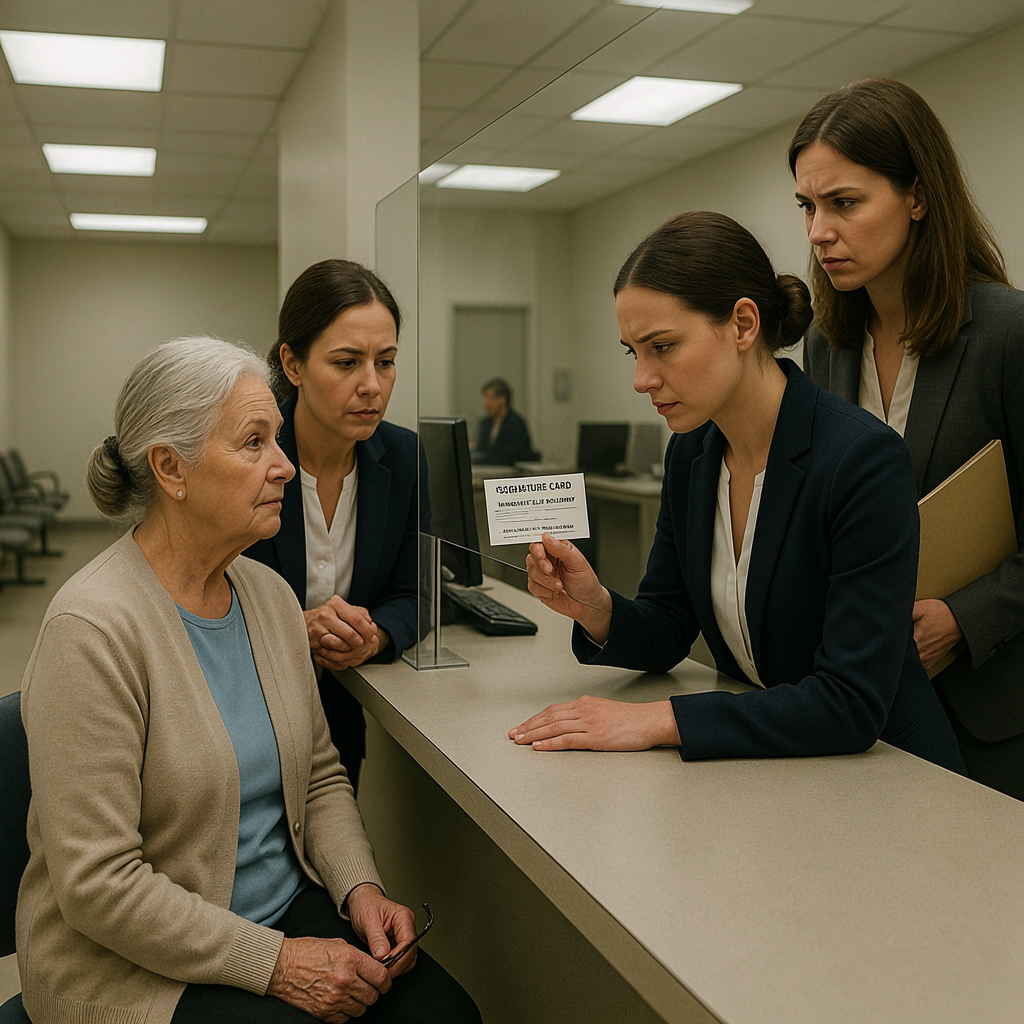
“Can I see the signature card?”
Karen’s fingers stopped moving.
“I’ll need to request it.”
“Please do.”
She disappeared into the back office.
Five minutes later she returned holding a photocopy.
I knew immediately.
The signature wasn’t Mama’s.
Mama had written her name the same way since Catholic school.
Long first letter.
Slight backward slant.
The final letter curled underneath like a tiny underline.
This signature was blocky.
Heavy.
Straight.
It looked like someone had written it while trying very hard to imitate handwriting they’d never learned.
I stared at it.
“That’s not hers.”
Karen didn’t answer.
I looked at her.
She looked at me.
Then she lowered her voice.
“Ma’am, I’m going to tell you something, but you didn’t hear it from me.”
My heart started pounding.
“What?”
Karen leaned closer.
“The person who opened that account came in with your mother’s identification.”
I swallowed.
“Who?”
Karen’s eyes flicked toward the signature card.
Then back to me.
“The employee who handled the account opening wrote a note in the file.”
“What note?”
Karen took a breath.
“It says your mother was not physically present.”
Everything inside me went still.
“What?”
“The note says the account was opened using documentation brought in by an authorized family representative.”
“Which family representative?”
Karen looked at me.
“Your brother.”
I couldn’t speak.
For a few seconds, the sounds of the bank seemed to disappear.
Then I whispered:
“Dale?”
Karen nodded.
“And that’s not the worst part.”
I stared at her.
“What could possibly be worse?”
She placed another sheet of paper on the counter.
“This account isn’t empty.”
I looked down.
There was a balance.
$19,200.
Twenty-four months.
Four hundred dollars every month.
Twenty-four thousand dollars should have been transferred.
But the balance was only $19,200.
I did the math twice.
“Where did the other $4,800 go?”
Karen’s face tightened.
“Cash withdrawals.”
My fingers went numb.
“From my mother’s account?”
“From the second account.”
“When?”
“Mostly during the first week of each month.”
“Who withdrew it?”
Karen looked uncomfortable.
“ATM transactions.”
“Which ATM?”
She gave me the locations.
Every single one was within three miles of Dale’s house.
I sat down.
For two years, my brother had been taking four hundred dollars a month from our mother’s Social Security.
And apparently, he hadn’t even been keeping all of it in the hidden account.
He’d been withdrawing cash, too.
I called Mama from the parking lot.
She answered on the second ring.
“What did they say?”
I couldn’t find the words.
“Mom, I need you to sit down.”
“I am sitting.”
“Okay.”
“What happened?”
“There is another account.”
Silence.
“What account?”
“One opened in your name two years ago.”
Another silence.
“Dale?”
“I don’t know yet.”
“You do know.”
Her voice had changed.
It wasn’t confused anymore.
It was quiet.
Very quiet.
“I know my son,” she said.
I closed my eyes.
“Mom, the signature isn’t yours.”
“I know.”
“You know?”
“I know how I sign my name.”
Then she said something I’ll never forget.
“I’ve been wondering how long it would take someone to notice.”
I sat up.
“What do you mean?”
Mama sighed.
“I noticed the money was missing two years ago.”
“Then why didn’t you tell me?”
“Because Dale said the bank had changed something with Social Security.”
I gripped the steering wheel.
“And you believed him?”
“For a while.”
“For two years?”
“No.”
Her voice trembled.
“I stopped believing him about six months ago.”
“Why didn’t you tell me?”
“Because I wanted to believe I was wrong.”
I couldn’t answer.
Mama had always protected her children.
Even when we didn’t deserve it.
Especially Dale.
He had been the charming one.
The fixer.
The son who called every Sunday.
The son who brought groceries.
The son who told Mama she didn’t need to worry about bills anymore.
And I’d been the suspicious one.
The difficult daughter.
The one who asked too many questions.
That afternoon, I drove to Mama’s house.
She was sitting at the kitchen table with an old wooden box in front of her.
“What’s that?”
She opened it.
Inside were bank statements.
Receipts.
Notes.
And a little spiral notebook.
Every month was recorded.
January.
February.
March.
Two years.
Four hundred dollars.
Mama had written everything down.
“I knew something was wrong,” she said.
“Why didn’t you tell me?”
She looked at me.
“Because I wanted proof.”
I sat beside her.
“You have proof.”
“No.”
She shook her head.
“We have part of it.”
Then she pulled another envelope from the box.
Inside were photocopies of checks.
Dale had written several checks from Mama’s original account.
Some were legitimate.
Some were not.
One check was for $2,700.
Another for $1,850.
Another for $3,200.
All payable to people Mama didn’t recognize.
“What are these?”
“I don’t know.”
I stared at the names.
One was a contractor.
One was an auto repair shop.
One was a law office.
And one was a nursing supply company.
“Mama, did you authorize any of these?”
“No.”
I looked at the dates.
They stretched back almost three years.
The room felt suddenly smaller.
“This isn’t just four hundred dollars a month.”
Mama shook her head.
“No.”
Then she looked at me.
“I think Dale has been using me.”
That sentence hurt more than the numbers.
Because Mama didn’t say it angrily.
She said it like a mother admitting that her son had become a stranger.
That evening, we didn’t call Dale.
We called an attorney.
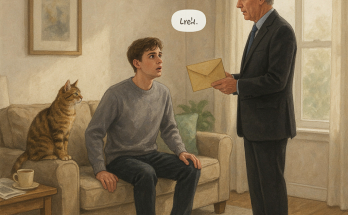
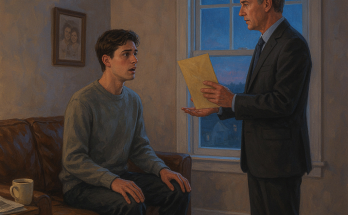
The attorney’s name was Mr. Harris.
He was an older man who had handled Mama’s estate planning years earlier.
We brought him everything.
He studied the documents without saying much.
When he finished, he removed his glasses.
“Do not confront your brother yet.”
Mama nodded.
“Why?”
“Because we don’t know the full scope.”
I asked, “What should we do?”
“Secure every account. Change every password. Revoke his access. Notify the bank that the signature is disputed. Then request a complete transaction history.”
Mama looked at him.
“And after that?”
“Then we find out where the money went.”
The next morning, Mama and I returned to the bank.
This time, the branch manager met us in a private office.
She was visibly uncomfortable.
She apologized.
Then she explained something that made my stomach turn.
Dale had not simply opened the second account.
He had also requested online banking access.
He had registered his own phone number.
His own email.
And his own mailing address.
Mama’s monthly statements for that account had never gone to her.
They had gone to Dale’s house.
“How did the bank allow this?” I asked.
The manager looked down.
“There were authorization documents.”
“Forged?”
“We’re investigating.”
Mama spoke for the first time.
“Did anyone ever speak to me?”
“No.”
“Did anyone ever see me?”
The manager hesitated.
“No.”
Mama leaned back.
“Then you know the signature isn’t mine.”
“Yes.”
That afternoon, the bank froze the second account.
They also placed restrictions on the original account.
Then they gave us something else.
A transaction history covering three years.
We spread the pages across Mama’s dining room table.
The pattern became obvious.
Every month, exactly four hundred dollars disappeared.
Then, within days, cash was withdrawn.
But there were other transactions.
Small at first.
$75.
$120.
$200.
Then larger amounts.
$1,400.
$2,600.
$5,000.
We kept going.
By midnight, we’d calculated more than $31,000 in questionable transactions.
Mama stared at the total.
“Thirty-one thousand?”
“At least.”
She closed her eyes.
“That’s my money.”
“I know.”
“No.”
She opened them.
“That was supposed to pay for my care.”
I realized then that this wasn’t just theft.
It had endangered her future.
Mama’s Social Security wasn’t extra money.
It paid for medicine.
Utilities.
Groceries.
Home repairs.
And the possibility that one day she’d need someone to help her live safely.
Dale hadn’t stolen from a wealthy woman.
He’d stolen from his own mother’s security.
Two days later, we received a call from the bank’s fraud department.
They had reviewed the documents.
They wanted to meet.
At the meeting, an investigator placed several papers in front of us.
“We found something unusual,” she said.
“What?”
“The second account was opened using your mother’s driver’s license.”
Mama looked confused.
“My license was in my purse.”
“According to our records, a copy was provided.”
“When?”
“Two years ago.”
Mama frowned.
“I never gave Dale a copy.”
I looked at her.
“Mom.”
She went silent.
Then she whispered:
“Wait.”
She stood up.
Walked to the cabinet.
Opened a drawer.
And pulled out an old folder.
“I remember.”
She handed it to me.
Inside was a photocopy of her driver’s license.
But across the top, in handwriting I recognized as Dale’s, were the words:
For insurance paperwork.
Mama stared at it.
“He asked for this.”
“When?”
“Two years ago.”
“Did he say why?”
“He said he needed it to update my insurance.”
The investigator nodded.
“That may explain how he obtained the identification.”
“But not the signature,” I said.
“No.”
She pointed to the signature card.
“We’re sending that for forensic examination.”
Mama looked at the signature.
“It’s so obvious.”
The investigator smiled sadly.
“To you.”
“What does that mean?”
“People often assume forged signatures are sophisticated. They aren’t always. Sometimes the person committing the fraud is counting on nobody looking closely.”
Mama looked at me.
“They counted on me being old.”
That sentence stayed with me.
Because that was the real betrayal.
Dale hadn’t just counted on the bank being careless.
He had counted on everyone dismissing Mama’s questions because she was eighty-one.
He had counted on her being embarrassed.
He had counted on her children arguing instead of comparing notes.
Most of all, he had counted on us believing him.
But the investigation wasn’t finished.
Three weeks later, the bank called again.
They’d found the destination of some of the money.
One account belonged to a company.
The company was registered to Dale.
A consulting business I’d never heard of.
I stared at the documents.
“What’s the company name?”
The investigator told me.
I recognized it.
I’d seen the name before.
On a family vacation.
Dale had bragged that his consulting business was doing “better than expected.”
I had assumed he was talking about his real estate work.
He wasn’t.
The investigator explained that several payments from the questionable account had been transferred to the company.
Some were labeled as consulting fees.
Some were labeled as reimbursements.
One transaction simply said:
Family expenses.
Mama laughed.
Not because it was funny.
Because sometimes betrayal is so absurd that anger can’t find a place to land.
“Family expenses,” she repeated.
Then she looked at me.
“I suppose I am family.”
The investigation eventually expanded beyond the bank.
Law enforcement became involved.
Dale was asked to come in for questioning.
He denied everything.
He claimed Mama had authorized him to manage her money.
He said she sometimes forgot what she’d signed.
He said I was trying to turn her against him.
Then he made his biggest mistake.
He told investigators the signature was Mama’s.
The bank’s forensic examiner disagreed.
The examination showed that the signature on the account card had been produced differently from Mama’s genuine signatures.
Pressure.
Stroke patterns.
Letter formation.
Spacing.
Even the way the pen lifted from the paper.
It wasn’t hers.
And the bank had security footage from the day the account was opened.
Dale walked into the branch alone.
He handed over Mama’s identification.
He sat at the desk.
And he signed her name.
The footage showed everything.
There was no ambiguity.
No misunderstanding.
No confused elderly woman.
No innocent mistake.
Just Dale.
Signing our mother’s name.
When the attorney showed us the footage, Mama watched silently.
At the end, she said:
“That’s my son.”
I reached for her hand.
She squeezed mine.
“I know.”
She looked at the screen again.
“I just wish he’d stolen something that didn’t hurt so much.”
Months passed.
The legal process moved slowly.
The bank reimbursed a portion of the unauthorized transactions while the investigation continued.
The rest became part of the restitution claim.
Dale’s friends stopped answering his calls.
Some relatives blamed me.
One aunt said I should have handled it privately.
“He’s your brother.”
I told her:
“That’s exactly why it hurt.”
Another relative said Mama should forgive him.
Mama listened.
Then she said something that ended the conversation.
“Forgiveness doesn’t require access to my bank account.”
Eventually, Dale admitted what he’d done.
He claimed he had only intended to “borrow” the money.
He said he’d planned to repay it.
But when investigators asked where the money went, the answer was humiliating.
Credit cards.
A truck payment.
Vacations.
Gambling debts.
Business expenses.
Restaurants.
Things Mama had never purchased.
Things she had never benefited from.
He had been taking four hundred dollars at a time because he believed small amounts wouldn’t be noticed.
But small thefts become large thefts when repeated long enough.
The final amount was far higher than we initially believed.
Nearly $38,000.
And there were still transactions the investigators couldn’t definitively attribute to him.
Dale eventually faced criminal charges.
He also signed a restitution agreement.
It would take years to repay everything.
But Mama wasn’t interested in revenge.
She wanted something simpler.
Control.
We moved her accounts to a new bank.
No one had access except Mama and me.
We changed her passwords.
We replaced her debit card.
We set up alerts for every withdrawal.
And every month, when her Social Security arrived, Mama checked the amount herself.
The first time she saw the full deposit after two years, she smiled.
“All of it.”
“All of it.”
She tapped the statement.
“Look at that.”
I laughed.
“You’re eighty-one.”
She smiled.
“And apparently still able to count.”
Then she paused.
“You know what hurts?”
“What?”
“I kept thinking I was becoming forgetful.”
I looked at her.
“You weren’t.”
“I thought maybe I was imagining things.”
“You weren’t.”
She nodded.
Then she reached for the old notebook where she’d recorded every missing four hundred dollars.
She turned to the final page.
At the bottom, beneath the last entry, she’d written:
I knew something was wrong. I just needed someone to believe me.
I read it twice.
Then I closed the notebook.
“You should never have had to prove that you were still capable of knowing your own life.”
Mama smiled sadly.
“Sometimes people treat age like a locked door.”
“What do you mean?”
“They see eighty-one and assume everything behind it is broken.”
She touched the notebook.
“But I’m still in here.”
“Yes,” I said.
“You always were.”
A year later, Mama was still living in her own house.
She still balanced her checkbook.
She still went to church.
She still complained about grocery prices.
And she still wrote her name in that same backward-slanted cursive she’d learned as a schoolgirl.
One Sunday, after dinner, she handed me a birthday card she’d bought for my daughter.
Her signature was on the envelope.
Long first letter.
Backward slant.
Tiny curl beneath the final letter.
I stared at it.
“What?”
She smiled.
“Checking.”
“Checking what?”
“That you know my handwriting.”
I laughed.
“I know it better than anyone.”
She nodded.
“Good.”
Then she grew serious.
“Because if someone ever tries to speak for me again, I want you to remember something.”
“What?”
“Being old doesn’t mean being invisible.”
I squeezed her hand.
“No.”
She looked toward the window.
“And trusting someone doesn’t mean they deserve to be trusted forever.”
I thought about Dale.
About the bank.
About the second account.
About the printed signature pretending to be my mother’s.
For two years, my brother had relied on a simple assumption:
That nobody would look closely.
But someone finally did.
And the thing that exposed him wasn’t some brilliant detective.
It wasn’t an expensive lawyer.
It wasn’t a hidden camera.
It was a daughter sitting across from her eighty-one-year-old mother and saying four simple words:
I believe you, Mama.
That was all it took to start pulling the thread.
And once we pulled it, the whole thing unraveled.
The final account balance was restored.
The forged signature was documented.
The fraudulent account was closed.
And Mama’s money was hers again.
But the greatest thing we recovered wasn’t the money.
It was her confidence.
She stopped asking me whether she was remembering things correctly.
She stopped apologizing before asking questions.
She stopped saying, “Maybe I’m confused.”
Instead, she started saying:
“Check it.”
And I always did.
Because sometimes the most dangerous thing you can steal from an elderly person isn’t money.
It’s their belief that their own voice still matters.
Dale tried to take that from Mama.
He failed.
Because she found her voice again.
And once she did, nobody could sign for her anymore.