That morning started with coffee and silence.At sixty-six, I had learned that silence could tell you more about a family than a hundred birthday cards ever could.
I sat at the little kitchen table in the apartment above my son’s garage, watching steam curl from my mug while sunlight spilled across the hardwood floor.
Outside, the cul-de-sac was already waking up. A school bus sighed at the corner.
Someone down the street was dragging a trash bin toward the curb. A sprinkler clicked methodically over a lawn.
It was August in Leesburg, Virginia.Hot, green, expensive—and, according to my son, a wonderful place for me to “enjoy retirement.”I had lived there for eleven years.
Technically, I lived in a small apartment above the detached garage behind my son Daniel’s house.
Technically, I also owned the house.
That distinction mattered.
But Daniel and his wife, Melissa, had spent years convincing everyone—including me—that it was merely a technicality.
“You don’t need to worry about the property,” Daniel always said.
“You’ve got enough on your plate,” Melissa would add.
And because I was his father, because I loved him, because I had spent forty years teaching teenagers that history was largely about learning from mistakes, I believed my son wouldn’t make me learn the same lesson twice.
My wife, Margaret, had died six years earlier.Cancer.
After forty-two years of marriage, losing her had made the house feel enormous. Every room carried an echo of her. Every closet contained some trace of her perfume. Every morning, I would wake expecting to hear her downstairs making tea.
Daniel had been thirty-seven then.
He came to me three days after the funeral.
“Dad,” he said, sitting beside me on the back porch, “you shouldn’t be alone.”
“I’ve been alone before.”
“Not like this.”
He proposed moving his family into the main house.
I could keep the garage apartment.
They would handle maintenance.
They would pay the utilities.
They would take care of the property taxes.
And I would never have to worry about being isolated again.
It sounded reasonable.
More than reasonable.
It sounded like family.
Daniel and Melissa had two children, Sophie and Ethan, then nine and six. I adored those kids.
They called me Grandpa Larry.
They’d sneak upstairs to my apartment on Saturday mornings and crawl into bed beside me.
Sophie liked my stories about World War II.
Ethan wanted to hear about dinosaurs, even though I knew almost nothing about dinosaurs.
I made pancakes.
I drove them to school.
I helped with homework.
I attended soccer games.
When Daniel lost his job during a corporate restructuring, I covered three months of their mortgage payments.
When Melissa wanted to start an online boutique, I lent her $18,000.
When their furnace broke, I paid the $7,400 replacement bill.
I never kept score.
That was my mistake.
People often confuse generosity with an absence of memory.
I remembered everything.
I simply didn’t keep receipts.
Until that birthday.
At 8:03 that morning, Daniel knocked on my door.
“Hey, Dad.”
He walked in holding a sheet of paper.
Melissa followed behind him.
Neither was smiling.
“Happy birthday,” Daniel said.
I waited.
Melissa cleared her throat.
“Well,” she said, “we’ve got something important for you.”
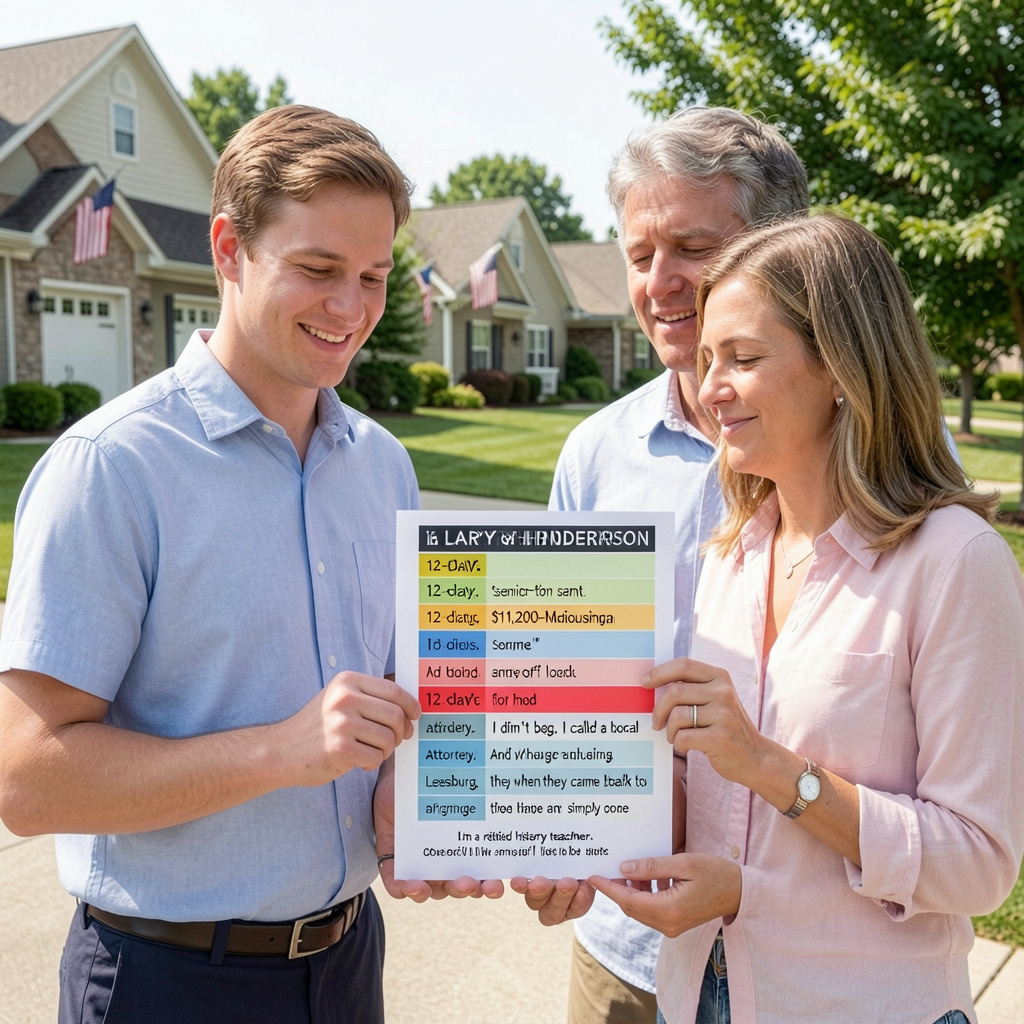
I looked at the paper.
It was twelve days of chores.
Color-coded.
Blue meant kitchen.
Green meant laundry.
Yellow meant childcare.
Red meant errands.
Purple meant cleaning.
At the top, in bold letters, it read:
GRANDPA HOUSE DUTIES — AUGUST 18–29.
I stared at it.
Then I looked at Daniel.
“What’s this?”
“It’s just a schedule.”
“A schedule for what?”
“While we’re gone.”
I laughed.
I honestly thought it was a joke.
“Where are you going?”
Daniel’s expression brightened.
“Remember that Mediterranean cruise we told you about?”
I didn’t.
Or perhaps I had forgotten because I hadn’t realized I was supposed to remember it.
Melissa jumped in.
“It’s twelve days. Greece, Italy, Croatia, Turkey. The kids have been dying to go.”
I looked from one to the other.
“That’s wonderful.”
“Thanks, Dad.”
“And the kids?”
“You’re watching them.”
I blinked.
“The kids?”
Daniel smiled.
“That’s why we made the schedule.”
I looked down again.
There were instructions for breakfast.
School pickup.
Soccer practice.
Laundry.
Dinner.
Dog walking.
Trash day.
“Where’s the birthday cake?” I asked.
Melissa looked confused.
“What?”
“Nothing.”
I smiled.
“It’s fine.”
Daniel checked his phone.
“We’ve got to get to the airport.”
Then came the strangest part.
They hugged me.
Quickly.
Like people leaving a hotel.
Melissa kissed my cheek.
“Don’t forget Wednesday’s trash.”
Daniel clapped my shoulder.
“Love you, Dad.”
Then they walked away.
No card.
No cake.
No dinner.
Not even a birthday candle.
I stood at the garage apartment window and watched their SUV disappear down the street.
The grandchildren waved from the backseat.
I waved back.
Then the car turned the corner.
And I was alone.
At sixty-six.
On my birthday.
With a twelve-day chore list taped to my refrigerator.
I stared at it for almost five minutes.
Then I took it down.
I folded it once.
Twice.
And put it in a drawer.
That night, after the kids were asleep, I couldn’t sleep.
I went downstairs to get a glass of water.
The main house was dark.
Daniel and Melissa had left their laptops on the kitchen counter.
One of them chimed.
I wasn’t snooping.
At least that’s what I told myself.
The screen lit up.
An email notification appeared.
Subject:
SENIOR CARE HOUSING — LARRY HENDERSON
I froze.
My son’s name was listed as the sender.
The preview showed:
“Following up on timing and property transfer…”
My hand tightened around the glass.
I opened the email.
There were several messages.
I read them slowly.
Daniel had contacted a senior living placement company.
He had been asking about “independent living options for a 66-year-old male.”
He had asked about move-in dates.
Monthly costs.
Transportation.
Medical support.
And then I saw the line that changed everything.
“We’d like to have him moved within 30–45 days if possible. Once he’s out, we’ll be able to finalize the house arrangement.”
I read it twice.
Then a third time.
The next email was worse.
“Is there any concern with him remaining on title after transfer?”
The response:
“That would depend on the deed structure. If the property is transferred, ownership would be determined by the recorded deed.”
My hands went cold.
I kept scrolling.
There were references to an attorney.
A deed.
A power of attorney.
A “family occupancy arrangement.”
And one sentence from Daniel:
“He’s trusting and doesn’t look at paperwork closely.”
I shut the laptop.
I stood in the kitchen for a long time.
I thought about Margaret.
She used to say that betrayal rarely arrives wearing a black mask.
It arrives wearing your son’s face.
I went upstairs.
I sat on the edge of my bed.
And for the first time in eleven years, I asked myself a question I should have asked much earlier.
Why did my son need me out of my own house?
The answer came quickly.
Money.
The property was worth approximately $780,000.
Daniel and Melissa had been living in it for almost eleven years.
They had paid some expenses.
They had renovated the kitchen.
They had replaced the roof.
But the deed remained in my name.
The mortgage was paid off.
And I had never transferred ownership.
I had never planned to.
Margaret and I had bought the property together before Daniel was born.
After her death, it became mine.
Daniel knew that.
Which meant he also knew exactly what it was worth.
I didn’t call him.
I didn’t call Melissa.
I didn’t confront anyone.
Instead, at 7:45 the next morning, I put on my best shirt.
I drove into town.
And I called an attorney.
Her name was Rebecca Sloan.
She was sixty-two, sharp-eyed, and had the unnerving habit of letting silence do half her questioning.
I showed her the email.
Then I showed her the deed.
Then I showed her the bank records.
She read everything.
Finally she looked at me.
“Mr. Henderson, does your son have power of attorney?”
“No.”
“Have you signed any recent documents?”
“No.”
“Any deed?”
“No.”
“Any trust documents?”
“No.”
“Any refinancing papers?”
“No.”
She leaned back.
“Then, based on what you’ve shown me, they don’t own the house.”
“I know.”
“No,” she said gently. “I don’t think you do.”
She pointed to the deed.
“Legally, it’s yours. But you’ve allowed your son to build a life around the assumption that it isn’t.”
I stared at the paper.
“What do I do?”
“What do you want to do?”
That question nearly broke me.
Because I wanted to say, “I want my son to love me.”
But an attorney couldn’t fix that.
So I said:
“I want my home back.”
Rebecca nodded.
“Then we’ll make sure you have it.”
Over the next week, she uncovered things I hadn’t known.
Daniel had been telling people the house was effectively his.
He had discussed refinancing it.
He had investigated using its equity to purchase an investment property.
Melissa had even contacted a contractor about converting my garage apartment into a storage space after I was moved.
They weren’t planning to throw me out immediately.
They were planning to make me disappear gradually.
Senior housing.
Smaller apartment.
Fewer belongings.
More dependence.
Eventually, no house.
No decision-making power.
No place to return to.
They had built an entire future around a house they did not own.
Rebecca advised me not to confront them.
“Let them come home,” she said.
“Then what?”
“Then you tell them the arrangement has changed.”
“What if Daniel gets angry?”
“He probably will.”
“What if he says I’m abandoning him?”
“Then remind him who was planning to abandon whom.”
So I waited.
For twelve days.
I lived according to their little chore schedule.
I made sure the kids were safe.
I took them to soccer.
I packed their lunches.
I made pancakes.
But something had changed.
I wasn’t their servant anymore.
I was watching.
Listening.
Remembering.
On the tenth day, Sophie came into my apartment.
“Grandpa?”
“Yes?”
“Are Mom and Dad going to make you move?”
My stomach dropped.
“Why would you ask that?”
She shrugged.
“I heard Mom talking.”
“What did she say?”
“She said you’ll be happier somewhere with people your age.”
I looked at her.
“Do you want me to move?”
She started crying.
“No.”
I pulled her into my arms.
“I love you, sweetheart.”
“Then why are they doing it?”
I didn’t have an answer.
Children should never have to understand the ugliness adults hide behind polite words.
The twelfth day finally arrived.
At 6:17 p.m., Daniel’s SUV pulled into the driveway.
The trunk was full of luggage.
They looked tanned.
Happy.
Relaxed.
They had photographs of beaches and restaurants.
Daniel walked inside carrying a bottle of wine.
“Dad!”
I stood in the kitchen.
“Welcome home.”
Melissa hugged me.
“How were the kids?”
“Fine.”
Daniel laughed.
“You’re a lifesaver.”
Then he looked around.
“Everything okay?”
“Yes.”
“Good.”
He opened the refrigerator.
“Man, I missed American food.”
I watched him.
For a moment, I saw my little boy again.
The seven-year-old who used to sit on my shoulders.
The teenager who once told me I was his hero.
The young man who cried at his mother’s funeral.
I wanted to believe there was still some of that person left.
Then he said:
“Oh, by the way, Dad, we need to talk about the senior living thing.”
I nodded.
“I know.”
His smile disappeared.
“You know?”
“Yes.”
Melissa looked at Daniel.
He looked at me.
“What did you see?”
“The email.”
Silence.
Daniel’s face hardened.
“Dad, you weren’t supposed to read that.”
I almost laughed.
“You’re right. I wasn’t supposed to know.”
“It’s not what you think.”
“Then explain it.”
Melissa stepped forward.
“We were just exploring options.”
“For me.”
“You’ve been alone too much.”
“I live above your garage.”
“Exactly.”
“My garage.”
She flinched.
Daniel crossed his arms.
“Dad, this is getting emotional.”
“No.”
I looked at him.
“This is getting factual.”
I placed a folder on the table.
He stared at it.
“What’s that?”
“Your future.”
He opened it.
Inside was a copy of the deed.
Then property records.
Then a letter from Rebecca Sloan.
Then documentation showing that I had formally terminated the informal occupancy arrangement allowing Daniel and Melissa to live in the main house.
Daniel read silently.
His face changed.
“Dad…”
I continued.
“The property is not being transferred to you.”
He looked up.
“Of course it is.”
“No.”
“You promised.”
“I promised you could live here.”
“That’s the same thing.”
“No, Daniel.”
I shook my head.
“It isn’t.”
Melissa grabbed the papers.
“You can’t just do this.”
“I can.”
“You’ve let us live here for eleven years!”
“Yes.”
“We invested money into this house!”
“Yes.”
“We raised our children here!”
“Yes.”
“So you can’t suddenly take it away.”
I looked at her.
“Actually, I can.”
Daniel slammed the folder shut.
“You’d put us on the street?”
“No.”
I paused.
“I’ve given you sixty days to move.”
He stared at me.
“Sixty days?”
“You’ll have time to find another home.”
“Where are we supposed to go?”
“That’s for you to decide.”
He laughed bitterly.
“This is unbelievable.”
“No.”
I looked directly into his eyes.
“What was unbelievable was reading that you were planning to put me in senior housing so you could take my home.”
He went silent.
Melissa began crying.
“You don’t understand.”
“Then help me understand.”
She couldn’t.
Neither could Daniel.
Because there was nothing left to explain.
That night, Daniel came upstairs.
He sat across from me.
For the first time in years, he looked like my son instead of a businessman negotiating a deal.
“Dad.”
I waited.
“I’m sorry.”
I looked at him.
“For what?”
“For the email.”
“That’s not enough.”
He swallowed.
“We thought… eventually… you’d need more care.”
“I might.”
“You’re sixty-six.”
“I’m aware.”
“You can’t stay independent forever.”
“No.”
I leaned forward.
“But I don’t need to be punished for aging.”
His eyes filled with tears.
“We were scared.”
“Of what?”
“That we’d never be able to afford a house.”
And there it was.
The truth.
Not concern.
Not love.
Fear.
Money.
Opportunity.
They had seen my age and their financial problems and created a solution in which my life became their asset.
I stood.
“Daniel, I would have helped you.”
“I know.”
“I’ve always helped you.”
“I know.”
“You didn’t need to steal from me.”
“We weren’t stealing.”
“You were planning to.”
He lowered his head.
“I know.”
That was the first honest thing he had said.
The sixty days passed.
Slowly.
Painfully.
They found a townhouse thirty minutes away.
Daniel moved out first.
Melissa followed two weeks later.
The children cried when they left.
Sophie hugged me so tightly I could barely breathe.
“I’ll still see you, right?”
“Every weekend.”
“Promise?”
“Promise.”
The house became quiet.
For the first time since Margaret died, it was mine again.
I hired a contractor to renovate the garage apartment.
Then I did something Daniel never expected.
I moved out of it.
I converted the apartment into a small guest suite.
Then I moved into the main house.
Margaret’s photographs went back onto the walls.
Her books returned to the shelves.
Her favorite chair went beside the window.
I planted roses in the backyard.
And I bought myself a birthday cake.
A big one.
Chocolate.
Because Margaret always said chocolate cake was the only acceptable kind of birthday cake.
I invited Sophie and Ethan.
I invited my neighbor, Mr. Alvarez.
I invited Rebecca.
And I left one chair empty.
It was Daniel’s chair.
I wanted him to know he was still welcome.
But not entitled.
That distinction mattered.
Three months later, Daniel came to my door.
He didn’t bring paperwork.
He didn’t bring a request.
He brought flowers.
“Dad.”
“Come in.”
He looked around.
“Mom’s pictures.”
“Yes.”
“The house looks good.”
“It does.”
He nodded.
Then he sat down.
“I’ve been going to counseling.”
I didn’t respond.
“I realized something.”
“What?”
“I thought because you were my father, your life belonged partly to me.”
I looked at him.
“It doesn’t.”
“I know that now.”
He wiped his eyes.
“I’m sorry.”
This time, I believed him.
Not because his apology was perfect.
It wasn’t.
But because he wasn’t asking for anything.
He wasn’t asking me to sign.
He wasn’t asking me to reconsider.
He wasn’t asking for money.
He was simply saying he was sorry.
And sometimes that is the first honest payment a person can make.
I poured him coffee.
We sat together.
For an hour, we talked about Margaret.
About his childhood.
About the cruise.
About how beautiful Greece had been.
Eventually, Daniel laughed.
“You know, Dad, that cruise cost us $11,200.”
“I know.”
“Best trip of our lives.”
I smiled.
“I’m glad.”
He looked embarrassed.
“You didn’t have to say that.”
“I meant it.”
He looked at me.
“You really do forgive me?”
I thought for a moment.
“Forgiveness doesn’t mean giving you the house.”
He laughed softly.
“I know.”
“It doesn’t mean pretending it didn’t happen.”
“I know.”
“It means I don’t want to spend the rest of my life angry.”
He nodded.
“That’s fair.”
I looked out the window.
The afternoon sun was falling across the lawn.
The flag at the end of the street hung perfectly still.
For years, I had believed family meant giving everything you had and expecting nothing in return.
I was wrong.
Family should mean love without ownership.
Help without control.
Generosity without manipulation.
And boundaries without guilt.
My son had mistaken my kindness for weakness.
But kindness had never been weakness.
It had simply needed a lock on the door.
A few months after Daniel moved out, I received a letter from the senior living company.
They were closing the inquiry.
The letter thanked me for “considering their community.”
I put it in a drawer.
Then I went outside.
The roses were blooming.
Sophie was coming over that afternoon.
Ethan wanted to build a model airplane in the garage.
And I had finally learned something I should have known when I was teaching history.
The past doesn’t change.
But what you do with it can.
My sixty-sixth birthday had begun with a color-coded chore list.
It ended with the return of my own life.
And the arrangement my son thought would last forever?
It disappeared the moment I remembered one simple truth:
A house can shelter a family.
But ownership is not love.
And no matter how old you are, it is never too late to take your life back.