The House They Thought Belonged to My Sister
For ten years, I saved for one thing.Not a wedding.Not a vacation.Not a new car.A house.My own house.I was twenty-nine when I finally signed the papers.
For the first time in my life, I had a key to a front door that belonged to me.
I remember standing on the porch that afternoon, holding that key so tightly that the metal dug into my palm.
The house wasn’t enormous.
Three bedrooms. Two bathrooms. A small backyard with an old lemon tree near the fence. The kitchen cabinets were outdated, and the living room needed new flooring.
But when I walked through the empty rooms, I didn’t see cracked paint or old countertops.
I saw ten years of my life.
Every overtime shift.
Every packed lunch.Every weekend I spent working while friends went away.Every time I said, “Maybe next year.”Every time I opened a shopping app, looked at something I wanted, and closed it.
Every paycheck where I automatically moved money into my savings account before I allowed myself to spend a dollar.
My house wasn’t just a building.
It was proof that I had kept a promise to myself.
I had grown up believing that if I worked hard enough, saved carefully enough, and stayed responsible, eventually I could build something of my own.
Unfortunately, my family had taught me something else.
In our family, my dreams were always negotiable.
My younger sister, Natalie, was different.
She was twenty-six, beautiful, outgoing, and charming in a way I had never been.
When Natalie wanted something, everyone found a way to make it happen.
When she wanted an expensive phone, Mom bought it.
When she wanted a car, Dad helped her with the down payment.
When she quit a job because she didn’t like her manager, nobody questioned her.
When she got engaged to Brandon, our parents immediately started talking about the wedding.
A big wedding.
A beautiful wedding.
A wedding people would remember.
I was happy for my sister.
At least, I tried to be.
But I had no idea that my family had already decided who was going to pay for it.
Me.
I didn’t discover that until the night I told Mom about my house.
I had gone to my parents’ house for dinner.
I was nervous the entire drive there.
I had rehearsed the words in my head.
“Mom, Dad, I bought a house.”
I expected surprise.
Maybe even pride.
Instead, when I finally told them, Mom froze.
She put down her fork.
“What did you say?”
“I bought a house.”
“With what money?”
“My savings.”
Her face changed.
Not gradually.
Instantly.
“Your savings?”
I nodded.
“I’ve been saving for ten years.”
Mom stared at me as though I’d confessed to stealing from her.
Then she stood.
“How much?”
I hesitated.
“Enough for the down payment and closing costs.”
“How much?”
I told her.
She went completely silent.
Then she laughed.
It wasn’t a happy laugh.
It was cold.
Disbelieving.
“You’ve got to be kidding me.”
“Mom—”
“You’re not even married.”
I blinked.
“What does that have to do with anything?”
“Everything.”
Dad looked uncomfortable, but he didn’t speak.
Mom walked toward me.
“That money was for your sister’s wedding.”
I honestly thought I had misunderstood her.
“What?”
“You heard me.”
“I saved that money for myself.”
“No. You saved it because you knew this family would need it.”
“I never said that.”
“You didn’t have to.”
My heart started pounding.
“Natalie’s wedding is six months away.”
“I know.”
“And you have all that money sitting in a house?”
“It’s not sitting anywhere. I used it to buy the house.”
Mom’s expression hardened.
“You’re selfish.”
I stared at her.
I had heard my mother call me stubborn.
Difficult.
Too independent.
Too sensitive.
But selfish?
After ten years of working myself exhausted?
After helping with bills whenever my parents were short?
After buying groceries when Dad was between jobs?
After lending Natalie money more times than I could remember?
“How am I selfish for buying my own home?”
Mom stepped closer.
“You’ve always thought you were better than your sister.”
“That’s not true.”
“Then prove it.”
“How?”
“Sell the house.”
I laughed because I genuinely thought she was joking.
She wasn’t.
“I can’t do that.”
“You will.”
“No.”
Her eyes narrowed.
Then she grabbed my hair.
I screamed.
She pulled me toward the kitchen counter so violently that my shoulder struck the cabinet.
“Mom! Let go!”
Dad stood up.
“Linda!”
But instead of stopping her, he just stood there.
Mom reached into a drawer.
When she came back, she was holding a lighter.
My entire body went cold.
She held it near my face.
“You’re going to listen to me,” she whispered.
I could smell the lighter fluid.
“You are not going to ruin your sister’s wedding because you suddenly decided you’re too good for this family.”
“Please.”
“That money belongs to Natalie.”
“It doesn’t!”
She brought the flame closer.
“You’re not even married,” she hissed. “What do you need a house for?”
I cried.
Not because I was afraid of the flame.
Because I finally understood.
My mother didn’t see my house as something I had earned.
She saw it as something I had taken away from my sister.
Dad finally moved toward us.
“Linda, enough.”
Mom released my hair.
I stumbled backward.
I grabbed my purse and ran.
I didn’t say goodbye.
I didn’t look back.
I drove home with tears streaming down my face.
That night, I sat alone in my new living room.
There were no curtains yet.
No furniture.
Just boxes and a mattress on the floor.
I held my keys in my hand and cried until my chest hurt.
I thought buying the house would make me feel safe.
Instead, I suddenly felt hunted.
Three days later, someone knocked on my door.
I wasn’t expecting anyone.
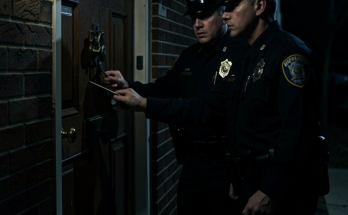
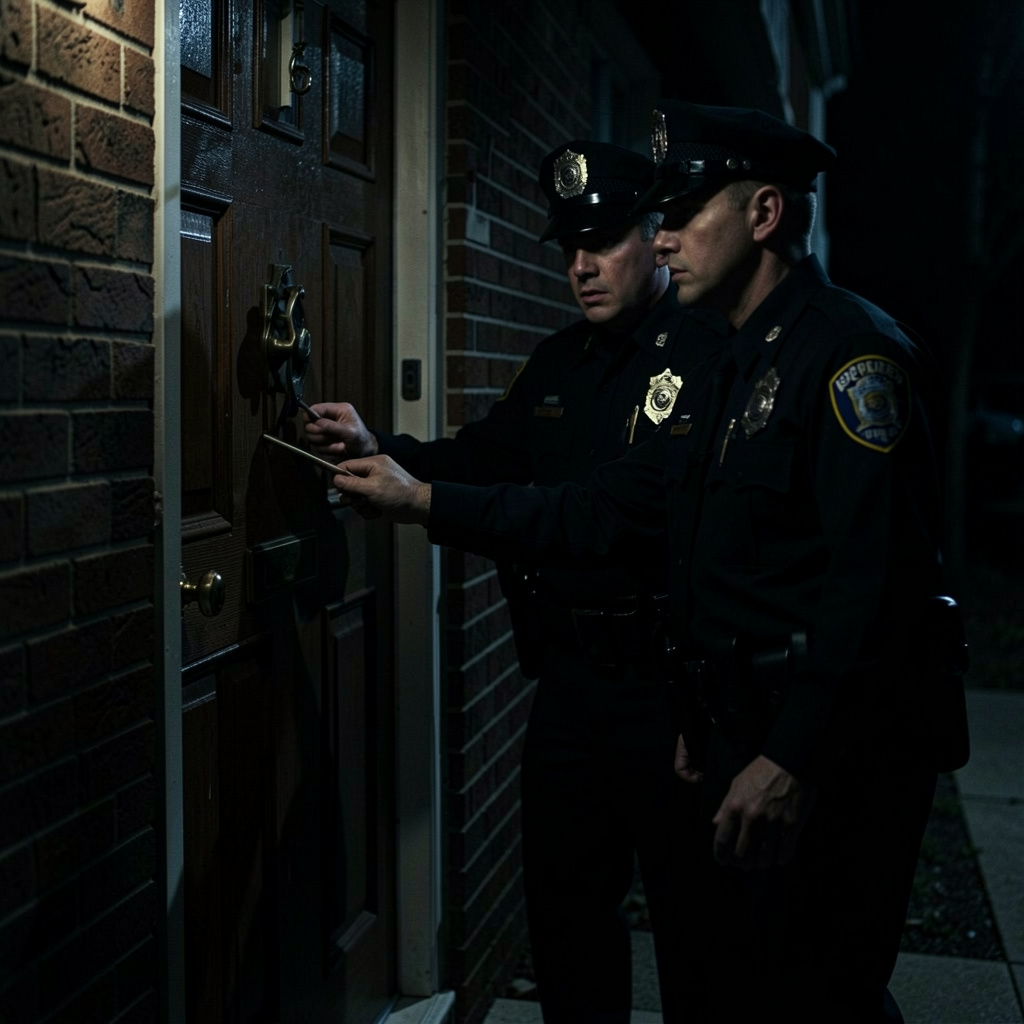
When I looked through the window, I saw two police officers standing on my porch.
My stomach dropped.
I opened the door.
“Can I help you?”
The older officer showed me his badge.
“Are you Emily Carter?”
“Yes.”
“We need to ask you some questions regarding a report filed by your mother.”
I felt the blood drain from my face.
“What report?”
The officer exchanged a look with his partner.
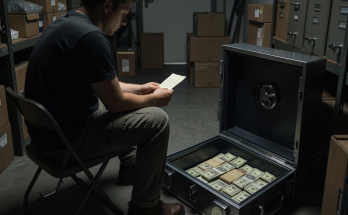
“Your mother claims you stole approximately forty-eight thousand dollars from your family’s joint savings account.”
I almost laughed.
Then I realized he was serious.
“I didn’t steal anything.”
“She says the money was transferred into your personal account and used toward the purchase of your house.”
“That’s impossible.”
“Do you have documentation showing where the money came from?”
“Yes.”
I stepped aside.
“Everything.”
I had kept records for ten years.
Bank statements.
Pay stubs.
Tax returns.
Overtime records.
Transfers.
Every deposit.
Every withdrawal.
Every cent.
The officers reviewed the documents at my kitchen table.
After nearly an hour, the older officer looked up.
“Ms. Carter, according to these records, the money used for your down payment came from your personal savings.”
“Yes.”
“And you’ve been making these deposits for years?”
“Yes.”
He nodded slowly.
“Your mother also claimed you threatened her during the argument.”
I stared at him.
“She grabbed my hair.”
“Did you report that?”
“No.”
“Why not?”
“Because she’s my mother.”
The officer’s expression softened.
“That doesn’t make it okay.”
I said nothing.
When they finally left, I thought it was over.
It wasn’t.
The next morning, I received a letter from a lawyer.
My mother and father were claiming that a portion of my savings had been contributed by them over the years.
They wanted the court to freeze my house purchase until ownership could be determined.
I read the letter three times.
Then I called a lawyer.
Her name was Sarah Mitchell.
She listened without interrupting.
When I finished, she asked one question.
“Do you have ten years of bank statements?”
“Yes.”
“Pay stubs?”
“Yes.”
“Tax returns?”
“Yes.”
“Employment records?”
“Yes.”
“Any evidence your parents contributed to the down payment?”
“No.”
Sarah leaned back.
“Then they made a serious mistake.”
“What mistake?”
“They assumed because you’re their daughter, you wouldn’t keep records.”
Two weeks later, we went to court.
My parents arrived with Natalie and Brandon.
Natalie wouldn’t look at me.
Mom looked furious.
Dad looked tired.
The judge asked why they believed they had a claim to my house.
Mom’s lawyer explained that I had supposedly been saving money intended for Natalie’s wedding and that the family had contributed financially to my savings.
Sarah stood and presented my records.
Ten years of bank statements.
Ten years of employment income.
Overtime payments.
Tax documents.
Every transfer.
Then she presented something else.
A recording.
I had forgotten about it.
But after the police visit, I had remembered that my phone had automatically recorded the argument at my parents’ house.
The judge listened.
My mother’s voice filled the courtroom.
“That money was for your sister’s wedding.”
Then:
“You’re not even married.”
Then:
“Sell the house.”
And finally:
“You are not going to ruin your sister’s wedding.”
The courtroom became silent.
My mother stared at me.
Natalie looked horrified.
The judge asked my mother directly whether she had ever deposited money into my savings account.
She said yes.
Sarah presented the records.
Every deposit she claimed was hers came from my paycheck.
One was even an overtime payment from a night shift I’d worked while sick.
The judge dismissed the claim.
But that wasn’t the end.
It was only the beginning.
Because after the hearing, Natalie came running after me.
“Emily!”
I stopped.
She was crying.
“I didn’t know.”
I looked at her.
“Didn’t know what?”
“Mom told me you promised to give me your savings.”
“I never promised that.”
“I know that now.”
She wiped her face.
“She told me you were saving because you didn’t need the money. She said you had no responsibilities.”
I laughed bitterly.
“Apparently owning my own life is a responsibility she doesn’t recognize.”
Natalie lowered her head.
“I should have asked you.”
“Yes.”
“I’m sorry.”
I believed her.
But forgiveness didn’t erase ten years of resentment.
A month later, something unexpected happened.
Dad called me.
He asked if he could come to my house.
I almost said no.
Instead, I said yes.
He arrived carrying a cardboard box.
“I found this in the garage.”
He placed it on my kitchen table.
Inside were old documents.
Receipts.
Bank statements.
And a notebook.
I opened it.
It was Mom’s handwriting.
Dates.
Amounts.
Notes.
I turned the pages.
My heart started pounding.
Every month for years, Mom had written down how much I had saved.
Not how much she had contributed.
How much I had saved.
At the top of one page, she had written:
“Emily’s house fund.”
I looked at Dad.
“Why did she keep this?”
He sighed.
“Because she always knew the money was yours.”
That sentence broke something inside me.
“Then why did she do this?”
Dad looked down.
“Because somewhere along the way, your mother convinced herself that your sister deserved everything first.”
“And you?”
“I convinced myself keeping quiet was the same as keeping peace.”
I stared at him.
“It wasn’t.”
“No.”
He nodded.
“It wasn’t.”
For the first time in years, Dad apologized.
Not vaguely.
Not with excuses.
He apologized for every time he had asked me to give in.
Every time he’d said, “You’re the responsible one.”
Every time he’d told me to understand Natalie because she was younger.
I cried.
So did he.
But I didn’t invite him to stay.
I wasn’t ready.
I needed my house to become mine.
Not a battlefield.
Not a family project.
Mine.
Over the next few months, I rebuilt it.
I painted the walls.
I replaced the floors.
I planted flowers along the front walkway.
I bought a dining table secondhand.
I hung photographs.
I turned the smallest bedroom into a reading room.
And one evening, nearly a year after I bought the house, I stood in the kitchen with a glass of wine and realized something.
I wasn’t waiting for anyone anymore.
Not for marriage.
Not for permission.
Not for approval.
Not for my family to decide whether I deserved happiness.
I had spent ten years saving for a house.
But the truth was, I had spent much longer saving myself.
I had learned to say no.
I had learned that being responsible didn’t mean being available for exploitation.
I had learned that loving your family didn’t mean surrendering everything you built.
And I had learned that sometimes the hardest door to walk through was the one you finally closed behind you.
Six months later, there was another knock.
I opened the door.
Natalie stood there.
She looked nervous.
“I have something for you.”
She handed me an envelope.
Inside was a check.
Five thousand dollars.
“What is this?”
“My wedding refund.”
I stared at her.
“What?”
“I canceled the big wedding.”
“You did?”
She nodded.
“Brandon and I decided we don’t want to start our marriage owing everyone something.”
She smiled sadly.
“We’re having a small ceremony instead.”
I didn’t know what to say.
She hugged me.
I hesitated before hugging her back.
“I’m sorry,” she whispered.
“I know.”
“I should have protected you.”
“You were never supposed to protect me.”
She pulled away.
“What was I supposed to do?”
“Tell the truth.”
She nodded.
“I will.”
Before she left, she looked around my house.
“You really did this yourself.”
I smiled.
“Yeah.”
She looked at me for a long moment.
Then she said something I’ll never forget.
“I’m proud of you.”
For years, I had wanted to hear those words from my mother.
But standing there in the doorway, I realized I didn’t need them anymore.
I had become proud of myself.
That was enough.
A year later, I planted a small tree in my backyard.
A lemon tree.
Just like the old one near the fence.
I wanted something that would grow with me.
Something that didn’t belong to my parents.
Something nobody could take from me.
As I covered the roots with soil, I thought about the girl I had been at nineteen.
She had worked two jobs.
She had eaten cheap meals.
She had watched friends travel.
She had gone home tired more nights than she could count.
And she had kept saving.
She hadn’t known what would happen.
She hadn’t known her own mother would someday hold a lighter near her face because she wanted the money for someone else’s wedding.
She hadn’t known police officers would come to her new home.
She hadn’t known she’d have to prove that her own money belonged to her.
But she had kept going.
And because she had, I was standing there.
In my backyard.
At my house.
With my keys in my pocket.
My name on the deed.
My future in front of me.
I looked at the lemon tree and smiled.
For ten years, I had saved money because I wanted a house.
I didn’t realize until much later that I was also saving something far more valuable.
My freedom.
And nobody—not my mother, not my sister, not anyone—could demand that I hand it over.