The Man Behind the Open Window
When I was fifteen, my mother married Gary.I remember being angry about it.Not because Gary had done anything wrong.That was almost the worst part.He was kind.
If he’d been arrogant, loud, controlling, or cruel, I would have known exactly what to hate.
I could have told myself he was trying to replace my father, that he didn’t belong in our house, that my mother had made a terrible mistake.
Instead, Gary simply showed up.
He fixed the loose cabinet door in our kitchen without being asked. He repaired my bicycle chain when it snapped. He learned how I liked my grilled cheese—slightly burnt around the edges.
He kept extra batteries in the junk drawer because I was always forgetting them.
And every Sunday morning, he made pancakes.
Not good pancakes.
They were too thick in the middle and somehow always slightly raw.
But he made them anyway.He’d stand at the stove wearing an old gray T-shirt, flipping pancakes with exaggerated concentration while Mom sat at the table drinking coffee.
“You’re going to burn that one,” she’d say.”I’ve got it.””You’ve been saying that for three pancakes.”
“I’ve got it.”Then he’d flip it.It would land halfway on the counter.
Mom would laugh.I’d laugh too, even when I tried not to.
That was Gary.He came to every school event.
Every one.Freshman orientation.
My first choir concert.The science fair where my volcano failed to erupt.
The basketball game where I sat on the bench the entire time because I wasn’t very good.
He was always there.Sometimes I would scan the crowd and see him before I saw Mom.
He’d raise one hand.
A little wave.
Nothing dramatic.
Just enough to say:
I’m here.
I never called him Dad.
I couldn’t.
Not then.
My biological father had left when I was eight. He had moved three states away, remarried, and slowly transformed from “Dad” into “the man who occasionally called on birthdays.”
So the word had become complicated.
Dad wasn’t a vacant chair.
It wasn’t a title someone could simply inherit.
I thought I had to protect it.
Gary never asked for it.
That mattered.
One night, when I was seventeen, I came home crying after a boy I liked told me he only saw me as a friend.
I found Gary in the garage changing the oil in his truck.
He looked at my face.
He didn’t ask what happened.
He just said, “Bad day?”
I nodded.
He put down the wrench.
“You want advice or pancakes?”
I laughed despite myself.
“Pancakes.”
“Excellent choice.”
We went inside.
He made pancakes at nine thirty at night.
That was the closest I ever came to calling him Dad.
But I swallowed the word.
Years passed.
I went to college.
Then graduate school.
Then I moved two hours away for work.
Mom and Gary stayed in the same little blue house with the white porch where they’d lived since I was sixteen.
I visited when I could.
I called Mom every Sunday.
I talked to Gary too.
Sometimes.
Never long enough.
Never enough.
I always assumed there would be more time.
Then Mom got sick.
It happened quickly.
Too quickly.
One month she was complaining about being tired.
The next she was undergoing tests.
Then came the diagnosis.
Then the hospital.
Then the quiet conversations doctors had in hallways.
Then the word terminal.
I was thirty-one when my mother died.
Gary was sixty-two.
I thought losing Mom would destroy me.
It did.
But what surprised me was how much losing Gary’s wife changed him.
He became smaller.
Not physically.
Emotionally.
He stopped making pancakes.
He stopped fixing things around the house.
He stopped answering his phone unless I called twice.
I stayed with him for two weeks after the funeral.
We sorted through Mom’s clothes.
We boxed her jewelry.
We found recipes in kitchen drawers.
One afternoon, I found a stack of Mother’s Day cards I’d made as a child.
Gary was sitting on the floor beside me.
He picked one up.
The front said:
WORLD’S BEST MOM.
Inside, in crooked purple crayon, I’d written:
“I love you because you make the best spaghetti.”
Gary smiled.
“She kept everything.”
“I know.”
He turned the card over.
There was something written on the back in Mom’s handwriting.
Keep this one.
I looked at him.
He shrugged.
“She kept all of it.”
I wanted to tell him I was sorry.
But the words felt too small.
So I hugged him.
He held me for a long time.
After that, we stayed in touch.
Not close.
Not the way we’d been with Mom.
But still family.
At least, that’s what I believed.
Then came Father’s Day.
I almost didn’t go.
I had bought a card weeks earlier.
It sat on my kitchen counter for days.
I would pick it up.
Put it down.
Pick it up again.
The front said:
For Someone Who Has Always Been There.
Inside, I wrote something I’d never said aloud.
I wrote about the pancakes.
The science fair.
The bicycle.
The basketball games.
The night he stayed awake until two in the morning because I was afraid after a thunderstorm.
I wrote:
“I know I never called you Dad. I wish I had. Not because you needed the title, but because you deserved to know what you meant to me.”
Then I added:
“You were there when you didn’t have to be. You loved Mom, and somehow, you learned how to love me too. I hope I gave you even a fraction of the family you gave me.”
I cried while writing it.
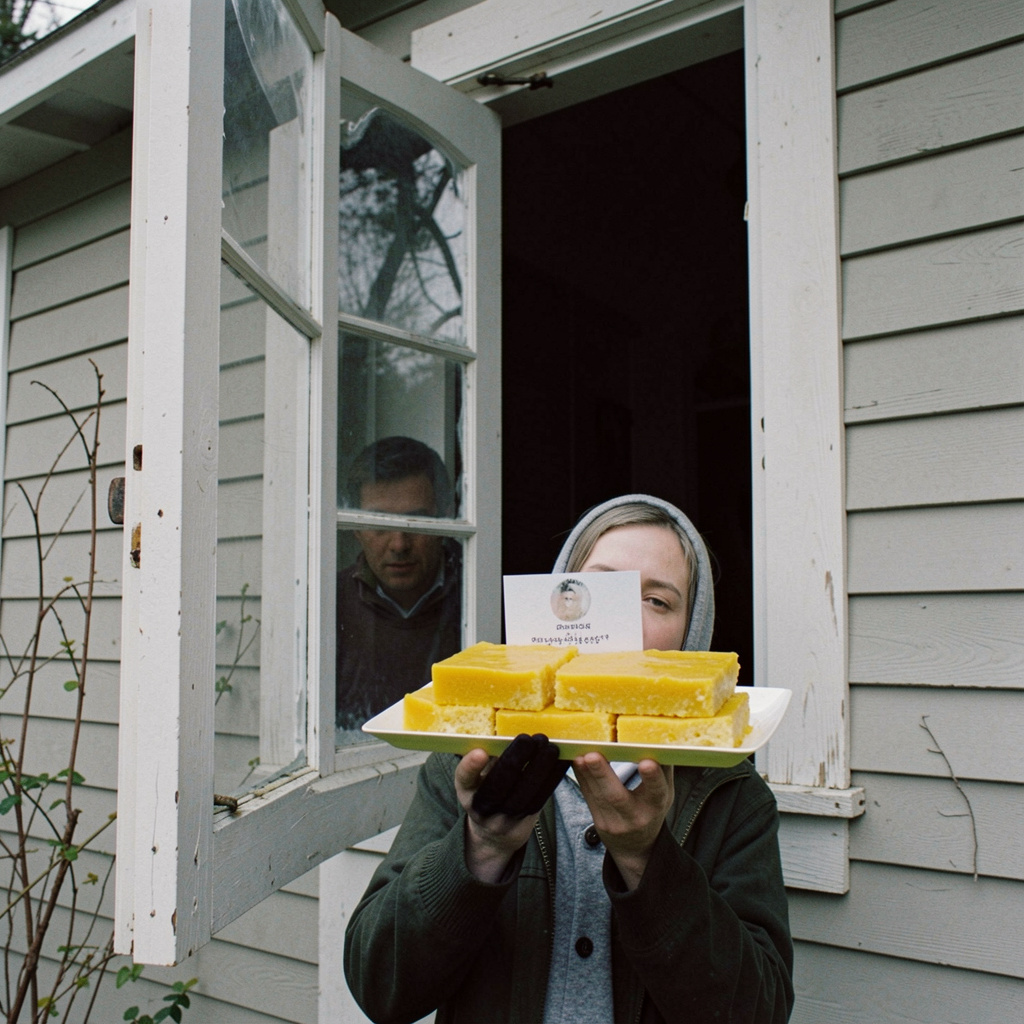
Then I bought lemon bars from a bakery across town.
Mom’s favorite.
I put them in a white box.
And on Father’s Day morning, I drove to Gary’s house.
I arrived early.
Around ten.
The driveway was empty.
His truck was there.
I knocked.
No answer.
I knocked again.
Nothing.
Then I noticed the window.
It was open.
Not cracked.
Wide open.
And I froze.
Because I could hear voices inside.
A man’s voice.
Then a woman’s.
I stepped closer.
I don’t know why.
Maybe because I was worried.
Maybe because I sensed something was wrong.
The curtain moved.
And I heard a sentence that made my entire body go cold.
“You said she wouldn’t come.”
It was the woman’s voice.
Then Gary answered.
“I didn’t think she would.”
I stopped breathing.
I looked at the lemon bars in my hand.
For a second, I wondered if I had come to the wrong house.
But I knew that voice.
It was Gary.
The woman spoke again.
“What are you going to tell her?”
There was silence.
Then Gary said quietly:
“The truth.”
I stepped backward.
The porch board creaked.
Inside, everything went silent.
The window curtain moved.
Then Gary appeared.
His face went pale.
He opened the front door.
“Claire?”
I stared at him.
“Who’s here?”
He didn’t answer.
That hurt more than I expected.
I looked past him.
A woman stood in the hallway.
She was probably in her late fifties.
I didn’t recognize her.
She had dark hair, tired eyes, and one hand pressed against her chest.
She looked at me.
Then at Gary.
Then back at me.
“Claire,” she whispered.
I stepped onto the porch.
“Who are you?”
The woman began to cry.
Gary closed his eyes.
And then he said something I never expected.
“This is your aunt.”
I actually laughed.
Not because it was funny.
Because my brain refused to understand.
“My what?”
“Your aunt.”
“My mother didn’t have a sister.”
Gary looked at the woman.
“She did.”
I felt the world tilt.
“What are you talking about?”
The woman stepped forward.
“My name is Evelyn.”
She swallowed.
“I’m your mother’s older sister.”
I stared at her.
“No.”
“I know.”
“No. My mother told me she was an only child.”
Evelyn nodded.
“She told everyone that.”
“Why?”
She looked at Gary.
He gestured toward the living room.
“Come inside.”
I didn’t want to.
But I did.
The house looked exactly the same.
Mom’s photographs still lined the hallway.
Her favorite blue vase sat on the mantel.
Her reading glasses were still beside the chair.
Except now there was a stranger sitting beneath the family photograph.
My aunt.
Evelyn.
Gary sat across from her.
I remained standing.
“I want an explanation.”
“You deserve one,” Gary said.
“Start with my mother.”
He nodded.
“Your mother had a sister. Evelyn. They were separated when they were young.”
Evelyn wiped her eyes.
“Our parents divorced when we were children,” she said. “Your grandmother took your mother. Our father took me. Back then, people could disappear from each other’s lives much easier.”
“What happened?”
“We wrote letters.”
She looked down.
“For years.”
“Then why did Mom say she was an only child?”
Evelyn took a deep breath.
“Because your mother blamed me.”
I looked at Gary.
“Blamed her for what?”
He answered.
“When your mother was nineteen, she got pregnant.”
My stomach tightened.
“With me?”
“No.”
I looked at Evelyn.
“My mother had another child?”
Evelyn shook her head.
“No. She lost the baby.”
I said nothing.
“Your mother was nineteen,” Evelyn continued. “She was scared. She didn’t know what to do. Our father wanted her to give the baby up for adoption. Your mother refused.”
She paused.
“But she was young and alone.”
“What does this have to do with you?”
Evelyn looked at the floor.
“I knew.”
My heart sank.
“You knew?”
“I found out.”
“How?”
“My husband at the time worked at the hospital. He told me your mother had been admitted.”
“Why didn’t you go to her?”
Evelyn’s eyes filled.
“I tried.”
She looked at Gary.
“Your mother wouldn’t see me.”
I felt something inside me cracking.
“Why?”
“Because she believed I had told our father.”
“Did you?”
“No.”
Her answer came instantly.
“I swear to you, Claire. I never told him.”
“Then why did she think you did?”
“Because your father told her I had.”
I stared.
“My grandfather?”
Evelyn nodded.
“He wanted us separated. He succeeded.”
She pulled an old envelope from her purse.
“I’ve kept these for forty years.”
She placed it on the table.
Letters.
Dozens of them.
Some were addressed to my mother.
Some from my mother.
I picked one up.
The handwriting was unmistakable.
Mom.
My hands trembled.
“She wrote to you?”
“Many times.”
“Why didn’t I know?”
“Because she stopped answering me.”
I opened one.
The first line read:
“Evelyn, I don’t know if you’ll ever forgive me.”
I couldn’t continue.
I looked at Gary.
“How long have you known about this?”
He looked ashamed.
“Almost twenty years.”
My anger surged.
“You knew?”
“Your mother told me after we got married.”
“And you never told me?”
“She asked me not to.”
“Why?”
“Because she was afraid you’d look at her differently.”
I laughed bitterly.
“She lied to me.”
“She was ashamed.”
“That doesn’t make it okay.”
“No,” Gary said. “It doesn’t.”
The room went quiet.
I looked at him.
“Why was Evelyn here today?”
He hesitated.
“Because I asked her to come.”
“Why?”
“Because I needed to tell you something.”
My heart started pounding.
“What?”
Gary stood.
He walked to the bookshelf.
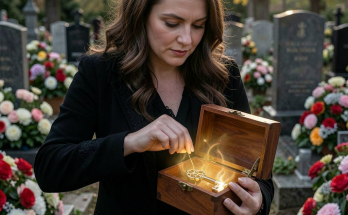
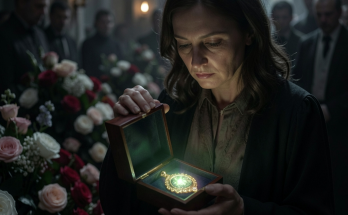
He pulled out a small wooden box.
I recognized it immediately.
Mom’s box.
She kept jewelry in it.
Photographs.
Letters.
Things she considered too important to throw away.
Gary opened it.
Inside was a folded document.
He handed it to me.
I opened it.
It was a letter.
From Mom.
My name was written across the front.
Claire.
I looked at Gary.
“Why didn’t you give me this before?”
“Because your mother made me promise to wait.”
“Until when?”
“Until you came to me.”
I frowned.
“What does that mean?”
He pointed toward the card in my hand.
“You came today.”
My throat tightened.
I opened the letter.
My mother’s handwriting blurred through my tears.
“My darling Claire,”
“If you’re reading this, it means you came to Gary on Father’s Day.”
I stopped.
I looked up.
Gary was crying.
Evelyn was crying.
I continued.
“I chose Father’s Day because I knew you might finally understand something I never knew how to say.”
“Gary is not your father by blood. But he is the man who chose you.”
My breath caught.
“When I married him, I was terrified you would hate him. Instead, you slowly let him into your life.”
“You never called him Dad.”
“That’s okay.”
“But I know you wanted to.”
I covered my mouth.
Gary looked away.
The letter continued.
“There were nights when you were little that you would ask me if Gary was staying forever. I always told you I hoped so.”
“He told me once that if you never called him Dad, he would still spend the rest of his life earning the right to be called it.”
I began sobbing.
Gary sat down.
I could barely read the next line.
“Claire, love is not always the person who gives you life. Sometimes it’s the person who keeps showing up after life becomes difficult.”
I pressed the letter against my chest.
“Gary showed up.”
“Every pancake.”
“Every concert.”
“Every broken bicycle.”
“Every time you needed someone.”
Then:
“I know I didn’t give you the family story you deserved. I know I hid Evelyn. I know I made mistakes. But I need you to know something else.”
“You were never unwanted.”
“Not for one second.”
The room disappeared.
There was only my mother’s handwriting.
Her voice.
Her words.
Then I reached the final paragraph.
“If you’re angry, be angry. If you’re confused, be confused. But don’t let my mistakes convince you that you weren’t loved.”
“And please, take care of Gary.”
“He’s going to tell you he doesn’t need anyone.”
“He’s lying.”
I laughed through my tears.
Because that sounded exactly like Mom.
The final line was short.
“You are my greatest joy.”
I folded the letter.
For several minutes, nobody spoke.
Then Gary said quietly:
“I didn’t want you to think I was replacing your father.”
I looked at him.
“You never did.”
He nodded.
“I wanted you to have the choice.”
I stood.
I walked across the room.
And for the first time in seventeen years, I wrapped my arms around him.
He held me tightly.
“I’m sorry,” I whispered.
“For what?”
“For never calling you Dad.”
His shoulders shook.
He pulled back.
“Claire.”
“I should have.”
“No.”
“I wanted to.”
He wiped his eyes.
“You were a kid.”
“I know.”
“You didn’t owe me a word.”
I looked at him.
“You earned it anyway.”
He smiled through tears.
Then Evelyn stood.
“I should go.”
I turned.
“No.”
She looked surprised.
“Please stay.”
She hesitated.
“I don’t know if I’m part of this family.”
I looked at the letter in my hands.
Then at the photographs on the wall.
Then at the woman my mother had spent decades pretending didn’t exist.
“Neither did I,” I said.
She began crying again.
I walked toward her.
We hugged.
It was awkward.
Careful.
Two strangers trying to understand why they shared blood and grief.
But it was something.
Later that afternoon, we sat around the kitchen table.
I opened the box of lemon bars.
Gary laughed when he saw them.
“Your mother would say these are too sweet.”
I smiled.
“She loved them.”
“She tolerated them.”
We laughed.
For the first time since Mom died, the house felt alive.
Evelyn told stories about my mother as a child.
Apparently, Mom had once tried to cut her own hair and ended up looking like a mushroom.
Gary admitted he’d known that story for years.
I accused him of withholding important historical information.
He laughed.
We ate lemon bars.
And eventually, I asked the question I’d been afraid to ask.
“Why did you invite Evelyn today instead of just telling me yourself?”
Gary looked at his hands.
“Because I don’t know how much time I have.”
My smile disappeared.
“What?”
He sighed.
“I’ve been having heart problems.”
I stared at him.
“How long?”
“A few months.”
“And you didn’t tell me?”
He gave me a guilty smile.
“Your mother would have said I’m stubborn.”
“She would have said you’re an idiot.”
He laughed.
“That too.”
I reached across the table and took his hand.
“You don’t get to disappear on me.”
“I wasn’t planning to.”
“Good.”
He squeezed my hand.
“I was afraid you’d stop coming around after she died.”
I looked at him.
“I almost did.”
His face fell.
“Not because I didn’t love you,” I said quickly. “Because it hurt.”
He nodded.
“I know.”
“I thought every time I came here, I’d see her.”
“You do.”
I looked toward the kitchen.
For one second, I could almost see Mom sitting at the table.
Coffee in her hands.
Smiling.
“You know,” I said, “I think she knew exactly what she was doing.”
Gary smiled.
“She usually did.”
That Father’s Day became the beginning of something new.
Evelyn and I stayed in touch.
At first, we exchanged messages once a week.
Then phone calls.
Then visits.
She told me about Mom’s childhood.
I told her about Mom’s favorite songs.
She had photographs I’d never seen.
I had memories she’d never known.
Together, we built a version of my mother neither of us had possessed alone.
And Gary?
I started visiting every Sunday.
Just like before.
Except now, I made the pancakes.
They were terrible.
Gary complained they were too thin.
I complained his were always raw in the middle.
We argued over pancake batter like Mom was still in the next room laughing at us.
A year later, I bought a new card.
It was Father’s Day again.
I drove to Gary’s house.
The same blue house.
The same white porch.
The same kitchen window.
Except this time, I didn’t knock.
I opened the door.
“Gary?”
“In here!”
I walked into the kitchen.
He was sitting at the table.
I put a small box in front of him.
“What’s that?”
“Open it.”
Inside was a framed photograph.
It was an old picture from my high school graduation.
Mom stood on one side of me.
Gary stood on the other.
His hand rested on my shoulder.
I’d never noticed before, but in the photograph, he wasn’t looking at the camera.
He was looking at me.
I had written something beneath it.
The man who showed up.
Gary stared at it for a long time.
Then he looked at me.
“I don’t deserve this.”
“Yes, you do.”
He swallowed.
“I still don’t need the title.”
“I know.”
I smiled.
“But I’m giving it to you anyway.”
He looked confused.
I sat beside him.
Then I said the word I’d carried inside me since I was fifteen.
The word I had been too afraid to say.
“Happy Father’s Day, Dad.”
Gary broke.
He covered his face with both hands.
And I started crying too.
After a moment, he reached for me.
I hugged him.
And in that little kitchen, surrounded by pancake batter, old photographs, and all the ghosts of the people we had lost, I finally understood something my mother had tried to teach me.
Family isn’t always the people who share your blood.
Sometimes family is the person who stays.
The person who fixes the broken cabinet.
The person who burns the pancakes.
The person who sits in the front row.
The person who never asks to be called Dad because he knows love can’t be demanded.
The person who keeps showing up.
Even when nobody is watching.
Especially then.
Years later, I still think about that open window.
For a long time, I thought it was the moment my world fell apart.
I thought I had arrived at Gary’s house expecting a simple Father’s Day and instead discovered secrets, betrayal, and a family history I had never known.
But I’ve come to see it differently.
That open window was an invitation.
An accidental one.
A strange doorway into the truth.
Because behind it was a woman I didn’t know, carrying pieces of my mother’s past.
Behind it was a man who had spent decades loving me quietly.
Behind it were letters that explained the things my mother couldn’t say.
And behind all of it was the truth I’d been avoiding since I was fifteen.
Gary had never been trying to become my father.
He had simply been trying to be there.
And sometimes, that is what fatherhood really is.
Not biology.
Not a title.
Not a name on a birth certificate.
Just presence.
Consistency.
Love.
A thousand ordinary choices to show up.
Years later, I still make lemon bars on Father’s Day.
I bring them to Gary’s house.
He always says they’re too sweet.
I always tell him Mom liked them that way.
Then he eats three.
And every Sunday, I make pancakes.
They’re still terrible.
But Gary always eats them.
And sometimes, when the morning light comes through the kitchen window, I imagine Mom sitting at the table, watching us.
I imagine her smiling.
And I like to think that if she could see us now, she’d know something important.
She didn’t lose her daughter when she died.
She left her with a family.
A complicated one.
A wounded one.
An imperfect one.
But a real one.
And I finally stopped being afraid of the word that had once felt too big for me.
Dad.
I wish I’d said it sooner.
But Gary never made me regret waiting.
Because he understood something I didn’t.
Love doesn’t keep score of the words you forgot to say.
It remembers the moments you showed up.
And after all those years, that’s what I remember most.
Not the secrets.
Not the arguments.
Not the years we lost.
I remember a man standing at a stove on Sunday mornings, burning pancakes and pretending he had everything under control.
I remember him sitting in the audience at every school event.
I remember him fixing my bicycle.
I remember him waiting up when I was late.
I remember him standing beside my mother.
And I remember him opening the door that Father’s Day, looking terrified that I might walk away.
I didn’t.
I never will.
Because sometimes, the person who isn’t your father becomes the father you needed.
And sometimes it takes an open window, a box of lemon bars, and a letter from the woman you lost to finally see it.
Gary didn’t replace my father.
He became something different.
Something better.
He became the man who stayed.
And that was enough.