The House She Left Behind
My mother passed away on a Tuesday morning.There was no dramatic warning, no final conversation in which she took my hand and told me everything I had always wanted to hear.
She simply closed her eyes in the hospital, and when the nurse came in twenty minutes later, my mother was gone.
I was thirty-four years old.
I had spent the previous six months driving three hours every weekend to visit her, bringing groceries, sitting beside her hospital bed, and pretending not to notice how tired she looked.
Her name was Margaret.To everyone else, she was a kind woman who had spent her life helping people.To me, she was the mother I had spent my entire childhood trying to please.
After my father died when I was eleven, Mom remarried a man named Richard.
At first, I thought Richard was wonderful.
He brought flowers home. He fixed broken cabinet doors.
He took Mom dancing on Friday nights.But Richard had a son from his first marriage.His name was Jason.Jason was two years older than me, and from the beginning, he made it clear that I was not his sister.
He called me “Mom’s kid.”Never “my sister.”Never even by my name when he was angry.
As the years passed, Mom slowly changed.
She became careful around Jason.
If Jason wanted something, she found a way to give it to him.
If I wanted something, she told me to be understanding.
“Jason has had a difficult childhood.”
“Jason needs his father.”
“You’re stronger than he is.”
“You have to be the mature one.”
I became the mature one so often that eventually nobody noticed when I needed someone to be mature for me.
I paid for my own college.
I moved out at twenty-one.
I worked two jobs.
I rarely asked Mom for anything.
And somehow, that became proof that I didn’t need her.
Then she got sick.
Cancer.
By the time the doctors found it, it had already spread.
During those final months, I became her daughter again.
Not the responsible daughter.
Not the convenient daughter.
Just her daughter.
I washed her hair.
I read to her.
I held her hand when she was afraid.
One night, when Richard had gone home to sleep, Mom looked at me and whispered, “I’m sorry.”
I smiled because I thought she was talking about something else.
“For what?”
She stared at the ceiling.
“For all the times you felt alone.”
My throat tightened.
“Mom, don’t.”
“I should have protected you.”
I squeezed her hand.
“You did what you could.”
“No,” she whispered. “I didn’t.”
I wanted to ask her what she meant.
But she started coughing.
So I stayed quiet.
Three days later, she died.
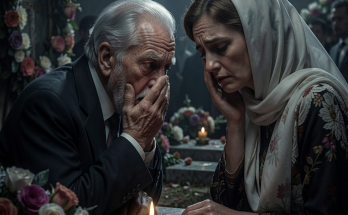
At the funeral, I stood beside Richard and Jason while people talked about how generous and loving Mom had been.
I listened to stories about her baking, her gardening, her charity work.
I wanted to scream.
Because everyone was talking about a woman I knew.
But nobody knew the version of her that existed when the door closed.
After the funeral, the lawyer called us to discuss the estate.
I went to the meeting expecting nothing.
Honestly, I had already prepared myself for that.
Mom and Richard had been married for twenty-three years.
The house was in both their names.
I assumed Richard would keep it.
I assumed there might be a few sentimental things for me.
Maybe her jewelry.
Maybe her old photo albums.
Maybe the silver necklace she wore almost every Sunday.
Instead, the lawyer opened the folder and said, “Your mother left her entire estate to Richard.”
I stared at him.
Jason smiled.
I looked at Richard.
He wouldn’t meet my eyes.
The lawyer continued.
“The residence, savings account, investment portfolio, and personal property.”
I felt strangely calm.
“Everything?”
“Yes.”
Jason leaned back in his chair.
Then he laughed.
Not loudly.
Just enough.
I looked at him.
He shrugged.
“Guess she knew who her real family was.”
The words landed harder than anything else that day.
I turned toward Richard.
He finally looked at me.
“I’m sorry,” he said.
I nodded.
“Okay.”
“Emily—”
“It’s okay.”
It wasn’t.
But I didn’t have the strength to fight.
The following morning, Richard came to my apartment.
He didn’t come alone.
Jason was with him.
Richard stood in the doorway.
“We need to talk about the house.”
I already knew.
“What about it?”
“You’ll need to remove your things.”
I stared at him.
“My things?”
“Your mother left some belongings upstairs.”
Jason crossed his arms.
“Don’t make this harder than it needs to be.”
I almost laughed.
Harder?
My mother had died a week ago.
I had just learned she had left me nothing.
And now they were asking me to leave the house where I had grown up.
There was nothing left to make harder.
I packed quietly.
Two suitcases.
Three boxes.
A framed photograph of Mom and me at the beach when I was thirteen.
Her old recipe book.
A blue sweater that still smelled faintly like her perfume.
That was all.
As I carried the last box toward the door, Jason was sitting in the living room.
He watched me.
Then he smiled.
“You know,” he said, “she never really saw you as family.”
I stopped.
He continued.
“You’re still her husband’s daughter, technically. But that’s it.”
I looked at Richard.
He said nothing.
Jason laughed.
“She never loved you the way she loved us.”
Something inside me broke.
Not loudly.
There was no dramatic scene.
I didn’t slap him.
I didn’t scream.
I simply put the box down, looked at the two men standing in my mother’s house, and said,
“Take care of each other.”
Then I left.
I spent the next week in a cheap motel.
I barely ate.
I barely slept.
I kept replaying Mom’s last words.
I’m sorry.
For all the times you felt alone.
I should have protected you.
I kept wondering what she had been trying to tell me.
On the seventh night, my phone rang.
It was Richard.
I almost didn’t answer.
When I did, I heard him crying.
Not sniffling.
Not pretending.
Actually crying.
“Emily?”
“Yes?”
“Please come here.”
My heart jumped.
“Why? What happened?”
“Please.”
His voice cracked.
“Come fast.”
I thought someone had been hurt.
Maybe Jason.
Maybe Richard had fallen.
I grabbed my keys and drove to the house.
When I arrived, the front door was unlocked.
I walked inside.
The house was dark.
“Richard?”
No answer.
I walked into the living room.
And froze.
Richard was sitting on the floor.
Around him were dozens of cardboard boxes.
The walls were covered with photographs.
Photographs of me.
Dozens of them.
I couldn’t breathe.
There were pictures from my childhood.
Me at five.
Me at eight.
Me holding a birthday cake at eleven.
Me graduating high school.
Me leaving for college.
Me standing beside Mom at my wedding.
Me holding my first nephew.
There were photographs I had never seen before.
I stepped closer.
“Where did these come from?”
Richard wiped his face.
“Your mother.”
I stared at him.
He pointed toward the dining room.
“There’s more.”
I followed him.
On the table was a thick envelope with my name written across it.
Emily.
In my mother’s handwriting.
My hands began to shake.
I opened it.
Inside was a letter.
My dearest Emily,
If you’re reading this, then I am gone.
I stopped reading.
I couldn’t see through my tears.
I sat down.
Richard stood behind me.
I continued.
I know you believe I left you nothing.
I know you believe I chose Richard and Jason over you.
And I know I have no right to ask you to forgive me.
But I need you to know the truth.
The house was never meant to be yours.
I stared at the sentence.
My heart sank.
Then I read the next line.
Because I bought you another one.
I looked up.
“What?”
Richard started crying again.
I kept reading.
For the last eleven years, I have secretly been saving money from my inheritance, my investments, and the proceeds from the sale of my old business.
I purchased a small house in your name.
It is fully paid off.
The deed is enclosed.
I wanted to give it to you when I knew I wouldn’t be here to see you enjoy it.
But there was more.
So much more.
I turned the page.
The house Richard lives in was never entirely mine.
Years ago, when Richard’s business began failing, he borrowed money against the property.
I paid off the debt.
I also paid Jason’s college tuition.
His first car.
His medical bills.
His business loan.
And every time you thought I was choosing them over you, I was trying to prevent this family from collapsing.
I closed my eyes.
Richard whispered, “I didn’t know.”
I looked at him.
“You didn’t know?”
He shook his head.
“I thought she was spending her money on herself. She never told me.”
I kept reading.
But there is one thing I need you to understand.
I did not leave you nothing.
I left you freedom.
I left you the one thing I could never give you while I was alive.
A life that doesn’t depend on anyone’s approval.
The deed to the house was attached to the letter.
I unfolded it.
My name was there.
Sole owner.
Paid in full.
I began crying.
But the letter wasn’t finished.
Emily, you were never unwanted.
You were never less loved.
I was simply too weak to stand up to people who knew how to make me feel guilty.
I’m sorry.
If I had one more chance, I would choose differently.
And then I saw something that made me stop breathing.
There was a second envelope.
Inside was a handwritten list.
Forty-three entries.
Each one was a payment Mom had made for me.
College tuition.
Emergency savings.
A down payment.
Medical expenses.
And at the bottom:
“Money I saved for Emily: $312,400.”
I stared at the number.
Richard covered his mouth.
“I didn’t know any of this.”
I believed him.
For the first time since my mother died, I saw the grief in his face.
Not guilt.
Grief.
“Where’s Jason?” I asked.
Richard looked toward the hallway.
“He found the papers.”
My stomach tightened.
“What papers?”
“The ones showing what your mother had been paying for all these years.”
“Where is he?”
Richard looked down.
“He left.”
I stood.
“Did he know about the house?”
“No.”
I folded Mom’s letter.
Then Richard said something I wasn’t expecting.
“Emily, there’s one more thing.”
He walked into the kitchen and opened a drawer.
He pulled out a small key.
“Your mother told me that if anything happened to her, I was supposed to give you this.”
“What is it?”
“I don’t know.”
He handed it to me.
There was a tag attached.
“Storage unit.”
My heart began pounding.
The next morning, I went with Richard to the storage facility.
The unit was small.
Inside were boxes stacked almost to the ceiling.
Every box had a date.
At the back was a wooden chest.
My name was carved into the lid.
Emily.
I opened it.
Inside were letters.
Hundreds of them.
Letters Mom had written to me over the years.
Letters she had never sent.
One was dated the day I left for college.
Another was dated my twenty-first birthday.
Another was dated the day I got married.
I opened one at random.
My daughter,
Today you called me and told me you were happy.
I wanted to tell you that I was proud of you.
But Jason was sitting beside me, and I was afraid he would think I loved you more.
I stared at the words.
Another letter.
Emily,
You don’t know this, but I cried after you left today.
You said you didn’t need anything.
I wanted to tell you that you should never have had to become so independent.
I kept reading.
Letter after letter.
Year after year.
Mom had been watching.
Loving.
Regretting.
But afraid.
And suddenly, the years of silence made sense.
Not excusable.
But understandable.
Then I found a final envelope.
It was dated three months before her death.
Inside was a single sentence.
“If Emily ever comes back to this house, tell her to look behind the fireplace.”
I looked at Richard.
“Did you know?”
He shook his head.
We drove back.
The fireplace was old stone.
We searched behind it.
Nothing.
Then Richard noticed a loose brick.
He pulled it free.
Behind it was a metal box.
Inside were legal documents.
And one photograph.
The photograph showed Mom standing in front of a house.
The house she had bought for me.
On the back she had written:
“She deserves somewhere nobody can take from her.”
I broke down.
Richard sat beside me.
“I’m sorry,” he whispered.
I looked at him.
“You should have defended me.”
“I know.”
“You should have stopped Jason.”
“I know.”
“You let me walk out believing my mother didn’t love me.”
Tears filled his eyes.
“I know.”
There was nothing else to say.
A month later, I moved into the house Mom had bought.
It wasn’t huge.
It wasn’t luxurious.
It was a small two-story house with a backyard and a lemon tree.
But it was mine.
For the first time in my life, I had a place where nobody could tell me I didn’t belong.
I planted flowers beneath the kitchen window.
I hung Mom’s photograph above the fireplace.
And every Sunday morning, I made her cinnamon bread from the recipe book she had left me.
One afternoon, there was a knock at the door.
I opened it.
Jason stood there.
He looked different.
Older.
Tired.
He wasn’t smiling.
“I need to talk to you.”
I almost closed the door.
But something stopped me.
“Come in.”
He stepped inside.
He looked around.
“She really bought this for you?”
“Yes.”
He nodded.
Then he sat down.
“I found out what she did.”
I said nothing.
He looked at his hands.
“She paid for everything.”
“Yes.”
“My college.”
“Yes.”
“My business.”
“Yes.”
“My father’s debts.”
I nodded.
He swallowed.
“And she kept giving me things while I was telling you she didn’t love you.”
I didn’t answer.
He looked at me.
“I was cruel.”
“Yes.”
“I thought she loved me more.”
“Why?”
“Because she always chose me.”
I took a breath.
“She chose your problems.”
He looked away.
“Maybe.”
Then he pulled something from his pocket.
A letter.
“She wrote this to me.”
I didn’t touch it.
“What does it say?”
He hesitated.
“She said I had spent my whole life demanding proof that I was loved while you spent yours giving proof that you loved her.”
That sentence stayed between us.
Jason wiped his eyes.
“She said if I ever lost her, I should remember that I had a sister.”
I looked at him.
“Did she call me that?”
He nodded.
“She called you her daughter.”
For years, I had imagined hearing those words.
Now that I finally heard them, they hurt more than I expected.
Jason stood.
“I don’t expect forgiveness.”
“Good.”
He nodded.
“But I wanted you to know.”
He walked toward the door.
Before he left, I said,
“Jason.”
He turned.
“She loved you.”
He stared at me.
“But she shouldn’t have had to destroy me to prove it.”
He nodded slowly.
“I know.”
Then he left.
I never became close to Jason.
Maybe someday we would.
Maybe we wouldn’t.
Some wounds don’t disappear simply because you understand how they were created.
As for Richard, things changed.
He sold the old house.
He moved into a smaller apartment.
He gave me Mom’s remaining belongings.
Not because the will demanded it.
Because he finally understood that some things weren’t property.
They were pieces of a person’s life.
One year after Mom died, I returned to the cemetery.
I brought flowers.
I sat beside her grave.
For a long time, I didn’t speak.
Then I said,
“You know, Mom, I spent my whole life wondering if you loved me.”
The wind moved through the trees.
“I wish you’d told me.”
I smiled through my tears.
“But I found your letters.”
I placed one beside the flowers.
“I know now.”
I touched the stone.
“I know.”
Then I told her about the lemon tree.
It had finally produced fruit.
I told her about the neighbor’s dog.
About the terrible first attempt I made at growing tomatoes.
About how I had painted the kitchen yellow because she always said yellow made a house feel warm.
And then I whispered,
“I forgive you.”
Not because what she did didn’t matter.
It did.
Not because the pain disappeared.
It hadn’t.
I forgave her because I no longer wanted the worst years of my life to be the final definition of our relationship.
My mother had failed me.
But she had also loved me.
Both things could be true.
And perhaps that was the final gift she left me.
Not the house.
Not the money.
Not the documents.
The truth.
For years, I had believed I was the daughter who had been left with nothing.
But standing beside her grave, I finally understood.
She hadn’t left me nothing.
She had left me evidence.
Proof that I had been loved even when I couldn’t see it.
Proof that my life mattered.
Proof that sometimes people make terrible choices while still loving you deeply.
And most importantly, she had left me a home.
Not just four walls and a paid-off mortgage.
A place where I could finally stop wondering whether I belonged.
A place where nobody could look at me and say,
“You’re not family.”
Because for the first time in my life, I knew something they could never take away from me.
I belonged to myself.
And that was enough.