Fourteen Days to Leave
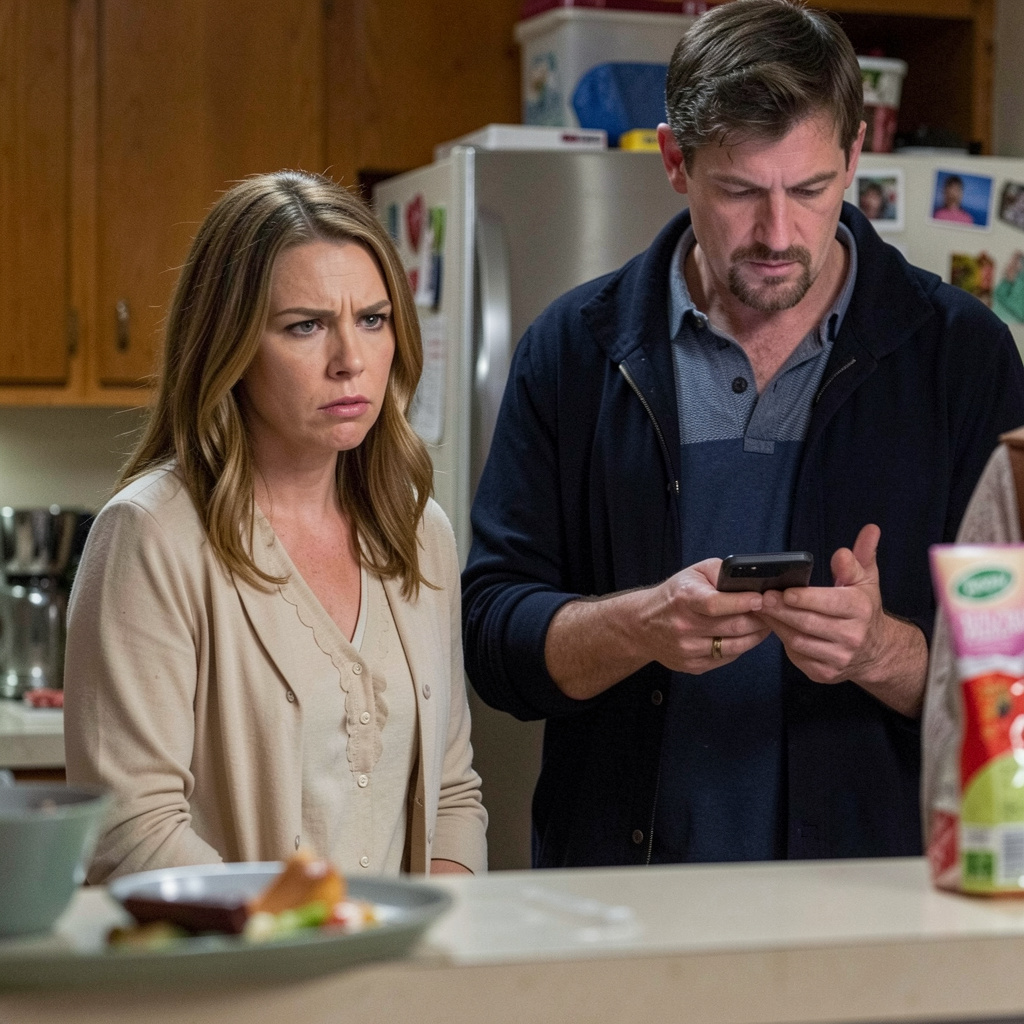
The first time Diane told me to leave my own home, she did it while holding a casserole dish.It was a Sunday evening, and the three of us were standing in the kitchen after dinner.
My mother-in-law had come over that afternoon without calling, as she often did.
She had spent three hours criticizing the curtains, complaining about the grocery bill, and telling my husband, Mark, that his sister needed more support.
Mark had barely spoken.
He stood beside the refrigerator, staring down at his phone.I was washing dishes when Diane finally cleared her throat.“I’ve made a decision,” she said.I turned off the faucet.“What kind of decision?”
She placed the casserole dish on the counter with exaggerated care.“You have fourteen days to move out.”
For a moment, I thought I had misheard her.
“Excuse me?”Diane folded her arms.
“You heard me.”I looked at Mark.He didn’t look up.“Mark?”His thumb continued moving across his phone.“Can you please look at me?”He finally raised his eyes.
There was something in his expression that hurt more than Diane’s words.
Not anger.Not surprise.Guilt.
“Mom thinks it would be best,” he said quietly.
I stared at him.
“Your mother thinks it would be best for me to leave my home?”
“Our home,” Diane corrected.
Then she laughed softly.
“Although, frankly, that’s part of the problem.”
I frowned.
“What does that mean?”
Diane leaned against the counter.
“You work, yes. You contribute. But family isn’t just about paying bills.”
I almost laughed.
Almost.
Because for eight years, my salary had quietly kept that house running.
I had paid the mortgage when Mark’s business struggled.
I had covered the property taxes.
I had paid the homeowners insurance.
I had paid the electricity, water, internet, groceries, repairs, and most of the expenses connected to the house.
I had never thrown it in anyone’s face.
That was my mistake.
Diane continued.
“My daughter and her children need a real family home.”
I felt something inside me go completely still.
“Your daughter?”
“Yes.”
“Sarah?”
“Of course Sarah.”
Sarah was Mark’s younger sister.
She had divorced her husband two years earlier and had been living in a cramped apartment with her two children.
I had helped her more times than I could count.
I had paid her overdue rent once.
Bought school supplies for her children.
Covered a car repair.
Sent grocery money when she was short.
And now Diane was standing in my kitchen telling me Sarah deserved my home more than I did.
“Where exactly am I supposed to go?” I asked.
Diane shrugged.
“That’s for you to figure out.”
I looked at Mark again.
“Is this what you want?”
He swallowed.
“I think we all need a change.”
“All?”
He looked away.
I understood then.
This wasn’t Diane’s decision.
It was theirs.
They had simply decided I was the easiest person to remove.
I took a slow breath.
Then I said the one word none of them expected.
“Fine.”
Diane blinked.
“Fine?”
“Yes.”
She smiled.
“I knew you’d understand.”
I smiled back.
“I understand perfectly.”
Then I went upstairs.
I didn’t cry.
Not yet.
I walked into our bedroom, closed the door, sat on the edge of the bed, and stared at the wedding photograph on the dresser.
Mark and I had been married for seventeen years.
I remembered the man he had been when we first met.
Kind.
Ambitious.
Protective.
He used to tell everyone that I was the strongest woman he’d ever known.
Somewhere along the way, he had forgotten.
Or perhaps I had simply stopped being useful to him.
I opened my laptop.
I checked our bank accounts.
Then the mortgage.
Then the utilities.
Then the insurance.
Then the automatic payments.
And that’s when I realized something they hadn’t considered.
They thought I was a woman being evicted.
They had forgotten that I was the woman paying for the house.
At 4:47 the next morning, before sunrise, I began making calls.
First, I canceled every automatic payment coming from my personal account.
Mortgage.
Electricity.
Water.
Internet.
Insurance.
Property maintenance.
Streaming services.
The gardener.
The security system.
The household credit card.
Everything.
I didn’t cancel anything illegally.
I simply stopped paying expenses that were no longer mine to carry.
Then I called my lawyer.
Her name was Rachel.
She answered on the second ring.
“What’s happening?”
“I need you to review my marriage, the house, our finances, and everything we’ve contributed over the last several years.”
There was a pause.
“Are you considering divorce?”
“I am now.”
She told me to gather every financial document I could find.
I already had most of them.
For years, I’d kept records.
Not because I expected this.
Because I was organized.
But suddenly, every spreadsheet, bank statement, receipt, and tax document became something else.
Evidence.
My second call was to a moving company.
I booked a move for the fourteenth day.
Not because I planned to disappear.
Because I wanted them to believe I was.
For thirteen days, I let Diane, Mark, and eventually Sarah believe they had won.
I packed quietly.
I smiled when Diane came over.
I nodded when Mark talked about how “peaceful” things would be once I left.
I even helped Sarah measure the living room for furniture.
She stood in the doorway one afternoon, holding a tape measure.
“Do you think my sectional will fit here?”
I looked around the living room.
The room I had painted.
The floors I had paid to refinish.
The windows I had replaced.
“Yes,” I said.
Sarah smiled.
“Thank you.”
I looked at her carefully.
“Are you happy?”
She hesitated.
“I don’t know.”
“Do you think this is right?”
She looked away.
“Mom says it is.”
“That wasn’t my question.”
Sarah sighed.
“I just want my kids to have somewhere stable.”
I nodded.
“I understand.”
And I did.
What I didn’t understand was why stability for her children required destroying mine.
On the fourth day, Mark finally asked me a question.
“So, where are you going?”
I was folding clothes.
“Somewhere.”
“Are you taking everything?”
“Everything that belongs to me.”
He nodded.
There was relief in his eyes.
I almost felt sorry for him.
Almost.
On the sixth day, Diane started telling people I was leaving voluntarily.
She said I had “realized the house was too much responsibility.”
She said I was “starting over.”
She even told a neighbor that I had “never really wanted a family.”
I heard about it from the neighbor herself.
I smiled.
“Thank you for telling me.”
She looked embarrassed.
“I didn’t believe her.”
“I know.”
On the eighth day, Rachel called.
“I’ve reviewed everything.”
“And?”
“You need to come in tomorrow.”
I went.
She spread documents across her desk.
“The house was purchased after your marriage.”
“Yes.”
“Both names are on the deed?”
“Yes.”
“And your income paid most of the mortgage?”
“Almost all of it.”
She nodded.
“Do you have records?”
“I have eight years of bank statements.”
Rachel smiled.
“Good.”
Then she showed me something else.
“The renovation loans?”
“Paid from my account.”
“Property taxes?”
“My account.”
“Insurance?”
“My account.”
“Major repairs?”
“Mine.”
Rachel leaned back.
“You haven’t been financially dependent on Mark.”
“No.”
“You’ve been financially supporting the household.”
I stared at the documents.
“So they can’t simply throw me out?”
“No.”
Rachel’s voice became firm.
“Diane has no authority to evict you. And Mark cannot unilaterally decide that his sister gets your marital home.”
I exhaled.
“What about the house?”
“That depends on what happens with the divorce. But there are several possibilities.”
I nodded.
Then Rachel said something that changed everything.
“There’s one more thing.”
She slid a bank statement toward me.
“Have you seen this?”
I looked down.
It was a joint savings account.
I knew about it.
What I didn’t know was that Mark had recently transferred $42,000 from it.
“Where did this go?”
Rachel pointed to the transaction.
“An account belonging to your mother-in-law.”
My stomach dropped.
I stared at the date.
Three weeks earlier.
The same week Diane had started insisting Sarah needed the house.
“Why would he give my money to his mother?”
Rachel looked at me.
“That is something you should ask him.”
I didn’t.
Not yet.
I went home and waited.
Day nine.
Mark came into the kitchen.
“Everything okay?”
“Fine.”
“Mom says Sarah found a school district she likes.”
“That’s good.”
He smiled.
“You’re handling this better than I expected.”
I looked at him.
“What did you expect?”
“Fighting. Screaming. Tears.”
“I’m tired of fighting.”
He nodded.
Then he walked away.
That night, I found another document.
It was inside Mark’s desk.
A printed email.
Diane had written:
Once she’s gone, we’ll move Sarah in immediately. Mark can finally have the house back. She has no reason to keep controlling everything.
I read it twice.
Controlling everything.
I almost laughed.
The woman who had paid the bills was controlling everything.
The people who contributed almost nothing were calling themselves the rightful family.
I took a photograph of the email.
Then I put it back exactly where I’d found it.
Day ten.
Sarah confronted me.
“Are you angry with me?”
I looked at her.
“Why?”
“Because I’m moving into the house.”
“I haven’t said you can’t.”
“But you don’t want me here.”
I sighed.
“This isn’t about whether I want you here.”
“Then what is it about?”
“Who decided I had to leave?”
Sarah was silent.
“Your mother,” I continued.
She looked down.
“Mark agreed.”
She nodded.
“And you?”
Her eyes filled with tears.
“I didn’t know what else to do.”
I believed her.
That was the hardest part.
Because Sarah wasn’t evil.
She was simply willing to accept a gift someone else was stealing from me.
“I hope you understand,” I said softly, “that your children deserve a stable home.”
“They do.”
“So do I.”
She looked at me.
Neither of us spoke.
Day eleven.
Mark asked me to sign something.
“It’s just a temporary agreement,” he said.
I read the first paragraph.
It said I was voluntarily surrendering my occupancy rights.
I looked up.
“You want me to sign this?”
“It’s just paperwork.”
“No.”
His face hardened.
“Why are you making this difficult?”
I smiled.
“I’m not.”
I pushed the paper back.
“You are.”
He stared at me.
Then he said something I would never forget.
“You’ve always been obsessed with money.”
I felt my chest tighten.
“My money?”
“Our money.”
“Interesting.”
He frowned.
“What?”
“Because when you needed help with your business, it was our money.”
“When the mortgage was due, it was our money.”
“When your mother needed surgery, it was our money.”
“But now that your sister needs a house, suddenly it’s my money?”
He said nothing.
I stood.
“Don’t ask me to sign anything else.”
Day twelve.
Diane arrived with Sarah.
She didn’t knock.
She never did.
She walked into the kitchen as though she already owned it.
“Two more days,” she announced.
“I know.”
“You should be grateful we’re giving you that much time.”
I looked at her.
“Thank you.”
She frowned.
“You’re being sarcastic.”
“I’m being polite.”
Sarah looked uncomfortable.
Diane ignored her.
“We’re having movers come in on the fifteenth.”
“No.”
Diane blinked.
“What?”
“I said no.”
“You don’t get to decide.”
“I do, actually.”
Her face changed.
“Mark!”
Mark came downstairs.
“What happened?”
“She says she won’t leave.”
Mark looked at me.
“You agreed.”
“I agreed to move out.”
“Then what’s the problem?”
“The problem is that you think I agreed to surrender my rights, my money, and my property.”
His face went pale.
Diane stepped forward.
“What are you talking about?”
I smiled.
“Ask your son.”
Silence.
Then Diane said, “You’re threatening us.”
“No.”
I picked up my purse.
“I’m warning you.”
I walked out.
Day thirteen.
I barely slept.
Not because I was afraid.
Because I knew what was coming.
At 6:00 that evening, Rachel called.
“Everything is ready.”
“Good.”
“Are you sure you want to do this tomorrow?”
I looked around my house.
“Yes.”
The next morning, the moving truck arrived at 7:15.
Diane was already outside.
She looked pleased.
“Finally,” she said.
I stepped out of my car.
“I have a few things to discuss first.”
Her smile disappeared.
Mark came outside.
Sarah followed.
Then Diane noticed the second vehicle.
Rachel stepped out.
Behind her was another attorney.
Diane stared.
“What is this?”
I looked at Mark.
“You told me I had fourteen days to leave.”
“Yes.”
“I’ve honored that.”
She looked confused.
“I haven’t seen you packing.”
“I packed.”
“Where are your boxes?”
“Already moved.”
Mark’s expression changed.
“What?”
I smiled.
“You assumed I was moving my belongings.”
I looked toward the house.
“I was moving something much more important.”
“What?”
“My financial responsibility.”
Rachel handed Mark a folder.
He opened it.
His eyes moved across the pages.
His face drained of color.
“What is this?”
“Eight years of mortgage payments.”
Another page.
“Property taxes.”
Another.
“Insurance.”
Another.
“Renovations.”
Another.
“Utilities.”
Another.
“Household expenses.”
Rachel spoke calmly.
“Your wife has documented substantial financial contributions toward this marital property.”
Diane grabbed the folder.
“She doesn’t own this house.”
Rachel looked at her.
“That’s not for you to determine.”
Diane looked at me.
“You’ve been planning this?”
“For thirteen days.”
Mark’s voice shook.
“You canceled everything?”
“Yes.”
“Why?”
I stared at him.
“Because you told me I wasn’t family.”
His mouth opened.
Nothing came out.
Then I said the words I had rehearsed in my head for thirteen nights.
“You wanted a real family home.”
I pointed toward the house.
“Then pay for one.”
Diane’s face turned red.
“You can’t abandon us!”
I laughed.
“Abandon you?”
I looked at Sarah.
“I’m sorry you’re caught in this.”
Then I looked back at Diane.
“But you didn’t ask me to stay.”
“You told me to leave.”
“So I am.”
Mark stepped toward me.
“Wait.”
I stopped.
“What?”
His eyes were wet.
“I made a mistake.”
“No.”
“You don’t understand.”
“I understand perfectly.”
“I was under pressure.”
“From your mother?”
He nodded.
“And Sarah.”
I looked at Sarah.
She was crying.
Mark continued.
“We thought you would understand.”
“I did.”
“That doesn’t mean I wanted you gone.”
I stared at him.
“You stood beside the refrigerator while your mother told your wife she had fourteen days to disappear.”
He lowered his head.
“You didn’t defend me.”
“I know.”
“And then you transferred $42,000 of our savings to your mother’s account.”
He froze.
Diane looked at him.
“What?”
Sarah looked shocked.
“You transferred money?”
Mark said nothing.
Rachel stepped forward.
“That transaction is being addressed separately.”
Diane suddenly turned on her son.
“You told me that money was yours!”
Mark’s face went white.
“I thought I could replace it.”
“You promised me!”
I watched them argue.
For the first time, I wasn’t part of the chaos.
I was standing outside it.
And it felt strangely peaceful.
Then Diane looked at me.
“You’re destroying this family.”
I shook my head.
“No.”
I picked up my bag.
“You did that when you decided family meant whoever deserved the house more.”
I turned toward Mark.
“I spent seventeen years building a life with you.”
He whispered, “I know.”
“No, you don’t.”
I looked at the house one last time.
“I thought love meant carrying people when they were struggling.”
My voice broke slightly.
“But I finally learned something.”
I looked directly into his eyes.
“Carrying someone is different from allowing them to stand on your back.”
Then I walked away.
The divorce took eight months.
It wasn’t easy.
There were arguments.
Lawyers.
Mediation.
Documents.
There were nights when I questioned myself.
I missed Mark.
Not the man he had become.
The man he used to be.
Eventually, the house was sold.
The proceeds were divided according to the settlement.
The $42,000 transfer was returned through the legal process.
Sarah moved into a smaller house with her children.
And Diane stopped speaking to me.
I didn’t mind.
Six months after the divorce, I bought a small house of my own.
It wasn’t large.
It didn’t have granite countertops or a giant backyard.
But it was mine.
Every payment.
Every wall.
Every decision.
One Saturday morning, someone knocked on my door.
It was Sarah.
She stood there holding a small box.
“Can I come in?”
I smiled.
“Of course.”
She sat at my kitchen table.
“I wanted to give you something.”
She opened the box.
Inside was an old photograph.
It was from years earlier.
Sarah, Mark, Diane, and me at a family barbecue.
Everyone was smiling.
She pointed at herself.
“I used to think that picture meant we were a family.”
I looked at it.
“So did I.”
She swallowed.
“I’m sorry.”
I reached across the table.
“You don’t have to keep apologizing.”
“I should have stopped Mom.”
“Maybe.”
She nodded.
“But I didn’t.”
“No.”
She wiped her eyes.
“I’m trying to be different with my kids.”
“That matters.”
She looked around my little kitchen.
“You seem happy.”
I smiled.
“I am.”
“Are you lonely?”
“Sometimes.”
She smiled faintly.
“But?”
I looked out the window.
“But loneliness is peaceful when you’re no longer surrounded by people who make you feel unwanted.”
Sarah nodded slowly.
Before she left, she hugged me.
And for the first time in a long time, it didn’t feel like a goodbye.
It felt like closure.
A year later, I received an email from Mark.
It was short.
I know I don’t deserve a response, but I want you to know that I finally understand.
I almost deleted it.
Instead, I read the rest.
Mom moved in with Sarah for a while. They fought constantly. The house we thought would fix everything didn’t fix anything.
You were never the problem.
I stared at that sentence for a long time.
Then I closed the email.
I didn’t respond.
Because I had already answered him.
Thirteen days earlier.
With silence.
And one simple word.
Fine.
They had thought that word meant surrender.
They thought I was defeated.
They thought I would pack my belongings, cry quietly, and disappear.
But “fine” had never meant I was giving up.
It meant I was done begging people to value me.
It meant I was done financing a family that didn’t consider me family.
It meant I was finally choosing myself.
And sometimes the most powerful thing a person can do isn’t to scream, threaten, or fight.
Sometimes it’s to calmly step back…
Cancel the payments…
Call the lawyer…
Pack the bags…
And let the people who thought they could live without you discover exactly how expensive your absence really is.
Fourteen days.
That’s all Diane gave me.
Fourteen days to leave.
But those fourteen days were the beginning of the first life I had ever built entirely for myself.
And this time…
Nobody could tell me I didn’t belong there.